Interviews

salmos-pixote-martinez-gallery-nyc

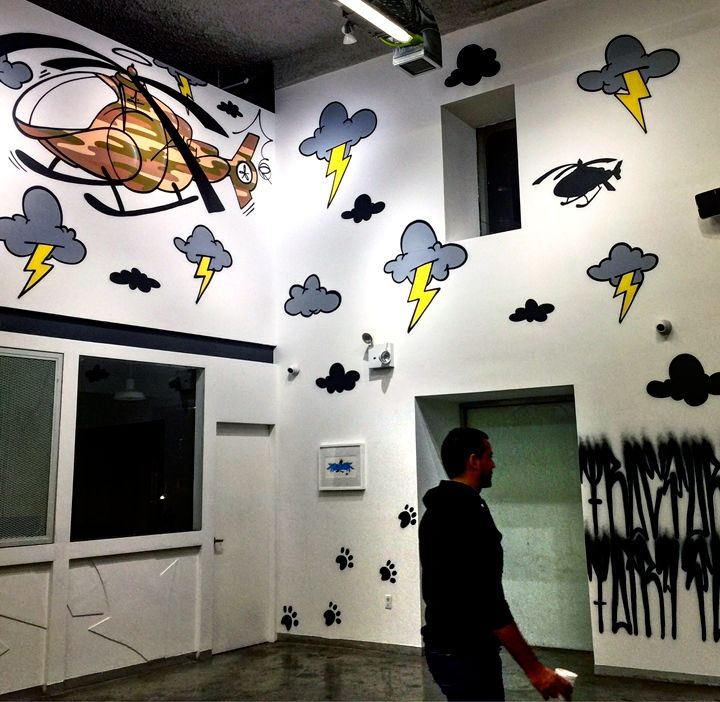
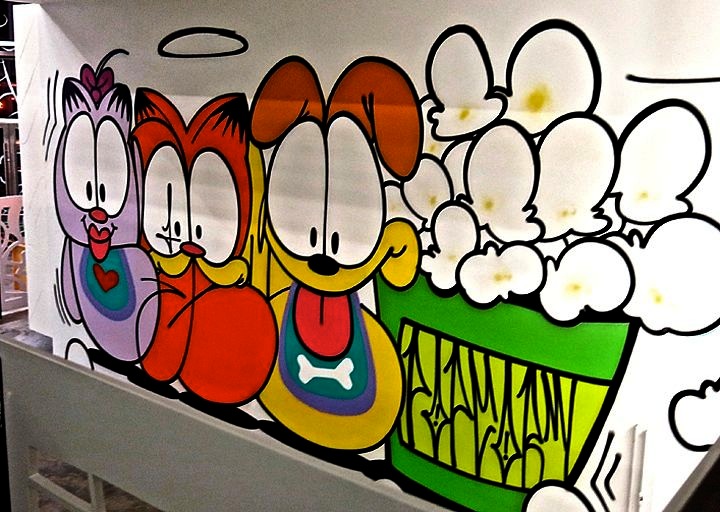
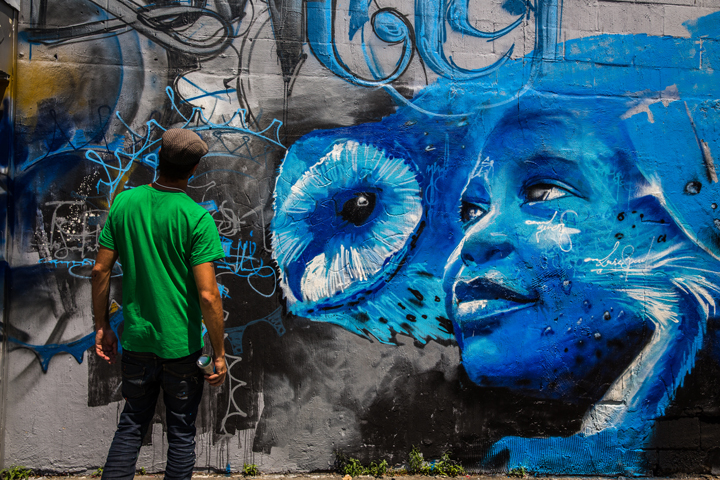
Born in Brazil in 1982, SALMOS first made his mark in São Paulo’s public spaces and freight trains as ISHI. In 2004, he opened his own tattoo store, and ten years later, he emerged as SALMOS, Sou Artista Livre Mais Ouseda de São Paulo, “the most daring free artist in Sao Paulo.” His current work — both indoors and outdoors — is largely a delightful fusion of graffiti writing and classic comic characters. This past Saturday, SALMOS‘s first NYC solo exhibit, FRACTURED FAIRY TALES  opened at  the Martinez Gallery. While visiting, I had the opportunity to speak to the artist.

salmos-art-martinez-gallery

When did you first hit the streets?

Back in 1996-97. I was 14 at the time.

What motivated you to do so?

I was drawn to the streets. Pixação — in particular — inspired me. And I came up with the idea of integrating comical characters into my writing.

salmos-character-artjpg

Can you tell us something about these characters? What is their appeal to you?

They are magical!  They fuse the nostalgia that adults feel with the mystification children experience.

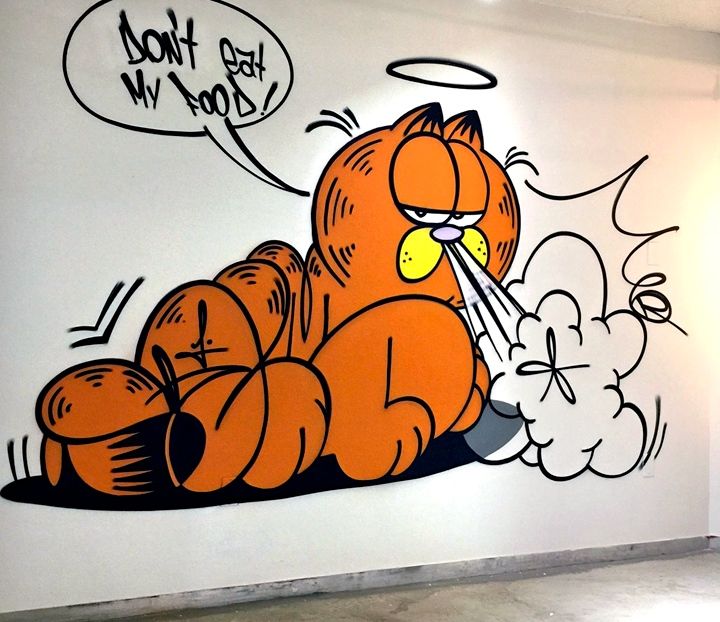
And how do you choose your characters? Why — for example — Garfield?

I love the ones that make me feel like I am a kid again! Garfield enchants me!

salmos-garfield-graffiti

And what brought you here to NYC?

The amazing opportunity to paint here. New York City is where it all started. The history of graffiti is here in NYC.

And we here in NYC love how writers from places like São Paulo are taking it to another level. We’re so glad you made it here! Have a safe trip home!

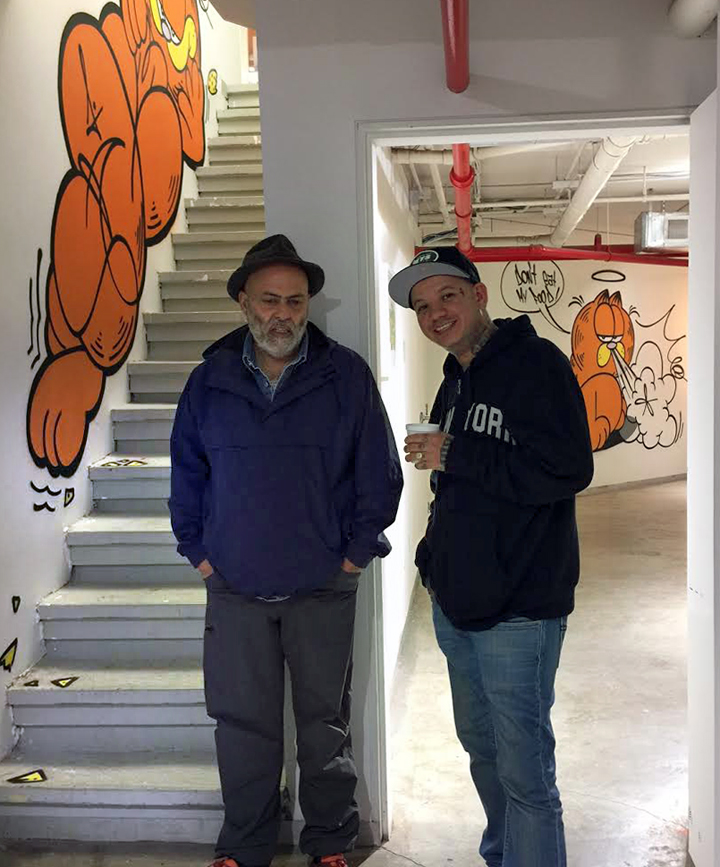
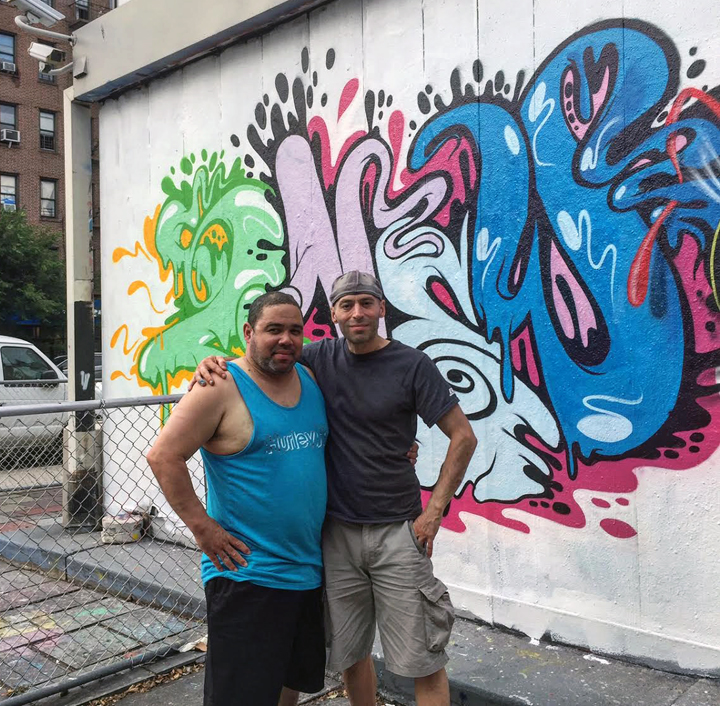
salmos-and-martinez

Curated by Octavio ZayaFRACTURED FAIRY TALES can be seen Mon- Sat, 11AM to 5PM, at the Martinez Gallery on 135th Street and Broadway.

Note: Standing to the left of SALMOS is Martinez Gallery‘s noted director, Hugo Martinez.

Photos by Lois Stavsky

{ 0 comments }

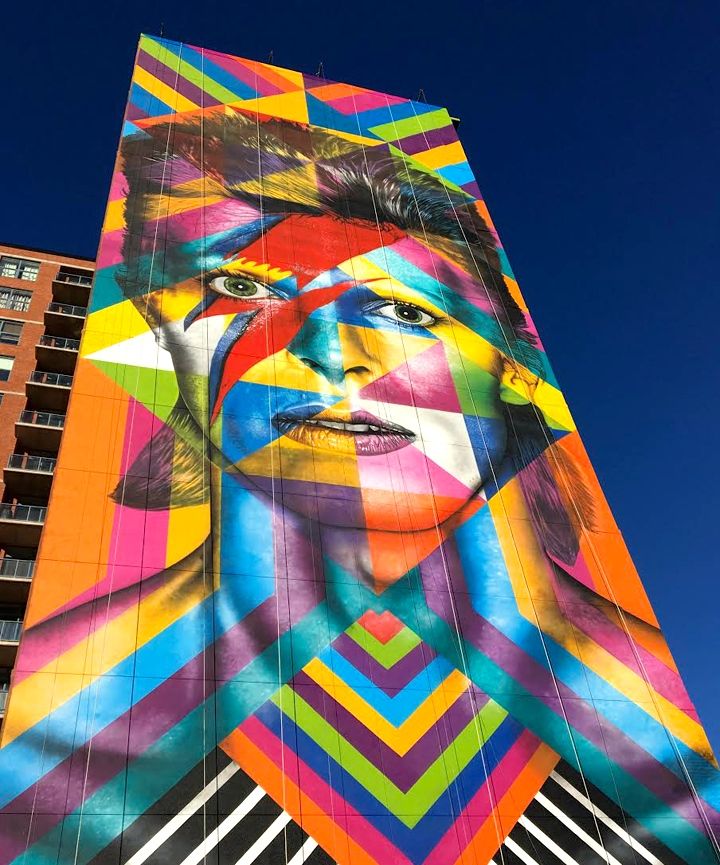
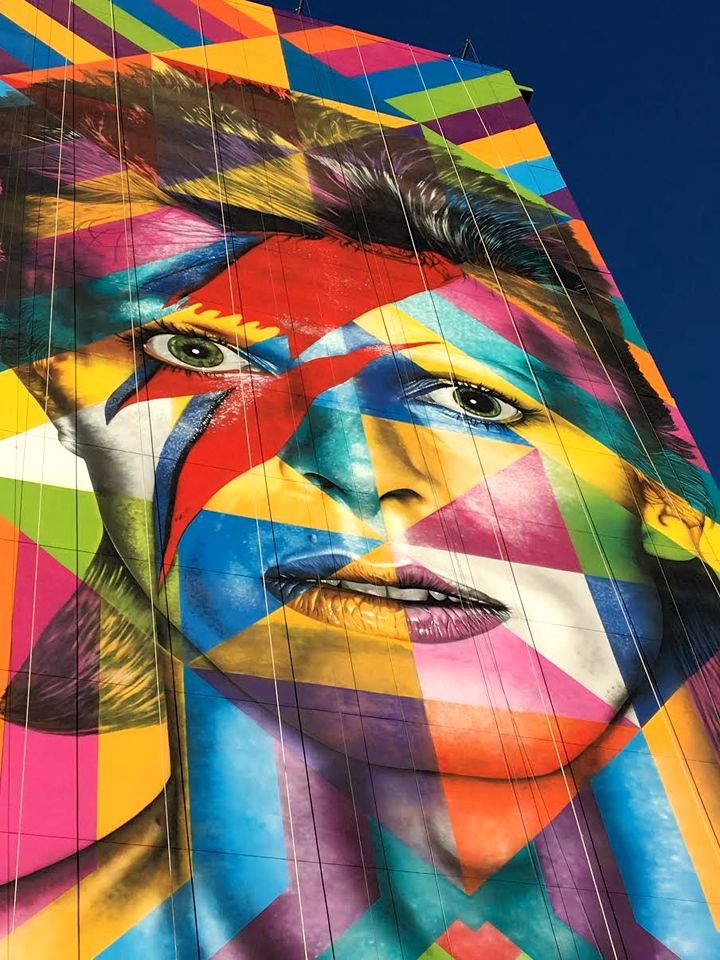
kobra-close-up-bowie-mural-art-jersey-city

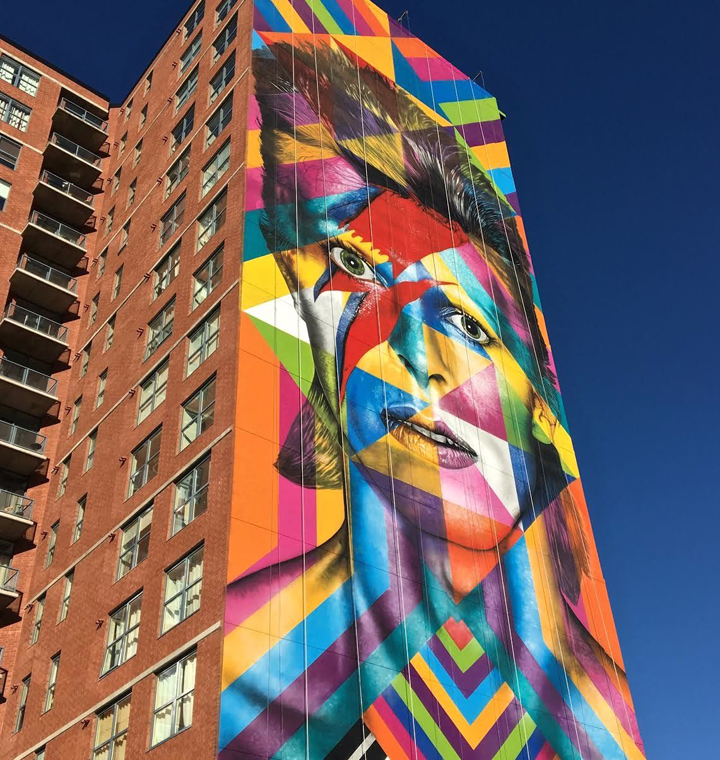
Recently in the news for setting the Guiness Book of World Records for the “latest spray paint mural by a team” with his Rio Olympic-inspired Ethnicities, self-taught Brzailian artist Eduardo Kobra has brought his extraordinary talents to Jersey City. Kobra’s rendition of pop icon David Bowie is the most recent addition to Jersey City’s more than 86 other public art works as part of the city’s Mural Arts Program launched in 2013 by Mayor Steven Fulop. This past Friday, a dedication ceremony was held at Jersey City’s Cast Iron Lofts where I had the opportunity to pose a few questions to the artist.

When did you first paint in an outdoor venue?

Ten years ago.

What inspired you to do so?

Everything I had seen and read about what was happening in New York City.

Can you tell us something about the first huge mural that you painted?

It was in Lyon, France. It was a tribute piece to immigrants in a building that was about to be dismantled.

kobra-david-bowie-street-art-jersey-city

Approximately how many huge murals have you painted since?

Over 30 in more than 20 countries.

The figures you’ve painted range from pop icons like John Lennon and Bob Dylan to historical figures inlcuding Ghandi and Nelson Mandela. What inspired you to paint David Bowie here in Jersey City?

Bowie’s creativity and vision had always inspired me. I’d actually painted this portrait six years ago on a canvas, and I was delighted to have the opportunity to paint it here in Jersey City on such a tall building. It is my way of keeping his memory alive among people who embrace him.

What was the greatest challenge that you’ve faced these past two weeks since you began painting here?

The height of the building is intimidating! And the mural, itself, is 180 feet tall.

kobra-david-bowie-mural-art-jersey-city

How have folks responded to the mural?

They love it. The response has been overwhelming.

Congratulations! It is wonderful!

Interview conducted and edited by Lois Stavsky; photos by Sara Ching Mozeson

Hailed in a range of media from the Huffington Post to the New York Times, our Street Art NYC App is now available for Android devices here.

en-play-badge 2

{ 5 comments }

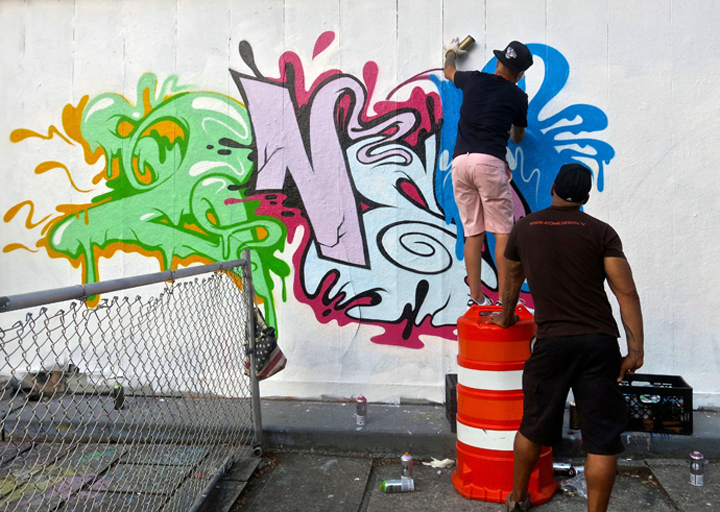
2-new-and-dia-msk-graffiti-writers

I met up with several members of the East Coast – and original – MSK crew while they were painting up in Inwood earlier this year. Among the writers I spoke to were: Kister, its current president; Dia One, MSK’s president back in the 80’s and its legendary former vice president, 2 New. (Note: pictured above is 2 New to the left of Dia One).

When was MSK first founded? And by whom?

It was founded in 1982 by MADE and WASE, along with a few other writers who attended IS 52 — right here in Inwood.

frankizm-msk-action-graffiti-nyc

Which trains was MSK hitting back in the day?

Any one nearby – the 1 train, the A, the AA, the C, the CC, the RR and sometimes the D and B.

How were the original MSK crew members regarded back then?

All of us growing up in the Heights and here in Inwood had enormous respect for them.  Everyone knew them and looked up to them.

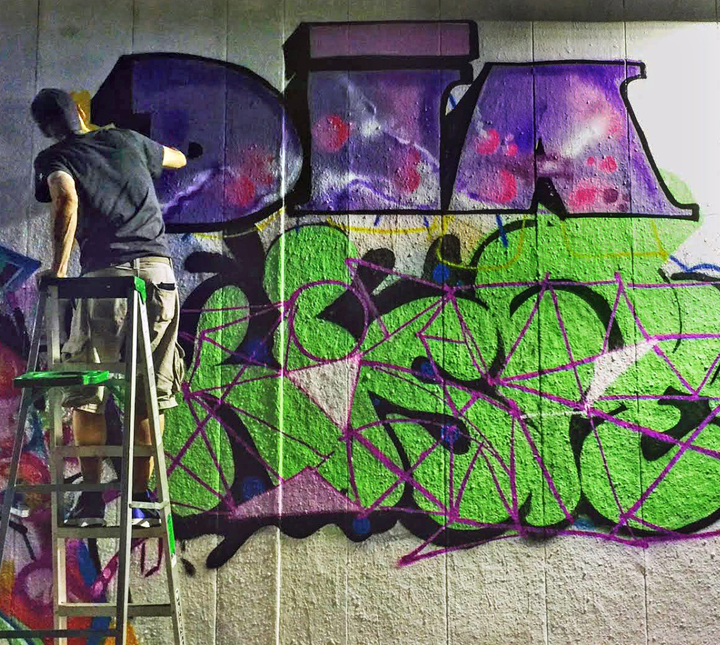
dia-msk-graffiti-nyc

Can you give us a sense of what it was like hitting the trains back then?

We followed a routine. Five or six of us would gather in a friend’s house.  We’d design an outline. Then we’d rack the paint from a local hardware store. And once we had the paint, we’d pick a yard and sneak in.

And once you got into the yard?

We had to worry about gangs, dogs, cops and stepping on the 3rd rail.  Success was getting out alive and taking a photo.

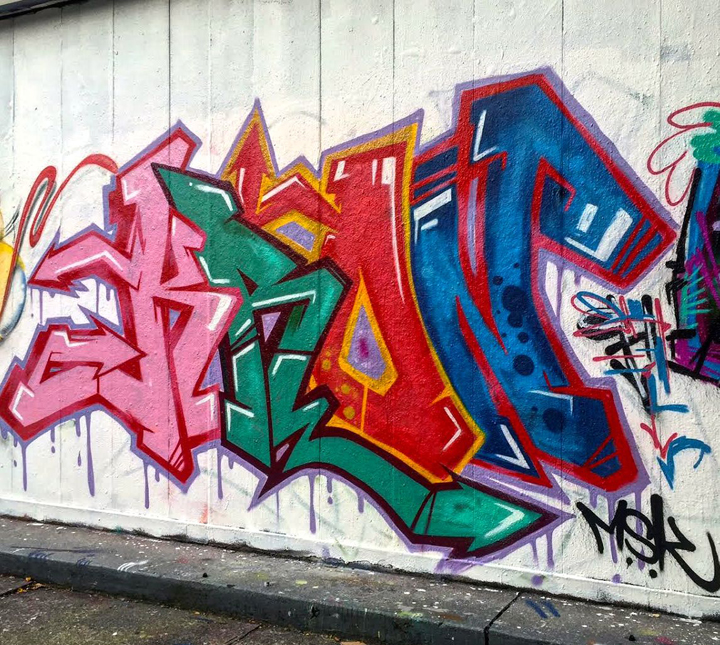
kron-graffiti-msk-nyc

Do any particular memories stand out?

When three young MSK guys went to the 145th Street lay-ups and had their cans taken away by members of Jon One’s crew.  We had to retaliate, and we ended up eventually beating the crap out of two of them. The drama only continued, and eventually Jon One left NYC for Paris.

As the train era ended in the late 80’s, what surfaces were MSK’s second and third generation hitting?

Mostly highways, rooftops and handball courts.  And because we had to be fast, we mostly did bombs and throw-ups. We didn’t have time for pieces – except for occasional ones on handball courts.

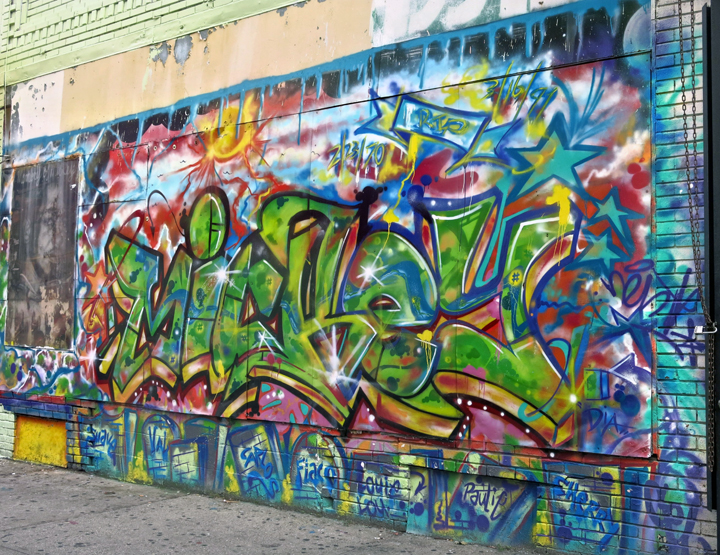
msk-graffiti-mural-nyc

Here you have members of all three generations of MSK working together – painting on a legal wall.

Yes, we do it because it’s fun. It’s our way of celebrating our culture.

And how does painting on a legal spot like this one differ from working illegally?

On a legal space like this, we can take our time and make as many changes as we want as we work. But when we paint on walls like these, we can’t get the adrenalin rush that comes with working illegally. It’s not the same — nowhere close! And we miss it!

Images

1. Dia One and 2 New against mural by Frankizm

2. Frankizm at work on tribute mural to 2 New

3. Dia One at work at night

4. Kron

5. Dia One  — memorial wall first painted in 1992 and redone, at the family’s request, in 2013 — with Flite, Frankizm, Kister, Cel & Nest

Interview & photos by Lois Stavsky

{ 2 comments }

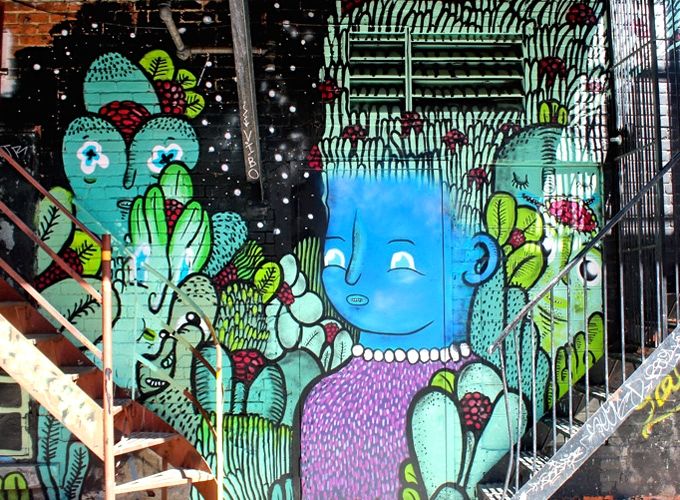
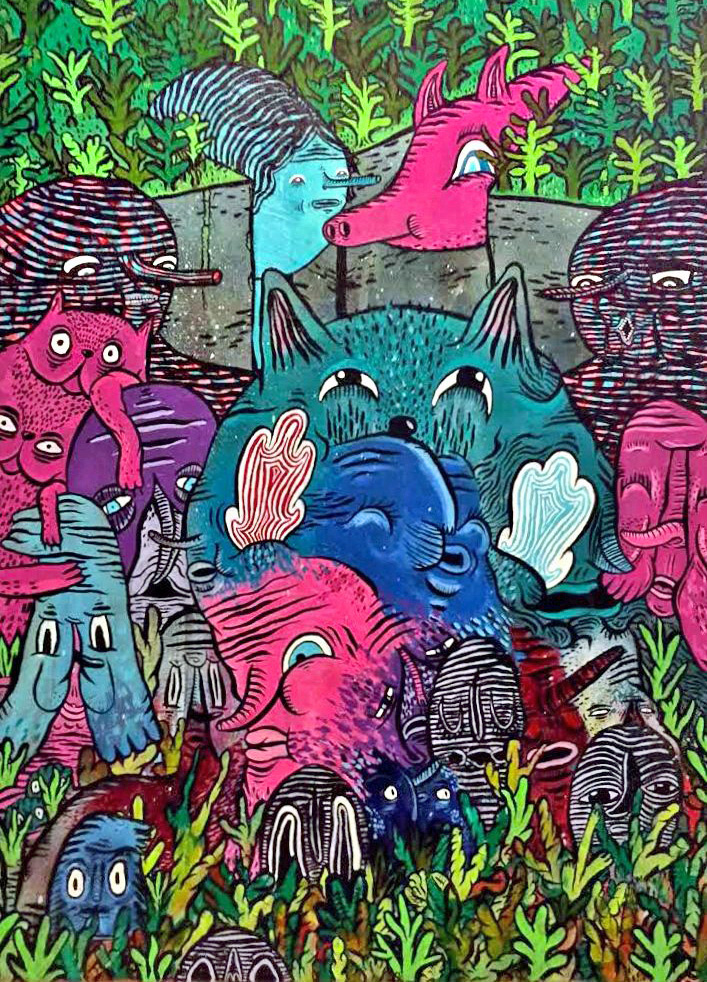
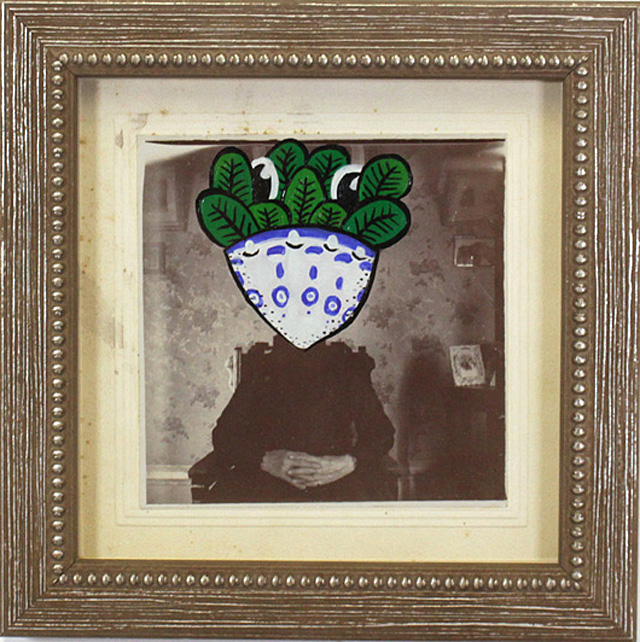
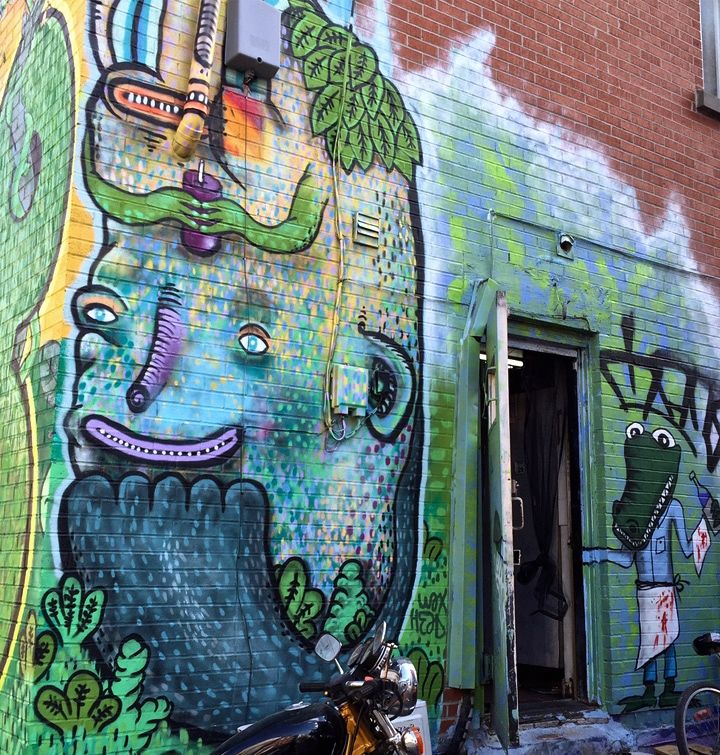
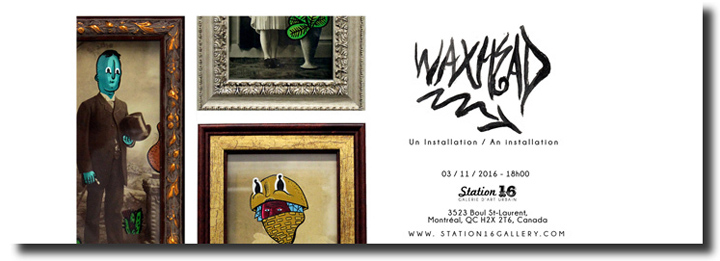
Toronto native Waxhead moved to Montreal in 2012, where his singular style has surfaced on a range of surfaces from vintage photographs to huge walls. I discovered his distinct aesthetic this past summer while visiting Station 16 and exploring the streets of Montreal. Waxhead‘s first solo exhibit in Montreal, Waxhead: An Installation opens this Thursday, November 3 at Station 16.  While in Montreal, I had the opportunity to visit Waxhead‘s studio and pose some questions to him.

waxhead-street-art-mural-montreal

When and where did you first get up?

I was 13 when I began tagging along the trackside in Toronto. It was back in 2006.

Who or what inspired you at the time?

I lived right beside the train tracks. I saw graffiti every day. It seemed like the natural thing to do. I didn’t become serious, though, about it until I was 18. That’s when I really got into characters.

How did your family feel about what you were doing back then?

My mom has always been supportive. ‘gotta love Mom!

Have you any thoughts about the graffiti/street art divide? 

I respect the mentality of getting up. But I also appreciate the refined work of street art. I’ve done both.

waxhead-characters

How do you feel about collaborating with other artists?

I love to collaborate. Among the artists I’ve painted with are: Cry0teSbuone and Getso.

What about the movement of street art into galleries?

It’s great when artists can live off their work and have a space to show it.  But they must keep the true sense of it.

Have you, yourself, exhibited your art in a gallery setting?

I’ve exhibited in several group shows — mostly in Canada.

What inspires you these days?

Colors, nature, old photos. I love collecting old photos and reworking them.

waxhead-spinach

Are there any particular cultures that have influenced your aesthetics?

I‘ve been inspired by the time I spent in India – particularly the beautiful colors I associate with its culture.

Do you work with a sketch in hand or do you just let it flow?

I let it flow. If I don’t like it, I can always do it again.

Are you generally satisfied with your work?

No! I’m very critical.

What do you think of the role of the Internet in all of this?

It’s a great tool for me to connect with other artists and with clients.

Do you have a formal arts education?

No! I’m self-taught. My friends were my best teachers.

img_0427

What percentage of your time is devoted to art? 

All of it. I live my life through my art. I’ve always been drawing.

And is it the main source of your income?

Yes, most of the money I earn is through my artwork.

What is the riskiest thing you’ve done?

I was painting in India – balancing on a wobbly two-story ladder  — when a giant bull was about to rub against it.

That certainly does sound menacing! How would you describe your ideal working environment?

Painting outside with friends. I love meeting and talking to people.

How has your work evolved through the years?

It’s become more refined.

waxhead-installation-station-16

What do you see as the role of the artist in society?

As far as the street artist — it is to connect people to one another through what they see on the streets. I especially want to connect to the youth in this city.

What about the photographers in this scene? And the bloggers? How do you feel about them?

We need them! What we do needs to be archived.

I certainly agree with that!

Note: Waxhead: An Installation — a collection of  Waxhead’s hand-embellished vintage photos — opens this Thursday, November 3 at 6pm at Station 16 and continues through November 14.

Interview by Lois Stavsky

Photos: 1, 2 & 4 Lois Stavsky; 3 courtesy Station 16

{ 1 comment }

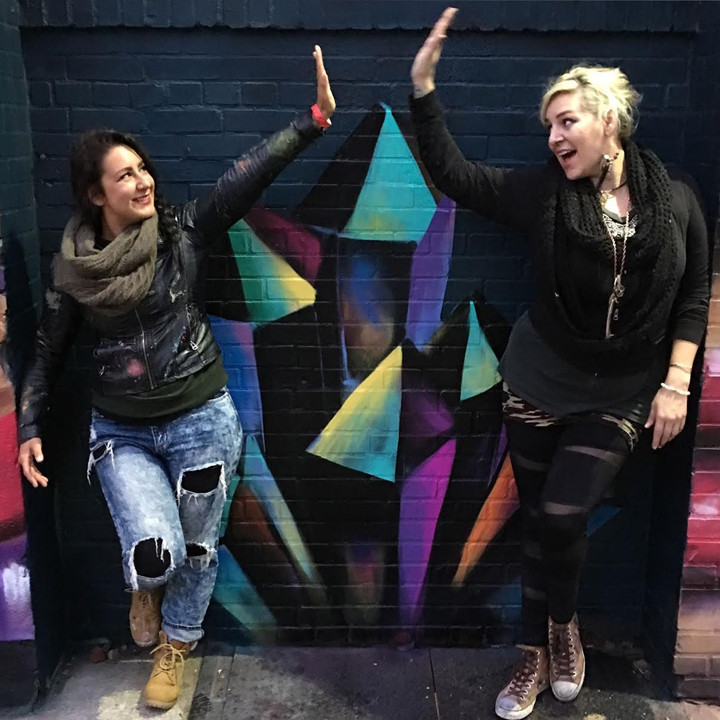
fin-dac-at-work-street-art-bushwick-nyc

Several stunning new murals recently surfaced on Morgan Avenue and Stagg Street in Bushwick. While visiting Livestream last week, I spoke to visual artist and curator Bianca Romero about Skillosophy, the movement behind these artworks.

Just what is Skillosophy? And when was it launched?

It’s an exhibition/showcase series that takes place four times a year with a focus on multi-disciplinary artists. It was launched last year by the co-founders of Lyricist Lounge & Defiant Ent and Livestream. For this past quarter, Danny Castro — Lyricist Lounge co-founder — and I decided to feature outdoor murals for the fall exhibition during Bushwick Open Studios, in addition to the art that is on exhibit inside the Livestream headquarters.

fin-dac-paints-mural-bushwick-nyv

What spurred you to add this outdoor element to Skillosophy?

Typically, Skillosophy is indoors, inside the Livestream studio space. But we wanted to take it outside for Bushwick Open Studios. It seemed like a great way to give exposure to the talented muralists and street artists, and it was a great addition to our Block Party to have it done live. We loved the communal and public aspect of it.

rubin-street-art-bushwick-nyc

You’ve done a wonderful job of curating it all. The art both inside and outside is wonderfully eclectic and is beautifully presented. Have you a background in art? 

Both my parents are artists. My father, in fact, was a pioneer in graphic design and has taught design at the School of Visual Arts and at the Parsons School of Design. My mother was a fashion designer, and I, myself, am an artist.

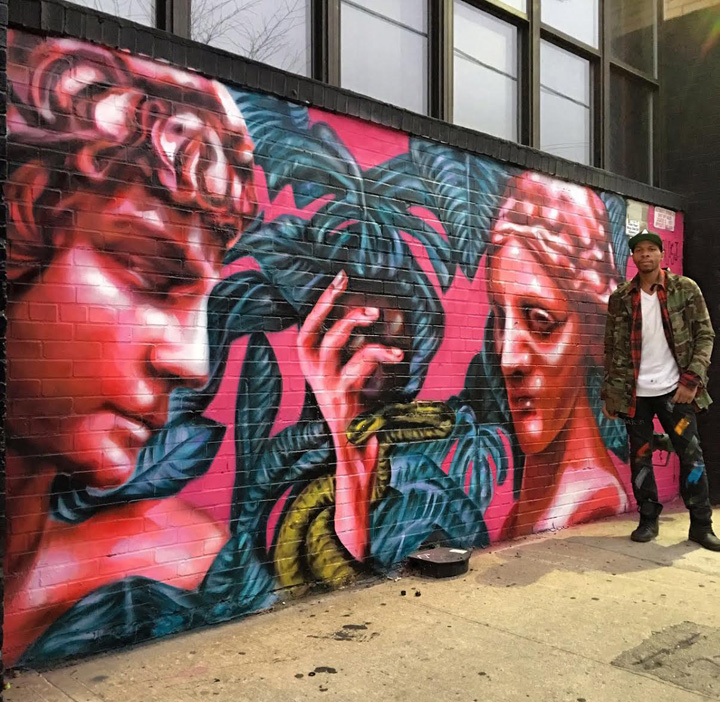
danielle-mastrion-lexi-bella-street-art-nyc

And can you tell us a bit about Livestream? When was it first founded and what is its mission?

It was founded in 2007 with the mission to make any every event available live online through video.

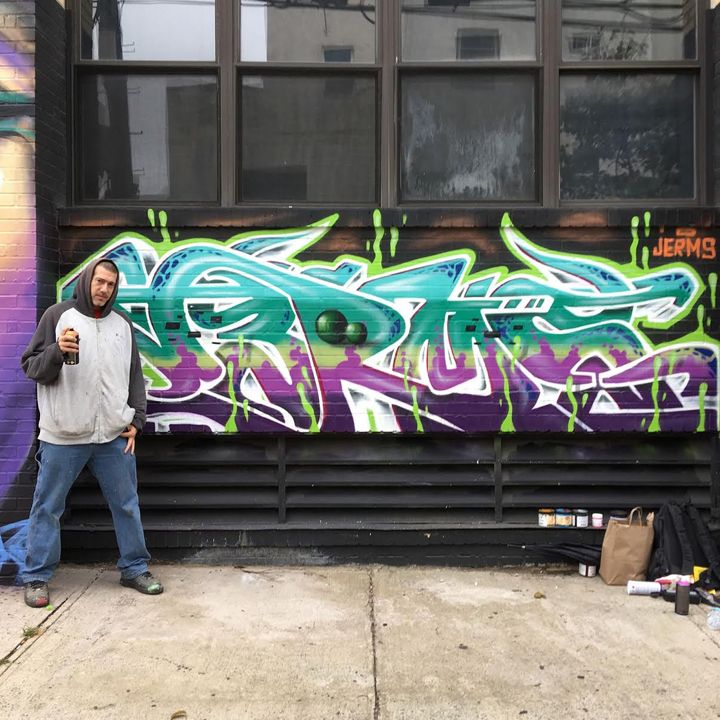
jerms-graffiti-bushwick-nyc

And how has Livestream responded to Skillosophy?

The love it. They’ve thoroughly embraced it. They love the idea of bringing the extraordinary talents of Bushwick into our offices. A walk through our offices — that are covered with work by local artists — is like a walk through the neighborhood!

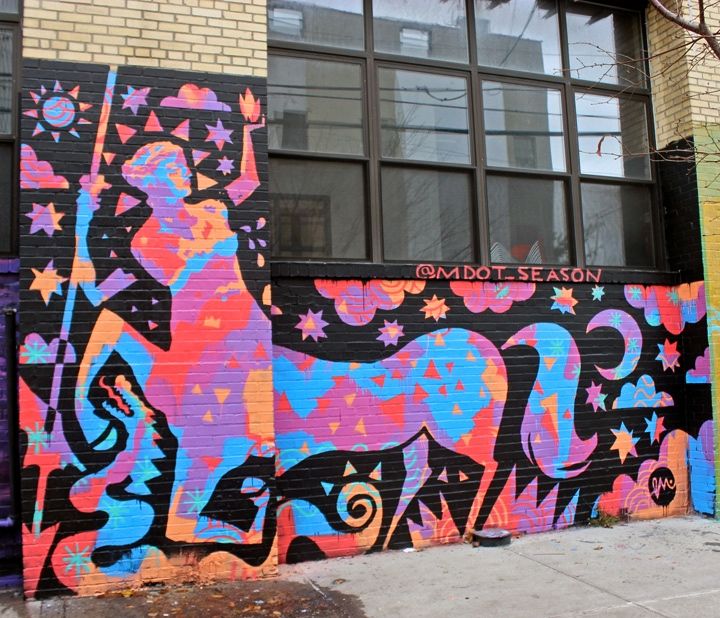
misha-t-m-dot-season-street-art-bushwick-nyc

Who is Skillosophy‘s audience?

All art lovers! Anyone who loves any aspect of art — music, dance, film or visual art.  The venue has hosted hip-hop shows, film industry mixers and skillshares in addition to art exhibits. We’ve had a very diverse audience…from working class folks to art collectors to party people!

n-carlos-j-street-art-bushwick-nyc

How can folks best keep up with your events? And how can they arrange a visit to Livestream‘s headquarters for private viewings of the indoor art?

They can follow Skillosophy on Instagram, and they can contact us at skillosophyshow@gmail.com to schedule a private viewing and inquire about pricing and events. And any artist or performer interested in participating in a future Skillosophy exhibition and showcase can contact as at this email, as well.

 Images

1 & 2 Fin DAC at work

3 Rubin at work

4 Danielle Mastrion and Lexi Bella

5 Jerms

6 Misha T 

7 N Carlos J

Photo credits 1-5 & 7 Karin du Maire and 6 Tara Murray; interview with Bianca Romero conducted by Lois Stavsky

{ 0 comments }

el-nino-de-las-pinturas-street-art-nyc

For the past several years, Queens-based photographer Raphael Gonzalez aka Zurbaran1 has been creating intriguing, visually dynamic images of street art, often focusing on the artists at work.  Within the past year, his photos have made their way into several shows including his first solo exhibit, The Hand of An Artist. He has also been featured in Yoav Litvin‘s blog, 2createart. I recently had the opportunity to meet up with him.

I love what you are doing! When did you first begin to photograph NYC’s street art and graffiti?

About four years ago.

ecb-street-art-bushwick-nyc

What inspired you to do so? 

Several years ago, my daughter visited Berlin and returned home incredibly excited about the street art she had seen there. Her enthusiasm, along with the photos that she showed me, inspired me to check out what was happening on the streets of NYC. And I first became serious about it all in October, 2013 when Banksy hit NYC with his month-long day residency Better Out Than In.

Within the few years that you’ve been shooting street art, you seem to have established friendships with many of the street artists you photograph.  Can you tell us something about that?

The very first street artist I met was Alice Mizrachi. I was standing in front of her mural at Welling Court when she noticed me. She was living right there at the time, and — almost at once — came out in her pajamas to speak to me! I was so impressed by her intelligence and craft. I photographed her in front of her mural, and we struck up a friendship right then.  She was the first street artist I photographed and spoke to. Since that day, I’ve become friends with many more.

dasic-fernandez-street-art-nyc

You’ve been photographing many artists as they work. How have they responded to this? Are they open to it?

The response has been great! And when I share the photos I’ve taken with them, they are so appreciative.

That’s great! As street art is so ephemeral by nature, it’s so important to document it. And I’m a huge fan of artful photographers who document the process. I notice that you’ve focused quite a bit on the artists’ hands.

Yes, I like observing their hands in action. And photographing hands gives me a chance to use my long lens which I love doing!

fanakapan-street-art-portrait-nyc

And you’ve also begun collaborating with some of the street artists whose works you photograph. How do you go about engaging them?

Yes! I love collaborating. The process makes me think a little differently, and the artists have been wonderful.  Among them are FumeroGizTrans1NoirCity Kitty. Some I’ve approached, and others have approached me.

What are some of the challenges that you face in seeing your projects through?

There’s never enough time. And there are so many artists! Going through all the photos that I take and then editing them is a lengthy, time-consuming process.

noir-graffiti

How has the scene changed since you first started photographing street art?

There are fewer walls, and street art has become more commercial. And it seems that in the past few years, street artists have achieved celebrity status. It’s almost like they are the new rock stars!

What’s ahead for you?

I would like to engage in more collaborations…different in nature than the usual ones!

futura-street-art-nyc

I look forward to seeing them all, and I will be keeping up with you — in the meantime — via your Instagram!

All photos © Raphael Gonzalez aka Zurbaran1; interivew conducted and edited by Lois Stavsky

Images

1. El Niño de las Pinturas, Brooklyn Is the Future, Brownsville

2. Hendrik Beikirch aka ECB, Bushwick

3. Dasic Fernandez, Welling Court Mural Project

4. Fanakapan, Bushwick Collective

5. Noir, as featured in Raphael Gonzalez‘s solo show at Fatty’s in Astoria, Queens

6. Futura, Bushwick Collective

{ 1 comment }

kid-lew-street-art-up-high-in-toronto

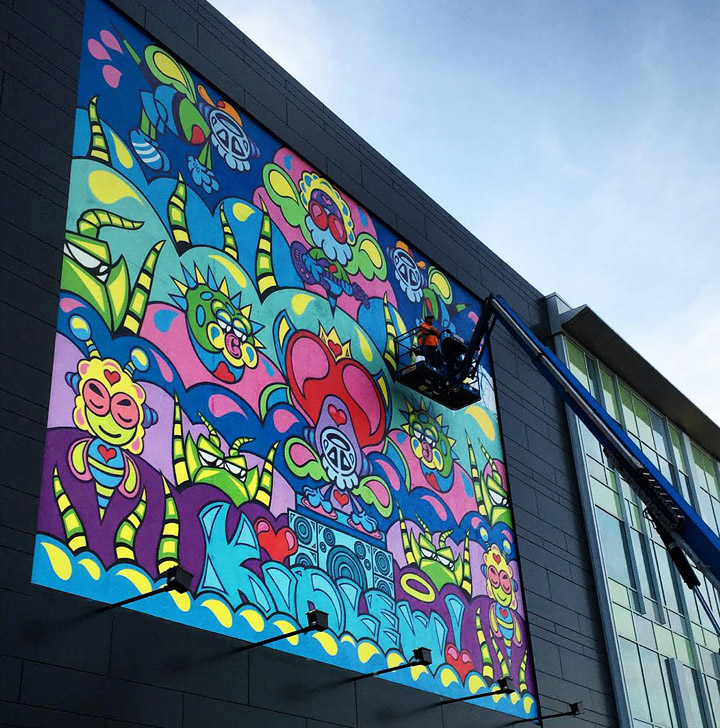
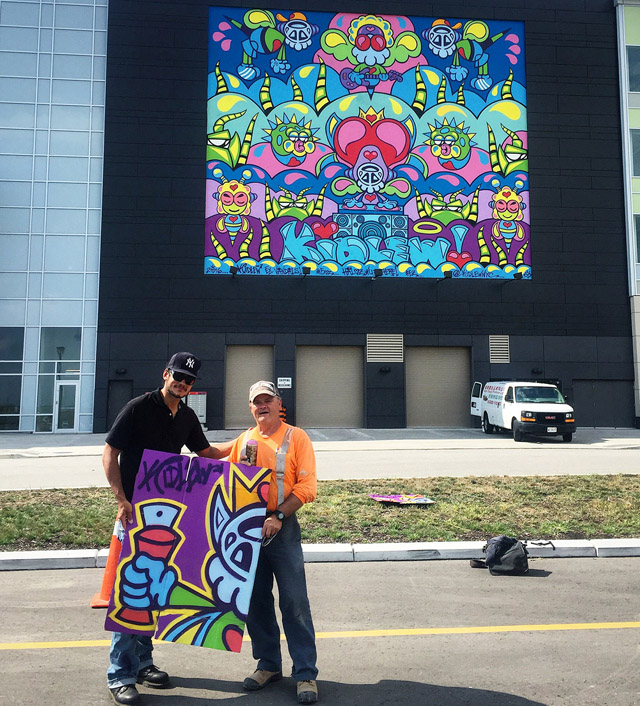
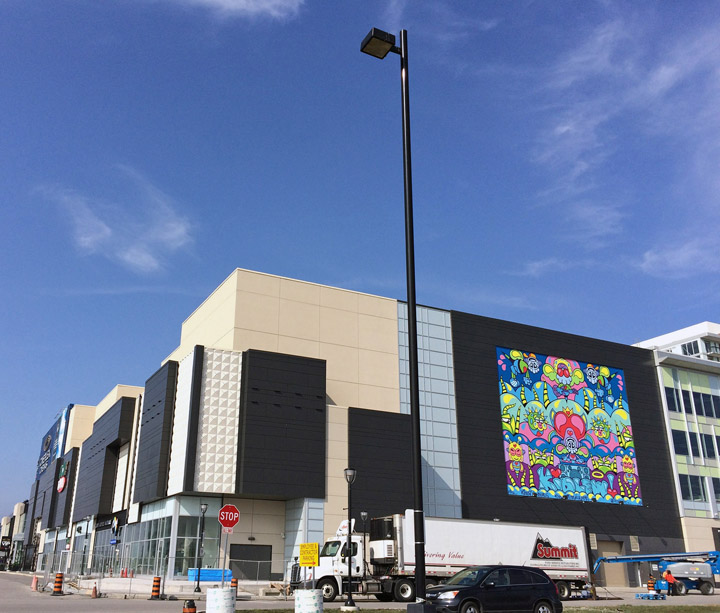
Queens-based artist Steve Lew aka Kid Lew recently brought his talents and vision to Toronto’s Enterprise Boulevard. The new urban complex — known as Downtown Markham – is now graced with a huge, brilliantly hued 40’x50’ mural, featuring Kid Lew’s iconic characters. Situated on the northeast corner of the Remington Contemporary Art Gallery, it can be seen for miles and by thousands of folks daily as they pass by on Highway 407. I recently spoke to the artist about his experience.

Can you tell us something about this project? What brought you to Toronto?

I had been invited by Broadway Bound — a fine arts and entertainment company — to paint an outdoor mural in Downtown Markham. I had submitted a few ideas, and one was accepted.

kid-lew-with-street-art-toronto

And how did you initially connect with Broadway Bound?

I had met Shelley Shier, the founder of Broadway Bound, at the Dorien Grey Gallery back in 2012. I was one of the street artists who had collaborated with Hank O’Neil aka XCIA for the exhibit Street Artists Unite. We’ve stayed in touch since.

Your mural is huge! How long did it take you to paint it?

It took 12 days, working 8-10 hours each day.

kid-lew-with-street-art-and-work-on-canvas

What were some of the challenges presented by this project?

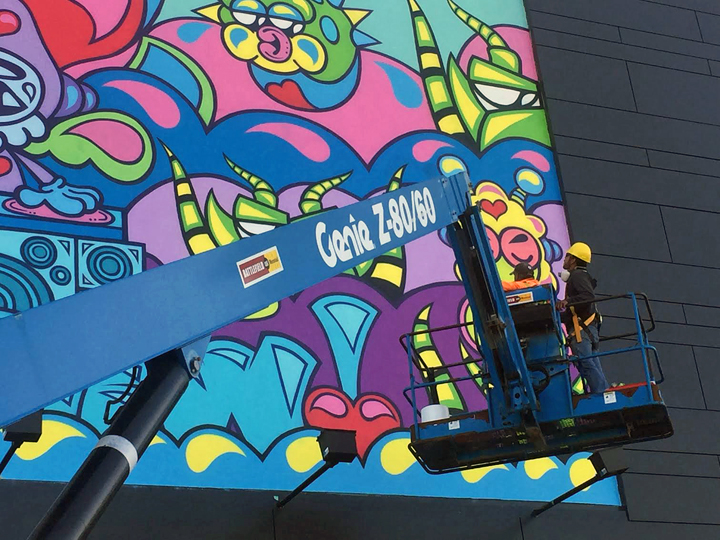
I almost always paint standing on the ground. But this time I started on the third floor of a building. I immediately got over my fear of heights!  It was also rainy and very windy. I could feel the lift swinging from side to side! Sometimes the wind actually sprayed the paint! Then when I walked around the hotel, I felt as though everything beneath me was moving! I had a serious case of lift lag!

I’ve been a huge fan of your characters since I first discovered them years ago — on the streets and in galleries! Can you tell us something about them? What initially inspired them? 

I was intially inspired by cartoons. I began as a young child copying Disney characters. And later on my main influences grew to include: graffiti, skateboarding, NYC pop culture and — in general — life in this city. But my greatest inspiration in Keith Haring. And because I am color blind, I tend to use colors that appear brightest to me — those that can be seen at night.

kid-lew-completed-mural-toronto

And who are these characters? What do they represent? And how have they evolved through the years?

They’re often not as bright as they appear to be. They represent different phases in my life. And as my life evolves, my characters continue to evolve, as well. Both my technique and design have become more refined through the years. I am also more responsive to my audience.

What’s next?

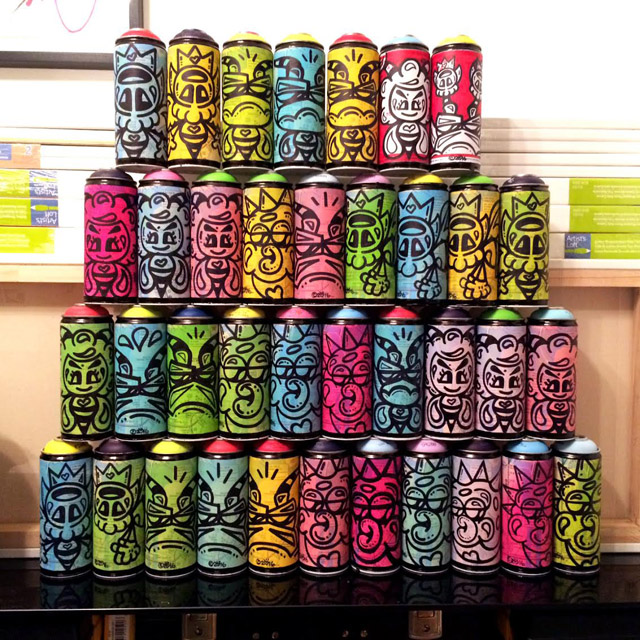
I hope to return to Jersey City to complete the mural I’d begun with Will Power and Ree. It is a huge mural that was put on hold. I’m, also, looking forward to painting more large-scale murals in a range of cities. And I am participating this weekend in the New York Comic Con, where you will be able to purchase custom used Montana Gold Spray Paint cans and ink drawings on spray painted subway maps. I will be signing some at 2pm at Booth 603 with Clutter Magazine.

kid-lew-graffiti-characters-spray-cans

Good luck with it all!  And I look forward to checking out your mural when I visit Toronto.

Interview conducted and edited by Lois Stavsky; all photos courtesy of the artist.

Note: Hailed in a range of media from the Huffington Post to the New York Times, our Street Art NYC App is now available for Android devices here.

en-play-badge 2

{ 0 comments }

buff-monster-street-art-central-avenue-nyc

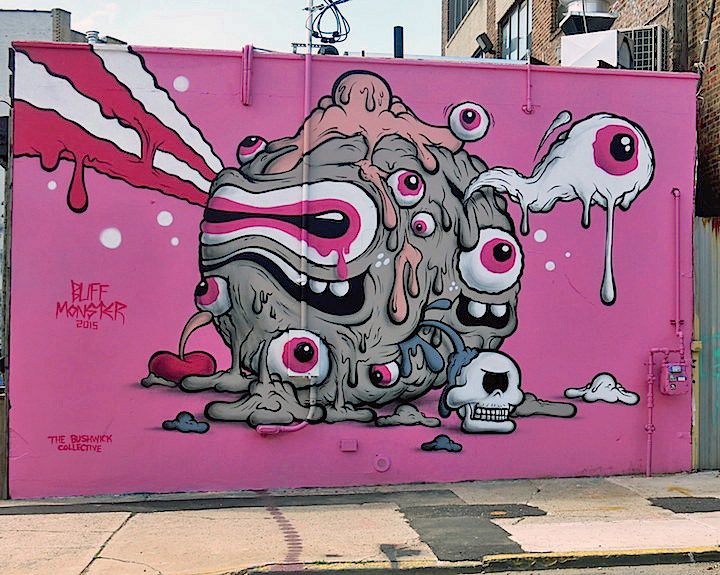
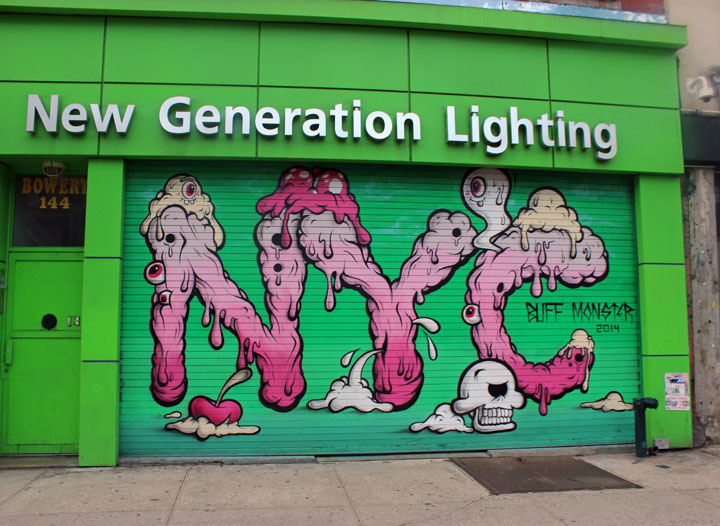
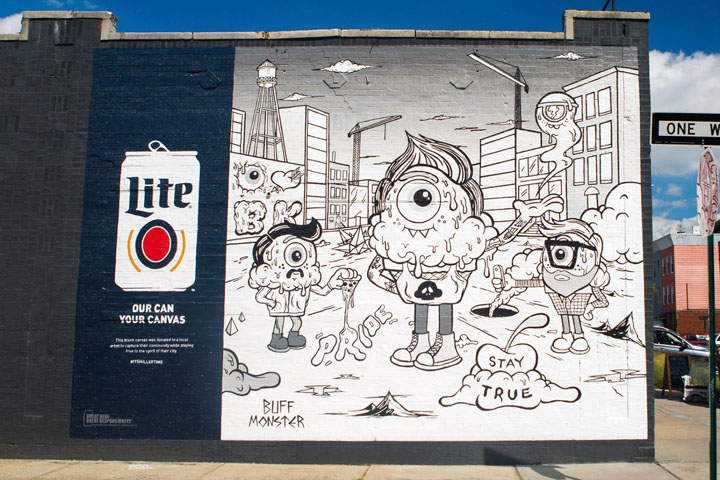
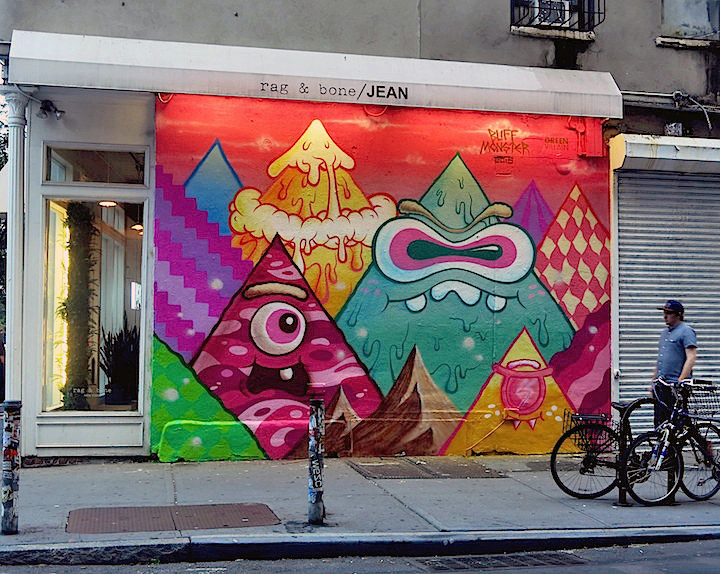
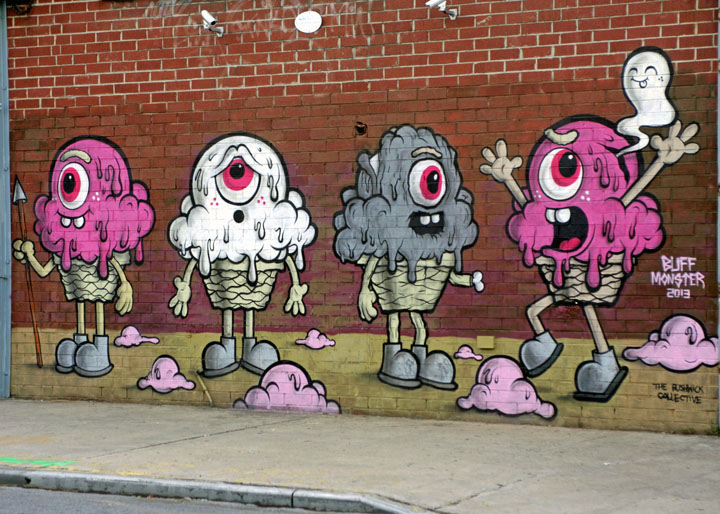
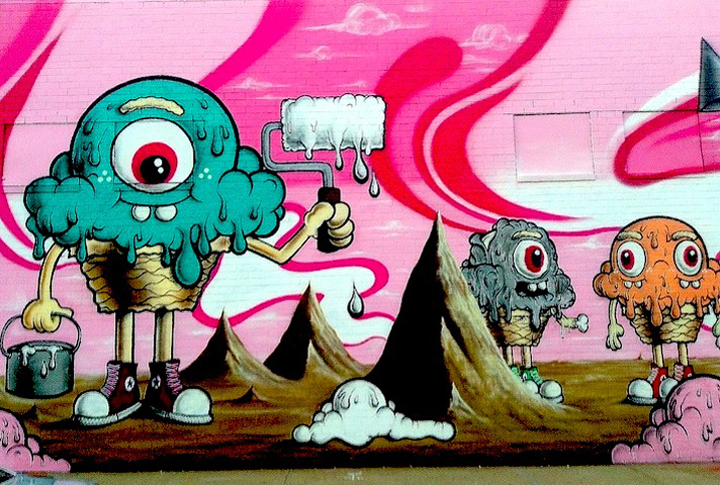
Celebrated for his captivating characters that have surfaced throughout the globe, Buff Monster forever delights us with his playful imagination and creative energy. In addition to painting murals across the world, the wildly talented and prolific artist has fashioned a wide array of artworks from prints and stickers to vinyl toys. He has also collaborated with numerous brands. Curious about this collaborative process, I recently caught up with him where he had just finished painting a mural in partnership with Miller Lite at Dobbins Street and Norman Avenue  — where Williamsburg meets Greenpoint.

buff-monster-street-art-in-nyc

You were born in Hawaii and lived on the West Coast for several years. What brought you to NYC?

I’ve been to all 50 states, but I’ve only lived in states with good weather. I lived in LA for 15 years, and I grew tired of the same climate all the time. I needed a change. I wanted to be somewhere where there are seasons. I was looking for something different — personally and professionally.

buff-monster-street-art-progress-bushwick-collective-nyc

And has NY met your expectations?

Absolutely! I love it! NYC has brought me new opportunities and projects. And snow is amazing! But you wouldn’t catch me painting outdoors in the winter!

buff-monster-street-art-brooklyn-nyc

You’ve created dozens of murals on the streets and an incredible range of your own products. You’ve worked, as well, with many brands. Among them are: Disney, Converse, Hello Kitty, Samsung, Nike, Coca-Cola and here with Miller Lite. What are some of the challenges that working with brands imposes?

The challenge is to make it work for everyone — for me, for the company I’ve teamed up with and for its intended viewers. Any collaboration I take on has to be consistent with my brand, and it has to make sense!  A successful collaboration forces me to think. And I like to think! I like challenges!

buff-monster-shutter-nyc

What about this particular project — this collaboration with Miller Lite?  What’s happening here?

This blank canvas was donated to me by Miller Lite as the first installation of  its Our Can, Your Canvas project, a program aimed at celebrating the character and soul of iconic neighborhoods. My challenge was to capture the distinct spirit of Brooklyn — its energy and integrity. And so I came up with symbols that represent Brooklyn as I see it.

buff-monster-miller-beer-street-art-brooklyn-nyc

You studied Business Administration and Fine Art at The University of Southern California.  How has your education in business administration impacted your art career?

It made my art career. If you don’t make money from what you do, it is just a hobby.

buff-monster-nolita-street-art-nyc

We love your characters. Your Melty Misfits are so much fun. What are some of your influences?                  

Among them are: Heavy Metal, Pop Art, ice cream, Japanese culture and graffiti.

buff-monster-close-up-street-art-nyc

How has your artwork evolved through the years?

It has become more expressive.

buff-monster-characters-bushwick-collective-nyc

What’s ahead?

I’m headed now to the Life Is Beautiful Music Festival in Las Vegas, Nevada where my Self Portrait will be on display at the Crime on Canvas group exhibit. ( Buff Monster has since returned and is now at work in Jersey City with Mana Urban Arts Projects.)

Note: Buff Monster’s mural for Our Can, Your Canvas remains up through October 30.

Photo credits: 1, 2, 4 & 8 Tara Murray; 5 Courtesy of Our Can, Your Canvas 3, 6 & 7 and interview Lois Stavsky; 

{ 0 comments }

my-dog-sighs-street-art

UK-based artist My Dog Sighs hits New York City this week with the London Ibiza Collective. Presented by Imagination in Space, the exhibit opens tomorrow, October 6th, and runs until the 16th at S Artspace Gallery, 345 Broome Street, in Lower Manhattan. What follows is an interview with the widely-acclaimed artist who has come to New York for the first time:

When did you begin hitting the streets? 

I’ve been leaving some sort of mark on the streets for about 15 years now.  I’d tried the gallery route a few years before and I failed.  It was so elitist. I began to realize that what you saw on gallery walls was dictated by curators. Not representative of the artists out there. I tried painting what I thought galleries would like, and that was a disaster. Watered down drivel.

So was it the democratic nature of street art that appealed to you?

Yes!  Having stumbled across some early street art — and then Wooster Collective — I loved the way street art engaged a truly democratic audience. The interaction it offered… It had such aesthetic too, so often working with the beauty of  urban decay. I started taking a piece of my work out with me on the way to catching the train to work on a Friday. I would find a nice quiet spot and leave it there for someone to spot and possibly take home. It was liberating.  I got excited as I walked away from the piece.

my-dog-sighs-street-art-on-can

What were some of your thoughts at the time?

A million questions ran through my head.  Who would see it?  What would they think?  Would they take it?  Would they feel wrong to take it?  Would they feel it’s right to take it? Would they carry the thought around with them all day? Might it encourage them to do the same? Imagine hundreds of little pieces of art hidden around the city! I started posting images online with the tag line Free Art Friday, and I started to get a good response…not just from the street artists and graffiti writers but also from lots of people who just liked the sentiment of the altruistic act.

And so that was the beginning of the Free Art Friday movement! How were you able to afford to do this?

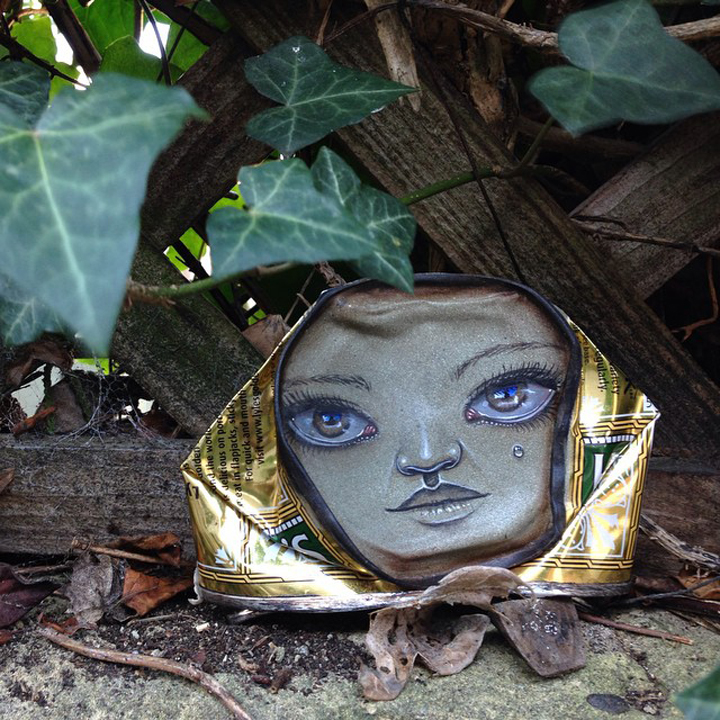
Yes! Little did I know that it would explode across the globe! Working without funds meant I used what I could find. So scraps of cards, junk and crushed food tins became my canvas.
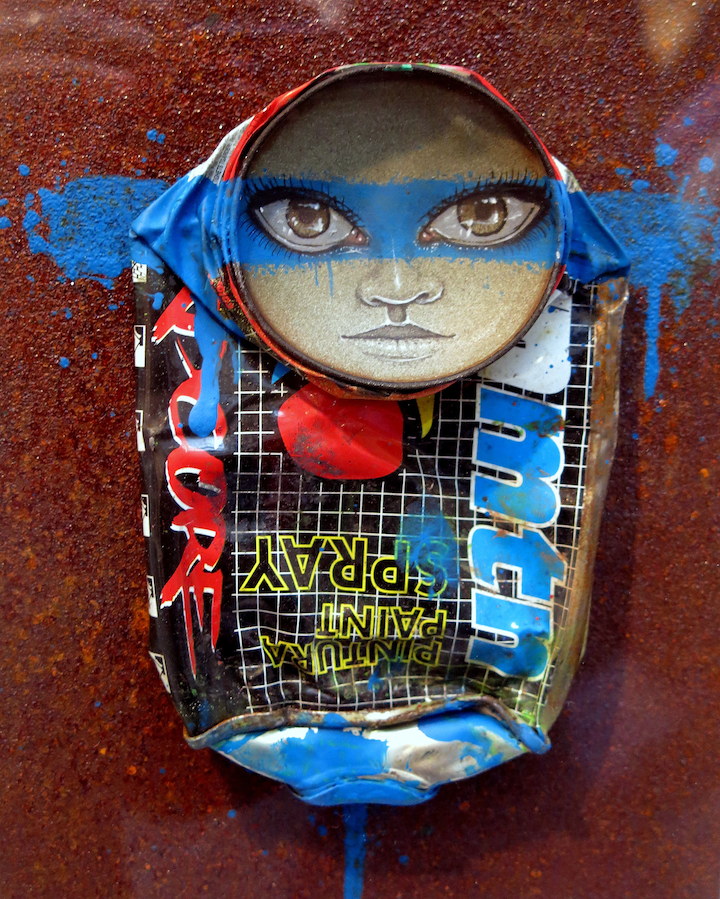
my-dog-sighs-sculpture-scope

Can you tell us something about your name? It is certainly distinct!

When I started working on the street, there were no street artists. There was just the art. There was no celebrity status like there is today. No one was interested in the artist. Just the art. And I loved that. I was never interested in being recognised for producing the work. I just liked the fact it was going to be seen. It was going to force people to question their everyday existence. It was going to confuse them and allow them to just break the monotony of the daily grind. With that in mind, I didn’t really want a ‘name’. It wasn’t necessary. I just wanted something easy to remember and that might add a layer of confusion to the viewer. The phrase My dog sighs had been sitting in my head for decades after seeing it scrawled on a fence in Biro as a kid. I remember looking at it for just a split second, but its melancholy and surreal nature just embedded itself in my brain. I can’t remember things one minute to the next, but I could not forget this phrase.  When I was trying to think of  something to write next to my work, it seemed to make complete sense to use this random phrase.  I never, for a moment, imagined that 15 years later I’d walk into a bar and get referred to as My Dog or Mr Sighs.
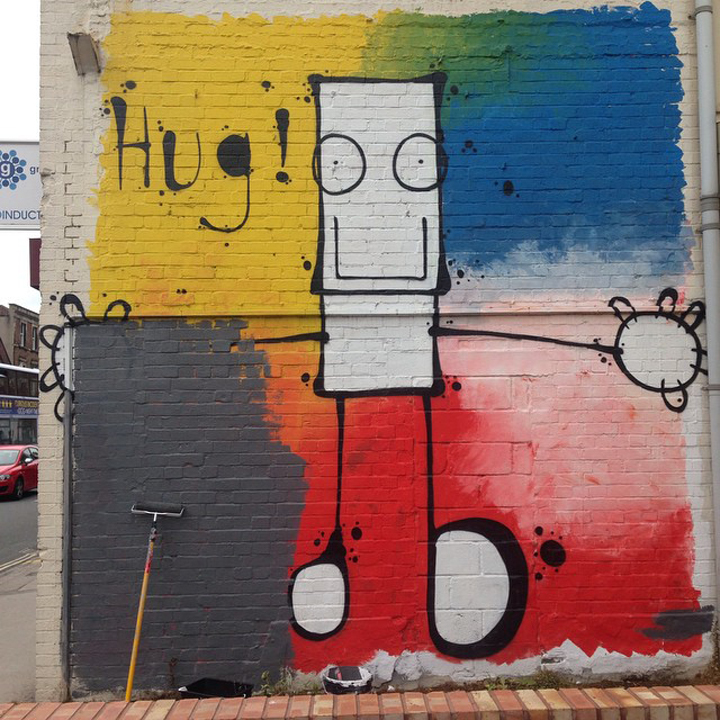
my-dog-sighs-street-art-mural

Much of your work focuses on eyes. Can you tell us something about that?

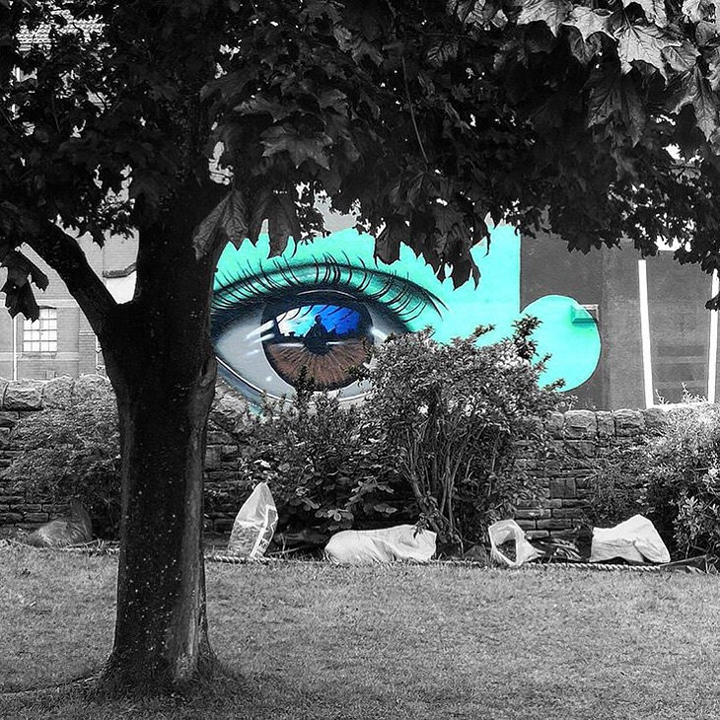
That developed from a can. I’d started painting cans with eyes that were closed, but then I thought I’d try one with eyes open. I nailed the eyes but messed up the nose. Feeling frustrated, I threw the can aside. A week or so later, I walked past a woman in a full burka. Everything was hidden except these beautifully made-up eyes. There was something so alluring and mysterious about seeing just eyes. I was completely captivated. I immediately came home and painted everything black on the cans except for the open eyes. Just like the burka. That can was one of my favorites. I then began to think about the power of seeing so little, and I started to explore the image of a pair of eyes in a narrow aperture. Initially, it was just a window the eyes looked through, but later I began exploring  that letterbox aperture in different formats; tags, drips, paint splashes. And I started to notice how when you look into someone’s eyes, you can see your own silhouette in the reflection. And as I continued to explore this, I began to hide narratives in the reflection. Little hidden stories that may at first be completely overlooked but — once discovered —  could be intriguing! It’s a huge cliche, but the saying The eyes are the window into the soul is often thrown at me. And I suppose I’m exploring that idea. Maybe it’s that I’m not very good at painting noses!
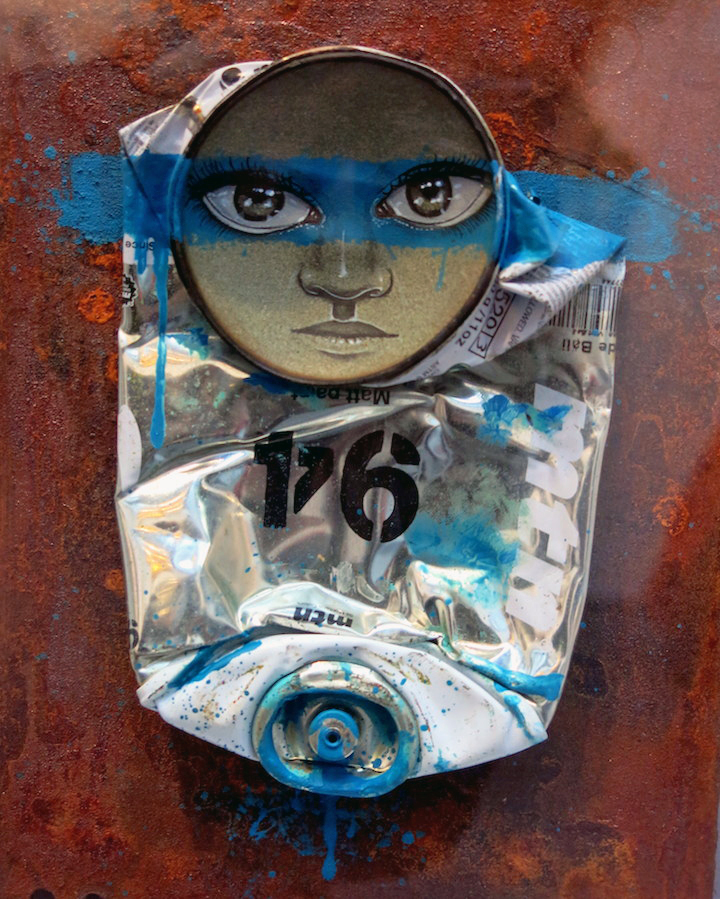
my-dog-sighs-art-scope

What can we expect to see in your upcoming exhibit — here in NYC?

For this show I went right back to one of the key moments in my life that shaped my interest in art. As a kid at school, art was about viewing traditional English landscapes and endlessly drawing cross sections of fruit and dead house plants in boring art classes. Then one day I saw a Lichtenstein print in a shop window. It blew me away. This bold brash comic book image was something I completely related to. And here it was masquerading as art. Unsettling and infiltrating the art world! Lichtenstein was my gateway into Pop — the shock of the new and the idea that art could be unsettling and naughty and ultimately very powerful. I’ve been exploring the burka stripe behind eyes in different formats and when the opportunity to show in NY came up, I knew exactly what I wanted to do. To pay homage to a hero.

When we were in London last year, we came upon your collab with the Brazilian artist Cranio. We loved it!  Have you collaborated with others? Do any of these collaborations stand out? Would you rather work on your own or collaborate with other artists?

Oh yeah. I love a good colab. It really gets you thinking outside the box. When you rock up to a wall on your own, you have a good idea about what the end result will be. But working with someone else is like cooking. When it works well, the sum of the two parts can be more than the ingredients. Among the artists I’ve collaborated with are: Snub23, Farkfk and Julian Kimmings. But I think my favorite was with Toasters in Bethnal Green last year. I was painting with a true hero, and the whole piece just seemed to work so well. We both had really in-tune ideas about what we wanted to achieve and it all just flowed so well.
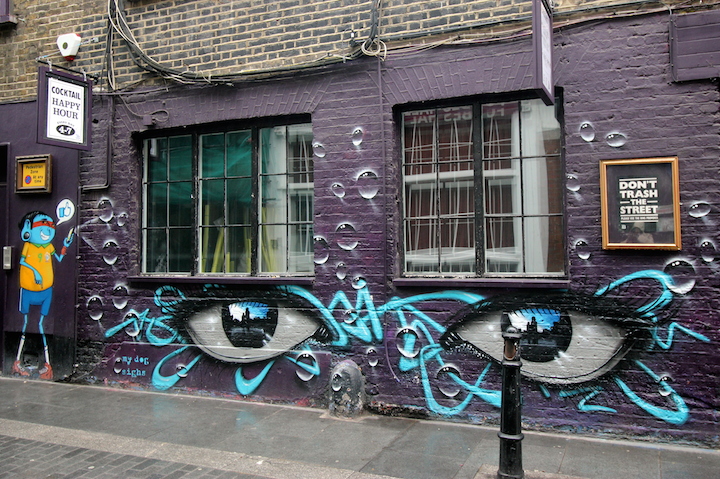
cranio-and-my-dog-sighs-street-art

For the past several years, your works have also made their way into galleries and art fairs across the globe.  How do you feel about that – the move of street art into galleries? And of your work, in particular, in this setting? 

I always feel like I’m juggling with hot coals a little with this question. Street art is such a pure art form. Maybe not quite as pure as graffiti but up there. It is so democratic. Art by anyone for everyone. It offers so much but asks for so little. And to do it makes my heart soar. But by its nature, it does not pay your rent or feed your kids. For a good while, I had a day job and kept art and money completely separate. But this drastically limited how much time I had to do it. After ten years of putting work out on the street I began to be approached by people to buy my work. Initially this funded the purchasing of new art resources, but eventually I began to see it as an opportunity to paint and create more. A few years ago I found myself in a position where I could paint full time. All day everyday. To get paid for something you adore doing…for something that makes your heart sing is an incredible thing. My work, both for the gallery and the street, has developed and evolved into so much more with all the time I’ve been able to dedicate to it. Showing in galleries across the globe gives me opportunities to paint and leave free art across the globe. In that way it’s the perfect symbiotic relationship.
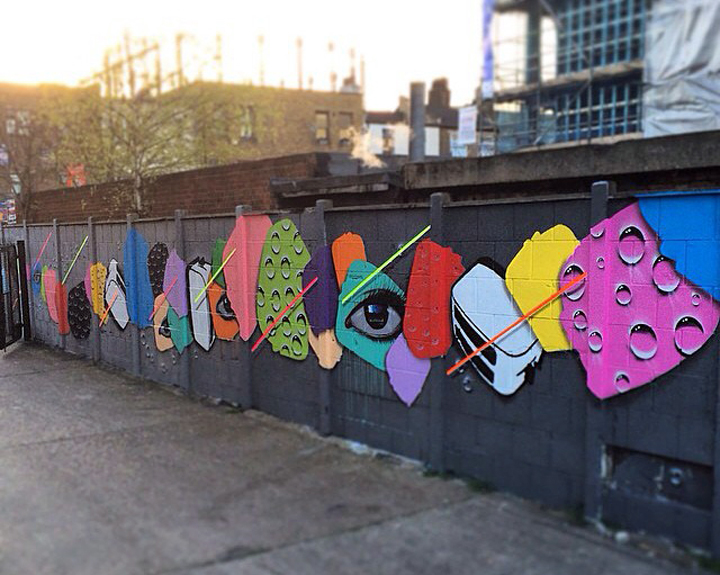
toaster-and-my-dog-signs-collab-street-art

Your work exudes a social and political consciousness. Have you any thoughts about the increasing link between corporations and street artists? Have you done any corporate work? Would you consider doing so?

I have a social and political conscience, and I have a family to support. There is always a balance. I have been approached, but — as yet —  haven’t worked on any corporate projects. I can completely understand, though, why artists do choose to work with corporations. They have rent to pay, and I’d never judge anyone for doing so.

How has your work evolved since you first started sharing it with others in public spaces?

For over ten years nothing I painted was ever over a few feet in diameter; it was often only an inch or two. Then ‘muralism’ seemed to arrive in full force and all of a sudden my contemporaries were painting huge walls. And it’s getting bigger and bigger: 16-18 story buildings. And part of what I now do is painting murals around the globe. But that to me is a different form of  street art. Many of today’s mural artists have never run around the streets at night, working at speed, considering placement or finding ways to convey a message in creative shorthand. Look at Anthony Lister. With just few quick paint splashes, a thousand pages of prose appears on a street corner. Sublime! People often comment about how quickly I work. It’s about finding the simplest way to convey the message.  Huge murals  have their place, but we mustn’t forget that there’s also something special about discovering a tiny paste-up or hidden piece that you might stumble across or completely miss if you’re not looking carefully.
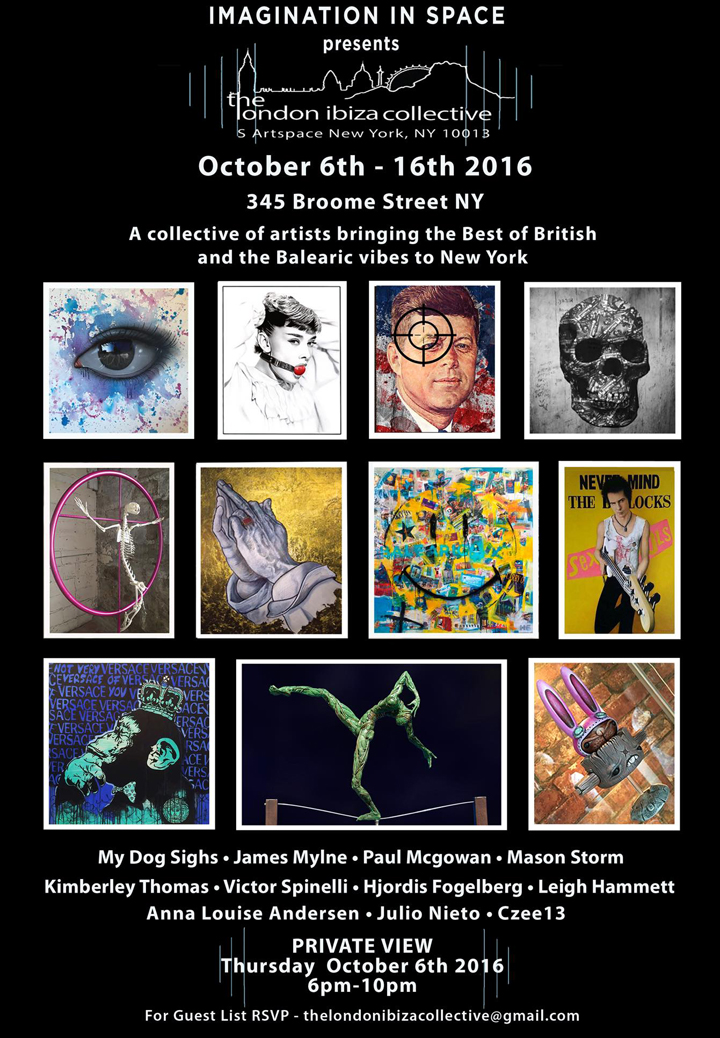
imagination-in-space

Absolutely!  What brings you to New York? 

It’s New York! Do I really need to explain? It’s the draw of that energy that NYC exudes. It’s the history of public mark making. It’s the melting pot of creativity. How can I not want part of my creative journey to take place in New York?

What’s ahead?

I’m not a great planner. Once the show is over and the downer of leaving NYC is over, I’ll wake up, go to the studio and find something that I can paint. If I’m lucky, the piece will come to life, and I’ll find a way of sharing it with the world.

Good luck with it all! And welcome to NYC!

Interview by Lois Stavsky

Photo credits 1, 2, 4 & 7 courtesy of the artist; 3 & 5 Lois Stavsky & 6 Tara Murray
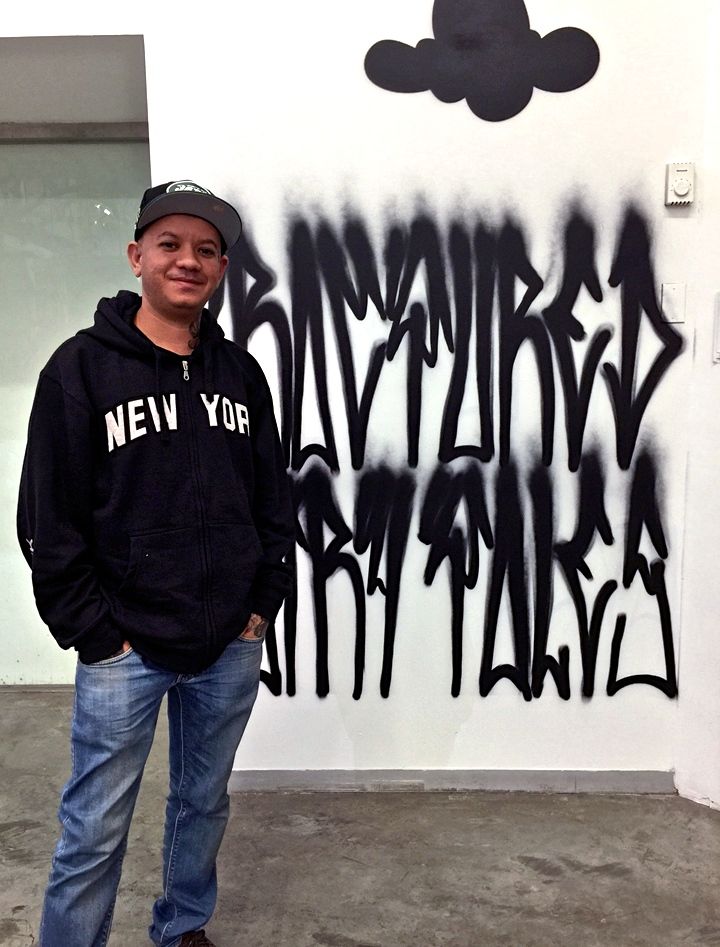
{ 0 comments }

see-one-paints-street-art-harlem-nyc

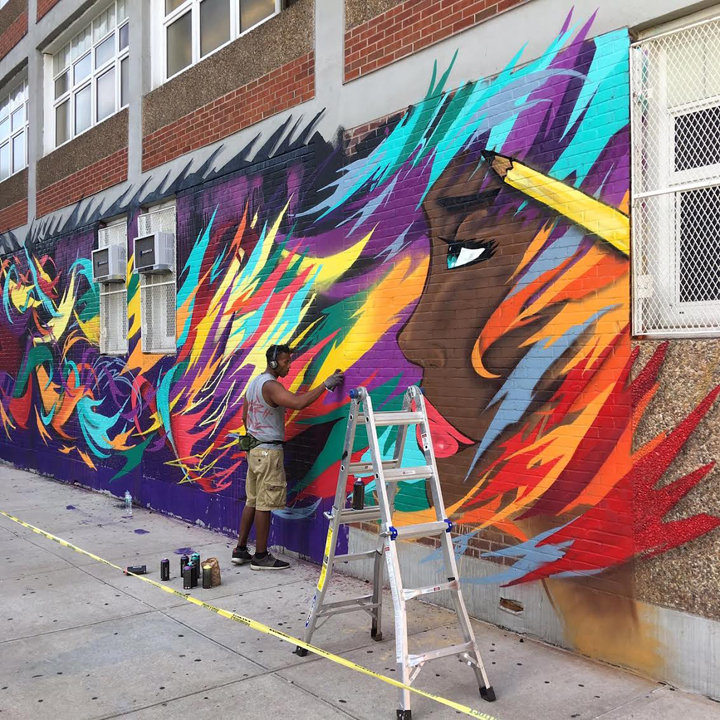
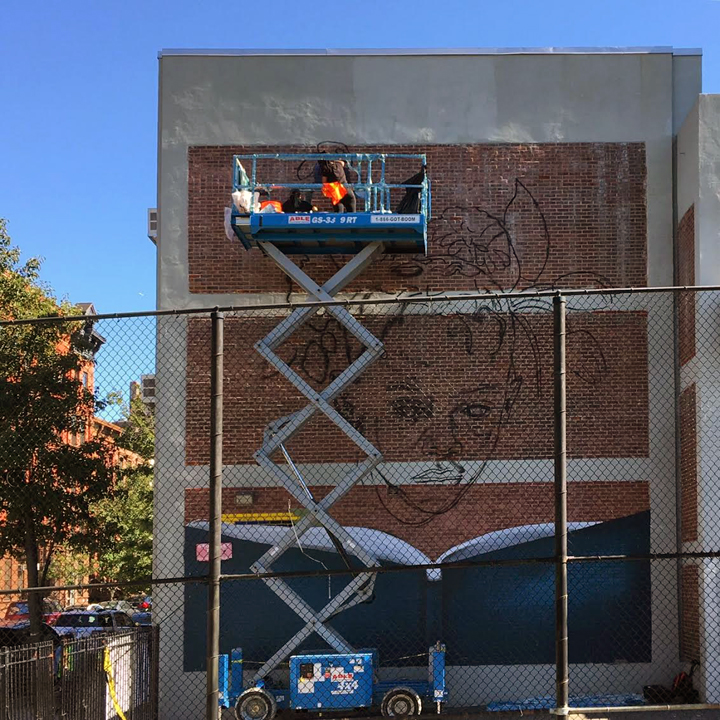
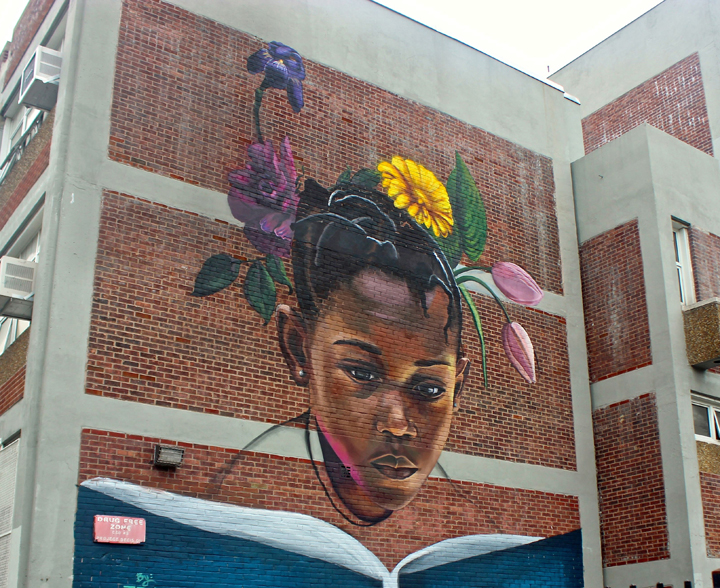
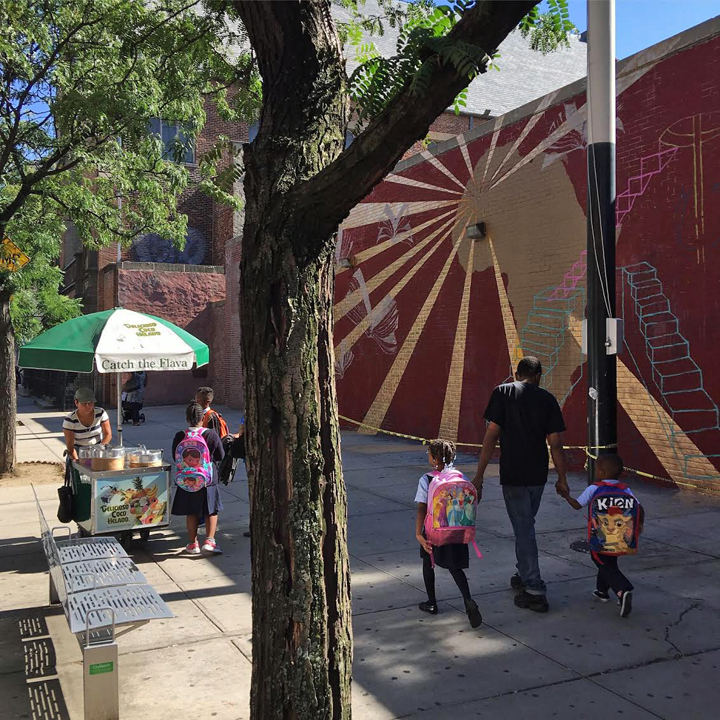
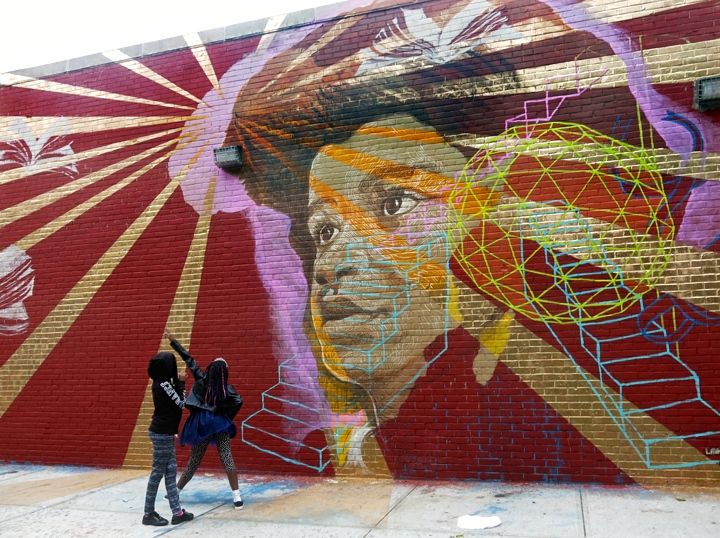
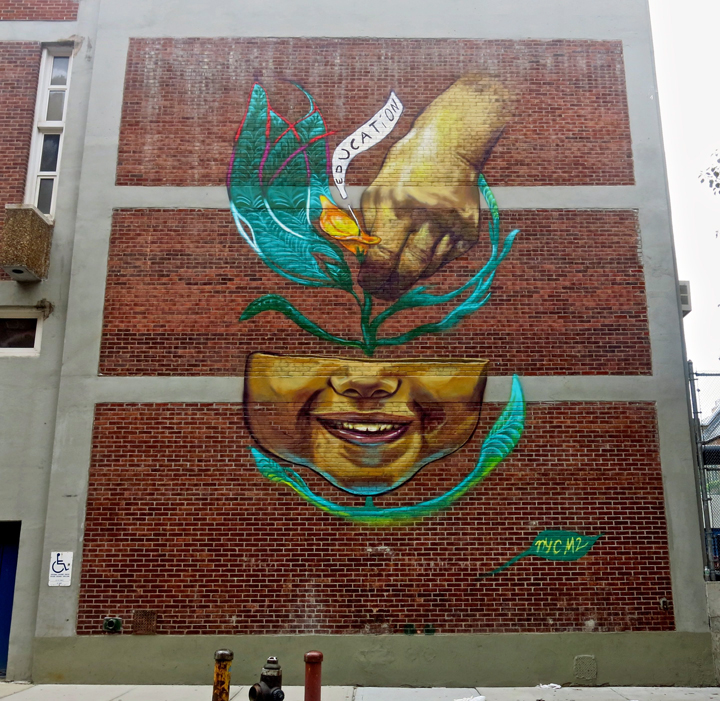
The Education Is Not a Crime Campaign, a street art campaign for educational equality in Iran, continues to grace Harlem with stylishly expressive, mural art on the theme of education. Within the last two weeks, four artists brought their skills and visions to PS 92 — located at 222 W 134th St. Pictured above is Brooklyn-based See One at work. What follows is an interview conducted on site with Not A Crime founder, Maziar Bahari — a journalist, filmmaker and activist who had been arrested without charge in Iran and detained for 118 days during the 2009 Iranian election protests.

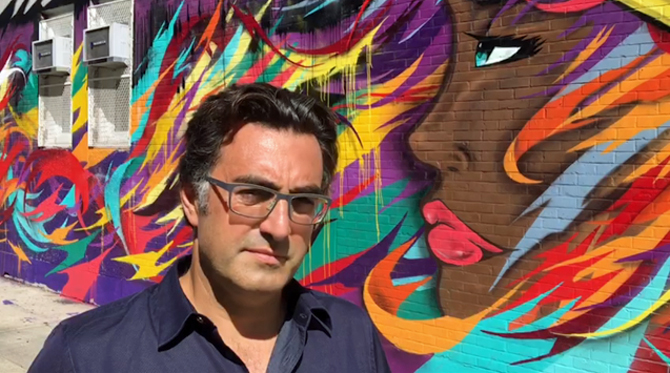
maziar-bahari

Can you tell us something about the Not a Crime Campaign? Its mission?

The Not a Crime Campaign is an awareness-raising campaign about the educational discrimination directed primarily against the Baha’is in Iran. The Baha’is of Iran are the largest minority in that country. Since the 1979 Islamic Revolution, they have not been able to enjoy their rights as citizens in terms of employment and education. Our campaign focuses solely on education and the fact that the Baha’is in Iran can not teach or study in universities.

tatyana-painting-street-art-harlem-nyc

Why did you choose to use street art to get your message across?

We thought that the best way to fight against suppression and bigotry is with arts and creativity. We’ve been involved with street art, music, film… At this moment the major part of our campaign involves street art. Why street art?  We live in a digital age. And we thought it would be interesting to have something really analog like street art and mix it with digital technology.

tatyana-street-art-mural-harlem-nyc

Our campaign is all about dialog and discourse. And through street art we can have different layers of dialog and discourse. I am not a  Baha’i myself, so I have this dialog with the Baha’i community.  And, then as a team, we have a dialog with the artists and with Street Art Anarchy, the organization that helps us choose the artists and negotiate the walls.  The artists, then, have a dialog with passersby.  Then the passersby have a dialog among themselves. And then we create a video about each wall and we put it on Twitter, Facebook and Instagram. And, finally, viewers from all around the wall can interact with the videos.

lmnopi-street-art-in-progress-harlem

What are some of the challenges presented by this project?

We face some challenges, but they are nothing compared to what some people go through every day in different countries. People who are arrested just because they want to be educated…people who are tortured just because they want to teach, to study. I’m almost ashamed of talking about our challenges, which are really minor. But NYC is a big, crowded city with a bureaucratic government. And each wall requires negotiating with the building owners, and there are many by-laws that restrict what we can do. But, again, these challenges are minor.

lmnopi-street-art-with-kids-in-harlem

How has the response been?  And why Harlem?

The reaction of the Harlem community has been amazing. We have found a home in Harlem. We chose Harlem because the people here understand discrimination. Harlem is in NYC, and the media attention to NY is always amazing. And we wanted to be in NY where world leaders gather in September for the United Nations General Assembly. But also Harlem is synonymous with the Harlem Renaissance.  And we see that people react to our walls here in ways that many people in other places didn’t. People in Harlem get our message immediately, and they appreciate the way we do things. And in addition to working with the street artists who create these beautiful works of art, we also work in the community in terms of outreach and other subjects.

marthalicia-mural-art-harlem-nyc

What’s ahead?

A continuation of what we’ve started. To have more connections with the community…to see what they want from us… what we can offer them in terms of providing our expertise with street art or music. And to talk about the subject that’s dear  to everyone around the world — and especially the people in Harlem — the subject of education and discrimination.

Thank you so much for the interview, Mr. Bahari. And good luck with the campaign.

Interview conducted by Karin du Maire and edited for Street Art NYC by Lois Stavsky

 Images

1. See One at work

2. Maziar Bahari, founder of  Not A Crime campaign, as captured during interview

3. Tatyana Fazlalizadeh at work

4. Tatyana Fazlalizadeh

5. Lmnopi mural in progress

6. Lmnopi, close-up with young admirers

7. Marthalicia 

 Photo credits: 1-3 & 5 Karin du Maire; 4 Tara Murray and 6 & 7 Lois Stavsky
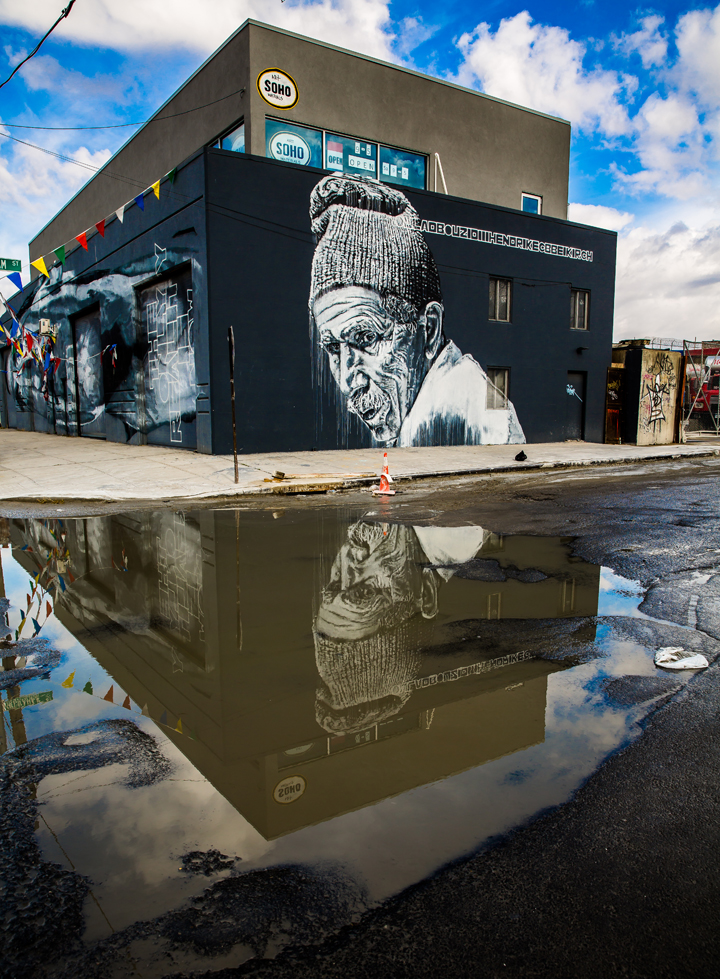
{ 0 comments }