Interviews

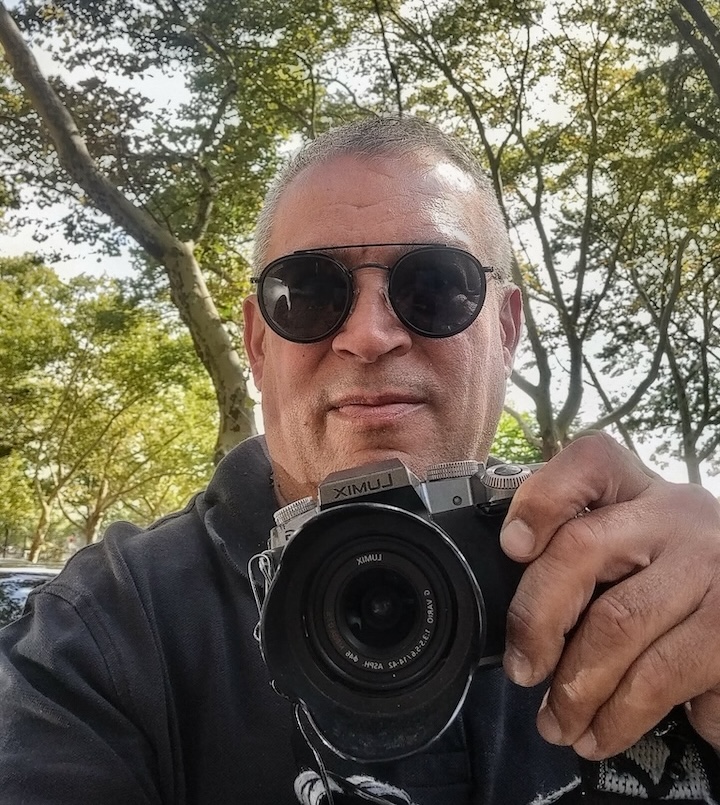
Based in Woodside, Queens, Richard Alicea has been documenting urban culture for over four decades. We initially met over our shared passion for graffiti and recently reconnected after a ten-year hiatus. I was delighted to have the opportunity to interview Richard, who had introduced me to such graffiti pioneers as Flint and the late Mico.

When did you first hold a camera in your hand with the intent of capturing an image?

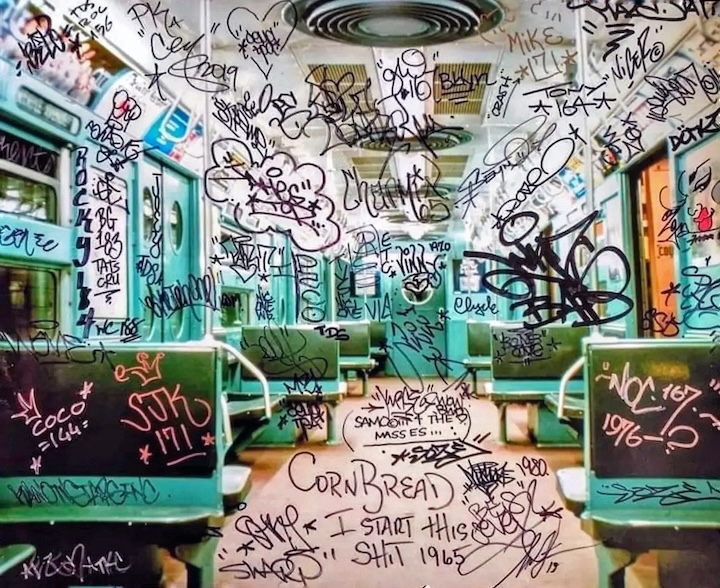
Back in 1976, my brother gave me my first camera.  The first image that I remember capturing was inside the GG train in Court Square, LIC.  I’ve since had multiple copies of that particular image signed by just about everyone who’s made a mark on NYC’s graffiti culture!
What kind of camera did you use back then? And what camera do you use now?

Back then I used a Fuji. These days  Panasonic LUMIX is the camera of my choice.

You have since produced an impressive body of work. Is there a central theme that ties your work together?

My principal interest is the urban environment – the art on the streets, the various cultural heritage celebrations and NYC’s distinct architecture.
Have you ever formally studied photography? Or was there a close friend or relative who influenced you?

Just about everyone in my family was passionate about photography. But I did study photography back in 1981 at New York Technical College. And a particular influence was Mycal Watts. A photographer and Vietnam veteran, Mycal has invited me to photo shoots at his Woodside studio.

Is there anything about your particular heritage that impacted you as a photographer?

My family raised me to honor my Puerto Rican heritage.  And I somewhat naturally began to appreciate and respect other cultures, particularly those with close family bonds.
What drew you to graffiti and urban art?

I was drawn to it the moment I saw it. Its appeal to me was instant!  Living in Woodside, I didn’t see much in my immediate neighborhood. But it began to surface in the 70s in nearby neighborhoods and along the 7 line. And I was especially impacted by the books that were published in the 80s.

How has your photography evolved in the last decade?

I have more patience than I used to have. With camera in hand, I will wait until I can get the best capture possible in a particular setting. And though I continue to focus on the art that surfaces on the streets, I’ve begun to focus more on the city’s overall culture, particularly parades.
What are some of the challenges you’ve faced while trying to capture a particular moment?

People can be suspicious of me! They’re not quite sure what I’m after!

How long do you generally spend on the editing process?

After each photo session, I’ll spend anywhere between one to two hours editing.
How important is the viewer’s response to you?

I’d like people to like what I do. But I understand why some folks may not.

How has your family responded to your passion for photography?  

They love it. They particularly like watching me interact with other people whom they don’t know.
Are there any places outside NYC that you haven’t photographed but would like to?

I’d like to make my way to Wynwood, Miami.

Have you ever tried to market your photography?

No. I’ve just been following my passion.
How do you decide which photos to share on social media?

I edit the photos I like, and then it’s kind of random which ones I choose to share.

Do you have any favorite photographers?

My favorites include street photographer Ira Berger, hip-hop culture documentarian Ernie Paniccioli and Mycal Watts.
Do any particular memories stand out?

9/11.  I vividly remember watching the first tower fall from where I was standing in Whitestone and taking photos that evening from the Brooklyn Promenade. I actually raced home before nightfall, concerned that the city might issue an executive order restricting driving.

Having documented New York City for decades, what are some of the biggest changes you’ve witnessed in the city?

Massive high-risers are reshaping neighborhoods like Long Island City, while mega-chains continuously replace traditional mom-and-pop stores.
How can folks view your photos?

They can follow me on Instagram and on Facebook.

What’s ahead?

I’d love to be able to predict the future, but I can’t!

Interview conducted and edited by Lois Stavsky

All photos © Richard Alicea

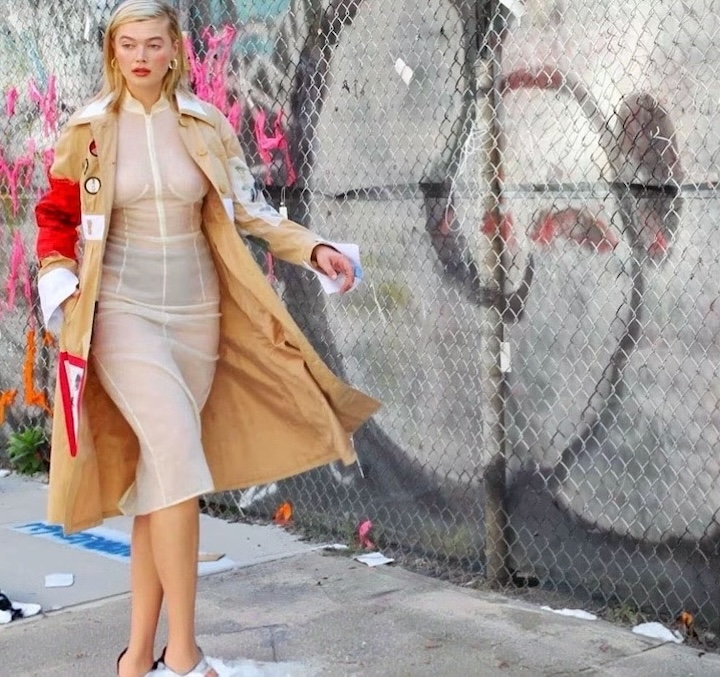
  1. Suitswon, Greenpoint, Brooklyn, 2017
  2. GG train, Court Square, Long Island City, 1976, signatures on this particular copy of photo completed 2019
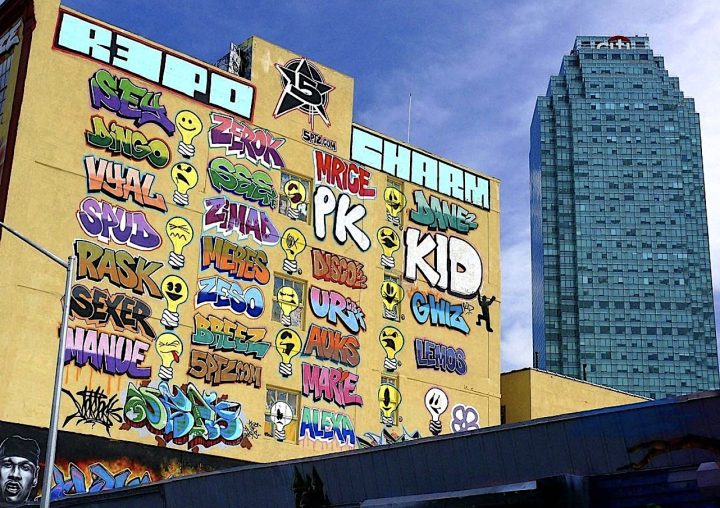
  3. 5Pointz, Long Island City, circa 2011
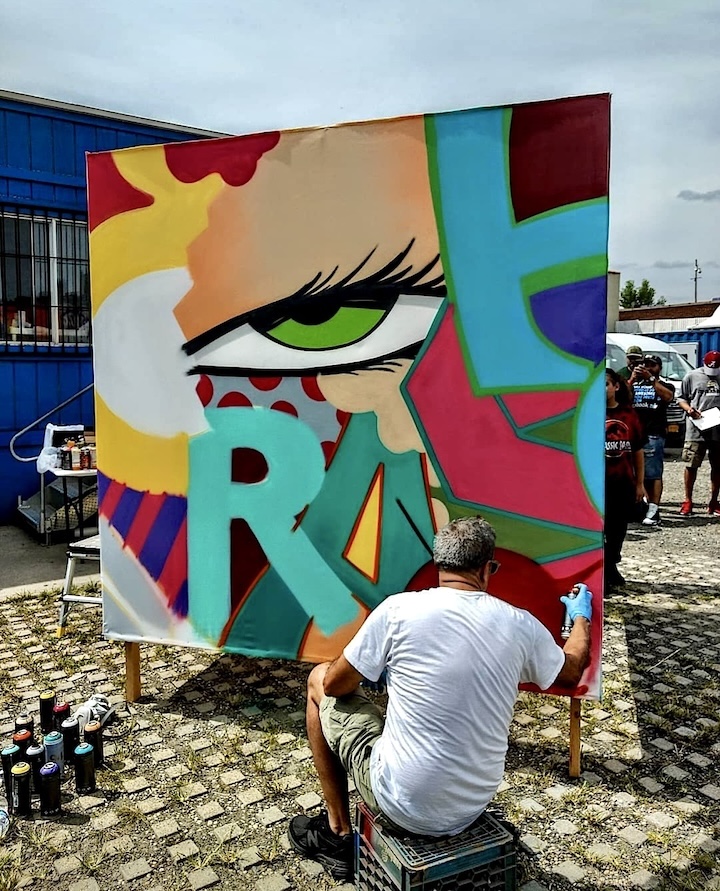
  4. Crash One at The Point CDC in the Bronx, 2018
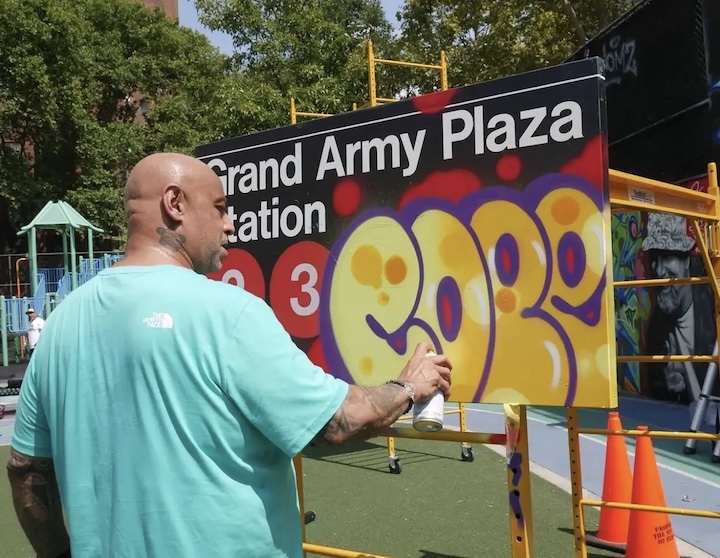
  5. Cope2 at the Graffiti Hall of Fame, East Harlem, 2024
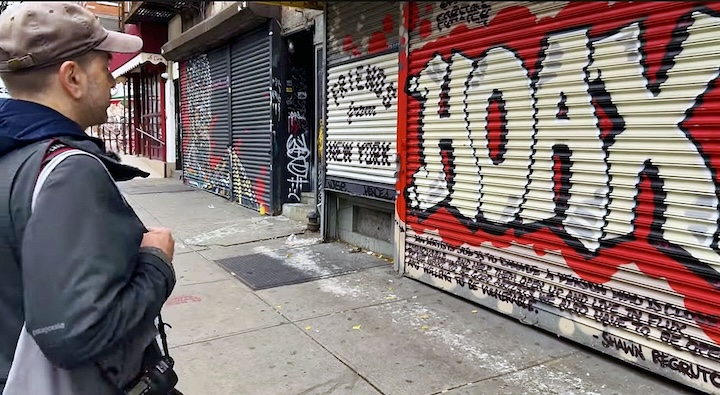
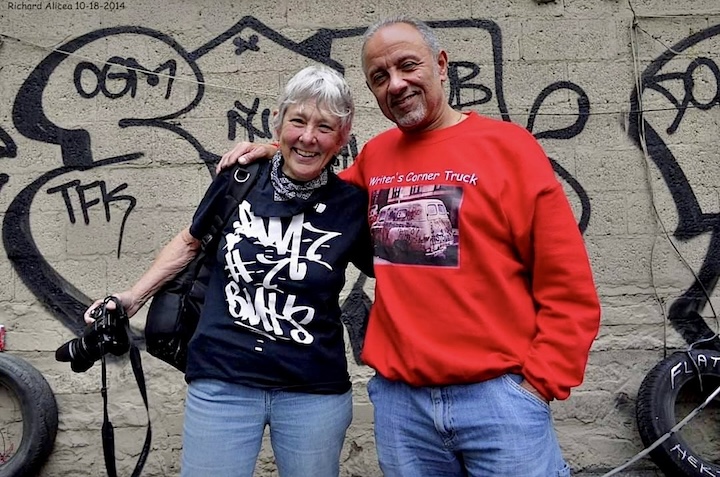
  6. Martha Cooper and Eddie Rodriguez aka Snake 1, Chinatown, NYC 2014
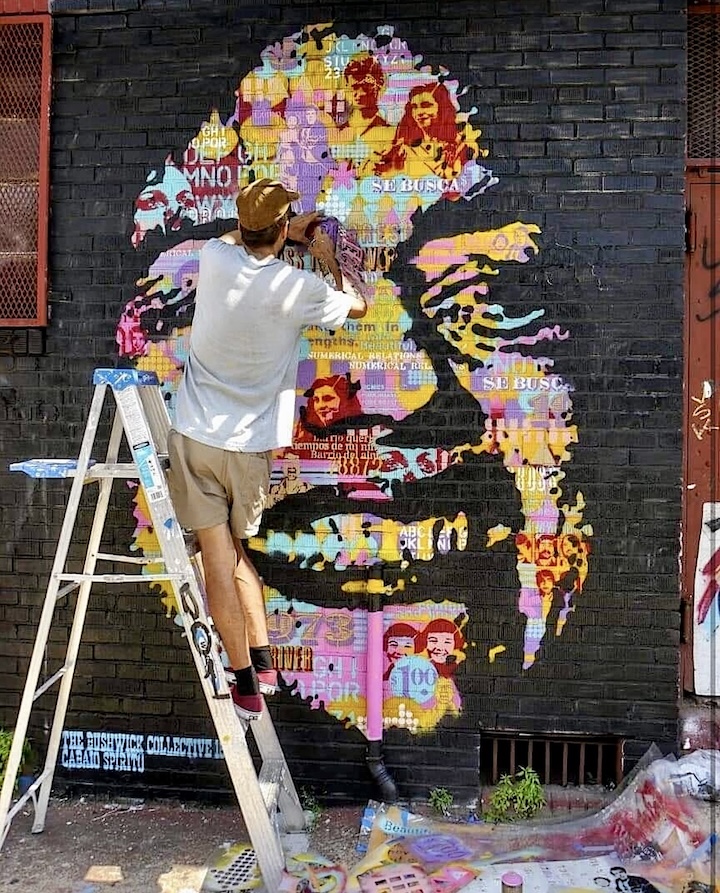
  7. Argentine stencil artist Cabaio Spirito at the Bushwick Collective, 2018
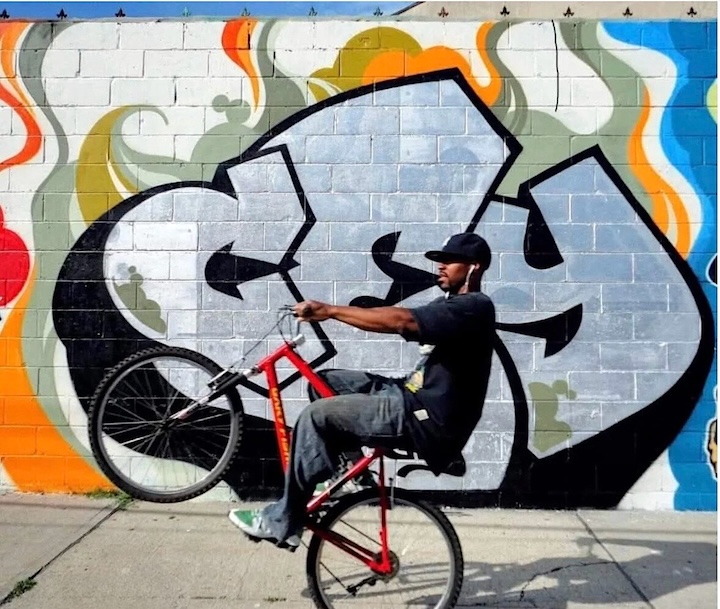
  8. Cey Adams at Welling Court, 2014
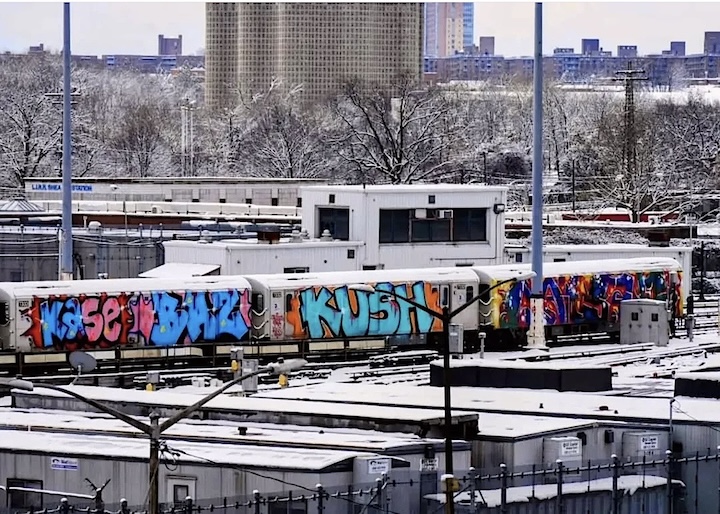
  9. The MTA Corona Yard,
  10. Richard Alicea, Selfie

{ 0 comments }
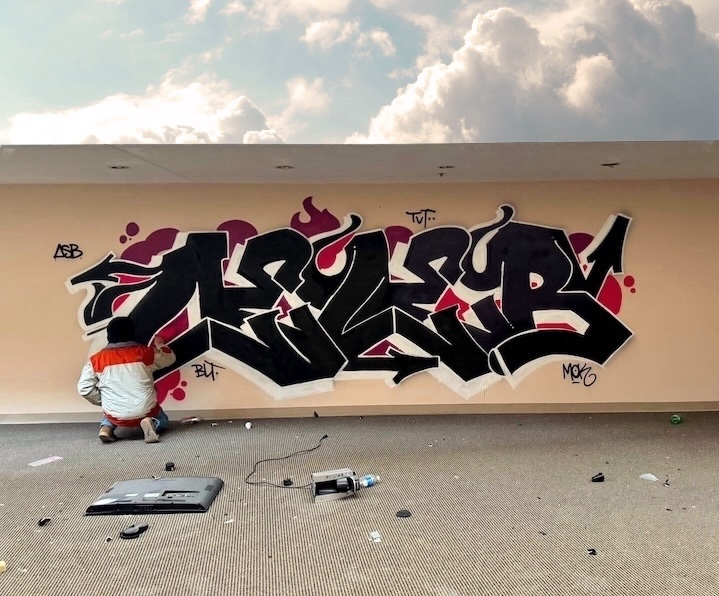
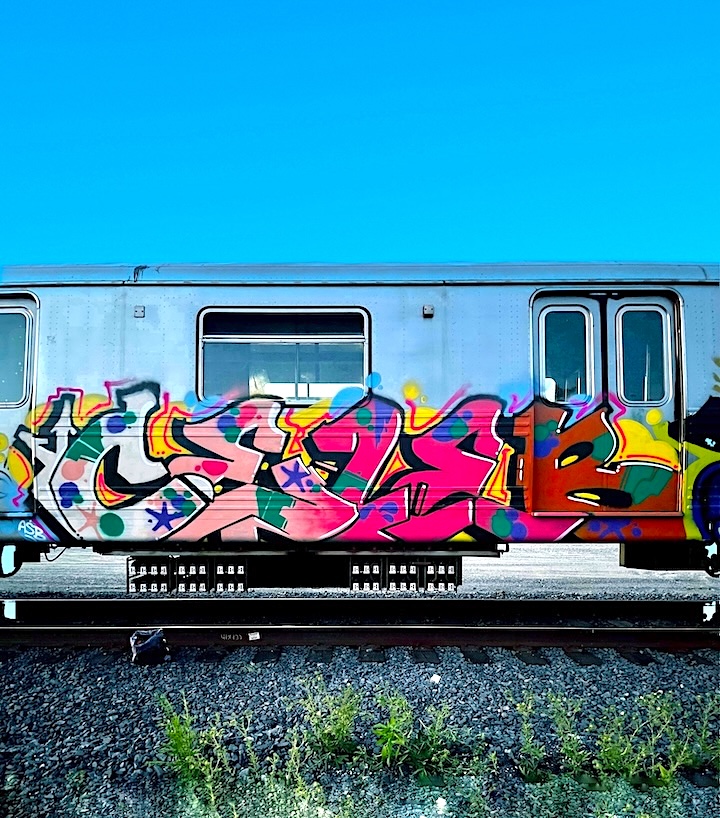
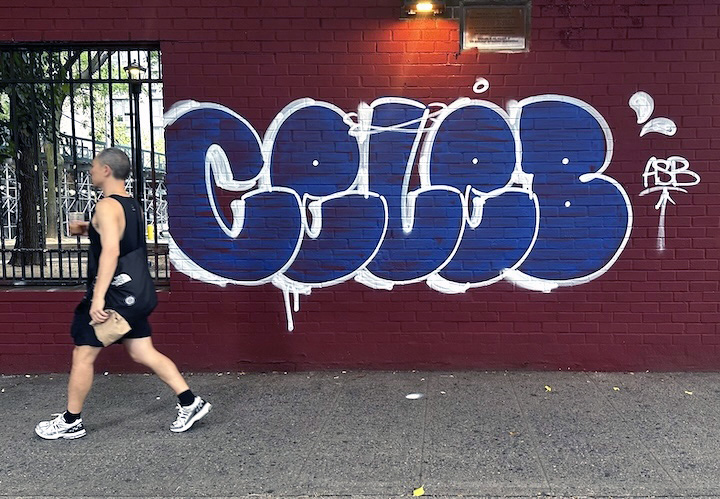
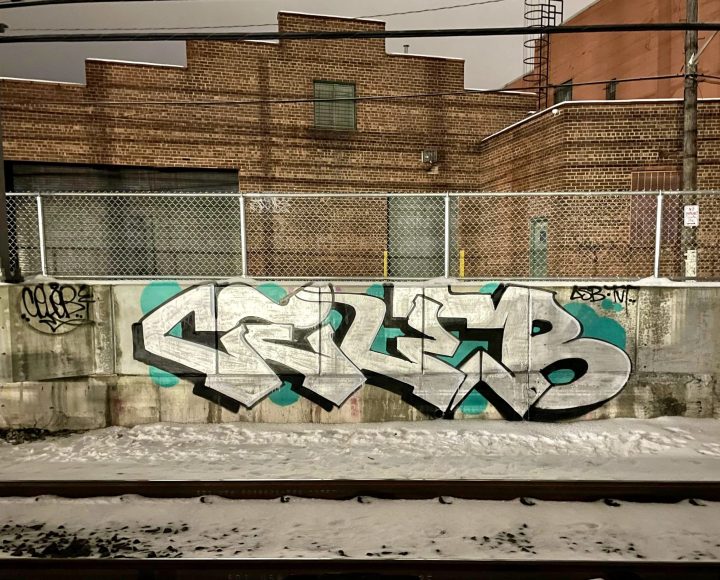
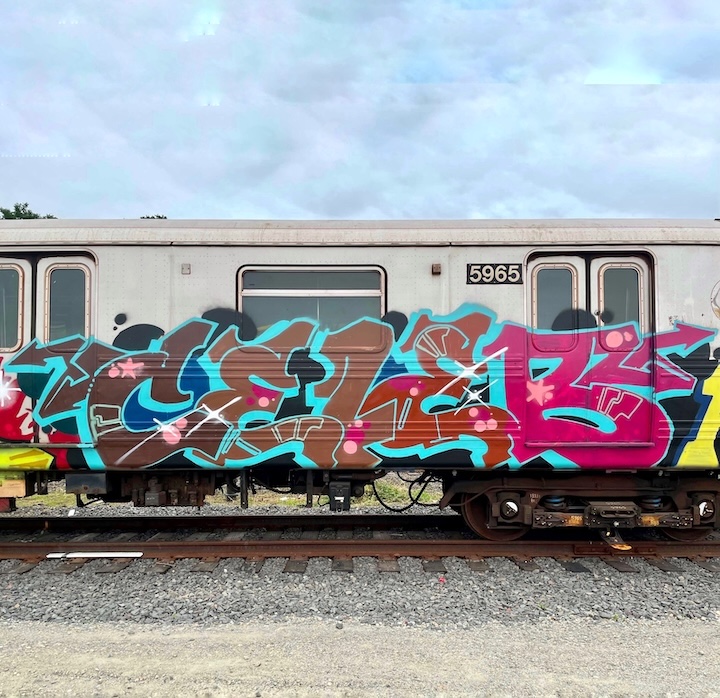
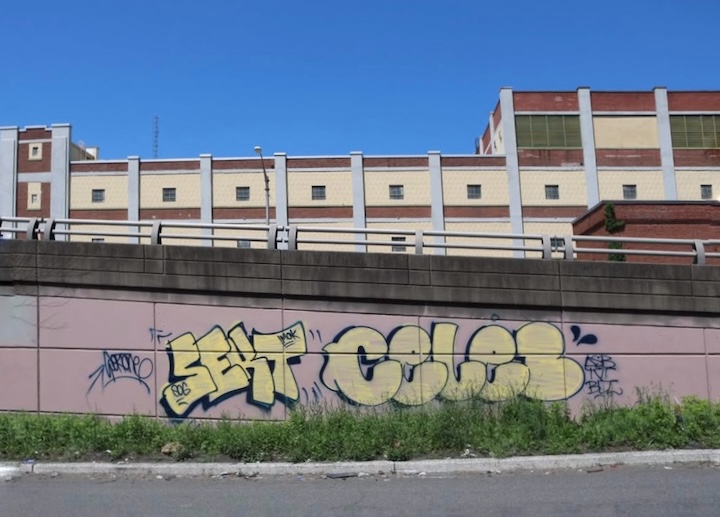
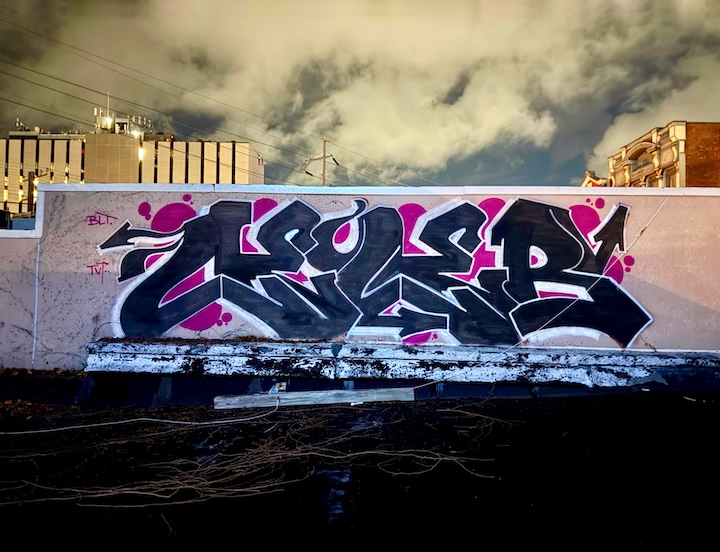
With his name on trains, tracks, trucks, gates and walls throughout tri-state area, Celeb has been increasingly making his mark in NYC and beyond. We recently had the opportunity to sit down with him and pose a few questions to him:

When did you first get up? And where?

Around 2007-2008. I was 15 when I first hit my local high school. And soon after, I was hitting nearby tracks and construction sites.

What inspired you back then?

Locally the writings I saw along the tracks, especially Curve’s, motivated me to get out there and make my own mark. I was also heavily influenced by the media that documented the scene—movies like Wild Style and Bomb the System, along with books like Burning New York.

Why do you continue to hit the streets?

I like the feeling. It makes me feel like I’m a kid again!

What is your favorite spot or surface to hit?

These days I like concrete walls and trucks.

Were you making art before you hit public surfaces?

Nope!

How has “bombing” changed you – assuming it has?

It has sharpened my senses. I’ve had to become more aware of my surroundings.

What is the riskiest thing you’ve ever done?

Paint across from a police station in Philly. When a police car approached, I hid behind the plywood.

How much time do you typically spend on a piece?

When I’m bombing, no more than 2 minutes. But if I’m piecing, I can spend up to three hours.

Have you had any memorable encounters while you were getting up?

I was painting in Brooklyn with three other guys when suddenly a group of cops showed up. “We should arrest you,” they said. “But we’re too busy with family matters.” They left as suddenly as they’d appeared, and they didn’t even take our paint.

Any other notable encounters?

I had another close call. We were painting at an abandoned psychiatric hospital in Poughkeepsie with 50 cans of paint. Again, cops showed up, let us go and didn’t take our paint

Was there a singular moment when you realized that graffiti is a particular passion of yours? What was it?

The very first time I got up!

Do you have a particular goal as a writer?

My goal is to master the craft. Quality over quantity. I’m not seeking fame, and my social media presence isn’t important to me.

Are you generally satisfied with your finished piece?

There’s always something that I’m not happy with.

Would you rather paint on your own or with other writers?

At this point, I’d rather paint with other writers. I belong to several crews: TVT,   BLT, ASB and MOK.

Have you a particular role in any of these crews?

I’m vice president of ASB.

What is your favorite paint? Caps? Colors?

My favorite paint is Montana Black and 004 Evolve. My favorite colors are light blue and pink to outline. My favorite cap is the Lego Thin spray paint cap.

From your perspective, how welcoming is the graffiti scene to people from different backgrounds?

Very welcoming! What matters is the quality of one’s work — not one’s racial or ethnic background.

How would you define a “toy?”

Someone who doesn’t know the rules, the history.  Someone who goes over old, faded graffiti. And the biggest toy is someone who goes over dead writers.

Who are some of the writers who inspire or influence you these days?

Among them are: Jick, Sekt, Mast and Vet aka Share TMC.

What about your name? How did you choose “Celeb?”

When I first started getting up, I kept on choosing names that I quickly got tired of. I didn’t feel that they suited me. But then I met a writer who told me that he used to write “Celeb,” but that he doesn’t anymore. I immediately liked the name, and I asked him if I could use it. He said I could, and I’ve been happy with it since.

If you were offered the opportunity to do a legal mural for pay, would you take it?

I would go for it! Why not?

How do you feel about the movement of graffiti into galleries?

I think it’s cool. I like the way it brings the community together.

Have you, yourself, shown in galleries?

I exhibited two pieces and sold one at the Brooklyn Beer Garden in a show curated by Werds.

What’s ahead?

It’s difficult to tell.  Perfecting my skills while – at the same time – getting my life together!

Interview conducted by Lois Stavsky with Giulia Shine and edited for brevity by Lois Stavsky; photos 1, 2, 4-7 courtesy of Celeb and 3 Giulia Shine

{ 0 comments }
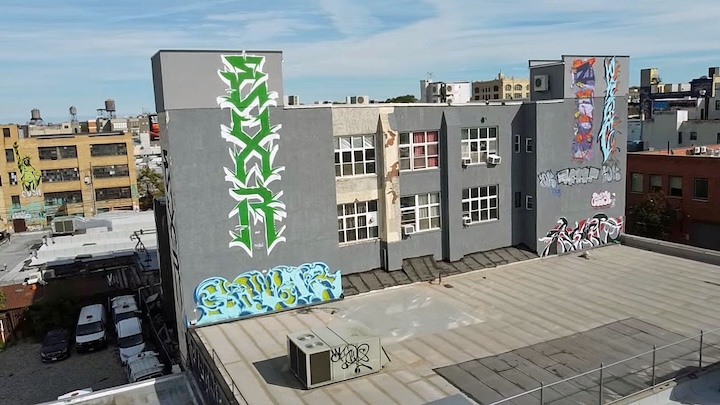
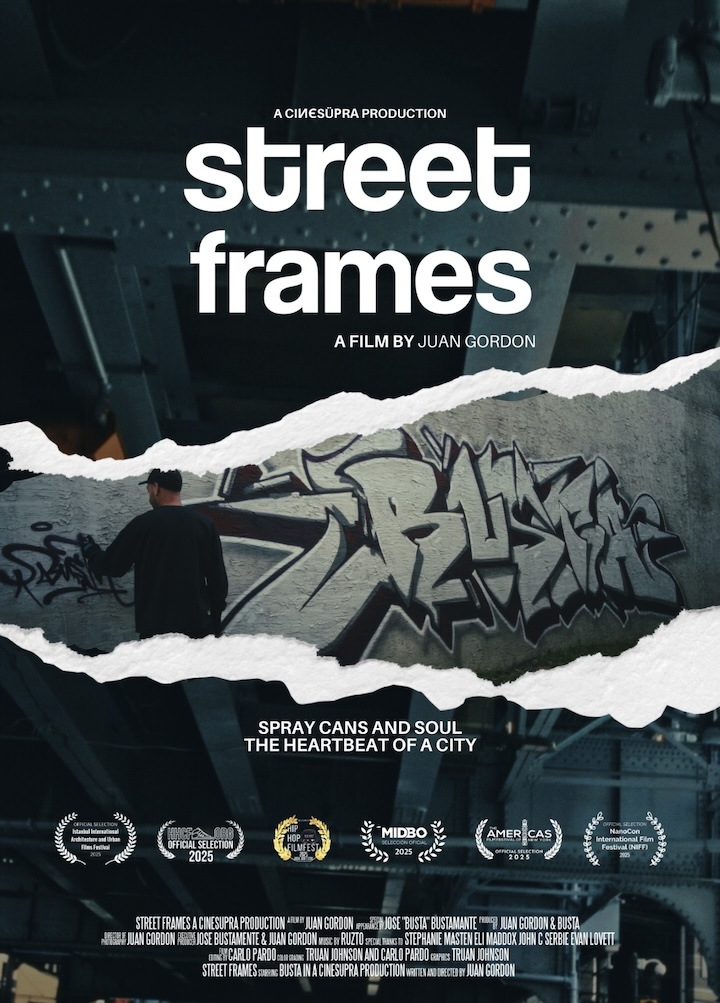
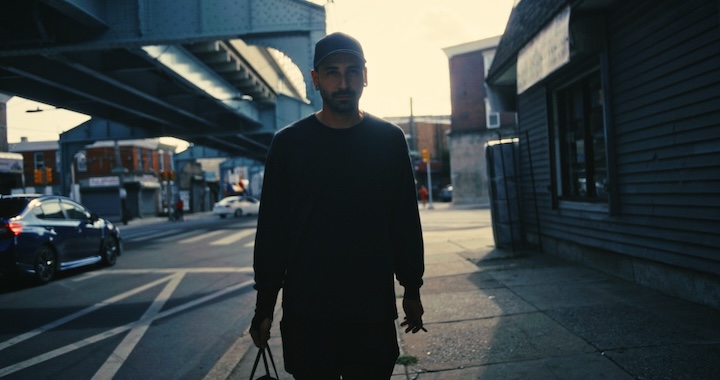
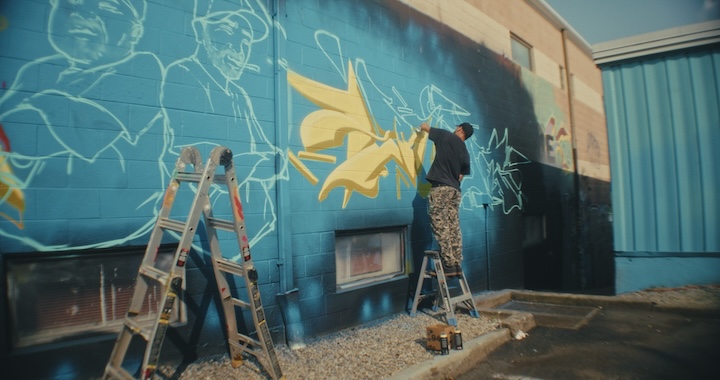
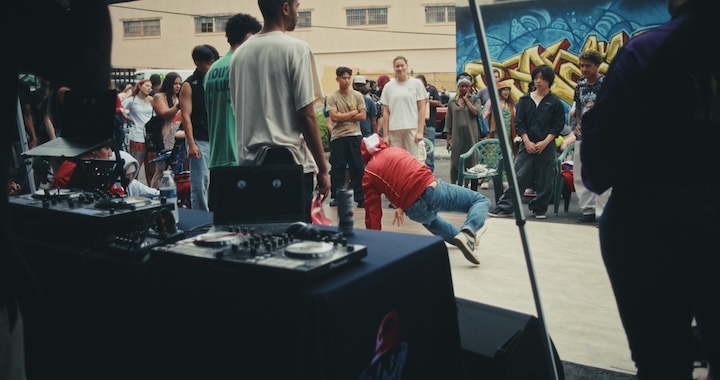
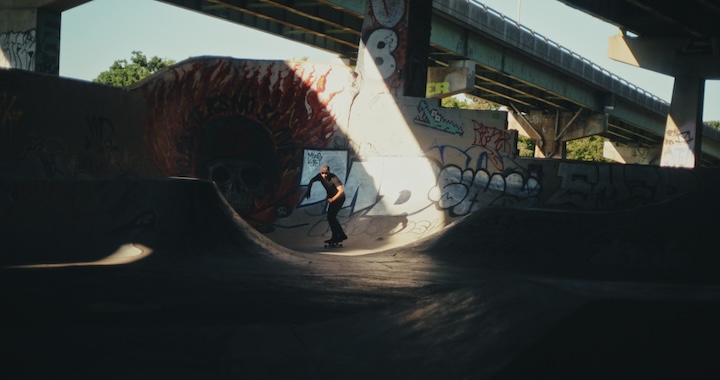
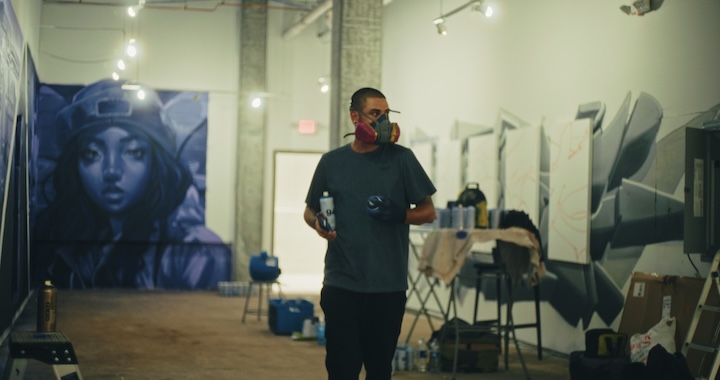
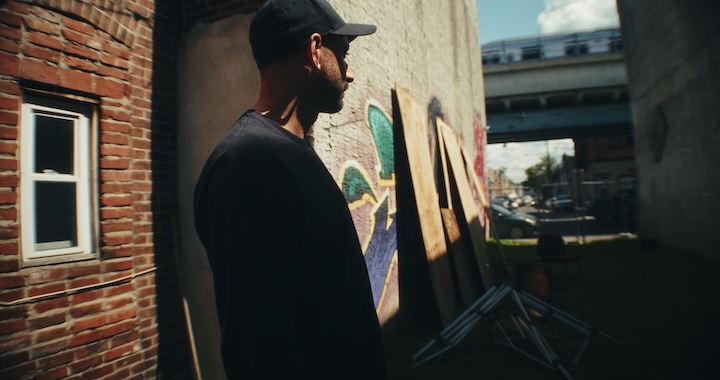
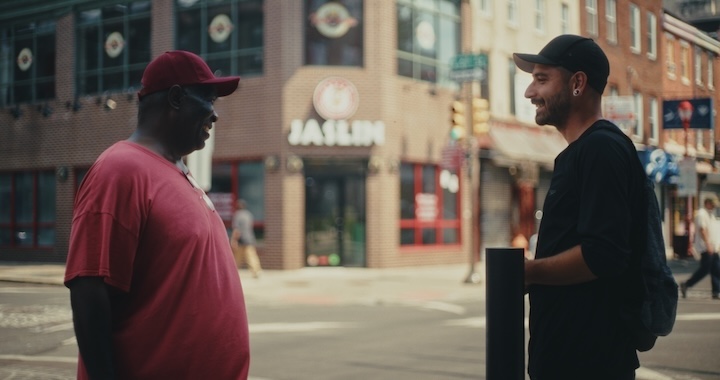
In his latest short film, Street Frames, Colombian filmmaker Juan Gordon pays homage to graffiti, Hip-Hop culture, and Philly-based, Colombia-born multimedia artist José “Busta” Bustamante. The result is a film that is both intriguing and informative, as it draws viewers into Busta’s world — its dualities, its challenges and its rewards. After viewing it, I posed a few questions to Juan:

What inspired you to produce a film spotlighting Jose Bustamante, known to us as Busta? What drew you specifically to Busta?

I’ve known Busta for over 15 years. We met in the streets of Bogotá through skateboarding, and I’ve witnessed his artistic evolution firsthand. In 2024, he invited me to his first solo show in downtown Philadelphia. I accepted, but with a distinct intention: I wanted to document his process, his dualities, his conflicts, and his relationship with the community. While his aerosol work is visually stunning and continues to evolve, it’s his philosophical foundation that truly fascinates me. I’m grateful he opened up in such a raw way to achieve this result.

What were some of the challenges you faced in seeing the project through?

Logistically, there were very few. We filmed in August with perfect weather, and thanks to a great network of collaborators, I had access to everything from secure locations in Kensington to secret spots across Pennsylvania and Jersey. The real challenge was internal: how to capture the profound soul of my subject—the artist, his art, and the complex emotions in between—while maintaining a deep sense of respect for the Hip Hop culture that defines him.

What would you like viewers to take away from this film? Are there any particular messages you hope to convey?

The urgency to create must never die; we must remain in constant motion. Personal and communal conflicts are what keep the world turning—without darkness, there is no light. I want viewers to take these and other questions they can perceive, take them home and reach their own conclusions, applying that creative spark to any aspect of their lives. Movement is life.

How does the graffiti scene in Philly and Trenton differ from the one in your Bogota hometown?

In general terms, they are very similar. You’ll find tags and pieces in the most hidden corners, whether they are “under the radar” works or governmentcommissioned murals. Bogotá, however, is a graffiti city par excellence due to its deep respect for the culture’s constant advancement. The main difference is structural: Bogotá currently has no subway system. Construction began recently, with the opening set for 2028. I’m eager to see how the culture will react to this new architecture—new canvases for paint, music, and film. Evolution is dual: it builds and destroys. simultaneously.

What kind of responses have you received to the film so far?

It has been incredibly positive. Throughout 2025, the film toured festivals, ranging from those focused strictly on Hip Hop cinema to general film festivals where audiences knew nothing about graffiti but were drawn to the story itself. Premiering at the Hip Hop Film Fest in NYC was a major milestone, as was seeing it reach Turkey, Italy, Mexico, Colombia and more. The feedback has been warm and noble; people really connect with the human element behind the art.

What’s next?

I am currently developing a narrative feature film set in a near-future Bogotá. The focus shifts from the walls to the internal movement of the city, exploring human dignity and the weight we carry through life. And yes, it still features a character who can’t help but leave his name on the walls.

How can folks view Street Frames?

After its successful run through the international film festival circuit, it is now available for public viewing on YouTube. You can also see a teaser for it here.

Note: All photos are stills from Street Frames, courtesy of Juan Gordon; interview questions by Lois Stavsky and Tara Murray

{ 0 comments }
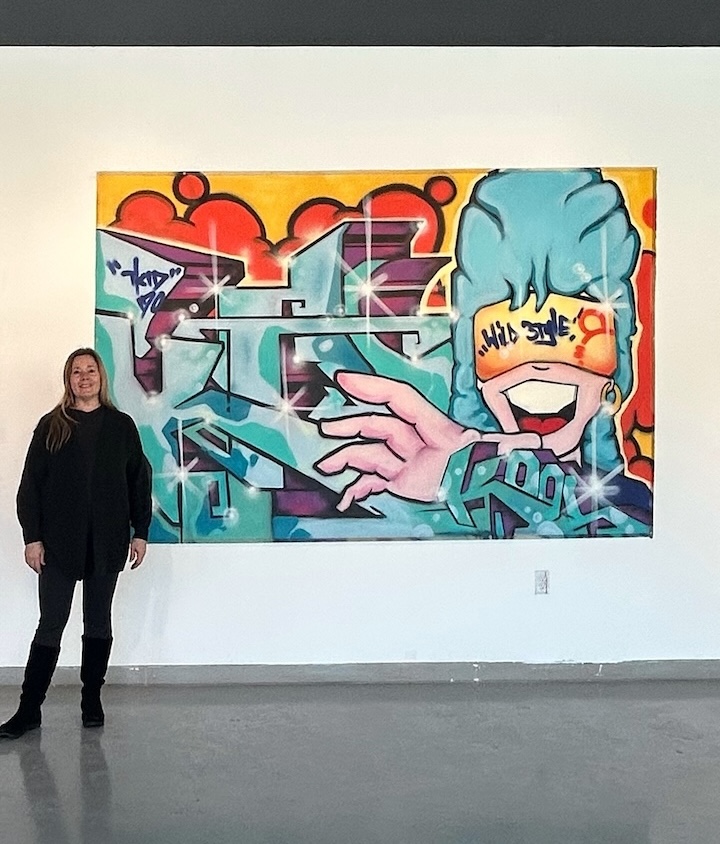
While numerous documentaries focus on graffiti artists themselves, few spotlight the photographers who track down their work and share it with the public. There’s No Reward is the exception. Filmed by Queens-based subculture observer Ray Parada, There’s No Reward takes us into the minds and lives of those photographers and documentarians who preserve this ever-ephemeral culture. Although they do not take the extraordinary risks many of the writers do, those featured in There’s  No Reward share their frenzied fervor, often bordering on obsessiveness. They, too, trespass into abandoned and soon-to-be-demolished spaces as they feed their addiction.

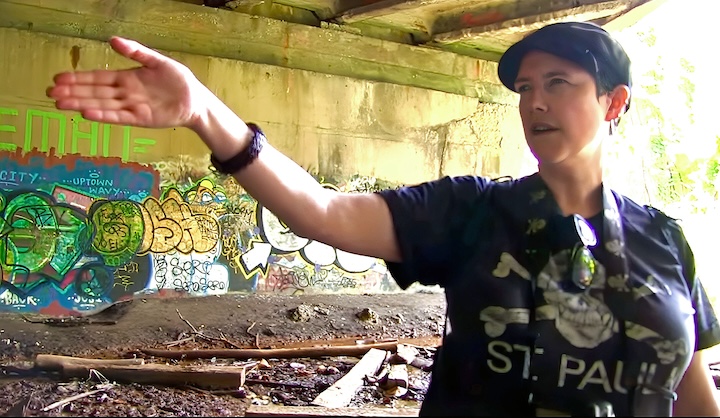
While each photographer’s particular approach may differ, all share an acute curiosity about graffiti, particularly unsanctioned public art. To Fresh Paint NYC — featured above — it’s largely a matter of tracking down and learning the history of graffiti, as well as documenting its continual evolution. To others, such as Luna Park, it’s a joyous adventure — a “walking meditation” that has taken her into neighborhoods and sites that she  most likely would never have discovered if not for her love of graffiti.

As Carnage observes, “Once you learn about graffiti and start seeing graff in your environment, you can’t unsee it. You’re always going to be curious about it, and you are always going to want to see more.”

After viewing the documentary, I had the opportunity to pose several questions to Ray.

What spurred you to produce a documentary that focuses on graffiti photographers and documentarians?

I had been into graffiti ever since discovering it in the ’80s. But in 2015, I met Steve aka Smkjr who introduced me to a scene I hadn’t known about — a secret world where graff hunters get up at 6 a.m. to hunt down anything new that may have surfaced since their last mission. Discovering a new piece by the likes of Curve, Klops, or Kuma was an instant high.

“There’s no reward,” explained Steve, “other than the adrenaline of exploring a spot and discovering an artist you admire.”

How were you able to connect with these photographers?

I actually worked with both Smkjr and Intospaces in the same workspace. I met others through them and through word of mouth.

The documentary covers a 10-year span. What were some of the challenges you experienced in shooting it?

When I first started, I was working with a handheld camcorder. I didn’t feel secure, and I felt the final product could be stronger. In addition, I lost a disc that held dozens of valuable photos and interviews. That was incredibly discouraging. But then COVID hit, and things picked up. The technology had improved significantly, and I regained the confidence I had lost.

How has the scene changed from when you first started shooting There’s No Reward?

Rappel graffiti has had a huge impact on the scene. Some of the artists who were active a decade ago are no longer around. Some of the places the photographers frequented no longer exist. Some of the photographers — due to family responsibilities — are not as active as they had been. And several of the photographers now use drones.

Note: You can view the documentary in its entirety here.

Interview conducted and edited by Lois Stavsky

Screenshots

  1. Fresh Paint NYC 
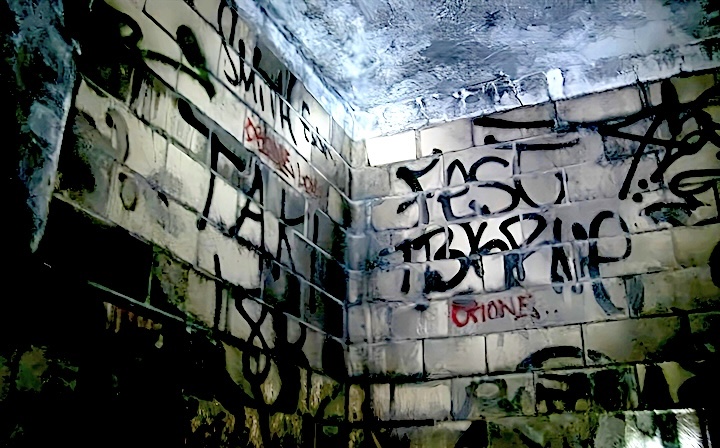
  2. Smith and Taki 183 & more as uncovered by Fresh Paint NYC 
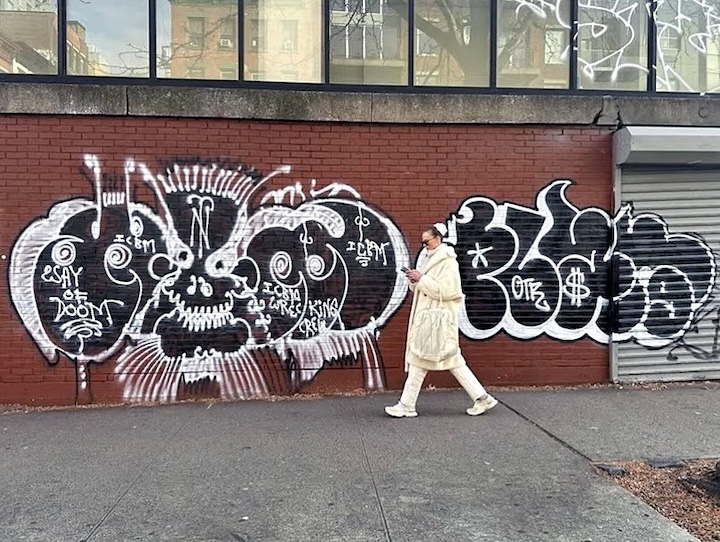
  3. Wombat ICBM + captured by Carnage
  4. Luna Park
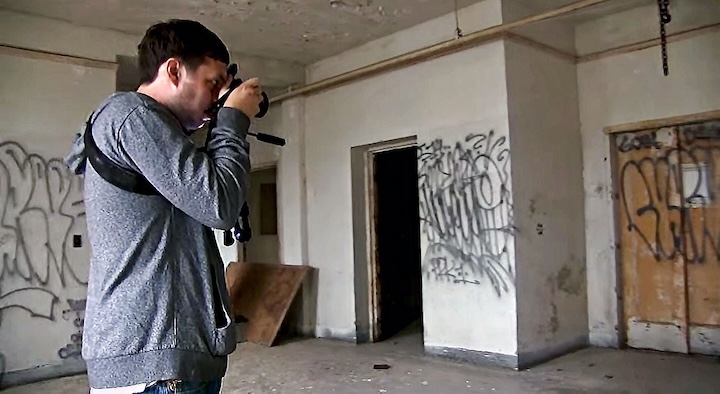
  5. Smkjr captures Curve and more in abandoned property
  6. Captured by Graff Season NYC 
  7. Carnage
  8. Exr and more rappel graffiti captured by Intospaces

{ 0 comments }
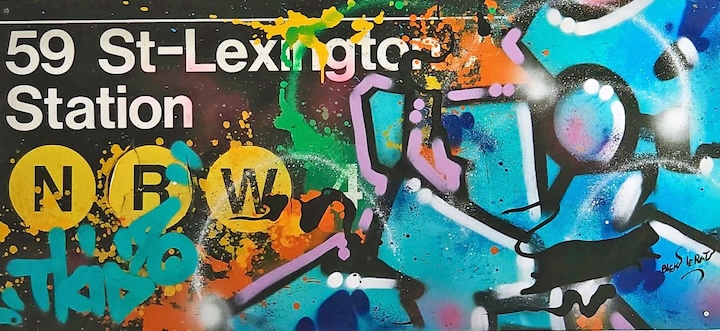
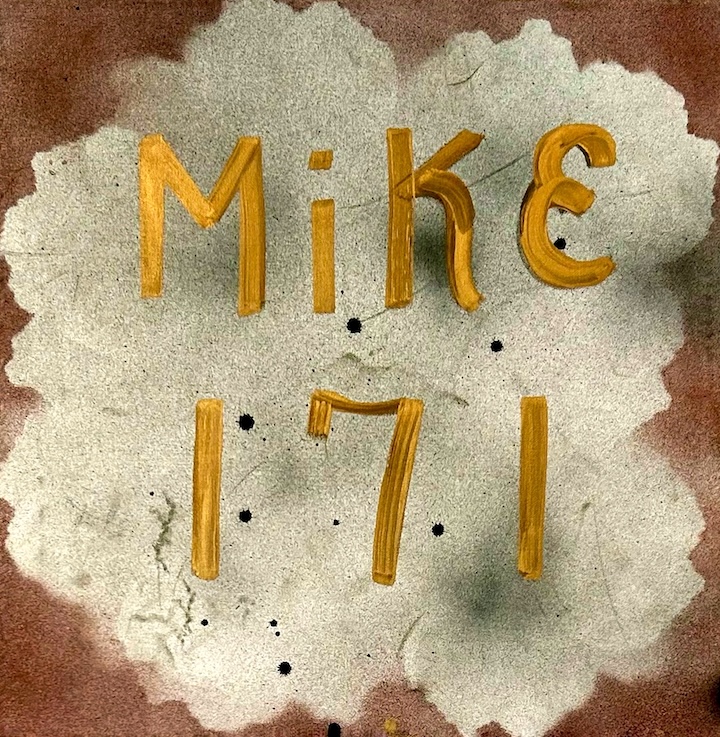
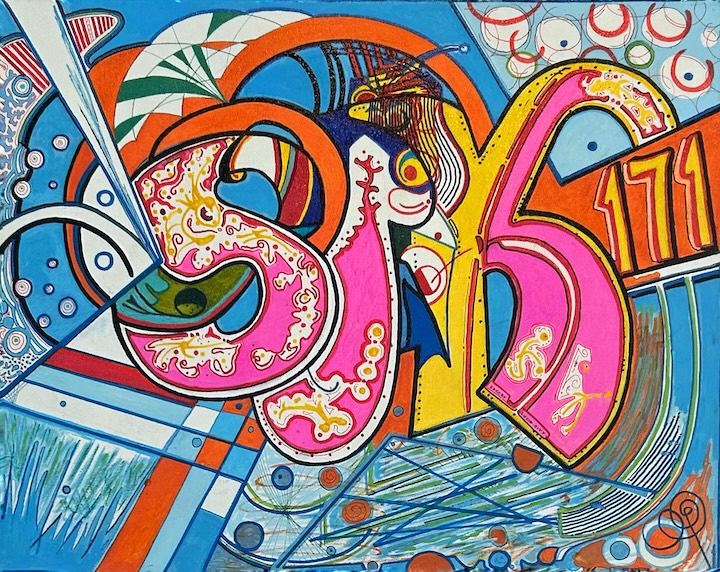
Located on 10th Avenue between 207th and 215th Streets in Upper Manhattan, The Ghost Yard — the largest train yard in NYC — was once home to many legendary writers. Among the first writers to hit parked trains there in the early 1970’s were MIKE 171 & SJK 171, also known as The Boys from the Heights, along with graffiti pioneer SNAKE 1, co-founder of the legendary Writers Corner 188. And earning the title King of the Yard in the 80’s, T-KID 170 began writing at the Ghost Yard in 1977.

TALES FROM THE GHOST YARD, curated by artist and arts educator Christine DeFazio, features works by these writers along with photographs illustrating writing at the Ghost Yard from the early 1970s to the late 1980s. While visiting the exhibition at the always-welcoming Bronx Art Space, I had the opportunity to pose a few questions to Christine:

This exhibition is so interesting and informative! What sparked your interest in graffiti?

In the early 2000’s, I began teaching in Mott Haven here in the Bronx. That’s when I started noticing graffiti. But it wasn’t until 2019, after I transferred to a school in Soundview, that my interest intensified. I started paying closer attention to the graffiti walls on the streets, and I  began attending gallery exhibitions in spaces — like Wall Works — that featured graffiti.

And what inspired you to curate this particular exhibition?

As I began researching graffiti, I read about the Ghost Yard, and it captured my interest. I was particularly interested in its history and its relationship to the history of graffiti.

What would you like your viewers to walk away with?

A sense of the history and evolution of writing — how writers went from writing on trains to painting with aerosol on canvases.

What were some of the challenges you faced in curating “Tales From The Ghost Yard?”

No challenges come to mind. MIKE 171 and SJK 171 were eager to answer any questions that I had, and I loved hearing Mike’s stories about playing in the Ghost Yard with his friends when they were children.

How has the response to the exhibition been?

The response has been great! There was a really good turnout for the opening. and a wide range of visitors have been coming by.

What’s ahead?

There will be a closing celebration this coming Saturday, February 14, from 5-7pm, along with a launch for my new book, Bronx Visual Identity. Tracing the deveopment of writing “from its inception in 1970’s Washington Heights to the golden age in 1980’s Bronx,” the book can be purchased here.

Good luck with your book! I’m looking forward to reading it. This exhibit has certainly sparked my interest.

Note: Located at 700 Manida Street in the South Bronx, Bronx Art Space, is open Thurs.-Fri., 2-6pm and this Saturday, Februry 14, from noon – 7 for its closing celebration and book launch of Christine’s book, Bronx Visual Identity, published by Lived Places Publishing.

Images:

  1. Christine DeFazio to the left of T-KID 170‘s tribute piece to the late Tracy 168

  2. T-KID 170 and French artist BLEK Le RAT, Aerosol on repurposed street sign

  3. MIKE 171, “Golden Dreams,” 2016, Acrylic and gold paint marker on canvas

  4.  SJK 171, “New Piece with Old Flair,” 2017. Acrylic markers on canvas

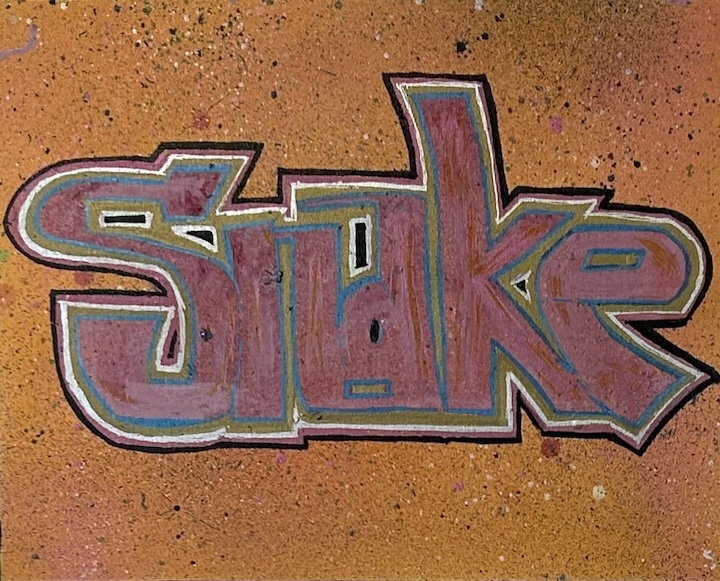
  5.  SNAKE 1, Orange and red signature piece, Aerosol on canvas

Photo credits: 1, 3, 4 & 5 Lois Stavsky; 2 Tara Murray

{ 1 comment }

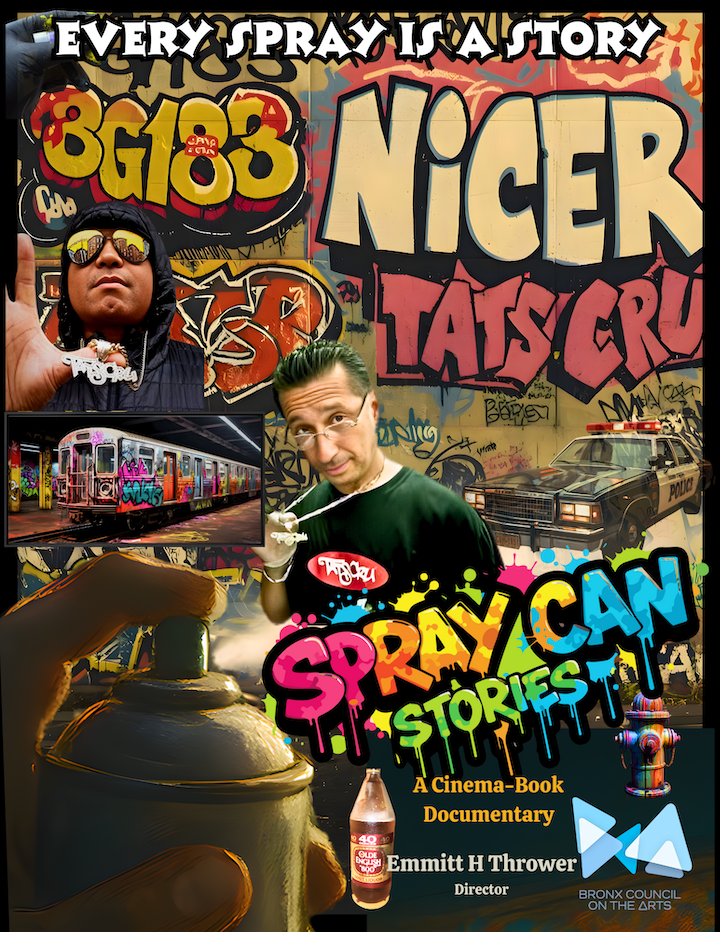
Directed by award-winning filmmaker Emmitt H Thrower, Spray Can Stories features not only in-depth personal interviews with legendary Tats Cru members BG 183 and Nicer, but also provides a fascinating glimpse into the entire hip-hop culture that emerged in the Bronx. After viewing the film, I had the opportunity to pose several questions to Emmitt:

What inspired you to produce a film focused on graffiti, particularly Bronx graffiti culture?

Growing up in Brooklyn in the early ’80s, I wasn’t all that aware of graffiti. I always liked to draw, and a few of us began writing our names with chalk in public spaces, but it never went any further. Years later, when I moved to the Bronx, I became intrigued by graffiti—its raw beauty, its democratic spirit, its impact. It was everywhere around me, and I was eager to explore its history and learn more about it. Once I did, I wanted to share what I discovered with others.

Who is your intended audience? The film is such a powerful educational resource—students around the globe are certain to love it.

My intended audience is broad. It includes anyone engaged in hip-hop culture, as well as those interested in learning how an illicit art form born in impoverished neighborhoods became a global phenomenon. As BG 183 and Nicer relate, they went from asking local stores for wall space to earning thousands of dollars creating ads for worldwide corporations.

What would you like your viewers to walk away with?

A deeper understanding how this original American art form began, along with an appreciation for the young people who started the culture.

How did you decide when and where to incorporate AI?

I was drawn to the visual impact of AI and the way it could be incorporated into the documentary as an added element to enhance the narrative. I also appreciated how AI allowed me to revisit the past and capture the sense of community that hip-hop culture fostered. My son was especially helpful in this particular aspect of the film’s development.

What were some of the challenges you faced in producing this film?

I kept asking myself how to create an immersive story that would authentically capture this rich culture and engage audiences. Another major challenge was overcoming the suspicion of the graffiti artists I had initially approached.

How did you support the production?

It was made possible with regrant funds from the New York City Department of Cultural Affairs administered by the Bronx Council on the Arts. I supplemented these funds with some of my own.

Although Spray Can Stories has already been nominated for and won several awards, it hasn’t yet debuted in New York City. How can folks see your film?

The film will make its debut this SUNDAY, Jan 11th, at 4 pm at La Nacional– 239 W 14th street, Manhattan followed by a Q and A with me and with special guests Cose TDS and Riff 170.  Additional showings will take place: TUESDAY Jan 13th 5 pm La Nacional – 239 W 14th Street, Manhattan;  SATURDAY Jan 17th 7:30 pm – Andrew Freedman Home – 1125 Grand Concourse, Bronx, and SUNDAY Jan 18th 7 pm – Sankofa House – 2422 Third Ave Bronx. You can check out the official trailer here.


Interview conducted and edited by Lois Stavsky with Tara Murray

{ 1 comment }

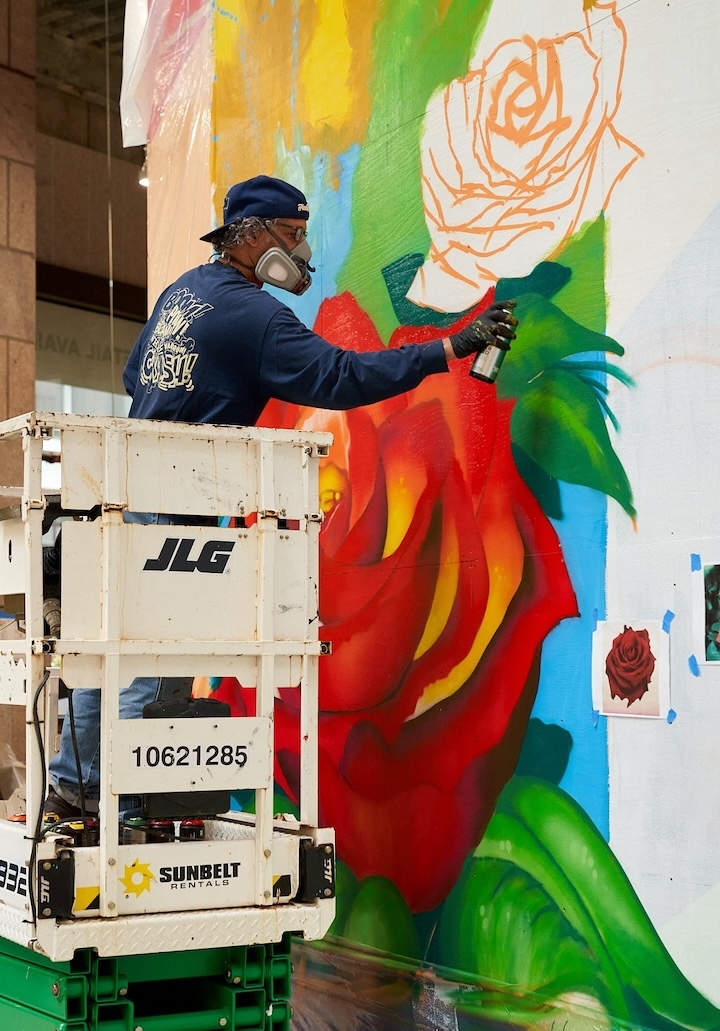
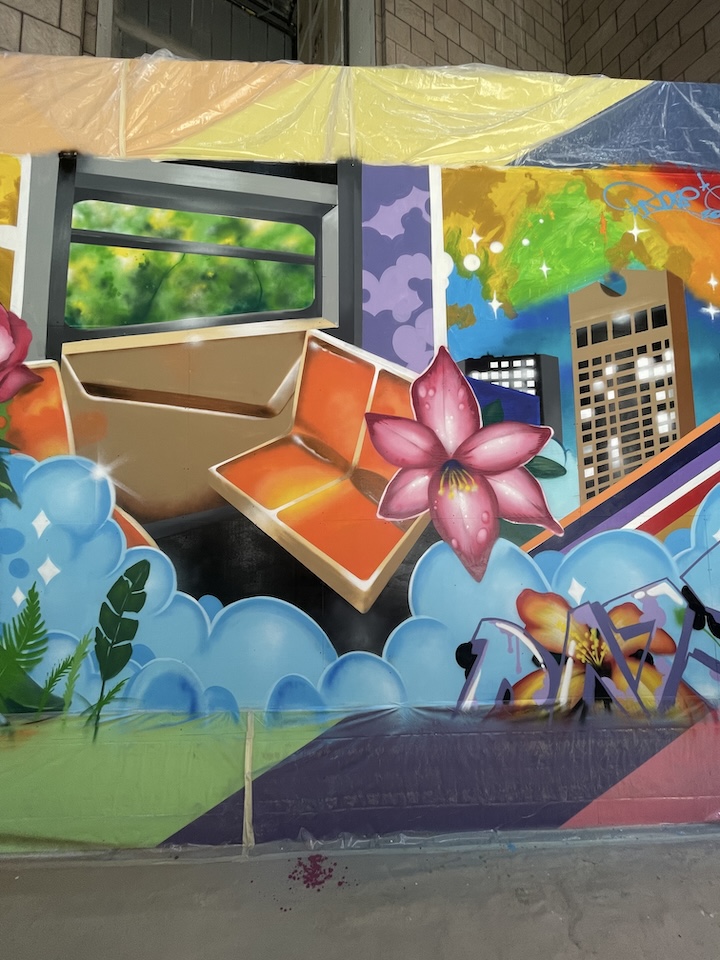
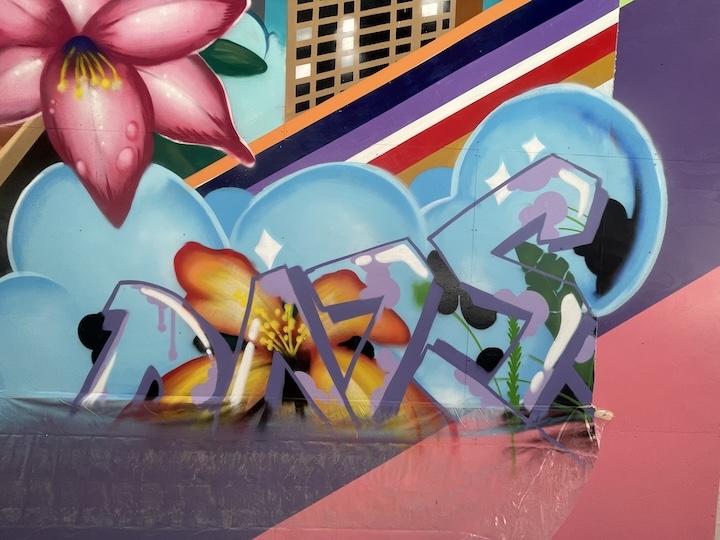
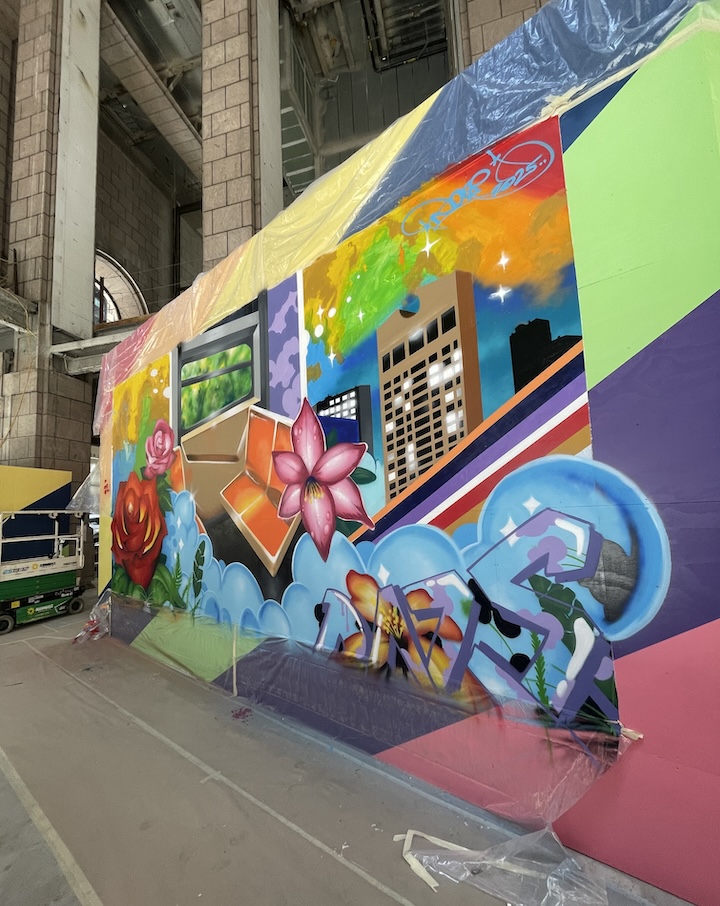
The legendary artist Chris “DAZE” Ellis is currently at work on newly commissioned artworks at 550 Madison Avenue on the corner of 55th Street. The following interview with him was conducted by Street Art NYC contributor Ana Candelaria.

How did this wonderful opportunity come your way? And why this location?

This project came about through my ongoing relationship with the Museum of the City of New York. I was informed that there might be an opportunity to activate this huge space in Midtown Manhattan. And so, I didn’t choose the location; the location chose me.

What was your vision for this project? And how did it evolve?

We began with an offsite meeting, where we saw firsthand what the space would look like. We tossed
around ideas, and I thought that whatever composition I come up with should be bright
and colorful — not dark and somber. It should, somehow, really lighten up the space. I started
thinking about color first and then composition.

Then I started thinking about this building which is really iconic. The chief architect is Philip Johnson, and I thought,”Okay, my work is very New York-based. I work in New York everyday, and I draw inspiration from my daily commute.”

I wanted to come up with something that is easily recognizable as very New York, but — at the same time — something related to the natural world, as the site’s atrium is so beautiful.

Were there any particular challenges that you faced in seeing your vision through?

Not really. Once I came up with an idea for this particular space, there weren’t any challenges.

Your artwork at this site is still in progress. How has the response been so far?

The response so far has been 100 percent positive. And, most importantly, we’ve gotten great respect
from people who are just walking by in the street. Those people come from all walks of life. There are lots of tourists in this area, as well as people who pass by on their way to work. This area has a great mix of people.

Interview conducted by Ana Candelaria

Photo credits: 1 Brad Farwell, 2-4 Ana Candelaria

{ 0 comments }
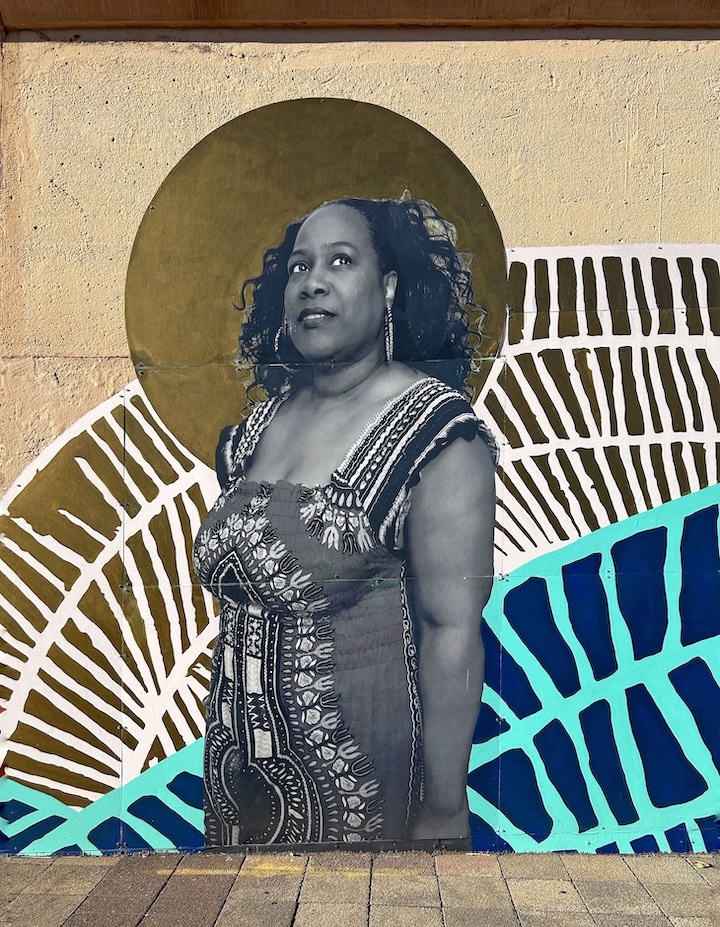
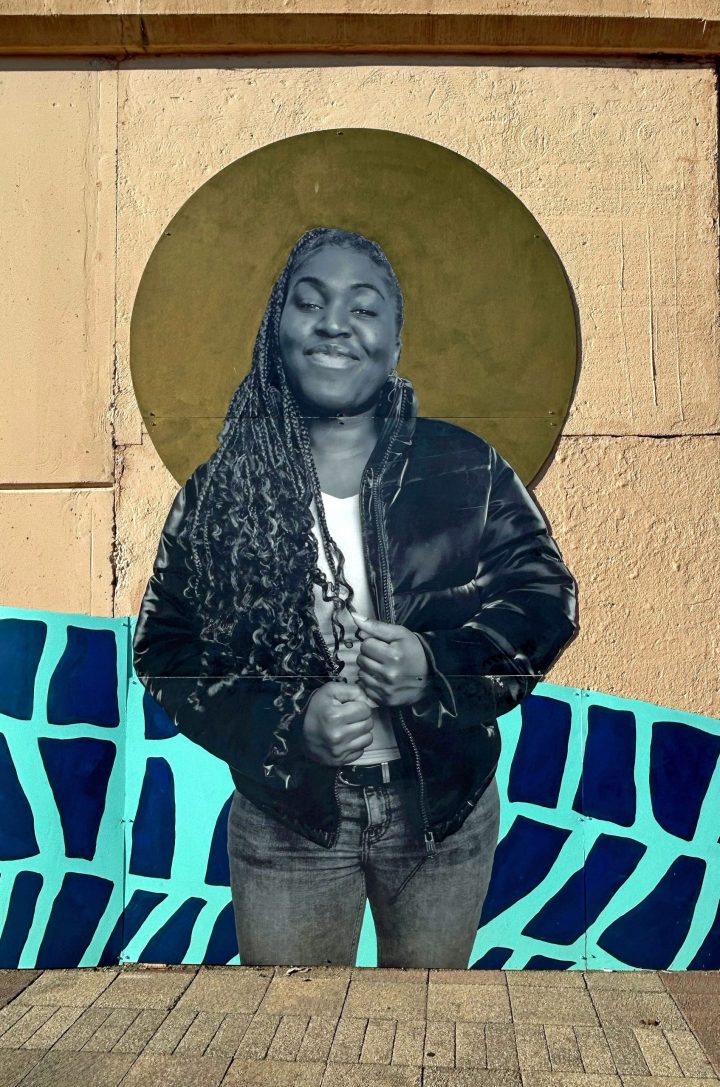
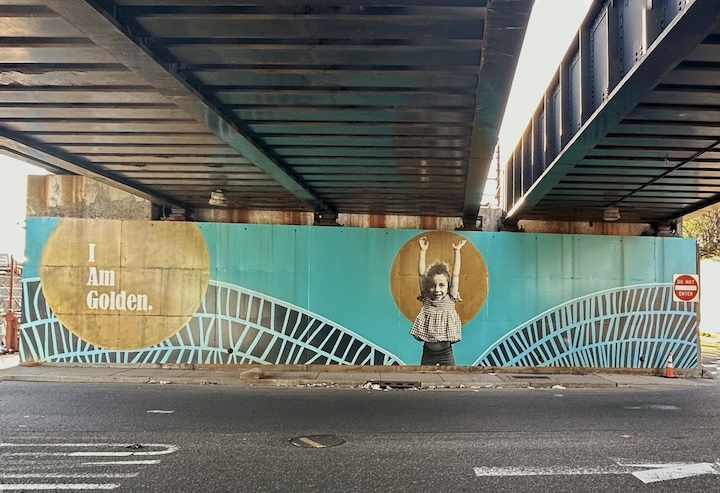
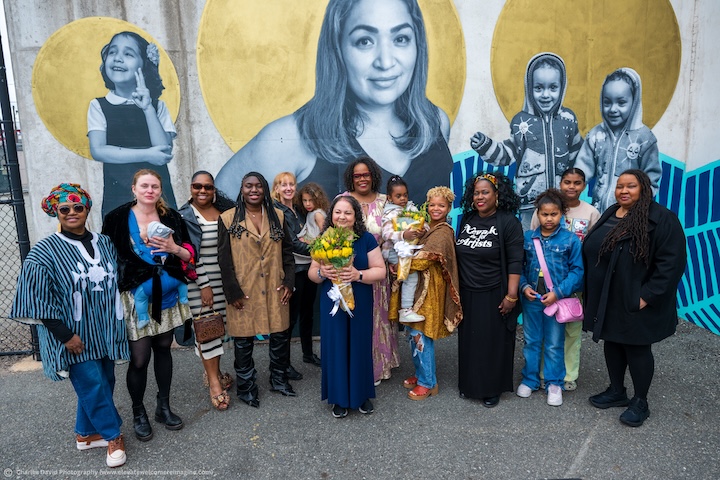
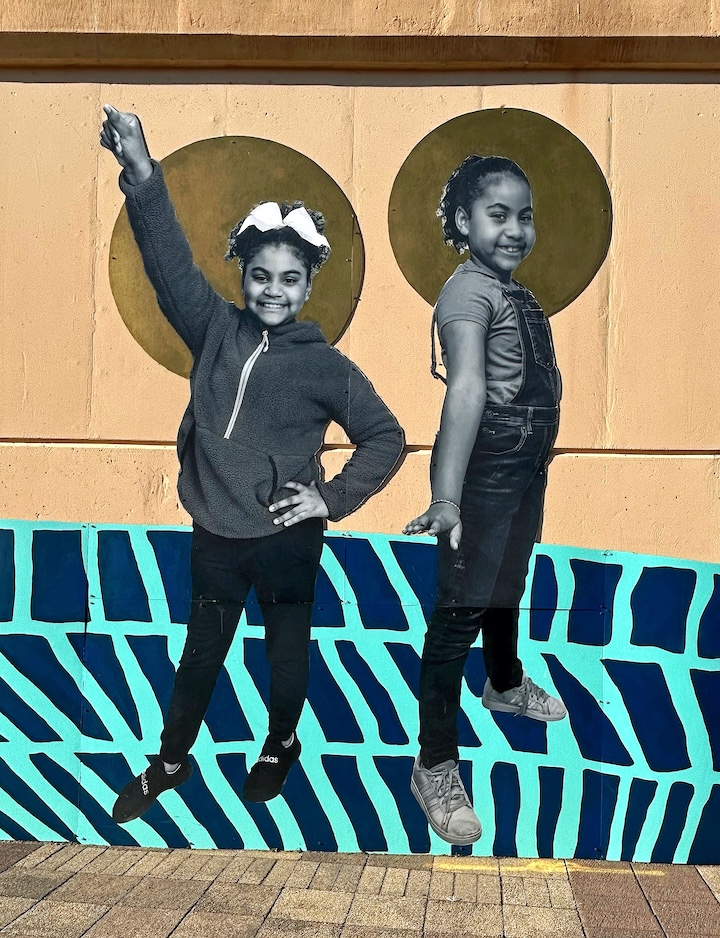
On my recent visit to Newark, arts educator and photographer Rachel Fawn Alban introduced me to The Golden Life, a joyous, brilliantly crafted mural project adjacent to the city’s Broad Street Station. Eager to find out more about this transformative venture, I  posed a few questions to Rachel, who created this richly radiant mural project in collaboration with Newark-based artist Armisey Smith.

This mural project is such a rich addition to Newark’s visual landscape. Whose concept was it?

The Golden Life is a collaboration between Armisey Smith and me. Armisey is a talented artist and close friend who believed in me long before I believed in myself. She encouraged me to partner with her, and together we set out to create something special and meaningful for Newark.

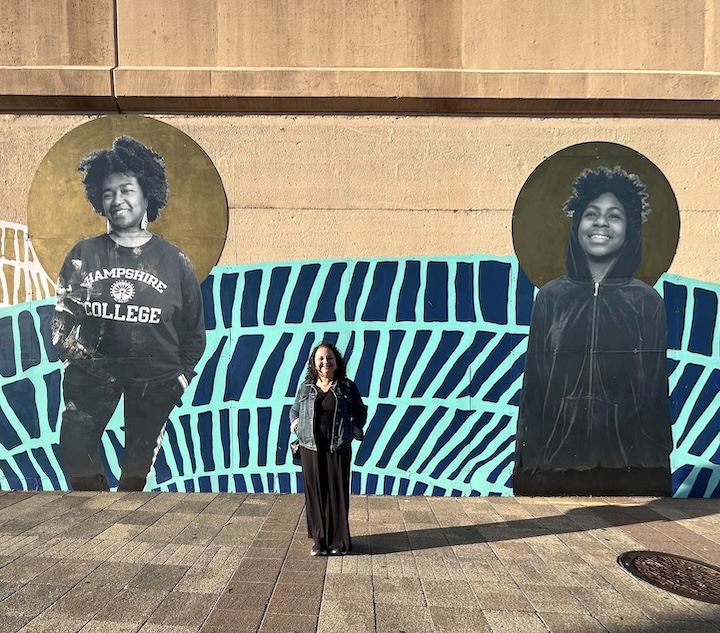
We chose to honor real community members—not famous or historical figures—which made the project deeply personal. The mural features large-scale portraits of 14 women and girls who live or work near the intersection, celebrating the diversity and creativity of Newark women and girls. The portraits are connected by vibrant lines and color, symbolizing community, connection, and sisterhood.

Can you tell us something about its process?

Creating this mural was both challenging and rewarding. In April 2023, Armisey and I hosted a free art workshop at the Newark Public Library for women and girls of all ages. We presented the project, took portraits, and led participants through creative exercises including a selfie station, collage-making, and haiku writing—all centered around the theme of The Golden Life.

One of my favorite aspects of the project is the audio component. While we couldn’t feature everyone’s portrait on the wall, we were able to present all of their poems—so even more voices were included. The recordings are accessible via the Bloomberg Connects app, along with a beautiful introduction by Newark artist Kween Moore. It’s a way for people to experience The Golden Life beyond the visual—listening while walking around the site adds another layer of engagement and accessibility.

What were some of the particular challenges involved in seeing this project through?

There were quite a few! It took about six months of planning before the workshop, then about a year from the time of the workshop to the ribbon cutting. Scheduling was a challenge since we are all educators and artists juggling multiple projects. And, since the project spanned multiple seasons, weather impacted our fabrication and installation timeline.

This was a complicated project with many stakeholders and technical processes. In fact, just before we were set to begin, two of our original walls became unavailable. This required a complete redesign and budget revision, which pushed us back several months. Thankfully, our amazing project manager, Rebecca Jampol, and our partners helped us stay on track. In the end, it all came together beautifully.

How has the community responded to it?

The response has been overwhelmingly positive. People have shared how they love seeing it every day and how meaningful it is to see their stories reflected in public art. In a diverse, majority-Black city like Newark, it’s especially powerful to create space for women and girls of color—who are often underrepresented in public art and media — to be honored and celebrated. The project also beautified a neglected and dilapidated intersection at Broad Street Station—used by hundreds of residents and commuters every day—transforming it into a welcoming and inspiring space. It’s a powerful reminder of how art can profoundly alter one’s environment and strengthen community.

What’s ahead for you?

I’m excited to continue creating art that celebrates diversity and brings people together. As a Jewish woman in Newark, I’ve been reflecting on the Black-Jewish alliance in America—a historic and ongoing partnership rooted in shared struggles and a commitment to justice. I’m eager to work on future projects that explore and honor these intersections, amplifying stories that haven’t always been told.

I’m also thrilled to keep collaborating with Armisey. Working together on this mural was incredibly rewarding, and we’re already brainstorming future projects. I’m confident that whatever we do next will be just as meaningful.

And before we wrap up, I want to thank the key supporters who made this project possible: Project for Empty Space for organizing and managing the initiative; the City of Newark’s Department of Arts and Culture; and Bloomberg Philanthropies for their incredible support. I’m also deeply grateful to our team of local artists who helped facilitate the workshop, fabricate, and install the mural—and of course, to all the participants who brought their creativity, stories, and spirit to the work. Golden Life for Life!

Interview and photos 1-5 by Lois Stavsky

Featuring Newark community members:

  1. Reine Campbell and Quincy Campbell
  2. Antoinette Ellis Williams, Rachel Fawn Alban & Tamia Thomas
  3. Denise Toney
  4. Klymora Smith
  5. Adele Rae Hayes Harris

Photo 6  © Charles David, featuring Armisey Smith, Rachel Fawn Alban and members of the Newark community

{ 0 comments }
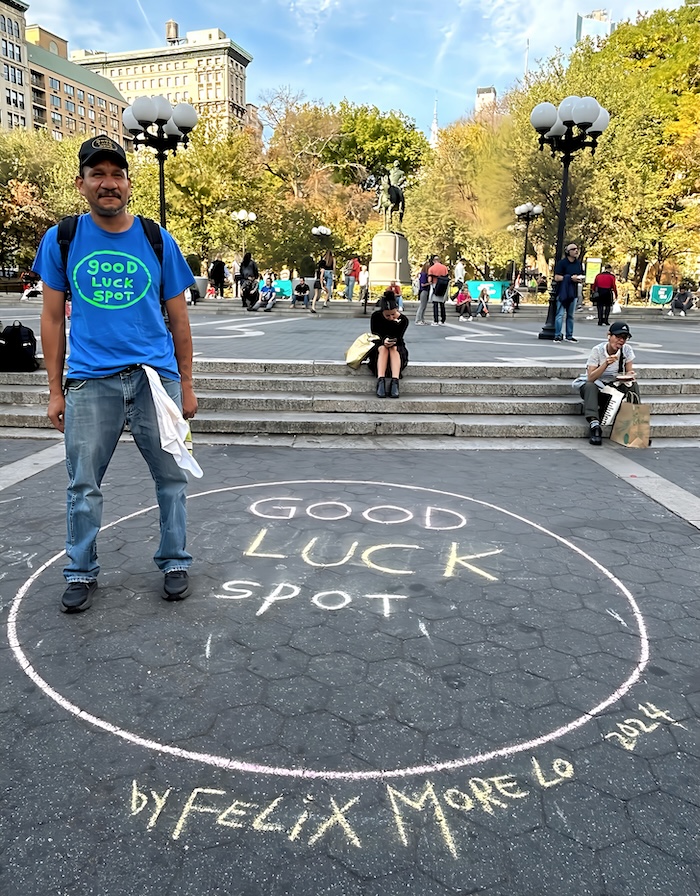
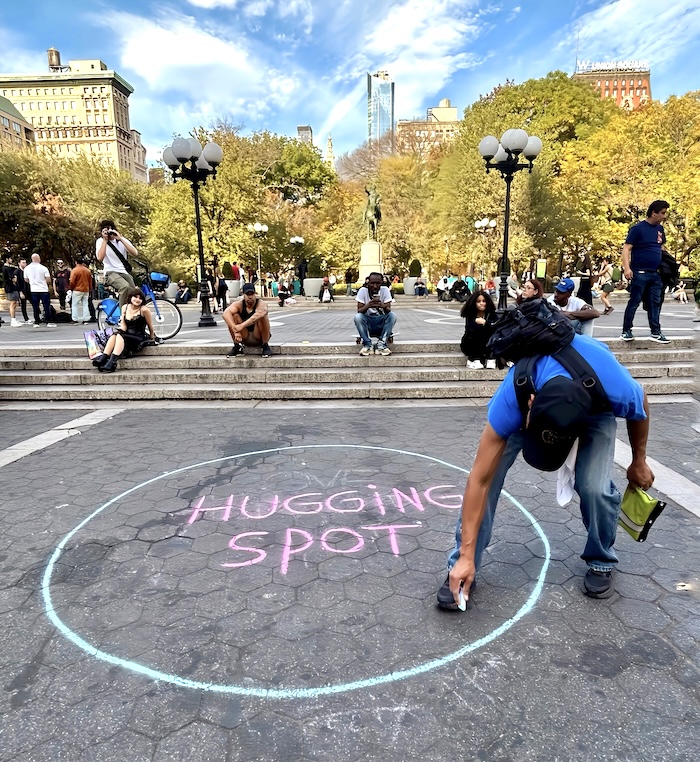
Colombian American artist Felix Morelo is increasingly engaging and provoking passersby with his intriguing ephemeral chalk spots that surface in some of New York City’s most trafficked sites. We were delighted to recently have the opportunity to pose a few questions to the artist.

When and where did you first hit NYC streets with your spirited chalk spots?

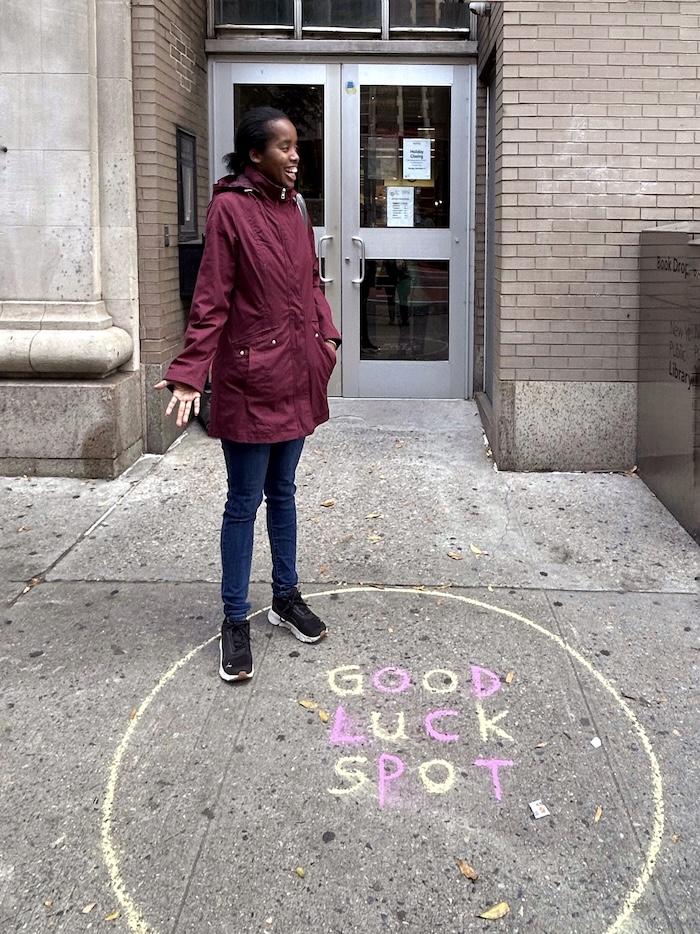
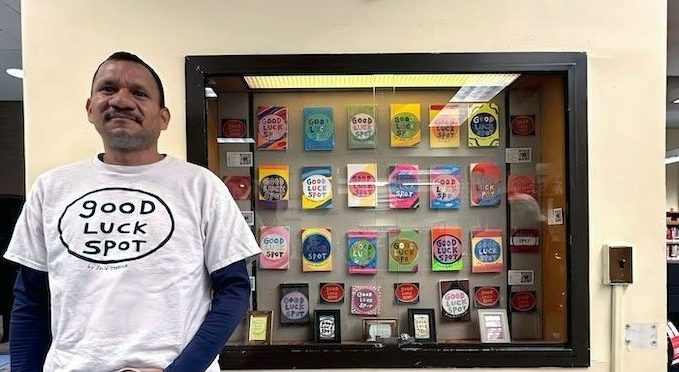
I began in the summer of 2009 with a “Good Luck Spot” in Union Square.

What spurred you to do so?

I was originally painting thousands of faces – mostly of children — on the city’s sidewalks. I thought of these faces as a community of spiritual seeds. An artist friend suggested that I take my concept further. I then came up with the idea of chalk spots that would directly engage the community.

And why did you continue working with this concept?

I felt that what I was doing was unique. I loved that people began interacting with my public art and with each other. And I liked the recognition I was getting!

Were there any responses to your street art that particularly stand out?

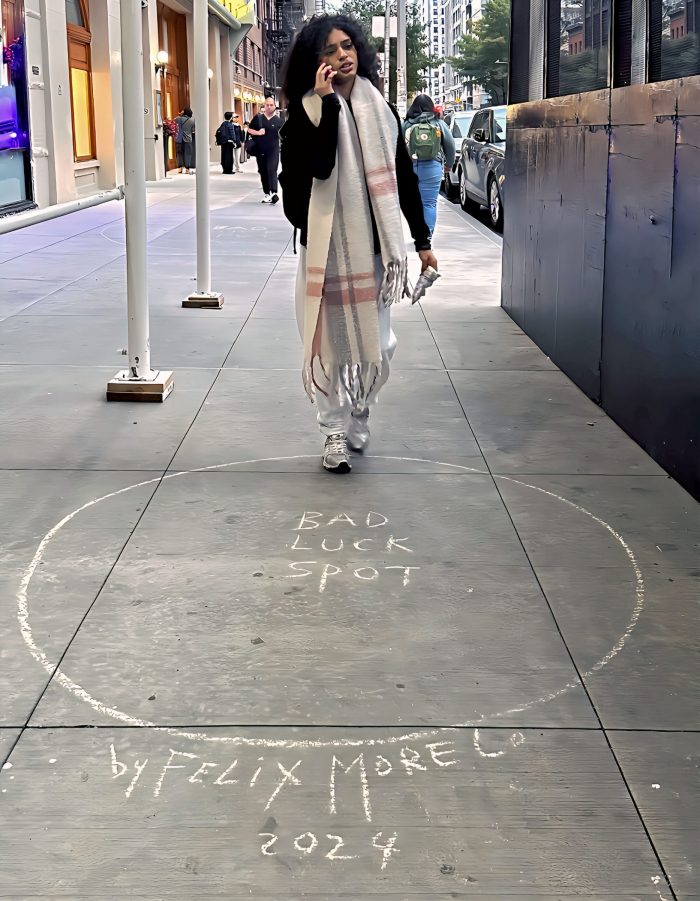
For the most part, people embraced and enjoyed the “Good Luck Spots.” I began experiencing negative feedback after I started drawing “Bad Luck Spots.” What stood out were the threatening email messages that I received from people who wanted to harm me.

Yes. We are curious about both your “Bad Luck Spots” and your “Suicide Spots.” What prompted you to create your first “Bad Luck Spot?”

At the time I was drawing “Good Luck Spots,” I myself was having a lot of bad luck. I was dealing with homelessness, joblessness and the loss of a partner. Creating “Bad Luck Spots” was cathartic for me, as it helped me get these bad feelings out of my system. Drawing both “Good Luck Spots” and “Bad Luck” ones reflect life itself – its yin and yang.

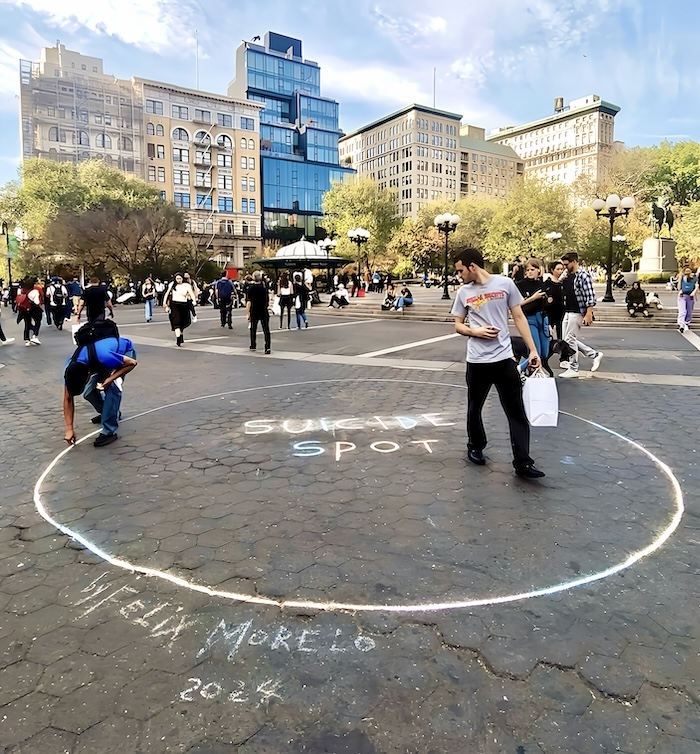
What about your “Suicide Spots?” They seem to have spurred quite a bit of controversy.

It’s a matter of free speech. Chalk isn’t permanent. I like the way these controversial spots stir debate and reflection. People’s reactions to them give me insight into human psychology.

Have you ever felt unsafe while drawing your spots on the streets?

I sometimes feel unsafe when I’m looking down. The worst thing that happened, though, was when someone threw water on me and then got in my face.

Besides the wide variety of spots you presently create, do you do anything differently now from when you first started using the street as a canvas?

When I began, I worked only with skinny white chalk. Three years ago, I tried drawing with thick colored chalk, and I liked the results. The colors spice up the message and more readily capture people’s attention.

How do you choose the sites for your spots?

I look for places where I can attract the most people and a certain type of people — those who are eager to engage and are open to new experiences.

Where else – besides New York City – have you drawn your spots?

I’ve drawn these spots in many places. Among them Colombia, Ecuador, Miami, Indianapolis. Cincinnati and Kentucky. I’d like to bring them to London.

What’s ahead?

I’ve participated in dozens of group exhibitions in a wide range of spaces, but I’m ready now for a solo exhibition in a gallery setting. I’m also in the process of collaborating with 10 different artists, and I would like to see those pieces exhibited together. And, of course, I’ll still be active on the streets conjuring new “spots,” to be drawn alongside the original “Good Luck Spots.”

Good luck with it all! We are looking forward to seeing your artwork both on the streets and in galleries. We love viewing it here on East 23 Street — both inside and outside Epiphany Library NYPL.

Interview conducted by Lois Stavsky and Tara Murray

Photo credits: 1-3, 5 & 6 Lois Stavsky and 4 Tara Murray

{ 1 comment }
Continuing through February 23, 2025 at the Saar Historical Museum in Saarbrücken, Germany, is “ILLEGAL. Street Art Graffiti 1960 – 1995,”  the first museum exhibition anywhere to focus solely on illegal graffiti.  I recently had the opportunity to pose a few questions to its curator, Dr. Ulrich Blanché, a Heidelberg University art historian who specializes in global graffiti and street art.

When did you first become interested in illegal markings? And what ignited your interest at the time?

Growing up in a house in the middle of nowhere in Bavaria with no neighbors within a kilometer, I was an easy victim for anything urban – ruin porn, street art, graffiti. While studying in Australia, my friend Shanu told me about stencils and Banksy. I was hooked.

What are some of the principal factors that motivated you to curate this exhibit?

My spirit of contradiction. Many street art and graffiti surveys act as if illegal art on the street is something that comes exclusively from NYC and Paris. As if the rest of the world was a blank canvas before we were enlightened/colonized by US street art and style writing graffiti. Unfortunately, many US/UK researchers/curators seem to read only English sources. And it seemed appealing to me to counter the old accusation that illegal street art and graffiti cannot be shown in a museum. Hence: an exhibition with only illegal works. I did not show the usual thing – new, legal works that barely survive on the old illegal street credibility of their creators.

Can you tell us something about the process of curating it? What were some of your main challenges? 

People seem to love “originals,” — whatever that is actually. One challenge was that there were often hardly any preserved illegally created originals, or you would have to spend a fortune to transport them. Another main challenge was that I was on my own in the curation process and in approaching artists/collectors. I missed student assistants I had worked with before.

How did you decide which artworks/artists to feature in the exhibition?

I tried to identify the earliest ones and the game changers. If the show would travel, I would include some more, for instance Flint Gennari (NYC), Valie Export (Vienna), SZ group (Moscow) and Tsang Tsou-Choi (Hong Kong). I tried to rewrite street art history in some cases – Brazilian stencil graffiti artist Alex Vallauri was earlier and had more impact worldwide in the early 1980’s than Blek le Rat. Art punk stencils by Crass influenced Banksy and Robert del Naja before they had even heard about Blek. There was a worldwide illegal street sticker campaign before OBEY, done by Cavellini from the 1970s onwards, etc. Among my other discoveries were 10 unknown SAMO© graffiti from 1979 in NYC and the first guy from Germany interested in Keith Haring. So new things about old hats and newly found old things that challenge street art or graffiti history —  at least in details. Graffiti is not just style writing from NYC; we also show L.A. Cholo graffiti, Philly graffiti or Pichação from Brazil – not all are common in overview shows. I tried to show large works so they can appeal in a physical way, and I tried to show developments on walls, not just work in mint condition, photographed the second the artist drops the can.

What is the central focus of the exhibition?

The concept is “hits and rarities.” To give an overview from the 50’s until the 90’s. I tried to identify the earliest examples, the ones who had a huge impact and some who should have had more impact. We start with Guy Debord, Ted Joans and of course Brassaï and end with Banksy’s first documented work on the street. We’re putting a spotlight on the Paris-Cologne-Zurich triangle because a lot was happening there and because the museum is in the middle of these cities, and another spotlight on the connections between street art, graffiti and music.

What would you like your viewers to walk away with?

I’d like the viewers to walk away with the thought that street art and graffiti did not start with Banksy. And that street art and graffiti stem not only from protest art or gang graffiti; it is far more complex. An audience interested in contemporary art would be amazed how many familiar names worked illegally, too: Christo/Jeanne Claude, Walter Dahn, George Condo, Valie Export, Daniel Buren, etc. Conceptual art, performance art, pop art, Fluxus, Mail Art are deeply interconnected with what we call street art today. And that early street art graffiti was more female than you’d expect.

How has the response been to the exhibit to date?

We were on German national TV and radio with the exhibition, as well as on several local and regional media. The response was very positive. Saarbrücken, however, is not Hamburg or Berlin. I think the bilingual catalog and the 3D scan of the show will reach quite a few people internationally, as well. For myself, it is great when people like Daim, Chaz Bojorguez and John Fekner say it is a great show!

Images:

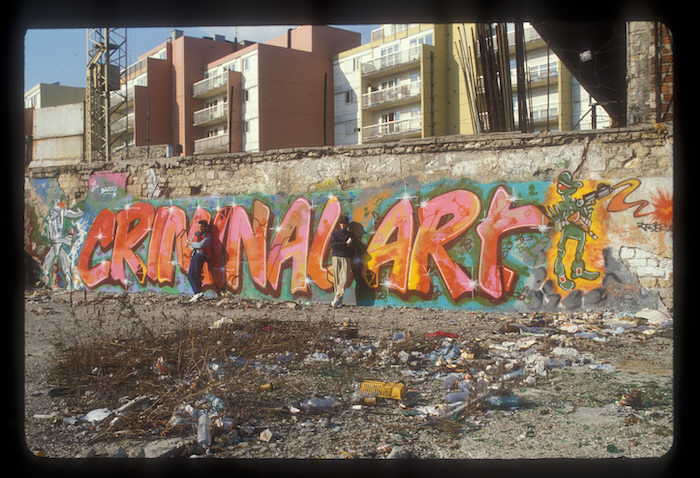
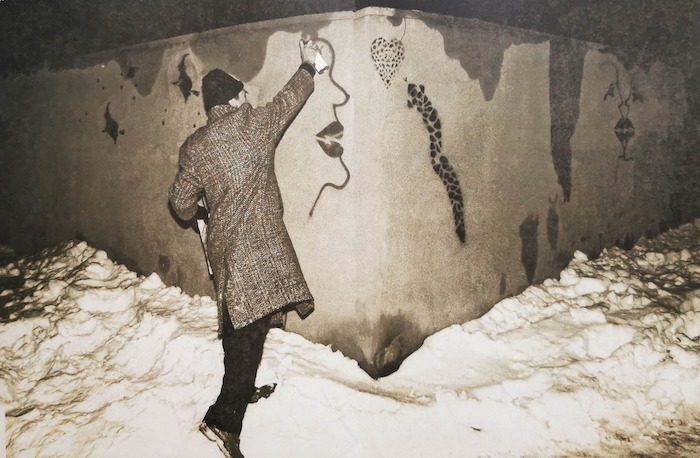
1. Bando and Doc in Paris, 1984; photo, Claude Abron

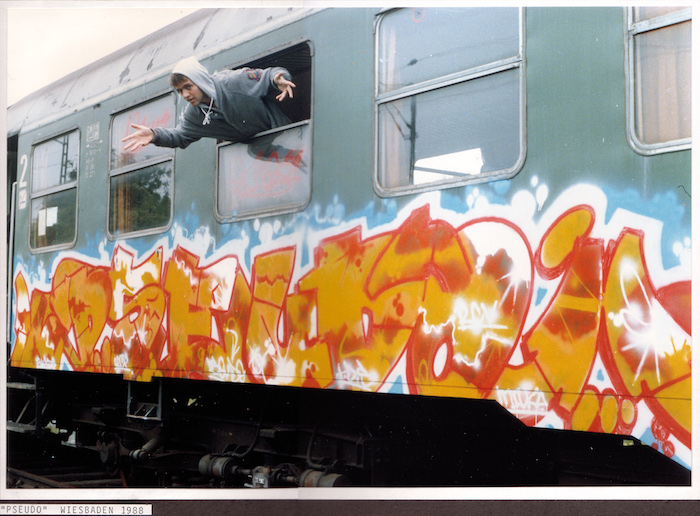
2. CanTwo in Wiesbaden, 1988; photo, CanTwo

3. Alex Vallauri in Lower Manhattan, ca. 1982-1983; photo, Claudia Vallauri 

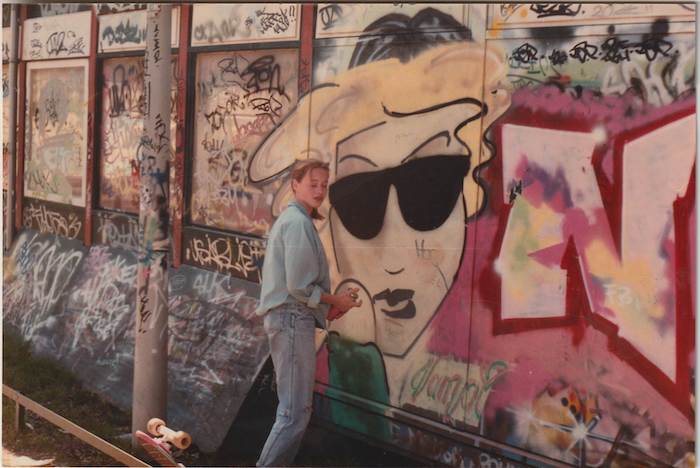
4. Vampirella in Amsterdan, 1985; photo, Vaselka M aka Vampirella

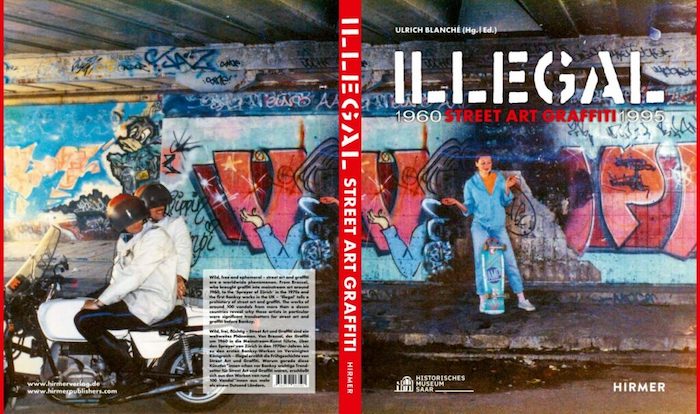
5. Book cover featuring Vampirella, photo, Vaselka M aka Vampirella

Interview with Dr. Ulrich Blanché by Lois Stavsky

{ 0 comments }