interview

The following guest poet is by Lower East Side-based photographer Ana Candelaria

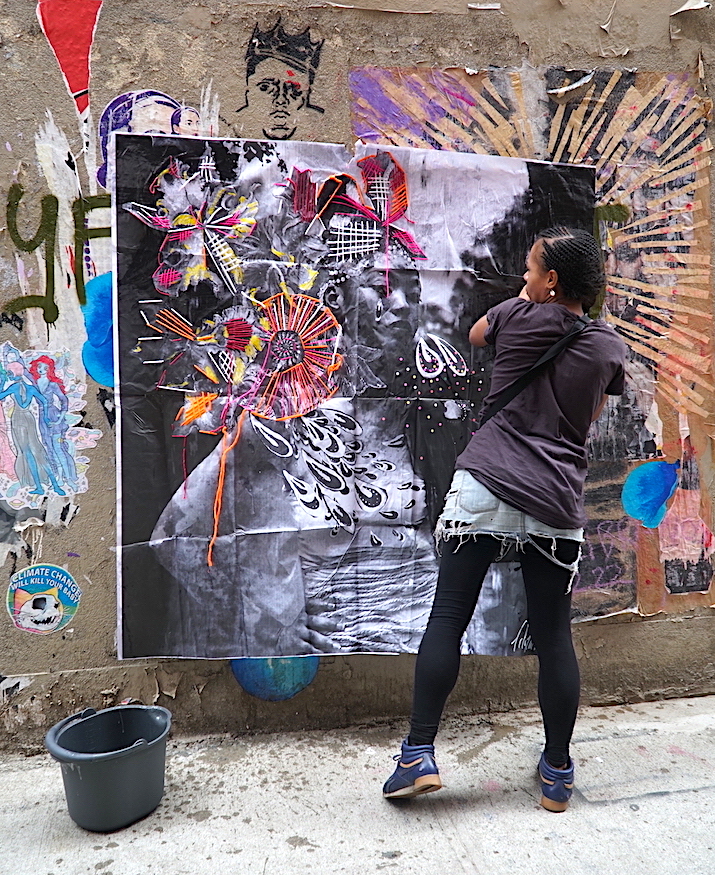
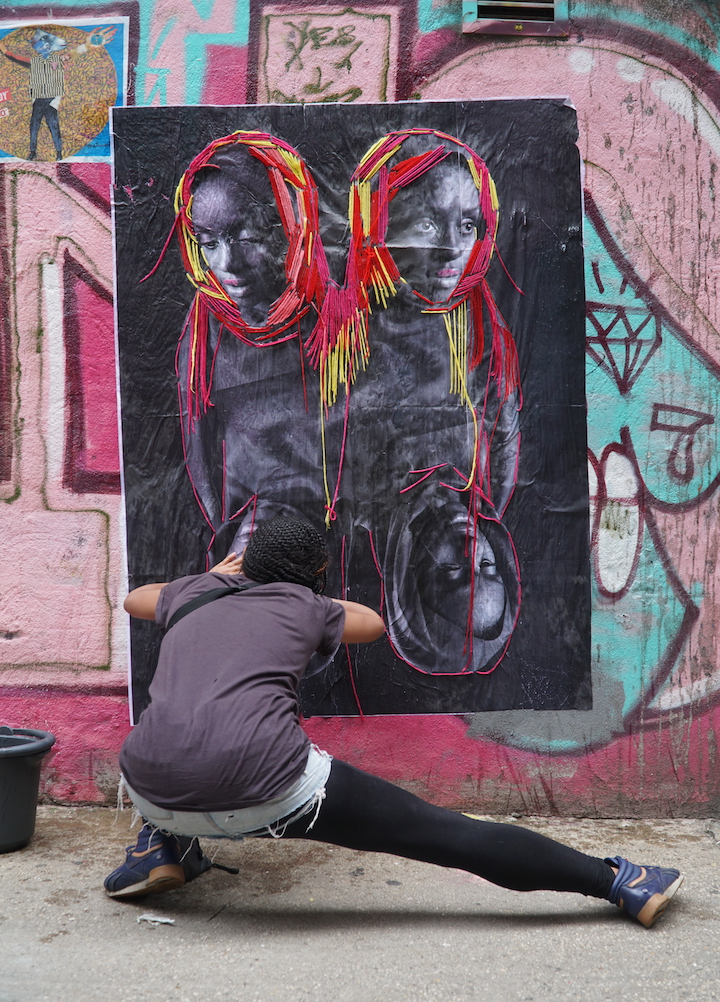
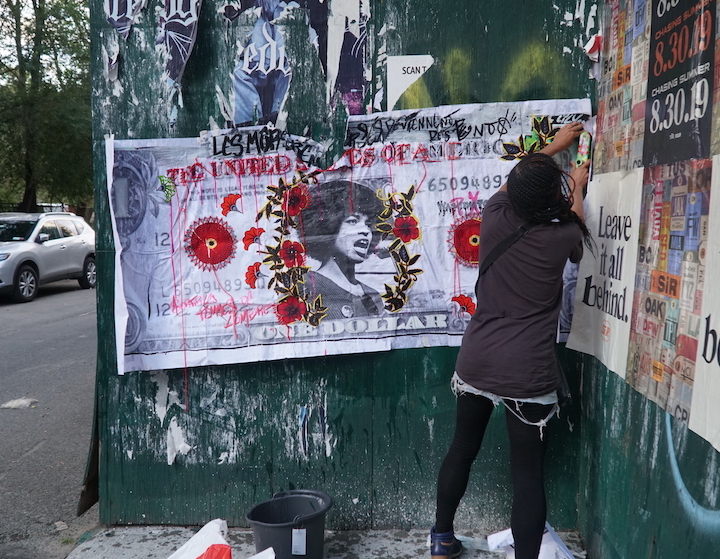
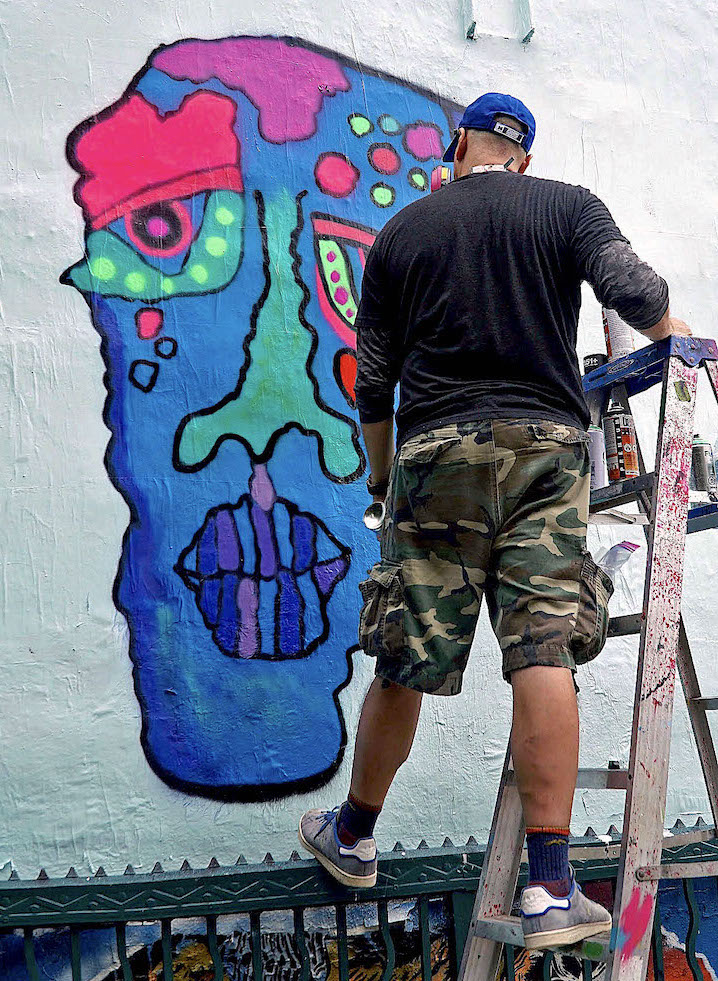
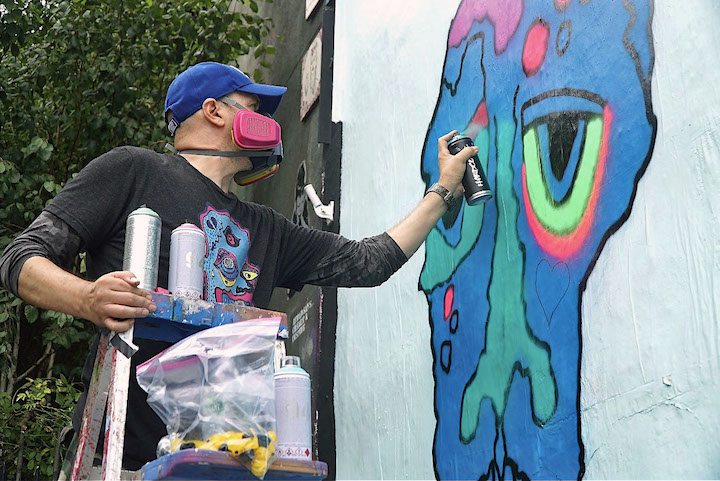
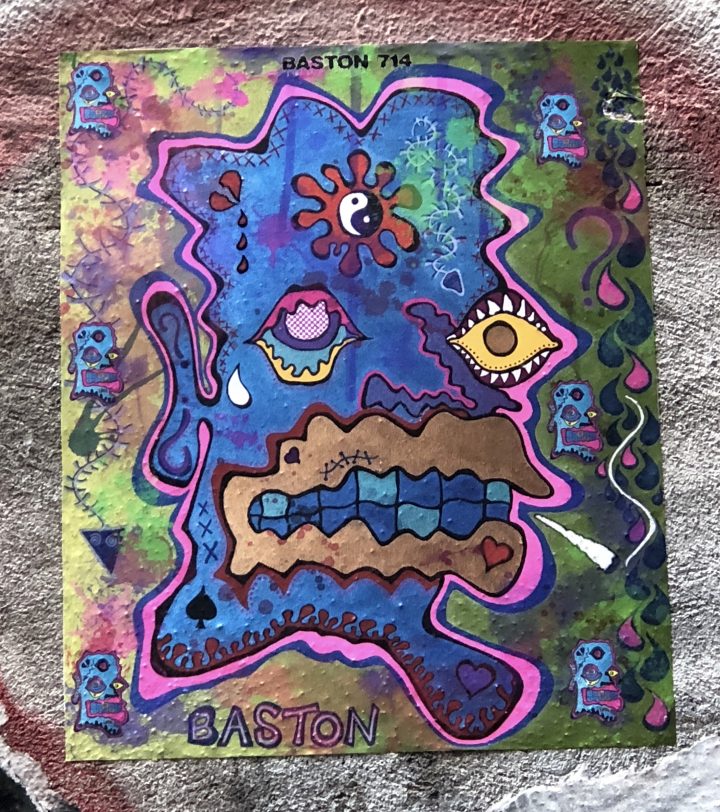
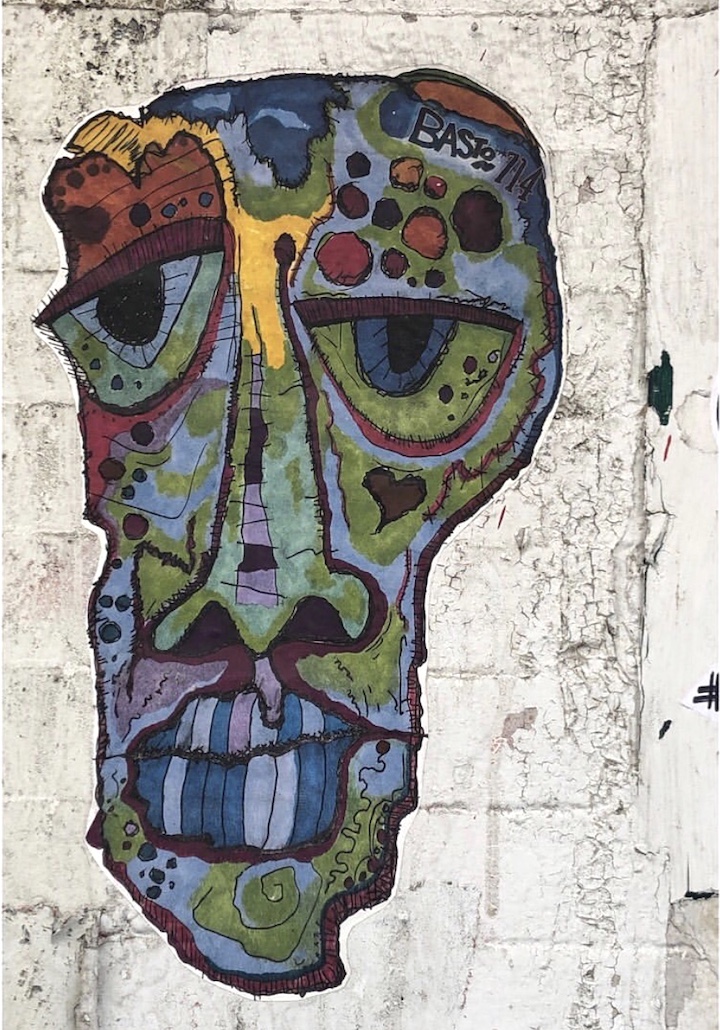
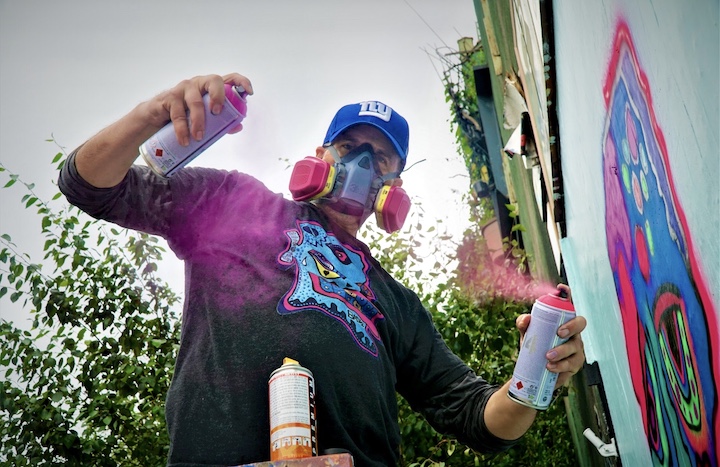
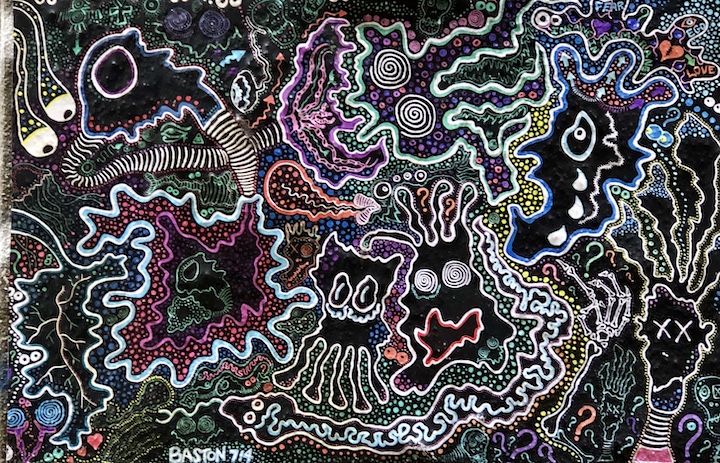
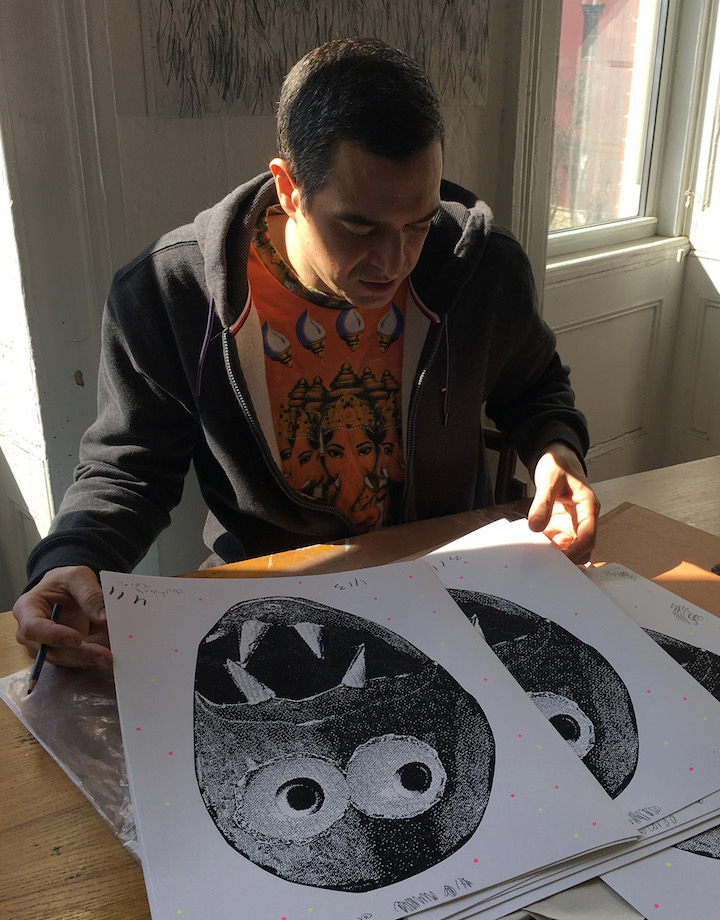
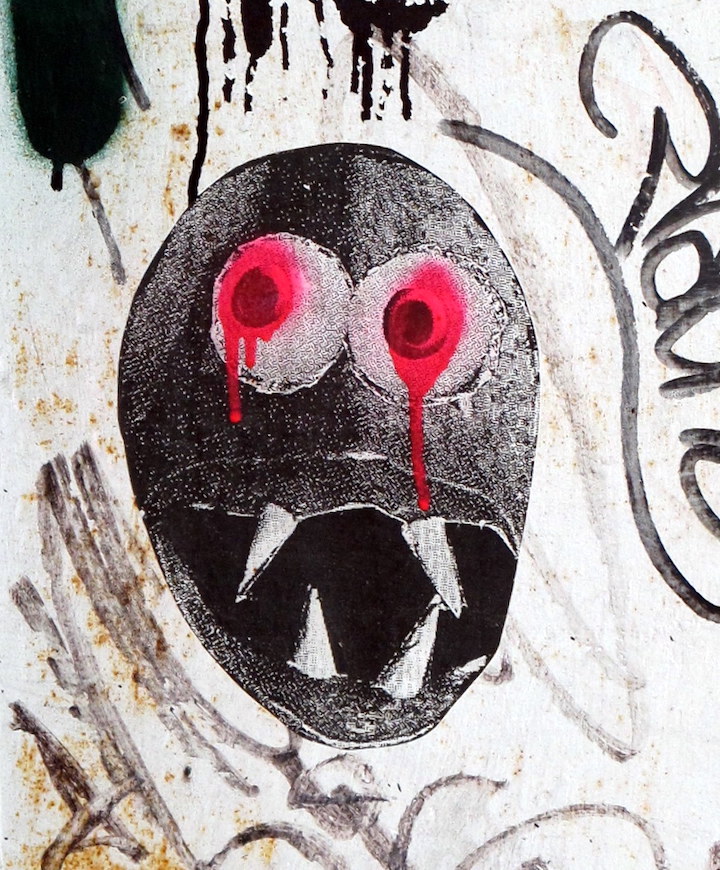
Born and raised in Brooklyn, Baston714 has been making his mark on our streets these past few years with his uniquely intriguing wheatpastes, paste-ups and stickers. By chance, I came upon him while he was painting a mural outside the Second Avenue subway station — one of our favorite street art spots. Soon afterwards, I had the opportunity to interview him:

When did you first discover your love for art?

Both my parents were artists and Pratt graduates. My father was a furniture designer and my mom a shoe designer. So art was always a part of my life. I was always creative and I was always drawing, but I majored in television broadcasting and worked largely in network news as an editor.

Do any early art-related memories stand out? Particularly those that may involve your parents?

One particular memory stands out. When I was five years old, after seeing the movie A Red Balloon, I started drawing red balloons all over my walls at home. My mother didn’t appreciate my efforts and made me wash them all off.  I remember, also, my father drawing characters and having me identify them. I’d guess who each one was. My father might have been a fantastic fine artist, but because he had a family to take care of, he never pursued that venue.

What motivated you to hit the streets with your distinct vision?

I didn’t expect to. I had no plans of being a street artist. But once I began to photograph street art, I was hooked. I started creating little drawings and sending them out to the street artists I’d met to get some feedback. The feedback was positive – and, like the street artists I’d befriended, I, too, wanted to share them in a public space. I started putting up stickers about three years ago.

Are there any street artists out there who particularly inspired you when you began to get your work up in public spaces?

Among those who inspired me were: Who is Dirk?, Fumero, Denton Borrows, Phetus 88. and Jeff Henriquez.. I started shooting videos with Who is Dirk?, at night. I loved the idea of being in Chinatown at 3 AM in the morning!

What about your name? How did you come up with Baston714 ?

I lived in the jungle for over five years in Iquitos, Peru — one of the most isolated cities in the world.  One of the Shamans — healers — gave me the nickname Baston which means walking stick in Spanish. And I always liked the number combination 714!

Can you tell us something about your now-iconic face?

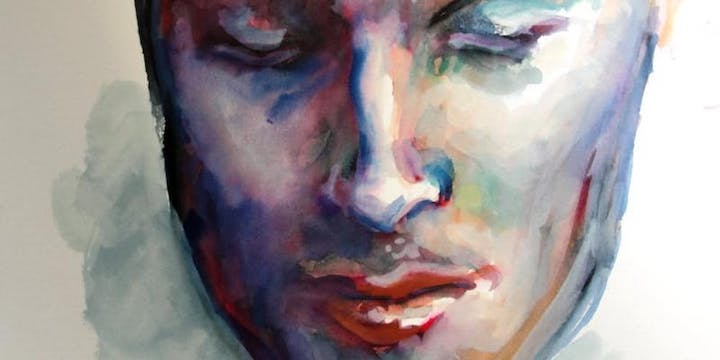
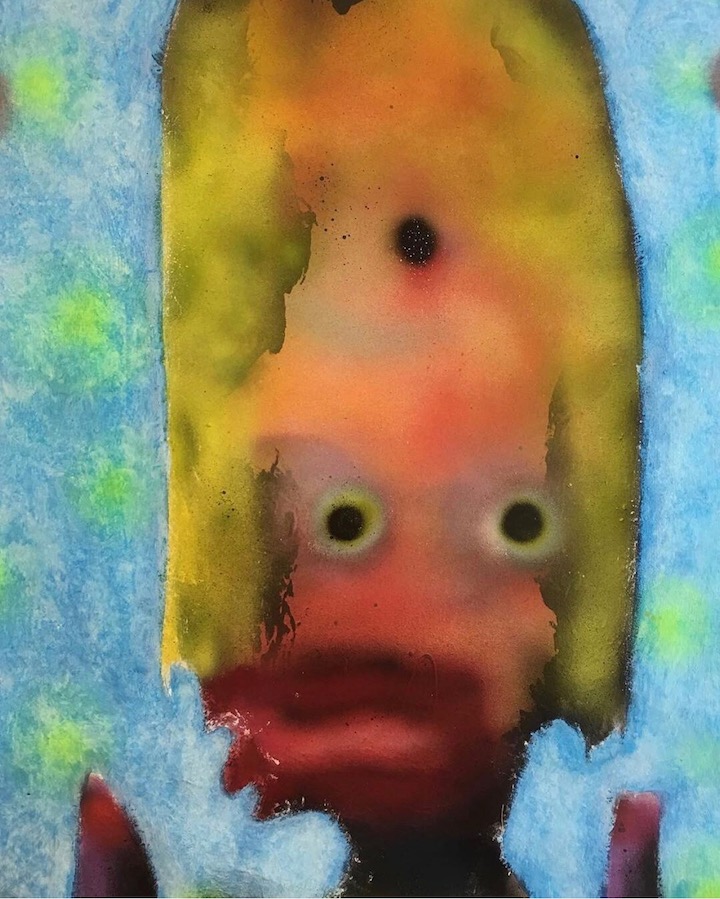
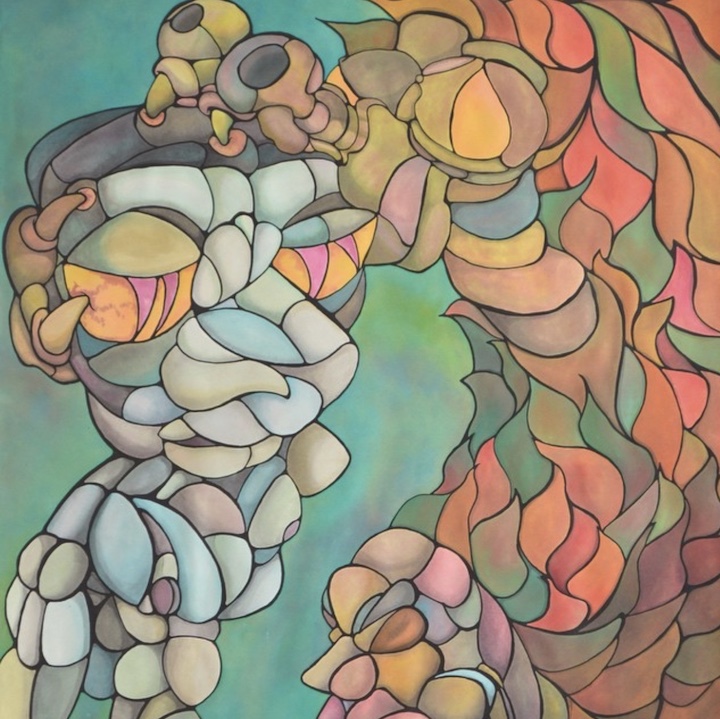
The face was influenced by other artists and the experiences I had with Shamans while living in the jungle. Painting comes from a very personal space. I had an idea and started fooling around. I like my colors to pop.

Are you generally satisfied with your artwork?

I hate my work until I’m about midway through creating it. About 56% in, I say to myself, “There’s something here.” And then the work starts to talk to me, “Do this! Put something here.” It comes to life.

I first met you while you were working on a wall on Houston Street and 2nd Avenue. Was this your first mural?

No, I’ve painted about five or six walls. Kon Air  gave me my first wall in Barcelona. It took me six hours to finish painting it. Fumero, gave me a wall at Art Basel 2018. Spray painting is extremely challenging. I like the challenge, and I would like to paint more walls.

Have you collaborated with any other artists?

Yes, I’ve collaborated with Zimad on stickers. I have also worked with Sinclair the VandalWho is Dirk? and Doodlehedz.

Are there any artists out there with whom you’d like to collaborate?

Among those I’d like to collaborate with are: Ratanic, Antennae and Fluidtoons.

Whats ahead?

More wheatpastes and I’d like to work on more walls.

Interview conducted by Ana Candelaria and edited for clarity and brevity by Ana and Lois.

Photo credits: 1, 2 & 5 Ana Candelaria; 3, 4 & 6 Lois Stavsky

{ 0 comments }

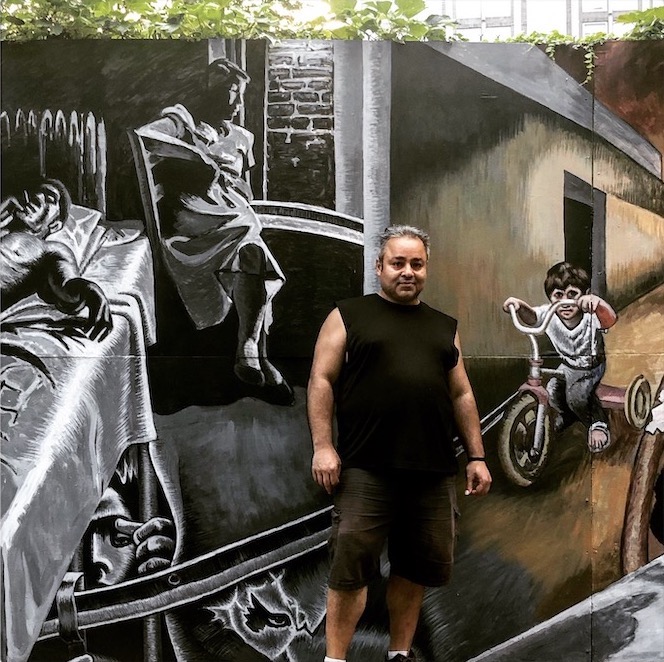
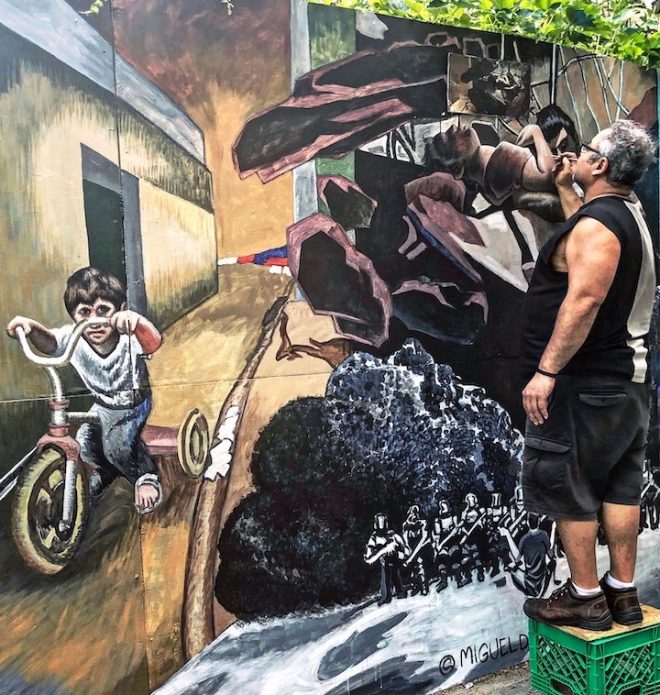
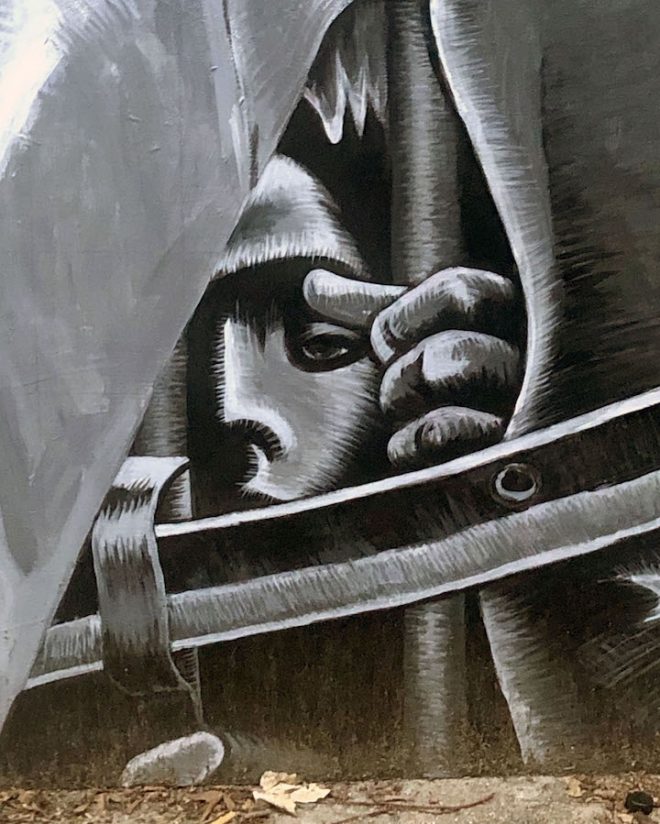
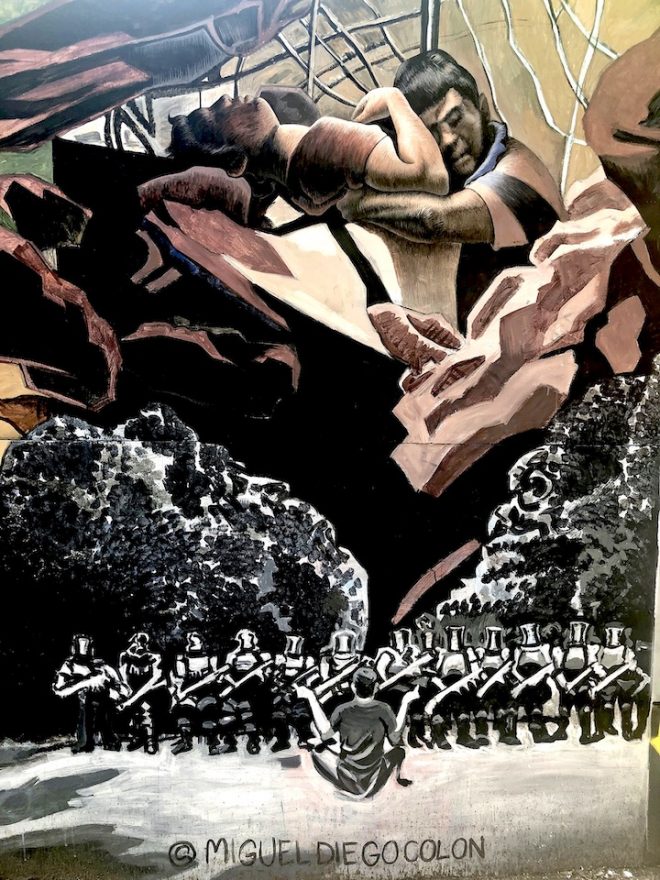
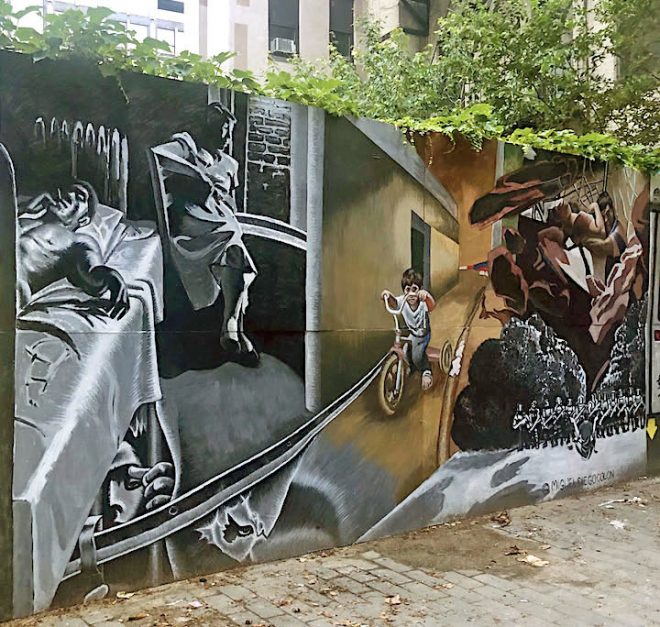
Working with paintbrush in hand, award-winning Manhattan-based artist Miguel Diego Colón recently brought his skills and vision to First Street Green Art Park. After he had finished his mural, I posed a few questions to him:

Although your artwork surfaced publicly this past year on a huge billboard near the Kings Plaza Shopping Center, this was the first time you actually painted in public. What was that experience like?

It was amazing! I loved interacting with passersby who stopped to watch me. I loved hearing people’s interpretations of what I was doing. And I felt flattered when people took photos of the mural and of me while I was painting.

All of your images reference some kind of economic or social injustice. How did you decide which images to incorporate into your mural?

I researched online the term “social justice.” I then visually interpreted particular issues that stood out…that particularly mattered to me.

And so the overall theme of your mural is social justice — or the lack of it.

Yes. I am concerned with oppression of all kinds…what it means to have one’s rights taken away.

Is there any particular segment of the mural that you especially like? 

One of my favorite segments is the image of the couple embracing during the collapse of a sweatshop. I like the way it represents connection — the way people can connect, especially during trying times.

What’s ahead?

I’m currently applying for a number of grants. And I would love, of course, more opportunities to paint in public spaces. I’m also working in my Fountain House Gallery studio on a painting modeled on my First Street Green Art Park mural, “Liberty’s Last Embrace.”

It sounds great! Good luck with it all! And, thank you, Jonathan Neville and First Street Green Art Park.

Interview conducted and edited by Lois Stavsky. Photos by Lois Stavsky

{ 0 comments }

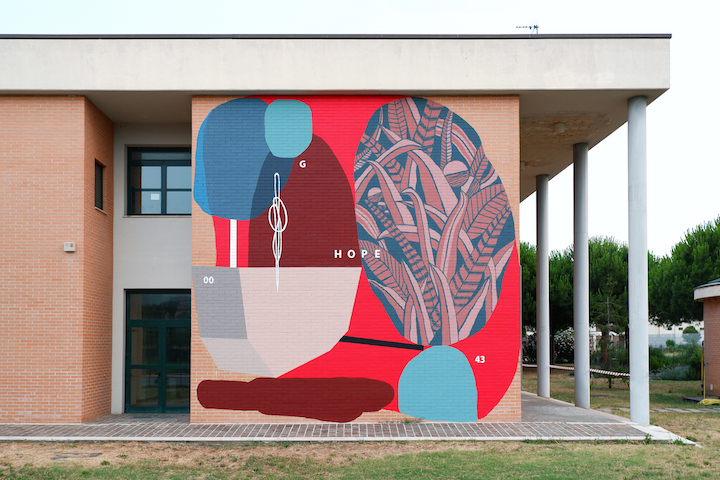
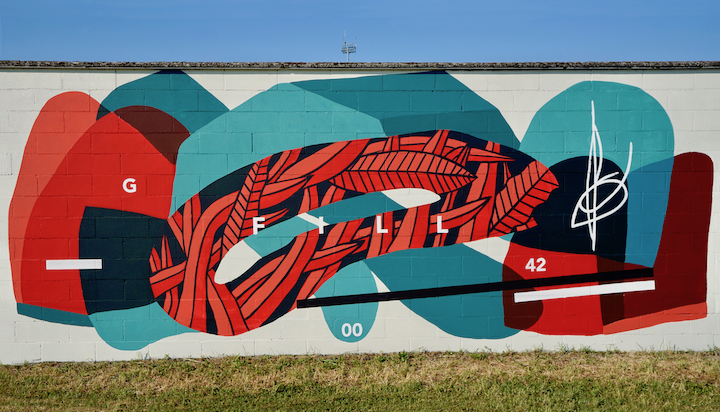
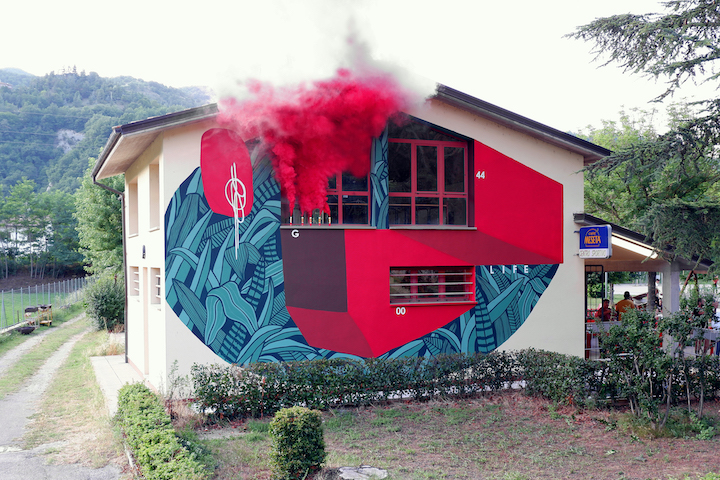
Born and based in the Italian town of Civitanova Marche, the wonderfully talented multidisciplinary artist Giulio Vesprini will be bringing his vision here to NYC this coming week. A brief interview with the artist follows:

You’ve studied art formally at the Academy of Fine Arts in Macerata and at the Department of Architecture in Ascoli Piceno. What spurred you to turn your talents to public spaces?

My two greatest passions are graphics and architecture. And thanks to the outstanding teachers I had in both disciplines, I came up with a way to combine my passions: archigraphia. I view painting in public spaces as a superior expression of art.

When and where did you first paint in a public space?

I started painting when I was fourteen yeas old. It was back in 1994. Using two old spray cans, I painted a big face on an abandoned wall. It seemed really ugly!  I didn’t know what I was doing, but it was fun doing it. I felt free, and it was a wonderful feeling!  At that moment, I understood that the wall was my only true canvas. 

Your work seems to straddle the lines between graphic design, fine art and street art. Can you tell us a bit about your process? Do you work with a sketch in hand or just let it flow?

Each one of my works is planned in terms of the space that will hold it. I always combine graphic language with the language of architecture. I always bring with me a drawing, along with some landscape photos. I feel that every street artist has to consider the site on which he is working — in terms of its distinct story and locale. Urban art should fuse with the specific space and not prevail over it. 

Have you collaborated with other artists?  Are there any artists out there with whom you’d like to collaborate?

Yes, I have collaborated with many others street artists. Among my most interesting collaborations were those with Aris and 108, two italian street artists. I’d like to paint with MOMO and Rubin415. I very much like their styles, and I think that they have a perfect understandng of architecture.

Have you exhibited your work in gallery settings? If so, where?

I’ve exhibited in Milan, Florence and in Bologna. Now I wish to show my art works in galleries in other countries — like Germany and France. I dream of having a show in the United States.

What’s ahead?  

I’ll be in NYC from August 5 though August 22. I am excited to be painting at rag & bone on East Houston Street, and I look forward to other opportunities to paint in NYC, as well. In September, I will be in France for an international street art festival and then off to projects in Rome, Turin and others Italian cities.

Photos

1  Mural for school in Civitanova Marche, Italy for project cordinated by Vedo a Colori

2  Final wall for the second edition of the Manufactory Project in Comacchio, Italy

3  Final wall for the Pennelli Ribelli Festival in Bologna, Italy

Interview conducted and edited by Lois Stavsky; photos courtesy of the artist

Note: Hailed in a range of media from WideWalls to the Huffington Post to the New York Times, our Street Art NYC App is now available for Android devices here.

en-play-badge 2

{ 0 comments }

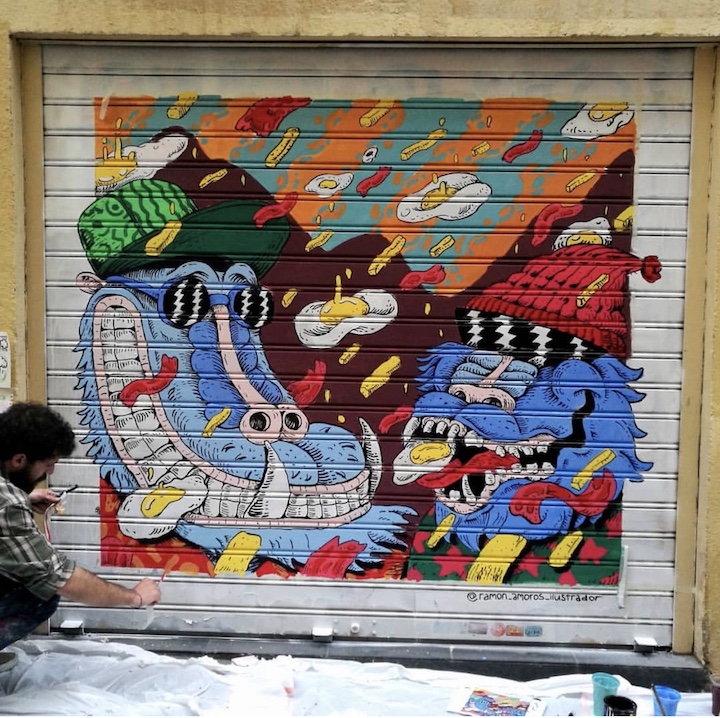
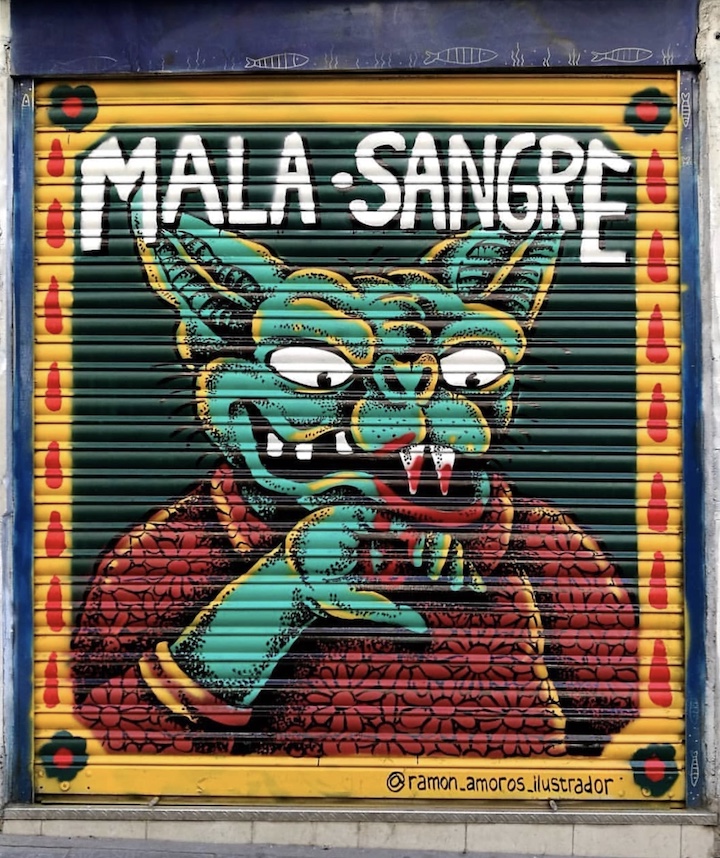
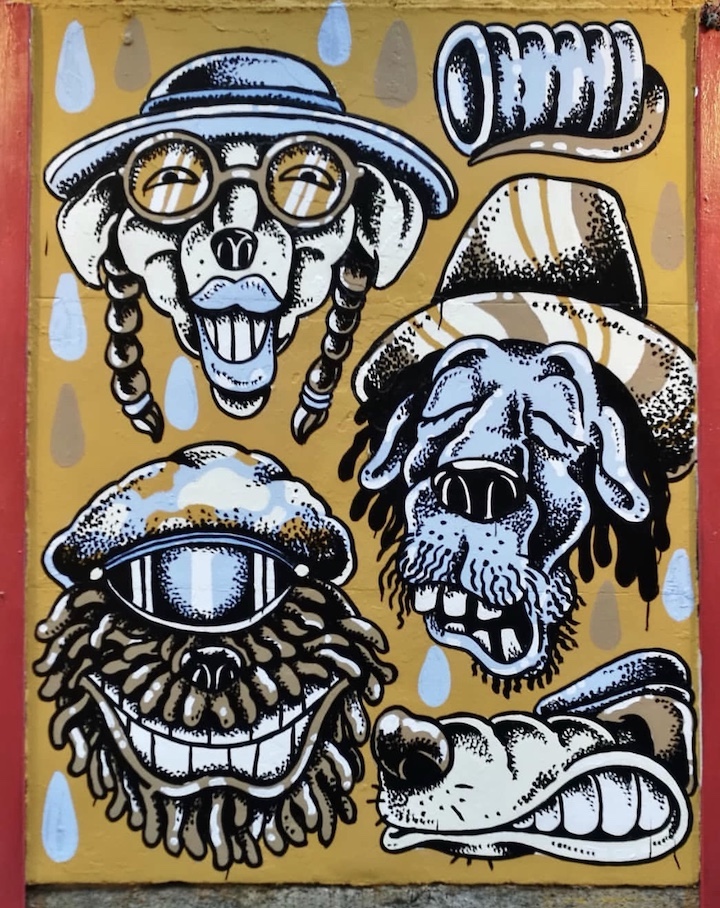
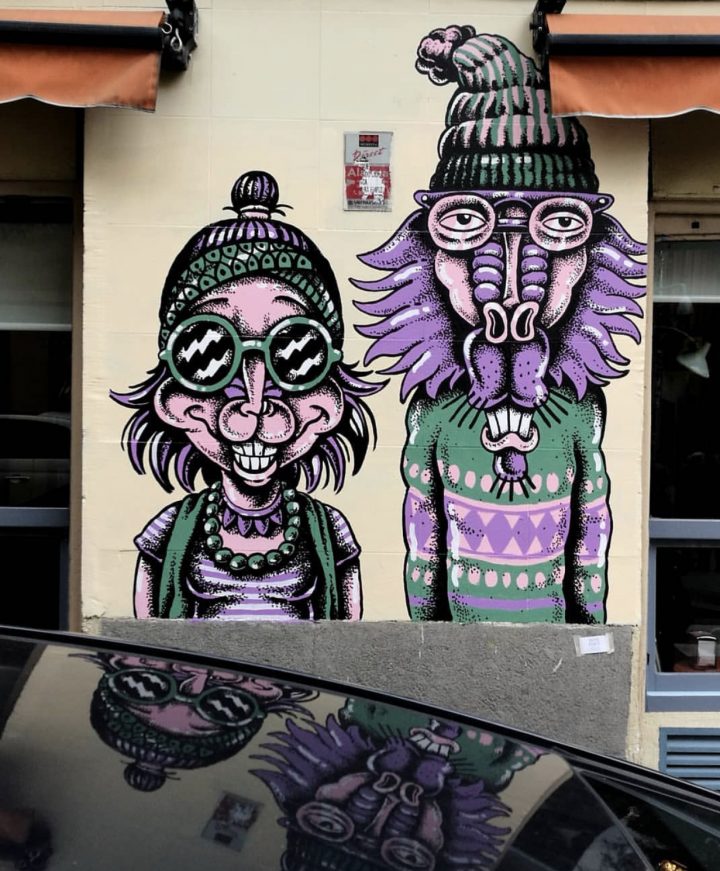
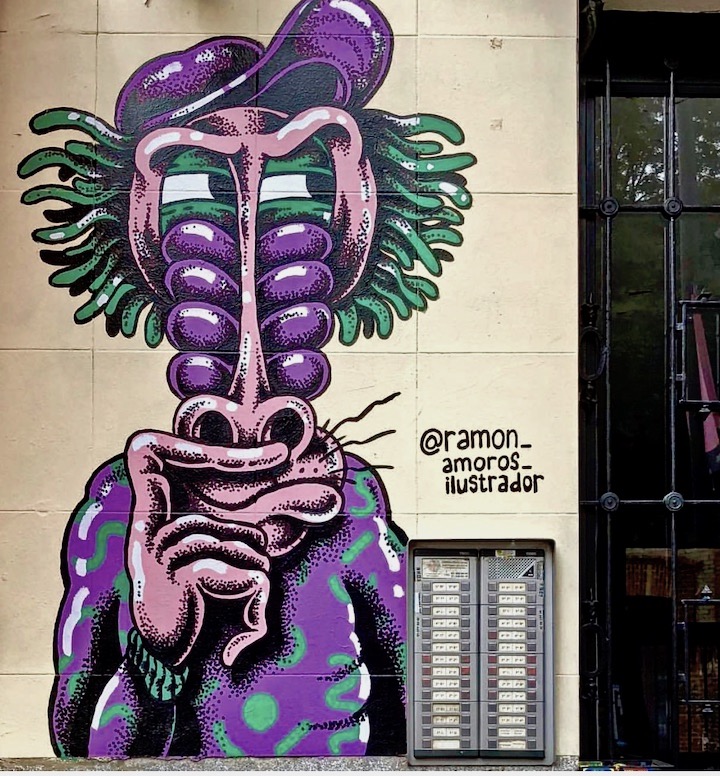
I came upon Ramón Amorós‘s delightfully playful aesthetic while street art-hunting in Madrid’s Malasaña neighborhood. I recently had the opportunity to pose some questions to the gifted Madrid-based Argentine artist who will be visiting the US this week.

You are primarily an illustrator. What stirred you to take your characters to the streets?

I’ve been drawing all my life. While studying for my Fine Arts degree, I took a class in wall painting. That was the first time I had a chance to see one of my characters on a large scale. A bit later, while taking an illustration course, I became friends with a couple of guys — including Sr Val and PoyoFrito — who were into graffiti, and I began to be much more aware of walls as an interesting artistic format. So it all began out of the simple desire to see my drawings on a bigger scale. I also really enjoy the dialogue that the public space allows between my work and the people around it.

Your characters are wildly imaginative. Can you tell us something about them? What inspires them? Where do your ideas come from?

Well, the aspect of drawing I most enjoy is making things up…creating stuff that doesn’t or can’t exist. To me that is the most fascinating quality of representation. I have always been keen on characters of all kinds…monsters, creatures, animals. Ever since I was a kid, I’ve been interested in animals; my mom used to get me all kinds of books about them — the weirder, the better. Later on, I began mixing different animal parts together to create my own. I enjoy studying features — eyes, noses, mouths — separately to see how I can combine them together to make them look funny or weird.
How have folks responded to seeing your characters in public spaces?

Surprisingly well! Painting in public spaces allows a closeness with viewers that few art forms permit. It brings people closer  — to praise the artwork or even to complain about it. It starts a conversation. I have always had good experiences. I love children’s reactions to my paintings, but what most surprises me is when older folks approach me and say how much they enjoy my work. This is something that I would have never thought possible, as I think of my style as one that appeals to young people. It’s fantastic that public space enables these kinds of conversations to happen!
I came upon your work in Madrid. Have you painted in other cities? 

I usually enjoy painting when I travel. I left a couple of small pieces in Brazil, Senegal and  — more recently — in Israel. I like the idea of leaving a mark in places I enjoy, and I also love the exchange between art, hospitality and the human connection that can come out of it.

When you paint outside, do you work from a sketch? 

Yeah. I usually want to know what the final result will look like. But I also enjoy some space for improvisation to keep things fresh. I usually add a lot of shading and details through lines or dots, and that gives a lot of room for small changes, corrections or additions that happen on the spot.

What’s ahead? 

Right now, I would like to develop my personal work further. I want to take on bigger walls and more ambitious projects. I’d like to connect with galleries and with more artists for collaborations outside of Madrid. I am getting ready to head to the US — to  NYC, San Francisco, LA and New Orleans. I will be in NYC from the 5th to the 16th,

That sounds great! Good luck with it all!

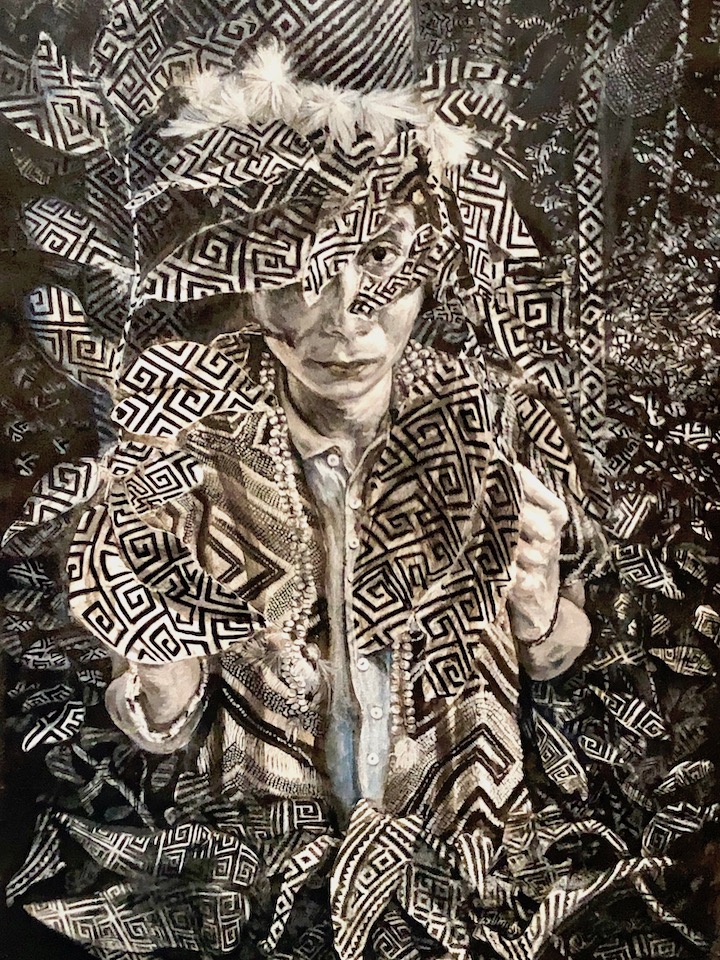
Photo credits: 1-4 Courtesy of the artist; 5 Lois Stavsky; interview Lois Stavsky

{ 0 comments }

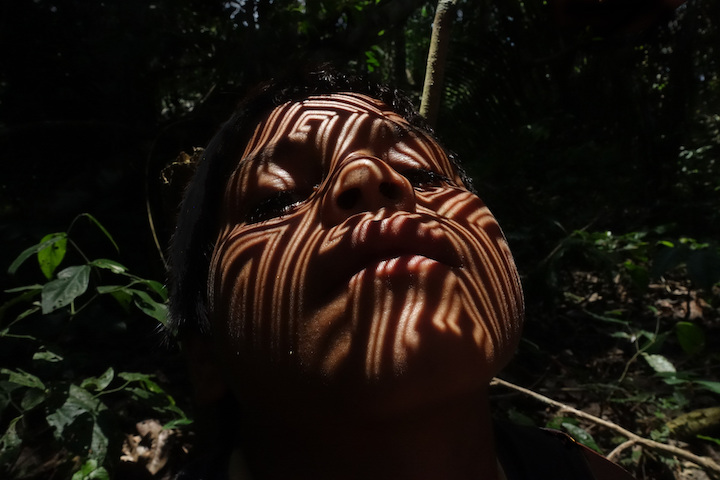
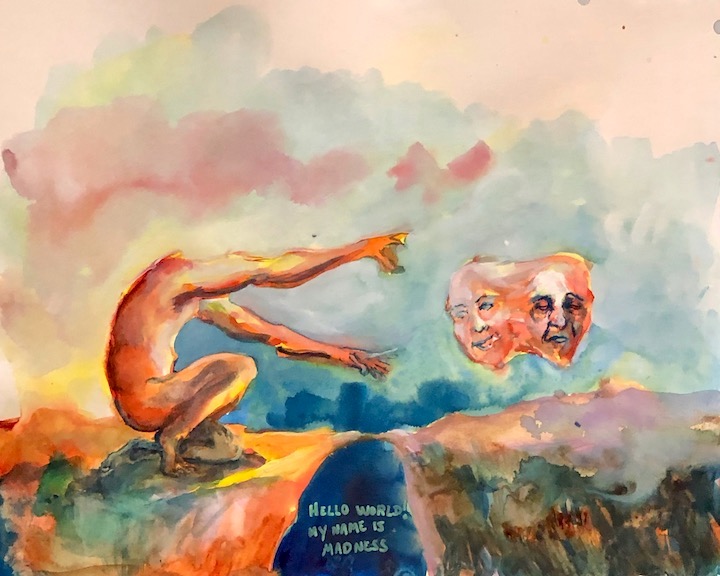
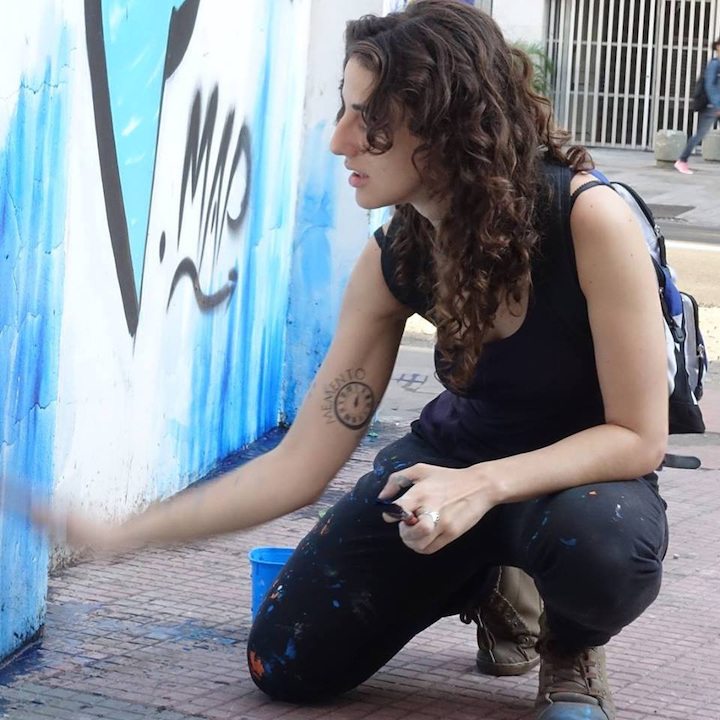
I’ve been mesmerized by Vanessa Rosa‘s distinctly beautiful and engaging aesthetic since I first came upon the Brazilian artist’s mural painting several years ago — as part of the Faces on the Blue Wall project — outside Lisbon’s Julio de Matos Psychiatric Hospital. We initially met up as she was beginning her residency at Red Hook’s Pioneer Works in 2017 and reconnected last week.

You are quite nomadic! Can you tell us a bit about your recent travels and adventures? Where have you been in the past year?

Yes! I visited Thailand for the Dinacon, the Digital Naturalism Conference, an experimental conference about exploring new ways of interacting with nature. I then traveled to China, where I visited the Shanghai K11 Art Mall, the first art mall in Mainland China. While in China, I also visited fiber optics fabric factories in Shenzhen, because I am interested in creating crazy patterns with this material. Following a brief visit to NYC and Boston, I spent time in a music producer’s space in Sao Paulo, where I painted and got to know rappers — especially Nego Bala — from the favelas. I spent the month of September in the Amazon beginning an artistic partnerhsip with the extraordinary shaman and artisan, Same Putumi.

In October, I traveled to Frankfurt to represent my family’s publishing company, Viajante do Tempo, at the Frankfurt Book Fair. From Frankfurt I went to Berlin and then London. Finally back in Brazil, I produced a show at the Museum of Image and Sound in São Paulo, and also worked with Same Putumi and with my friend, the architect Veronica Natividade.
Wow! You are amazing! What brought you back to the US?

I’d been invited to participate in next year’s Smithsonian Folklife Festival, an annual exposition of living cultural heritage on the National Mall in Washington, DC. It  is DC’s largest cultural event. In 2020, the festival will explore how diverse domains of cultural knowledge—from religion to design to science—shape the ways we understand, experience and respond to ever-changing natural, social and built environments.

And why New York City? Why did you choose to work in New York City?

I want to make things happen. And for someone who wants to have access and impact, no other city is as important as this one. I am, in fact, in the process of applying for an artist’s visa.

Your studio space here at the NYC Resistor in Downtown Brooklyn is extraordinary in terms of its equipment and resources.

Yes. My residency here at the NYC Resistor is ideal. We meet regularly to share knowledge, hack on projects together and build community. It is the perfect match as it is so rich in technology. And interacting with its other members advances my research and the projects that I’d started earlier with Same Putumi.

Can  you tell us something more about your mission — particularly regarding your collaborative work with Same Putumi?

My mission is to save the Amazon through the recognition of knowledge systems possesssed by indigenous groups. The Amazon’s genetic diversity is more important than gold. We must recognize and strengthen indigenous people’s knowledge systems. It is a knowledge they have attained from a high level of observation that no scientist can reach.

And what about your new drawings?

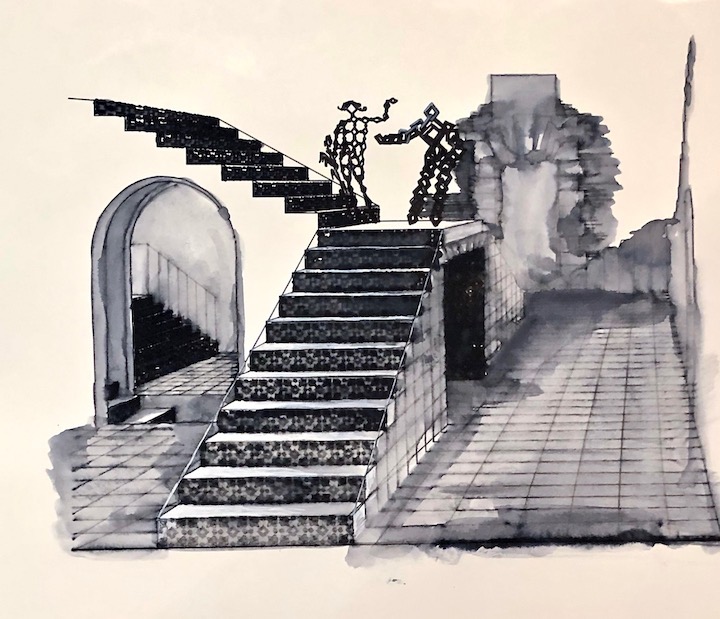
I’m combining 16th century drawings — by the Italian artist Serlio — on how to use linear perspective with Islamic patterns and 17th century crazy character drawings by Braccelli. And I’m doing this with a drawing machine!

What about public art? Mural Art? Will you be doing anything here in NYC? Can we expect to see anything soon?

Yes! I will keep you posted!

That sounds great! I’m looking forward!

Note: On Saturday, July 13, 1-4pm, Vanessa will be presenting a workshop on watercolor at the NYC Resistor, 87  3rd Avenue, 4th Floor in Brooklyn. Information and tickets are available here.

Photo credits: 1, 4 & 5 Lois Stavsky; all others courtesy of the artist; interview conducted by Lois Stavsky

{ 1 comment }

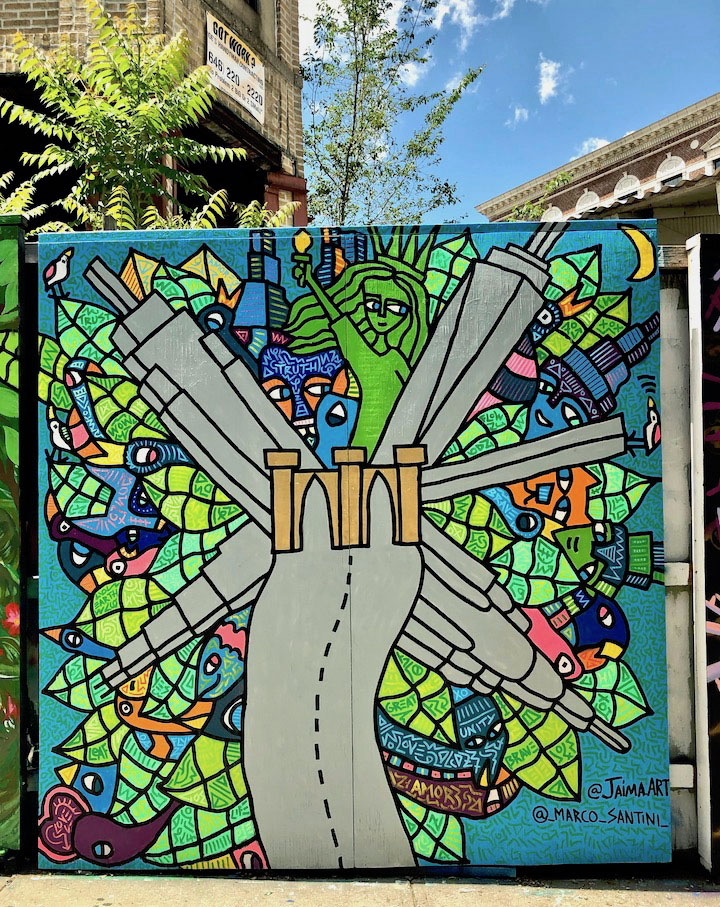
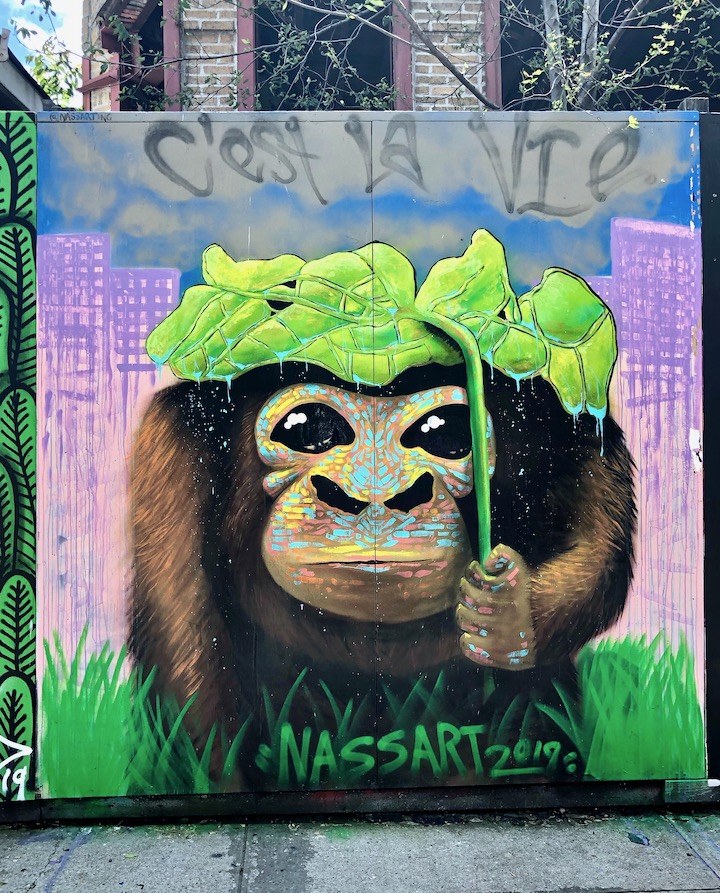
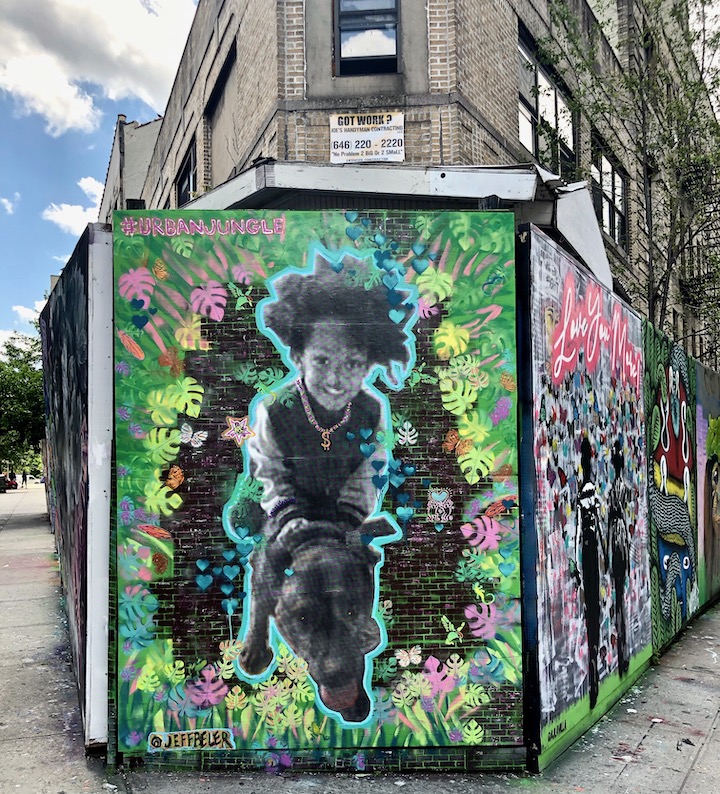
Underhill Walls — a  model grassroots project in the Brooklyn neighborhood of Prospect Heights —  has once again morphed. This time it is a canvas for 17 diversely enchanting murals reflecting the theme Urban Jungle. While visiting it last week, I had the opportunity to pose a few questions about Underhill Walls— its origins and more — to its indefatigable curator, Jeff Beler.

Underhill Walls continues to bring so much intrigue and beauty to this neighborhood. When did this project first begin?

The first set of murals surfaced here — at St. Johns Pl. and Underhill Avenue — back in the fall of 2015.

How were you able to access these walls? The concept is brilliant. It reminds me of the Centre-fuge Public Art Project that for years transformed an East Village eyesore — a neglected DOT trailer — into a rotating open-air street art gallery.

I live nearby, and I had been eyeing those walls for 10 years. They’d been ravaged by a fire, and they’d been neglected. I eventually contacted the owner of the three-floor abandoned building who was open to the concept of beautifying the property.

And then what? How did the actual transformation take place?

I started to put a team together. The first step was to build panels. And the first artists to participate in the project back in 2015 were: UR New York, Fumero, Badder Israel, Raquel Echanique, Col Wallnuts and Sienide.

Did you collaborate with any organizations at the time?

For our first project, we coordinated with the non-profit Love Heals. Titled “What’s Your Sign? Mural Project,” our first project’s mission was to raise public awareness for the HIV/AIDS crisis among  Black and Latino youth.

What are some of the challenges you’ve faced in seeing this project through these past few years?

Selecting artists with the right chemistry to work together. When that happens, everything flows smoothly and beautifully. And this is exasctly how “Urban Jungle” played out.

How often do the murals change?

Twice a year. Every May and October. Since 2015, we’ve had nine rotations.

What’s ahead?

So long as the panels are here, we will be here! And each project will continue to reflect a distinct theme.

Fabulous!

Images

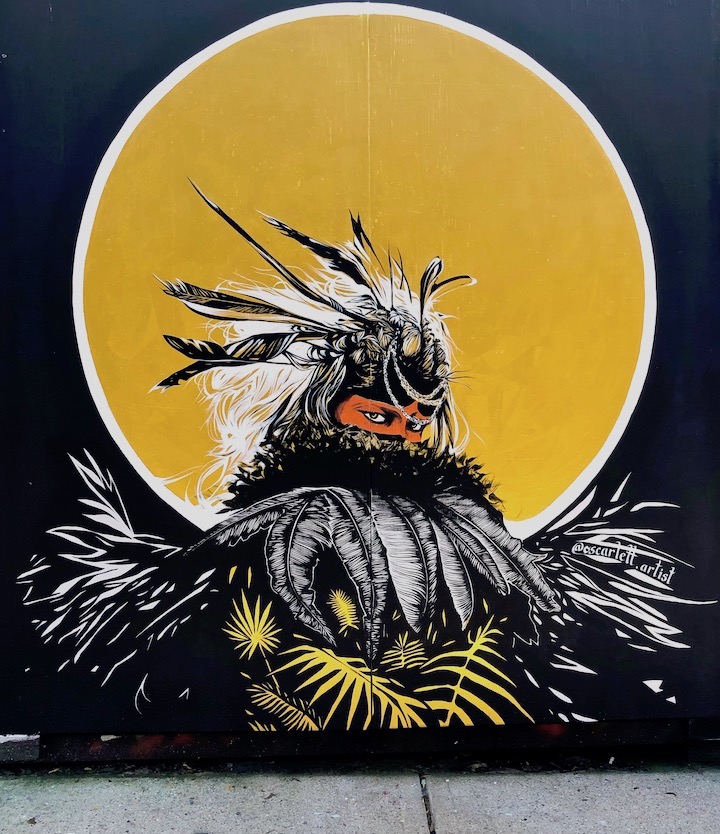
1  Oscar Lett

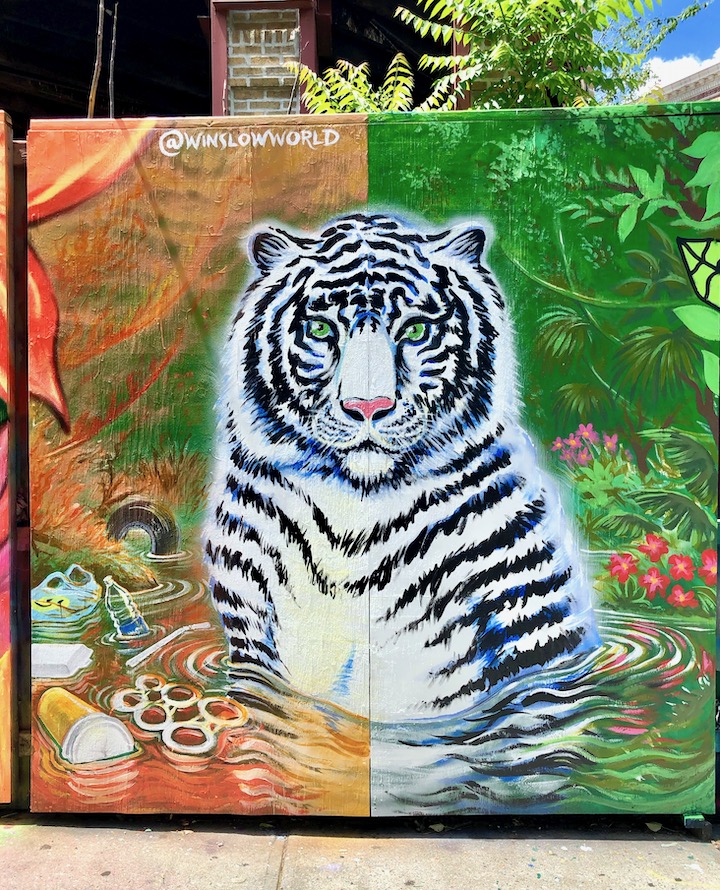
2  Justin Winslow

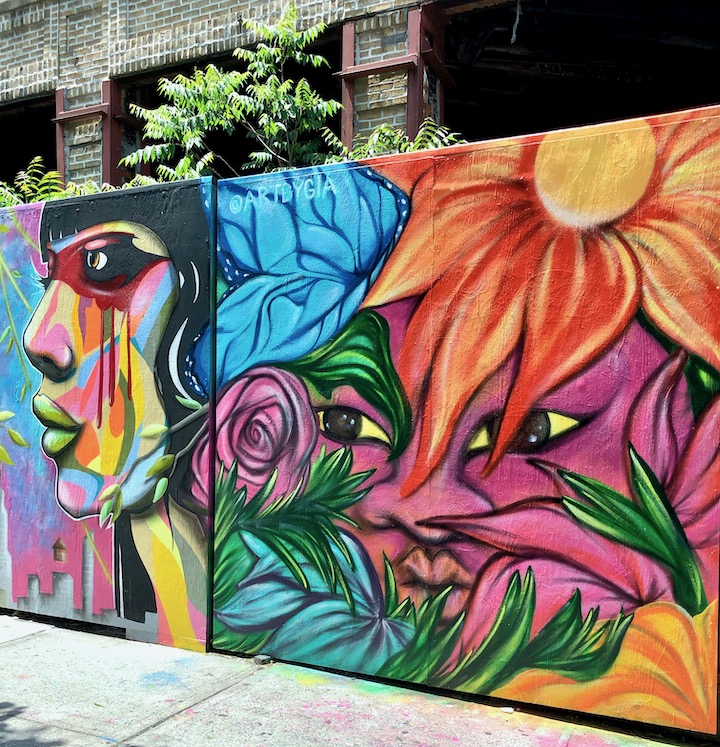
Ralph Serrano (L) and Giannina Gutierrez (R) 

4  Jaima and Marco Santini collaboration

5  Nassart

6  Jeff Beler

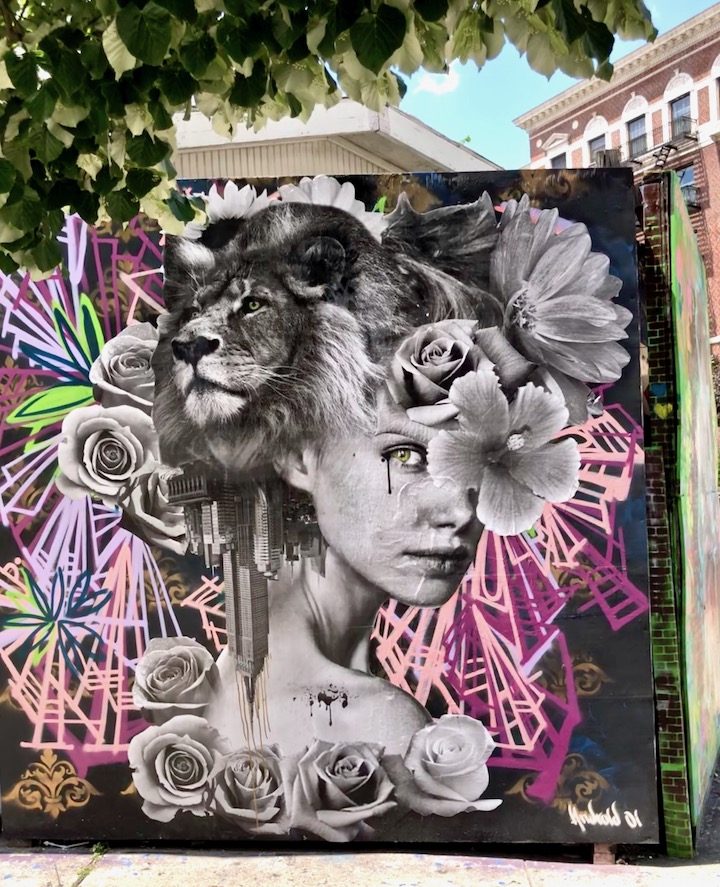
7  Android and Miishab collaboration

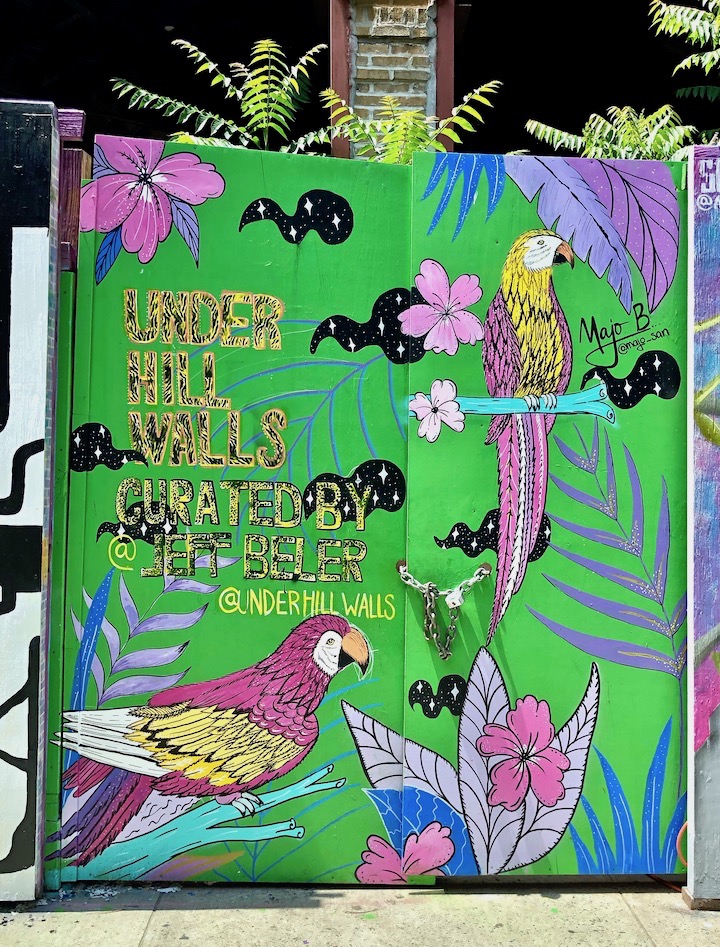
8  Majo

Interview with Jeff conducted and edited by Lois Stavsky; photos by Lois Stavsky

Keep posted to StreetArtNYC Instagram for more recent images from Underhill Walls.

Note: Hailed in a range of media from WideWalls to the Huffington Post to the New York Times, our Street Art NYC App is now available for Android devices here.

en-play-badge 2

{ 0 comments }

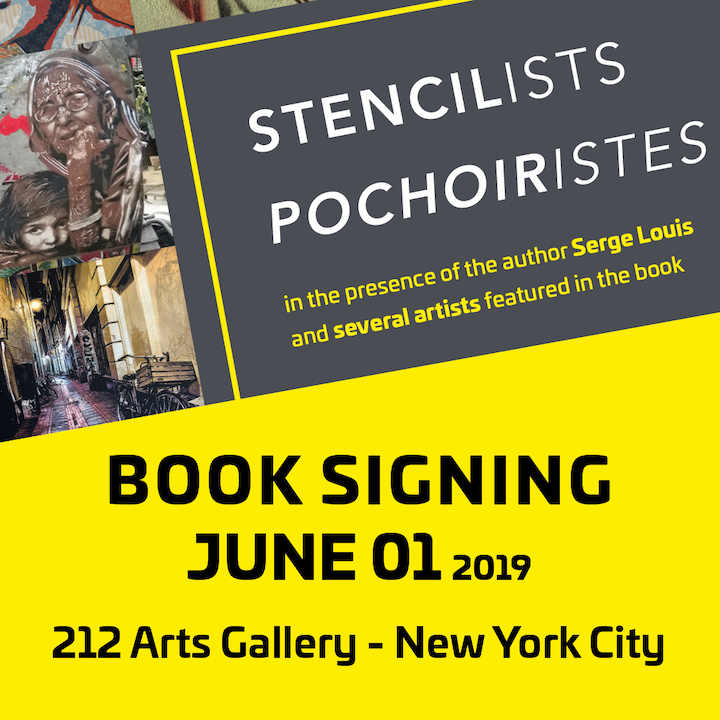
Comprised of interviews with 17 American and European artists who use the stencil technique as their principal means of expression, STENCILISTS POCHOIRISTES, by art and culture enthusiast Serge Louis, has arrived in New York City! Featuring 444 pages and 273 illustrations, along with an introduction by stencil art connoisseur Samantha Longhi, it is Serge Louis’s second book devoted exclusively to stencil art. I recently had the opportunity to speak to Serge:

What spurred your interest in stencil art?

I’ve always been passionate about alternative forms of expression and how and why they surface. Why do folks create stencils? And how do they go about sharing them with others? And stencil art particularly appeals to me because it’s an ideal way to translate and share a message.

Yes. Stencils are quite an accessible means of communication. When did you begin working on this book?

I’ve been interested in stencil art for over a decade, and I had already published one book on the theme. Pochoirs et Pochoiristes à Bruxelles specifically focuses on Brussels’ rich stencil art scene. Three years ago, I began this book of interviews and images produced by artists in both America and in Europe.

Have you any early memories related to stencil art? Or any that stand out?

My earliest memory is of a very simple black and white one. Every stencil stands out in some way. Each one is something new. Each one is a surprise. Since I started paying attention to stencils, the way I view my environment has changed. Each city is distinct. And when I visit someplace new, I feel as though I’m on a “hunt.”

I can certainly relate to that! What were some of the challenges you encountered in producing this book?

The main challenge was convincing the artists to give me the time I needed to interview them in depth. Their time is precious, and they had to feel that taking the time to share their experiences was worthwhile and would interest others.

How can folks get a copy of STENCILISTS POCHOIRISTES?

Along with several of the artists, I will be at 212 Arts — 523 East 12th Street — on Saturday afternoon, June 1, and I will be signing copies of the book. You can also order the book through the publisher.

What’s ahead?

I’ve begun sorting through photos for my next book, and I have already interviewed six artists.

Good luck with it all! And Saturday’s book signing at 212 Arts is certainly a cause for celebration!

Interview conducted and edited by Lois Stavsky; photos courtesy of Serge Louis

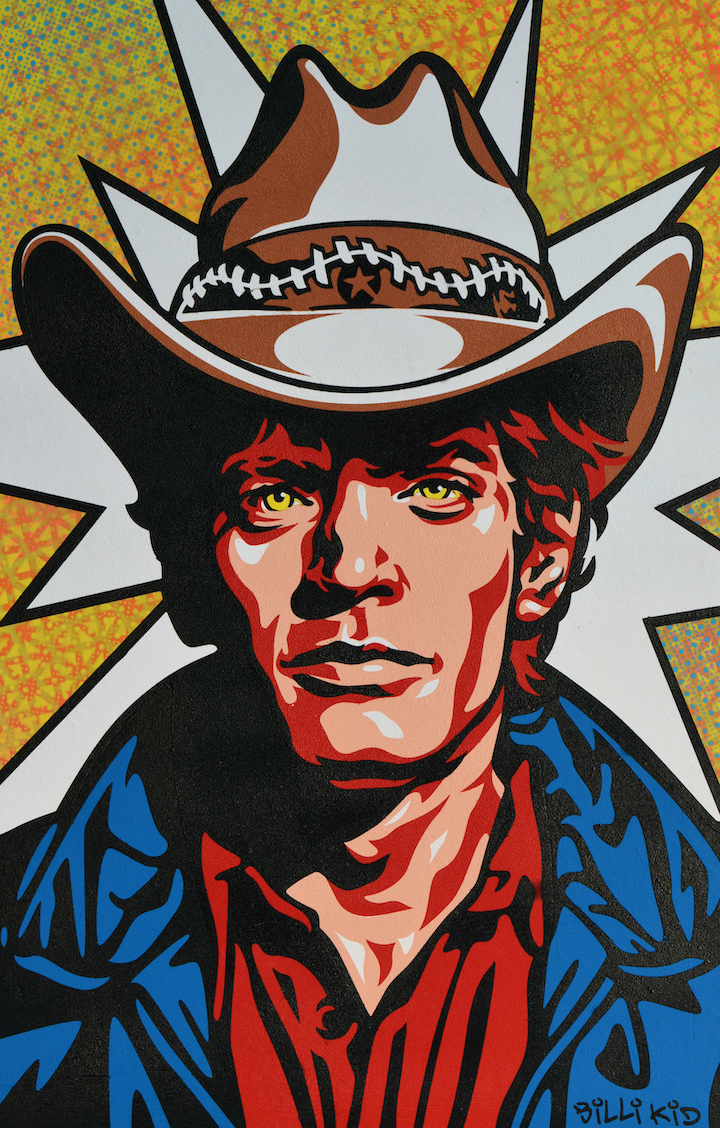
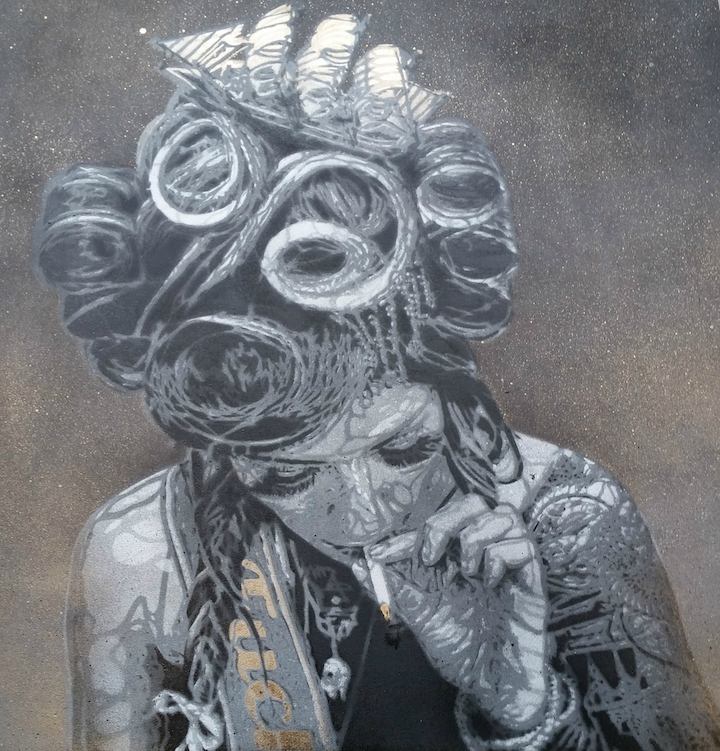
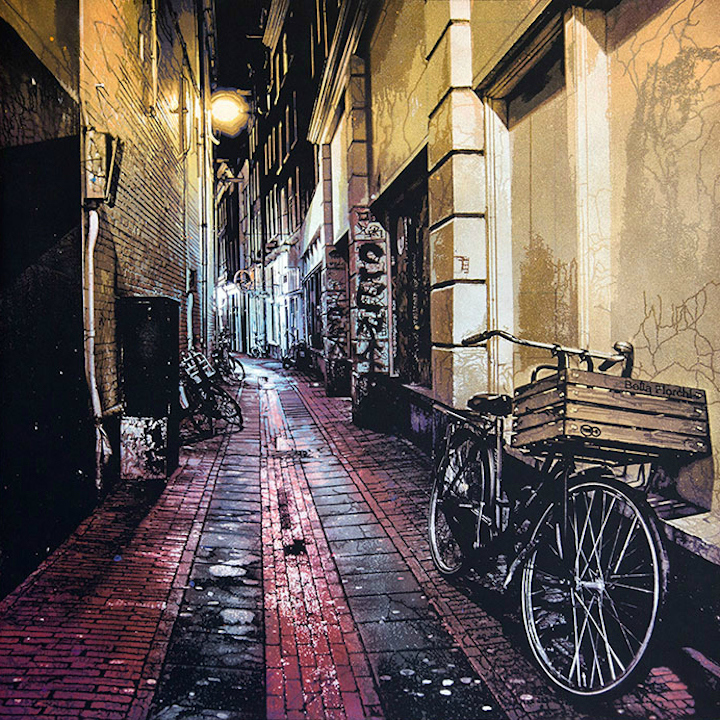
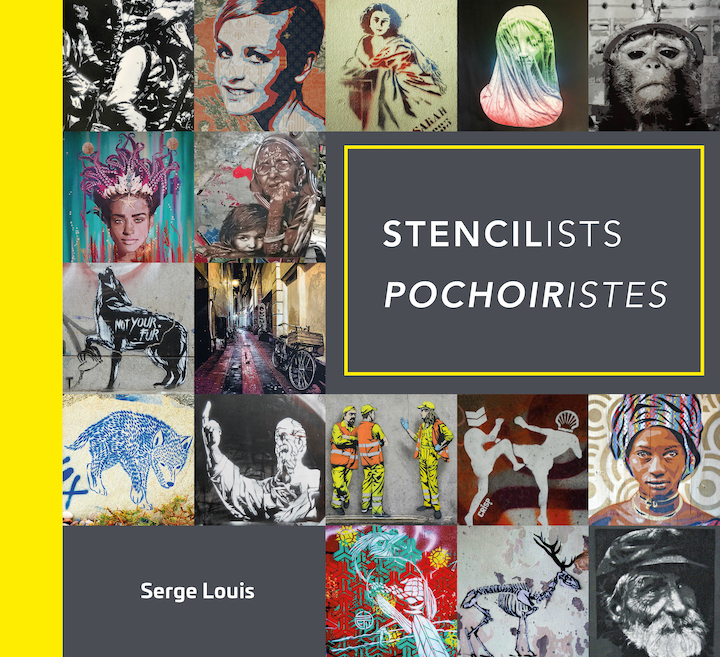
  1. Cover of book featuring stencil art by those artists interviewed for STENCILISTS POCHOIRISTES:  Ben Spizz, Billi Kid, Crisp, Dave Lowell, Dipo, Docteur Bergman, ENX, Jaune, Jinks Kunst, Logan Hicks, Nice Art, Niz, Praxis, Raf Urban, Spencer, Stew and Tripel
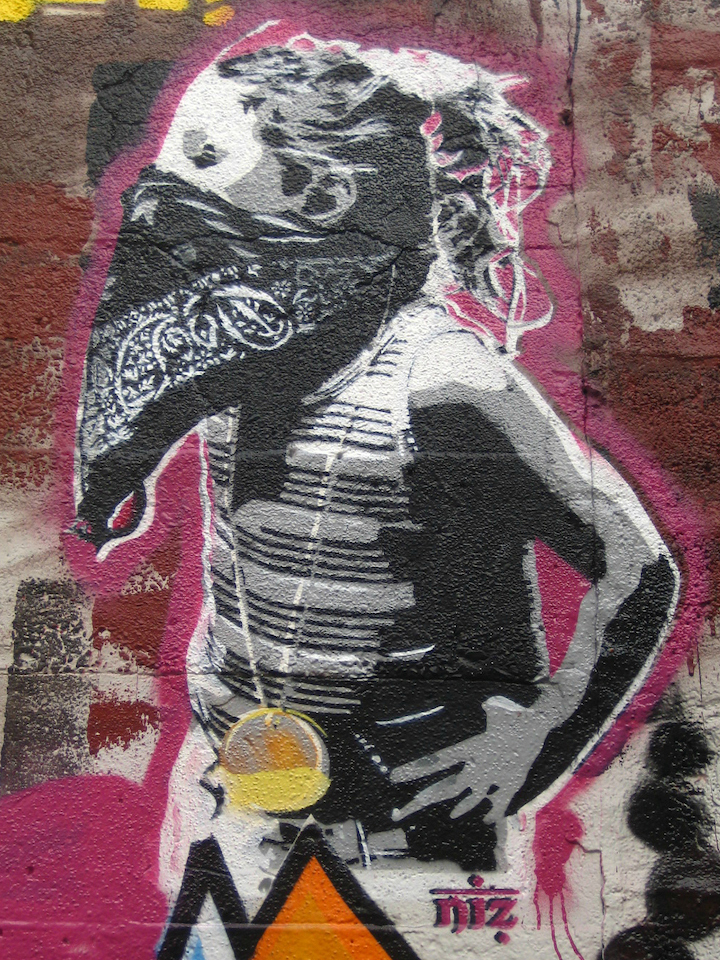
  2. Austin, Texas-based Peruvian native Niz
  3. Brooklyn-based Colombian native Praxis
  4. New York-based Colombian native Billi Kid
  5. Austin, Texas-based Dave Lowell
  6. Brooklyn-based, Baltimore-raised Logan Hicks

{ 1 comment }

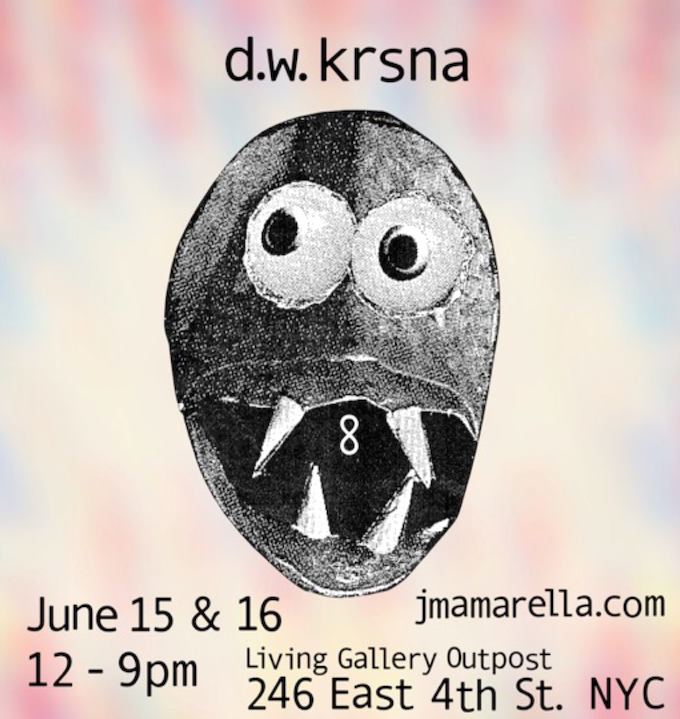
I recently had the opportunity to catch up with Jason Mamarella, as he readies for today’s print release and his upcoming exhibition at the Living Gallery Outpost.

When I first started exploring NYC’s streets in pursuit of street art —  well over a decade ago — I saw your now-iconic character, dint wooer krsna, everywhere! He was one of the most prolific images around town. He has since been featured in over two dozen books and has made his way onto a range of media including the opening scene of Exit Through the Gift Shop. You’d once told me that dint wooer krsna was conceived as your online identity at about the same time that MySpace was born.

Yes! It was online before it was on the streets. I did not want to reveal who I was. It was critical that my identity remain hidden at that time.  Someone had threatened to shoot me over a woman, and I had reason to believe he was quite serious.

What about the name krsna?  I’ve always wondered about it.

It’s a reference to Hare Krishna. I used to hang out in Hare Krishna temples. The Hindu God Krishna was a vegetarian — as I am. He was a friend of the cow.

What motivated you to hit the streets with dint wooer krsna

I was newly divorced, and I needed to get out of the house. I’d been tagging for years — since I was a teen — but I wanted my character to stand out. krsna was my first wheatpaste.

Have you ever been arrested?

I’ve been arrested three times for vandalism. The first was in 1993 at an after-party at Ferry Point Park. Together with Aones WTO, Kech & James “V.E.” Conte, R.I.P,  I was caught tagging the Bronx Whitestone Bridge. The penalty was  community service and five years ACD. Then in 2008, I was caught and identified online for getting stencils up in Hoboken. After nine summonses, a judge yelled at me for 20 minutes. Nothing more. But I had to pay $3,000 to have a lawyer stand next to me in court. And in 2010, an undercover grabbed me on 2nd Avenue in the East Village for two stickers I’d put up. The cop told me that I was responsible for bringing kids into this “degenerate lifestyle,” and he called the Vandal Squad.

Had you any particular influences? 

James “V.E.” Conte, R.I.P. He got up everywhere. He was obsessive compulsive. I modeled myself on him — trying to get up as much and as often as I possibly could.

For several years you were largely absent from the streets.

Yes, in 2013, I began focusing, almost exclusively, on my studio work.

So what brought you back?

I guess it was always in me. It was just dormant for awhile.

How has the street art scene changed since you first hit the streets with dint wooer krsna?

Just about everything after 2010 is irrelevant; it’s all about legal permission spots. Much of it is devoid of any originality or intellectual merit.

What — do you suppose — is responsible for this change?

Projects like The Bowery Wall and the film Exit Through the Gift Shop have pushed street art so much into the mainstream that it has become trendy. People just want to hop onto the bandwagon.

Yes. It’s certainly lost its subversive appeal to those of us who were initially drawn to that aspect of it. How has your art evolved over time?

I’m leaning more towards abstraction.

You have a new hand-embellished print, Jibb Wibbles, about to be released. I know that your first three prints sold out quickly. How can folks get hold of this new one?

It’s available from House of Roulx at this link. All proceeds will go to benefit Little Wanderers, a non-profit that rescues needy cats.

And can you tell us something about your upcoming exhibit at the Living Gallery Outpost?

I will be showing my new paintings from noon to 9pm on the weekend of June 15th and 16th. They’re dark.

That should be interesting! I’m looking forward to seeing them all!

Interview conducted and edited by Lois Stavsky

Photo credits: 1 Katherine Zavartkay; 2 Lois Stavsky, 2011, East Village; 3-5 courtesy of the artist

{ 0 comments }

The following guest post is by Houda Lazrak

While in Vienna, I had the chance to meet and talk with Jakob Kattner, founder of Calle Libre, the impressive mural festival that has been enlivening Vienna’s 6th and 7th district walls since 2014.

How would you describe Calle Libre? And why the Spanish name?

I would describe Calle Libre as a festival of urban aesthetics. My doctoral thesis focused on urban art in South America. I researched it there for 14 months, and this festival is my way to give back to the artists who helped me — who let me live with them and document their lives.

Where in South America did you do your street art research?

Colombia was the first country I visited. Stinkfish became a friend. He introduced me to the local scene, which really paved the way for me to explore further. I then went to Brazil, where I found a unique urban art style whose history is unfamiliar to most people. And, finally, Argentina. There I could feel how the weight of dictatorial history had impacted the street art scene but, also, how artists finally found their freedom.

How has Calle Libre evolved since 2014?

 We have broadened the programing every year. It started with live painting at the Danube Canal, along with an exhibition. We then added workshops at mumok. And the following year, we hosted film screenings, organized performances and presented artist talks. We also started doing annual signed screen print editions in collaboration with Limited Edition Art Prints aka LEAP. Among the artists we work with are Millo, Alfalfa, Inkman, Rodrigo Branco and Stinkfish. And in 2017, we launched guided tours.

What would you say is your main mission?

Intercultural exchange through art. We always include South American and local artists.

Is this your full time job?

I run a creative advertising agency called Warda Network. We produce creative, video and digital content. Actually, the agency does the documentation for Calle Libre, but the festival is its own separate nonprofit entity.

That’s why your online documentation is so great! Can you tell us something about your background?

I studied fine art and cultural theory. I am also a rapper. I’ve always wanted to work with moving images. I directed my own music video and that’s how I met my current partner at Warda Network.

Who is your team? Who helps you produce Calle Libre?

We are a team of seven. My fiancé, Laura, and I are the curators. When we started, it was just the two of us — and we still can’t believe how we managed to create an entire festival! Today, we rely on our team.

How many murals have you produced so far? 

 More than 35 but I am not sure how many are still up.

How have people reacted to Calle Libre?

It has been all positive feedback, especially from people who live near the walls that are painted during the festival. There is always a person from the team at each wall, and we have heard great things. We’ve also had funny incidents.

Such as?

When Mantra painted his 3D butterflies, someone asked us how he was able to put glass over such a big wall. And when Nychos painted a naked woman with a parrot on her shoulder in his signature Jugendstil-inspired style, a woman — whose house window faced the mural — asked why he was drawing her.

Do you focus on specific neighborhoods?

Each year we try to include new districts, but the 6th and 7th are where we have the most walls. It’s also where most of us live. These districts like the impact we’ve had, so we have good relationships with them. We try to pair artists with walls in relevant contexts. For example, the mural by Stinkfish — featuring a father carrying his child — is located on a kindergarten school property.

Have you collaborated with any museums in Vienna aside from mumok.?

The Albertina Museum contacted us about a possible collaboration on a Keith Haring exhibition. When we received the news, it was like we were knighted!

How do you get the funding to produce such a significant festival?

We get public funding from the city. We also received money from the European Union our first year. We apply for project grants, and we collaborate with local partners, based on where the walls are. It’s like playing the lottery! We never know how the next festival will be funded. We work for free and we love what we do, but it’s nice when the city and citizens give back. Every time we walk past the walls, we feel a sense of gratification.

Who are some of your favorite local artists?

Perk Up, Skirl, Frau Isa

What has been your biggest challenge since you first launched Calle Libre?

Convincing building owners to let us paint the walls! That’s definitely the hardest part.

Are there any artists on your wish list?

Inti, Pixel Pancho, Herakut, Os Gemeos. I also want to bring talented artists from South America who are not yet well-known in Europe.

I’m looking forward to seeing what’s next!

Images

1 Stinkfish

2 Kashink

3 Mr Woodland

4 HNRX

Mantra

6 Millo

7 Koz Dos

Interview and images by Houda Lazrak

Note: Hailed in a range of media from WideWalls to the Huffington Post to the New York Times, our Street Art NYC App is now available for Android devices here.

en-play-badge 2

{ 0 comments }

If you haven’t yet had your portrait drawn with one line in under one minute by the wonderfully passionate, nomadic Brooklyn-based 0H10 M1ke, tomorrow is your chance. From 6 – 10pm, Mike promises to do that and lots more at 198 Allen Street. Last week, we met up and caught up a bit.

When we last spoke in 2014, you said that your goal was to create 100,000 one-line matchbox portraits? Mine was 11,206! How close are you to your goal?

My most recent was #13,021! I’ve done quite a few at 17 Frost, at 198 Allen, on the trains, on the streets — anywhere I can!

How do you approach folks? And how do they respond?

I simply say, “Give me a New York moment; I’ll draw your portrait in one line on a matchbox in one minute.” They generally respond with skepticism. But once they see the portrait I’ve created, they like it.

In addition to your ongoing matchbox project, what other projects have engaged you as of late?

I’ve been preparing for my upcoming solo show and performance If Basquiat and Keith Haring had a baby…reimagining the works of Basquiat and Haring in one-line drawings. I’ve, also, been working on creating sculptures inspired by Warhol; instead of using Brillo boxes, I use Nike boxes. And I’ve been staging wrestling as dance, which will be projected –along with large portraits — onto a huge screen outside 198 Allen.

What inspires you to keep creating?

I’m compulsive. I have to. And people, the street art community in particular, have been welcoming and supportive.

Are there any particular artists out there who continue to influenc your aesthetic?

Obviously Haring and Basquiat. But other main influences include UFO and Neckface.

Anything else new — in terms of your art-making?

I’ve been getting my original drawings into hand-made books. I recently constructed a 3o-pocket rotating magazine rack, and I’ve filled it with all hand-made original artbooks and magazines. I also create on a larger variety of surfaces.

What’s ahead?

Murals, prints and reproducibles.

Good luck with it all!

Note: You can keep up with 0H10 M1ke here — now that he’s posting on Instagram!

Interview conducted and edited by Lois Stavsky; all images courtesy of the artist

{ 0 comments }