interview

Graffiti-A-New-York copy

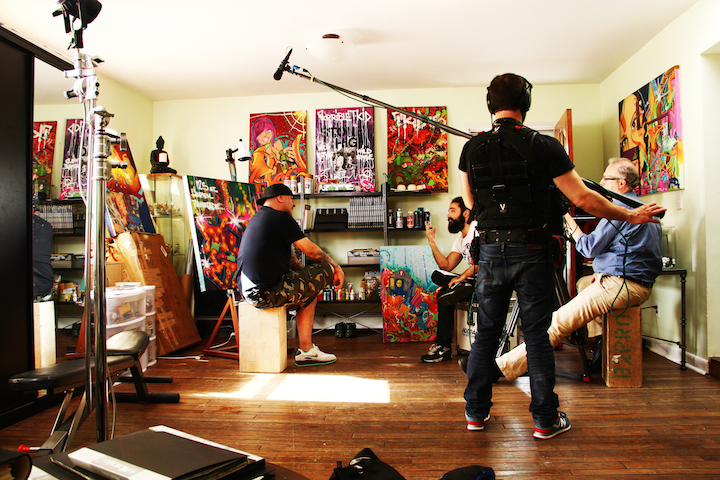
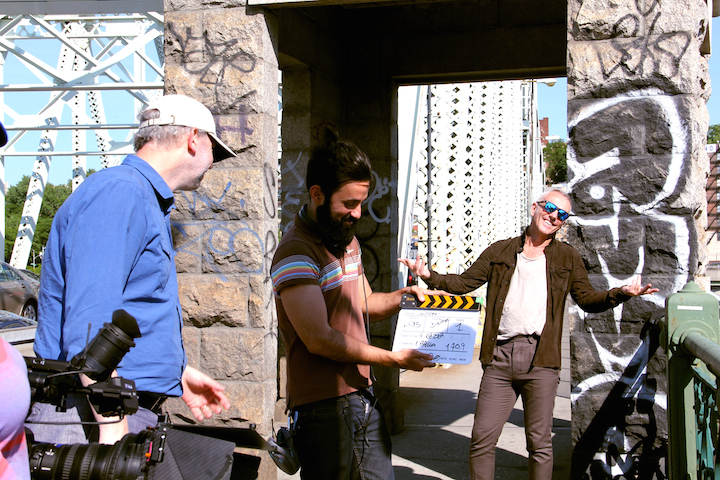
Aired last year in Italy, Sky Art’s underground documentary hit Graffiti A New York brilliantly chronicles the history of graffiti in NYC focusing on several key figures in the scene. After viewing the documentary, we had the opportunity to pose some questions to its producer and director Francesco Mazza.

You grew up in Italy. What spurred your interest in NYC graffiti? And how were you first introduced to its culture?

In the early 90’s a number of original graffiti writers from the Bronx moved to Italy looking to recover — thanks to the good weather and the healthy food — from the “crazy 80’s” in New York. They, maybe, needed what we now think of as a “detox” after the tumult.  At the time, graffiti writing had already come to the European consciousness through the movie Style Wars and the book Subway Art, but because of the influence of these newly migrated Masters, Italy, unlike the rest of Europe, developed a graffiti style akin to that of New York City’s.  It was the kind of style created by Phase 2, who moved to Italy himself, back in the 70’s. The walls of my neighborhood, Milano Lambrate, in the early 90’s looked exactly like those in the Bronx during the 70’s and the 80’s.

To us kids playing soccer in the street, those wall paintings were a sort of a mystery, and kids love mysteries. So, out of curiosity, we started asking questions to the older guys, and we all got involved.   From that point on, graffiti became an essential part of our lives — in our neighborhoods and in our identities as individuals.

graffiti-A-New-York-process-shot

What made you decide to produce a film on the topic? 

Having lived in New York for three years already, I was looking for a way to show the city to an Italian audience from a fresh and original perspective. I asked myself, “What do I know best?” The answer was clear: graffiti. I figured that behind the history of the graffiti movement, there was the history of the city itself. Really, graffiti writing could flourish only because of the terrible financial situation of New York during the 70’s. I always found it fascinating that all the crime and pain and blood of the 70’s spawned, at least, the most vibrant art movement the world has ever seen.

How long did the process take — from its conception to its completion?

The film itself took about a year to be made, but there are some elements of the history that I’d still like to add. I’m hoping for the opportunity to re-shoot some parts and add additional ones for a US release.  I’m searching for funding right now.  As great as it was to bring this to the Italian market, it has become clear to me that the documentary was the kind of record of a movement that deserves to be a part of the American canon, as well.  It’s about NYC. It documents the scene decade by decade. It’s really important to find a way to bring this history “home.”  Hopefully, I’ll find the financial backers; and due to the nature of the film, I’d love to partner with a museum, if possible.

graffiti-A-New-York

How did you decide which artists to include?

“Graffiti writer” is a label. When you look beyond the label, there is literally everything. Artists, addicts, entrepreneurs, fools, poets, murderers; you name it, I saw it. Right off the bat, you have to understand that you won’t be able to get close to everybody if you want to stay somewhat safe.  It’s also very hard to gauge the importance of the single artist. Is a graffiti artist important because he had or has a great style? Cool, but what if the said writer has done only a couple of hits and nobody in the community cared about him? And what if you focus on the quantity, but then the style of that writer — whose name was everywhere — literally sucked?

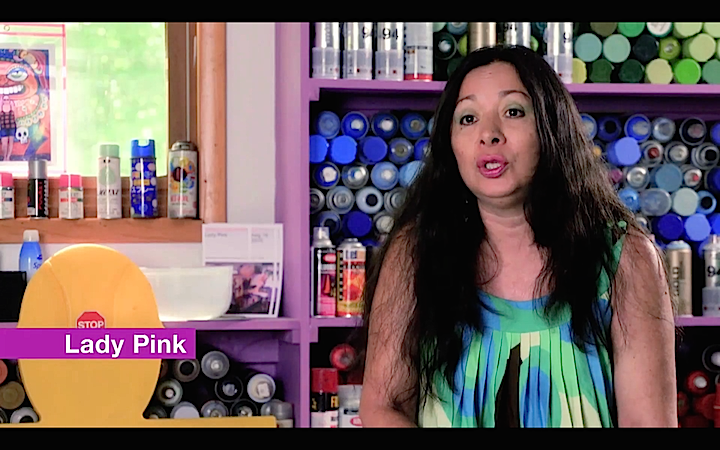
There was a balancing act.  I, of course, chose artists with historical importance, but I also reached out to the writers that I like and that inspired me when I was a kid. Fortunately, most of them were willing to help me with the project.  I also felt strongly about making sure women were represented in the film.  They were absolutely a part of the movement, but sometimes when history chronicles events, women don’t always get the due they deserve in the record.  It was important to me to not fall into that trap as a director.

lady-pink-graffiti-artist

How did the artists respond to you?

Some of them were skeptical at the beginning, and they were absolutely right. When mainstream media talks about graffiti writing, they tend to create confusion. If we consider the art world, I think that after the 19th century, nobody considered an artist as someone who can only “make something look pretty.” Nobody thinks that Pollock, so to say, was an amazing artist because he could simply “make a canvas look pretty”; there was a complexity that was beyond — or sometimes even consciously lacking — beauty.  For some reason, all around the world, when media, or institutions, or public opinion deal with graffiti writers, they consider the graffiti writers’ work just on their ability to “decorate” a wall in a happy, colorful way. To me, and I think to all graffiti writers, there is, indeed, decoration. Maybe beautiful, wonderful decoration, but graffiti writing is also something else. Graffiti writing points right to the contradiction of contemporary society where we all matter. We all pay taxes and have the right to vote —  but, at the same time, to what degree do we really matter to the machine?  I think it’s a question everyone asks. As a result, millions of individuals decide to express their identity, their presence in the world by writing on a wall, consciously facing the consequences of their deeds.

When I walk in my Crown Heights neighborhood in Brooklyn and I see a portrait of a dragon on a shutter, I think, nice illustration, but nothing beyond that. When I see a rough tag on a wall, I don’t say, “Look at that! So pretty!” but I think about a guy or girl that, despite the risk of getting busted and sentenced to two years of prison, decided to face the challenge and put his freedom at jeopardy to have me see his name.  Now, what is more interesting, from a social/cultural point of view? The fellow who copies an illustration of a dragon and gets paid for that, or the one who takes the risk for free to screw up his life forever just to have one individual out of one hundred thousand reading his name?  I personally have no doubt about which is both more interesting and matters more.  So, the graffiti writers I contacted were really scared that I was another guy from the media industry with no grasp at all of the roots and the meaning of the movement. It took me a lot of time and efforts to gain their trust, but once they realized what I was talking about, they were really cooperative and with some of them I built great friendships.

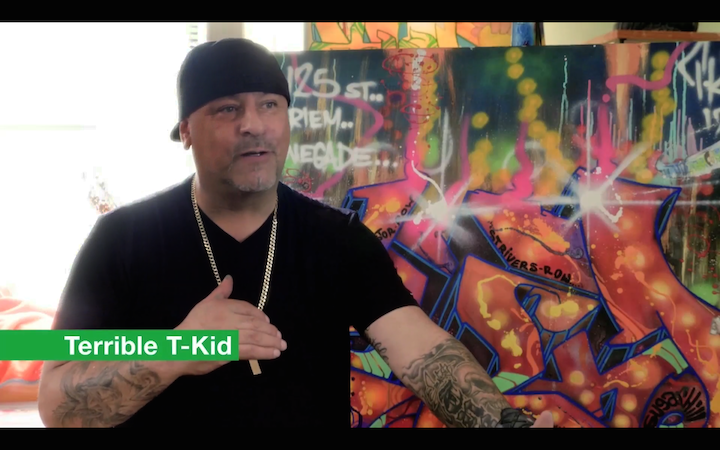
tkid -graffiti-artist

What were some of the challenges you faced in producing the film?

I served as writer, director, and executive producer. The network, Sky Art,  gave me a budget, and I was free to manage it however I liked.  But that was hard, because as a director, I always wanted more  — more days of shooting, more footage, more writers to interview — but as an executive, I had to put some limits. It was like being two different people at once.  Now that I can look back, I better understand the limitations I had and their effects on me. And an American alternative presentation — that wasn’t able to be made at the time —  is something important to pursue going forward, as much to “do right” by NYC.

Who was/is your target audience?

The original documentary targets an Italian audience who is fascinated with New York but doesn’t really have a knowledge of it, as well as everybody else who wants to know, once and for all, the real history of one of the most relevant artistic, cultural and, to a certain extent, political movements of the 20th century.  Now I need to broaden the reach beyond Italy.

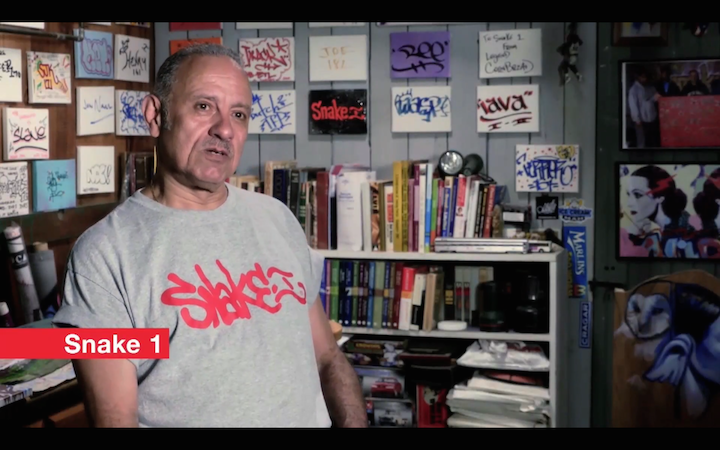
snake-graffiti-artist

Will New Yorkers have the opportunity to view it?

Unfortunately, as of now, they don’t, and that’s a travesty.  That’s where my fight is now — finding a means to change that.  Everything about this movie is New York City.  The residents need this film.  It needs to be a contribution to their historical record.  Hopefully, I’ll find the funding for what is really a “preservation” project.  People aren’t around forever.  The interviews with important artists in Graffiti A New York, all in English, need to come “home.”

I certainly agree!  Graffiti A New York is not only a passionate homage to the roots of graffiti, but an essential visual and spoken record of a significant NYC era.  What’s ahead for you? Can we expect any more films on the topic of street art or graffiti?

Currently I’m working on a project for the Discovery Channel for which I hope to be able to announce details soon.  Later this year I’m doing a documentary on Stewart Brand and the Whole Earth Catalogue that I’m very excited about.  This fall I’ll be shooting a short project in New York again.  I’m also continuing to show Frankie: Italian Roulette, my short fictional film from last year, at festivals across the US.  Next up for Frankie is the Crossroads Festival in Jackson, MI on April 2. Even Frankie is about life in NYC and fighting to stay there, so — going forward —  it’s no surprise that I’ll, of course, continue to focus on the themes present in Graffiti A New York: art, actions of consequence, social responsibility of both the system and the individual, and, of course, the city of New York itself.  And, fingers crossed, we can make the US adaptation of Graffiti A New York.  That really must happen.

The questions for this interview were formulated by Lois Stavsky and Tara Murray after viewing the European market release Graffiti A New York.

Note: Hailed in a range of media from the Huffington Post to the New York Times, our Street Art NYC App is now available for Android devices here.

en-play-badge 2

{ 0 comments }
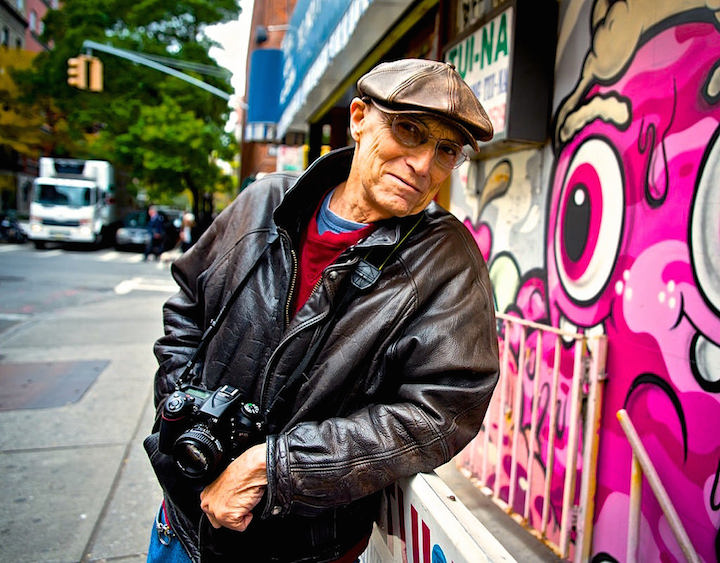
Allan-Ludwig-photo-by-Julie Dermansky

Still out there each day with camera in hand documenting what has surfaced overnight, photographer Allan Ludwig aka Elisha Cook, Jr recently shared with us some of his thoughts on the changes that he’s witnessed in his downtown Manhattan neighborhood and more:

You’ve lived here in Soho for decades.  At what point did the changes in your neighborhood become most apparent?

Around 2003, I noticed that the new stores in my neighborhood were — for the most part — only selling expensive items.  I no longer recognized my neighbors’ faces on the streets. Tourists and shoppers were everywhere. I knew then that I must turn my lens onto the graffiti and street art here before it all disappeared.

allan-ludwig-graffiti-nyc

dylan-egon-photo-allan-ludwig

And what are some of the changes that you have observed in the street art that surfaces here these days?

It has largely lost its edginess.  Much of the street art here has  gotten exceedingly commercial.  It’s often difficult to tell the difference between what is sanctioned and what is done without permission. Street art and ads have become increasingly interchangeable. And too many “street artists” these days seem to use public space primarily to promote their gallery shows.

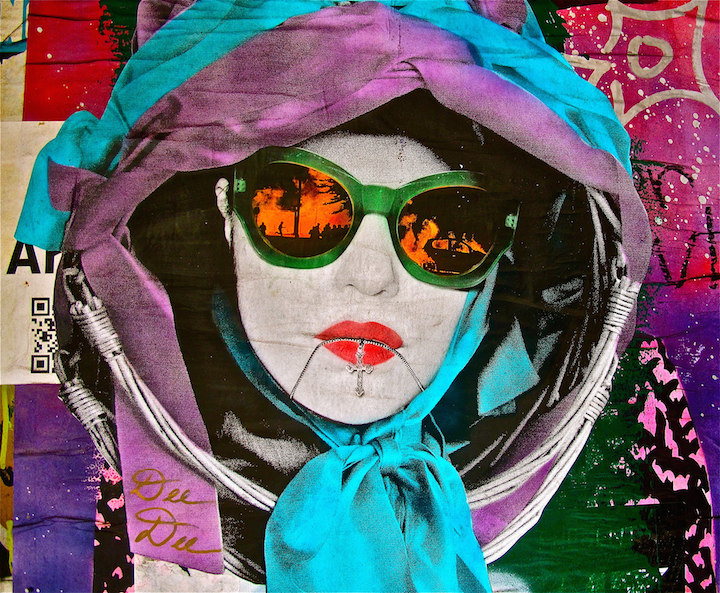
Dee-Dee-was here- photo-Allan Ludwig

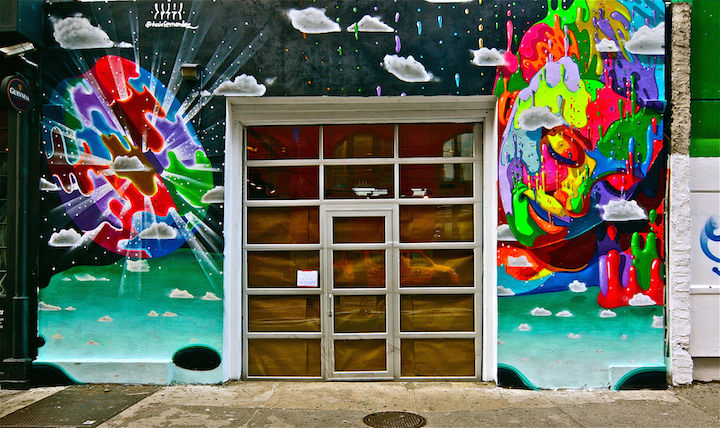
Dasic-Fernandez-photo-by-Allan-Ludwig

What do you suppose has caused these changes?

The monetization of it all.  And I feel that the street art festivals have not only legitimized an underground movement, but have created an elite — not all that different from the mainstream art world.

 We’ve noticed that you tend to focus your camera on illegal works, particularly tags and bombs. Why is that?

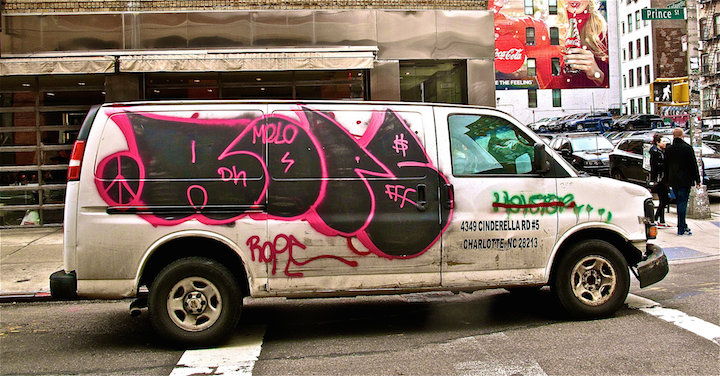
Because they are real and raw. I love their poetic spontaneity. I can feel the artist’s pure passion and love for it.

graffiti-bomb-on-truck

graffiti-bombs-photo-allan-ludwig

Not everyone would agree with you! Any thoughts about Mayor de Blasio’s proposed efforts to keep the city graffiti-free?

I don’t see any point to it. It’s a misdirected use of funds. The money should be used, instead, to help the homeless.

We noticed that you were daily documenting the impromptu David Bowie memorial in front of his home. Did you know Bowie personally?

I live just down the block from him, so I’d see him from time to time around the neighborhood. But, no, I didn’t know him personally. I would simply nod in acknowledgement and respect when I saw him. I sensed that he was my kind of person. But I did not want to invade his privacy.

david-bowie-soho-memorial-photographer-allan-ludwig

And what about the memorial? What spurred you to photograph it daily and in such detail?

I loved it! I loved that it was spontaneous and inclusive. There was no hidden agenda!

Interview conducted by Lois Stavsky with Tara Murray

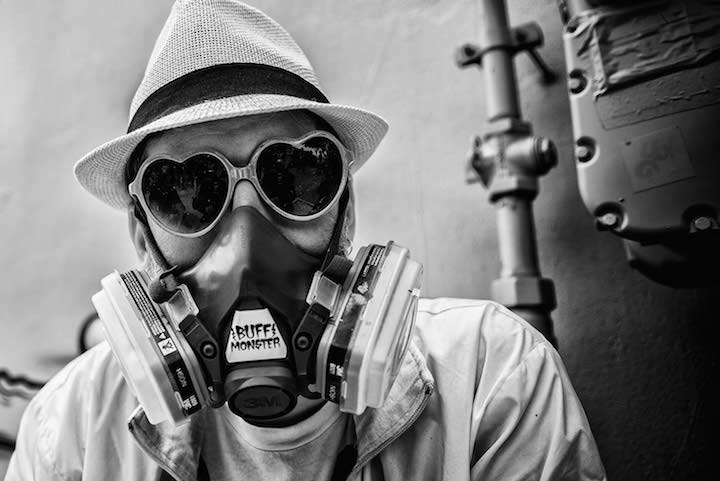
All photos by Allan Ludwig aka Elisha Cook, Jr, except for the first one — featuring Allan alongside Buff Monster — which was photographed by Julie Dermansky; photo 3 features Dylan Egon; photo 4 features Dee Dee  and photo 5, Dasic Fernandez

Note: Hailed in a range of media from the Huffington Post to the New York Times, our Street Art NYC App is now available for Android devices here.

en-play-badge 2

{ 9 comments }

Lulu-reich

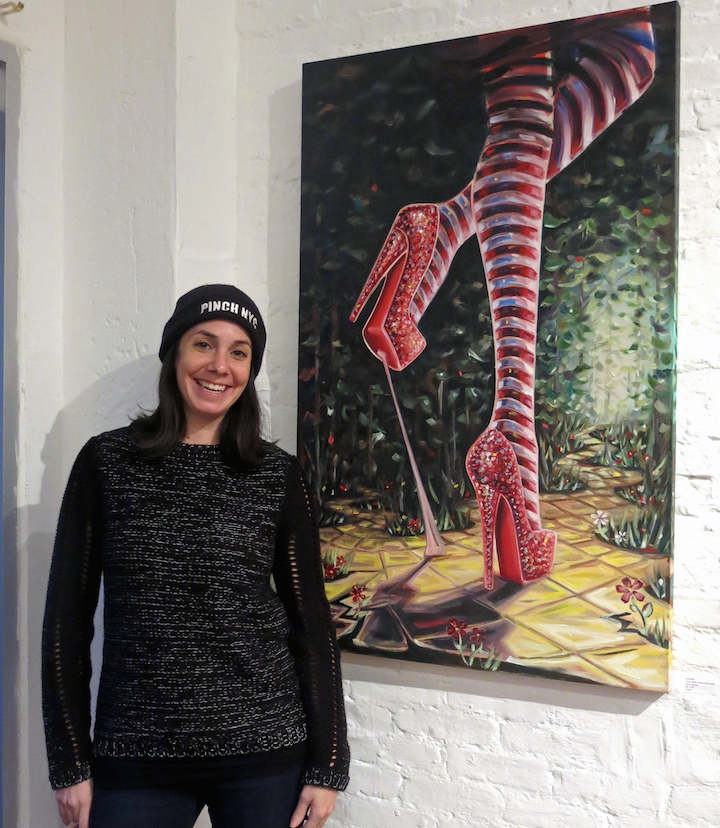
I recently stopped by 212 ARTS and had the opportunity to speak to Laura “Lulu” Reich who, along with Marc Leader, founded and directs the gallery.

I’ve heard great things about your current exhibit, Gumshoe: Red, White And Black, and I’m so glad I finally had the opportunity to visit this space! How long has 212 ARTS been here?

We’ve been here as 212 ARTS since this past October.

This space here at 240 East 4th Street is so perfect for a gallery. Why did you choose this particular neighborhood? And how were you so lucky to get this space?

I’m an East Village girl and I love everything about this neighborhood — its history, alternative culture and more. Yes, acquiring this space was mere luck! I had found out from the landlord that it was available.

gumshoe-art-on-canvas-212arts-nyc

What is the vision behind 212 ARTS

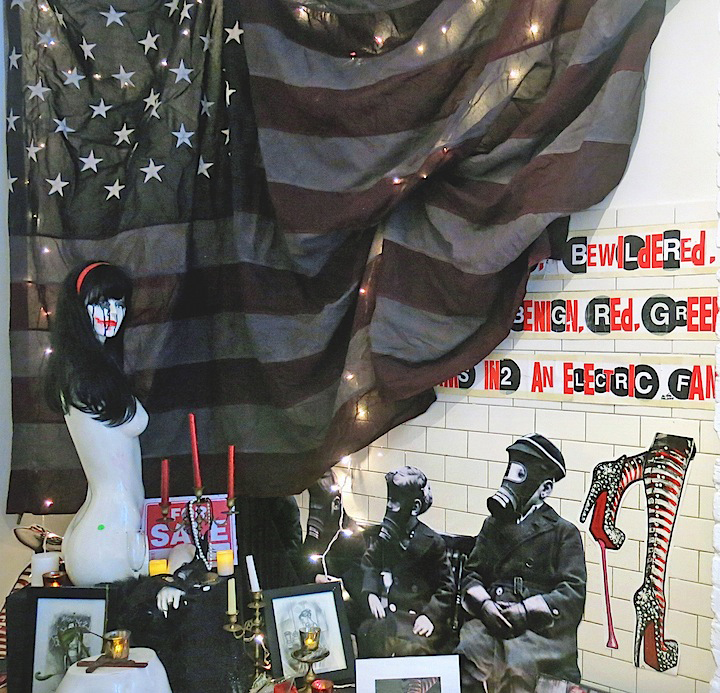
It is to give exposure in a gallery setting to urban artists, particularly those who work on the streets, as well as in their studios. It is also to educate folks about the artists in this scene. There are stories to tell, as in this current exhibit, Gumshoe: Red, White And Black.

Can you tell us something about this current exhibit?

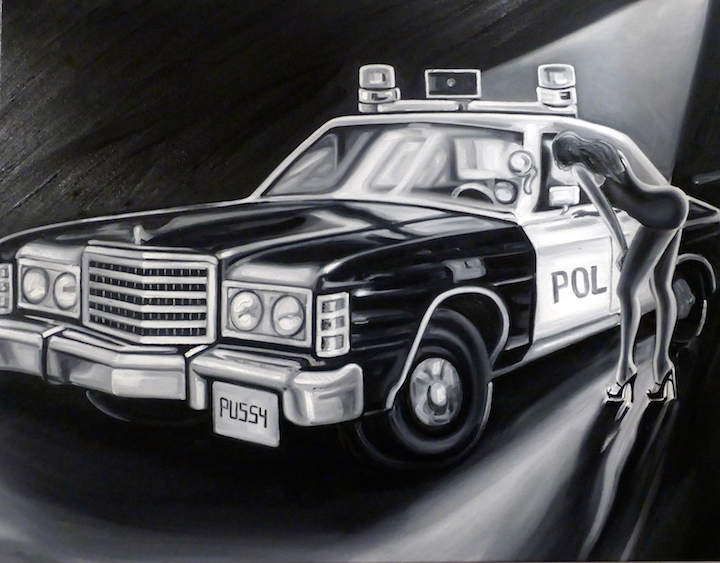
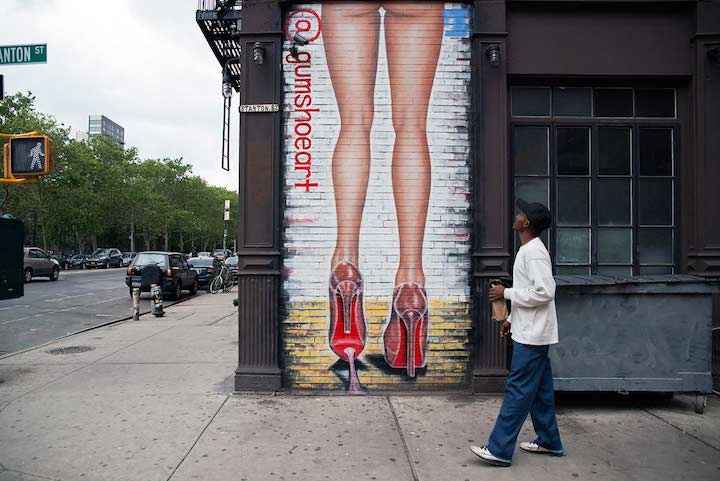
It is Gumshoe‘s first solo exhibit in NYC. We chose to present this exhibit because we love Gumshoe’s work and her distinct female energy! And it seemed like the perfect exhibit for Valentine’s Day.

Gumshoe-art-on-canvas

And what about its title, Red, White and Black?

Most of the pieces in the exhibit are red, white and black. The title is a play, of course, on the colors of the American flag, presenting the darker side of the American dream.

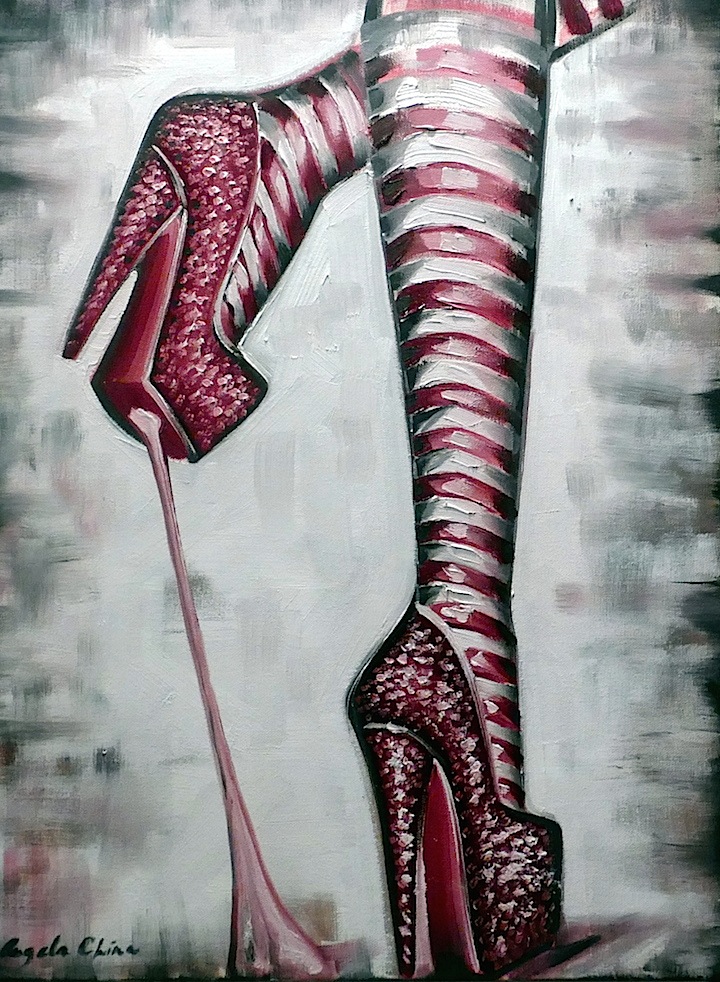
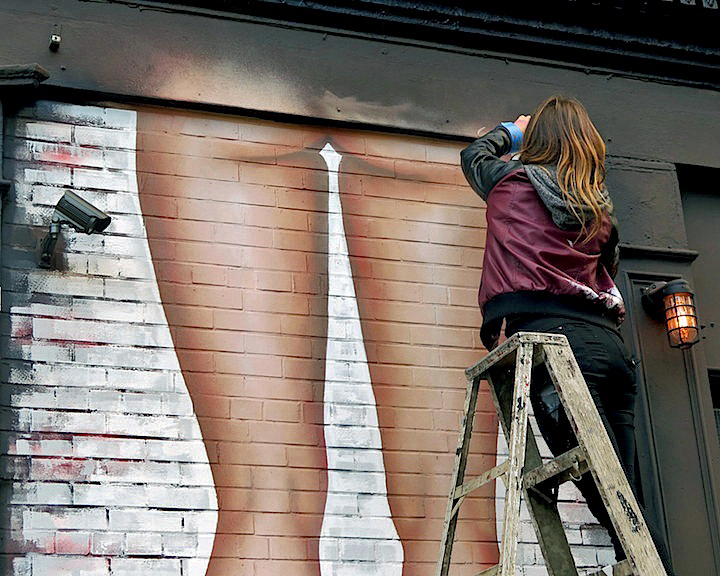
And the gum that always makes it way onto those glorious red Louboutin heels? What is that all about?

As we strive for perfection and sometimes almost reach it, we meet inevitable disaster! The gum is the metaphor for that. We get stuck along the way!

gumshoe-installation-212arts

Oh, yes! There is a story to tell! Until when will folks be able to see this exhibit?

We are open Tuesday through Saturday 2:00 pm – 8:00 pm and on Sunday 2:00 pm – 7:00 pm.  You can also make an appointment to see it by contacting me at laura@212arts.com  Gumshoe‘s exhibit closes on Wednesday, February 17th.

What’s next?

Opening on the 18th is an exhibit featuring artworks by NYC graffiti legends. Among those showing are: Crash, Skeme and T-Kid.

Gumshoe-paints-street-art-nyc

I’m certainly looking forward to that! Good luck!

Interview conducted and edited by Lois Stavsky; all photos feature Gumshoe‘s work; photo 4 of Gumshoe‘s installation also features Jily Ballistic and Al Diaz; photo 5 of  Gumshoe at work was captured awhile back on the Lower East Side.

Photo credits:1 & 4 Lois Stavsky; 2 & 5 Dani Reyes Mozeson and 3 Houda Lazrak

Note: Our highly acclaimed Street Art NYC App is now available for Android devices here.

en-play-badge 2

{ 0 comments }
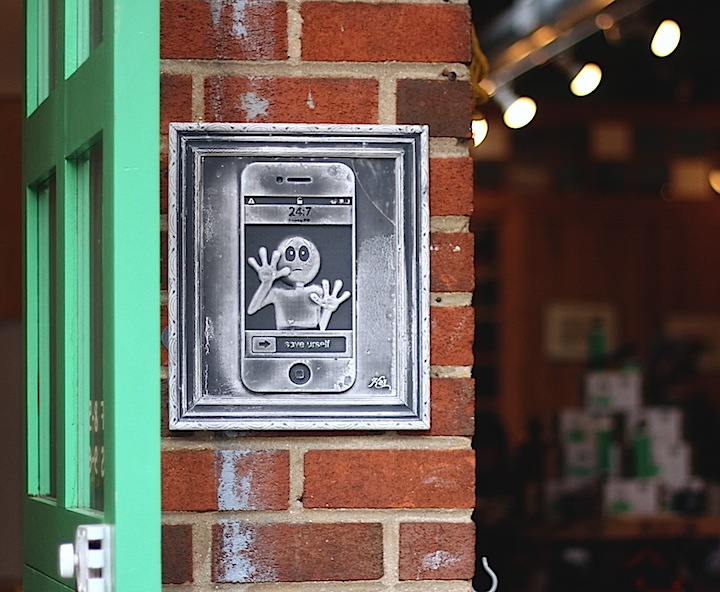
Last month, West Coast-based Kai Aspire was avidly gracing NYC streets with his earnest artworks. I had the opportunity to meet up with him then and pose a few questions:

kai-aspire-with-flowers

When and where did you first get up on a public surface?

I was 15 years old, and it was in LA.

What inspired you at the time?

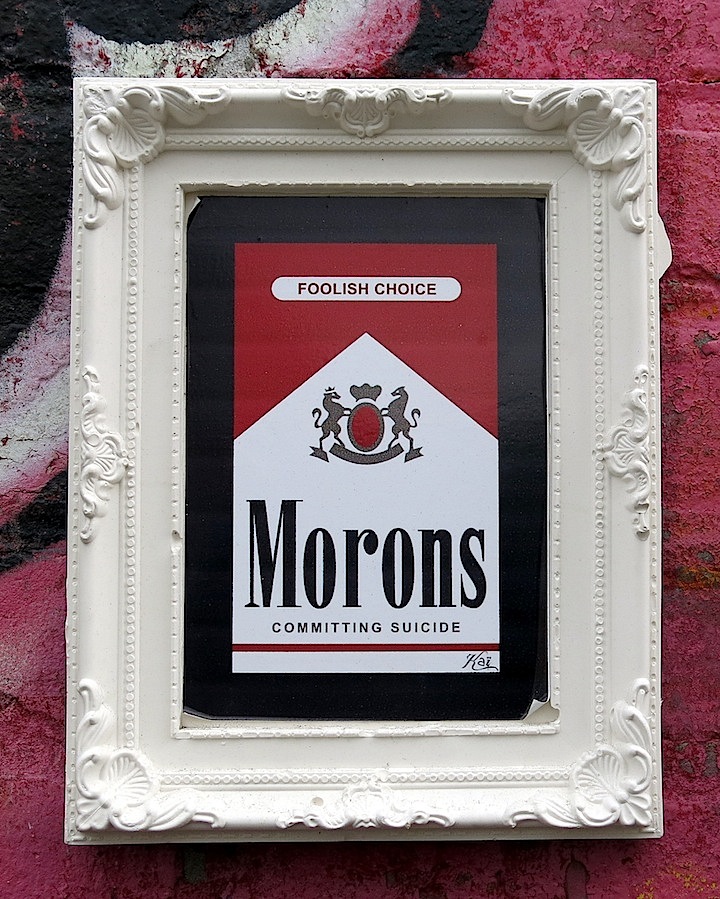
My dad was a heavy smoker, and I was concerned about his health. The first work of art I created was to get his attention, and it did!

Bushwick summer

Did you have any preferred surfaces back then?

The electrical boxes in LA were ideal!

Were you ever arrested?

Just as I was leaving a spot in Beverly Hills, a cop pulled a gun on me. He then handcuffed me and lay me on the floor. Six back-up cops came and made me remove everything that I put up. But they didn’t arrest me. They told me – somewhat apologetically — that they liked what I was doing!

How does your family feel about what you are doing?

They love it!  My mom gets a little scared sometimes. But she wants me to be happy, and she knows that what I am doing makes me happy.

kai-aspire-running-

What percentage of your time is devoted to your art these days?

Just about all of it!

 Any other passions?

Surfing and soccer.

How do you feel about the movement of graffiti and street art into galleries?

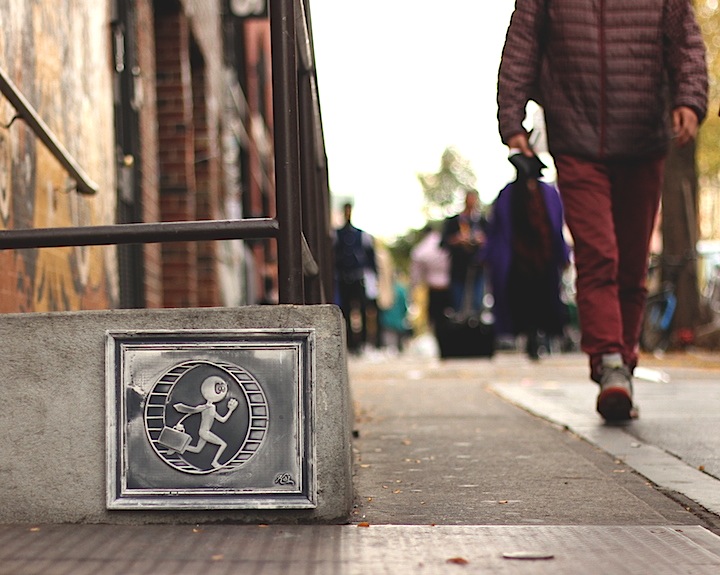
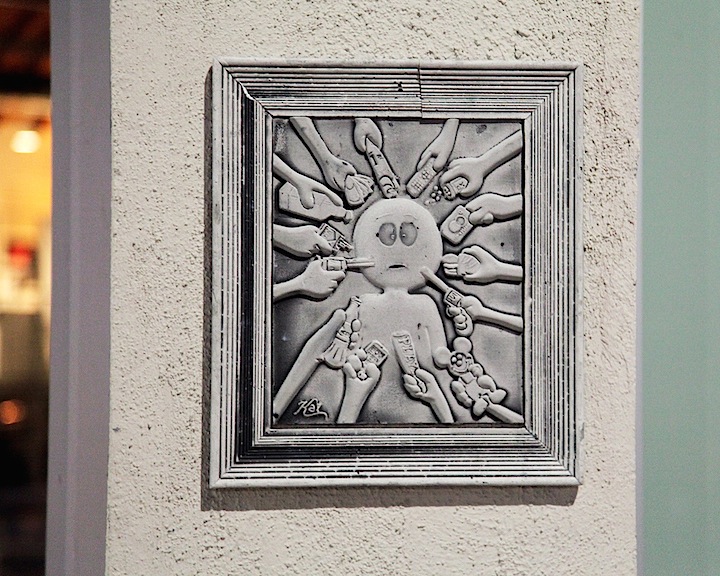
It’s fine, so long as we don’t lose our touch with the streets. But my focus is on bringing the beauty of galleries onto the streets. That is why I pay so much attention to how my works are framed.

kai-aspire-bombarded

What about the corporate world? Any feelings about working with it?

I try to avoid it.

Do you prefer working alone or collaborating with others?

It’s easier for me to work by myself, as I have a distinct vision as to how I want to present my artwork.

Have any particular cultures influenced your aesthetic?

My father’s French and growing up, I read French comics. And my mother’s Mexican heritage has most likely influenced the relief-work that I do. I love working with my hands.

kai-aspire-with-tree

What is the riskiest thing you ever did?

Trying to get my message of reconciliation – love instead of hate — out in Hebron amidst gunshots, while hiding from the police. I was lucky to get out alive.

Yes! Hebron is definitely one of the world’s most conflict-ridden places. You’ve recently begun a world tour. Where else are you headed?

In addition to Hebron, I’ve been to Paris and Tel Aviv. Other stops include: West Palm Beach, Miami, LA, San Francisco, Bogota, New Zealand, Australia, Mexico and Brazil.

That’s quite ambitious! How do you feel about the role of the Internet in this scene?

It’s certainly interesting. It seems to blur the line between marketing and art, as it can give an artist a lot of exposure.

kai-aspire-trapped

Have you a formal art education?

I studied for one year at CalArts, the California Institute of the Arts, and then I learned the more practical aspects of art at ENSBA, Ecole Nationale Superieure des Beaux-Arts in Paris.

What inspires you these days?

Everyday life.

You obviously have a message you are interested in transmitting. 

Yes. Much of my work is a comment on our misplaced values.

kai-aspire-

How has your work evolved in the past few years?

The process is more complex, and I use less sarcasm in getting my message across.

What do you see as the role of the artist in society?

To bring beauty to the world as he or she critiques it in a loving way.

That sounds good! Best of luck with your travels!

Interview conducted and edited by Lois Stavsky; Photo 2 by Lois Stavsky; all others courtesy of the artist.

{ 1 comment }

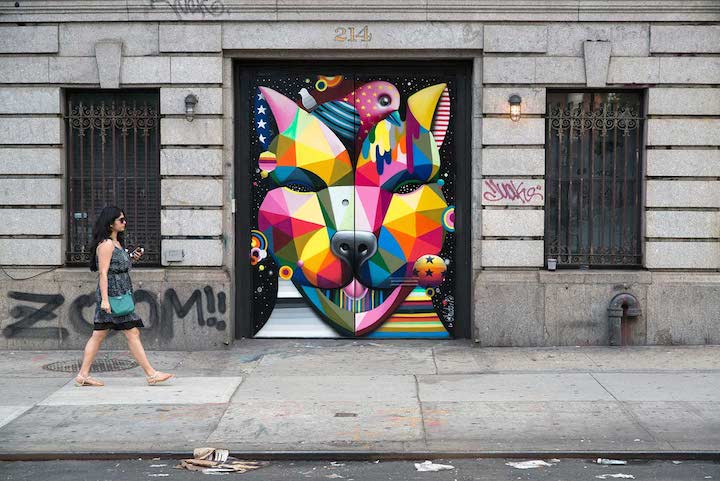
Okudua-street-art-on-Lafayette-David Sharabani-in-NYC

A huge fan of Lord K2’s photography and his outstanding book, Street Art Santiago, I was delighted to discover that Lord K2 has also been photographing NYC’s street art and graffiti.  During his most recent stopover in NYC, I had the opportunity to speak to him.

Why NYC?

Because it is the epicenter of it all.  It is where graffiti was born, and where the best artists from across the globe come to paint.

Buff-Monster-in-Bushwick,-Brooklyn,-NYC

Any distinct standouts?

Os Gemeos immediately comes to mind. But just about every artist who has painted on the famed Bowery wall is extraordinary. And the L.I.S.A Project, too, has brought so many first-rate artists to Manhattan.  My initial focus was just Manhattan because the borough attracts so many outstanding artists.

But you had begun to photograph beyond Manhattan.

Yes. I decided that I did not want to limit myself. And among the sites I’ve photographed outside of Manhattan are the Welling Court Mural Project in Astoria, Queens and the Bushwick Collective in Brooklyn.

David-Sharabani-At-Welling Court Mural Project

Many of your photos are in black and white. Why is that?

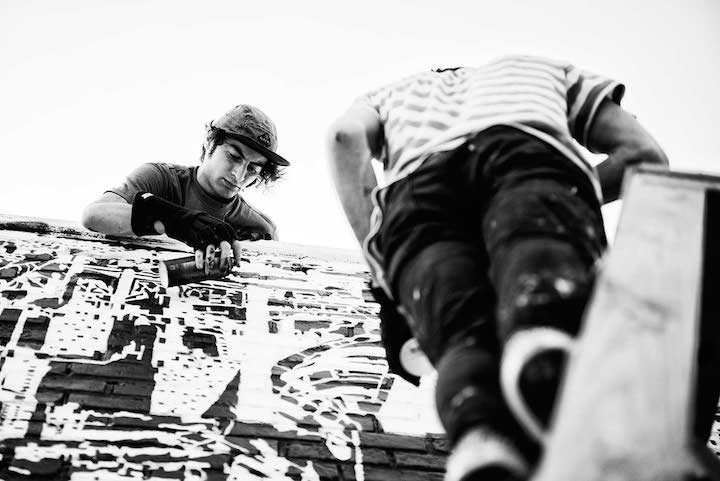
Too much color in a book can oversaturate the senses. And when I capture the artists in action, I find that limiting the image to black and white often creates a more satisfying overall portrait.

Any particular inspirations among the photographers out there?

I was definitely inspired by Martha Cooper’s work. And the late Garry Winogrand’s photos of Manhattan have influenced my approach to street photography.

Geobany

How have the artists you’ve photographed responded to you?

They’ve all been welcoming and warm.

How long have you been working on this project?

I began two years ago  Taking my time allows me to photograph the new art works that arise which, in turn, allows me to curate from a larger selection.

Gumshoe-art-photo-David Sharabani-NYC

You spent a considerable amount of time in South America. What are some of the most striking differences between the street art scene here in NYC and what you experienced there?

I found that in South America the artists generally paint for the love of it. And making a living out of art is a bigger challenge in South America than it is here. In NYC, financial considerations come more into play, as many of the artists have more opportunities to get the attention of gallerists and collectors.  Also, in South America lines are blurred between what is legal and what is illegal. There’s a general leniency towards unsanctioned art, while here in NYC painting illegally is quite problematic.

Icy-and-Sot

Absolutely! And accessing legal walls can be quite challenging! When can we expect to see you back in NYC?

I plan to return in the summer.

That sounds great! The walls are waiting for you!

Interview by Lois Stavsky; all photos Lord K2

Images: 1. Okuda  2. Buff Monster  3. SweetCrimes  4 .Geobany  5. GumShoe & 6. Icy and Sot

{ 2 comments }

Stik

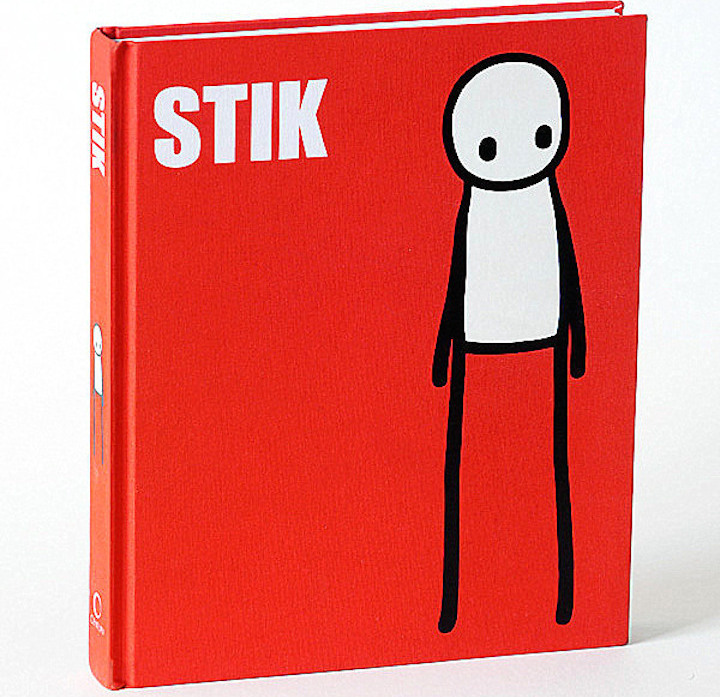
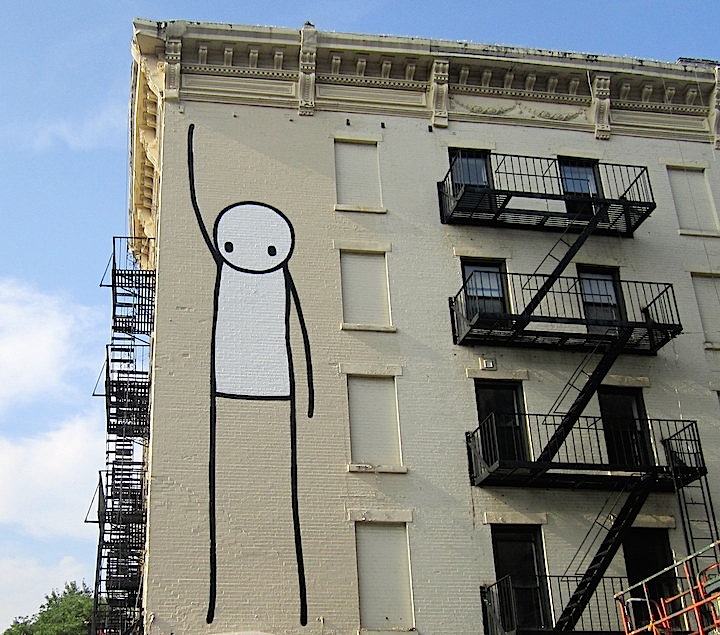
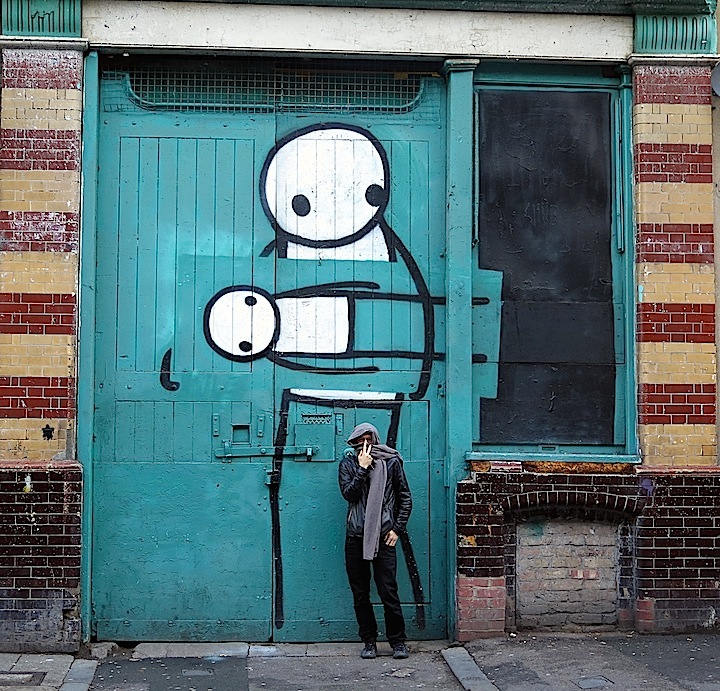
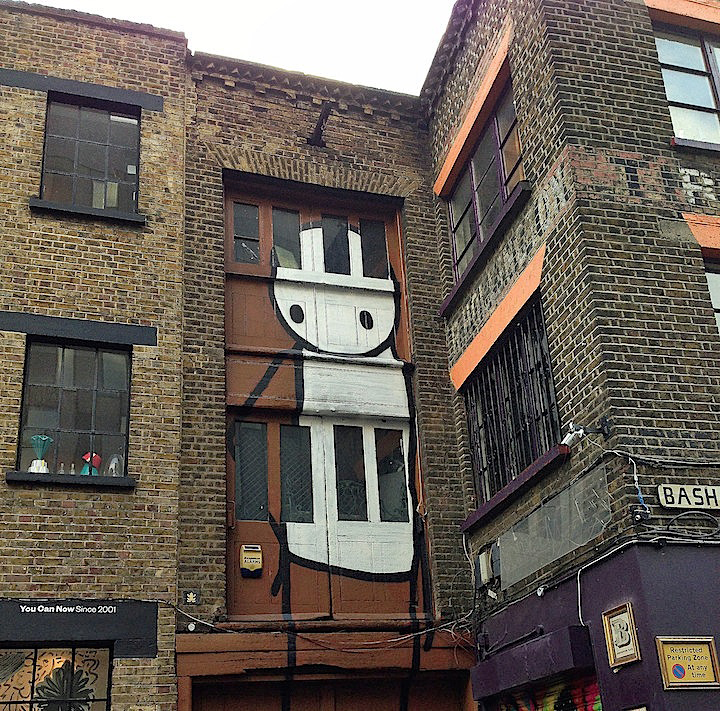
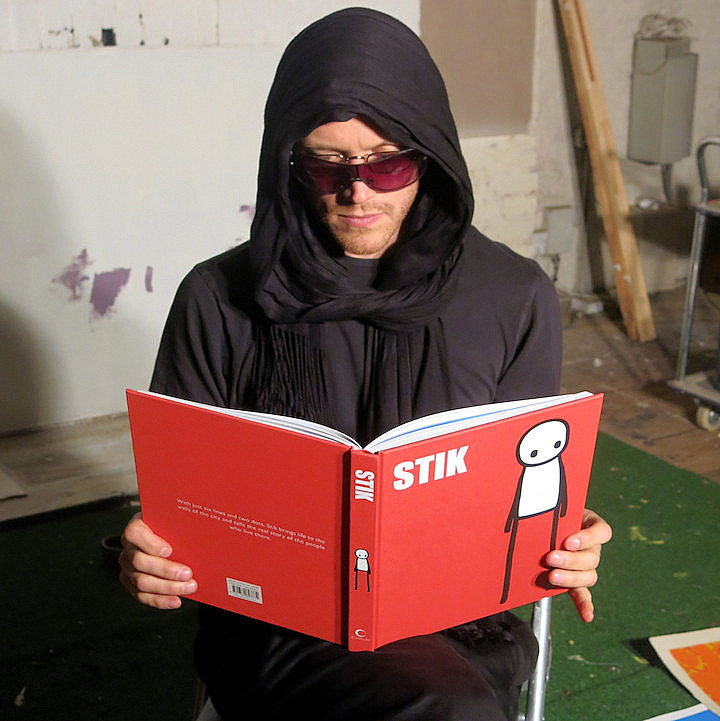
Known for his iconic life-size stick figures that have surfaced throughout the globe, East London-based Stik has attained celebrity status with Random House‘s recent release of his first book. While in London last month, I had the opportunity to speak to the artist.

When did Stik first surface? And where?

It was back in 2003 in Hackney Wick along the canal.  It was the safest place to paint at the time.

Can you tell us something about Stik’s origin? What was the concept behind it?

I came up with the idea of six lines and two dots simply because it was the quickest way to paint without getting caught.  My first Stik drawing represented my struggle to find shelter and survive. While homeless, I had lost all my drawings. Anything I could get up on the streets could be seen, at least, for a time.

stik

How did folks respond to your work at the time?

They liked it. They could identify with it. It especially spoke to lonely people.

How has Stik evolved since it first surfaced?

At first I only painted lonely people.  It was my way of reflecting on my personal struggles. Then as my circumstances improved, I became involved with causes and the figure changed as its context changed.

stik-street-art-london

What are some of these causes?

Homelessness, gentrification, the National Health Service, underground cooperatives and more.

Your new book, simply titled Stik, is currently a best-seller in London.  What was the concept behind it?

It is a journal of the progression of the Stik project.

stik-street-art-character-London

Your book is so stunningly presented and has gotten such wonderful press in London. When did the idea of first publishing a book come to you?

In 2010, while living in a homeless hostel, I was writing a monthly column for the Hackney Citizen that included a mural related to a news story. I did this for a year, and it made me think about articulating meanings.

Any plans to visit NYC?

Yes! I plan to visit NYC in the spring.

stik-reads-book

That sounds great!  We are certainly looking forward to seeing you again in NYC!

Photo credits: 2. Tara Murray 3. Dani Reyes Mozeson 4-5. Lois Stavsky; interview by Lois Stavsky

{ 0 comments }
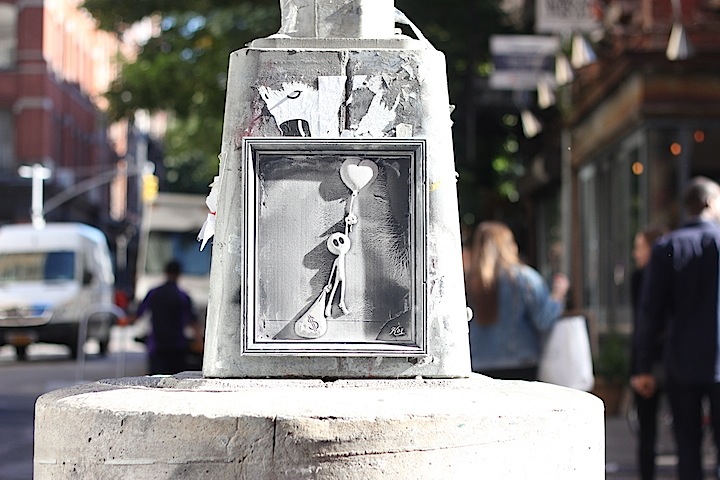
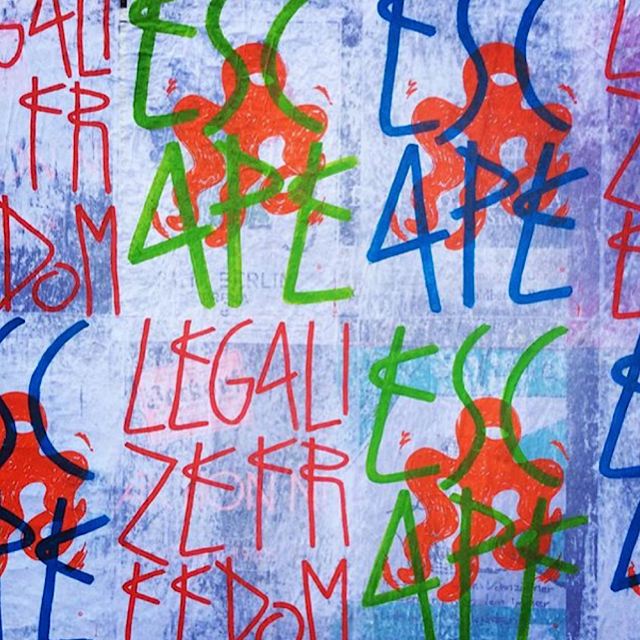
sp38-escape-legalize-freedom-urban-poetry-the-quin-NYC

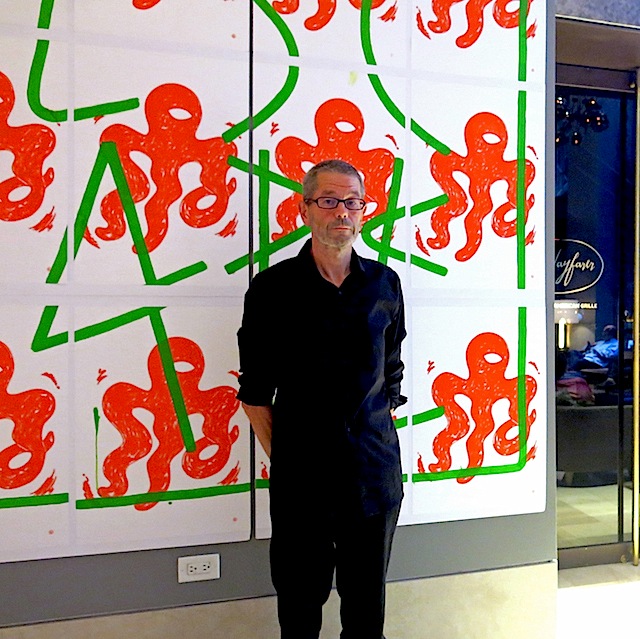
The noted French artist SP38 made his NYC debut this past week at the Quin Hotel on West 57th Street. Curated by DK Johnston, SP38‘s exhibit, Escape (Legalize Freedom), features the artist’s iconic text-based works that continue to surface across the globe. While visiting the Quin Thursday evening, I had the opportunity to speak to the artist.

You are currently based in Berlin. What brought you there? And what prompted you to stay?

I first came to Berlin 20 years ago.  There was so much empty space at the time, and the city — after the German reunification —  was especially welcoming to artists. Before moving to Berlin, I had been living in artist squats in Paris.

sp38-urban-poetry-art-exhibit-the-Quin-NYC

The streets are the principal canvas for your urban poetry. Why the streets?

It is the best way for me to get my message across to the world.  The streets allow me to reach so many people.

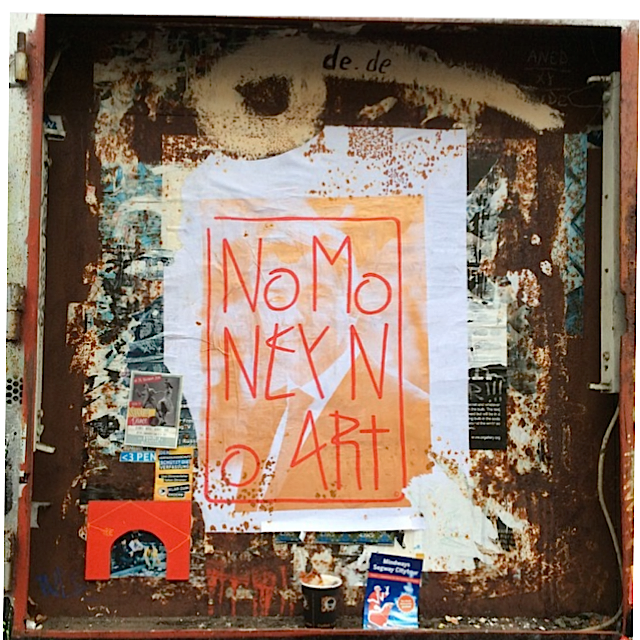
Among your statements that have surfaced in public spaces are: “ESCAPE,” “OCCUPY,”  “SLAVES,”  “VIVE LA BOURGEOISIE,” “NO PROPAGANDA,”  “NO MONEY NO ART” and “I DON’T WANT TO BE U’RE FRIEND ON FACEBOOK.”  The name of this exhibit here at the Quin, in fact, is ESCAPE (Legalize Freedom). What is your intent in putting these messages out there?

I am interested in provoking a reaction. I want folks to think about what is happening. And I use humor and sarcasm because I also want to make them laugh.

sp38-street-art-berlin-no-money-no-art

Have you any favorite surfaces?

I love old doors and new walls. I focus on how my message will work within its immediate environment, as well as its general surroundings.

Besides Berlin, where else have you gotten up? And how have folks responded to your work?

I’ve brought my urban poetry to Seoul, Ragoon, Montreal, Bristol, Santiago and the Philippines. The response has always been positive!

sp38-art-at-quin-hotel-nyc

How has your work evolved since you first started sharing it on public spaces?

As I get older, it has become cleaner and more simple. I especially like writing on white paper.

What about NYC? What is your impression of our city?

I love it! It is a mix of everything cool!

sp38-escape-legalize-freedom-street-art

Escape (Legalize Freedom) remains on view at The Quin Hotel, 101 West 57th Street at Sixth Avenue.

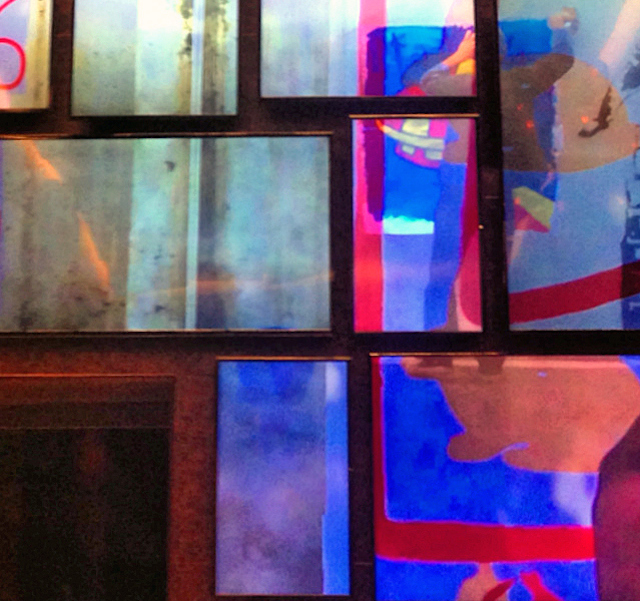
Photo credits: 1, 3 and 5 via artist’s Instagram; 2 and 4 (close-up from video wall) at the Quin by Lois Stavsky; interview by Lois Stavsky

Note: Images 3 & 5 on the streets of Berlin

{ 2 comments }
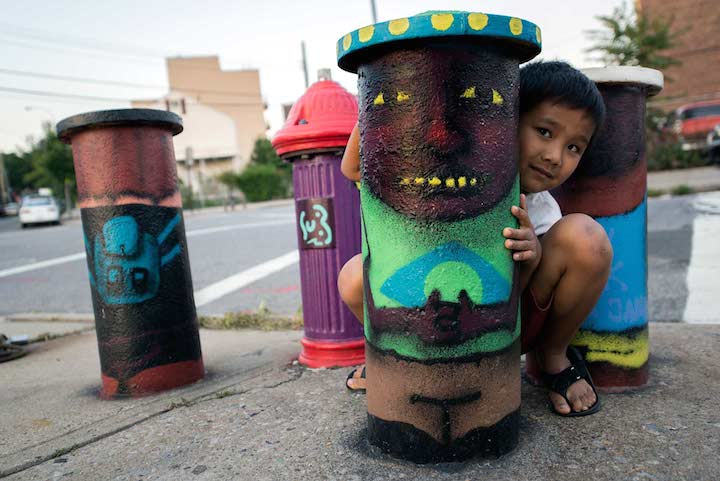
Queens native Cern began writing graffiti in the early 90’s.  His artworks — characterized by luscious colors, swooping shapes and imaginative characters — have, since, made their way into public spaces, alternative venues, festivals, galleries and museums throughout the globe. We recently met up with him in Long Island City where his current exhibit, Vertical Archipelago, remains on view through the end of this month.

cern-art-on-canvas

When did you first get up? And where?

Back in 1990 in Queens. I was 12 at the time.

What inspired you to do so?

Everyone around me was doing it!

Are there any early memories that stand out?

I remember riding the train with my mom, looking out the window and thinking, “Wow! This is amazing!”  She said, “This is bad!”

cern-abstract-face

What percentage of your day is devoted to your art these days?

Way too much!

Any thoughts on the graffiti/ street art divide?

Everyone seems to be having a good time!

Your current exhibit Visual Archipelago is beautiful, and it encompasses an incredibly wide range of artworks. How do you feel about the movement of graffiti and street art into galleries?

It’s nothing new. It’s been going on for 40 years. It’s a normal progression. And I like the way art looks everywhere.

cern-surreal

What about the corporate world? How do you feel about the relationship between street artists and the corporate world?

I have no problem with an artist getting paid to promote a cool product. I, myself, like working with small, independent businesses.

Do you prefer working alone or collaborating with others?

I like both.

What is the riskiest thing you’ve ever done on the streets?

I just finished painting six stories high on Canal Street throughout the night!

cern-multiple-faces_

How you feel about the role of the Internet in this scene?

It’s cool! It provides us all with yet another medium.

Do you have a formal arts education?

I have a degree in Studio Art from Queens College, but I never really used it. It did teach me, though, how to deal with bureaucracy.

What inspires your art these days?

Memories, discoveries, nature, animals and urban life. And, of course, all my travels have been a source of inspiration.

cern-surreal-birds

Do you work with a sketch in your hand or do you let it flow?

I sometimes work from loose sketches.

Are you generally satisfied with your work?

Usually.

How has your work evolved in the past few years?

It’s more experimental, and I tend to work with a range of mixed media including spray paint, watercolor, graphite and ink.

cern-with-art-work-at-exhibit

What do you see as the role of the artist in society?

To heighten people’s visual awareness.

What do you see as the future of street art and graffiti? Where is it all going?

Styles seem to be evolving more quickly. And the marketing of the art has become increasingly important, almost as important as the art, itself.

And what about you? What’s ahead?

I want to continue in my own development as a person and as an artist.

Note: All of the above images were captured on our visit to Vertical ArchipelagoCern’s current exhibit at 26-19 Jackson Avenue in Long Island City.

Interview by Lois Stavsky with Tara Murray.

Photos: 1, 2, 3 & 5 Tara Murray; 4 & 6 Lois Stavsky

{ 1 comment }

Ramiro-Davaro-centrefuge-public-art-project

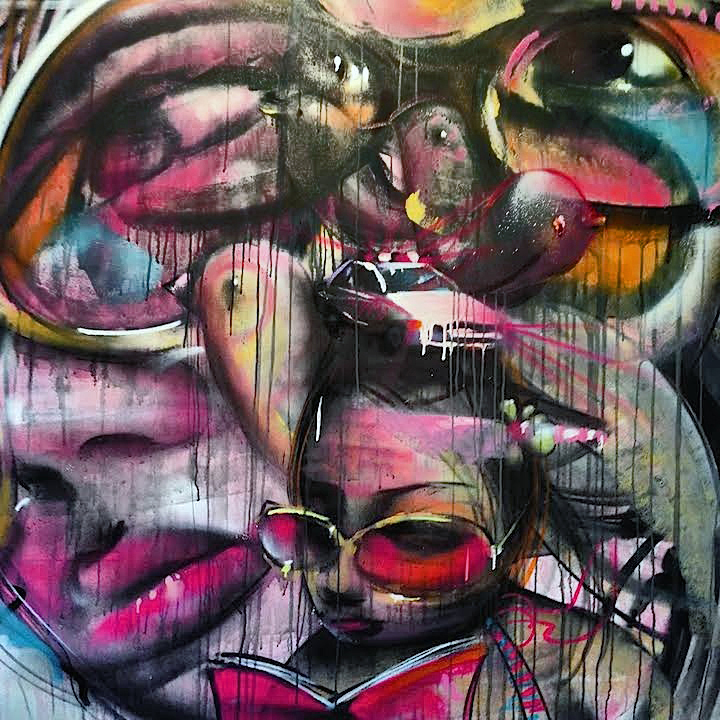
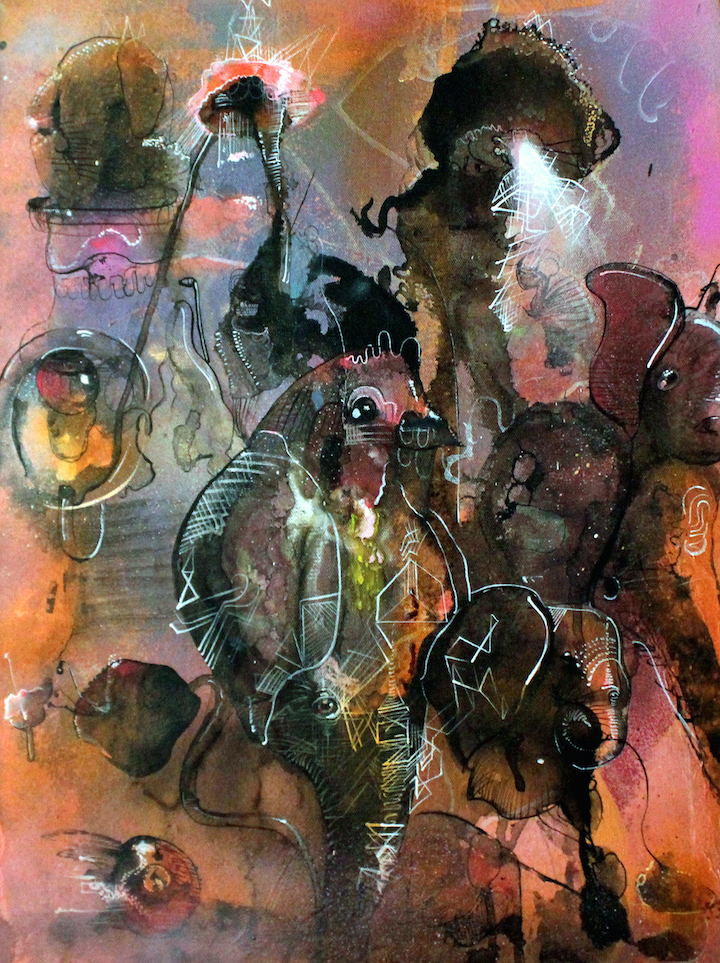
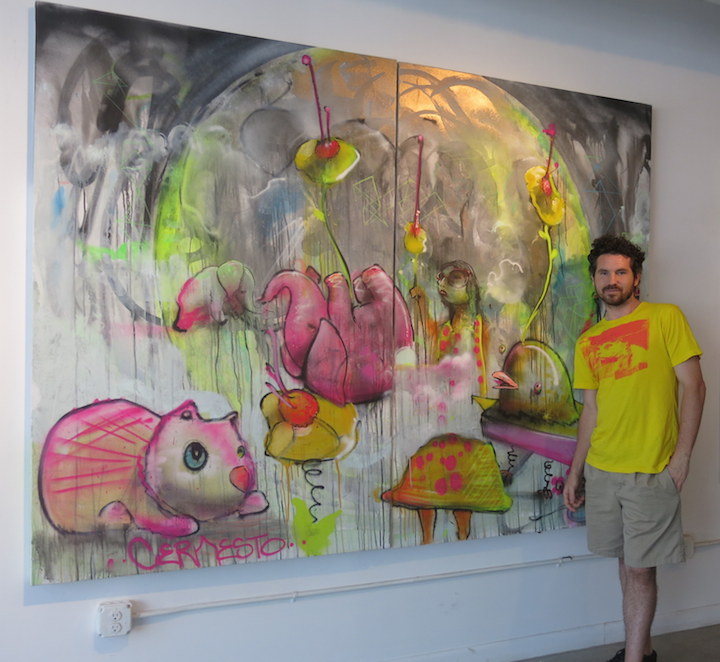
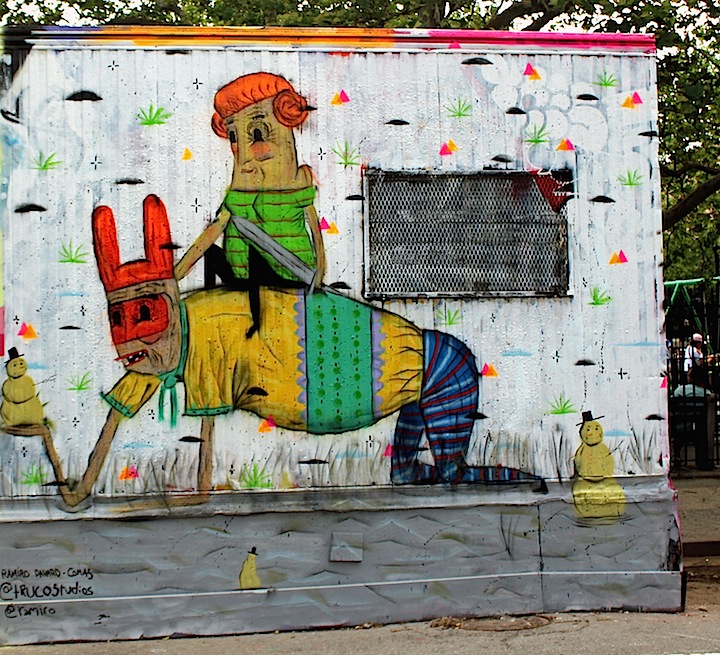
With influences ranging from comic book art to South American/European muralism, Brooklyn-based Ramiro Davaro has created a wondrous world of fantastical characters who have made their way onto public and private spaces throughout NYC and beyond. We recently had the opportunity to visit Ramiro’s studio and speak to him.

When did you first paint on a public surface and where?

It was back in high school around 2002. I was about 16 at the time. I painted some mushrooms on a huge rock at a park we used to go hiking in.  It was the worst. I basically ruined a nice lookout.

What inspired you to do so?

I was getting tired of painting on small surfaces. I wanted a larger canvas so I could paint way bigger! But what I painted was so dumb that it took a few years before I was ready to try again.  My first real art on the street was in 2007 in Buenos Aires.

ramiro-Davaro-little-havana-street-art

Do any early graffiti/street art-related memories stand out?

I remember seeing lots of political art – with faces of politicians and names of soccer teams — on the streets of Argentina when I was a young child.

What percentage of your day is devoted to your art these days?

About 70%. When I’m not doing something art-related, I’m skateboarding.

How does your family feel about what you are doing?

Everyone likes my work and has been very supportive.

ramiro-davaro-studio-art

Any thoughts on the graffiti/ street art divide?

I don’t feel it, and I don’t think about it. I love both, and they’re both necessary.

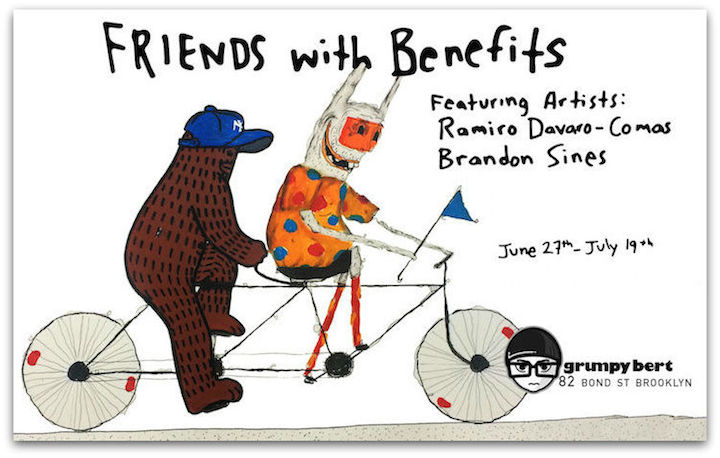
How do you feel about the movement of graffiti and street art into galleries?  We’ve seen your work at Cotton Candy Machine in Williamsburg and you are now showing with Brandon Sines at Grumpy Bert in Downtown Brooklyn.

I think it’s good for everyone!

What about the corporate world? Any feelings about that?

So long as I can dominate the conversation and be true to my vision, I don’t have a problem with it.

ramiro-davaro-street-art

How you feel about the role of the Internet in this scene?

It’s a bit much! It can be insane. But on the positive side, it creates opportunities for artists, and it also builds bridges.

Do you have a formal arts education?

No. I majored in Business. But my mom used to always take me to art museums. While growing up in Massachusetts, I got my very early schooling at the Worcester Art Museum.

Do you work with a sketch in your hand or do you let it flow?

I mostly just let it flow.

ramiro-davaro-art-on-paper

Are you generally satisfied with your work?

About 80% of the time!

How has your work evolved in the past few years?

Before moving to Brooklyn, I had been able to visit and live in different countries. As a result of my experiences, my process has become more mature, more thought-out, and tighter. Working with different companies, painting murals in a range of places and engaging in various projects have also helped me become more flexible and fluid in the work I can produce. In these past couple of years, my hand has really taken over and put a definitive mark on the work I produce.

Are there any artists out there whose works have inspired you or influenced your particular aesthetic?

I remember reading about David Ellis and the Barnstormers crew in Juxtapoz back in 2008.  That blew me away!  As far as influences — Os Gemeos, D*Face and Word to Mother come to mind.

sines- davaro

What’s ahead?

More shows and more murals! A group show in LA at Luz de Jesus Gallery in September; a few animations with FlipBooKit for the Maker Faire here in NYC in at the end of September; painting at Art Basel in December; a group exhibit at Redefine Gallery in Orlando in February. Books, walls, Aruba, Argentina and more art!

It sounds great! Good luck with it all!

Note: Through Sunday, you can check out Ramiro’s works — many in collaboration with Brandon Sines — at Grumpy Bert in Downtown Brooklyn.

Photos: 1, 5 Tara Murray; 2 – 4 Lois Stavsky

{ 2 comments }
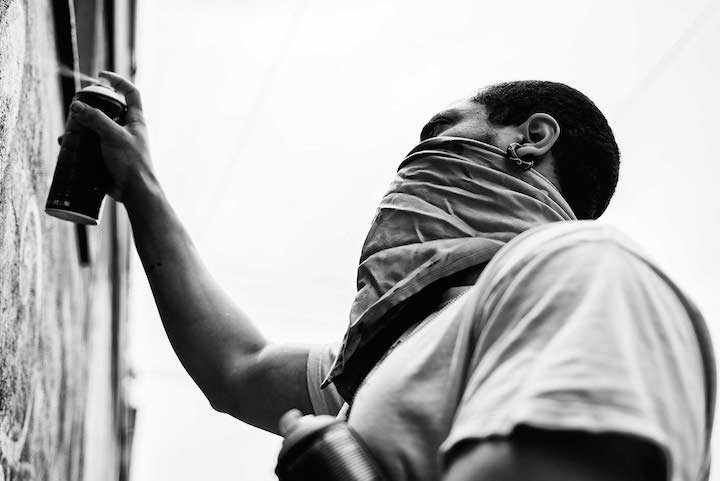
For over three decades Bronx native Just One has been making his mark on NYC public and private spaces. We recently had the opportunity to speak to the prolific artist.

Just-One-graffiti-Bushwick-NYC

When did you first get up? And where?

It was back in 1984 — over 30 years ago — in the West Farms section of the Bronx. I was 14 at the time.

What inspired you to do so?

My older brother and his friends were all doing it. It was the natural thing to do.

Any early memories that stand out?

I was at a handball court in Crotona Park when the spray can I was holding in my hand almost burst into flames.

How did that happen?

It came into contact with a cigarette lighter, and could have easily blown up.

We’re glad it didn’t! We’ve noticed your work in quite a few projects these days – from JMZ Walls in Bushwick, Brooklyn to Operation Skittles at August Martin High School in Jamaica, Queens. Do you prefer legal or illegal surfaces?

I love painting anywhere – but to experience the full essence of graffiti, there is nothing like painting on a surface I discover on my own. Finding a space, being there alone and creating something out of nothing is the ultimate experience.

just-one-JMZ-Walls-graffiti-NYC

Have you ever been arrested for graffiti?

No!

How’s that?

I have good instincts.

What was the riskiest graffiti-related thing you’ve ever done? And why did you do it?

Hitting an elevated abandoned train line, where I had to hop over each wall to do another letter. Why did I do it? I’d been eyeballing that spot for quite awhile and nobody else took it, so I’d figure I’d take my chance. And, yes, it was worth it!

How does your family feel about what you are doing?

My children love it!

What percentage of your day is devoted to your art these days?

About 70%.

Just-graffiti-three-pieces

What keeps you painting after all these years?

Passion and the adrenalin rush!  It also relieves my stress.

Any thoughts on the graffiti/ street art divide?

I, myself, prefer the movement and flow of graffiti. But art is art. And street art can be beautiful.

How do you feel about the movement of graffiti and street art into galleries? Have you shown your work in galleries?

I don’t have a problem with that. It’s a good thing! I’ve shown at the Jeffrey Leder Gallery in Long Island City and in bars and other alternative spaces around town.

Do you prefer working alone or collaborating with others?

Both.

Is there anyone in particular you would like to collaborate with?

I’d like to paint with Mitch 77, Jamie Hef and Lee Quinones.

just-one-graffiti-street-art-mural-NYC

Do you rep any crews?

TMC, TFO, KD, COA and I’m the prez of WF, World Famous Crew.

How you feel about the role of the Internet in this scene?

It can be too much. When it gets too much into your business, it’s bad.

Do you have a formal arts education?

I’m self-taught, but my teachers always encouraged me to draw.

Do you work with a sketch in your hand or do you let it flow?

I freestyle.

Are you generally satisfied with your work?

Most of the time!

Just-one-graffiti-august-martin-high-school-nyc

How has your work evolved in the past few years?

It’s sharper and neater. And I work much faster.

What do you see as the role of the artist in society?

To inspire others to express themselves.

How do you feel about the photographers in this scene?

The more exposure our works get, the better for us.

What do you see as the future of graffiti? Where is it going?

It will continue to evolve.

And what about you? What’s ahead for you?

I plan to keep painting.  And I want to get back into the canvas scene and hopefully — sometime soon — do a solo show.

Interview by Lois Stavsky with City-As-School intern Diana Davidovaphotos: 1, 3-5 courtesy of Just; 2 & 6 (with Awez) Lois Stavsky

{ 1 comment }