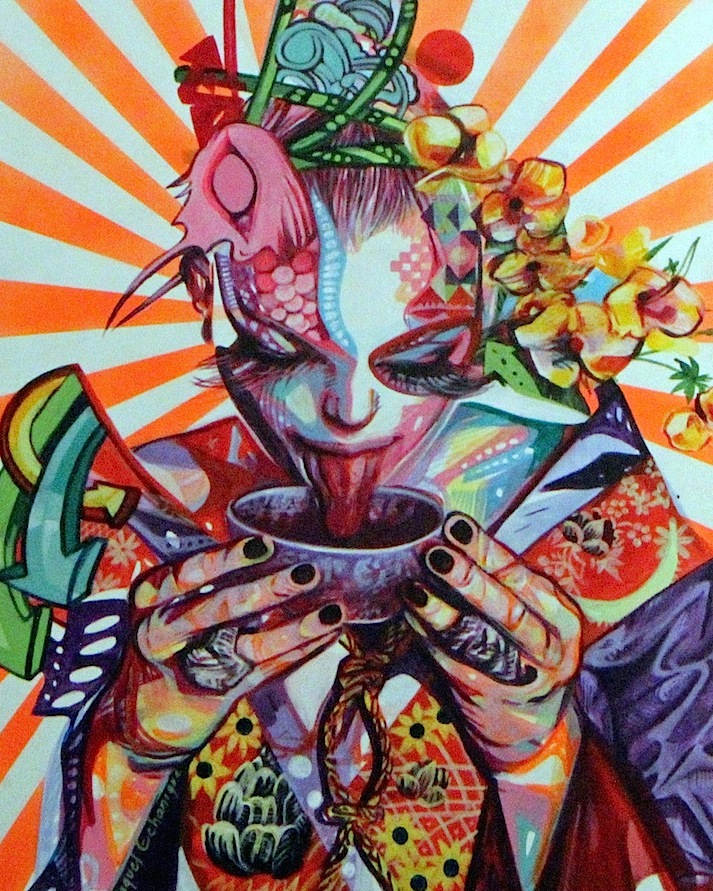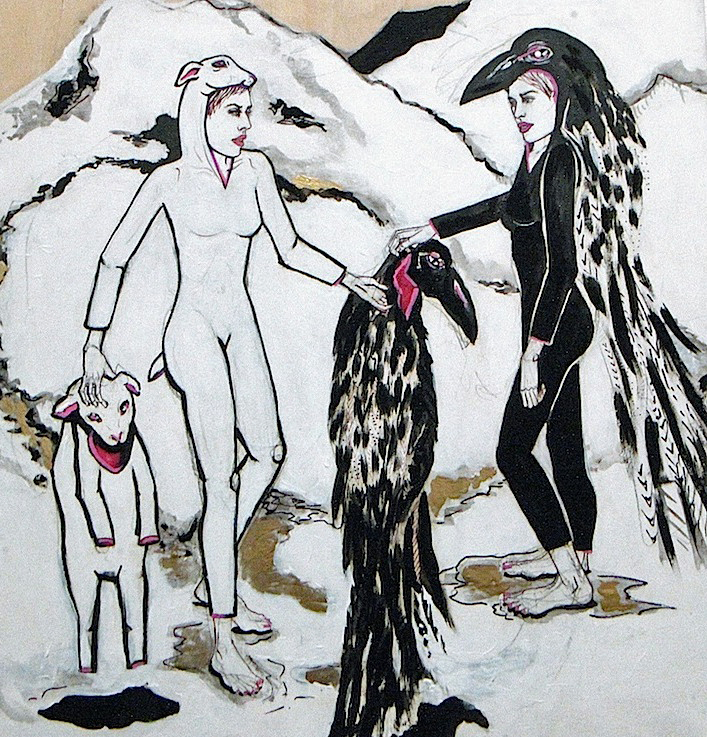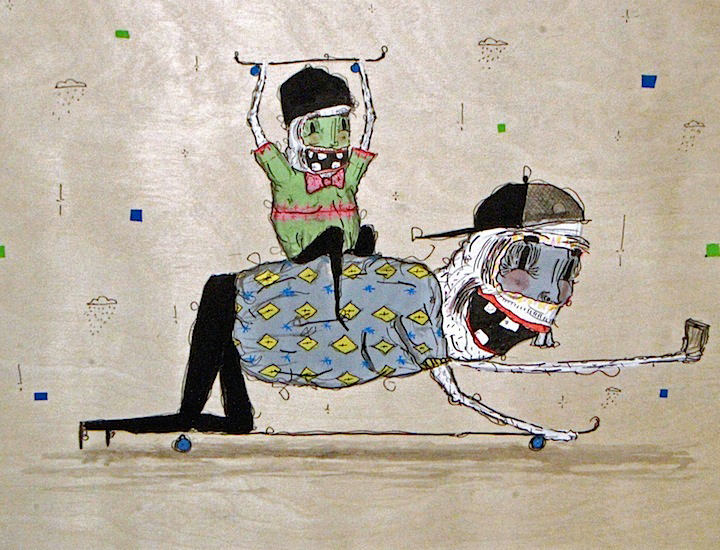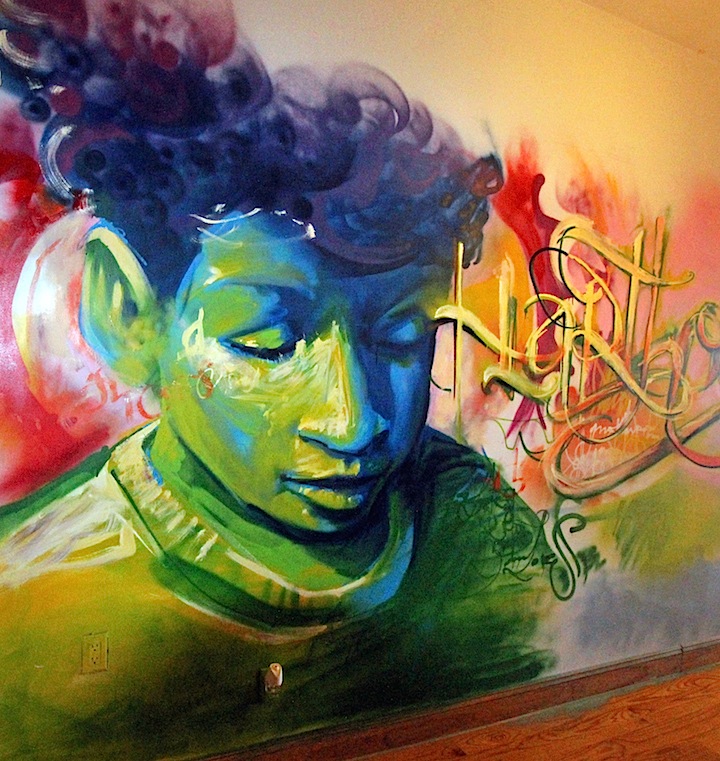
Interviews

Graffiti-A-New-York copy

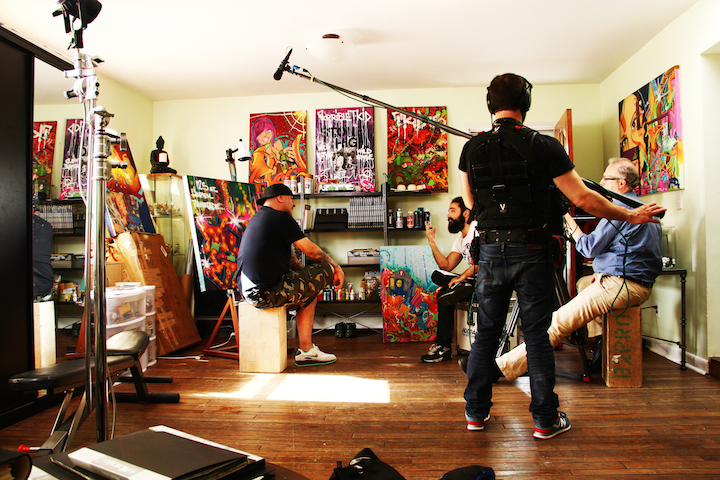
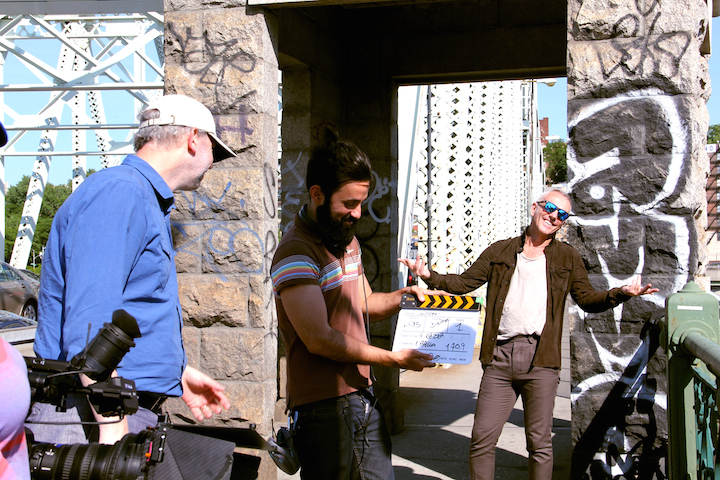
Aired last year in Italy, Sky Art’s underground documentary hit Graffiti A New York brilliantly chronicles the history of graffiti in NYC focusing on several key figures in the scene. After viewing the documentary, we had the opportunity to pose some questions to its producer and director Francesco Mazza.

You grew up in Italy. What spurred your interest in NYC graffiti? And how were you first introduced to its culture?

In the early 90’s a number of original graffiti writers from the Bronx moved to Italy looking to recover — thanks to the good weather and the healthy food — from the “crazy 80’s” in New York. They, maybe, needed what we now think of as a “detox” after the tumult.  At the time, graffiti writing had already come to the European consciousness through the movie Style Wars and the book Subway Art, but because of the influence of these newly migrated Masters, Italy, unlike the rest of Europe, developed a graffiti style akin to that of New York City’s.  It was the kind of style created by Phase 2, who moved to Italy himself, back in the 70’s. The walls of my neighborhood, Milano Lambrate, in the early 90’s looked exactly like those in the Bronx during the 70’s and the 80’s.

To us kids playing soccer in the street, those wall paintings were a sort of a mystery, and kids love mysteries. So, out of curiosity, we started asking questions to the older guys, and we all got involved.   From that point on, graffiti became an essential part of our lives — in our neighborhoods and in our identities as individuals.
graffiti-A-New-York-process-shot

What made you decide to produce a film on the topic? 

Having lived in New York for three years already, I was looking for a way to show the city to an Italian audience from a fresh and original perspective. I asked myself, “What do I know best?” The answer was clear: graffiti. I figured that behind the history of the graffiti movement, there was the history of the city itself. Really, graffiti writing could flourish only because of the terrible financial situation of New York during the 70’s. I always found it fascinating that all the crime and pain and blood of the 70’s spawned, at least, the most vibrant art movement the world has ever seen.

How long did the process take — from its conception to its completion?

The film itself took about a year to be made, but there are some elements of the history that I’d still like to add. I’m hoping for the opportunity to re-shoot some parts and add additional ones for a US release.  I’m searching for funding right now.  As great as it was to bring this to the Italian market, it has become clear to me that the documentary was the kind of record of a movement that deserves to be a part of the American canon, as well.  It’s about NYC. It documents the scene decade by decade. It’s really important to find a way to bring this history “home.”  Hopefully, I’ll find the financial backers; and due to the nature of the film, I’d love to partner with a museum, if possible.
graffiti-A-New-York

How did you decide which artists to include?

“Graffiti writer” is a label. When you look beyond the label, there is literally everything. Artists, addicts, entrepreneurs, fools, poets, murderers; you name it, I saw it. Right off the bat, you have to understand that you won’t be able to get close to everybody if you want to stay somewhat safe.  It’s also very hard to gauge the importance of the single artist. Is a graffiti artist important because he had or has a great style? Cool, but what if the said writer has done only a couple of hits and nobody in the community cared about him? And what if you focus on the quantity, but then the style of that writer — whose name was everywhere — literally sucked?

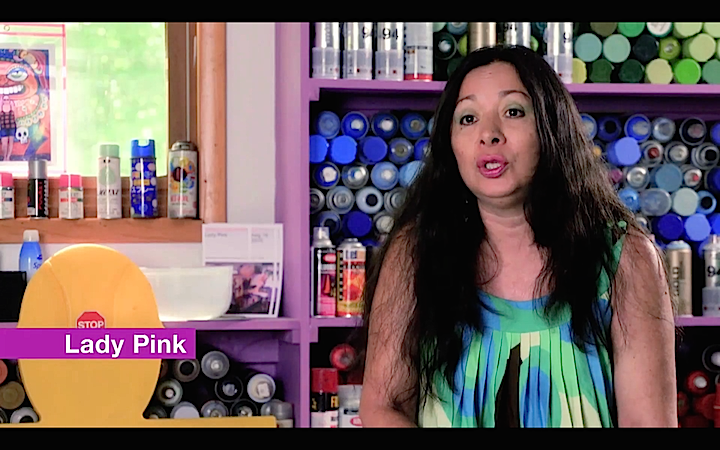
There was a balancing act.  I, of course, chose artists with historical importance, but I also reached out to the writers that I like and that inspired me when I was a kid. Fortunately, most of them were willing to help me with the project.  I also felt strongly about making sure women were represented in the film.  They were absolutely a part of the movement, but sometimes when history chronicles events, women don’t always get the due they deserve in the record.  It was important to me to not fall into that trap as a director.
lady-pink-graffiti-artist

How did the artists respond to you?

Some of them were skeptical at the beginning, and they were absolutely right. When mainstream media talks about graffiti writing, they tend to create confusion. If we consider the art world, I think that after the 19th century, nobody considered an artist as someone who can only “make something look pretty.” Nobody thinks that Pollock, so to say, was an amazing artist because he could simply “make a canvas look pretty”; there was a complexity that was beyond — or sometimes even consciously lacking — beauty.  For some reason, all around the world, when media, or institutions, or public opinion deal with graffiti writers, they consider the graffiti writers’ work just on their ability to “decorate” a wall in a happy, colorful way. To me, and I think to all graffiti writers, there is, indeed, decoration. Maybe beautiful, wonderful decoration, but graffiti writing is also something else. Graffiti writing points right to the contradiction of contemporary society where we all matter. We all pay taxes and have the right to vote —  but, at the same time, to what degree do we really matter to the machine?  I think it’s a question everyone asks. As a result, millions of individuals decide to express their identity, their presence in the world by writing on a wall, consciously facing the consequences of their deeds.

When I walk in my Crown Heights neighborhood in Brooklyn and I see a portrait of a dragon on a shutter, I think, nice illustration, but nothing beyond that. When I see a rough tag on a wall, I don’t say, “Look at that! So pretty!” but I think about a guy or girl that, despite the risk of getting busted and sentenced to two years of prison, decided to face the challenge and put his freedom at jeopardy to have me see his name.  Now, what is more interesting, from a social/cultural point of view? The fellow who copies an illustration of a dragon and gets paid for that, or the one who takes the risk for free to screw up his life forever just to have one individual out of one hundred thousand reading his name?  I personally have no doubt about which is both more interesting and matters more.  So, the graffiti writers I contacted were really scared that I was another guy from the media industry with no grasp at all of the roots and the meaning of the movement. It took me a lot of time and efforts to gain their trust, but once they realized what I was talking about, they were really cooperative and with some of them I built great friendships.
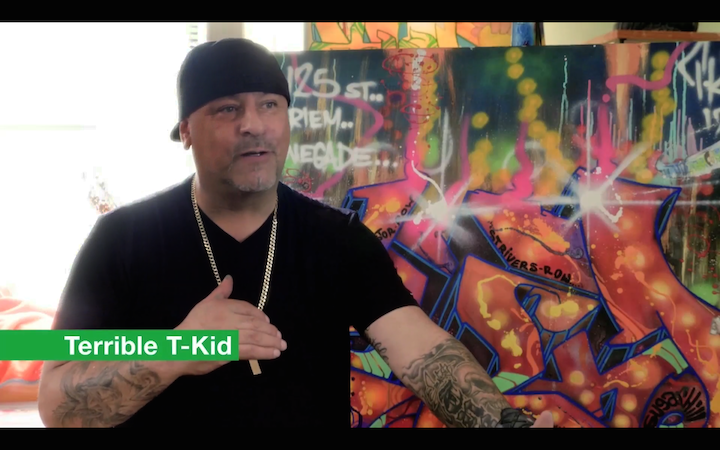
tkid -graffiti-artist

What were some of the challenges you faced in producing the film?

I served as writer, director, and executive producer. The network, Sky Art,  gave me a budget, and I was free to manage it however I liked.  But that was hard, because as a director, I always wanted more  — more days of shooting, more footage, more writers to interview — but as an executive, I had to put some limits. It was like being two different people at once.  Now that I can look back, I better understand the limitations I had and their effects on me. And an American alternative presentation — that wasn’t able to be made at the time —  is something important to pursue going forward, as much to “do right” by NYC.

Who was/is your target audience?

The original documentary targets an Italian audience who is fascinated with New York but doesn’t really have a knowledge of it, as well as everybody else who wants to know, once and for all, the real history of one of the most relevant artistic, cultural and, to a certain extent, political movements of the 20th century.  Now I need to broaden the reach beyond Italy.
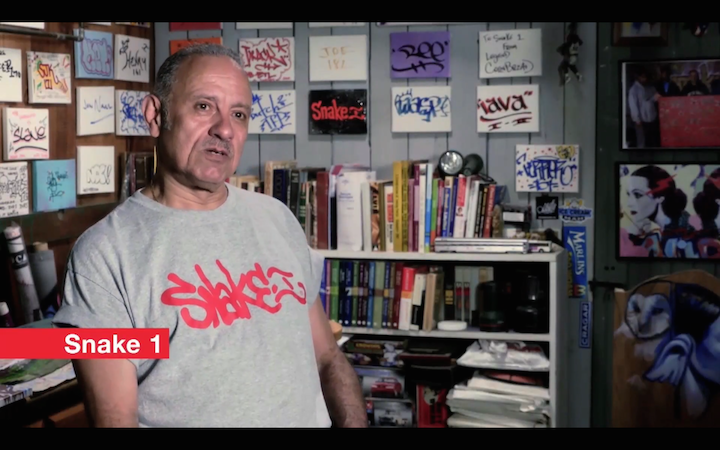
snake-graffiti-artist

Will New Yorkers have the opportunity to view it?

Unfortunately, as of now, they don’t, and that’s a travesty.  That’s where my fight is now — finding a means to change that.  Everything about this movie is New York City.  The residents need this film.  It needs to be a contribution to their historical record.  Hopefully, I’ll find the funding for what is really a “preservation” project.  People aren’t around forever.  The interviews with important artists in Graffiti A New York, all in English, need to come “home.”

I certainly agree!  Graffiti A New York is not only a passionate homage to the roots of graffiti, but an essential visual and spoken record of a significant NYC era.  What’s ahead for you? Can we expect any more films on the topic of street art or graffiti?

Currently I’m working on a project for the Discovery Channel for which I hope to be able to announce details soon.  Later this year I’m doing a documentary on Stewart Brand and the Whole Earth Catalogue that I’m very excited about.  This fall I’ll be shooting a short project in New York again.  I’m also continuing to show Frankie: Italian Roulette, my short fictional film from last year, at festivals across the US.  Next up for Frankie is the Crossroads Festival in Jackson, MI on April 2. Even Frankie is about life in NYC and fighting to stay there, so — going forward —  it’s no surprise that I’ll, of course, continue to focus on the themes present in Graffiti A New York: art, actions of consequence, social responsibility of both the system and the individual, and, of course, the city of New York itself.  And, fingers crossed, we can make the US adaptation of Graffiti A New York.  That really must happen.

The questions for this interview were formulated by Lois Stavsky and Tara Murray after viewing the European market release Graffiti A New York.

Note: Hailed in a range of media from the Huffington Post to the New York Times, our Street Art NYC App is now available for Android devices here.

en-play-badge 2

{ 0 comments }
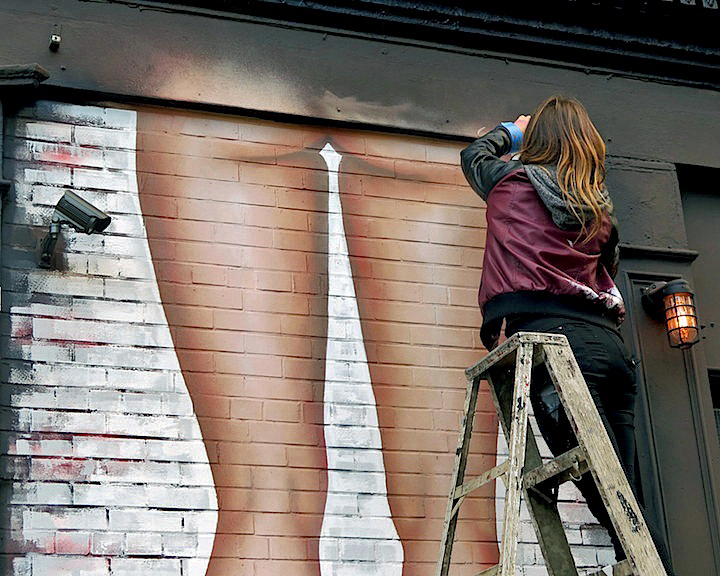
giz-ghost_edited-1

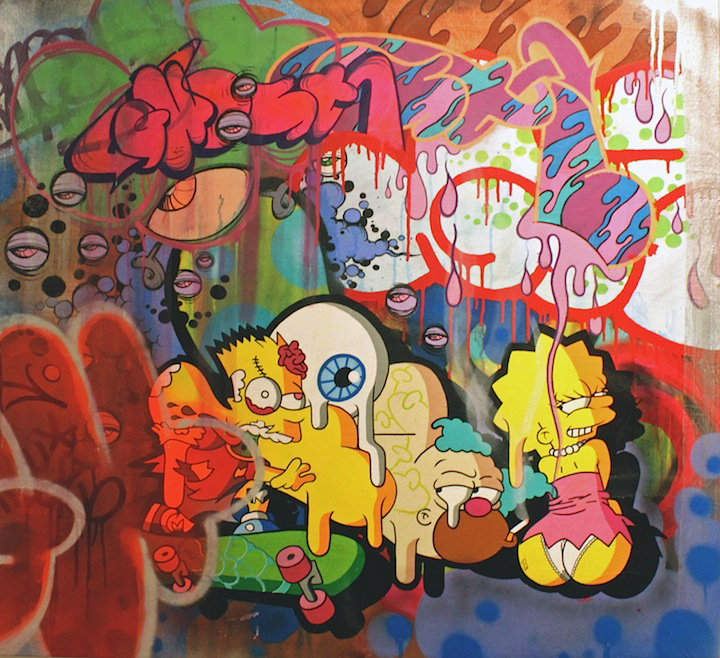
This past Friday, we visited Fillin Global’s inaugural showing of curated art at Castle Fitzjohns on the Lower East Side. Featuring a diverse range of creative artworks by over two dozen artists in different media, the exhibit exudes a wonderfully expressive energy. Among the artists whose works we saw are many who also bring their talents to our city’s streets. While there, we had the opportunity we had the opportunity to speak to Thomas Feinstein — of Fillin Global — who curated the exhibit with co-curator Jackie Collins.

This exhibit is amazing! There are so many different styles and techniques represented here, and everything seems to work together. Just what is Fillin Global?

FILLIN is an artist agency, representing innovative artists from across the globe.

such-graffiti-on-canvas

How did you get such a varied, talented group of artists together in one setting? 

Many are friends. Some I’ve known from my childhood growing up in Long Island. Let’s just say I was a bad kid!

ja-giz

How long did it take you to get this exhibit together?

I began working two months ago for a February 19 launch. But during the final week, I barely slept at all.

marc-evan-art

 What were some of the challenges that came your way in getting this all together?

The biggest challenge was working with such a wide range of styles and media and making it all flow.

Dain-artwork

How have folks responded to the exhibit?

They love it!

phetus-artwork-fillinglobal

 What’s ahead?

We are planning an event in a huge warehouse where artists will be able to paint directly on the walls. It will take place this summer.

That sounds great! Good luck and congratulations on this inaugural show.

Note: Today, Sunday, Feb 28, is the final day to check out the Fillin Global’s inaugural exhibit. The gallery — located at 98 Orchard Street — will remain open until 10pm.

Images:

1. Giz & Ghost, Untitled

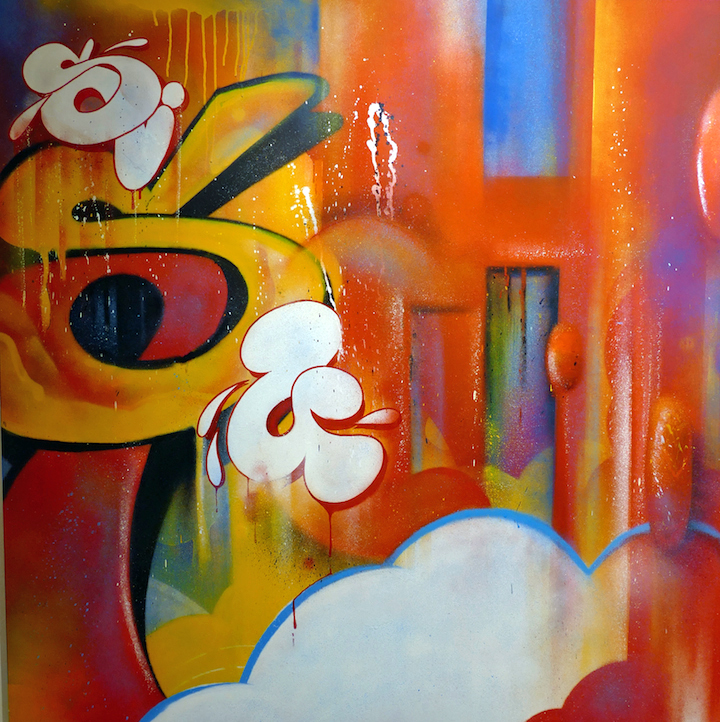
2. Such, The Big ‘H’

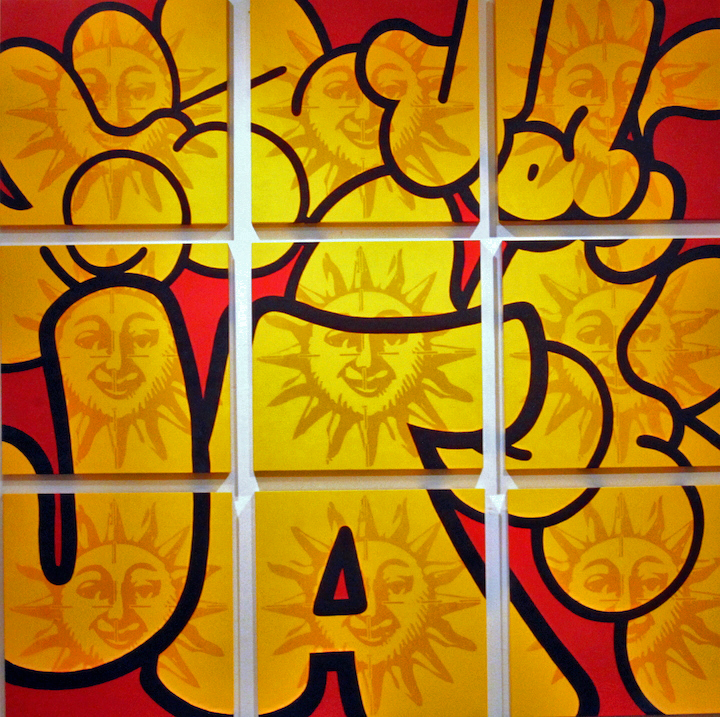
3. JA & Giz, Tabs of the Rising Sun

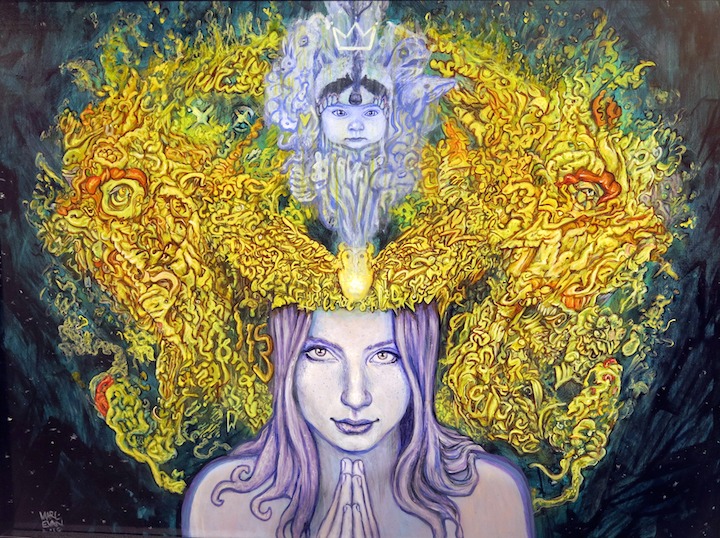
4. Marc Evan, Limitless Undying Love

5. Dain, I Wasted Time on You

6. Phetus, Untitled

Photo credits: 1, 3 & 6 Tara Murray; 2 & 5 Dani Reyes Mozeson and 4 Lois Stavsky

More artworks and info about them can be seen here.

Note: Hailed in a range of media from the Huffington Post to the New York Times, our Street Art NYC App is now available for Android devices here.

en-play-badge 2

{ 0 comments }
Sei-and-Ki-smith-brothers

We recently had the opportunity to meet up with Apostrophe founders and curators — Sei and Ki Smith  — and find out a bit about their plans for 2016:

Just what is Apostrophe?

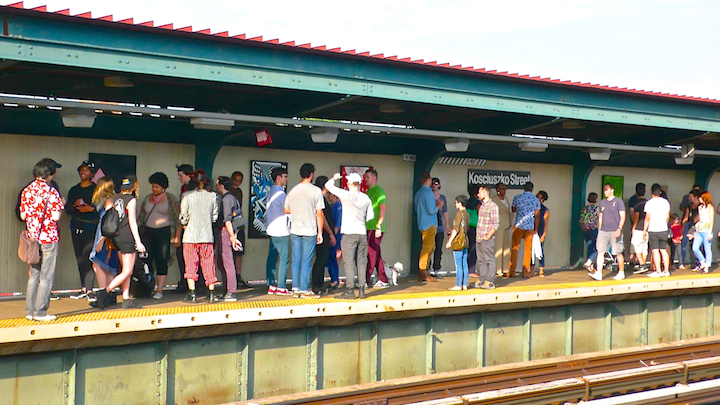
Apostrophe began as a gallery and performance space in Bushwick in 2012, and it has since evolved into a series of pop-up exhibits and events. As a collective, it is designed to offer exposure to artists while sparking a creative energy that can be experienced by everyone.  Our last exhibit, Subway Show, took place at the Kosciusko Street stop on the J train.  The subway passengers, along with anyone else who came by, were treated to art, music, a comedic performance and refreshments!

Apostrophe-subway-show-NYC

What about its name, Apostrophe?

Our concept came before the name. The name was inspired by the title of Frank Zappa’s eighteenth album Apostrophe’.  It suggests an inclusive fusion of energies.

What is Apostrophe’s current mission?

The mission of our current project Base 12 is to highlight the art of twelve talented artists in a dozen diverse, unconventional settings, while making their art accessible to folks who might not otherwise see it.  When art is shown exclusively in gallery settings, its audience can be limited.

James-A-Reyes-art-apostrophe-art-collective-nyc.png

What kinds of alternative settings are you referring to?

Of the nine upcoming pop-up shows here in NYC, three will take place on subway platforms, three in museums and three in parks. They will all engage passersby in non-traditional ways. Details will  be announced the day of the event via Instagram and Facebook.

That sounds great! How did you select the artists?

Some had participated in exhibits in our former Bushwick space; others we met through friends. And some we discovered through our open call for submissions.  We’ve all gotten to know one another, and we all work well together.  Once a month we come together, and we critique each other’s artworks. We love not only the works of the artists we are showing, but their energy, as well!

sei-smith-art-apostrophe-art-collective-nyc

Do you both have a formal art education?

We both went to art school, but neither of us finished. We grew up, though, in a family of artists and have always engaged in art-related projects here and abroad.

What’s ahead?

In addition to what will be happening here in NYC, we are planning three exhibits and events abroad: at Alan Istanbul in Turkey; at corretger5 in Barcelona, and at a gallery space — to be announced — in London.

James-rubio-street-art-nyc

It’s all very exciting!  Lots of luck! We will definitely keep posted to your Instagram.

Interview by Lois Stavsky with Houda Lazrak

Photo credits: 1 Lois Stavsky; 2-4 courtesy of Apostrophe; 5 Tara Murray

2  Subway Show 

3  James A Reyes, My Shorty

4  Sei Smith, Half Portrait No. 5

5  James Rubio, Black Flowers, close-up of public art work

Apostrophe’s Base 12 will also feature the works of Caslon BevingtonRyan Bock, Morell Cutler, Alana Dee Haynes, Kolter Hodgson, Charlie Hudson, The Love ChildJulia Powers and Bruno Smith

Note: Hailed in a range of media from the Huffington Post to the New York Times, our Street Art NYC App is now available for Android devices here.

en-play-badge 2

{ 0 comments }
Allan-Ludwig-photo-by-Julie Dermansky

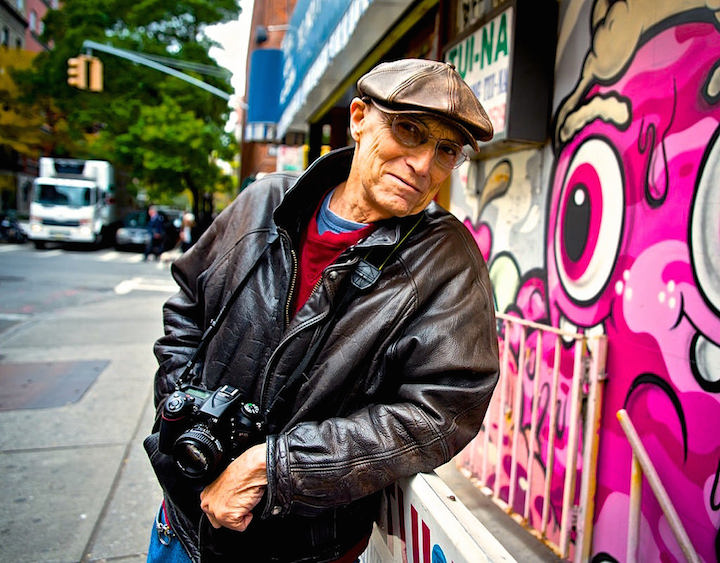
Still out there each day with camera in hand documenting what has surfaced overnight, photographer Allan Ludwig aka Elisha Cook, Jr recently shared with us some of his thoughts on the changes that he’s witnessed in his downtown Manhattan neighborhood and more:

You’ve lived here in Soho for decades.  At what point did the changes in your neighborhood become most apparent?

Around 2003, I noticed that the new stores in my neighborhood were — for the most part — only selling expensive items.  I no longer recognized my neighbors’ faces on the streets. Tourists and shoppers were everywhere. I knew then that I must turn my lens onto the graffiti and street art here before it all disappeared.

allan-ludwig-graffiti-nyc

dylan-egon-photo-allan-ludwig

And what are some of the changes that you have observed in the street art that surfaces here these days?

It has largely lost its edginess.  Much of the street art here has  gotten exceedingly commercial.  It’s often difficult to tell the difference between what is sanctioned and what is done without permission. Street art and ads have become increasingly interchangeable. And too many “street artists” these days seem to use public space primarily to promote their gallery shows.

Dee-Dee-was here- photo-Allan Ludwig

Dasic-Fernandez-photo-by-Allan-Ludwig

What do you suppose has caused these changes?

The monetization of it all.  And I feel that the street art festivals have not only legitimized an underground movement, but have created an elite — not all that different from the mainstream art world.

 We’ve noticed that you tend to focus your camera on illegal works, particularly tags and bombs. Why is that?

Because they are real and raw. I love their poetic spontaneity. I can feel the artist’s pure passion and love for it.

graffiti-bomb-on-truck

graffiti-bombs-photo-allan-ludwig

Not everyone would agree with you! Any thoughts about Mayor de Blasio’s proposed efforts to keep the city graffiti-free?

I don’t see any point to it. It’s a misdirected use of funds. The money should be used, instead, to help the homeless.

We noticed that you were daily documenting the impromptu David Bowie memorial in front of his home. Did you know Bowie personally?

I live just down the block from him, so I’d see him from time to time around the neighborhood. But, no, I didn’t know him personally. I would simply nod in acknowledgement and respect when I saw him. I sensed that he was my kind of person. But I did not want to invade his privacy.

david-bowie-soho-memorial-photographer-allan-ludwig

And what about the memorial? What spurred you to photograph it daily and in such detail?

I loved it! I loved that it was spontaneous and inclusive. There was no hidden agenda!

Interview conducted by Lois Stavsky with Tara Murray

All photos by Allan Ludwig aka Elisha Cook, Jr, except for the first one — featuring Allan alongside Buff Monster — which was photographed by Julie Dermansky; photo 3 features Dylan Egon; photo 4 features Dee Dee  and photo 5, Dasic Fernandez

Note: Hailed in a range of media from the Huffington Post to the New York Times, our Street Art NYC App is now available for Android devices here.

en-play-badge 2

{ 9 comments }

Lulu-reich

I recently stopped by 212 ARTS and had the opportunity to speak to Laura “Lulu” Reich who, along with Marc Leader, founded and directs the gallery.

I’ve heard great things about your current exhibit, Gumshoe: Red, White And Black, and I’m so glad I finally had the opportunity to visit this space! How long has 212 ARTS been here?

We’ve been here as 212 ARTS since this past October.

This space here at 240 East 4th Street is so perfect for a gallery. Why did you choose this particular neighborhood? And how were you so lucky to get this space?

I’m an East Village girl and I love everything about this neighborhood — its history, alternative culture and more. Yes, acquiring this space was mere luck! I had found out from the landlord that it was available.

gumshoe-art-on-canvas-212arts-nyc

What is the vision behind 212 ARTS

It is to give exposure in a gallery setting to urban artists, particularly those who work on the streets, as well as in their studios. It is also to educate folks about the artists in this scene. There are stories to tell, as in this current exhibit, Gumshoe: Red, White And Black.

Can you tell us something about this current exhibit?

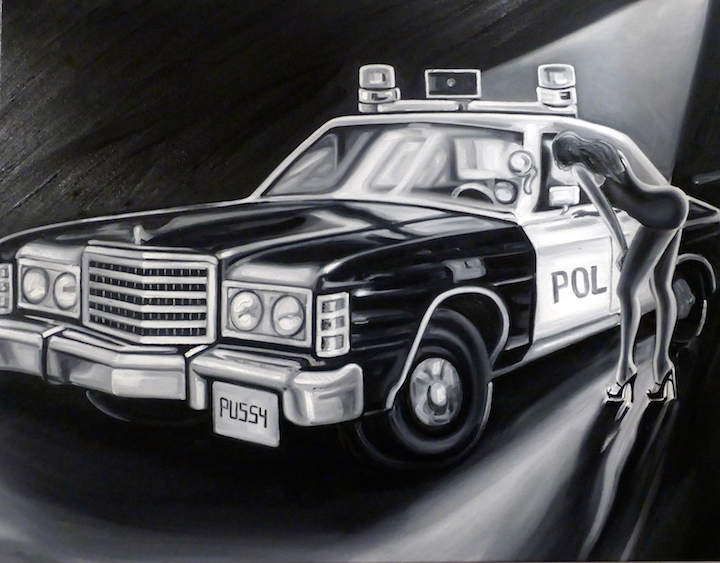
It is Gumshoe‘s first solo exhibit in NYC. We chose to present this exhibit because we love Gumshoe’s work and her distinct female energy! And it seemed like the perfect exhibit for Valentine’s Day.

Gumshoe-art-on-canvas

And what about its title, Red, White and Black?

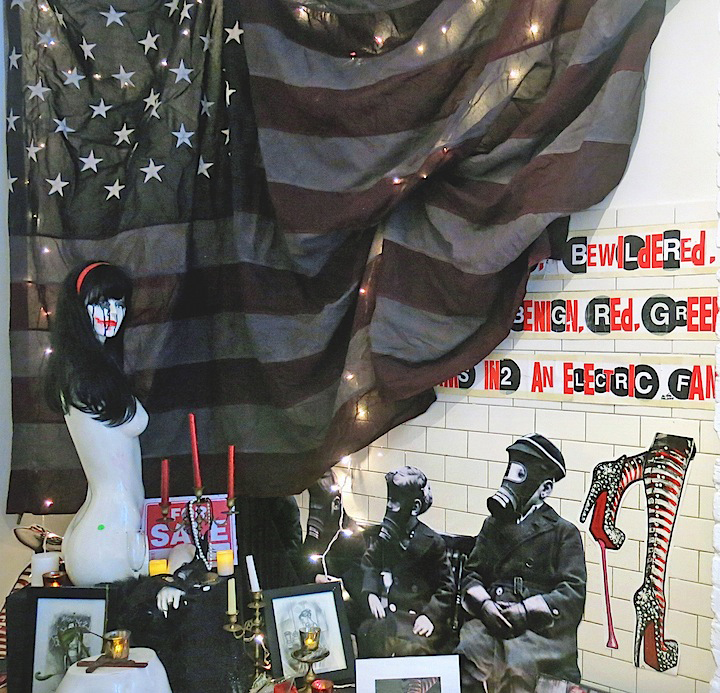
Most of the pieces in the exhibit are red, white and black. The title is a play, of course, on the colors of the American flag, presenting the darker side of the American dream.

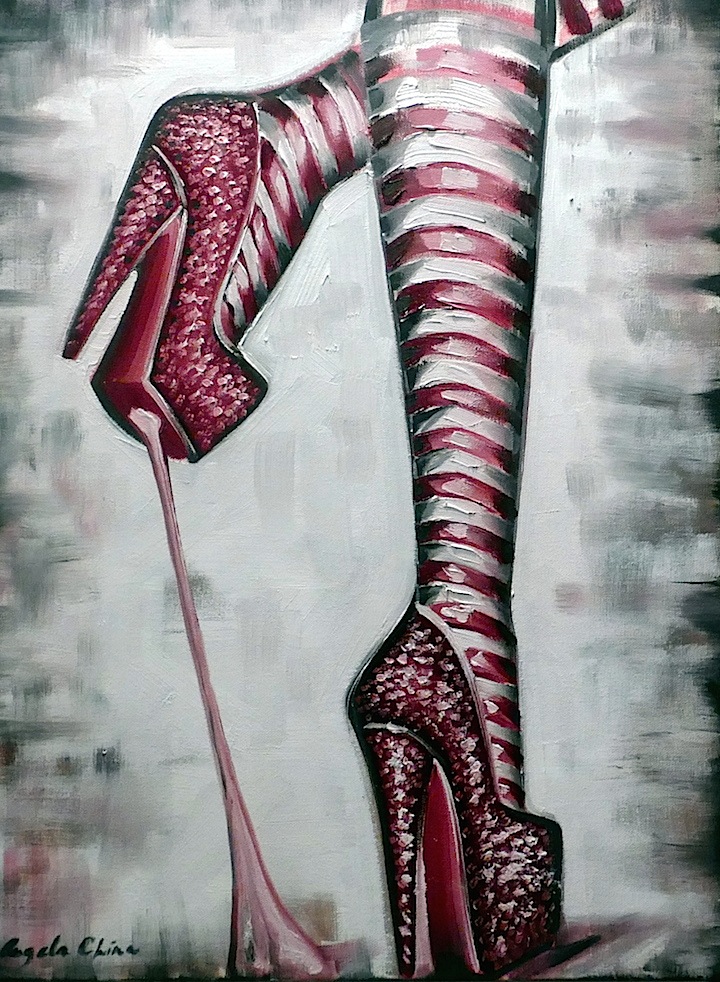
And the gum that always makes it way onto those glorious red Louboutin heels? What is that all about?

As we strive for perfection and sometimes almost reach it, we meet inevitable disaster! The gum is the metaphor for that. We get stuck along the way!

gumshoe-installation-212arts

Oh, yes! There is a story to tell! Until when will folks be able to see this exhibit?

We are open Tuesday through Saturday 2:00 pm – 8:00 pm and on Sunday 2:00 pm – 7:00 pm.  You can also make an appointment to see it by contacting me at laura@212arts.com  Gumshoe‘s exhibit closes on Wednesday, February 17th.

What’s next?

Opening on the 18th is an exhibit featuring artworks by NYC graffiti legends. Among those showing are: Crash, Skeme and T-Kid.

Gumshoe-paints-street-art-nyc

I’m certainly looking forward to that! Good luck!

Interview conducted and edited by Lois Stavsky; all photos feature Gumshoe‘s work; photo 4 of Gumshoe‘s installation also features Jily Ballistic and Al Diaz; photo 5 of  Gumshoe at work was captured awhile back on the Lower East Side.

Photo credits:1 & 4 Lois Stavsky; 2 & 5 Dani Reyes Mozeson and 3 Houda Lazrak

Note: Our highly acclaimed Street Art NYC App is now available for Android devices here.

en-play-badge 2

{ 0 comments }
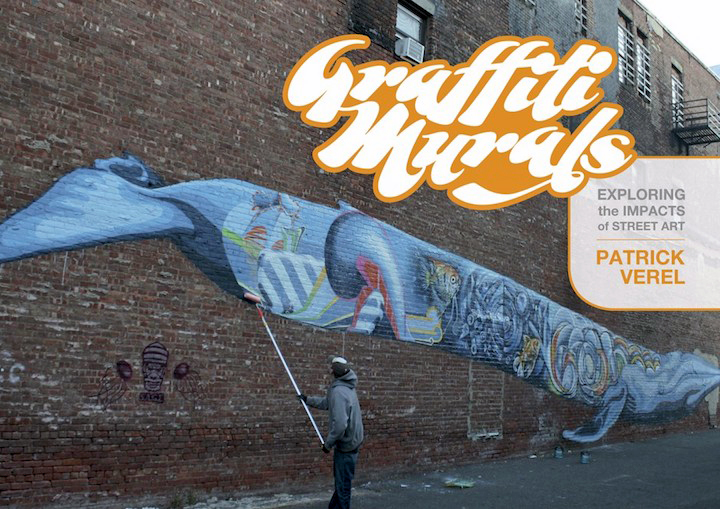
Patrick-Verel-Graffiti-Murals

In his highly acclaimed book Graffiti Murals: Exploring the Impacts of Street Art, free-lance writer and photographer Patrick Verel presents six case studies, along with dozens of photographs, exploring the role of sanctioned graffiti murals and street art in the urban environment. I recently met up with him and had the opportunity to ask him a few questions:

What spurred your interest in this topic?

I was always into graffiti.  I have a short attention span, and I love being surprised! Cities stimulate me and graffiti is part of that stimulation.

How did this initial interest evolve into a book?

I never thought I’d actually write a book. It developed from the thesis that I wrote when I was enrolled in Fordam University’s Urban Studies Master’s Program.

Wallnuts-Crew-graffiti-mural-Gowanus-Patrick-Verel-graffiti-murals-NYC

You focus on six cases from the South Bronx to Trenton, New Jersey. How did you connect to all of the folks whom you interviewed?

I sent out lots of emails after poking around the Internet.  And I made some of the connections via my Flickr contacts — like the photographer Luna Park, who hooked me up with Robots Will Kill.

What were some of the obstacles you encountered while doing your research?

Getting people to talk to me and synthesizing all of the information.

Patrick-Verel-5Pointz-graffiti-NYC

You seem to have accomplished that quite well! What — would you say – was the mission of your book?

To change the way so many people think about graffiti. To introduce them to the positive benefits of graffiti murals in enhancing the urban environment.

Are there any particular factors that assure the success of these interventions?

So much depends upon the owner of the space and his relationship with the artists. That owner must be able to trust the artists to do what they want.  And a successful collaboration demands money, effort and time.

Robots-Will-Kill-Peeta-Never-ECB-graffiti-mural-art-Patrick-Verel-NYC

Were there any unexpected outcomes following the publication of the book?

Yes! I received a positive response from City Government, and I connected to Natalie Raben of the Lower East Side BID and the 100 GATES Program.

Have you noticed any changes in the graffiti/street art since you wrote your book?

There seem to be more projects, like the Bushwick Collective and the Welling Court Mural Project, that give artists legal opportunities to paint outdoors.

TerraCycle-patrick-verel-graffiti-murals-NJ

Published by Schiffer Publishing, Graffiti Murals: Exploring the Impacts of Street Art, is available online and in most bookstores.

Interview by Lois Stavsky

Photos of murals by Patrick Verel

1. Book cover, Lank completes mural he painted with Delve, Luv1 and Casso in Jersey City

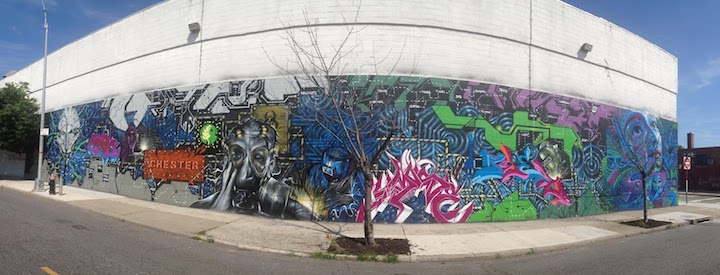
2. Wallnuts mural in Gowanus with Dos, Chester, Muse, Been3 and Werc

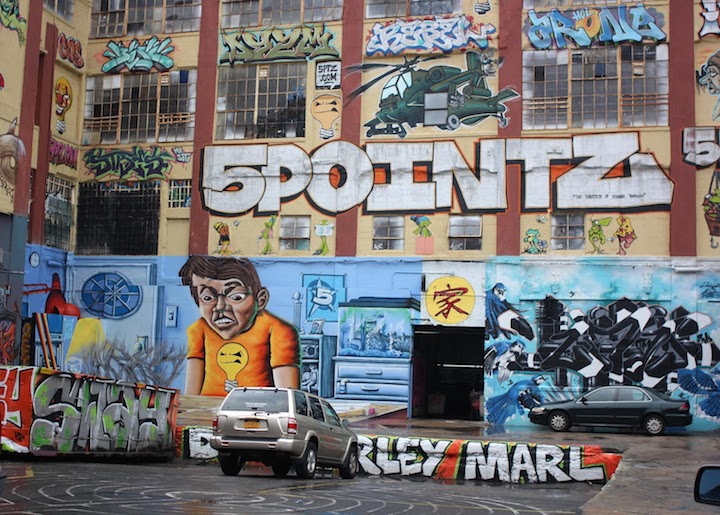
3. 5Pointz in LIC with Meres, Zimad and more

4. Robots Will Kill in Bushwick with Chris, Veng, Peeta, Never & ECB

5. Taste, Mek, Evak, Sno Reo & Zoe at TerraCycle in Trenton, NJ

Note: Our highly acclaimed Street Art NYC App is now available here at Google Play for Android devices.

en-play-badge 2

{ 0 comments }
Jily-Ballistic-and-JPO-art-17-Frost

SOLD Magazine launched this past Thursday evening with an exhibit — co-curated with Ellis Gallagher — and party at 17 Frost. When I stopped by early in the evening, I had the opportunity to speak to John Paul O’Grodnick, who — along with Greg Frederick and BD White — made it all happen.

 Just what is SOLD Magazine?

SOLD Magazine is a free magazine by artists for artists and art lovers. Among its features are: artists interviewing each other, studio visits, artist and photographer profiles, a travel section and much more.

What motivated you thee to launch it?

A sense that artists need a new platform for exposure. Our mission is to provide that platform.

chris-rwk-art-17-frost

 When did you guys first begin working on SOLD Magazine? And how did you fund it?

We began working on it at the beginning of October, and we funded it via a Kickstarter campaign.

It’s great that your campaign was so successful! What has been your greatest challenge in seeing this through?

Rounding up the artists whom we wanted to participate in our venture.

raquel-echanique-17-Frost-exhibit

 Was it an open call? How did you decide which artists to include?

No! It was artists we’ve known and worked with in the past. Some of them suggested others.

How often do you expect to publish SOLD Magazine?

Once every three months. It is intended as a quarterly.

elle-art-17-Frost-nyc

How will folks be able to get hold of it?

We plan to make it available in galleries and museums throughout the city, as well as in local businesses here in Williamsburg.

I notice that this premier issue focuses on female artists, with your first cover featuring Gilf and Elle. What can we expect in future issues?

Every issue will have a theme. Our next one will focus on collaborations.

Ramiro-Davato-art -at-17-Frost

 That sounds great! Congratulations!

Note: The above images of are of works that were on exhibit and for sale at Thursday evening’s SOLD Magazine‘s launch:

1. Jily Ballistic and John Paul O’Grodnick aka JPO

2. Chris RWK

3. Raquel Echanique

4. Elle

5. Ramiro Davaro

Interview by Lois Stavsky and photos by Tara Murray

{ 0 comments }
el-nino-de-las-pinturas-art-hart-house-east-harlem-nyc

A collective of artists based primarily in Harlem, HART has become an active force in the uptown arts scene. While visiting its space, I had the opportunity to speak to one of its founders, Kristy McCarthy aka D Gale.

Can you tell us something about HART’s mission?

Our mission is to use art as a tool to engage, educate and empower the members of our Harlem community.  We are especially interested in beautifying abandoned and neglected spaces.

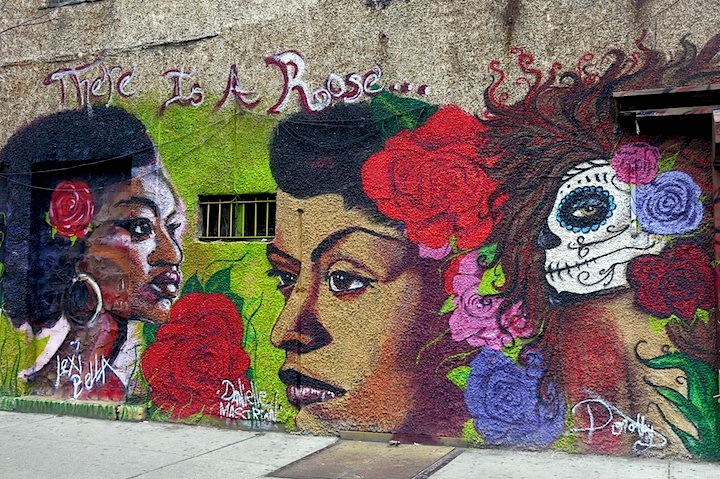
lexi-bella-danielle-mastrion-d-gale-street-art-east-harlem-nyc

When was the Harlem Art Collective first born?  And was anyone – besides you – involved in its conception?

It officially began last February. Gia Gutierrez and I had talked about starting some sort of Harlem-based artist organization. But as she didn’t have enough free time at that point to devote to launching it, Harold Baines and I organized the first few meetings with about 10 other artists and community members.

How did you get the word out?  And how many artists are currently involved?

We initially got the word out mostly via emails and through our personal networks. About 40 artists currently participate.

D-Gale-public-art-east-harlem-nyc

Here at HART’s base, you provide space for local artists to live and free studio space for artists to create. In addition, you rent out two of the bedrooms to folks who are in NYC for short periods of time.  How did you come upon such an amazing 5-bedroom space in the heart of East Harlem?

We found out about it from the building’s landlord. And its size and location made it a perfect match for our needs.

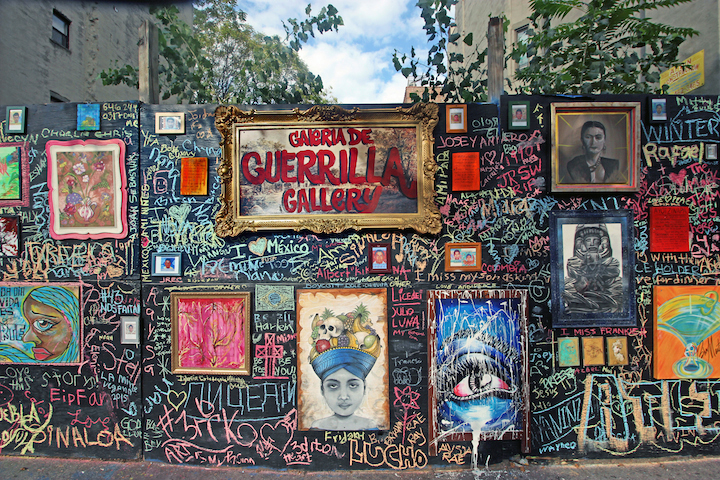
Among your projects is the always-engaging Guerilla Gallery on 116th Street off 2nd Avenue. It has introduced us to many new artists, and it also showcases art by some of our all-time favorite ones. What other projects have you initiated? 

We have partnered with other community organizations — such as the East Harlem Block Nursery, Concrete Safaris and the Manatí Community Garden — to paint murals at block parties and community events. We worked with Urban Innovations to paint and install little free libraries in community gardens around Harlem, and we have hosted free art workshops at the HART house.

Guerrilla-gallery-street-art-east-harlem-nyc

How can an artist join your collective?

We hold meetings twice a month. Anyone interested in attending and finding out more about HART can contact us via our Facebook page. We are also going to start a monthly newsletter this spring and, hopefully, add a community calendar to the Guerilla Gallery.

What’s ahead?

We are working on organizing a spring show that will feature artists from the collective and from the neighborhood. We are also working on starting other Guerrilla Galleries on abandoned construction walls around Harlem. And we are planning to paint more murals that directly involve the community. We have, also, recently formed a women’s caucus within the collective to organize projects specifically dedicated to women’s issues and female empowerment.

steve-perez-zerkoler-bio-tats-cru-street-art-east-harlem-nyc

That sounds great! Good luck with it all. We are looking forward!

Images:

1. El Nino de las Pinturas, inside the Hart House

2. Lexi Bella, Danielle Mastrion and Kristy McCarthy in East Harlem

3. Kristy McCarthy in East Harlem

4. The Guerrilla Gallery in East Harlem, as seen earlier this year

5. Steve Perez, Zerk Oer and Bio,Tats Cru at the Guerrilla Gallery in East Harlem, as seen this past week on massive wall spelling out E-L  B-A-R-R-I-O

Photo credits: 1 & 4 Tara Murray; 2, 3 & 5 Lois Stavsky

Interview by Lois Stavsky

{ 7 comments }
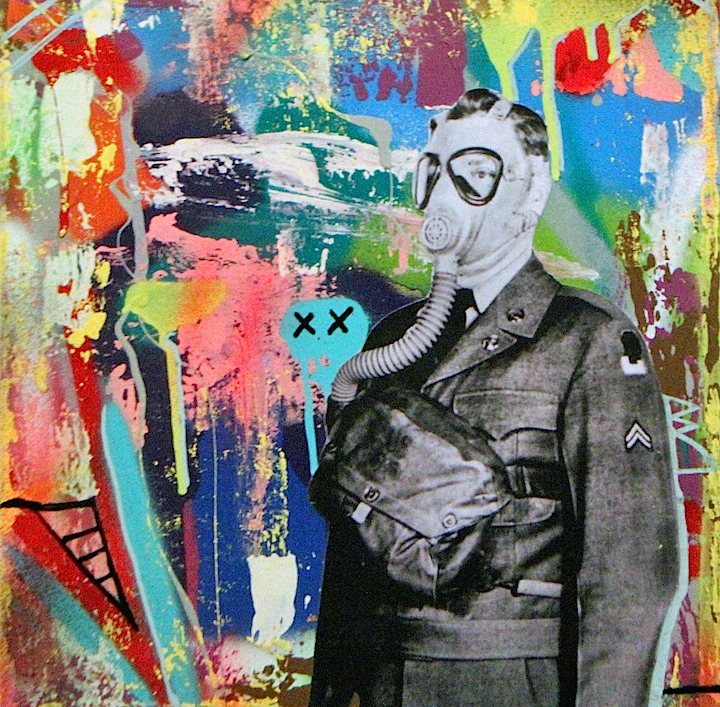
rocko-the-art-of-peace

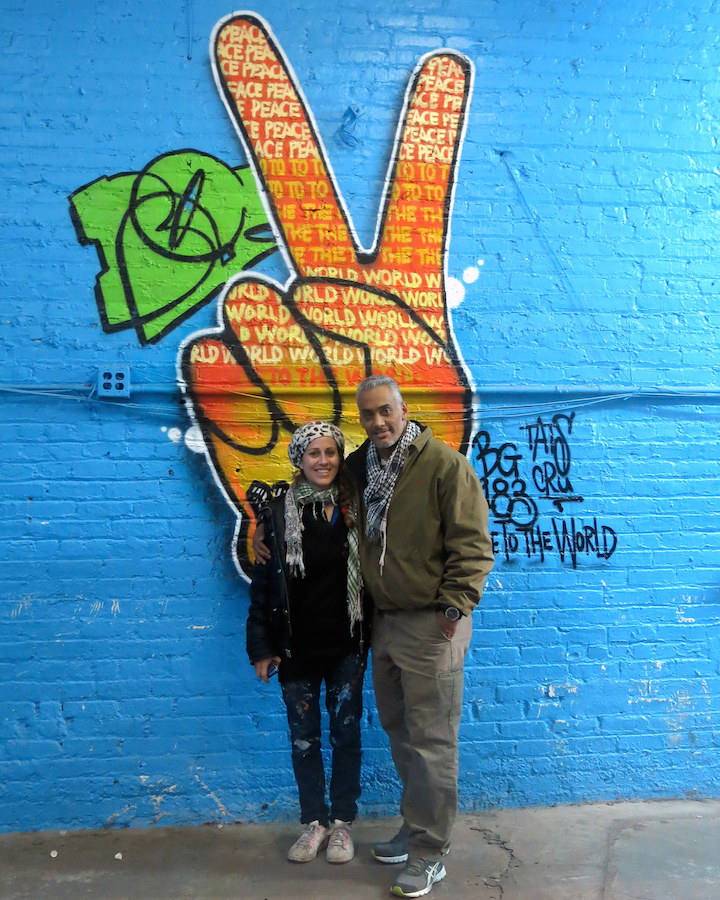
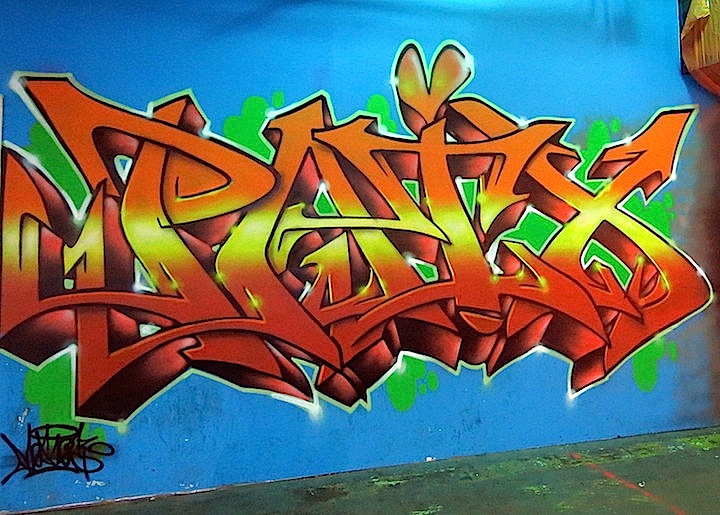
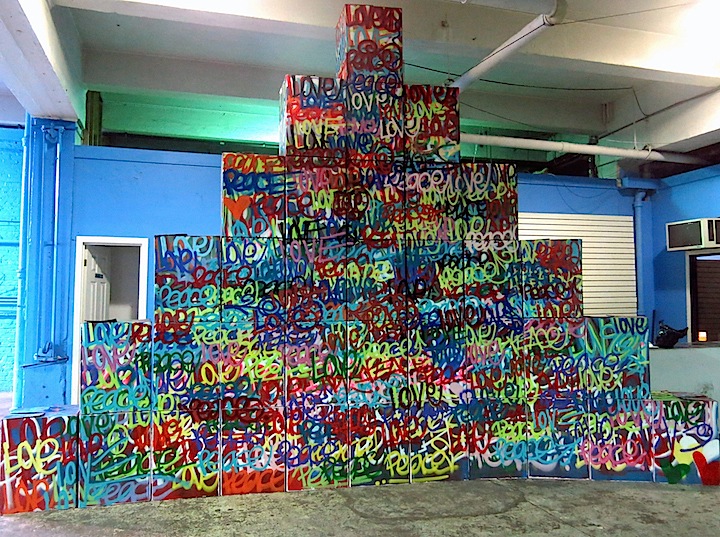
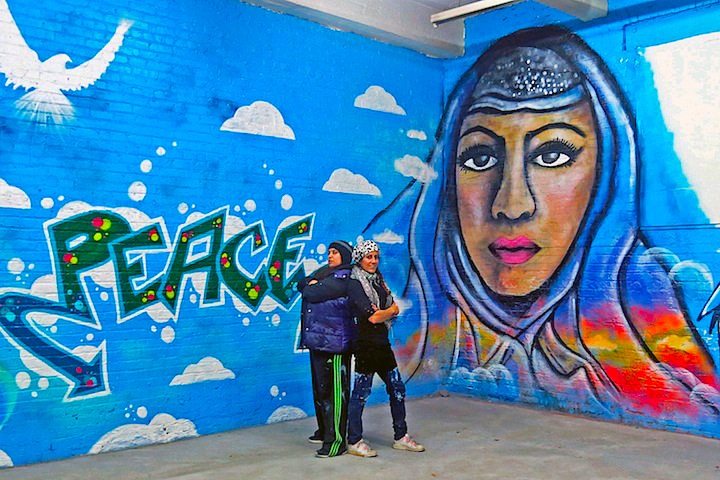
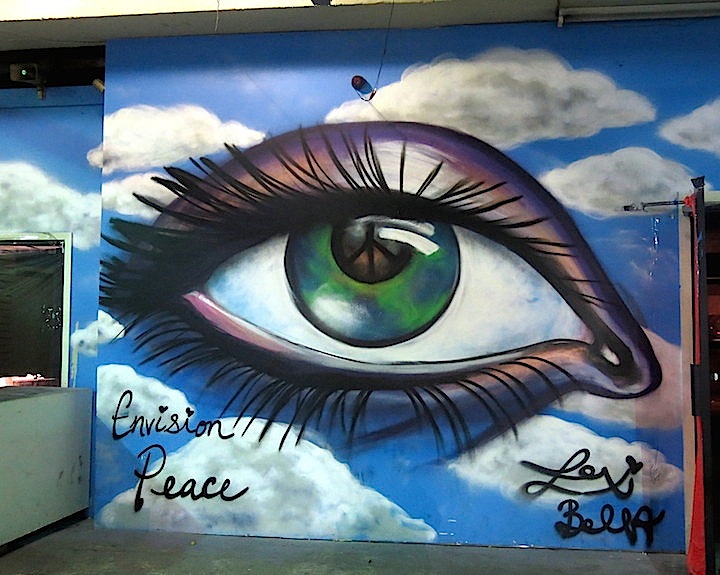
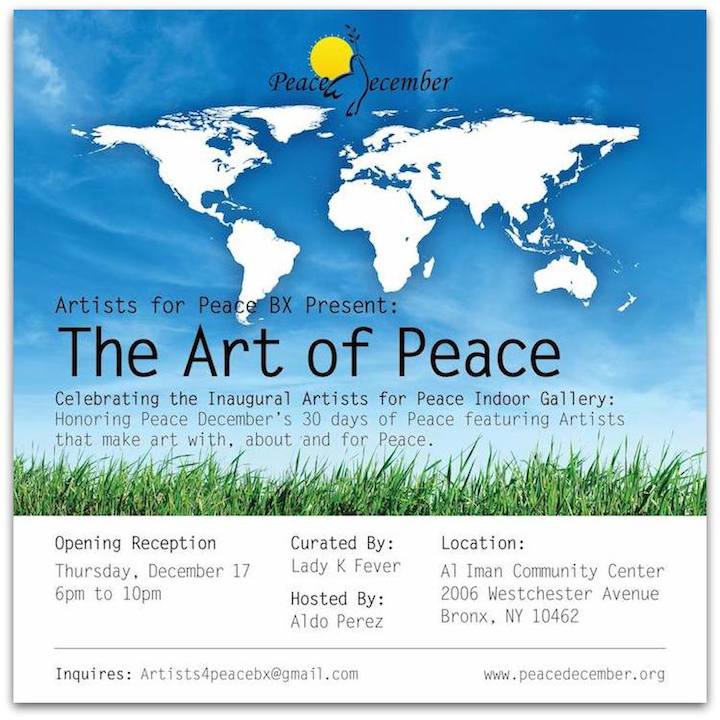
Curated by Lady K Fever and hosted by Aldo Perez, Ihe Art of Peace, an exhibit of mural and graffiti art celebrating peace, opens tonight at the Al Iman Community Center. I had the opportunity to speak to Lady K Fever while visiting the space at 2006 Westchester Avenue earlier this week.

BG-183-the-art-of-piece-mural-art

Can you tell us something about the concept behind this exhibit?

It is an exploration of the notion of peace from the perspective of artists representing a range of ideologies, nationalities, religious backgrounds and ethnicities. The title is a take on The Art of War by Sun Tzu written in the 6th century B.C.

meres-the-art-of-peace-graffiti

What inspired it?

It was inspired by Peace December, an organization started five years ago dedicating the month of December to celebrating peace. As Sheikh Musa Drammeh of Peace December contends, trillions of dollars are spent on defense and none are allocated to promoting peace. 

chris-riggs-graffiti-art

As curator, how did you decide which artists to engage in this exhibit? 

When Aldo Perez approached me to curate it, I sought artists from a range of backgrounds and communities. Many, in fact, had already been engaged in community-based projects promoting co-existence.

scratch-and-lady-k-fever-the-art-of-peace

What were some of the particular challenges you faced in curating this exhibit?

My main concern was that the imagry would not offend the community. I also had to keep the artists’ egos in check, reminding them that The Art of Peace’s principal mission is to promote peace. And I was working with a limited budget.

lexi-bella-envision-peace

The exhibit opens this evening from 6-10pm. How might folks — who can’t make it this evening — see it?

Yes, there will be a reception tonight with DJ Prince Tafari, the artists and special guests — including Assemblyman Jose Rivera. There will also be select artworks for sale. Folks who won’t be able to attend can email artists4peacebx@gmail.com and arrange a time to visit The Art of Peace.

the-art-of-peace

Images:

1.  Rocko 

2. BG183, Tats Cru with Lady K Fever and Aldo Perez posed in front

3. Meres One

4. Chris Riggs

5. Scratch and Lady K Fever

6. Lexi Bella

Interview and photos by Lois Stavsky

{ 1 comment }
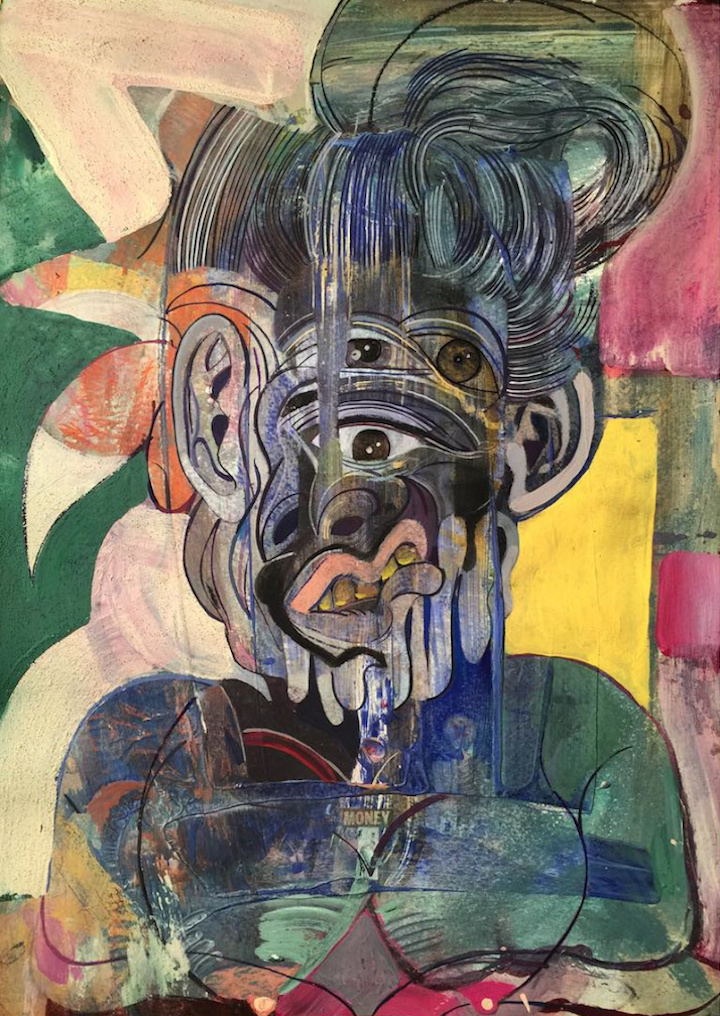
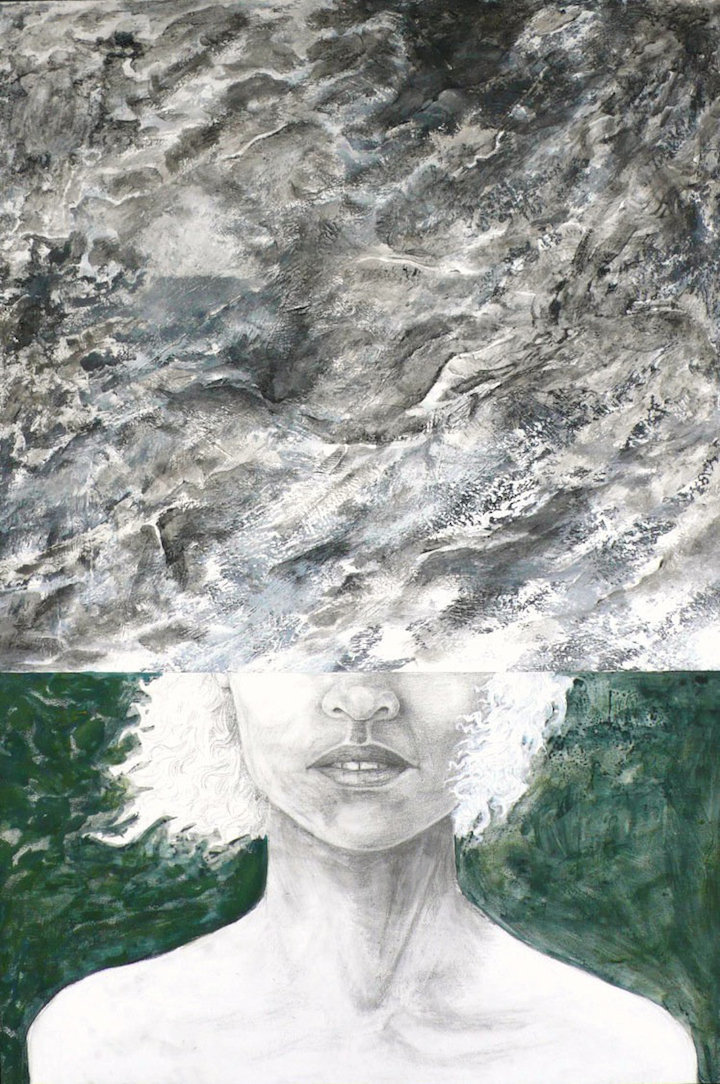
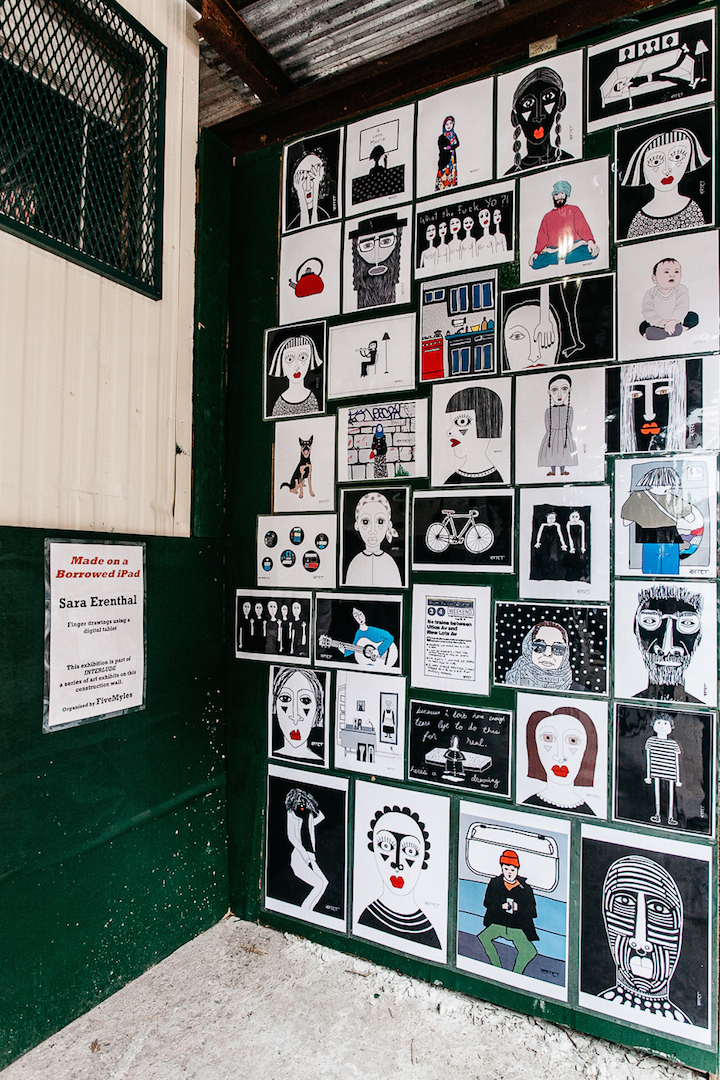
Brooklyn-based Sara Erenthal has shared her distinct drawings, public art, sculptures, and mixed media artworks with us New Yorkers for the past several years in both galleries and on the streets. After viewing her current outdoor installation adjacent to FiveMyles, I had the opportunity speak with her:

"Sara Eremthal installation"

I love your installation here in Crown Heights adjacent to FiveMyles. When did you first begin to share your talents in public spaces?

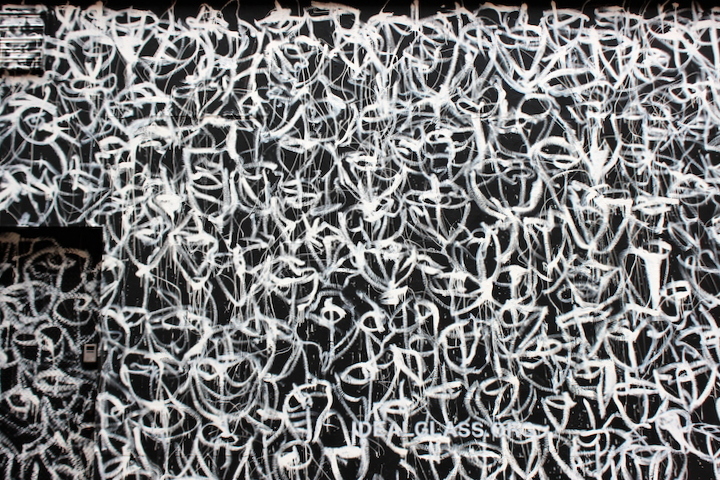
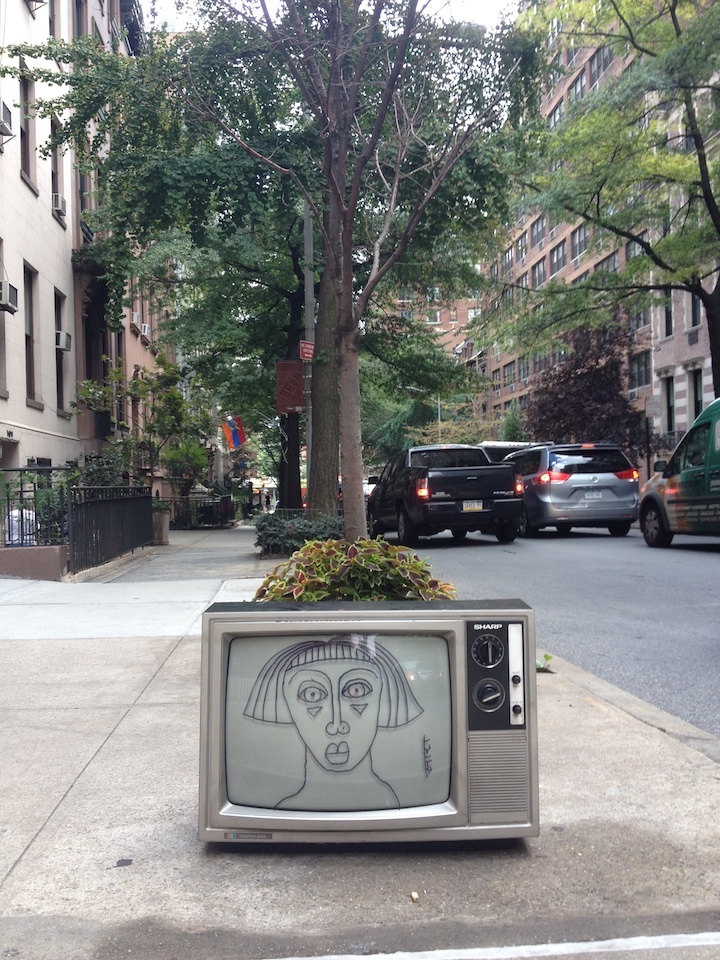
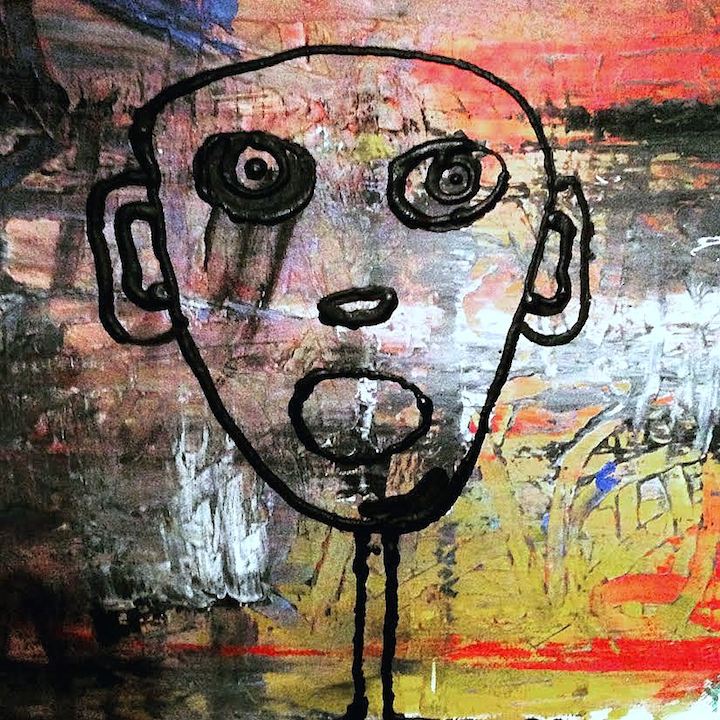
About four years ago – soon after I returned to NYC from backpacking in India – I drew 100 small faces with a Sharpie in a range of places from phone booths to subways.  It was quite secretive! And, luckily, I was never arrested. These days I can’t take those risks, and I only paint outside on found objects – like abandoned mattresses, castoff furniture, useless appliances and discarded canvases.

Why the streets?

I’ve always loved street art, and I love sharing with others. When I paint on found objects and leave them on the streets, I give people the chance to pick up a free gift. Art should be accessible to the public, and art galleries can be intimidating.

sara-erenthal-art-on-found-object

When did you first begin drawing?

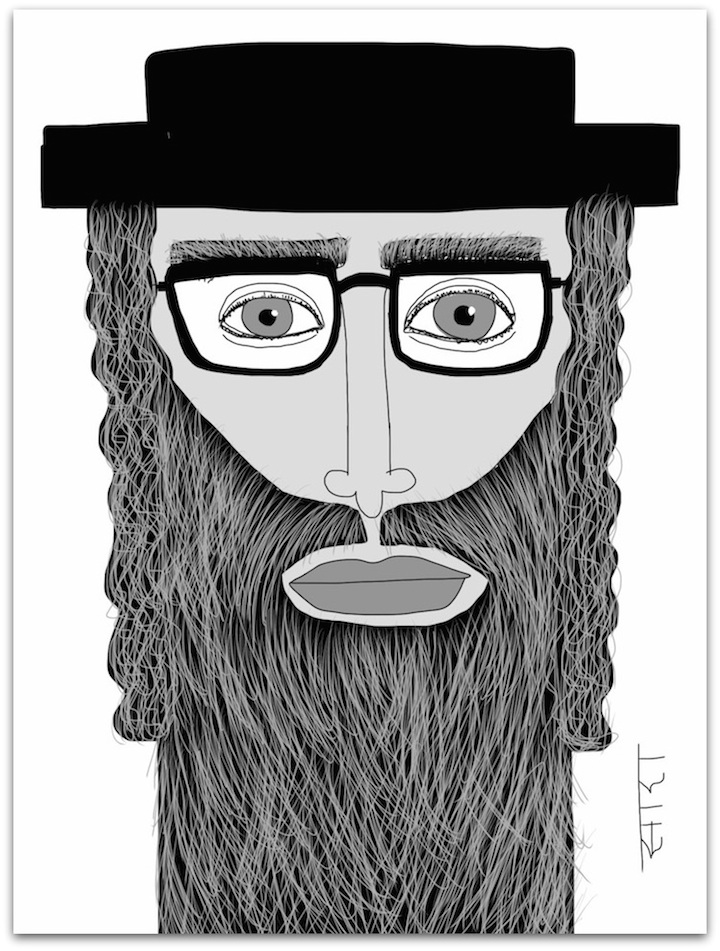
I’ve been drawing all my life, and I’ve always loved art. But growing up in an ultra-Orthodox family, I wasn’t exposed to art outside of a few landscapes and portraits of Hasidic rabbis. I never went to museums or galleries. I do remember, though, seeing art that I loved while I was riding the subways as a child!

When were you first exposed to contemporary art – other than what was “permissible” and what you saw on the subway trains?

I was 17, and I had just broken away from my community. A young Israeli artist at the time introduced me to modern African drawings. That was the beginning!

sara-erenthal-chassid-portrait

How might your strict religious upbringing have influenced your artwork?

Art was my way of releasing myself from all the constraints that had been imposed upon me.  Through art, I was able to let go of the negativity I’d experienced as a child. Creating art was part of my healing process.

Your artwork has a distinct “outsider” aesthetic. Have you ever studied art in a formal setting?

No.

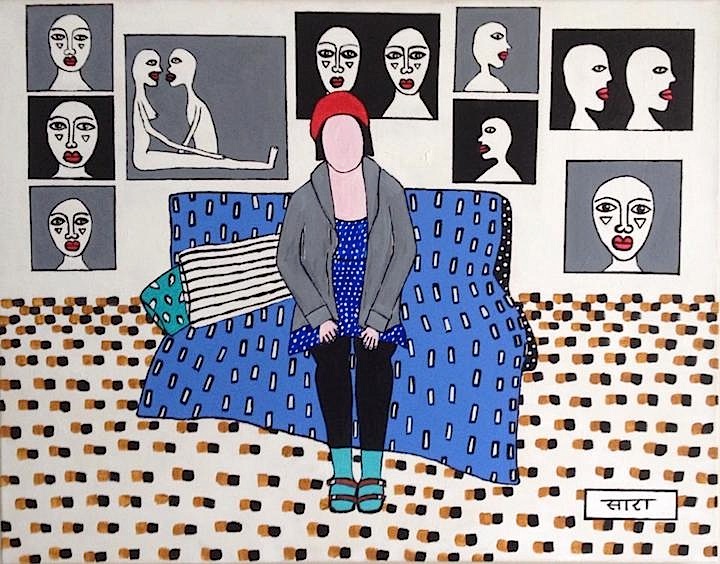
sara-erenthal-portrait-in-room

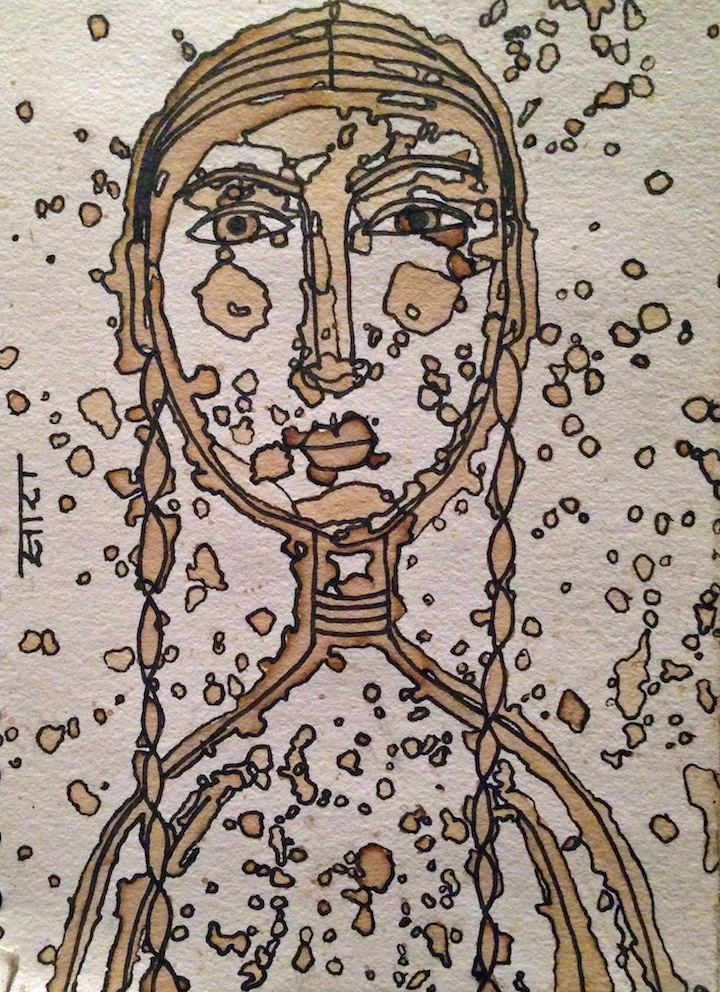
You are obviously fond of creating portraits. Who are these people who surface in your drawings?

Many are me – variations of myself at different stages in my life. They’re self-conscious representations of my subconscious. Others are people I encounter in my everyday life or people from my past who remain with me.

Are you generally satisfied with your work?

Yes – but I’m frustrated that I often lack the time, space and materials to do a fraction of what I’d like to do.

sara-erenthal=self-portrait-with-coffee-stains

Can you elaborate a bit on some of the challenges you face as an artist?

Yes. Working to meet basic expenses consumes far too much energy and time. I would like to be able to create when I’m inspired. Our society needs to do more to support artists. Artists are undervalued. Most people don’t take artists seriously enough. They tend to perceive what we do as frivolous or self-indulgent. Living one’s life as an artist is not a choice; nor is it an indulgence.  And the public needs to understand that.

What do you see as the role of the artist in society?

To share beauty and inspire others, while evoking conversation.

sara-erenthal-portrait-on-found-art

What’s ahead?

I would like to continue to create, heal and share. I would also love to exhibit more works in public spaces and in galleries. And I would like to gain more recognition as an artist.

Note: Sara’s installation, Made On a Borrowed iPad — curated by gallery director Hanne Tierney for the Interlude Project — will remain on view through December adjacent to FiveMyles, 558 St Johns Place in Crown Heights.

The interview was conducted and edited by Lois StavskyPhotos: 1  Anthony Disparte; 2 – 4 courtesy of Sara Erenthal; 5 & 6 Lois Stavsky

{ 0 comments }