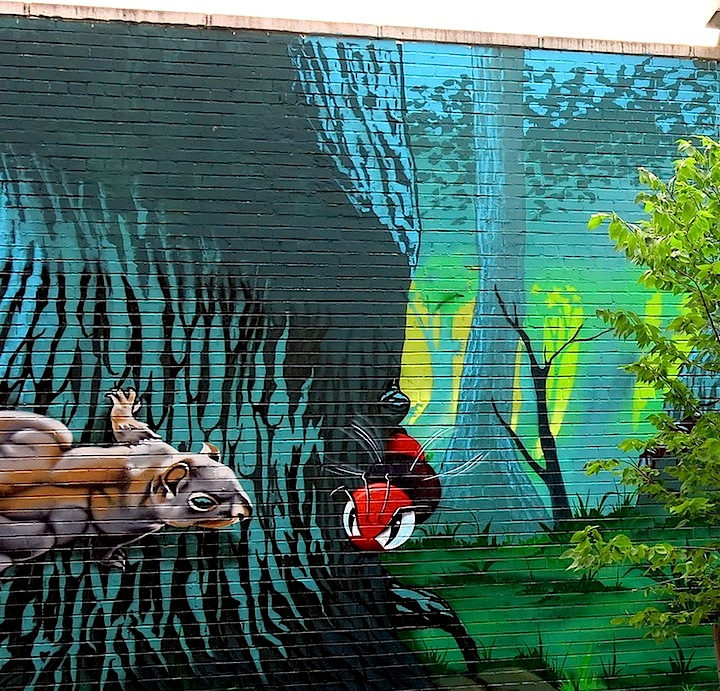
Pastelfd

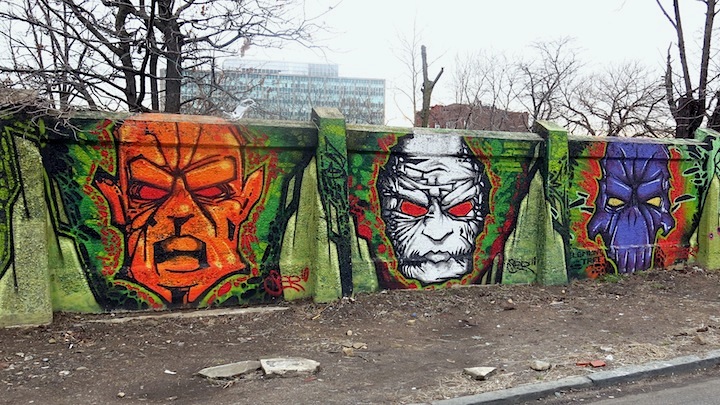
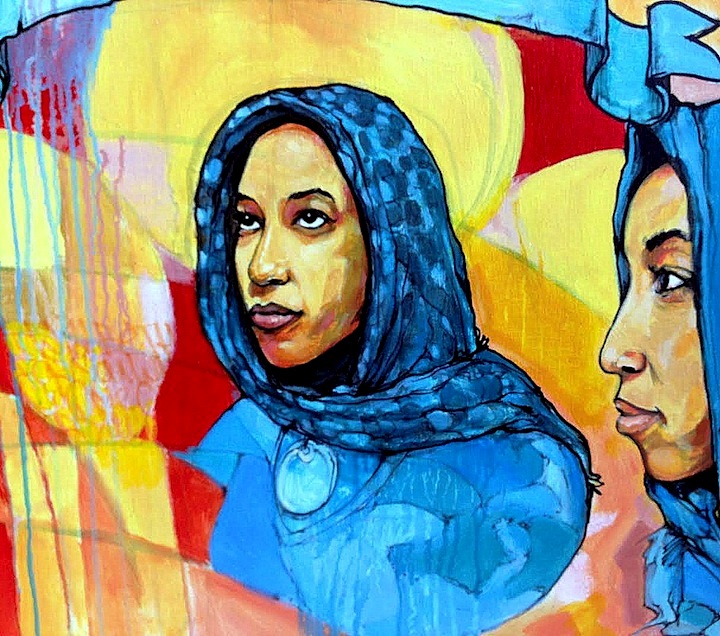
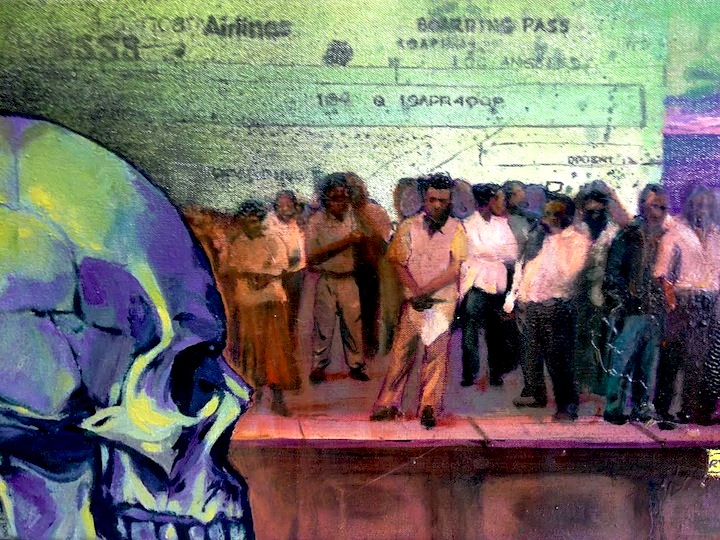
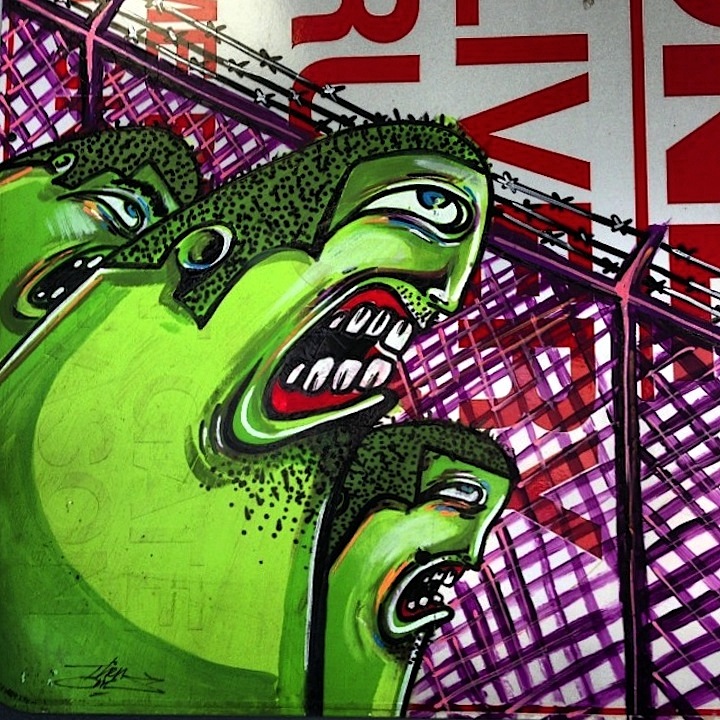
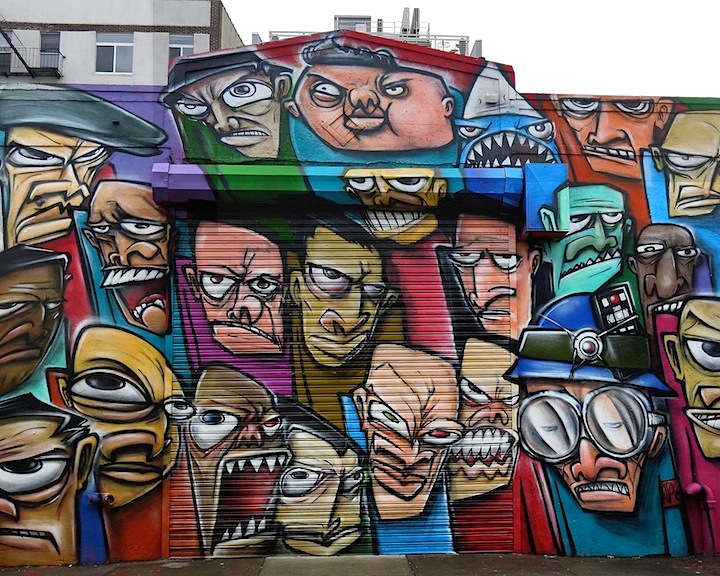
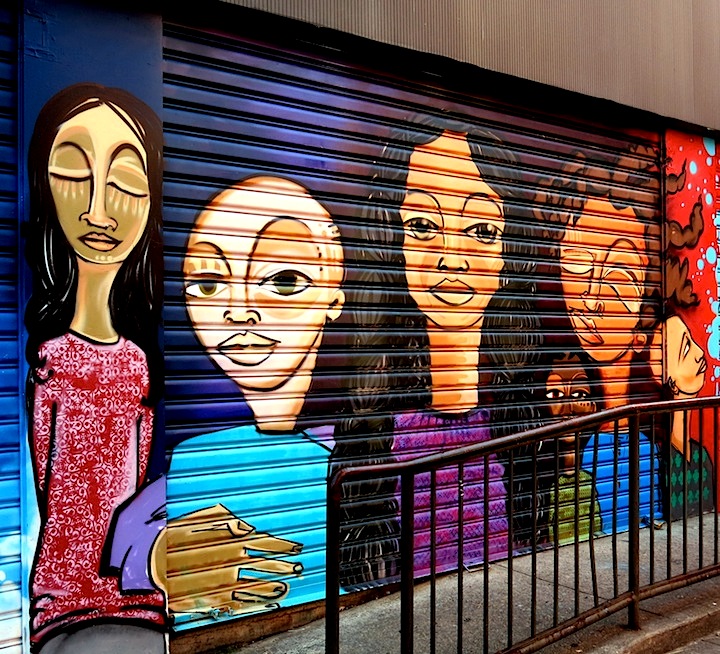
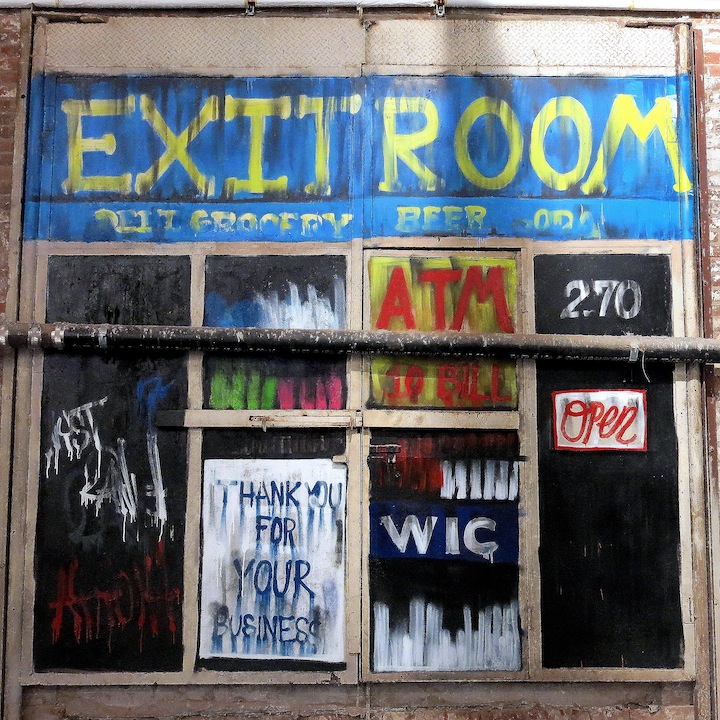
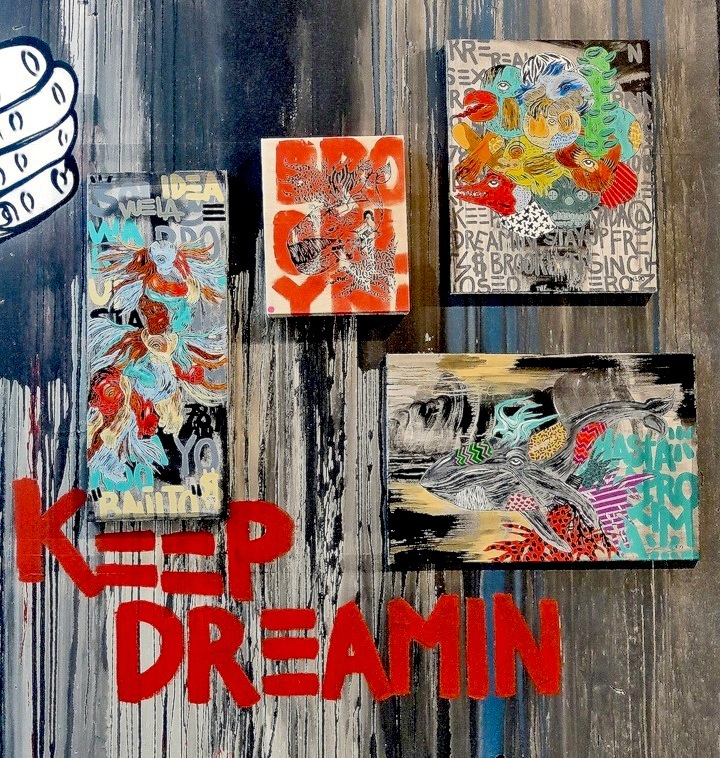
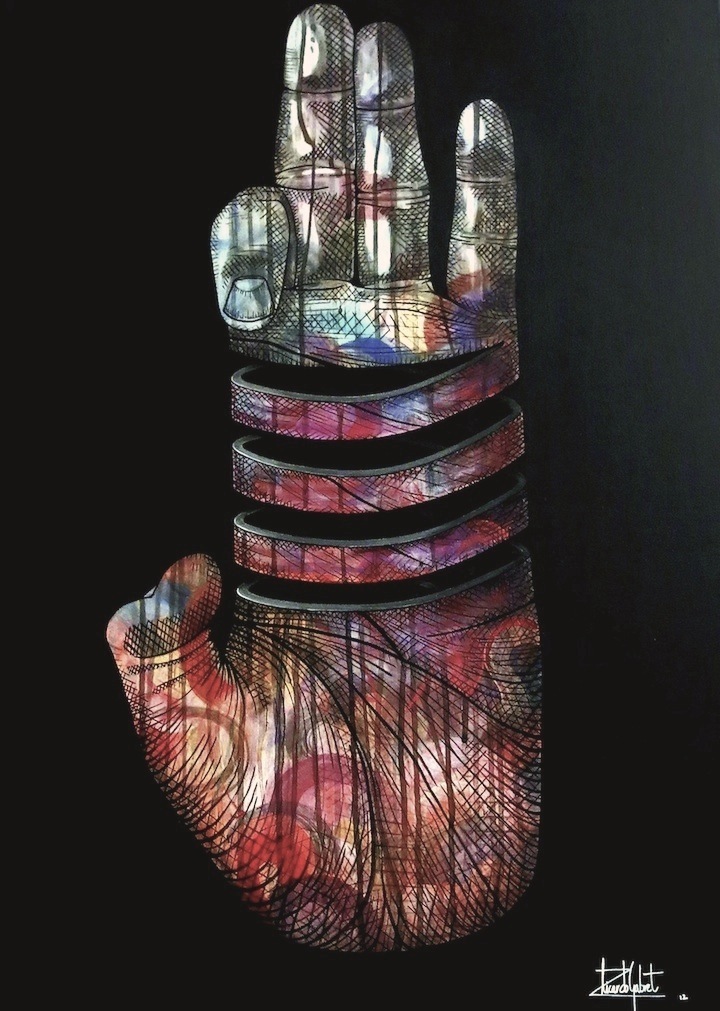
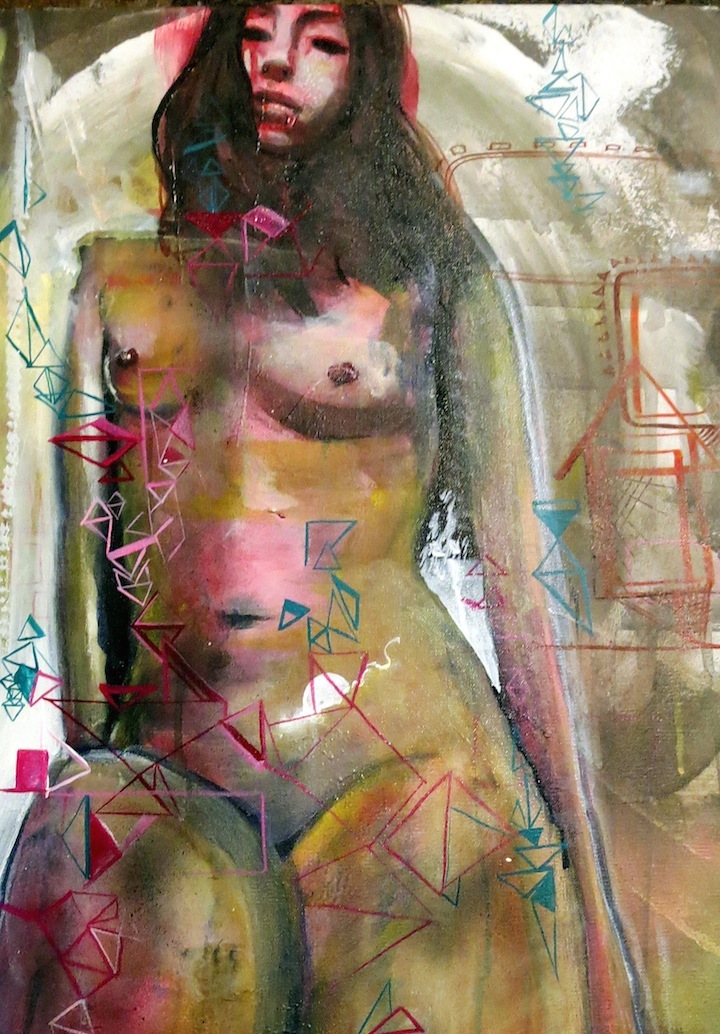
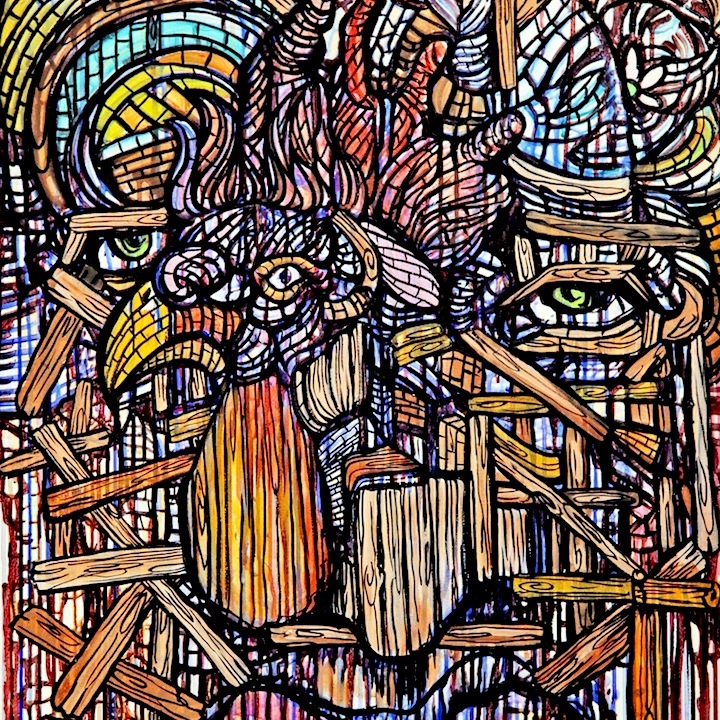
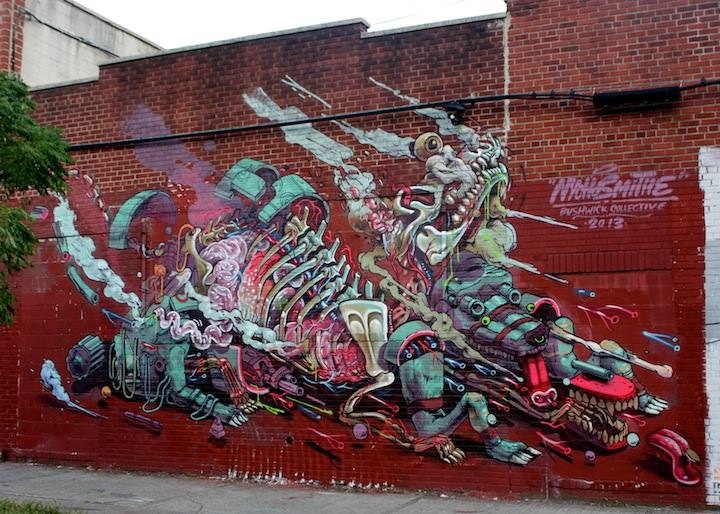
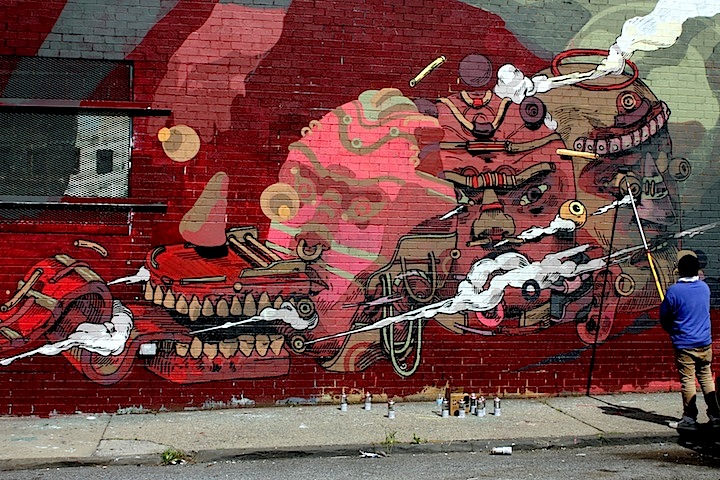
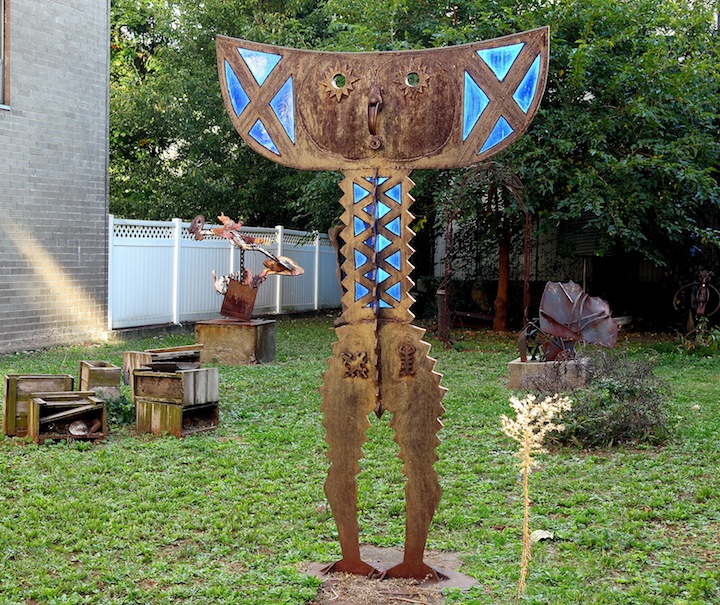
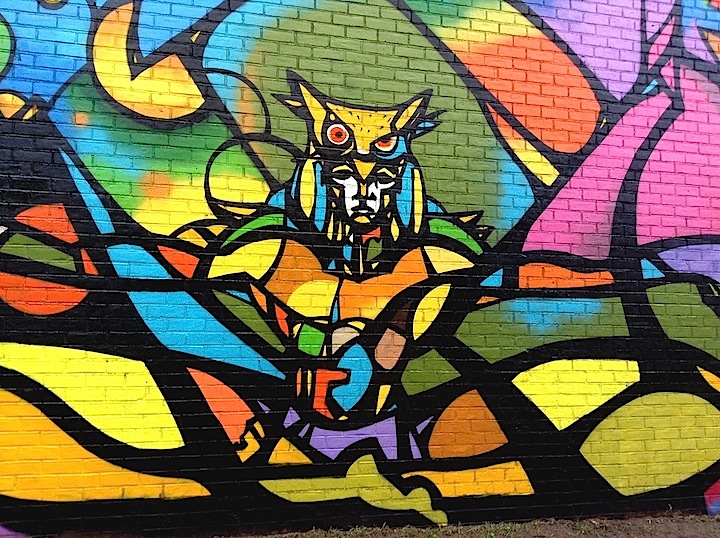
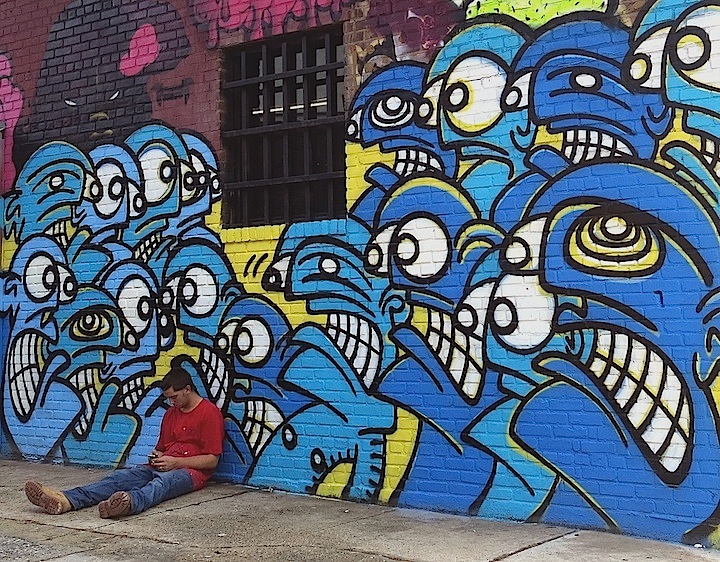
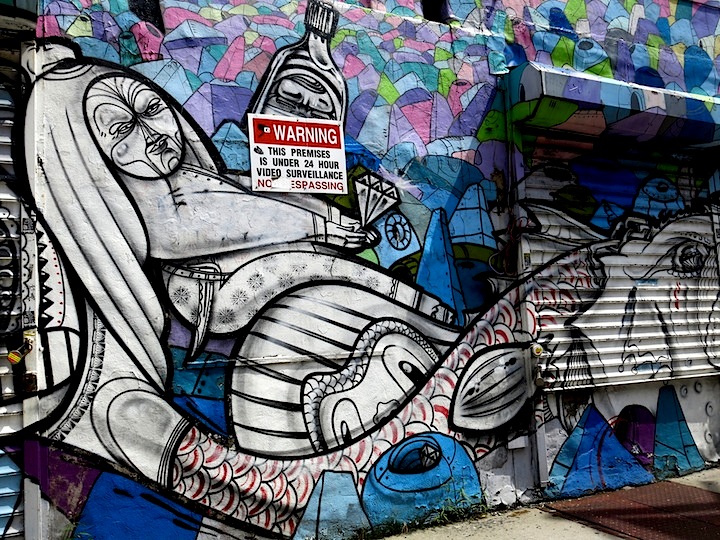
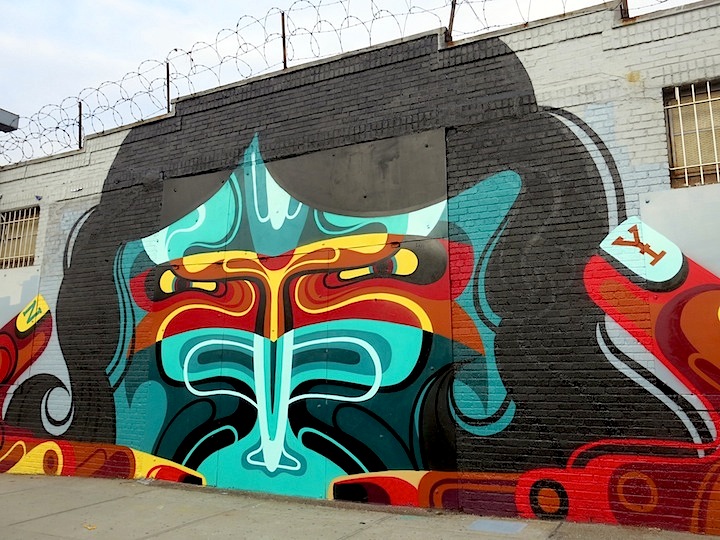
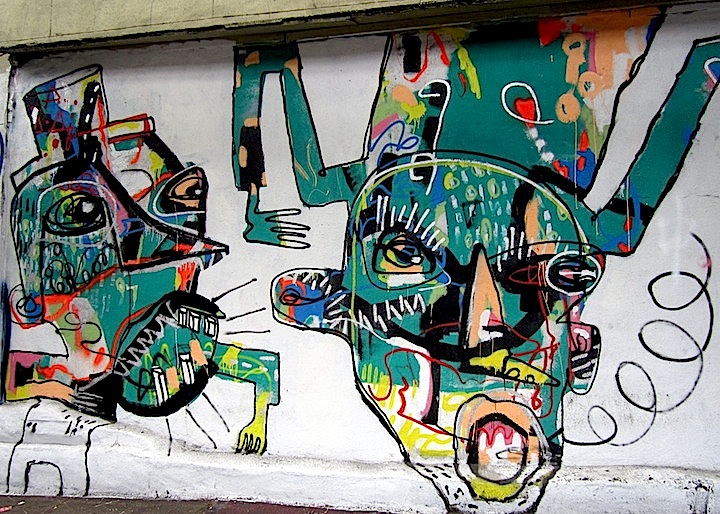
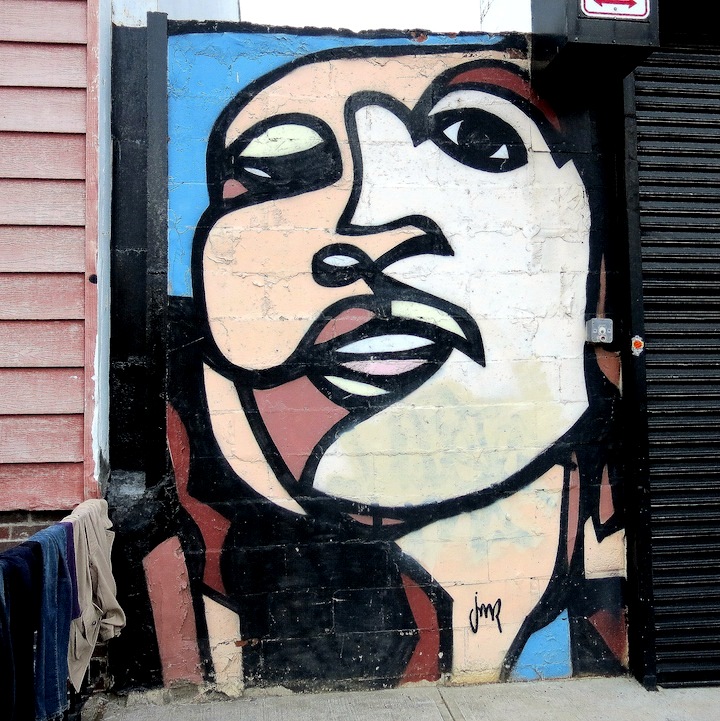
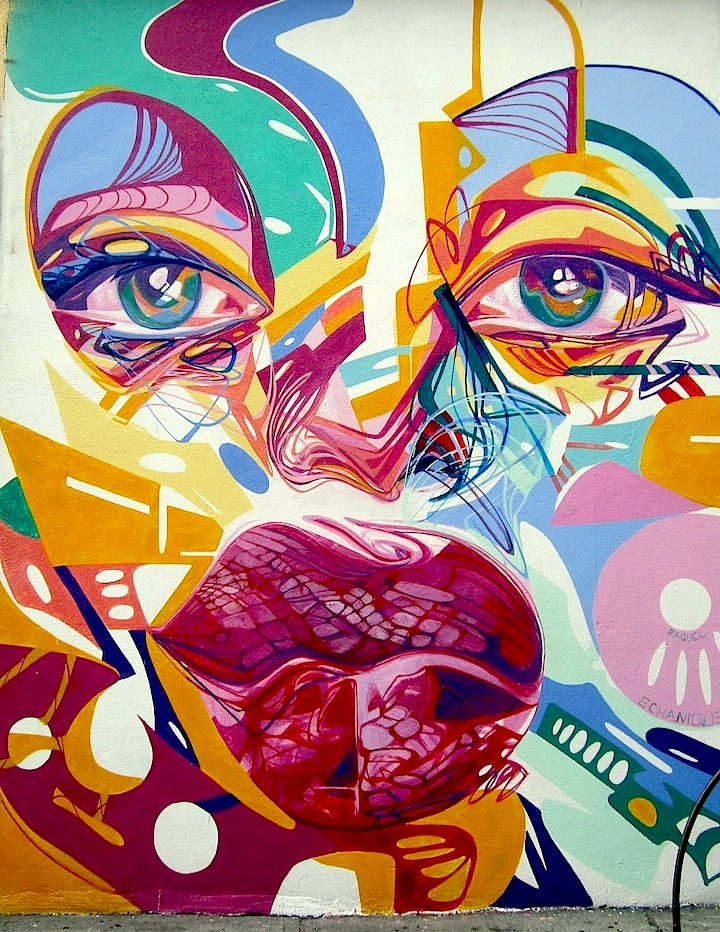
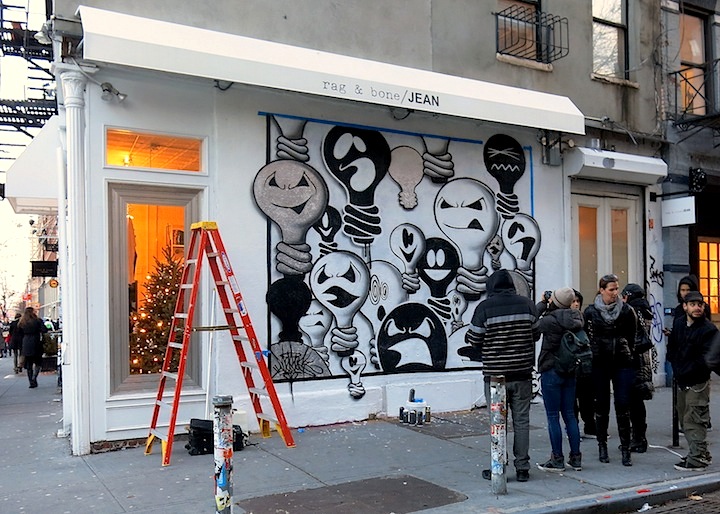
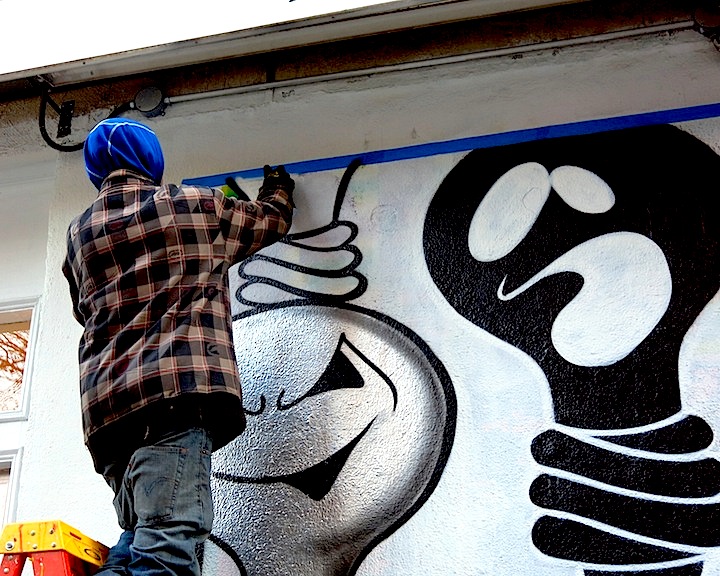
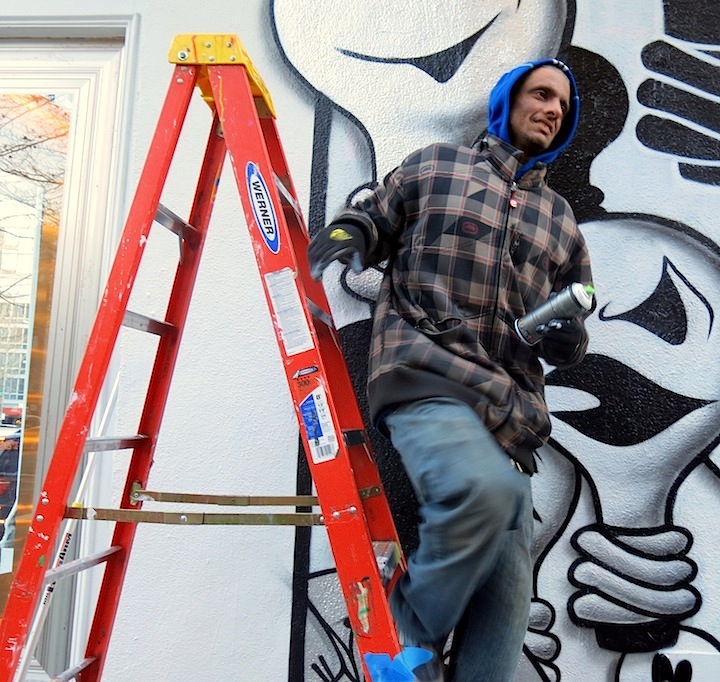
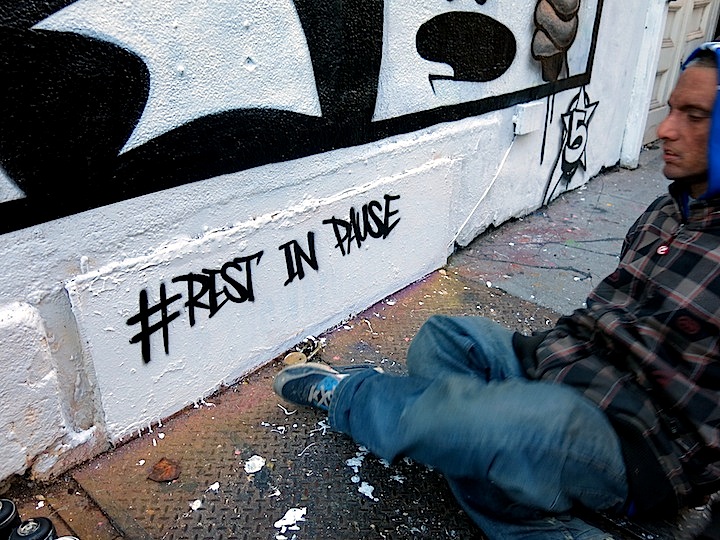
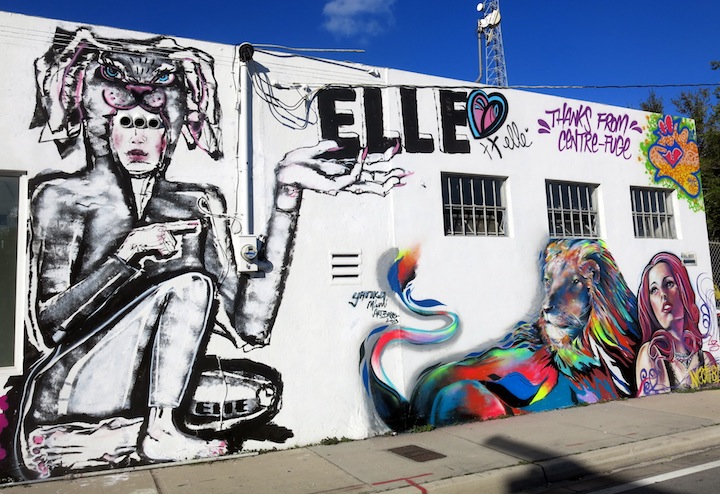
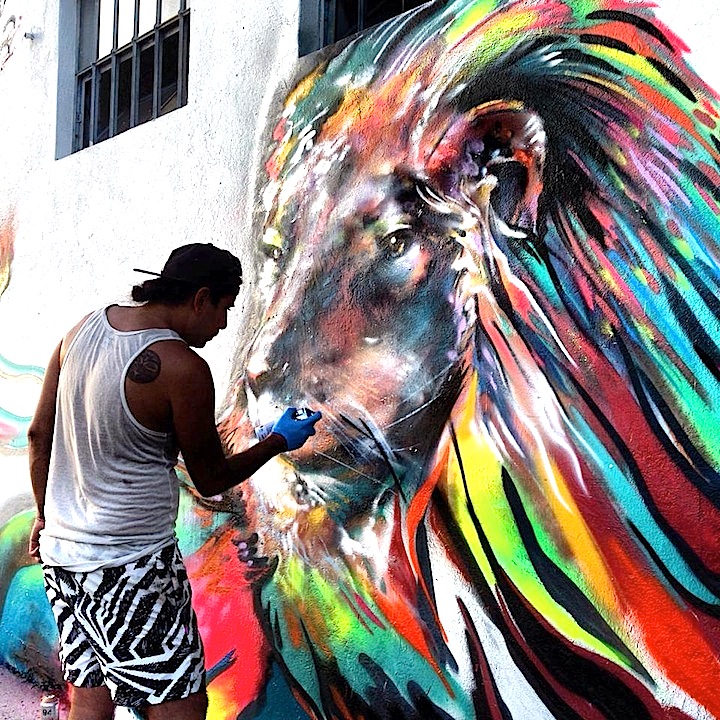
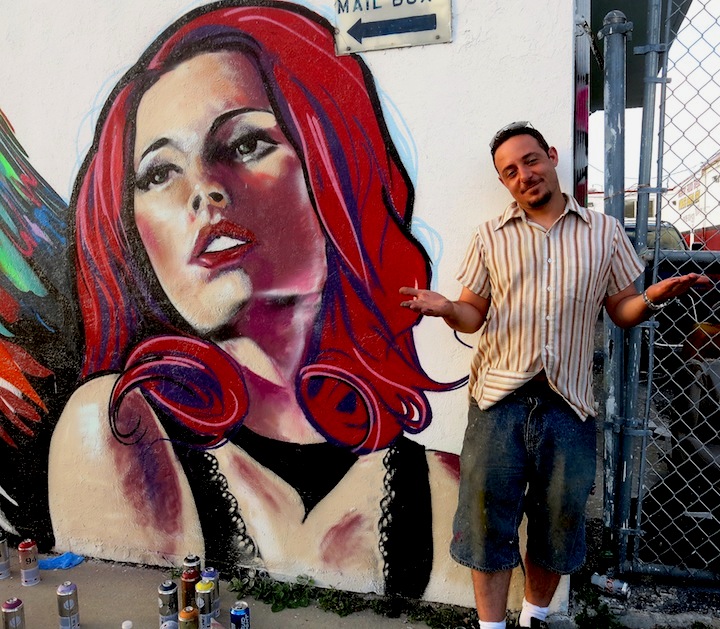
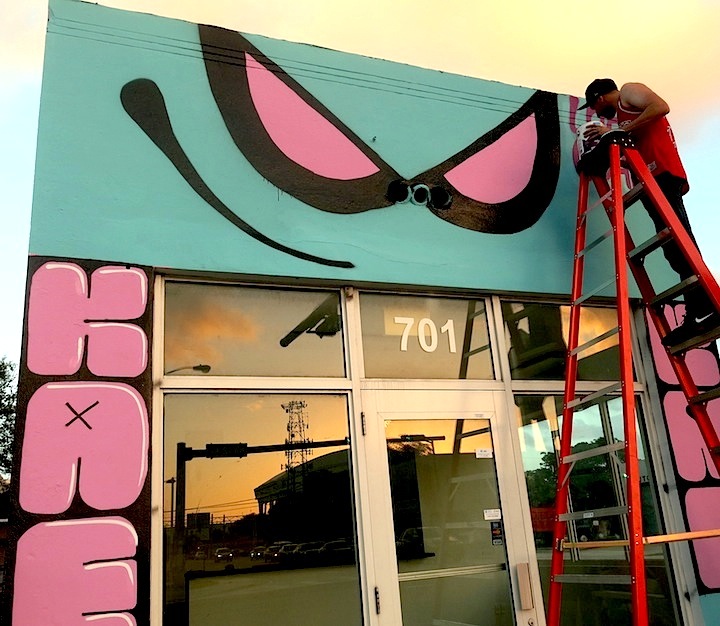
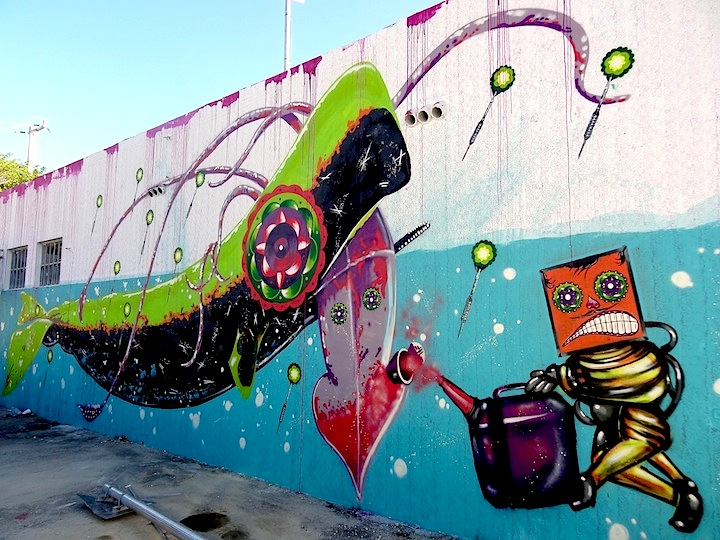
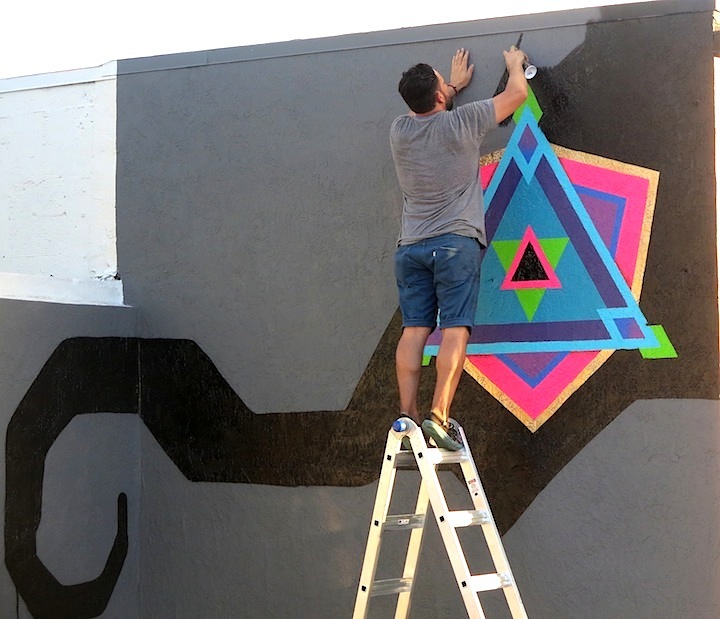
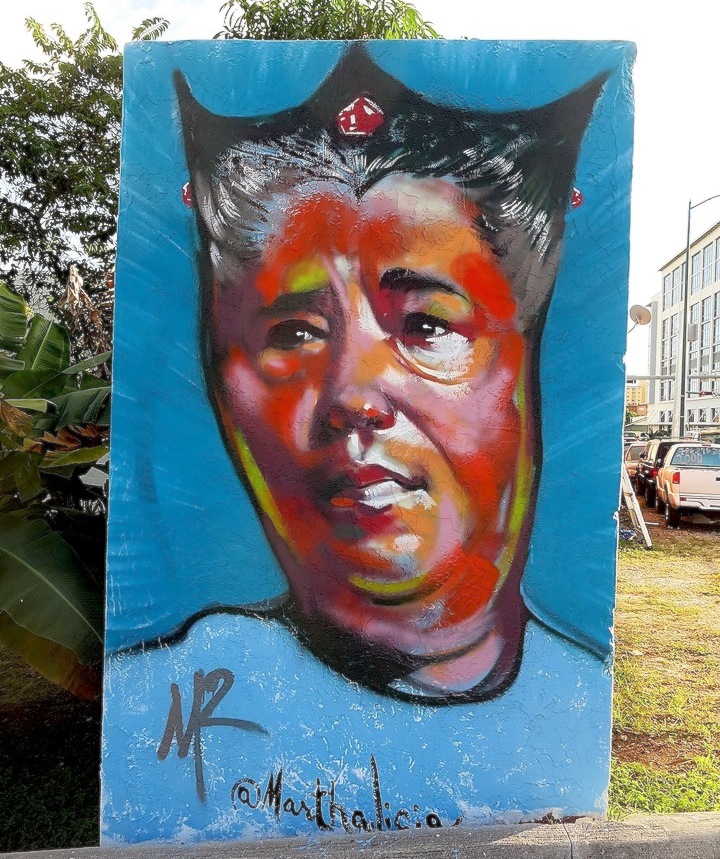
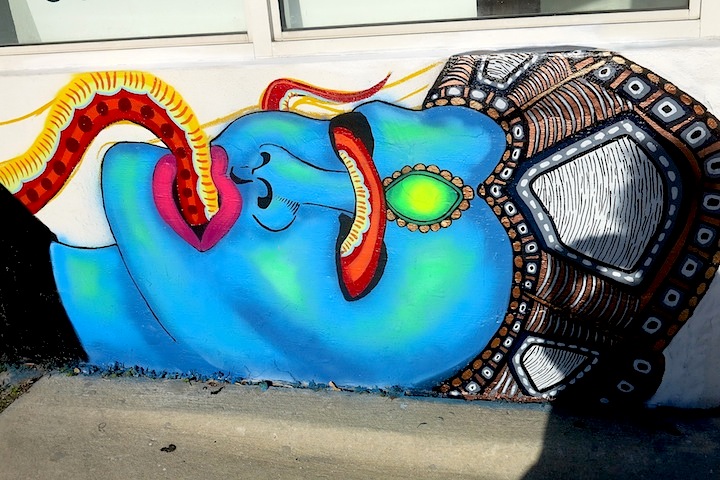
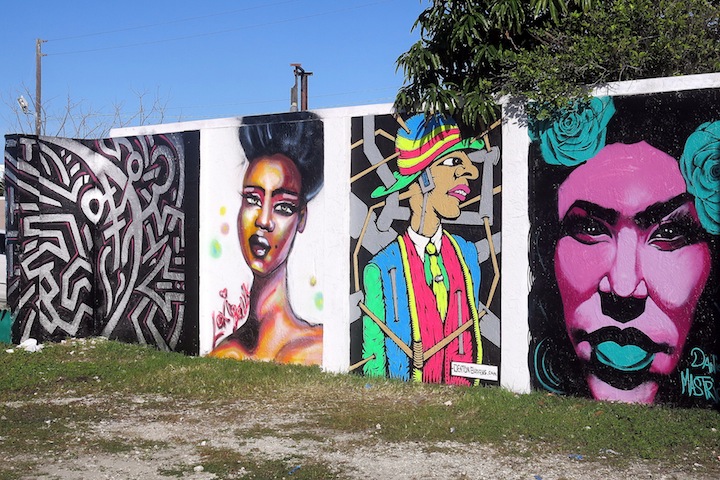
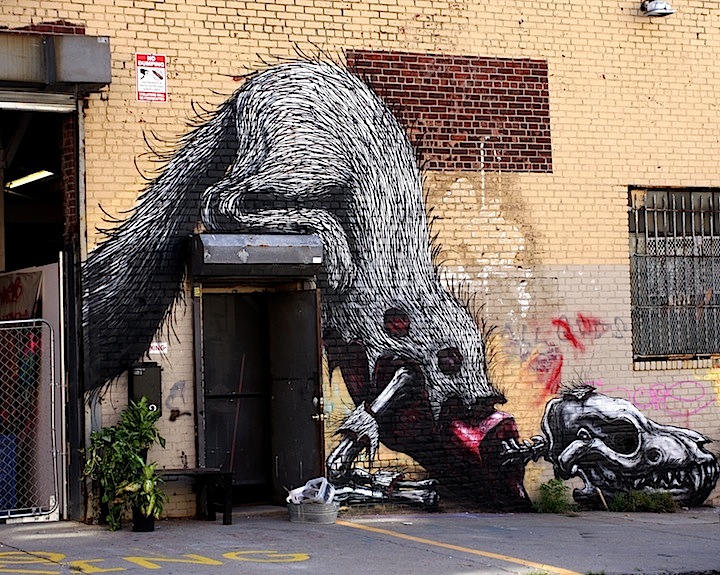
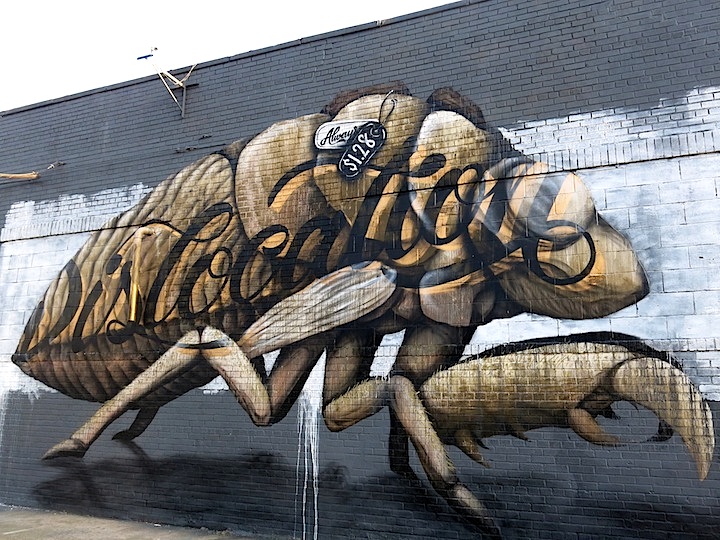
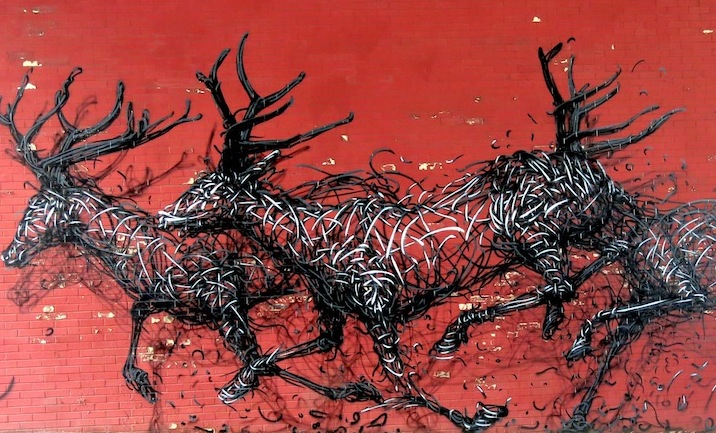
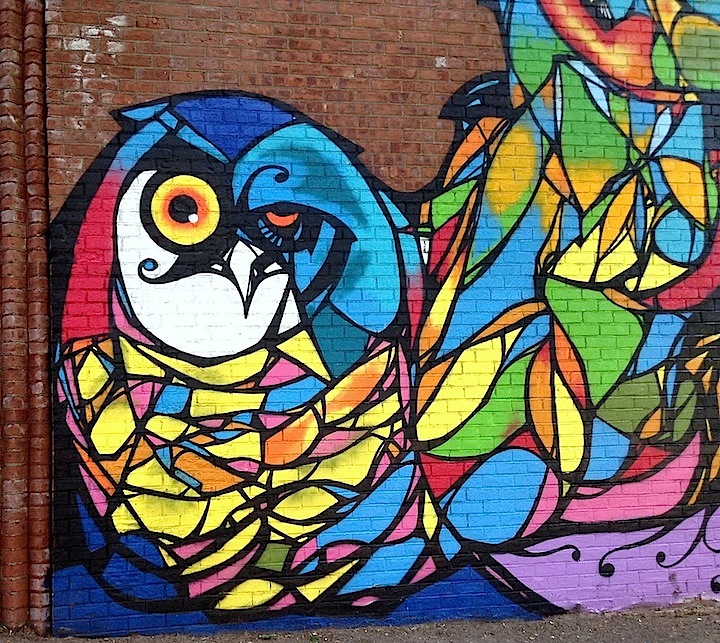
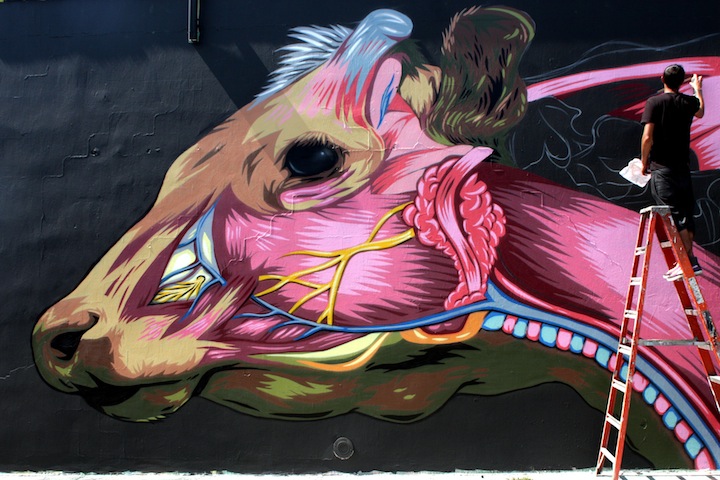
Based in Argentina where he shares a studio with artists Jaz and Ever, Pastel recently participated in the urban arts festival, Los Muros Hablan, here in NYC.  His splendid mural in the South Bronx is representative of his distinct aesthetic, which fuses his passions and talents for architecture, painting and muralism.  I had the opportunity to speak to him briefly last month before he returned to his native Buenos Aires.

When did you first get up in a public space?

When I was 14 or 15, I began tagging in my Buenos Aires neighborhood with markers that I made from tampons and tar. But then when I broke my knee playing soccer and I could no longer dream of playing professionally, I began painting walls. That was in 2002.

Have you a formal art education?

I studied architecture at the University of Buenos Aires.

But you aren’t working primarily as an architect these days; are you?

No, I don’t like the structure of business, and I don’t see the need for more construction in cities.  There are too many buildings already.

Pastelfd

What percentage of your time is devoted to art?

Almost all of my time. About 20% is devoted to architecture, but I would like to devote 100% of it to my own art.

What is the riskiest thing you ever did?

Living my life as an artist.  In Argentina, it’s way expensive and uncertain.

I suppose that’s the life of an artist anywhere! How does your family feel about what you’re doing now?

At the beginning they didn’t understand it; now they love it.

Pastelfd

Do you prefer working alone or collaborating with others?

I like both, and they’re both different experiences. I especially love collaborating with Elian. We just look at each other, and we know! A real symbiosis. Our styles are different, but we can fuse them to create one image. Two paintings become one.

What is your ideal working environment?

I grew up in the city, and I love it, but I probably prefer being away from the city. Maybe in a tropical space.

Do you work with a sketch, or do you just let it flow?

I begin with a sketch and progress to a watercolor.  I then paint on a canvas and finally on a wall. I try to use the wall as the final stage of a study.

Pastelfd

Are you generally satisfied with your finished piece?

I try to be, but I’m never quite. There are always things to improve.

How has your work evolved through the years?

It’s changed radically. It’s far more conceptual these days with a philosophical mix. I need to have a concept behind the painting. I don’t paint just to paint. I need the work to tell something

How do you feel about the role of the Internet in all this?

It’s the new Jesus. You need to trust in somebody or something.

Pastelfd

What about the photographers and bloggers?

I love them. They’re essential. We need them.

Is there much of a graffiti/street art divide in Buenos Aires?

They are two different worlds, but we all get along.

What’s ahead?

More painting, more new projects and loving more and more what I do.

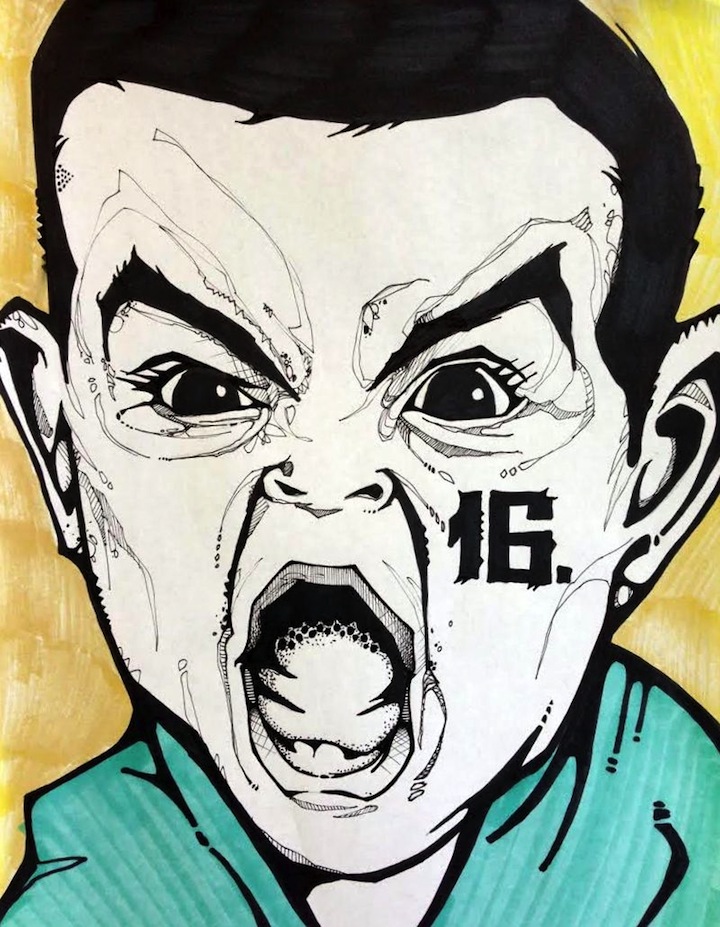
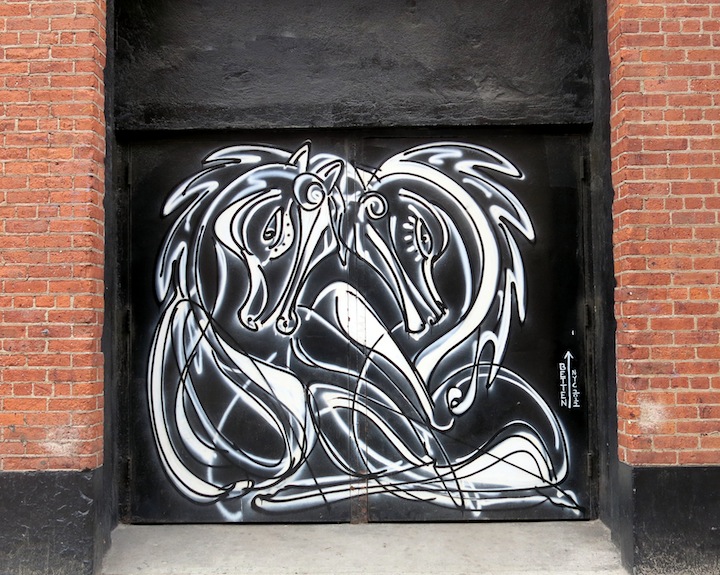
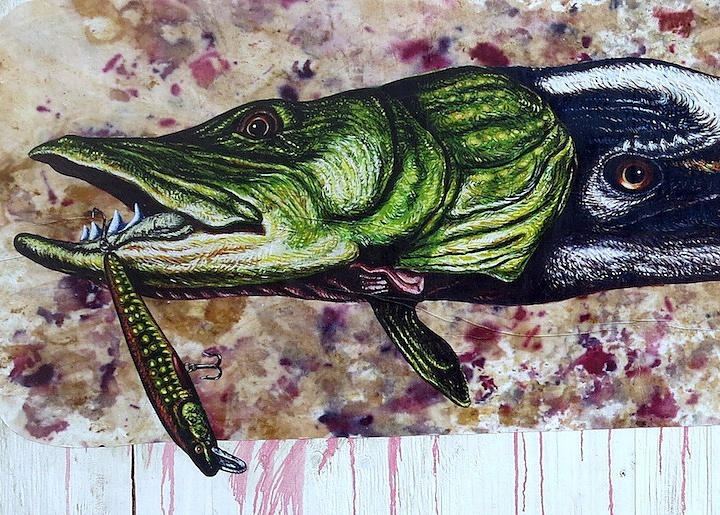
Interview by Lois Stavsky; first photo of Pastel in the South Bronx by Lois Stavsky; following two photos of Pastel in Buenos Aires and final two of Pastel in Atlanta, Georgia, courtesy of the artist.

{ 2 comments }

Carole Feurerman

Among the six remarkable exhibits opening this Sunday, September 29, at Jersey City’s wondrous cultural venue, Mana Contemporary, is an outdoor installation of Carole Feuerman’s extraordinary lifelike sculptures. Included is the debut of her newest work — a sculpture of Olympic gold medalist Lauren Perdue floating in a pool.

Close-up of Olympic gold medalist Lauren Perdue

Carole Feuerman

And here’s a sampling of Carole Feuerman’s other sculptures — all part of a series of swimmers and bathers — displayed on Mana Contemporary’s exterior grounds:

Grande Catalina, 2005-2011

Carole Feuerman

Survival of Serena, 2012

Carole Feuerman

Monumental Shower, 2010

Carole Feuerman

Quan, 2012

Carole Feuerman

And greeting us as we enter the grounds of Mana Contemporary is The Golden Mean, a 16-foot male diver as he readies to do a back dive.

Carole Feuerman

Also opening Sunday of particular interest to those of us who love public art is POP CULTURE: SELECTIONS FROM THE FREDERICK R. WEISMAN ART FOUNDATION.  Among the artists featured with a strong presence on the streets are: John Matos aka Crash, Retna, Keith Haring and LA2. Located at 888 Newark Avenue in Jersey City, Mana Contemporary is a short ride from downtown Manhattan. This Sunday shuttle buses to Mana Contemporary are available every half hour starting at 12:30 pm from Milk Gallery at 450 West 15th Street.

All photos by Dani Reyes Mozeson 

{ 0 comments }

It’s been a busy past few days on East First Street in the East Village, as eight artists have been refashioning the now-famous trailer just outside the First Street Green Park. Here are a few images captured from Centre-fuge Public Art Project‘s tenth cycle:

Brooklyn-based brothers Willow and Swil

willow-and-swil-art-on-centre-fuge-trailer

Los Angeles-based artist CS-Navarrete at work

C-S-Navarette-paints-Centre-fuge

CS-Navarrete

Amanda Hurn aka Miishab at work

Miishab-paint-centre-fuge-NYC.

Brooklyn-based artists Nicole Salgar and Chuck Berrett at work

Nicole-Salgar-and-Chuck-Berrett-paint-for-Centre-fuge-NYC

And their completed piece

Nicole-Salgar-and Chuck Berrett-Centre-fugeNYC

Australia-native Damien Mitchell at work

Damien Mitchell

And his completed piece

Damien Mitchell

The prolific Long Island-based Phetus at work

Phetus

Photos of CS-Navarette at work, image 2; Nicole Salgar & Chuck Berrett’s completed piece and Damien Mitchell’s completed work by Dani Reyes Mozeson; photos of Willow & Swil; Nicole Salgar & Chuck Berrett at work, Damien Mitchell at work and Phetus at work by Tara Murray; photos of CS-Navarrete at work, image 1 and Miishab at work by City-as-School intern Kali Norris

{ 0 comments }

From quirky sculptures to vibrant murals, the Manhattan’s High Line and its immediate environs have it all. Here’s a sampling of what we captured this past week:

London-based Gilbert & George, Waking

Gilbert and George

NYC-based George Condo, Liquor Store Attendant

George Condo

NYC-based Jordan Betten, Lady Luck

Jordan Betten

Lady Luck, close-up

Jordan Betten

Brazilian muralist Eduardo Kobra — as seen from the High Line, looking as fresh as when it was first painted last year

Kobra

Nigerian artist El Anatsui, Broken Bridge II, captured via Instagram at night

El Anatsui

And off the High Line — François-Xavier Lalanne, Sheep Station with JR and José Parlá collaboration in background

Sheep Station

Photos of Gilbert & George, George Condo, Kobra and Sheep Station by Dani Mozeson; photos of Jordan Betten by Tara Murray and of El Anatsui by Lois Stavsky

{ 0 comments }

Bishop203 at Low Brow Artique

September 20, 2013

Earlier this week, we had the opportunity to interview one of our favorite people, Bishop203. A first-rate artist who’s been hitting a range of surfaces from abandoned factories, freight trains and walls to black books and canvases for years, Bishop203 is now the owner of Low Brow Artique, a superb space at 143 Central Avenue in Bushwick.

Bishop203

When did you first conceive of opening a business?

It was something that had been in the back of my mind for quite awhile. But growing up, I’d always wanted to be an art teacher.

So – what happened?

I hated school, and I failed all of my art classes. Actually, I failed just about all of my classes. And when my friends went on to college, I stayed behind for two more years and then graduated to painting freight trains.

Low Brow Artique

And how did Low-Brow Artique – one of our favorite spaces – come to be?

About a year and a half ago – soon after my father died – I thought to myself,  “I’m not doing anything much with my life, so why not open a business related to what I love?”  But I didn’t have a business plan or anything.  At first, I thought I would open an art supply store, but I wasn’t sure I had enough knowledge to do so at that point. And so I decided to focus on graffiti supplies, as I knew enough about hooligans to run a business catering to fellow hooligans.

What made you decide to set up shop in Bushwick?

I felt there was a need for it here.  There was no other outlet for graff supplies in my neighborhood, and with Joe Ficalora, the curator of the Bushwick Collective, making so many walls available to artists coming here from all over the world, the local aerosol art scene was booming.

Low Brow Artique

We notice you have just about every brand of spray paint here at really good prices.  There are also markers, pens, black books, a variety of hand-printed and home-made goods, and t-shirts. What else is available? 

Canvases, wood panels, screen print supplies, Liquitex paints, Krink and much more. I’m also about to start stocking Montana 94.

And your gallery has become one of the most popular graffiti/street art venues in NYC.  Tell us something about that.

I love it. It gives me the opportunity to showcase my favorite art. And it was especially wonderful for me to recently feature my dear buddy Bisc’s work. Bisc and I go back years, and his show was my most successful one. It was epic.

Bishop

What are some of your goals for Low Brow? Where would you like to see it go?

I love teaching the young bucks of the next generation. I can see myself giving formal classes here.  And I want to help up-and-coming artists achieve their dream by exhibiting their work.. That, perhaps, may be my greatest legacy.

How do folks find out about your space? 

It’s word-of-mouth. The graffiti world is small, and everyone wants to be up on the latest news.

Low Brow Artique

And what about your artwork? We see it regularly at 5Pointz and in this part of town. What’s happening with it? 

Well, for the most part, it’s taken a back seat to what’s happening here at Low Brow. But I’m ready to step up my game, especially when it gets too cold for much to be happening on the streets. And just this week, I was delighted to have a print released by my fellow hooligan, Bisc, who in collaboration with his partner at Daylight Curfew, has begun a monthly print series.

Bishop print

What do you see as the future of graffiti and street art?

I see it as just getting bigger and bigger. Just check out what’s been happening down the block.

 Interview by Lois Stavsky with Tara Murray; photos by Lois Stavsky; print image courtesy of Daylight Curfew

{ 1 comment }
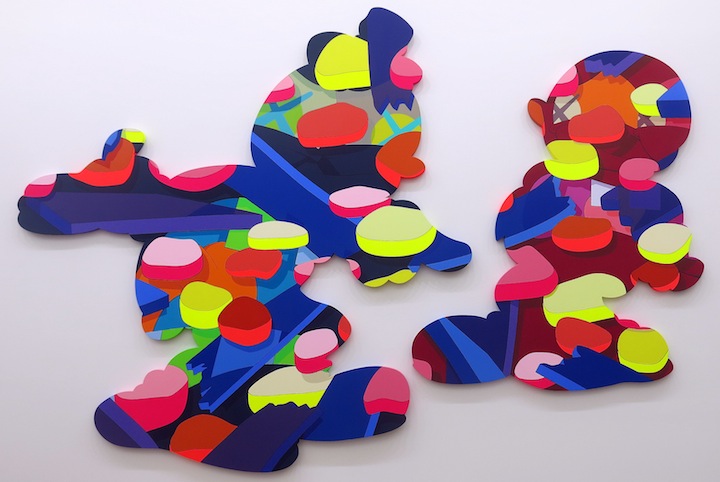
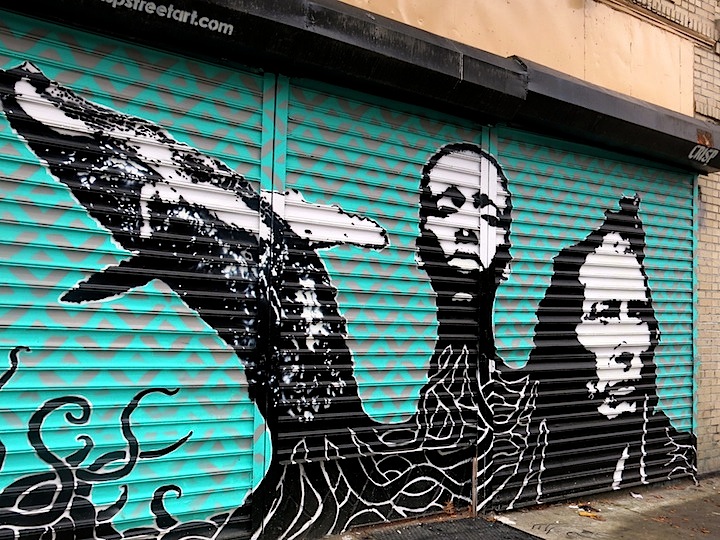
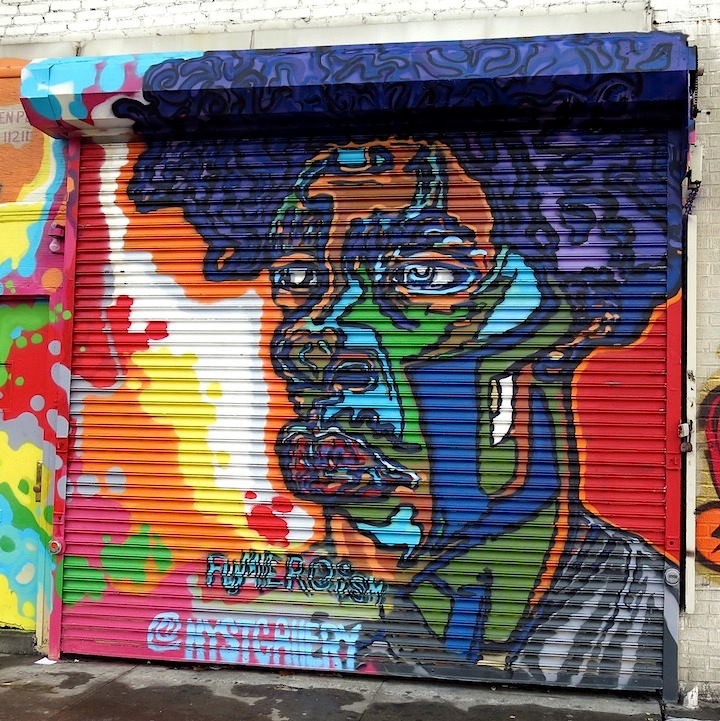
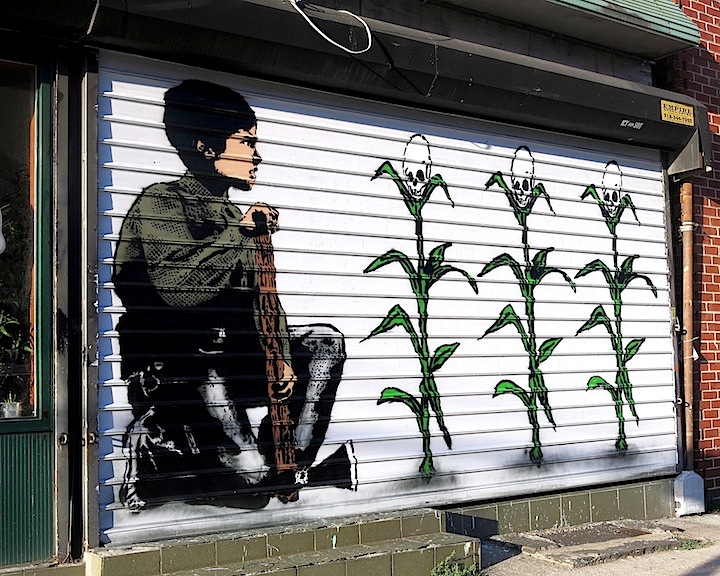
This is the third in a series featuring images of New York City’s doors that sport everything from tags and stickers to sophisticated images.

Judith Supine in Williamsburg, Brooklyn

Judith Supine

ASVP in NoLita

ASVP

Bishop in Nolita

Bishop203

Craig Anthony Miller aka CAM in Williamsburg, Brooklyn

Craig Anthony Miller

The Yok in Williamsburg

The Yok

One of 13 Portals on the Lower East Side

one of the 13 portals

Gaia in Long Island City, Queens

Gaia

Jordan Betten in Chelsea

Jordan Betten

Photos of Judith Supine and 13 Portals by Dani Mozeson; ASVP, Bishop and the Yok by Tara Murray; CAM by Lois Stavsky

{ 0 comments }

COCO144 is a pioneer New York City-based graffiti/street artist. He started tagging in 1969, co-founded United Graffiti Artists and introduced the stencil into the graffiti movement in NYCThis interview was conducted and edited by Yoav Litvin. Yoav is a writer, photographer and author of a forthcoming book on NYC graffiti/street art.

You were there at the beginning of it all. How did graffiti start?

Graffiti is what the media called it. What I call the writing movement started in NYC back when I was in junior high in 1968. It began in the Inwood section of Manhattan with Julio204. Then in 1969, it took off in Washington Heights, with writers like Phil T. Greek and TAKI 183.1970

Why did writing start?

Writing was a reflection of the times — the socio-political and economic realities back then. It was a combination of the spirit of the anti-war movement, frustration with economical and social inequality, and racial and political tensions.

1972

How do you feel about the evolution of it all? Where’s it heading? What’s the difference between today and back when graffiti just started out?

It has changed from a social scream of the inner city to a large-format, graphic design-like urban beautification movement. Go out right now and try to write your name on a wall, you’ll get arrested! Try to paint anything else and you’re more likely to get away with it.  Back then, we wanted to be known within our circle of writers for destroying the system; you hit, do your thing and were cool to be incognito rather than celebrating who you are. That’s changed today.

1974

Why do you think this movement has spread throughout the world?

Making your mark is a contagious virus with no known vaccination or cure.

1984

Who do you consider are the pioneers?

My contemporaries, far too many to name, but I also feel that folks who are really interested in knowing the history of the movement should do their research.

1995

How did you get your name – COCO144?

COCO was a term of endearment given to me by my parents when I was 3 months old. I grew up on 144th St. in Harlem.

What are some of your preferred mediums?

Markers, spray paint and later I developed the stencil for obvious tactical reasons.

2009

What were some of the concerns and dangers you had to consider?

Going into the yards you always had to consider the third rail. Other than that, there wasn’t much security to worry about at that time.

How have you evolved as an artist?

My name has developed and evolved in a calligraphic sense. I’m still working with my name. I see it as a process of constant rediscovery of myself; my name is a big part of who I am. Today I am influenced by my workplace, a Science Research Institute in Manhattan. I integrate the sciences into my name. I find it fascinating that both art and science utilize and emphasize the process of experimentation/trial and error. Both also greatly value and rely on curiosity and modesty as driving forces. Lastly, both accentuate the importance of the process as much as that of the final product.

2010

1) Photo, 1970

2) Photo, 1972

3) Photo, 1974

4) Photo, 1984

5) Photo, 1995

6) Photo, 2009

7) Photo, 2010

All photos ©COCO144

For a slideshow by COCO click the following link: COCO

For an interview with Yoav on Street Art NYC see here.


{ 5 comments }

This is the third in an occasional series featuring images of males who surface on NYC public spaces:

Stik across from Dorian Grey Gallery in the East Village

Stik

Blek le Rat at the Bushwick Collective

Blek le Rat

Icy and Sot and Gilf!, close-up from huge mural for First Street Green and Centre-fuge Public Art Project

icy and sot and gilf!

Gaia at Bushwick Collective

Gaia

LNYCost and Enx in Williamsburg, Brooklyn

LNY, Cost and Enx

Vexta in Bushwick

Vexta and Gilf!

Manny Vega in East Harlem

Manny Vega

Photos by Dani Mozeson, Tara Murray and Lois Stavsky

{ 1 comment }
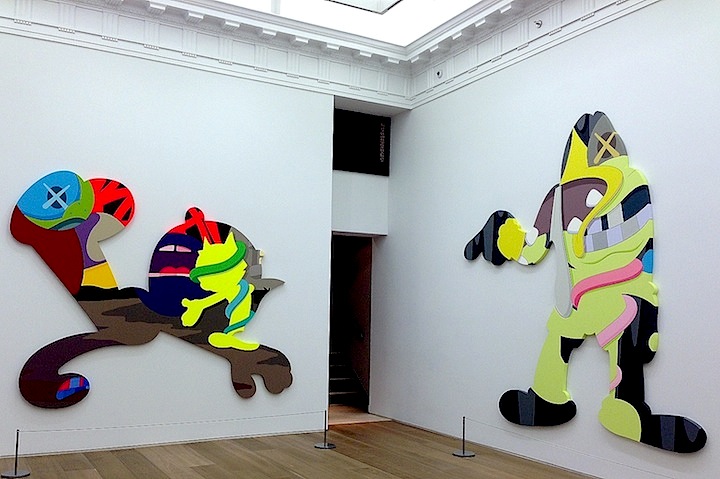
KR.ONE

While graffiti is largely identified with hip-hop, for Louie “KR.ONE” Gasparro graffiti has been synonymous with rock and roll. “Art transcends any fixed style stereotypes,” comments Louie, in reference to his two greatest passions: graffiti and rock music.

KR.ONE

Tomorrow evening the Queens-based master hand-stylist – whose artworks have been featured this past spring in Christian P. Acker’s Flip the Script Book Release and Art Show at Reed Space and in a solo exhibit at 5Pointz — celebrates his love of art and music and his talents for creating them both.

WOODSIDE ART MUSIC

Along with showcasing new works on paper and canvas, Louie will perform in a musical ensemble with several of his musician friends.

“Celebrating creativity,” Louie explains, “is a celebration of life.”

Photos courtesy of the artist

{ 0 comments }
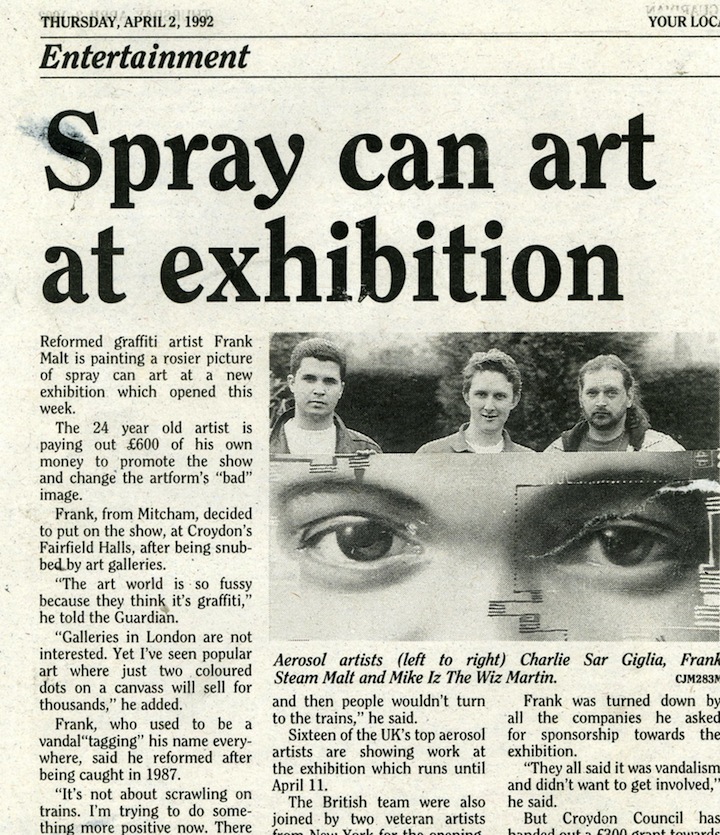
Phlegm

In his signature illustrative style, Sheffield-based Phlegm was busy these past two days gracing a huge wall in Sheepshead Bay, Brooklyn with his mesmerizing characters, books-in-hand.  These images were captured yesterday.

Phlegm

And here’s a close-up:

Phlegm

Photos by Tara Murray

{ 3 comments }