street art

COCO144 is a pioneer New York City-based graffiti/street artist. He started tagging in 1969, co-founded United Graffiti Artists and introduced the stencil into the graffiti movement in NYCThis interview was conducted and edited by Yoav Litvin. Yoav is a writer, photographer and author of a forthcoming book on NYC graffiti/street art.

You were there at the beginning of it all. How did graffiti start?

Graffiti is what the media called it. What I call the writing movement started in NYC back when I was in junior high in 1968. It began in the Inwood section of Manhattan with Julio204. Then in 1969, it took off in Washington Heights, with writers like Phil T. Greek and TAKI 183.1970

Why did writing start?

Writing was a reflection of the times — the socio-political and economic realities back then. It was a combination of the spirit of the anti-war movement, frustration with economical and social inequality, and racial and political tensions.

1972

How do you feel about the evolution of it all? Where’s it heading? What’s the difference between today and back when graffiti just started out?

It has changed from a social scream of the inner city to a large-format, graphic design-like urban beautification movement. Go out right now and try to write your name on a wall, you’ll get arrested! Try to paint anything else and you’re more likely to get away with it.  Back then, we wanted to be known within our circle of writers for destroying the system; you hit, do your thing and were cool to be incognito rather than celebrating who you are. That’s changed today.

1974

Why do you think this movement has spread throughout the world?

Making your mark is a contagious virus with no known vaccination or cure.

1984

Who do you consider are the pioneers?

My contemporaries, far too many to name, but I also feel that folks who are really interested in knowing the history of the movement should do their research.

1995

How did you get your name – COCO144?

COCO was a term of endearment given to me by my parents when I was 3 months old. I grew up on 144th St. in Harlem.

What are some of your preferred mediums?

Markers, spray paint and later I developed the stencil for obvious tactical reasons.

2009

What were some of the concerns and dangers you had to consider?

Going into the yards you always had to consider the third rail. Other than that, there wasn’t much security to worry about at that time.

How have you evolved as an artist?

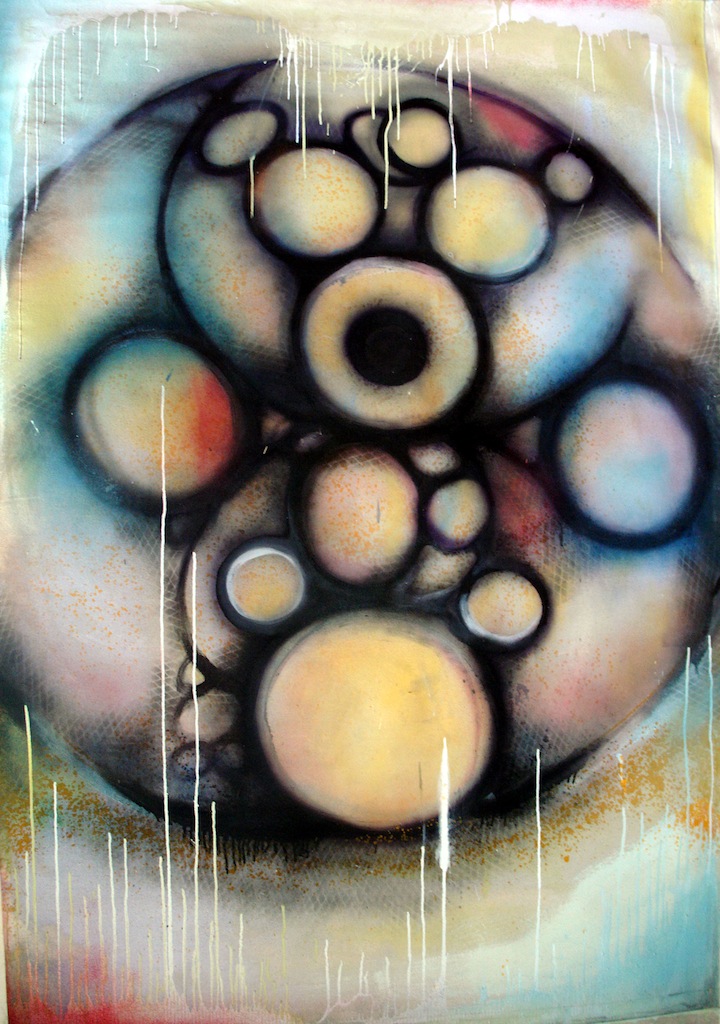
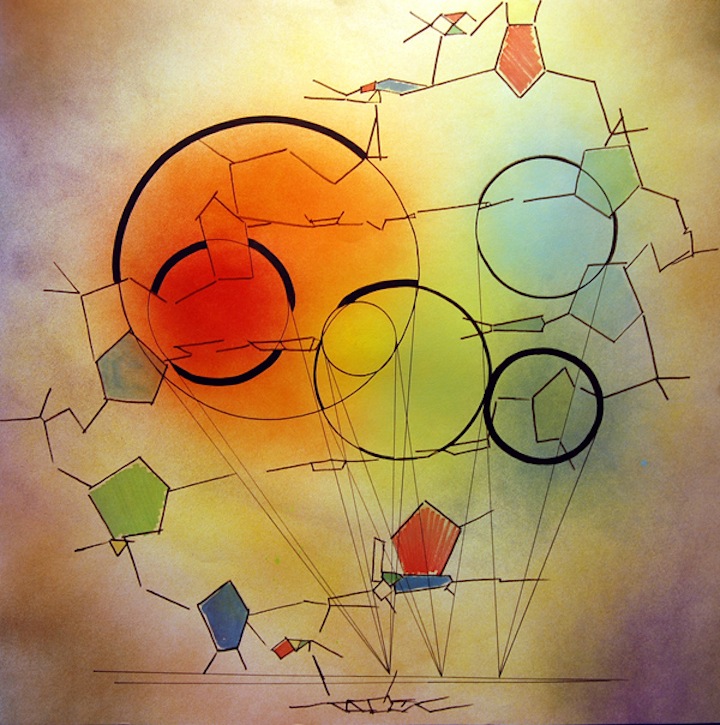
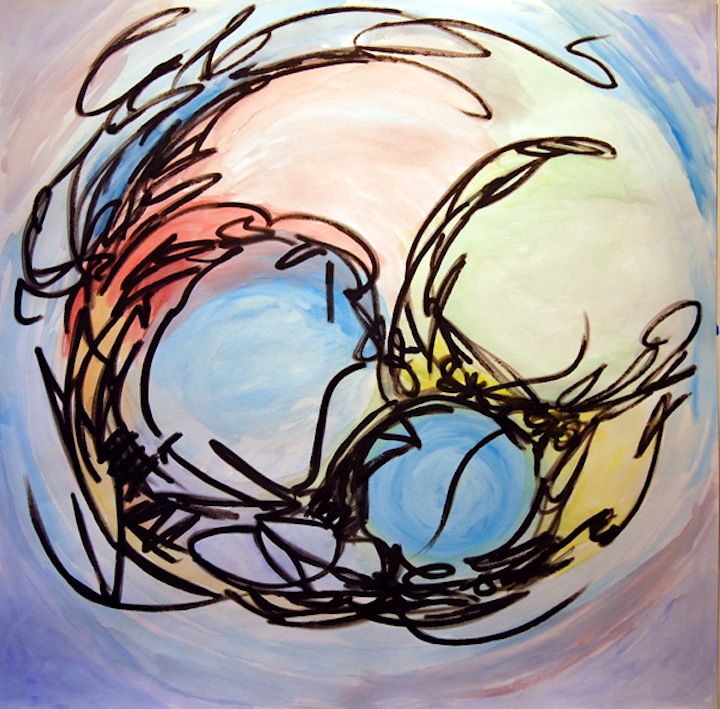
My name has developed and evolved in a calligraphic sense. I’m still working with my name. I see it as a process of constant rediscovery of myself; my name is a big part of who I am. Today I am influenced by my workplace, a Science Research Institute in Manhattan. I integrate the sciences into my name. I find it fascinating that both art and science utilize and emphasize the process of experimentation/trial and error. Both also greatly value and rely on curiosity and modesty as driving forces. Lastly, both accentuate the importance of the process as much as that of the final product.

2010

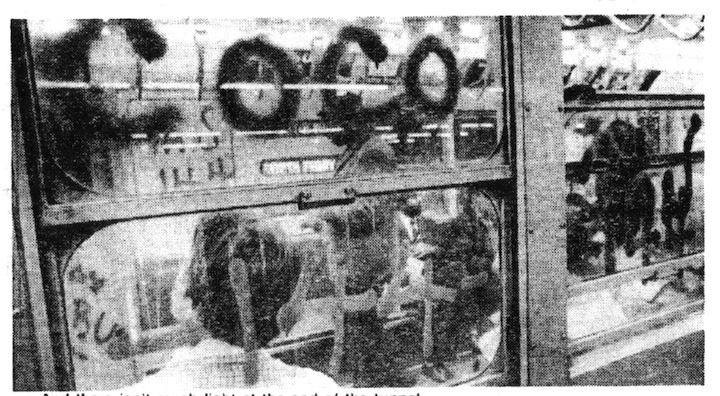
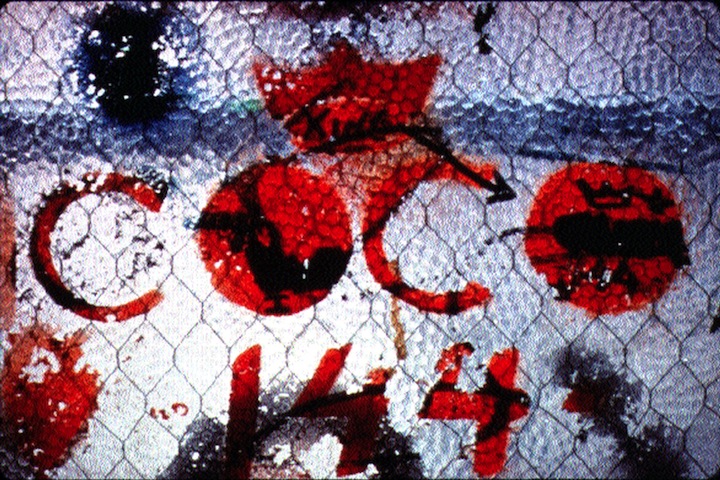
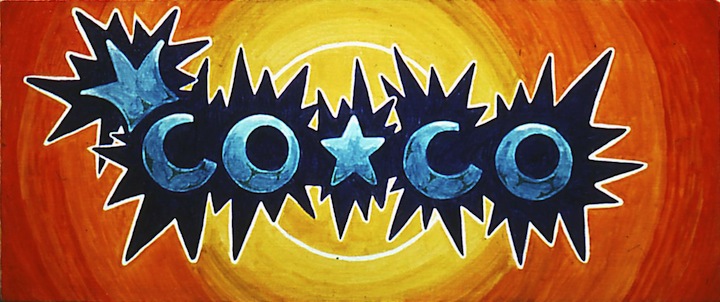
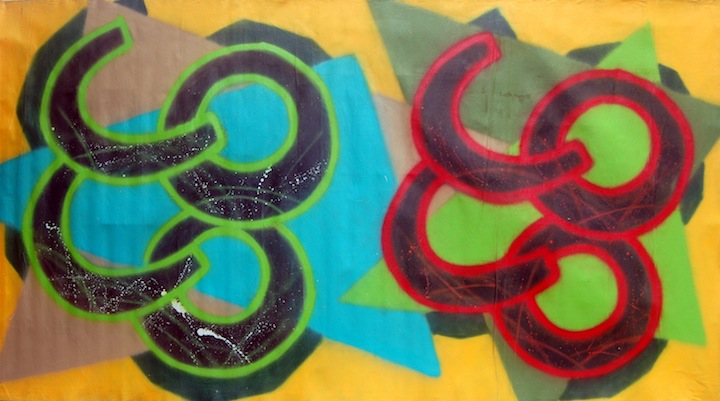
1) Photo, 1970

2) Photo, 1972

3) Photo, 1974

4) Photo, 1984

5) Photo, 1995

6) Photo, 2009

7) Photo, 2010

All photos ©COCO144

For a slideshow by COCO click the following link: COCO

For an interview with Yoav on Street Art NYC see here.


{ 5 comments }
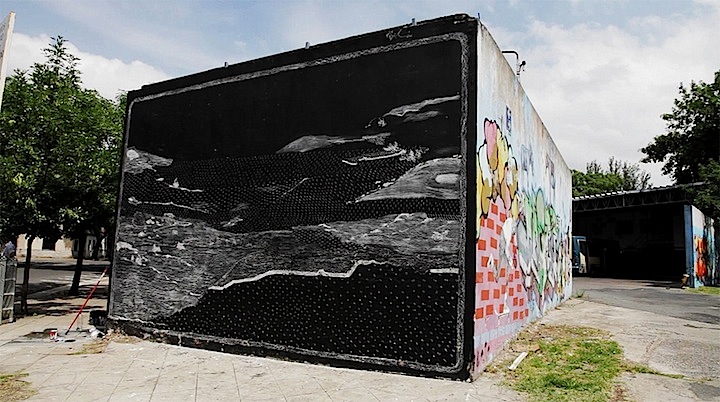
This is the third in an occasional series featuring images of males who surface on NYC public spaces:

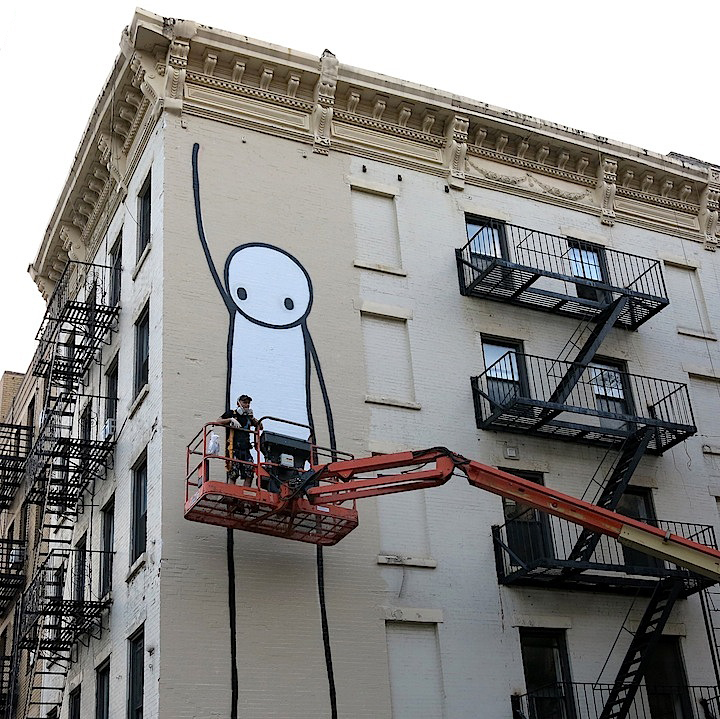
Stik across from Dorian Grey Gallery in the East Village

Stik

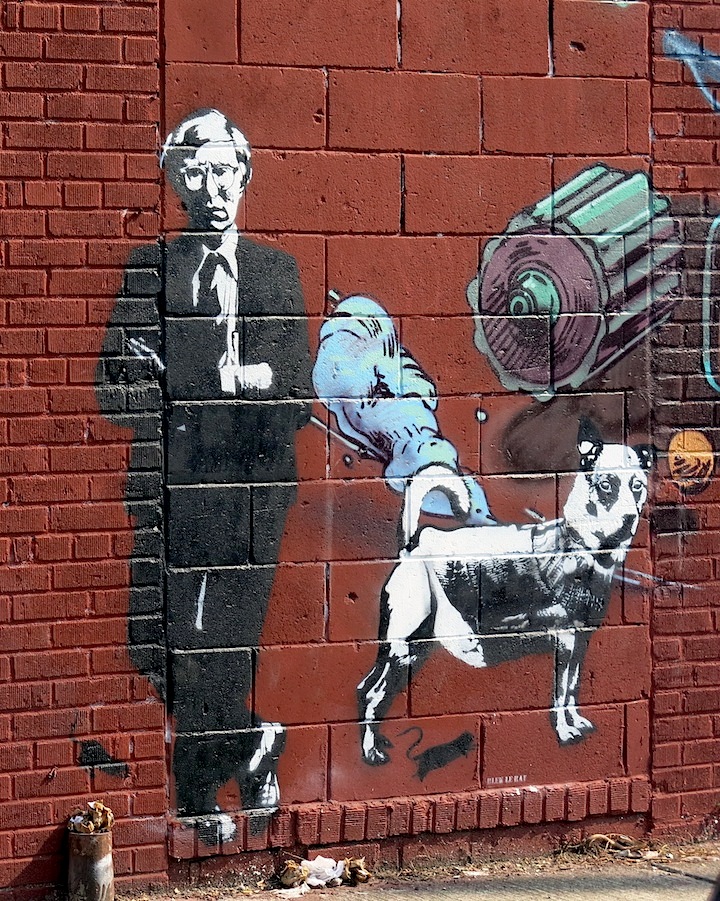
Blek le Rat at the Bushwick Collective

Blek le Rat

Icy and Sot and Gilf!, close-up from huge mural for First Street Green and Centre-fuge Public Art Project

icy and sot and gilf!

Gaia at Bushwick Collective

Gaia

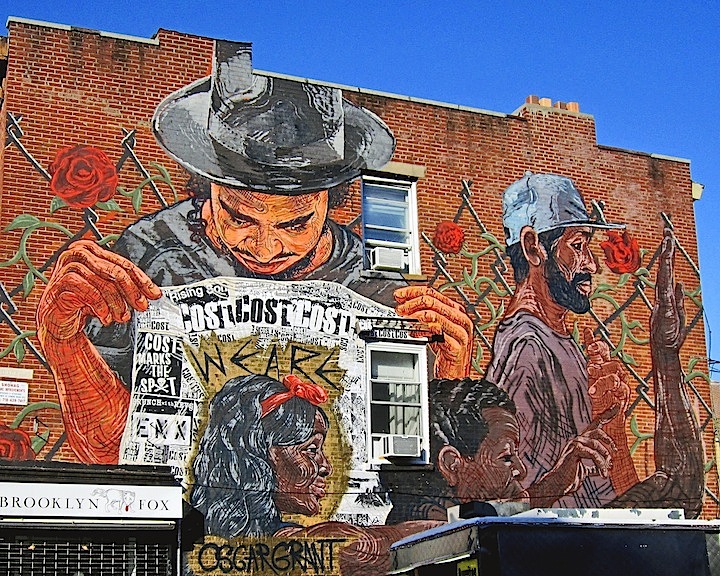
LNYCost and Enx in Williamsburg, Brooklyn

LNY, Cost and Enx

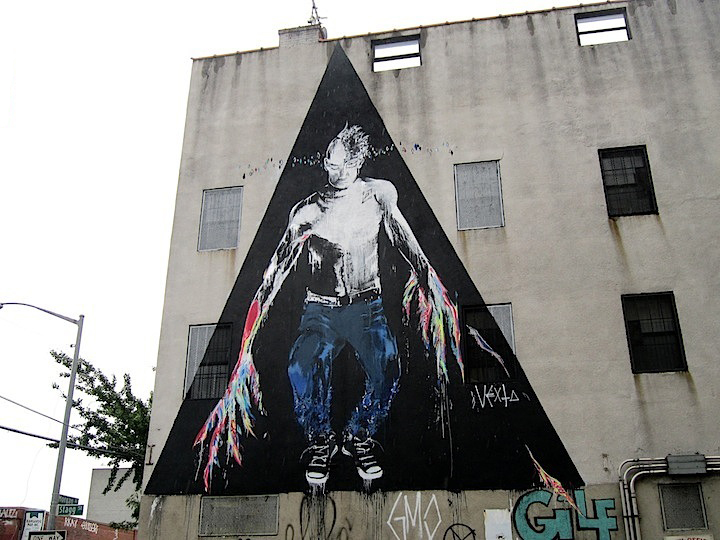
Vexta in Bushwick

Vexta and Gilf!

Manny Vega in East Harlem

Manny Vega

Photos by Dani Mozeson, Tara Murray and Lois Stavsky

{ 1 comment }

Phlegm

In his signature illustrative style, Sheffield-based Phlegm was busy these past two days gracing a huge wall in Sheepshead Bay, Brooklyn with his mesmerizing characters, books-in-hand.  These images were captured yesterday.

Phlegm

And here’s a close-up:

Phlegm

Photos by Tara Murray

{ 3 comments }
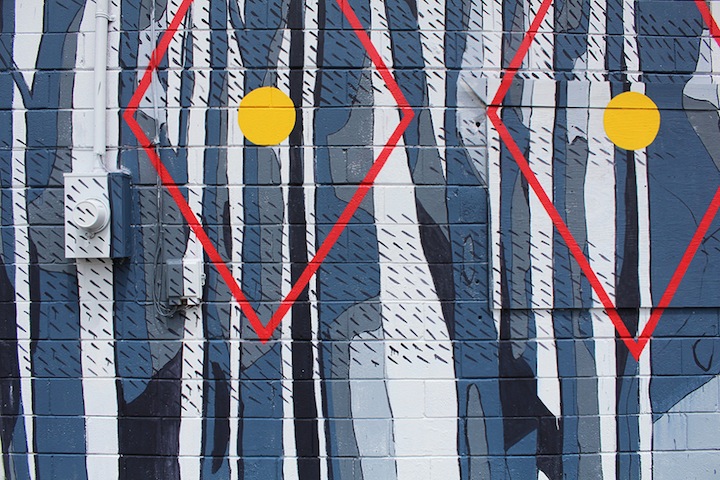
Speaking with Dede

September 11, 2013

Prolific on the streets of his native Tel-Aviv, Dede aka Dede Bandaid has spent the last two weeks leaving his mark here in NYC — in Brooklyn, in downtown Manhattan and at 5Pointz in Long Island City, Queens.

Dede

When did you first get up?

When I was 13, I found a spray can as I was wandering around my neighborhood. I’d always been drawing on just about every surface, but I’d never used a spray can. I was curious. And so I went to my schoolyard to try it out!

What was that like?

It was amazing. I looked up to the sky, and I began to paint a galaxy with stars and more. But it was years before I got up again in any public space. The walls in my house and in my friends’ houses became my canvases.

And when did that change? When did you first hit the walls of Tel Aviv?

It changed when I was in the army. Army service in my country is compulsory, and I hated it.  And so during one of my vacations from the army, I sprayed a pro-peace stencil on a public space. That was around 2000.

Dede

Do you paint alone? Or do you get up with any crews?

I’m almost always on my own.  On occasion I’ve collaborated with Latzi. I feel that I’m more influenced by Israeli culture, politics and aesthetics than many of the other writers here. I’m, also, not involved in “the scene.”  I’m more intent in getting a message across and – at this point – developing my own distinct style.

What other aspects of Israeli culture – besides its fraught politics — have influenced your aesthetic?

I infuse iconic Israeli symbols into my artworks– such as the white pigeon for peace and various plants that have Biblical references. But my main inspiration comes from everyday Israeli life – all the discussions that Israelis engage in daily regarding the army, the government, the economy…

Do you prefer to work legally or illegally?

I definitely prefer working in unauthorized spaces. That’s what street art is about. I can do whatever I want, without having to show sketches to anybody. The beauty of getting up on the streets is the freedom it gives you. And there’s the adrenaline rush – that only comes with working illegally.

Dede

Tell us something about the band aid. You sign your work Dede with an image of a band aid alongside it. How did that come about?

About five years ago, I was seeking a way to express and heal my wounds. The band aid then became a symbol for all kinds of difficulties – personal and societal — seeking remedies.

And what about the houses? I’ve been noticing lots of houses – in different shapes and positions – in your work. What do these houses represent?

When I first started including houses in my works, they represented the notion of “home” – and not feeling at home anywhere. But then they came to represent so much more – a search for home, the high cost of housing, the political situation…

Dede

Have you exhibited your art in gallery spaces?

Yes.  Back in Israel, I’ve exhibited in Tel Aviv and in Jerusalem. I’ve also exhibited my stencil work in Berlin. And here in NYC at New York University’s Bronfman Center.

Any thoughts about the movement of street art into galleries?

Well, when it’s in a gallery, it’s no longer street art. And when my work is in a gallery, it is judged more harshly than anything I do on the streets.

Dede

What percentage of your time is devoted to art?

All of it. I’m either painting or sleeping.

Is art, then, the main source of your income?

Yes. I sell paintings and I do commissions.

How does your family feel about what you do? 

They love it. My mom loves seeing my work in the streets, and she always photographs it.

What is the riskiest thing you did and why were you willing to take that risk?

I’ve taken lots of risks. But the riskiest was probably navigating a lengthy, unruly river in the rain to install a yellow submarine.

Was it worth it?

Definitely!

Dede

Any thoughts about the graffiti/street art divide?

I don’t feel it in Israel.

Have you a formal art education? 

Yes. I graduated from Bezalel in 2009. I learned a lot, and it was lots of fun. But I’ve learned far more from the streets.

Do you work from a sketch or do you just let it flow?

I usually just let it flow.

Are you generally satisfied with your finished piece? 

Never.

Your work seems quite different from when I first saw it on the streets of Tel Aviv a number of years ago. How has it evolved through the years? And why has it changed so radically?

I began by stenciling and found myself too easily influenced by other stencil artists. And when I began to make my stencils more detailed, I developed an infection from cutting them. And so I began painting more free hand. And now it’s evolving into a fusion of painting and collage. I am working more and more on developing my own voice.

Dede

How do you feel about the role of Internet in all this?

It’s definitely more positive than negative. It seems that most people first discover street art on the Internet. And online I get to see work from lots of artists I haven’t met. But the Internet can also strip you somewhat of the ability to develop a distinct, personal style.

What about the role of the photographer?

The photographer’s role is very vital to the movement.  Many artists either don’t document their work or document it poorly.  And since the Internet does have so much power these days, the photographer’s role is increasingly important.

What’s ahead?

Evolution and advancement.

Photo at 5Pointz by Dani Mozeson; all others courtesy of the artist

{ 5 comments }
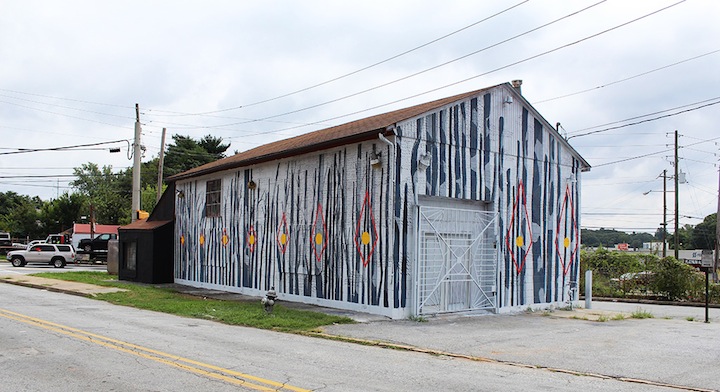
This is the tenth in a series of posts featuring images of girls — and women — who grace New York City’s public spaces:

Dasic — with Rubin in the background — at Hunts Point in the Bronx

Dasic and Rubin

Tristan Eaton in NoLita

Triston Eaton

Community mural in Bedford-Stuyvesant Brooklyn, When Women Pursue Justice, since 2005

Community mural

LMNOP at Welling Court in Astoria, Queens

LMNOP

Alice Mizrachi aka AM in East Harlem

Alice Mizrachi

FKDL at the Bushwick Collective

FKDL

Gore at 5Pointz in Long Island City, Queens

Gore

How and Nosm in Williamsburg, Brooklyn

How and Nosm

Photos by Dani Mozeson, Tara Murray and Lois Stavsky

{ 2 comments }
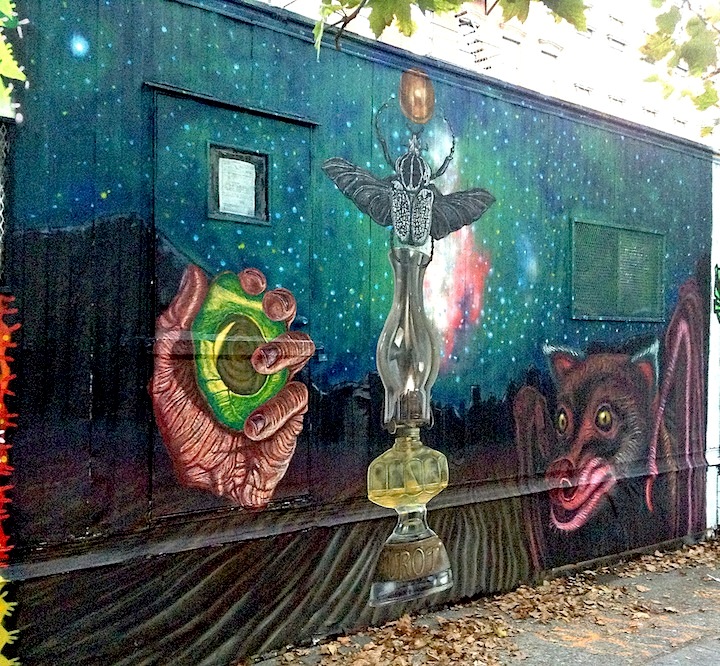
Dozens of new artworks, representing a wide range of cultures, styles and approaches, have surfaced this summer at 5Pointz. Here are a few from NYC’s ever-evolving open-air gallery:

Veteran graff artists Bis and Vor 

Bis and Vor

Austrian artist Roofie

Roofie

Japanese artist Shiro with PartYes1 and Meres

Shiro, Part, Yes One and Meres

ND’A and Bishop

NDA and Bishop

The Mexican Har crew, close-up

Har graffiti

Har Crew, complete mural

Har Crew

French artist Zeso

Zeso

Brooklyn-based international muralist Joel Bergner

Joel Bergner

Barcelona-based artist Dase

Dase

Photos by Dani Mozeson, Tara Murray and Lois Stavsky

{ 3 comments }
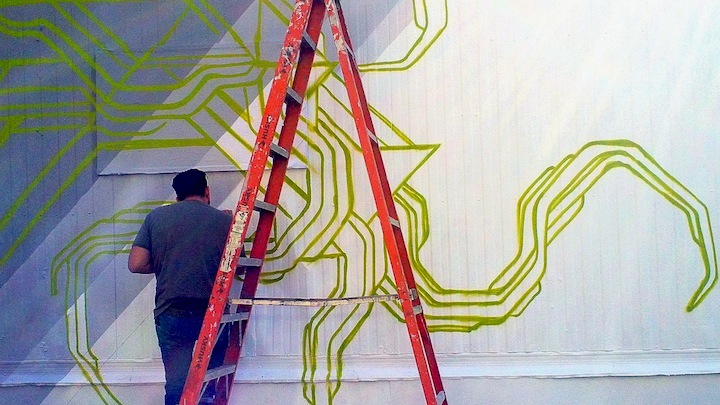
Based in Granada, Spain, the wonderfully talented and passionate artist Raúl Ruiz, aka El Niño de las Pinturas, visited NYC earlier this summer. I met up with him at the Bushwick Collective – where he was painting with Rimx – and then caught up with him at 5Pointz, where we spoke briefly.

El Nino de las Pinturas

When did you first get up?

Back in the 90’s. I was 11 when I brought graffiti to my neighborhood in Granada, Spain.  I began the usual way — by tagging and bombing.

What inspired you?

The movie Style Wars introduced the culture to me.

What is the attitude of the authorities in Granada to graffiti?

The government makes it tough. The fines for doing illegal works are excessive. It’s difficult to paint anywhere without the owner’s permission. And even when I had the owner’s permission and he loved what I did, I was forced to whitewash the wall.

How does your family feel about what you do? 

At first, they didn’t like it. They told me to paint only canvases.  But now they take pride in what I do.

El Nino de las Pinturas

Any thoughts about the movement of graffiti and street art into galleries?

It’s okay. We artists need money to live. But when our art is in a gallery, it’s no longer graffiti.  Graffiti is made in the streets for all people to experience. And we we must always remember to respect our masters  — the streets.  The streets are the inspiration and source of it all. If we lose the streets, we lose the way.

What percentage of your time is devoted to art?

Everything I do is art.

Have you a formal art education?

I studied fine arts for a year and a half. But I didn’t need teachers. I have masters — the streets.

Are there any particular cultures that influence your aesthetic?

Granada is a fusion of cultures, so my primary influence is the human culture.  But there are definite Moslem influences to my aesthetic.

What inspires you these days?

Everybody I meet.  And the natural world inspires me, as well. I love animals.

El Nino de las Pinturas and Rimx

Are you generally satisfied with your final piece? 

I am, but when I look at it, I feel like I didn’t create it.

Where have you painted?

Here in the US, I’ve painted in San Francisco, Santa Fe and NYC. I’ve also painted in many other countries. Among them are: Argentina, Venezuela, Mexico, the Dominican Republic, Morocco, Germany, Hungary, Belgium and France.

Any favorite place?

I love them all.

What do you see as the role of the artist in society?

Whatever role society has imposed on the artist — the artist needs to break away from it.

Any thoughts about street art bloggers?

They need to know the artists. Many don’t.

El Nino de las Pinturas and Danielle Mastrion

What about the graffiti/street art divide?

It’s not important. We use the same gallery — the streets. But in some way street art gave legitimacy to graffiti.

What’s ahead?

My art will evolve as I experience more.  And I will continue to develop my own distinct style.

Interview by Lois Stavsky; photos 1. El Niño de las Pinturas at 5Pointz by Tara Murray; 2. with Rimx at the Bushwick Collective by Lois Stavsky; 3. with Rimx in Bedford-Stuyvesant, courtesy Rimx and 4. with Danielle Mastrion in Bushwick by Tara Murray

{ 1 comment }

From August 19 – August 25, Los Muros Hablan, an international urban arts festival, gave a voice to silent, empty walls in East Harlem and the South Bronx. Presented by La Repuesta, a leading Puerto Rican cultural space, Los Muros Hablan NYC, featured a wonderfully eclectic group of global artists.

Axel Void, 201 East 103rd Street in East Harlem

Axel Void

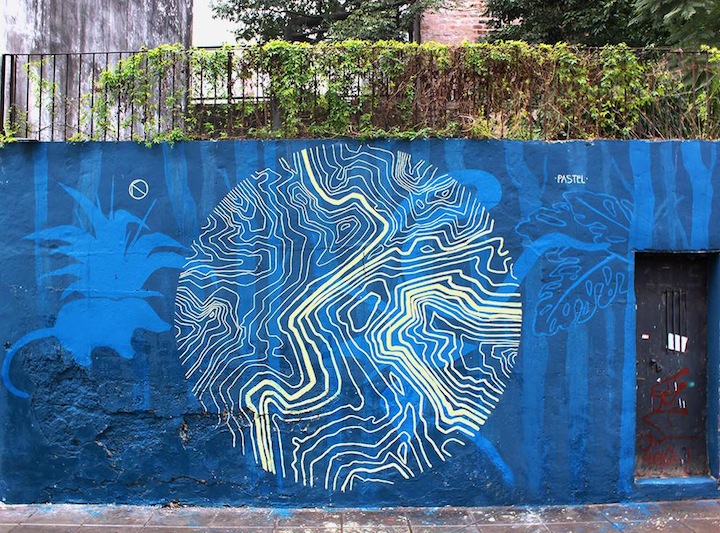
Pastel, 138 Street & Grand Concourse in the South Bronx — close-up from huge mural captured via instagram

Pastel

Celso Gonzalez and Roberto Biaggi, 54 East 116th Street in East Harlem

Celso Gonzales and Roberto Biaggi

Viajero, 2022 Third Avenue in East Harlem

Viajero

Viajerto

Rimx,154 East 100th Street, as seen in progress last week

Rimx

Betsy Casañas, 1664 Park Avenue in East Harlem

Betsy Casanas

LNY, 195 East 100th Street in East Harlem

LNY

Jufe, 2018 Third Avenue in East Harlem

Jufe

Elian138 Street & Grand Concourse in the South Bronx

Elian

Photos by Dani Mozeson & Lois Stavsky; keep posted to our Facebook page for more images of the completed murals from this week-long Los Muros Hablan NYC event presented in collaboration with Councilwoman Melissa Mark-Viverito and El Museo del Barrio.

{ 6 comments }
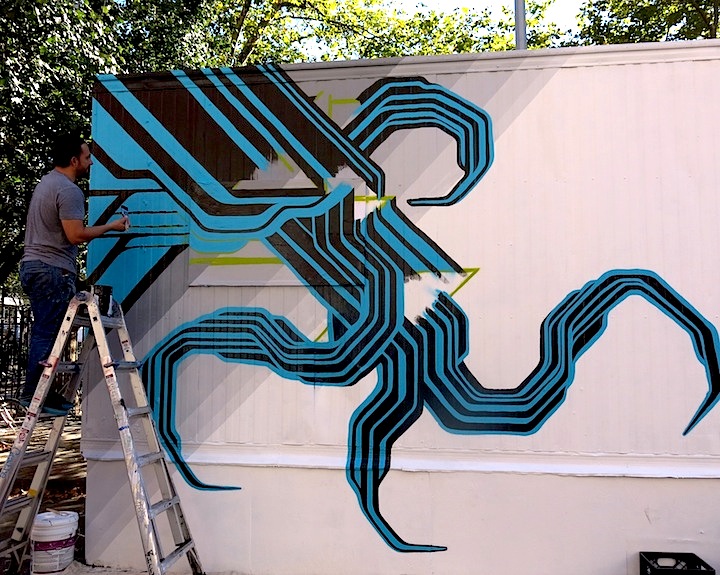
A range of curious characters have found a home on the streets of NYC. Here are a few in the first of our series featuring some of our favorite ones:

Zio Ziegler in Williamsburg, Brooklyn

Xio Ziegler

Sheryo in the East Village

Sheryo

JC at Welling Court in Astoria, Queens

JC

Lamour Supreme in Williamsburg, Brooklyn

Lamour Supreme

Reme821 in Bushwick, Brooklyn

Reme821

Sinned at Welling Court in Astoria, Queens

Sinned

QRST at the Bushwick Collective

qrst-in-bushwick-collective

Mr. Penfold at the Bushwick Collective

Mr. Penfold

Photos by Dani Mozeson, Tara Murray and Lois Stavsky

{ 1 comment }
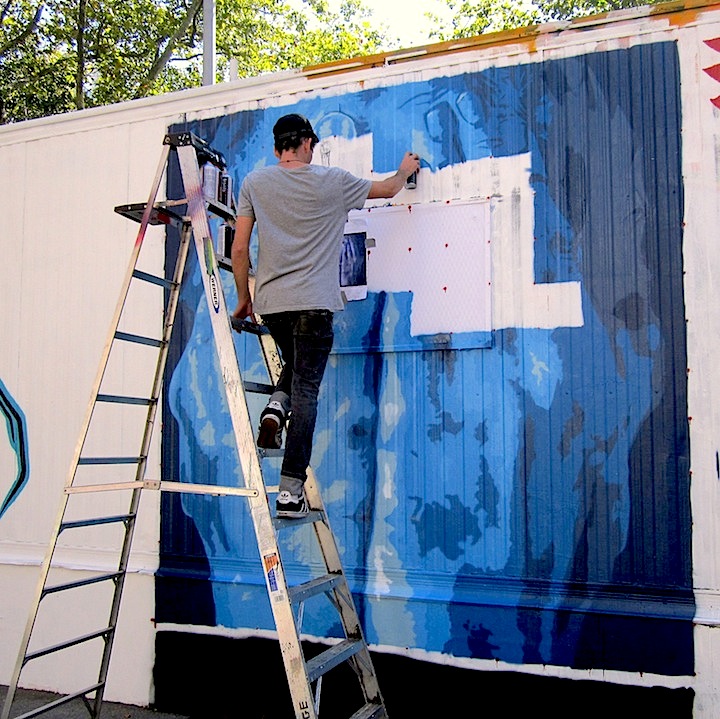
Speaking with Ever

August 18, 2013

A masterful muralist and inspiring thinker, Argentinian artist Nicolás Romero aka Ever has graced countless cities throughout the globe with his wondrous vision. Earlier this summer, he stopped off in NYC, where he painted on a rooftop in Williamsburg, Brooklyn. That’s where I caught up with him.

Ever

When did you first start getting up?

I was 16 and into hip-hop. The first time I got up was with two friends in our school’s bathroom. We thought we were so cool. Then whenever I took my dog for a walk, I did throw-ups around my neighborhood.

So your neighborhood was your main canvas back then?

Mostly for bombing, but it made me nervous.

Ever-close-up-Brooklyn-Rooftop

When did you become serious about it?

When I met Jaz and other members of DSR. They were professionals. They took street art and public art seriously. I started to share a studio with Jaz and began to think of myself as an artist. In 2003, I started making portraits.

How did your parents feel about what you were doing?

My parents encouraged me. When I was seven, they introduced me to Van Gogh and Goya. I became obsessed with Van Gogh because he cut off his ear. I had a problem with my ear, so I identified with him. When I was thirteen, I began taking art classes outside of school.

Did you continue to study art formally?

I studied architecture at the university for a few months, but it wasn’t for me.

Ever

Who are your inspirations? Any particularly artists?

I have many. I’m inspired by Mexican muralists — the way their art reflects the people and their social consciousness. I’m also inspired by such artists as Van Gogh, Lucian Freud and Francis Bacon.

What is your main source of income these days?

Half my income is from commissions and the other half is from sales.

How do you feel about the movement of street art and graffiti into galleries?

It’s okay. I’d rather sell my work in galleries than do commission pieces for corporations.

Ever

Have you had any negative experiences while getting up on the streets?

The mural that I did in Lima, Peru was censured. I was accused of glorifying Communism. The image on the mural was changed, and it is no longer mine.

You’ve painted in so many cities. Have you a favorite one?

Paris. There is an openness there.

Any thoughts about the graffiti/street art divide?

I don’t see it.

Ever

How has your art evolved since you began painting murals?

I’ve become more abstract and I’ve begun to think of the body as “just a dress to use on Earth.”  My portraits no longer have eyes.  And I’ve begun to use religious symbols obsessively in my work, even though I don’t believe in a traditional God. My work has also become more socially conscious.

What inspired that?

Before 2009, I was apolitical. But in 2009, I lived in Paris, and I began to think of art as the means to inspire societal change. The revolution must start here — on the walls.

Interview by Lois Stavsky. Photos of Brooklyn rooftop and Baltimore mural by Lois Stavsky. Final image of wall in Santurce, Puerto Rico — which I caught only at the beginning — courtesy of the artist.

{ 0 comments }