Street Artists

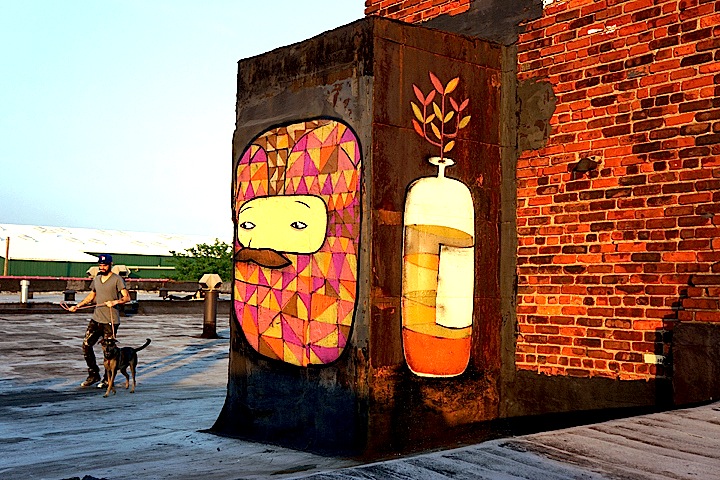
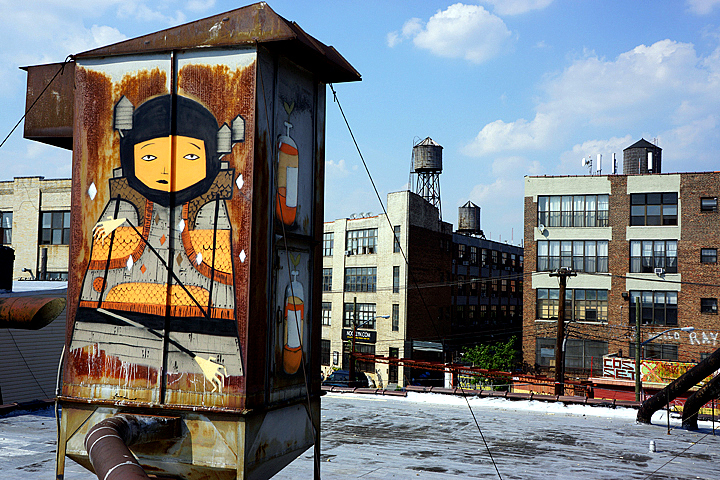
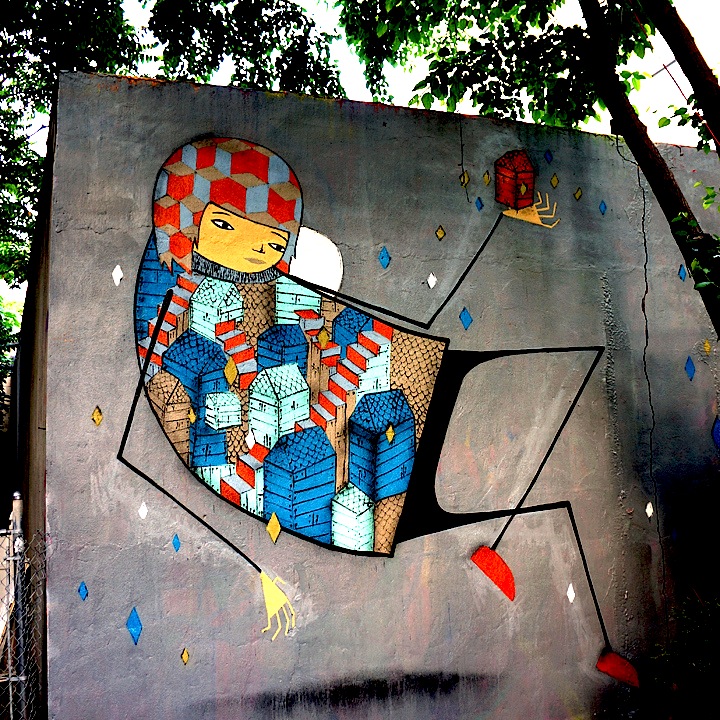
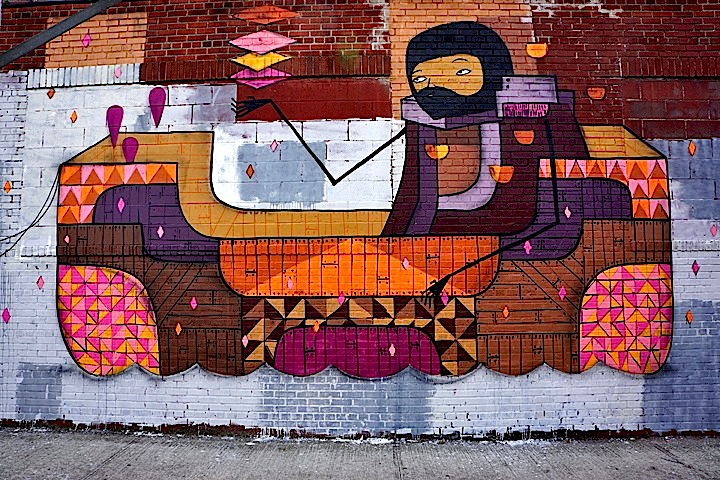
Australian artist Kyle Hughes-Odgers creates enchanting public artwork and exhibits his work in galleries across the globe. With strikingly beautiful  patterns in luscious colors — fusing figurative, abstract and narrative elements — he engages us visually and intellectually. We had the opportunity to speak to the talented artist on his recent trip to New York City, where he left his mark at the Bushwick Collective and on nearby rooftops.

kyle-hughes-odgers

When and where did you start getting up?

In 2005, I started with wheat pastes and stickers in Perth and Melbourne.

What inspired you to get up?

I was always drawing and painting. I saw doing street art as an immediate way to get my work out into a public forum.

Any early graffiti-related memories?

I was more interested in comic books.

What inspires you these days?

Everything. Architecture, patterns, narrative, decay…

Kyle Hughes-Odgers

Any preferred spots or surfaces?

I love rundown abandoned spaces with unique textures. One of my favorite spaces was an abandoned French mansion in Cambodia.

Have you exhibited your work in gallery setttings?

Yes. Shortly after I got my work up on the streets, I started showing work in galleries. I’ve had solo shows in Perth, Melbourne, Berlin and Amsterdam. And I’ve participated in group-shows all over the world.

What percentage of your time is devoted to your work?

I’m a full time artist. I work on gallery exhibitions, private commissions and large scale public art work. I also recently illustrated a children’s book.

Any thoughts about the street art/graffiti divide?

I don’t really focus on whether or not there is a divide. I’m open to anything creative.

Kyle-Hughes-Odgers

Do you prefer working alone or collaborating with others?

I like working alone, but I think it is important to collaborate.

Any thoughts about the role of the Internet in all of this?

I think the Internet is great. It’s an amazing resource to access what’s happening all around the world.

Are there any particular cultures that have influenced your aesthetic?

None that I’m conscious of.

Are you generally satisfied with your finished piece?

Sometimes.

kyle-hughes-odgers-street-art-NYC

How has your work evolved through the years?

My first work was hand-drawn characters on brown paper. But then, as I started hanging out with people who use spray paint, I became more interested in texture and colors and learned more about how to use the medium.

What do you see as the role of the artist in society?

It is the role of the artist to document our existence based on his or her observations.

Have you any thoughts about the role of the photographer?

It is very important. Street art is so ephemeral that if it’s not documented it’s as if it didn’t exist.

Kyle-Hughes-Odgers

What do you see as the future of street art?

The lines will continue to blur between the different art genres.

Any favorite street artists?

There are many; but some of my favorites are Aryz, Escif, Roa, Phibs and Beastman.

What’s ahead?

More gallery shows, more installations and ten-story high pieces.

Good luck! It all sounds great!

Photos courtesy of the artist.

{ 0 comments }

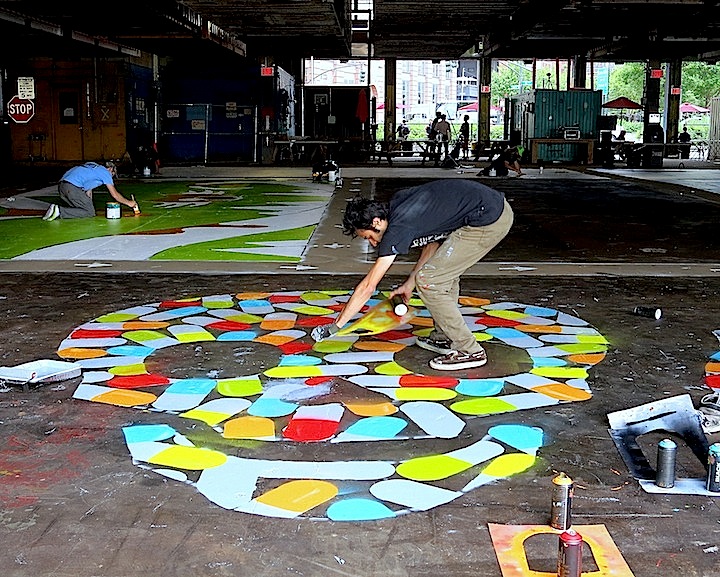
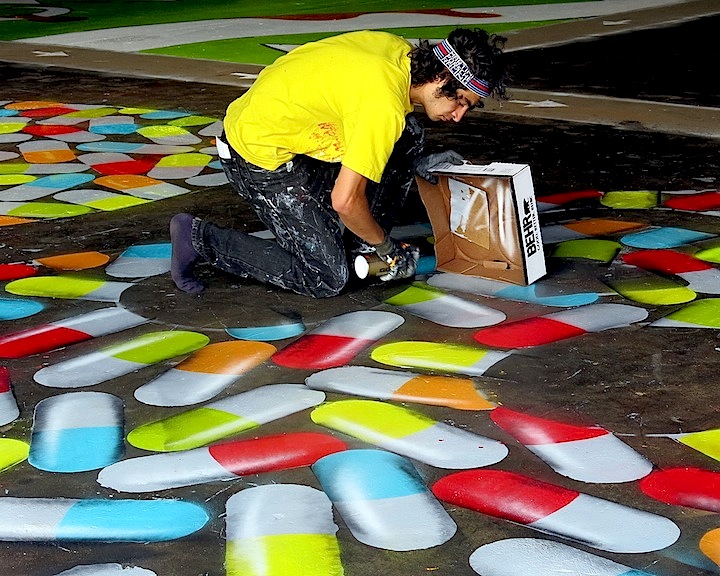
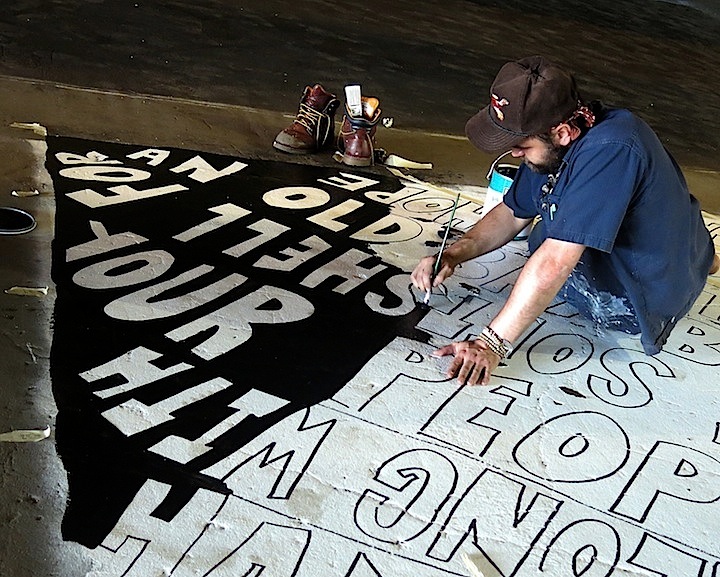
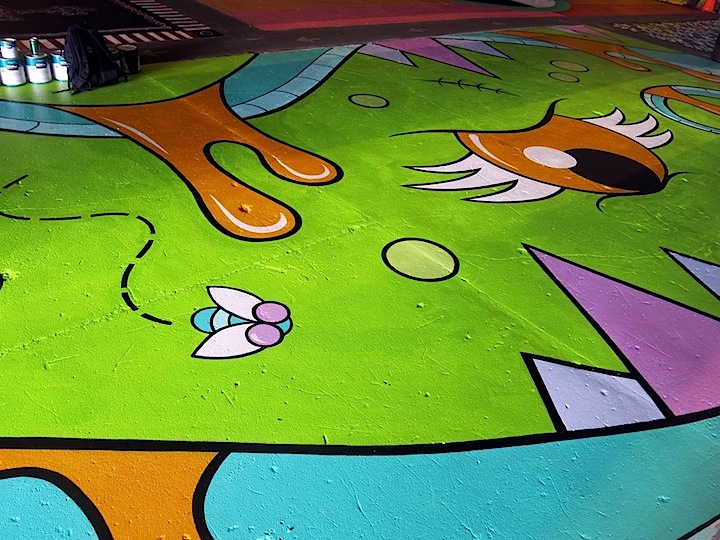
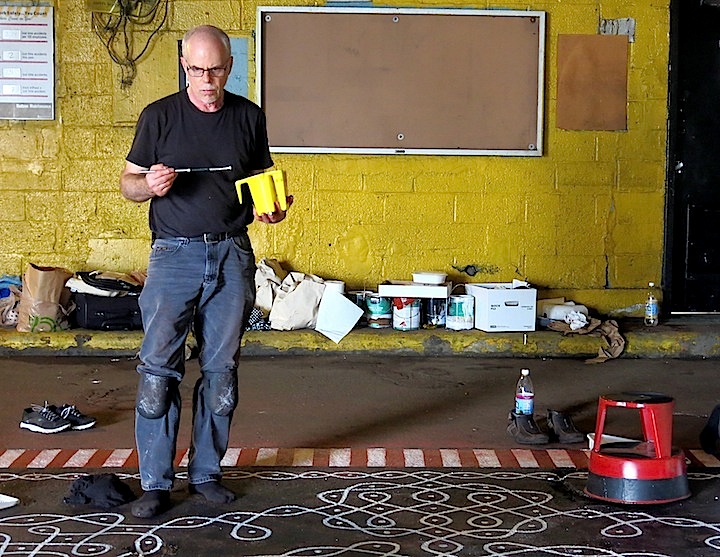
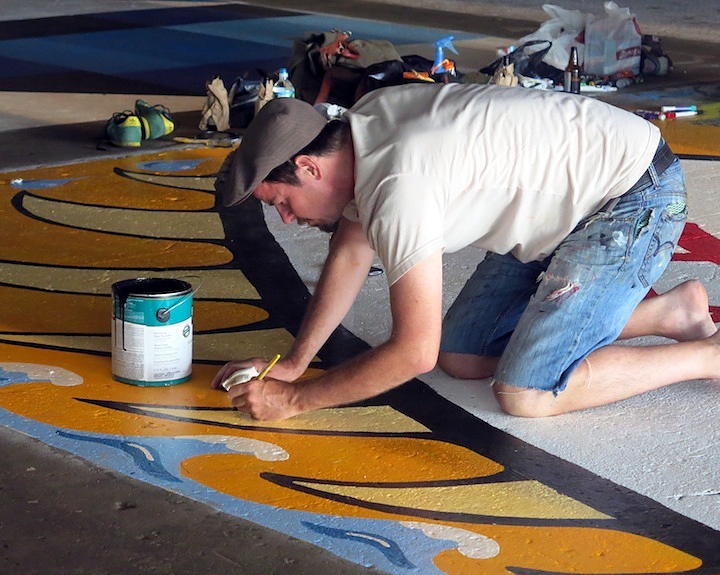
Armed with spray paint, paintbrushes, markers, pencils and assorted implements, a diverse group of artists have transformed the ground level of the Marina at Pier 57 into a mesmerizing medley of styles, shapes, colors and concepts. Here’s a sampling of what we recently captured on the “magic carpet” under 36 suspended shipping containers:

Iranian stencil artist IcySinned painting, top left

Icy and Sinned

Icy’s brother and partner Sot 

Sot

Daniel Patrick at work with words

Daniel Patrick

Queens-based artist Sinned, close-up

Sinned

Painter Bruce Wall at work on piece in collaboration with Josh Miller

Bruce Wall

Bruce Wall

 Garrison Buxton of Ad Hoc Art

Garrison- Buxton-art-Pier-57

NYC-based RJ Raizk

RJ Raizk

RJ Raizk

Brooklyn-based Subtexture

Subtexture

Not pictured are works by Depoe, Rrobots and In Pursuit of Magic.

Commissioned by YoungWoo & Associates, the completed artworks can be seen at the Marina at Pier 57 at West 15th Street within Hudson River Park through July.

Photos by Dani Mozeson, Tara Murray and Lois Stavsky

{ 3 comments }

This is the third in an ongoing series featuring the range of faces that surface daily on NYC’s public spaces:

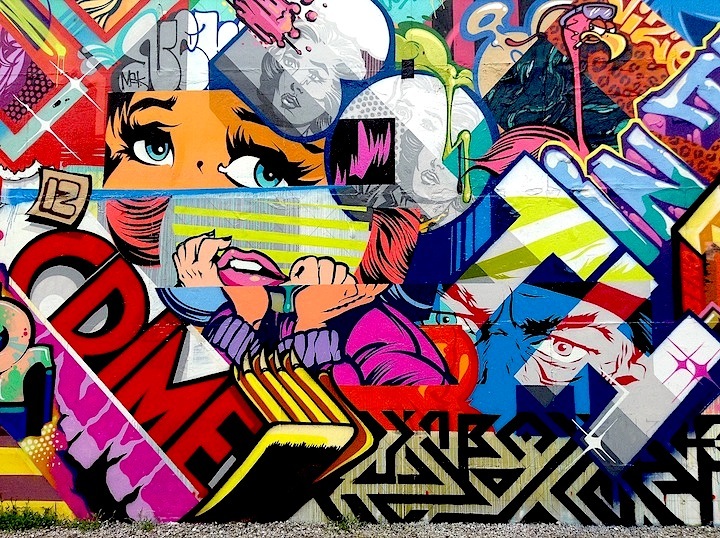
Pose and Revok on the Bowery and Houston, close-up

Pose and Revok

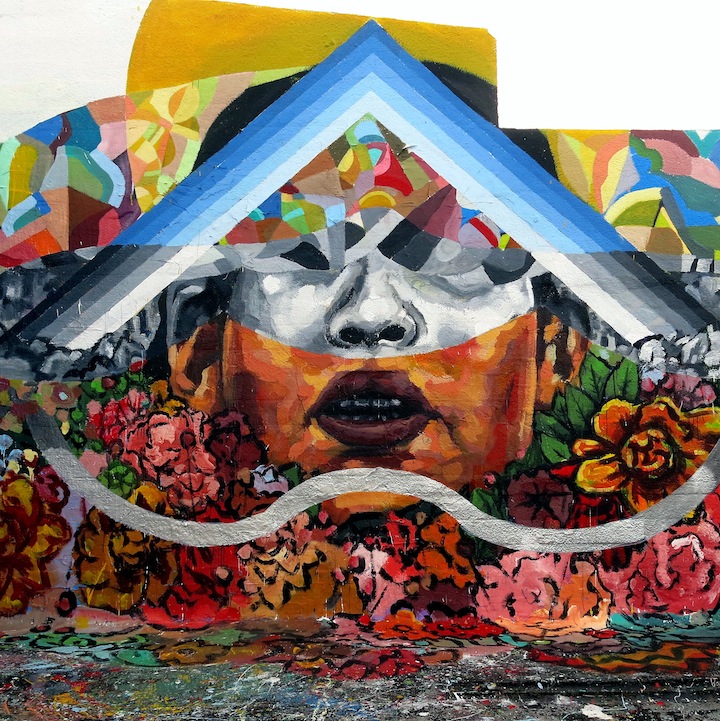
Argentinian artist Ever on Williamsburg rooftop, close-up

Ever

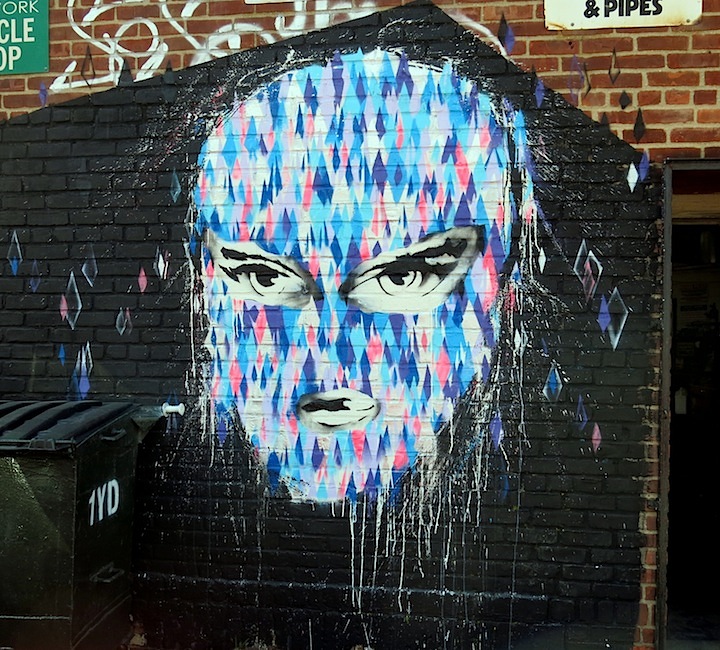
Australian artist Vexta at Welling Court in Astoria, Queens

Vexta

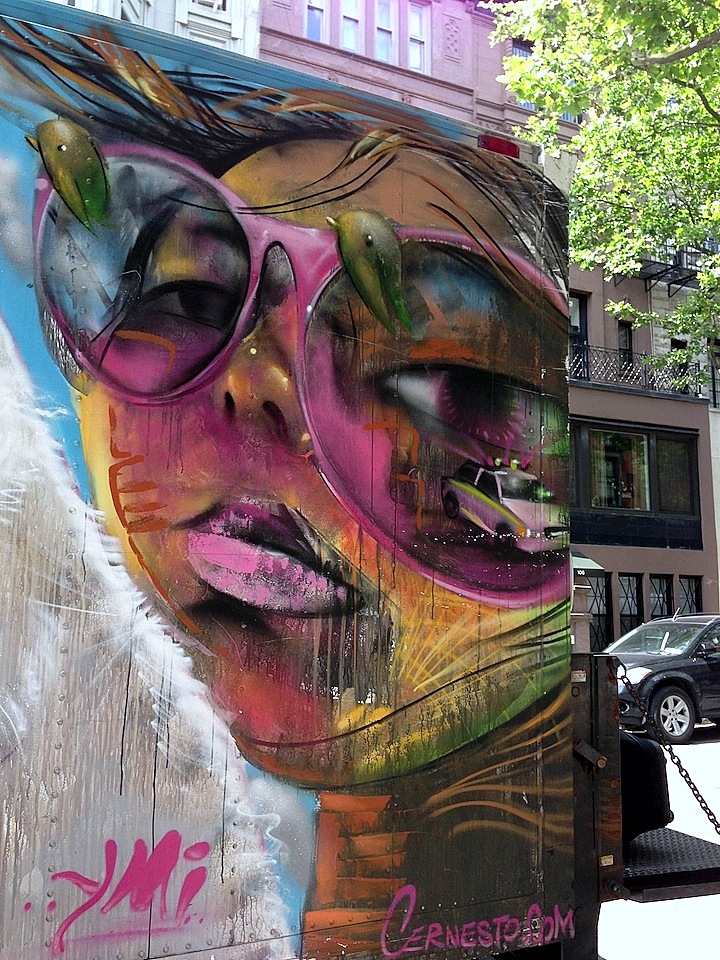
Cern on truck spotted on Manhattan’s Upper West Side

Cern

Mata Ruda and ND’A at Welling Court in Astoria, Queens

mata ruda and ND'A

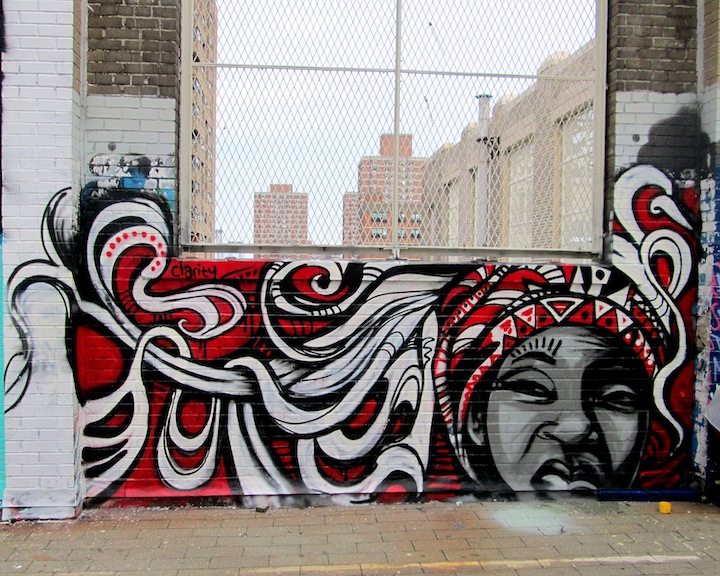
Crystal Clarity on Lower East Side rooftop

Crystal Clarity

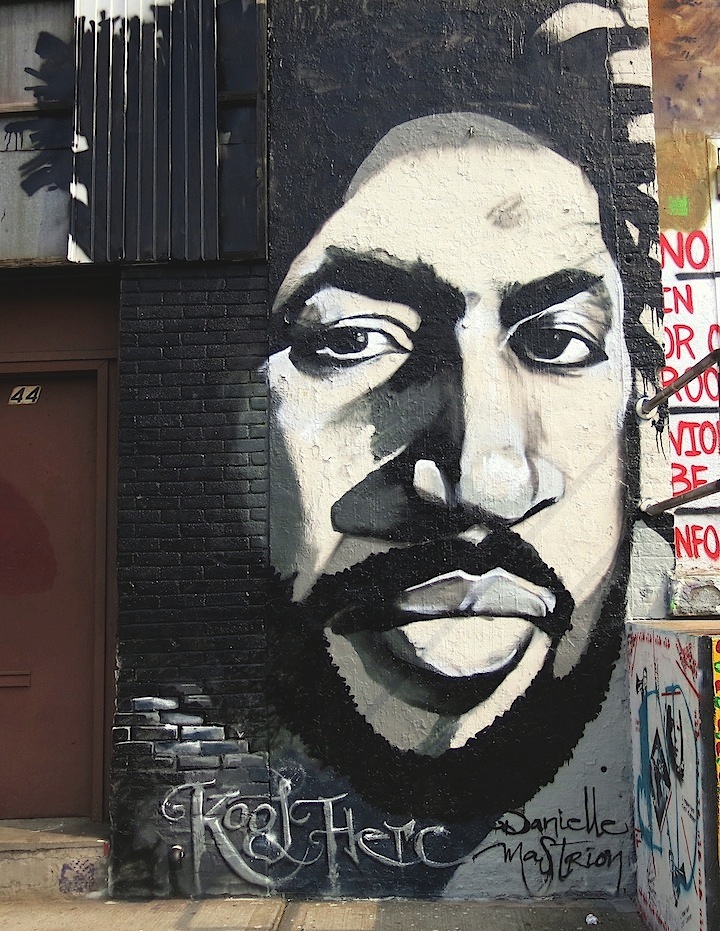
Danielle Mastrion with signature by El Niño de las Pinturas at 5Pointz in Long Island City, Queens

Danielle Mastrion

 Phetus in Bushwick, Brooklyn

Phetus

Photos by Lenny Collado, Dani Mozeson, Tara Murray & Lois Stavsky

{ 0 comments }

Speaking with Facter

July 4, 2013

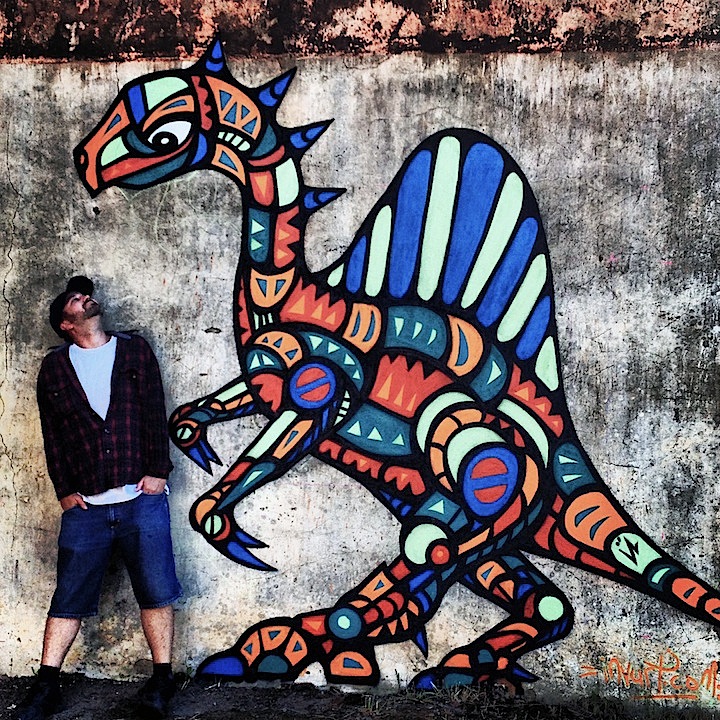
Fletcher Anderson aka Facter, the Melbourne-based artist, writer and editor of  the popular webzine INVURT, recently spent some time in NYC during his extensive travels. While he was here, we had the opportunity to speak to him.
Facter

When and where did you start getting up?

I began bombing when I was about 14 back in 1989 in Perth, Western Australia. I was crap – terrible at doing anything more than tagging. I took an eight-year break to concentrate more on writing, and then about six years ago, I went back to it.

What inspired you back in Perth?

When I was about eight years old, my sister was seriously into graffiti — like everyone else — and turned me on to the movies Beat Street and Wild Style. Then, when I was in high school, just about everyone I knew was bombing, so I fell into it, as well.

Have you any preferred spots? 

I’ll paint anywhere and everywhere.

Have you ever been arrested?

Never for actually painting or bombing. A few years after I began painting, though, I was busted when I was caught up in a house raid where stolen paint was stashed. I got off as I wasn’t involved in the theft, but things went a bit south from there and I moved up to Queensland to get away from it all. In hindsight that was kind of fortunate, as that’s where I really discovered my love of art .
Facter

How do your folks feel about what you do on the streets these days?

They love what I do and are very supportive.

What percentage of your time is devoted to art?

I work nine to five as a Business Analyst – it pays the bills. But it also helps fund different projects that I help make happen via my webzine, Invurt.  After 5pm every night, I’m either blogging about the street art scene in Australia and NZ, writing and editing Damn It! Magazine with Jo Jette, or drawing. Weekends are full of more painting, and checking out gallery shows and attempting to have a personal life outside of it all…haha!

How does the street art scene here in NYC compare to the one back home in Melbourne?  

I really do love the NYC scene. And as I’ve only scratched its surface, I hate to generalize. But there does seem to be more openness and tolerance in Melbourne. And  it does feel like the scene back home has less of a competitive nature. Melbourne is a very cultured city, and most people try to work together towards the same goals of furthering the art they love – which is great.
Facter

Have you any favorite cities?

The Mission in San Francisco is amazing. NYC and the Bushwick Collective are brilliant. I love Boston. I find the people there so generous and helpful. Oslo was great fun, as were Tartu, Estonia and Valka/Valga  That said, I especially love Hosier Lane and Aerosol Alley, back home in Australia.

Any thoughts about the street art/graffiti divide?

I hate the idea of a divide. The media and governments spent 30 years waging a war against graffiti. They couldn’t just turn around and let it go, so they came up with the term street art to save face and try to differentiate between things they liked and things they didn’t. Suddenly there was this whole big deal about it all, and it saddens me. If it’s on the street, and it’s art, then it’s all “street art” – even graffiti. And anyone that thinks graffiti isn’t art is… well…

Wow! That makes so much sense!

At the end of the day, we all love to paint walls, so we all have that in common. What’s the point in having any kind of beef against anyone who has that love?

How do you feel about the movement of graffiti and street into galleries?

Once it’s in a gallery, it’s not street art anymore – plain and simple. It’s a street artist exhibiting street art – derived work in a gallery.  I think it’s great that more and more street artists are getting the opportunity to exhibit in galleries. Everyone wants to get paid for doing what they love to do – and it’s about time that they were recognized as the talented creatives that they are.
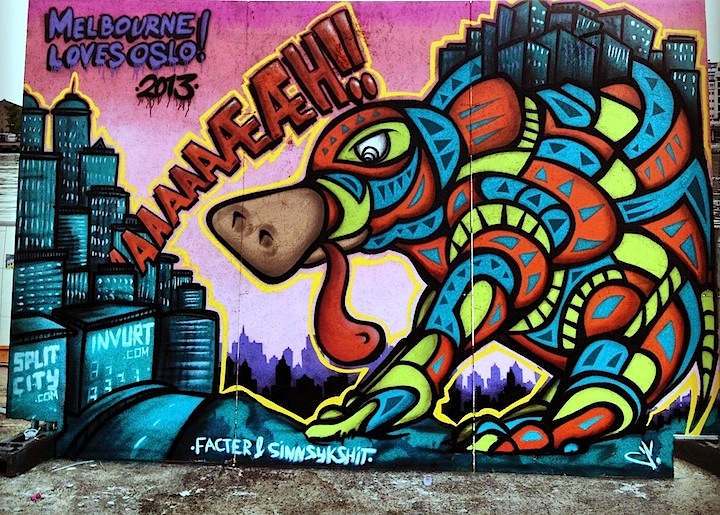
Facter and Sinnskyshit

Have you exhibited your work?

I have had lots of group shows and solo shows in Australia, and I was in one group show in Toronto. My aim next year is to be involved in more shows outside of Australia.

How do you feel about the role of the Internet in all of this?

I love it. Street art is the world’s first “as it happens” global art form. I honestly don’t think that the whole phenomenon would be what it is without the Internet.

Have you a formal art education?

Yes, but I never use it – I went off on a tangent long ago.

What’s the riskiest thing you ever did? And why did you take that risk?

Doing run-ups on trains always felt pretty risky. And I did it because trains are big, shiny and boring. One day, I hope, all the trains will be legally painted by the artists who were once arrested for doing so.
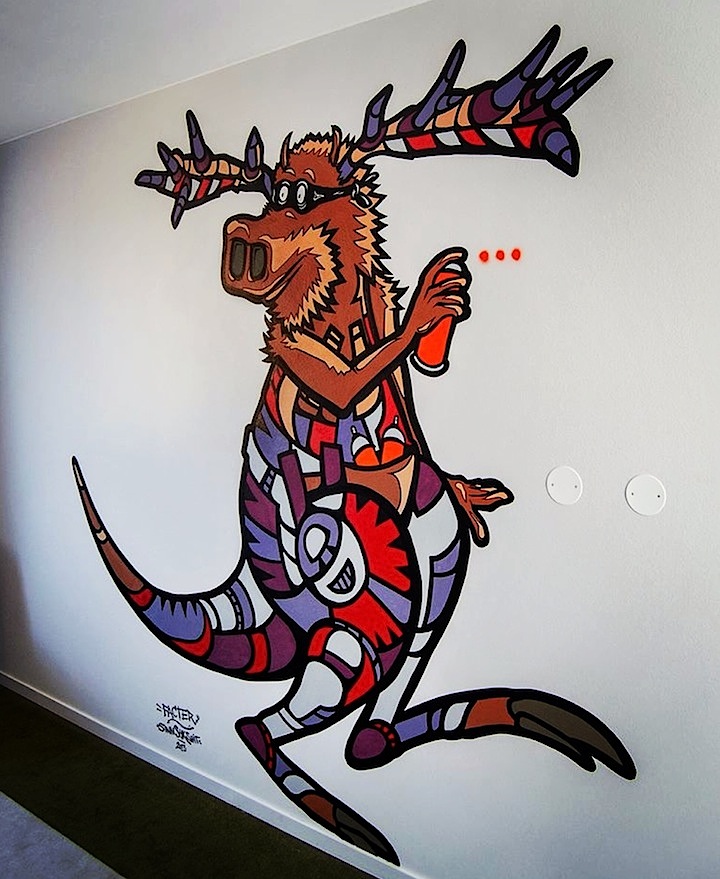
Facter and Sinnskyshit

What inspires your aesthetic these days?

Science fiction, ancient cultures and robots. I’m also a huge dinosaur lover… haha.

Are there any particular cultures that have influenced your aesthetic?

I grew up in the middle of nowhere near an aboriginal community – in a place in the Northern Territory of Australia called Nhulunbuy. I learnt the value and beauty of traditional cultures from an early age. Mayan and Maori art have been a huge love since I was a kid – which is why I just spent three months in Central America visiting the ruins, having my dreams of seeing them for myself fulfilled.

Do you work with a sketch in hand?

No, I usually just let it flow. I like to surprise myself – lately though, as I’ve been travelling I’ve been starting to think about my planning a bit more, due to having limited time to fuck around on a wall … it’s a different approach for me.

Are you generally satisfied with your final piece?

Hell, no!
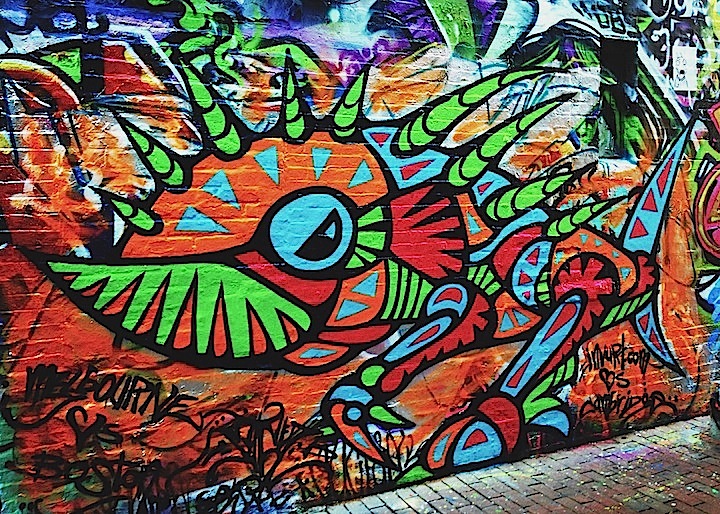
Facter

How has your work evolved through the years?

I’ve always had a distinctive style since I first started, but I continue to refine it – I think it has enormous scope for me to do some cool things with.

What do you see as the role of the artist in society?

To visualize the collective dream.

What do see the role of the street art blogs?

In 20 years from now, I’m hoping that they will all serve as an amazing resource and snapshot of a brilliant art movement as it happened. That’s why I love writing about it and documenting it, and the only reason I do it.

That sounds right! What do you see yourself doing in five years?

More of the same of what I’m doing now! Writing, documenting, painting. Hopefully I’ll be doing more shows, travelling and painting amazing spots. I also look forward to helping launch and participating in bigger projects with more artists in Melbourne.

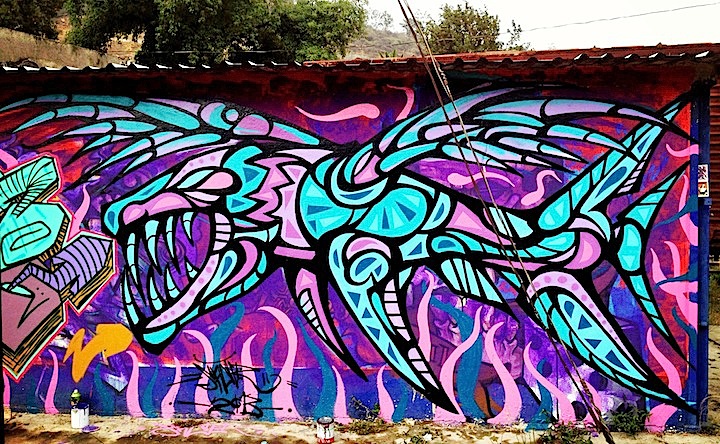
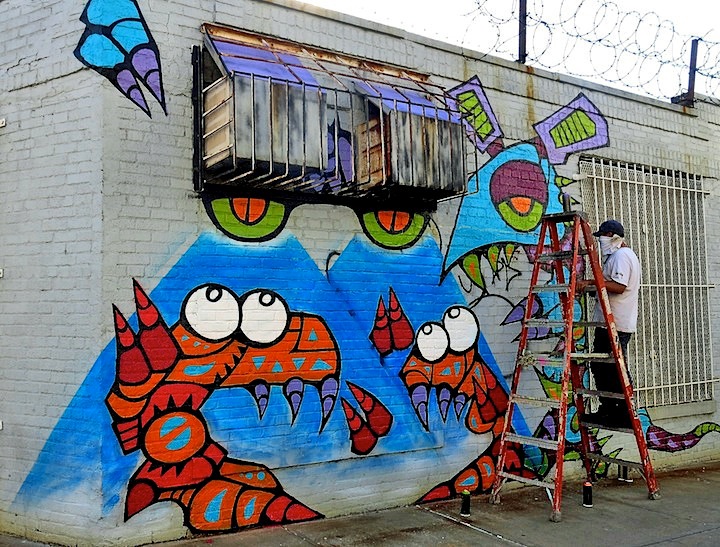
Photos: 1. Valka, Latvia 2. Oaxaca, Mexico 3. the Bushwick Collective 4. & 5. Oslo with Sinnskyshit 6. Boston; all photos courtesy of the artist, except Bushwick Collective by Lois Stavsky
{ 0 comments }

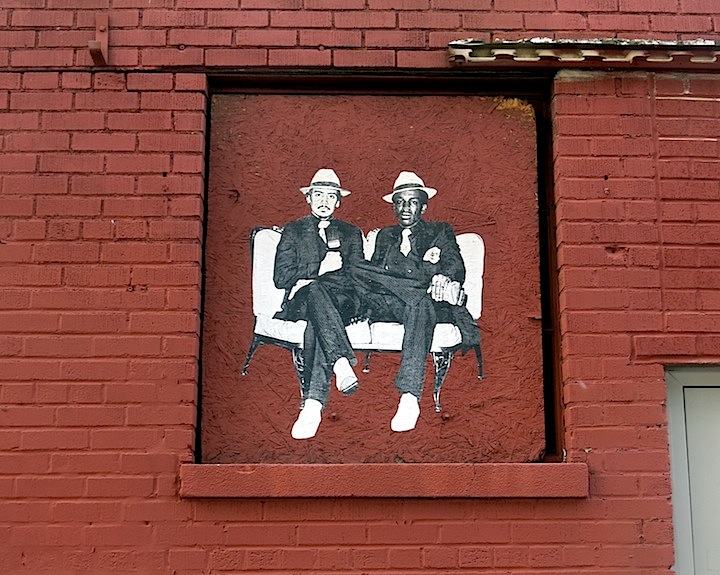
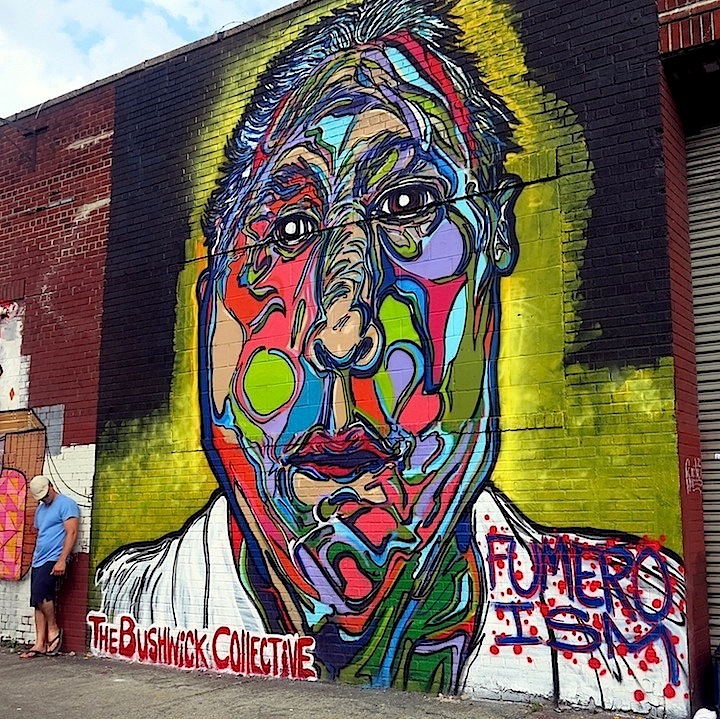
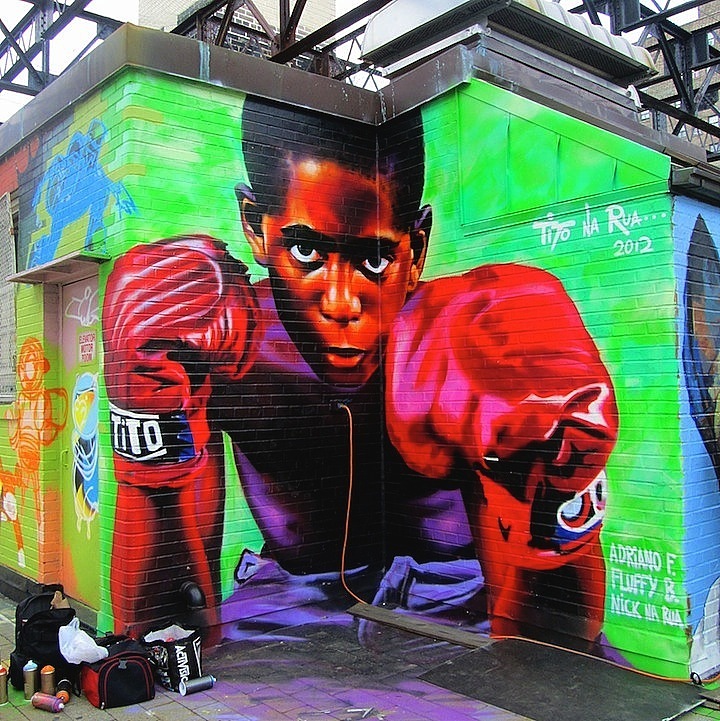
This is the first in a series of images of males who surface on NYC public spaces:

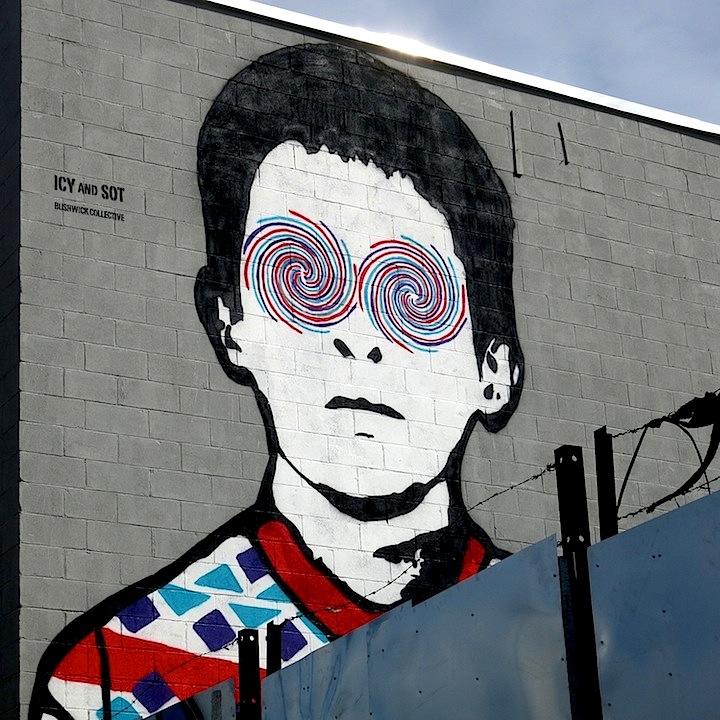
Icy and Sot at the Bushwick Collective

Icy and Sot

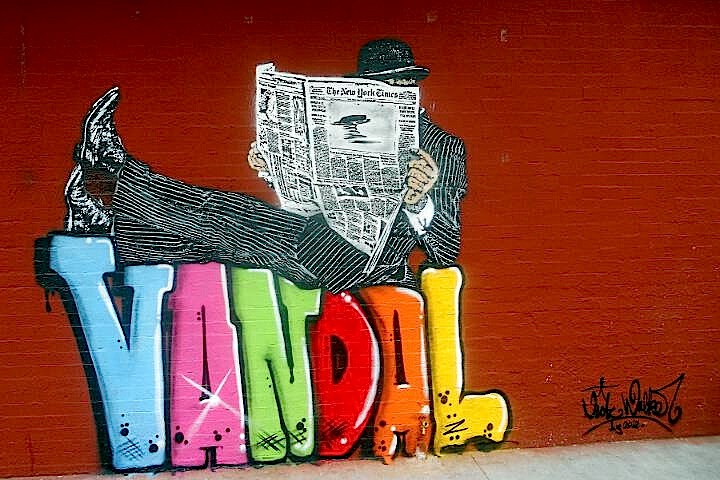
Nick Walker on Manhatan’s Lower East Side

Nick Walker

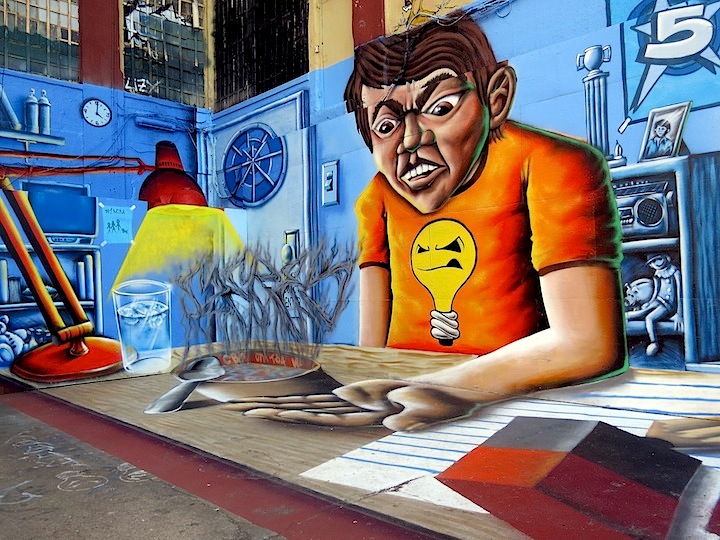
Meres at 5Pointz in Long Island City

Meres

SinXero and Joe Conzo do the Cold Crush Brothers in the Bronx

SinXero and Joe Conzo

Fumero at the Bushwick Collective

Fumero

Tito Na Rua on Lower East Side rooftop

Tito Na Rua

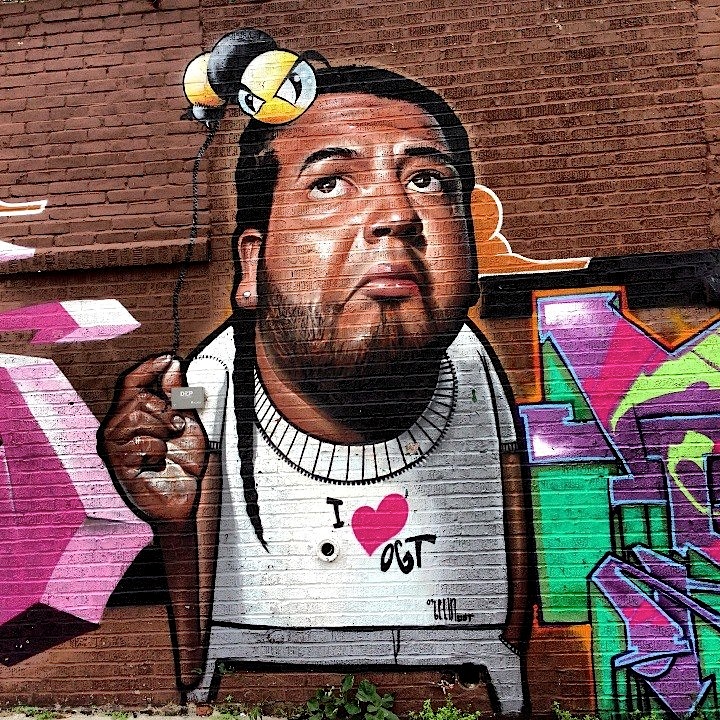
Belin and the Royal Kingbee in the Bronx

Belin and King Bee

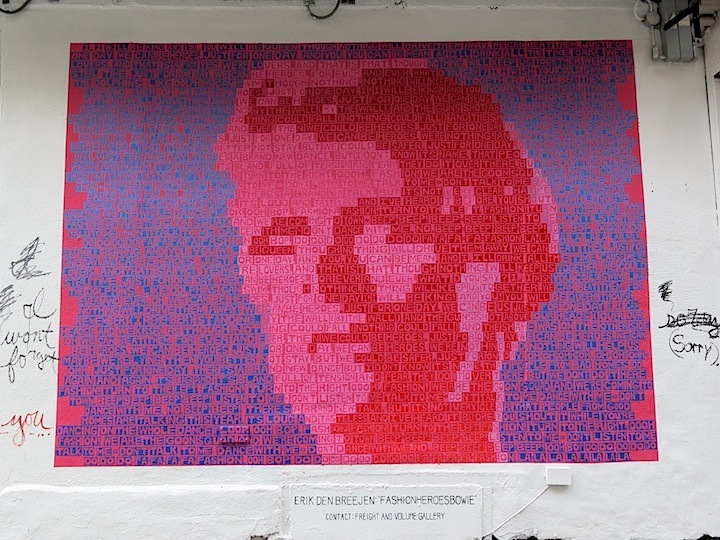
Erik Den Breejen does David Bowie in NoLita

Erik Den Breejen

Photos by Lenny Collado, Dani Mozeson, Tara Murray and Lois Stavsky
{ 0 comments }

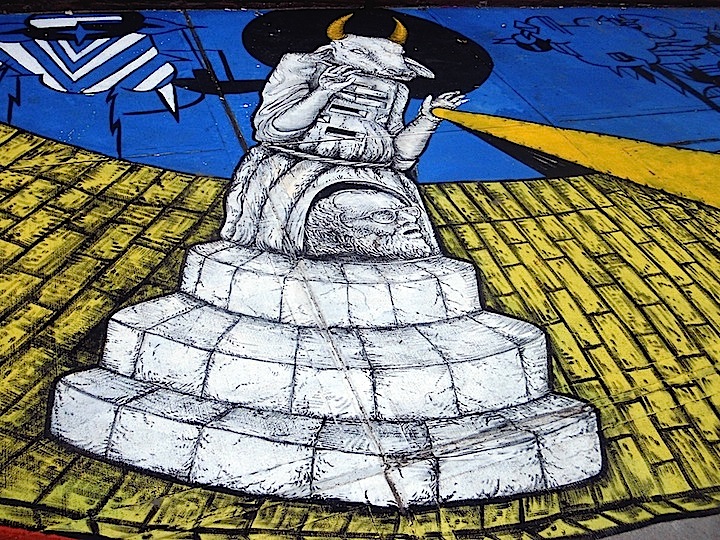
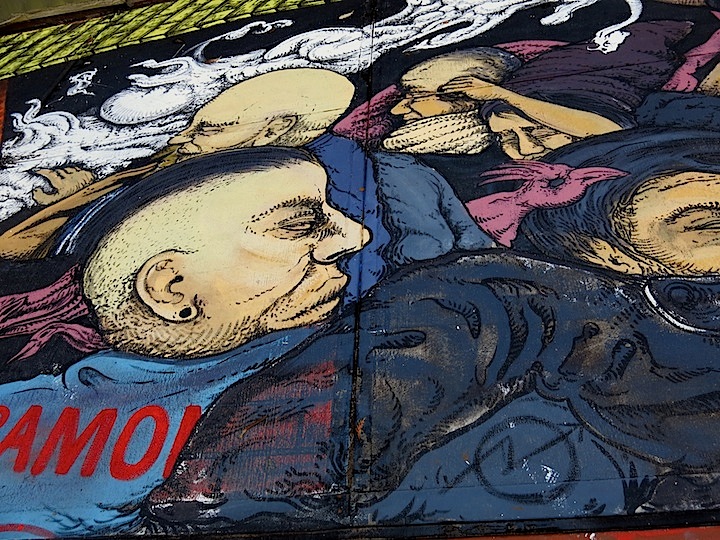
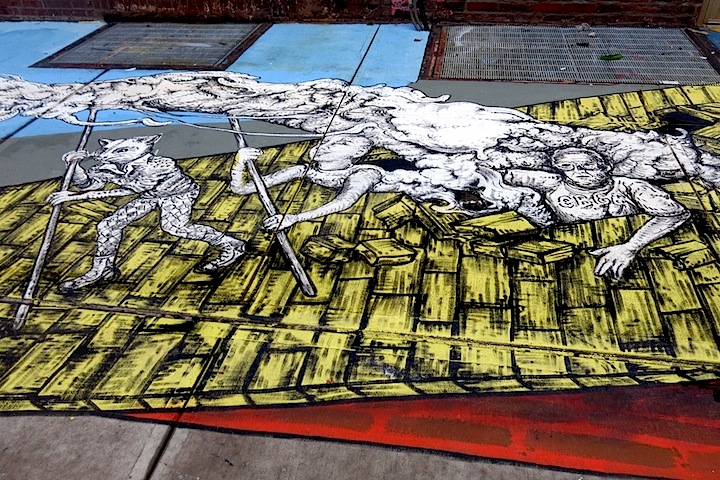
The new FABnyc sidewalk mural, fashioned by Ecuadorian artist Raúl Ayala, is among our favorite public artworks to surface this year. On one of our many visits to Extra Place in Manhattan’s East Village, we had the opportunity to speak to the amazing artist.

When did you start creating art?

When I was a child, I had difficulty sleeping at night.  My mind was plagued by hallucinations, and I would panic. My parents didn’t know what to do with me. Then we learned that what I was experiencing is known as hypnagogic hallucinations, a kind of somnambulism.  A doctor told my parents that in earlier times, this condition was considered a gift. So to fight the fear of night, I began to draw.

And what happened to the hallucinations and panic attacks?

They stopped.

Raul Ayala

Wow! Did you go on to study art in a formal setting?

Yes. I studied Visual Arts at the university back home in Ecuador. I graduated in 2007.

Was your education helpful?

These days my art reflects mostly what I learned after I graduated, but the formal education that I received gave me the opportunity to teach, and I love teaching.

What inspired you to get up on public spaces?

While teaching inmates in Ecuador’s prison system, I came up with the idea of using the prison walls as a canvas. I see walls as the ideal canvas – as they are a metaphor for separation – all kinds of separations…social, economic, physical.

What about graffiti? When did you start doing graffiti?

I went to Argentina for one year to study painting.  There the walls are filled with graffiti. When I returned to Ecuador, I began doing graffiti with a spray can. I always preferred the brush, though, and I consider myself a muralist more than a graffiti artist.

What is the attitude of your parents towards your life as an artist?

At the beginning it was difficult for them. But now, they see me happy and productive, and they’re great about it.

Raul Ayala

What percentage of your time is devoted to art?

Just about all of it. During the day, I work as an art handler for a Chelsea gallery to pay my bills. Other times, I do my own art.

Do you prefer working alone or collaborating with others?

I like to work alone, but I also love working with others. I have collaborated with D*Face and Liqen, along with many other friends and partners in crime. I love the challenge of collaboration, and I think it’s the best learning experience an artist can have!

Do you work with a sketch, or do you let it flow? 

I always have lots of sketches, but I’m not faithful to them.

Are you generally satisfied with your finished work?      

No.

Raul Ayala

How do you feel about the movement of graffiti and street art into galleries?

Once art goes into a gallery, it becomes merchandise. It’s all about money. The power of graffiti is its relationship with the city and the people.  I see graffiti as a means to communicate with others and as social commentary.

Have you exhibited your work at in any gallery spaces, and how did you feel about it?

My first solo exhibit was at Arteactual FLACSO back home in Ecuador. I did it with the understanding that I could paint all the walls in the gallery. And then we sold prints. I feel that we artists have to take advantage of all the spaces available to us, and if we are going to use a gallery, we have to find a way to question that private space. I prefer outdoor walls, because my mission as an artist is to visually and intellectually engage a broad community of people.

Are there any particular cultures that influence your aesthetic?

Yes. Pre-Columbian and other Ecuadorian nationalities and cultures like the Shuar and Waorani from the Amazon Jungle, and Valdivia and Chachi from the coast.

Raul Ayala

Any favorite artists or influences? 

I have lots of influences — many that do not come from visual arts.  These days I am obsessed with the writer Roberto Bolaño, and I am also reading about the Reconstruction Era here in the USA. Among the younger visual artists I like are:  Liqen, Hyuro, Escif and Vazco Basko. The more mature ones include: Dennis McNett and  Miguel Varea.  Some of the dead ones are:  Guadalupe Posadas, Guaman Poma, Francis Bacon, el Bosco and los Muralistas Mexicanos. Tattoos and Brazilian Pixacao are other movements that I observe. In terms of music, I am more of a death metal head but I am, also, into Latin American music, specially old tunes.

What brought you to New York City?

I was living with my girlfriend in Ecuador, and she needed to move back to the U.S. to get her citizenship. We tried the long-distance relationship thing, but that didn’t work so well. So I decided to move here.  We are now staying in New York City, and I am experiencing first-hand what it’s like to live and work as an immigrant. And we recently got married!

What is your impression of New York City?

I have only been here  for a year and a half, so I am still pretty new in the city,  Although I have found friends and support, I feel it’s a hard city. I see it as a rich playground, with the rich players blind to the workers behind the scene.

Raul Ayala

How does the street art/graffiti here in NYC differ from that back home in Ecuador?

The graffiti writers in Quito are very experimental. Also, one almost never gets arrested back home. There is a bit of a stigma to the use of the spray can, and so a police officer may stop you if you are using one. But graffiti is not regarded as a criminal act!  You know that you can talk to the police, and they may leave you alone. You still need to be very careful and fast, but there is more freedom to paint in the streets in Ecuador than here in NYC.

Tell us something about your current project.

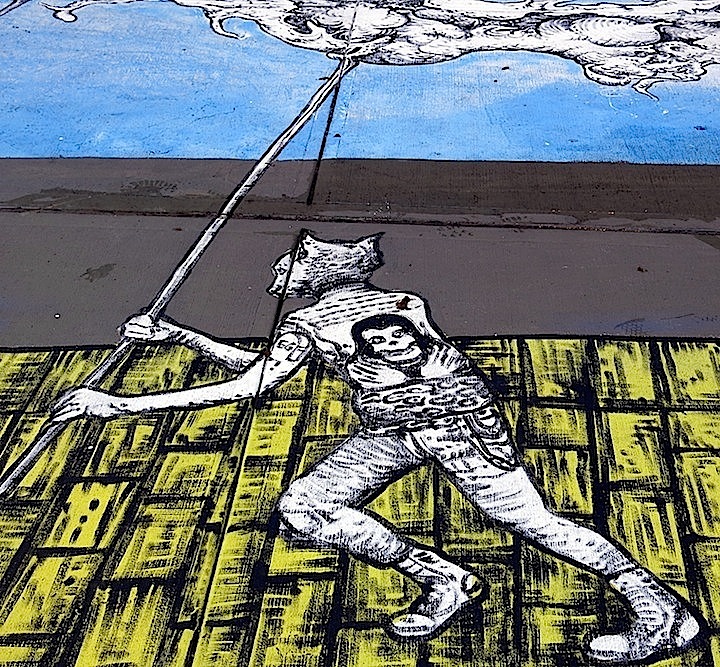
I’m working here at Extra Place with James Rubio from the Antagonist Art Movement on a FABnyc sidewalk mural. Inspired by a poem Dee Dee Ramone wrote about Joey soon after his death, it features wild creatures, representing punk rockers, carrying a dragon cloud — a symbol of Joey’s spirit. This mural is a tribute to Arturo Vega. It could have never happened without his influence and support.

What’s ahead?

I am a Fellow for the Create Change Professional Development Program at the Laundromat Project.  I’m learning how to work with socially-engaged art here in NYC.   I’m quite excited about this. I am looking forward to producing artwork in my current neighborhood in Bed-Stuy, Brooklyn. I will keep you posted! Also, I am participating in the exhibit For Which It Stands at The Lodge Gallery at 131 Chrystie Street on Manhattan’s Lower East Side.  Curated by Keith Schweitzer and Jason Patrick Voegele, it opens tomorrow evening — Friday, June 28, 6-9pm and continues through July 28.

It sounds great! Good luck!

Photos by Tara Murray and Lois Stavsky
{ 3 comments }

Speaking with Wes21

June 24, 2013

A member of schwarzmaler, a collective of outstanding graffiti writers, street artists and illustrators, Swiss artist Wes21 creates stunning, detailed works that blur the boundaries between reality and fantasy.  We recently spoke to him during his visit to 5Pointz.

Wes2, Semor, Onur and KKade

When did you first start getting up?

I was about 11 years old when I hit my father’s garage.

Where was this?

In a small town near Berne.

What inspired you at the time?

Graffiti was all around me. I grew up without a TV, and I was always drawing. So it seemed like the natural thing to do.

Wes21

How did your parents feel about what you were doing?

They encouraged me.  My father used to bring me photos of graffiti.  They love it.

Have you any preferred spots?

I love painting anywhere but I especially love rooftops and places near water.

Have you ever exhibited your work?

Yes, and I do many exhibitions every year.  I’ve shown my work in both group and solo shows in Switzerland, Germany, Hungary and Italy.

Wes21

How do you feel about the movement of graffiti and street art into galleries?

I feel fine about it, so long as it’s well-done. Showing in a gallery pushes me to the next level. And then I’m a better artist when I paint in the streets!

Have you a formal art education?

Yes. I studied graphic design and illustration in art school for four years.

Any thoughts about the role of the Internet in all this?

I don’t pay much attention to it.

Wes21

Are you generally satisfied with your finished piece?

Not completely. If I were, I wouldn’t be motivated to paint another one!

Is there much of a graffiti/street art divide back home

Not really. Most of the artists who hit the streets are open-minded.

What do you see as the role of the artist in society?

To capture a moment — real or imaginary — for eternity.

All photos courtesy of the artist

{ 0 comments }

This is the second in an ongoing series featuring the range of faces that surface daily on NYC’s public spaces:

Australian artist Jess Busj at 5Pointz in Long Island City, Queens — close-up

Jess Busj

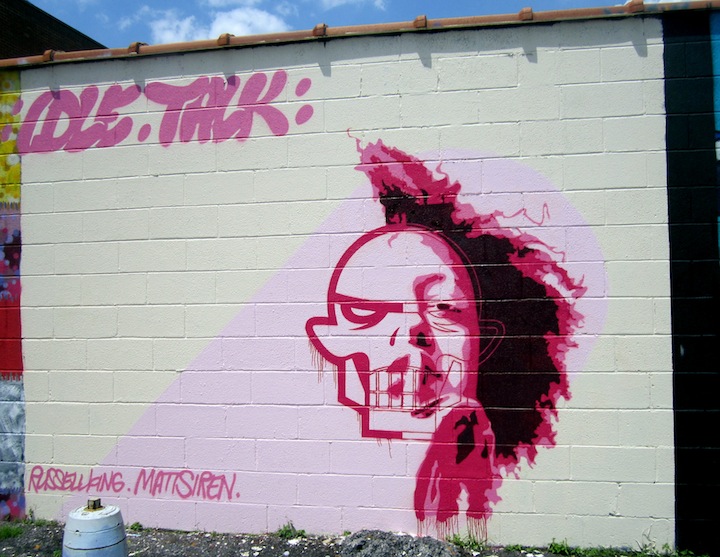
Russell King and Matt Siren at Welling Court in Astoria, Queens

Russell King and Matt Siren

Mata Ruda at the Bushwick Collective

Mata Ruda

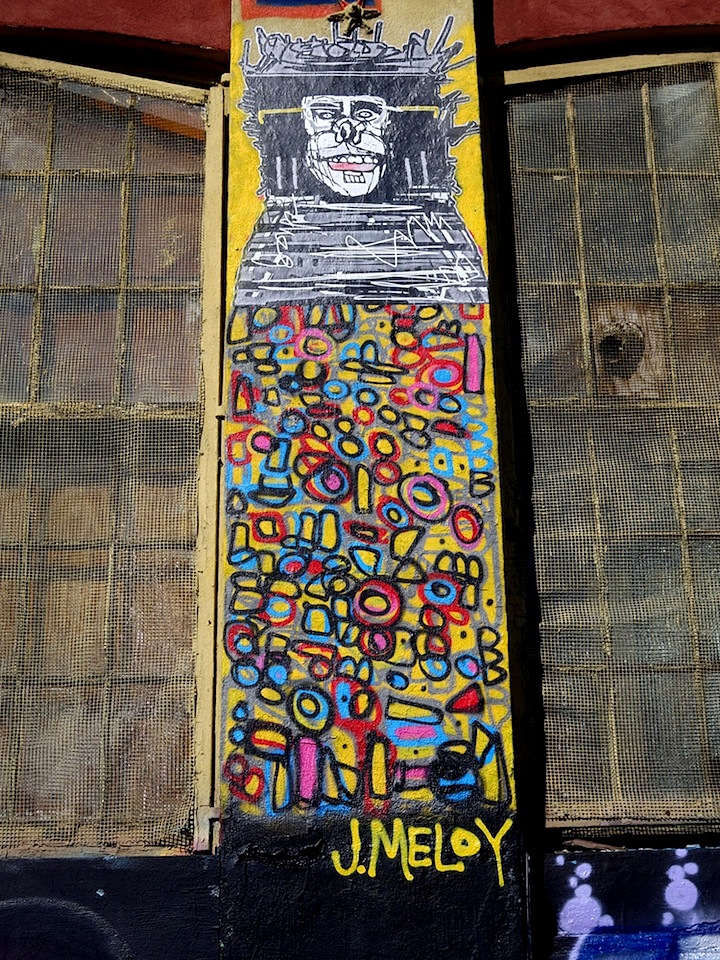
Joseph Meloy at 5Pointz in Long Island City, Queens

Joseph Meloy

Toofly at the Bushwick Collective

Toofly

Australian artist Daek on Manhattan’s Lower East Side

daek william

Nelson Rivas aka Cekis in the Hunts Point section of the Bronx

Nelson Rivas aka Cekis

Photos by Lenny Collado, Tara Murray and Lois Stavsky
{ 0 comments }

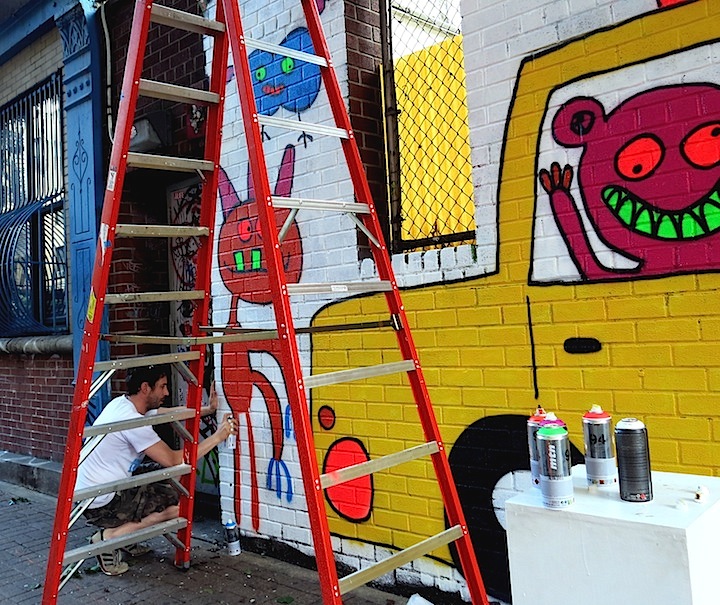
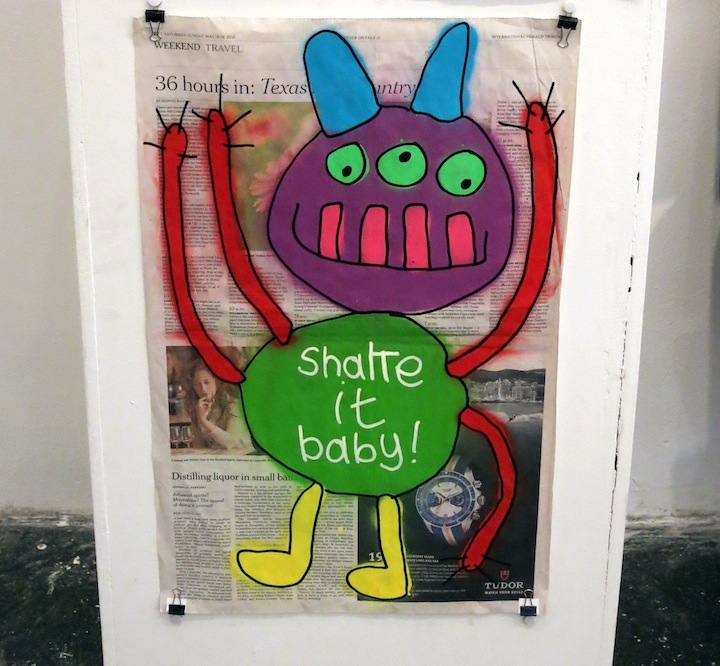
NYC became a bit more colorful and joyful these past few weeks, as Bortusk Leer’s lovable monsters found their way here — both on the streets and at CULTUREfix on Manhattan’s Lower East Side.

Bortusk-leer-street-art-in-NYC

When did you first start getting your artworks up in public spaces? And where?

In 2006 in London.

What inspired you at the time?

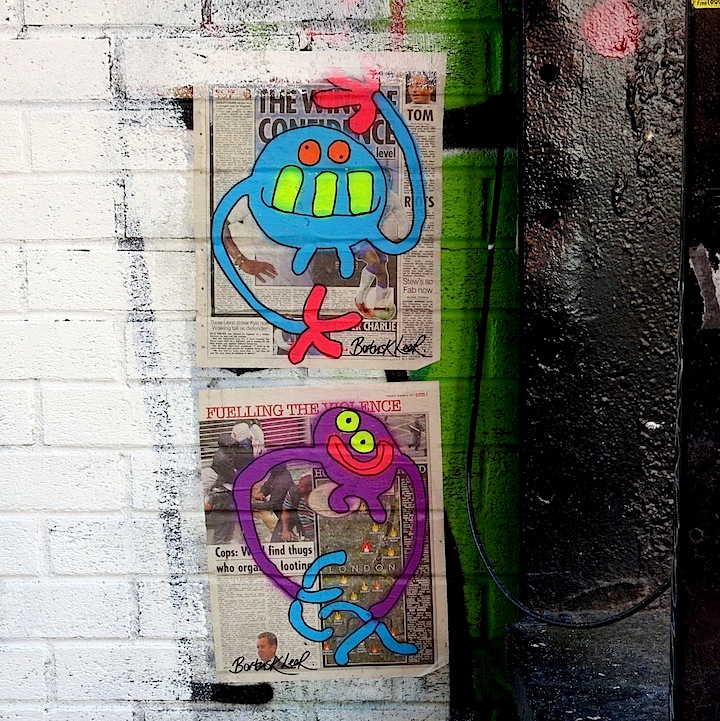
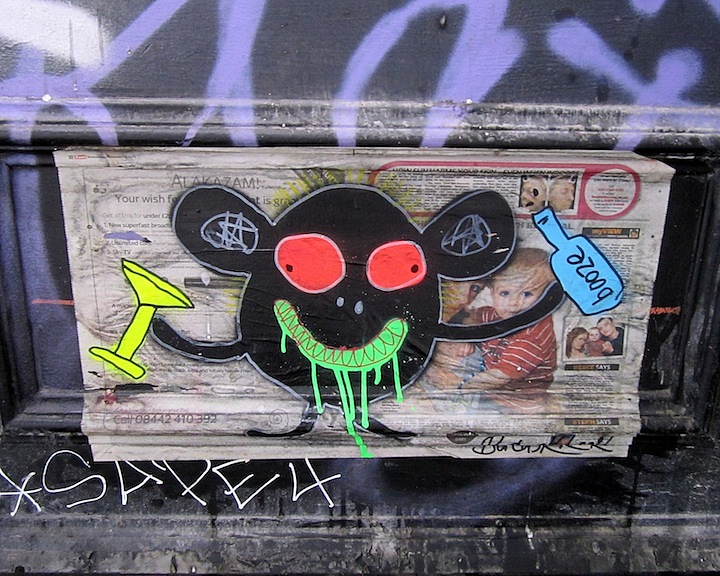
I was working at the Leonard Street Gallery, where I became friendly with lots of street artists.  And both Sweet Toof and Cyclops said to me, “Why don’t you just put your work out on the streets?” And so I did. I began stenciling pigeons onto newspaper and cardboard and stuck them up. The monsters came somewhat later.

Your monsters are quite joyful!

Yes. I was seeking an antidote to all the negative images that I passed daily on the streets. I wanted to get something out there that would cheer folks up.

bortusk-leer-paints-in-NYC

What percentage of your time is devoted to art these days?

Most of it. Between commissions and art sales, I’ve been earning enough money to be a full-time artist.

Have you a formal art education?

Yes. I studied art in a formal setting for six years. First at Canterbury Tech and then at the Falmouth College of Arts.

Any thoughts about the move of street art into galleries?

In my case, I was exhibiting artwork in galleries long before I shared it on the streets. It’s a different experience.  I certainly don’t have a problem with street artists selling their work in galleries. 

bortusk-leer-monsters-on-newsprint

Any favorite cities?

Amsterdam – where I’m based these days.  It has everything a big city has – without its madness.

How has your work evolved in recent years?

It’s become more stylized. I’m actually trying to loosen up a bit.

Are you generally satisfied with your finished piece?

Generally, yes!

Bortusk-Leer-street-art-paste-up-in NYC

How would you describe your ideal work environment?

Lots of music, space and light!

What inspires you these days?

Everything! I can’t stop drawing.

Are these any particular cultures that have influenced your aesthetic?

I love the primitiveness of ancient cultures. And I’ve also been influenced by cartoons!

Any favorite artists?

I love Picasso. And I’ve been particularly inspired by the members of the CoBrA Movement and the works of one of its founders, the Dutch painter, Karel Appel.

Bortusk-leer-in-SoHo

How do you feel about the role of the Internet in all this?

It’s a good tool for networking and a great way to find out what’s happening.

Any thoughts about the graffiti/street art divide? Is it apparent to you?

There is a divide, but it doesn’t really affect me.  Graffiti, I feel, demands greater technical expertise.  And I can understand why graffiti writers might resent street artists who gain acceptance more easily. But I do feel that both forms will eventually merge into one.

What do you see as the role of the artist in society?

Many roles! But mine is to cheer people up.

Bortusk Leer’s lovable monsters remain on exhibit at CULTUREfix through Sunday.

Photos by Tara Murray and Lois Stavsky
{ 0 comments }

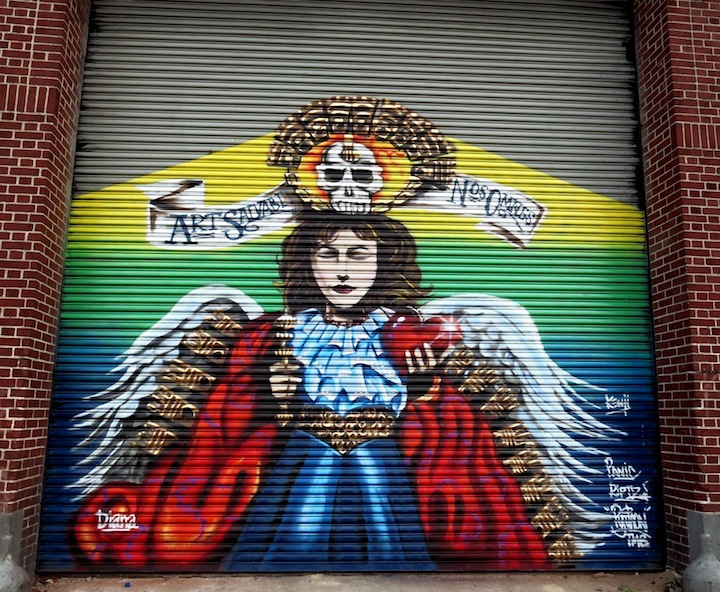
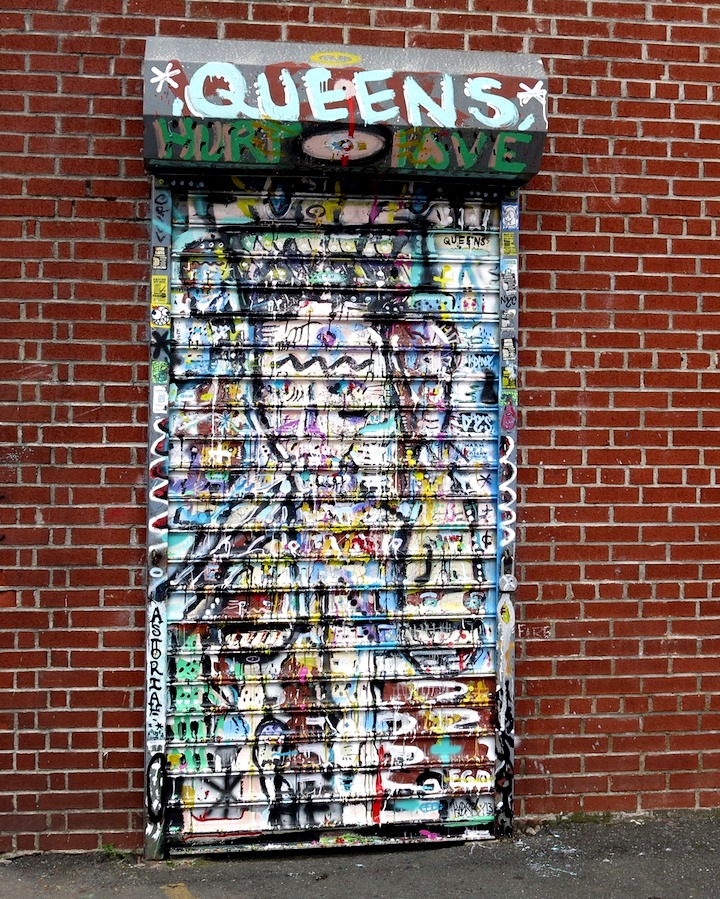
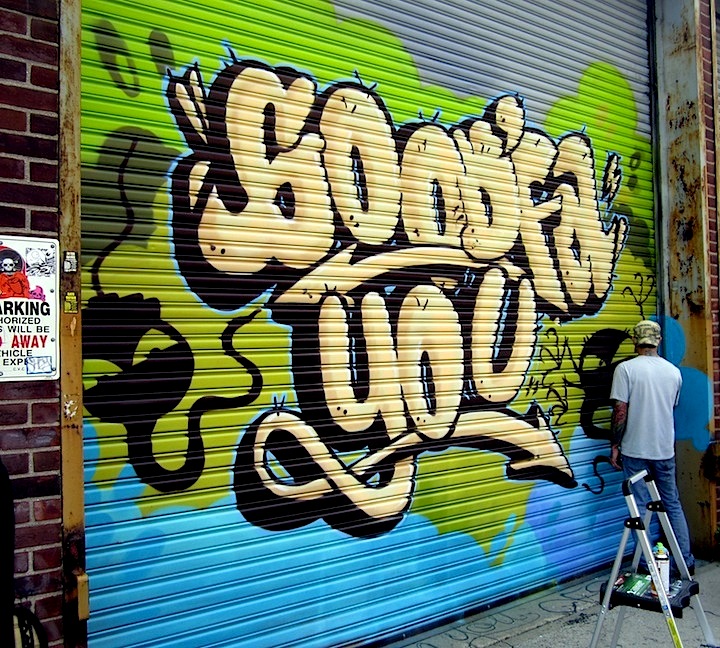
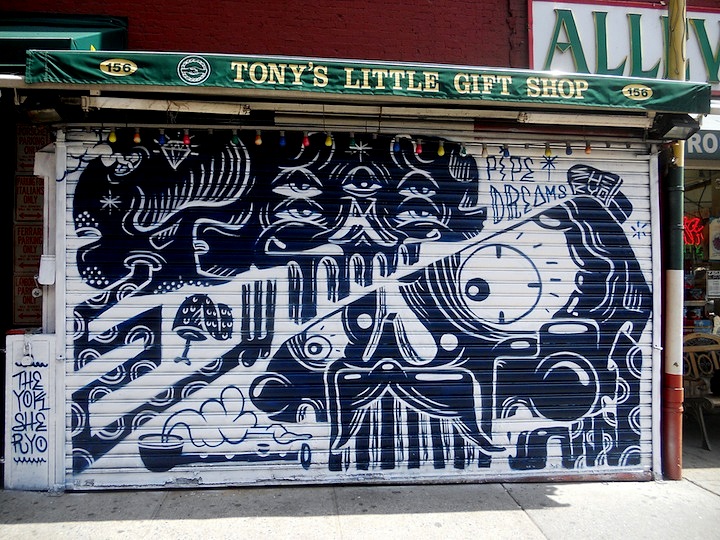
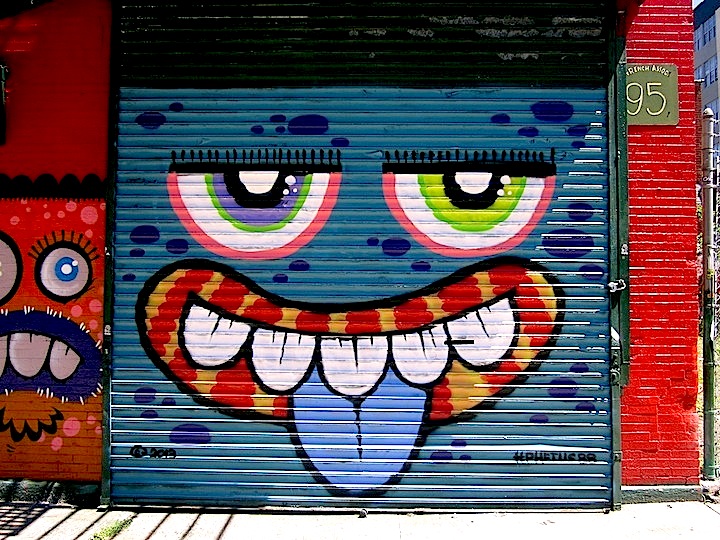
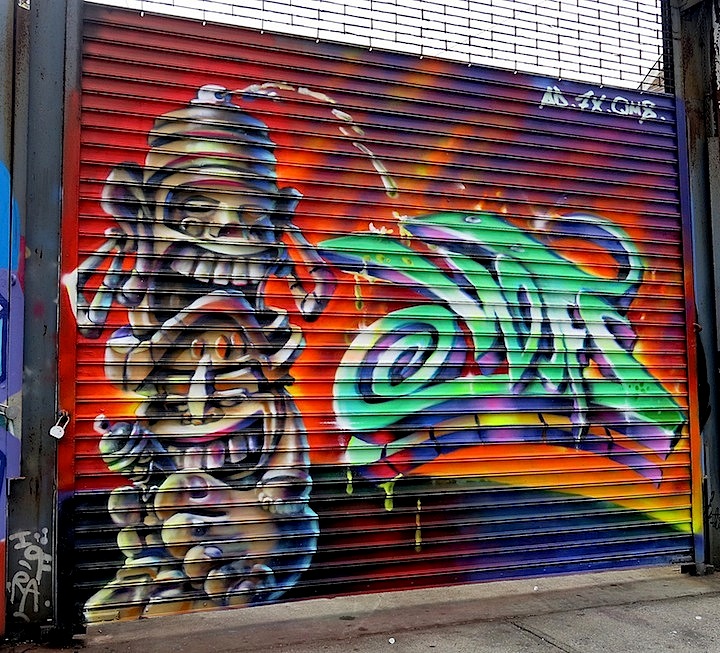
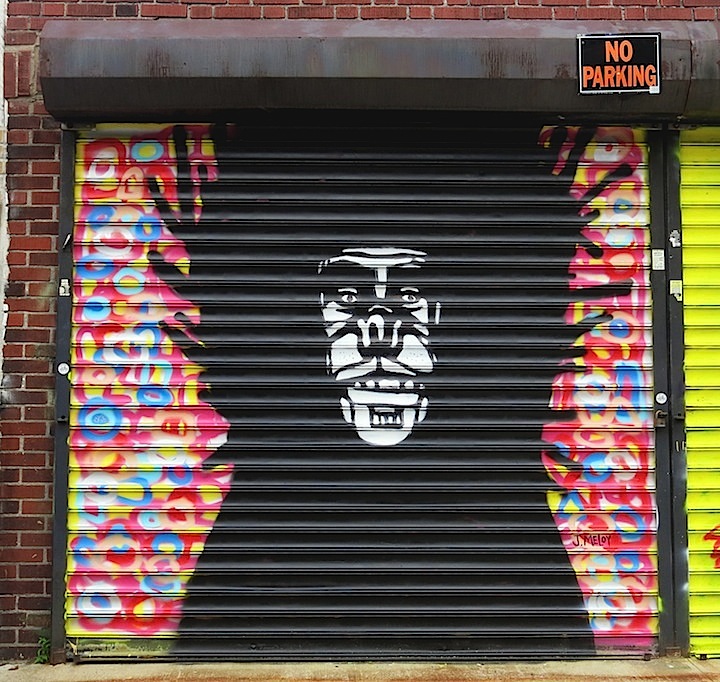
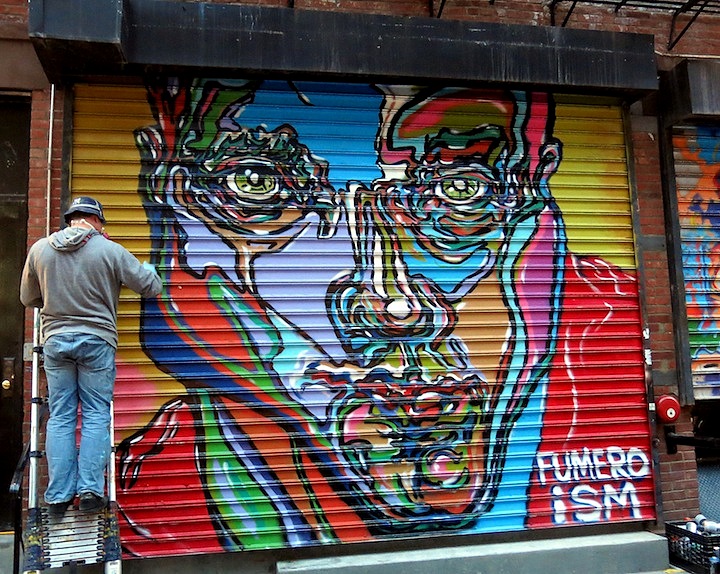
This is the fifth in an occasional series of artwork on NYC shutters.

Kenji Takabayashi at Welling Court in Astoria, Queens

Kenji Takabayashi

Kosby at Welling Court in Astoria, Queens

Kosby

Zam Art at Welling Court in Astoria, Queens

Zam

Sheryo and the Yok in Manhattan’s Little Italy

Sheryo and the Yok

Phetus in Williamsburg, Brooklyn

Phetus

Hef atWelling Court in Astoria, Queens

Hef

Joseph Meloy at Welling Court in Astoria, Queens

Joe Meloy

Fumero in NoLita

Fumero

Wisher914 at Welling Court in Astoria, Queens

Wishe914

Photos by Tara Murray and Lois Stavsky
{ 0 comments }