Interviews

Speaking with Dede

September 11, 2013

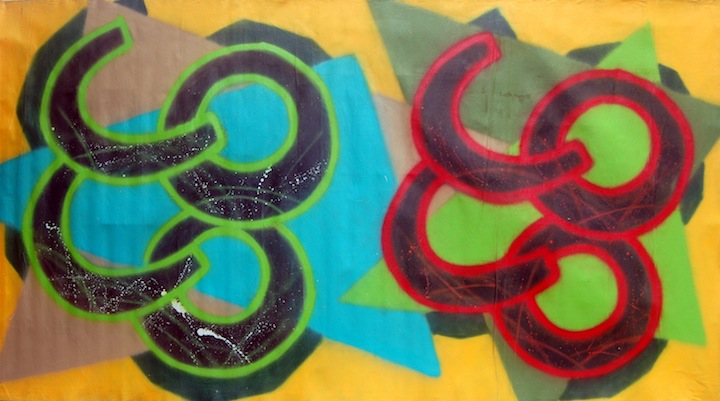
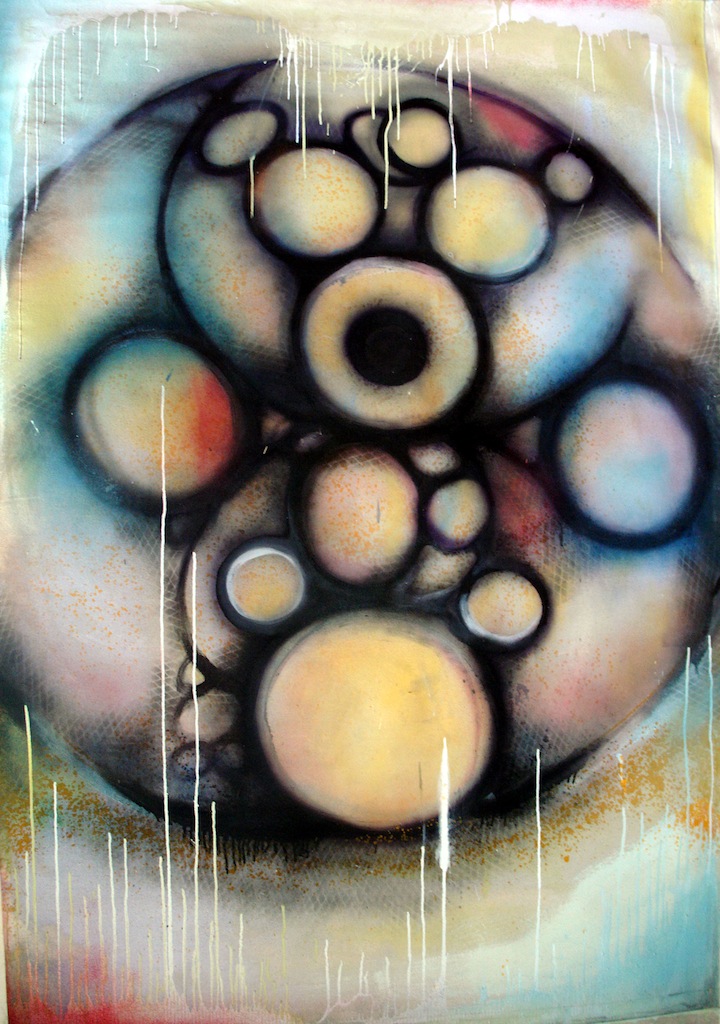
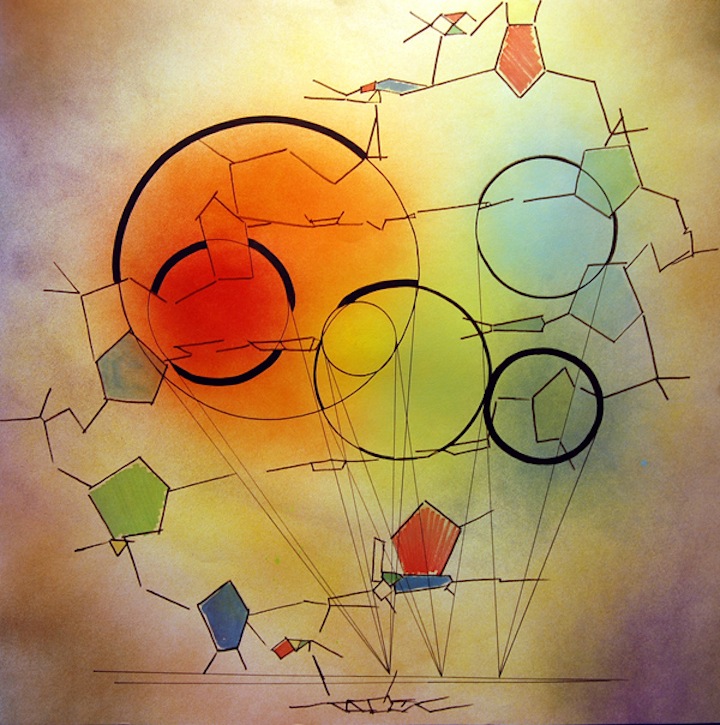
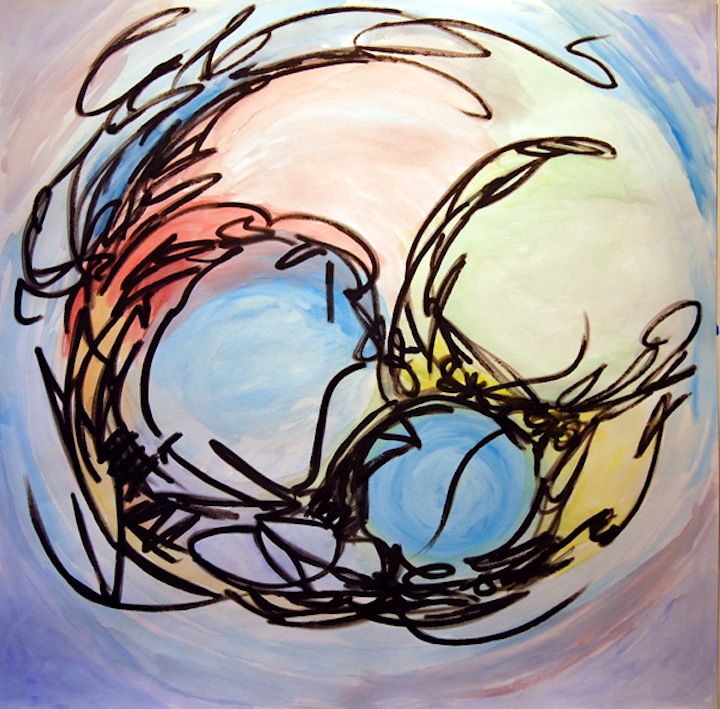
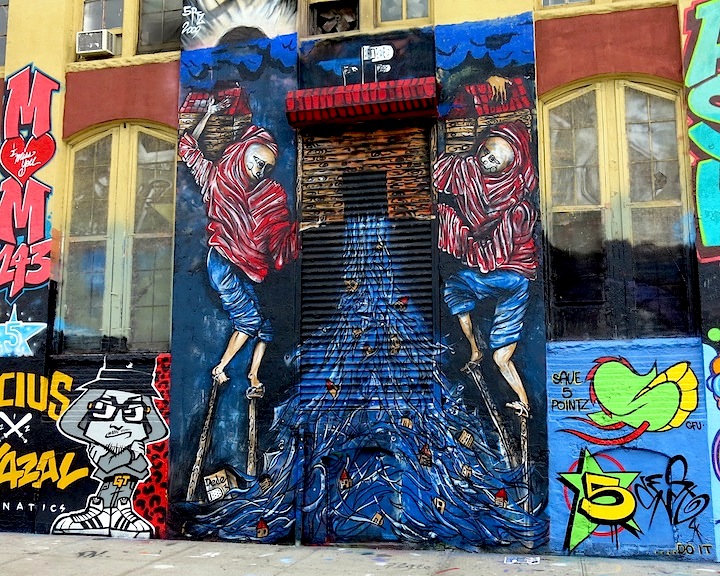
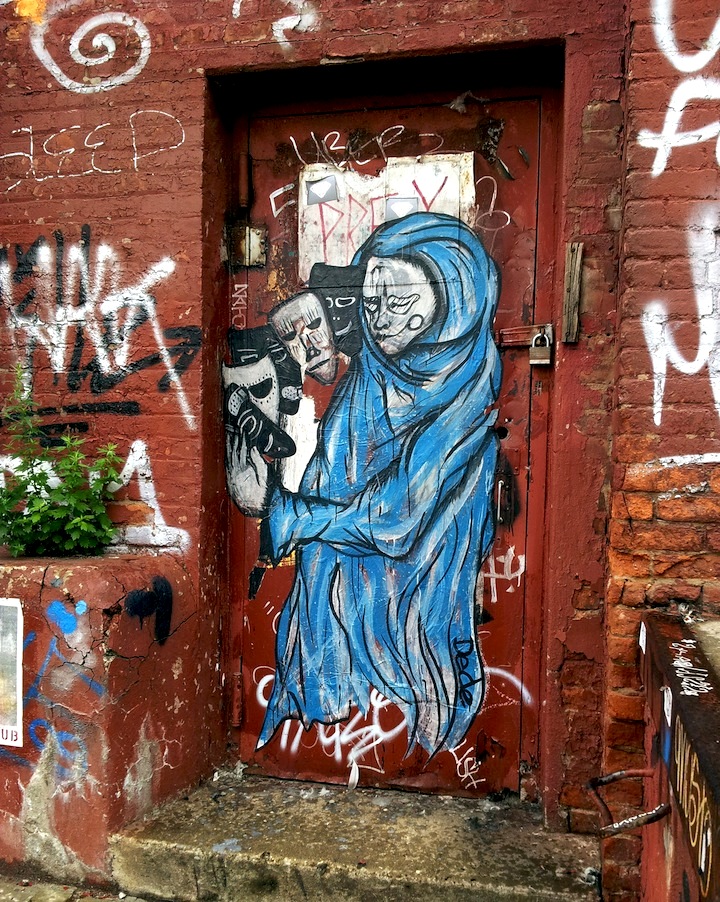
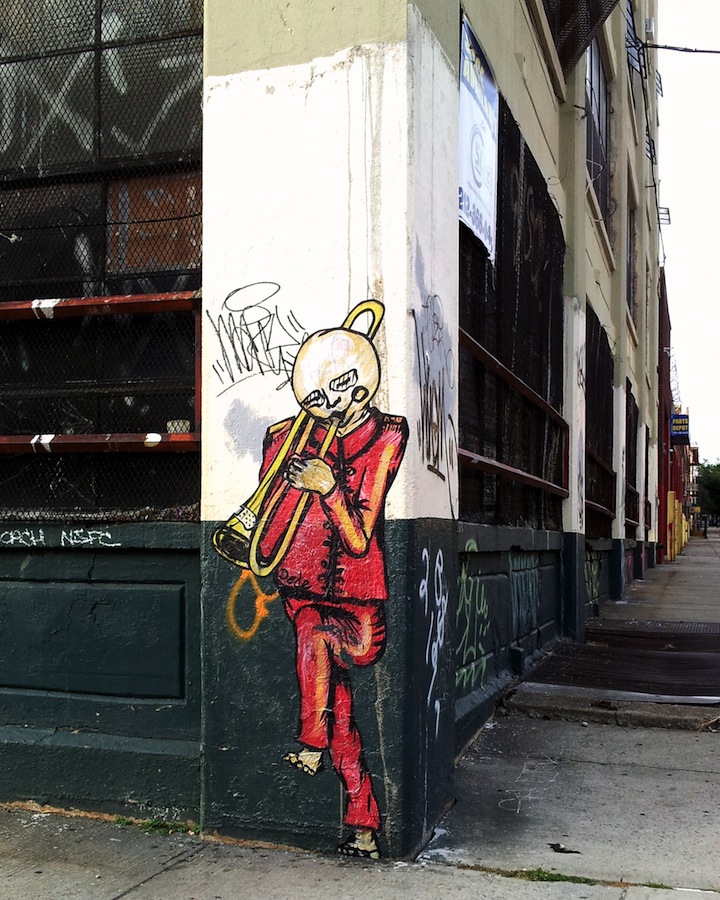
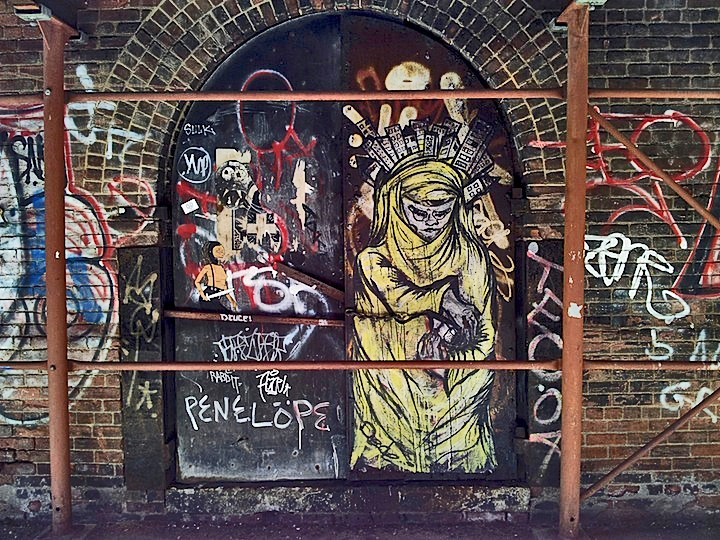
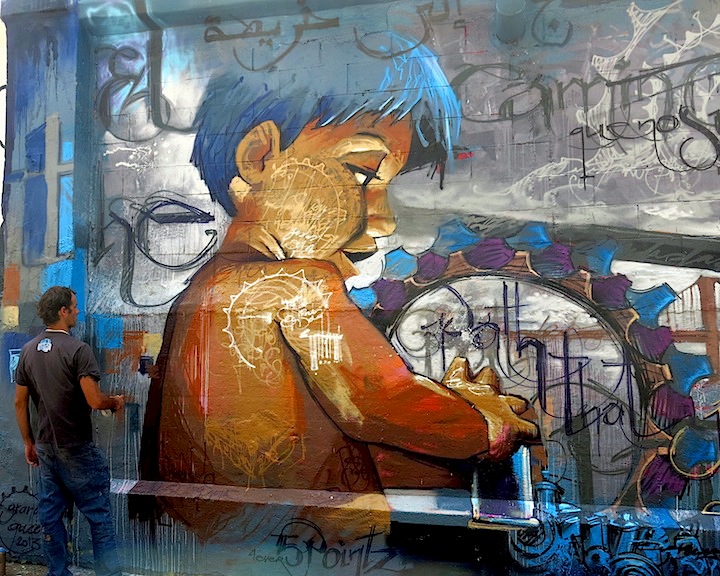
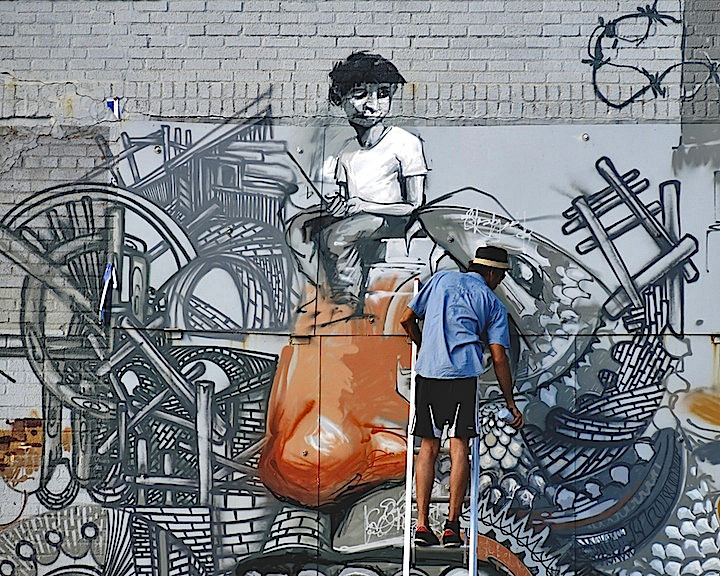
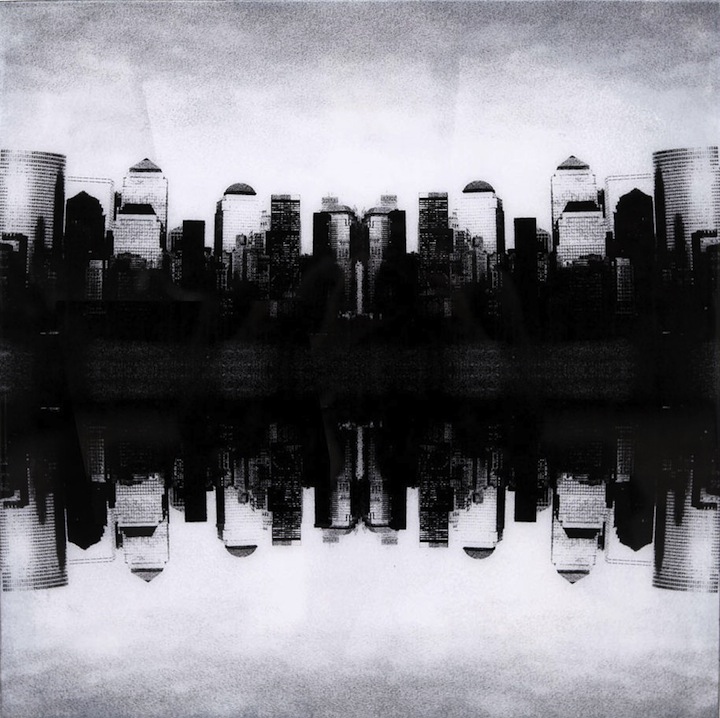
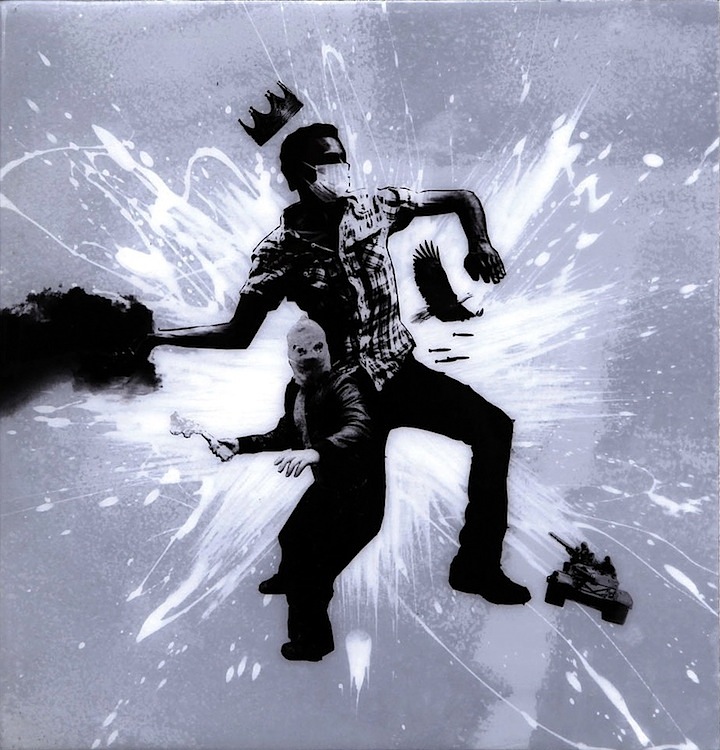
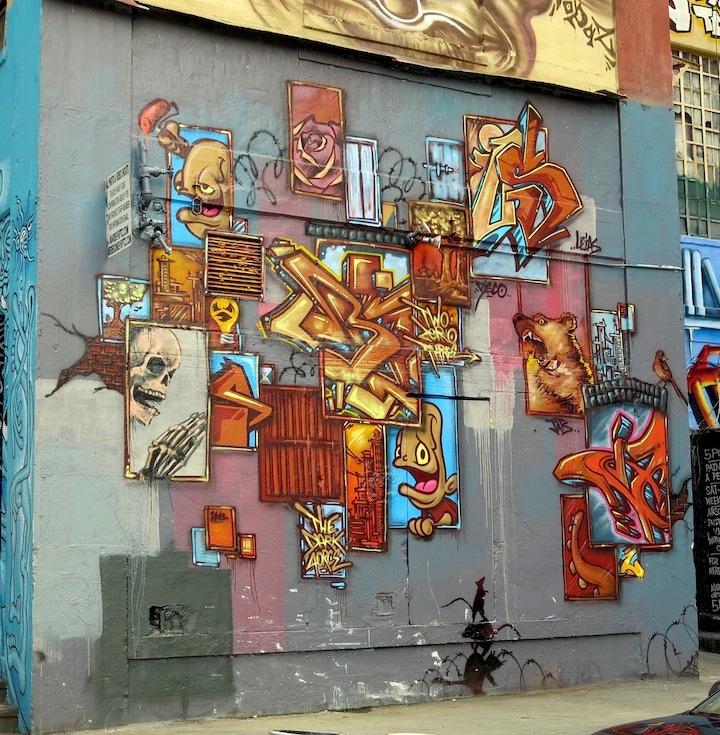
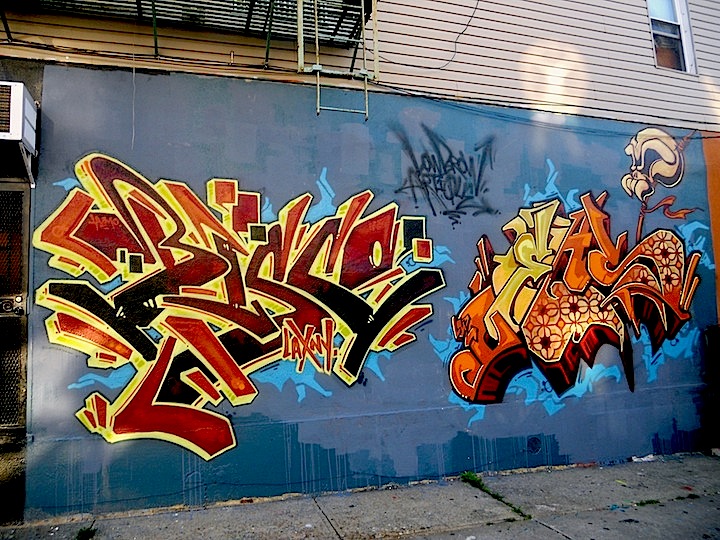
Prolific on the streets of his native Tel-Aviv, Dede aka Dede Bandaid has spent the last two weeks leaving his mark here in NYC — in Brooklyn, in downtown Manhattan and at 5Pointz in Long Island City, Queens.

Dede

When did you first get up?

When I was 13, I found a spray can as I was wandering around my neighborhood. I’d always been drawing on just about every surface, but I’d never used a spray can. I was curious. And so I went to my schoolyard to try it out!

What was that like?

It was amazing. I looked up to the sky, and I began to paint a galaxy with stars and more. But it was years before I got up again in any public space. The walls in my house and in my friends’ houses became my canvases.

And when did that change? When did you first hit the walls of Tel Aviv?

It changed when I was in the army. Army service in my country is compulsory, and I hated it.  And so during one of my vacations from the army, I sprayed a pro-peace stencil on a public space. That was around 2000.

Dede

Do you paint alone? Or do you get up with any crews?

I’m almost always on my own.  On occasion I’ve collaborated with Latzi. I feel that I’m more influenced by Israeli culture, politics and aesthetics than many of the other writers here. I’m, also, not involved in “the scene.”  I’m more intent in getting a message across and – at this point – developing my own distinct style.

What other aspects of Israeli culture – besides its fraught politics — have influenced your aesthetic?

I infuse iconic Israeli symbols into my artworks– such as the white pigeon for peace and various plants that have Biblical references. But my main inspiration comes from everyday Israeli life – all the discussions that Israelis engage in daily regarding the army, the government, the economy…

Do you prefer to work legally or illegally?

I definitely prefer working in unauthorized spaces. That’s what street art is about. I can do whatever I want, without having to show sketches to anybody. The beauty of getting up on the streets is the freedom it gives you. And there’s the adrenaline rush – that only comes with working illegally.

Dede

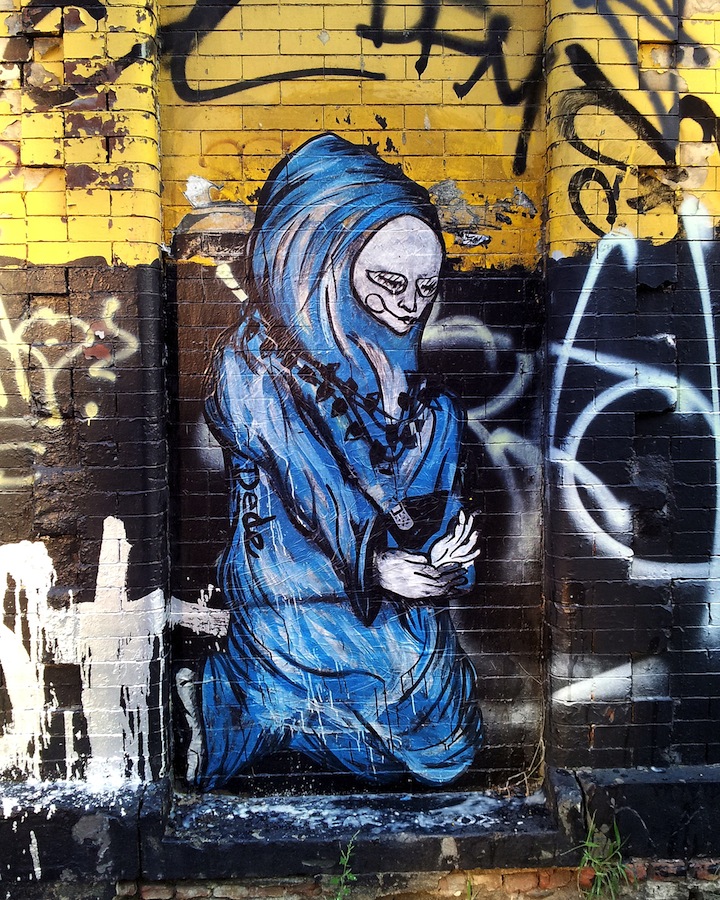
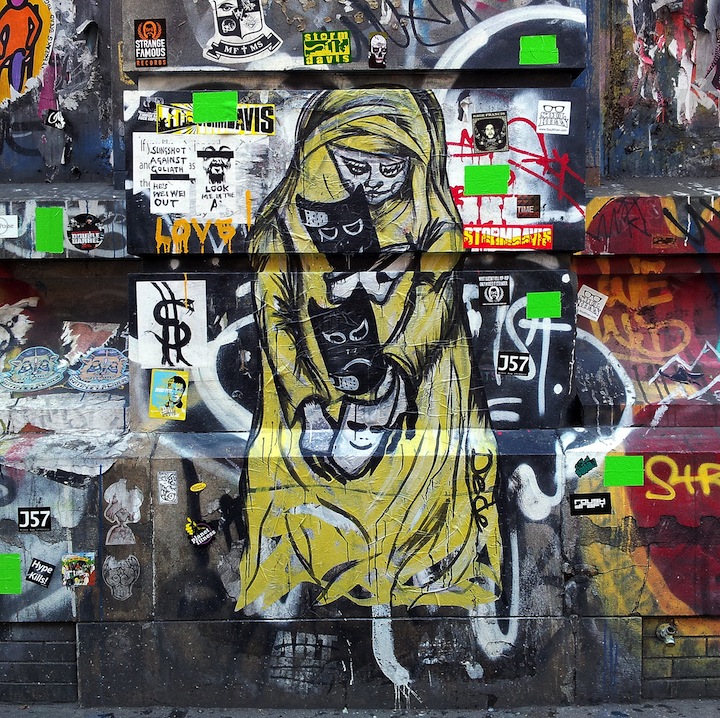
Tell us something about the band aid. You sign your work Dede with an image of a band aid alongside it. How did that come about?

About five years ago, I was seeking a way to express and heal my wounds. The band aid then became a symbol for all kinds of difficulties – personal and societal — seeking remedies.

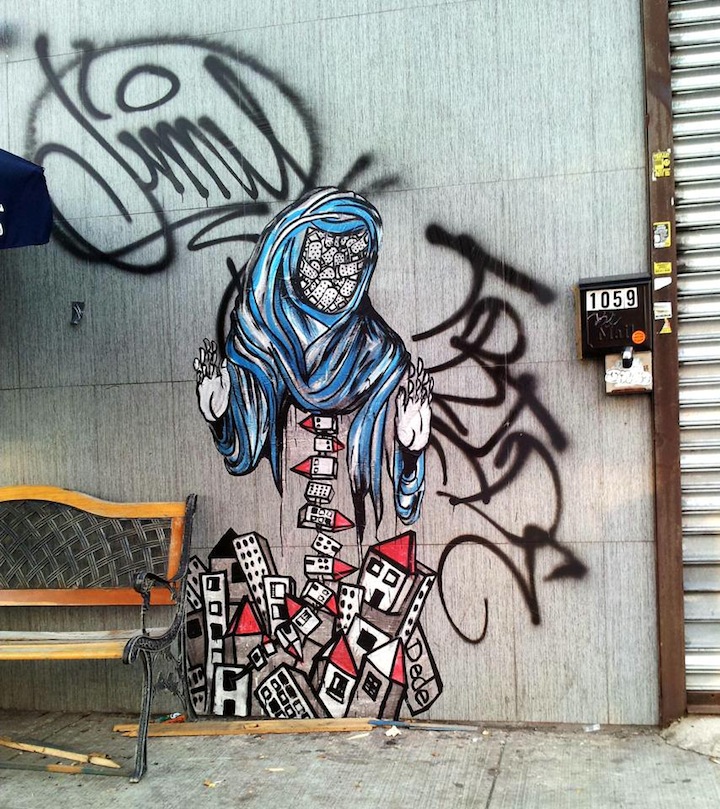
And what about the houses? I’ve been noticing lots of houses – in different shapes and positions – in your work. What do these houses represent?

When I first started including houses in my works, they represented the notion of “home” – and not feeling at home anywhere. But then they came to represent so much more – a search for home, the high cost of housing, the political situation…

Dede

Have you exhibited your art in gallery spaces?

Yes.  Back in Israel, I’ve exhibited in Tel Aviv and in Jerusalem. I’ve also exhibited my stencil work in Berlin. And here in NYC at New York University’s Bronfman Center.

Any thoughts about the movement of street art into galleries?

Well, when it’s in a gallery, it’s no longer street art. And when my work is in a gallery, it is judged more harshly than anything I do on the streets.

Dede

What percentage of your time is devoted to art?

All of it. I’m either painting or sleeping.

Is art, then, the main source of your income?

Yes. I sell paintings and I do commissions.

How does your family feel about what you do? 

They love it. My mom loves seeing my work in the streets, and she always photographs it.

What is the riskiest thing you did and why were you willing to take that risk?

I’ve taken lots of risks. But the riskiest was probably navigating a lengthy, unruly river in the rain to install a yellow submarine.

Was it worth it?

Definitely!

Dede

Any thoughts about the graffiti/street art divide?

I don’t feel it in Israel.

Have you a formal art education? 

Yes. I graduated from Bezalel in 2009. I learned a lot, and it was lots of fun. But I’ve learned far more from the streets.

Do you work from a sketch or do you just let it flow?

I usually just let it flow.

Are you generally satisfied with your finished piece? 

Never.

Your work seems quite different from when I first saw it on the streets of Tel Aviv a number of years ago. How has it evolved through the years? And why has it changed so radically?

I began by stenciling and found myself too easily influenced by other stencil artists. And when I began to make my stencils more detailed, I developed an infection from cutting them. And so I began painting more free hand. And now it’s evolving into a fusion of painting and collage. I am working more and more on developing my own voice.

Dede

How do you feel about the role of Internet in all this?

It’s definitely more positive than negative. It seems that most people first discover street art on the Internet. And online I get to see work from lots of artists I haven’t met. But the Internet can also strip you somewhat of the ability to develop a distinct, personal style.

What about the role of the photographer?

The photographer’s role is very vital to the movement.  Many artists either don’t document their work or document it poorly.  And since the Internet does have so much power these days, the photographer’s role is increasingly important.

What’s ahead?

Evolution and advancement.

Photo at 5Pointz by Dani Mozeson; all others courtesy of the artist

{ 5 comments }

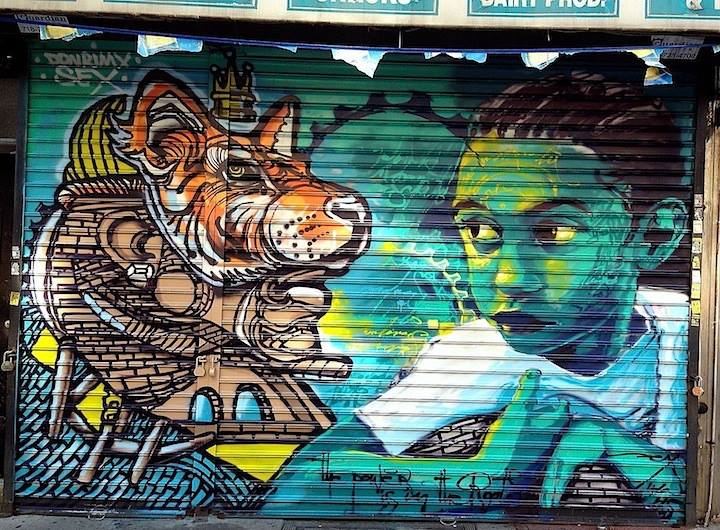
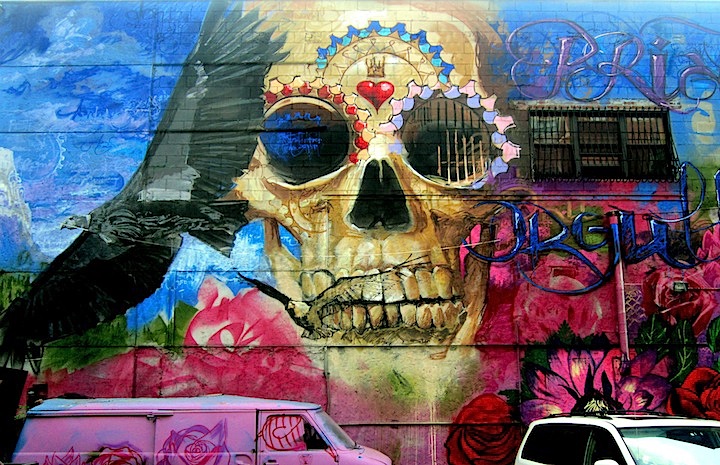
Based in Granada, Spain, the wonderfully talented and passionate artist Raúl Ruiz, aka El Niño de las Pinturas, visited NYC earlier this summer. I met up with him at the Bushwick Collective – where he was painting with Rimx – and then caught up with him at 5Pointz, where we spoke briefly.

El Nino de las Pinturas

When did you first get up?

Back in the 90’s. I was 11 when I brought graffiti to my neighborhood in Granada, Spain.  I began the usual way — by tagging and bombing.

What inspired you?

The movie Style Wars introduced the culture to me.

What is the attitude of the authorities in Granada to graffiti?

The government makes it tough. The fines for doing illegal works are excessive. It’s difficult to paint anywhere without the owner’s permission. And even when I had the owner’s permission and he loved what I did, I was forced to whitewash the wall.

How does your family feel about what you do? 

At first, they didn’t like it. They told me to paint only canvases.  But now they take pride in what I do.

El Nino de las Pinturas

Any thoughts about the movement of graffiti and street art into galleries?

It’s okay. We artists need money to live. But when our art is in a gallery, it’s no longer graffiti.  Graffiti is made in the streets for all people to experience. And we we must always remember to respect our masters  — the streets.  The streets are the inspiration and source of it all. If we lose the streets, we lose the way.

What percentage of your time is devoted to art?

Everything I do is art.

Have you a formal art education?

I studied fine arts for a year and a half. But I didn’t need teachers. I have masters — the streets.

Are there any particular cultures that influence your aesthetic?

Granada is a fusion of cultures, so my primary influence is the human culture.  But there are definite Moslem influences to my aesthetic.

What inspires you these days?

Everybody I meet.  And the natural world inspires me, as well. I love animals.

El Nino de las Pinturas and Rimx

Are you generally satisfied with your final piece? 

I am, but when I look at it, I feel like I didn’t create it.

Where have you painted?

Here in the US, I’ve painted in San Francisco, Santa Fe and NYC. I’ve also painted in many other countries. Among them are: Argentina, Venezuela, Mexico, the Dominican Republic, Morocco, Germany, Hungary, Belgium and France.

Any favorite place?

I love them all.

What do you see as the role of the artist in society?

Whatever role society has imposed on the artist — the artist needs to break away from it.

Any thoughts about street art bloggers?

They need to know the artists. Many don’t.

El Nino de las Pinturas and Danielle Mastrion

What about the graffiti/street art divide?

It’s not important. We use the same gallery — the streets. But in some way street art gave legitimacy to graffiti.

What’s ahead?

My art will evolve as I experience more.  And I will continue to develop my own distinct style.

Interview by Lois Stavsky; photos 1. El Niño de las Pinturas at 5Pointz by Tara Murray; 2. with Rimx at the Bushwick Collective by Lois Stavsky; 3. with Rimx in Bedford-Stuyvesant, courtesy Rimx and 4. with Danielle Mastrion in Bushwick by Tara Murray

{ 1 comment }
Speaking with Bisco Smith

August 25, 2013

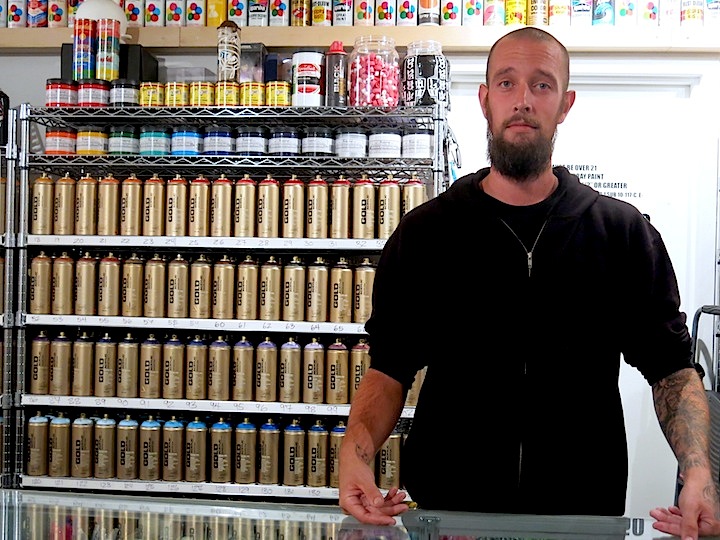
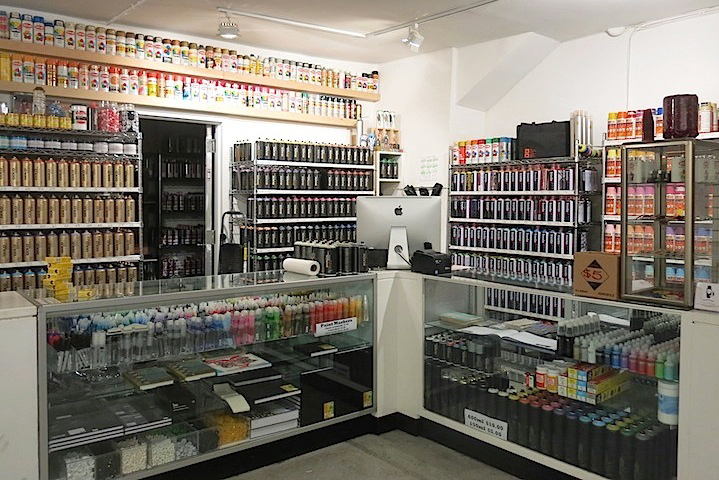
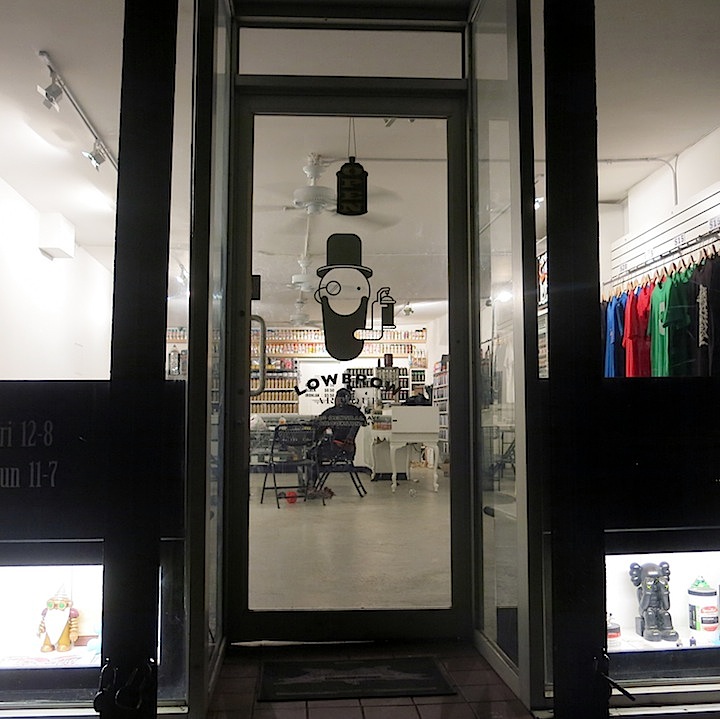
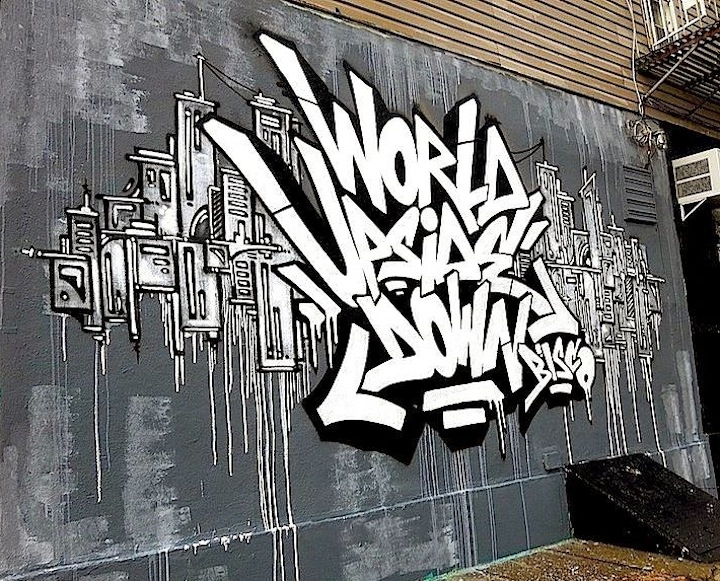
Currently based in both LA and NYC, Bisco Smith is celebrated for his graffiti on walls, as well as for his audio and visual work within hip-hop culture.  WORLD UPSIDE DOWN, a recent collection of this talented artist’s works, is on view at Low Brow Artique, 143 Central Avenue in Bushwick, through September 7th.  We spoke with Bisco soon after his hugely successful opening:

Bisco-graffiti-at-Low-Brow-Artique-Bushwick-NYC

When and why did you start getting up? 

I was about 12 or 13 years old when I started writing.

Any particular inspirations at the time?

I grew up skateboarding, and we were all into writing. Just about everyone in my school had a black book. We also avidly followed Chino’s Graf Flix section in the Source. This was sometime in the mid-90’s.

What was your preferred surface – back then? 

Abandoned buildings. I grew up spending day after day inside of a huge dead factory. We could paint anything and everything in there.

Any early graffiti memories that stand out?

The first time I got taken down to the train tracks, a party got broken up by the police and on our escape, we ended up under a bridge filled with burners.

Bisco Smith

What is the riskiest thing you ever did? 

Train tunnels and some less-than-solid rooftops. I remember getting caught between two trains, coming on opposite sides, while I was standing between two third rails. That experience will make you appreciate life all over again.

Why were you willing to take that risk?

I ask myself the same question now.

What percentage of your time is devoted to art these days?

Just about all of it. Both visual arts and music.

Do you have a day job? What is the main source of your income these days?

I work as a graphic designer and I mentor kids.  I have a strong moral compass, and just about 98% of the work that I do is for the right cause. I’m involved with various community-based organizations including ARTS By the People, based in New York and New Jersey.

Bisco Smith

Have you any thoughts about the graffiti/street art divide?

Graffiti has a code, street rules, that “street art” doesn’t have – and that’s one of the reasons for the tensions between the two. But I don’t think there’s enough respect on either side.

How do you feel about the movement of graffiti and street art into galleries? 

I think it’s great when people can make a living doing what they love – and also impact others.

Would you rather work alone or collaborate with others? 

When I’m working on walls, I prefer to collaborate.  More often than not, I paint with my friends and crew mates: Leias, Bishop203 or Meres

Is there anyone in particular with whom you would like to collaborate? 

Jackson Pollock – if he were alive.

Any favorite graff artists?

Ces. Since Videograf 8 dropped, that whole 90’s era in the Bronx really was my favorite.

Bisco, Meres and Bishop203

Do you have a formal art education?  

Yes. I studied communication design at Pratt.

Was it worthwhile?

Very much so. It taught me a trade. There’s work in graphic design.

How do you feel about the role of the Internet in all this? 

Both positive and negative. I love the connections and opportunities, but miss when style was localized

What inspires you these days?

Lately, I have been heavy on instagram and tumblr checking out other artists, working artists.

Are there any particular cultures that have influenced your aesthetic?

Hip-hop culture for sure.

Bisco and Leias

Do you work with a sketch-in-hand or just let it flow?

I let it flow.

Are you generally satisfied with your finished piece?  

For the most part, but in the end — for me  — it’s more about the day and the moment. The end result is a bonus.

How has your work evolved through the years?

Although I continue to work on the streets, I no longer need its framework to create. I think my artwork is more focused these days – especially if I know it’s headed to a gallery.

What do you see as the role of the artist in society?

Balance out the mundane, as well as make people think.

What about the role of the photographer? The blogger?

It is important to document what’s out there and happening. I think its essential to any movement.

Bisco Smith

Any thoughts about sanctioned vs. unsanctioned art?

I like them both. I think both are needed and both allow for their own outcomes and impacts.

The Europeans seem to appreciate and respect graffiti far more than we do here in the States? Any thoughts about that?

If it doesn’t make money here, society seems to not appreciate it.

What’s ahead?

More visual explorations, socially engaged work, and gallery exhibits.

Interview by Lois Stavsky. Photos: 1. Bisco on exterior of Low Brow Artique, photo by Lois Stavsky; 2. & 3. Bisco in WORLD UPSIDE DOWN, photos courtesy of the artist; 4. Bisco, Meres, Bishop203 & Leias at 5Pointz, photo by Lois Stavsky; 5. Bisco & Leias on exterior of Low Brow Artique, photo by Tara Murray and 6. Bisco in Watts, photo courtesy of the artist

{ 0 comments }

Speaking with Ever

August 18, 2013

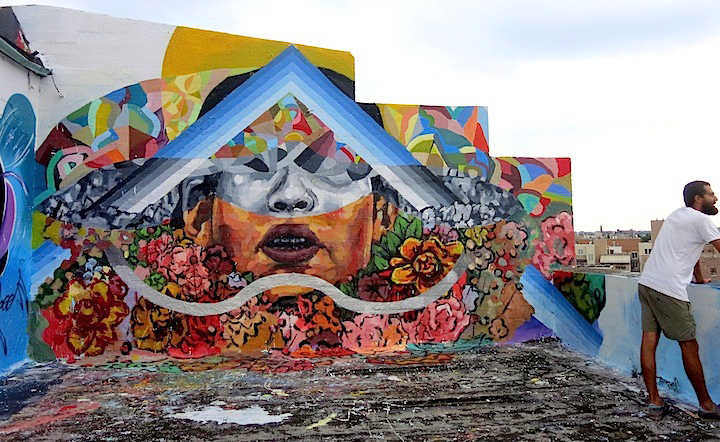
A masterful muralist and inspiring thinker, Argentinian artist Nicolás Romero aka Ever has graced countless cities throughout the globe with his wondrous vision. Earlier this summer, he stopped off in NYC, where he painted on a rooftop in Williamsburg, Brooklyn. That’s where I caught up with him.

Ever

When did you first start getting up?

I was 16 and into hip-hop. The first time I got up was with two friends in our school’s bathroom. We thought we were so cool. Then whenever I took my dog for a walk, I did throw-ups around my neighborhood.

So your neighborhood was your main canvas back then?

Mostly for bombing, but it made me nervous.

Ever-close-up-Brooklyn-Rooftop

When did you become serious about it?

When I met Jaz and other members of DSR. They were professionals. They took street art and public art seriously. I started to share a studio with Jaz and began to think of myself as an artist. In 2003, I started making portraits.

How did your parents feel about what you were doing?

My parents encouraged me. When I was seven, they introduced me to Van Gogh and Goya. I became obsessed with Van Gogh because he cut off his ear. I had a problem with my ear, so I identified with him. When I was thirteen, I began taking art classes outside of school.

Did you continue to study art formally?

I studied architecture at the university for a few months, but it wasn’t for me.

Ever

Who are your inspirations? Any particularly artists?

I have many. I’m inspired by Mexican muralists — the way their art reflects the people and their social consciousness. I’m also inspired by such artists as Van Gogh, Lucian Freud and Francis Bacon.

What is your main source of income these days?

Half my income is from commissions and the other half is from sales.

How do you feel about the movement of street art and graffiti into galleries?

It’s okay. I’d rather sell my work in galleries than do commission pieces for corporations.

Ever

Have you had any negative experiences while getting up on the streets?

The mural that I did in Lima, Peru was censured. I was accused of glorifying Communism. The image on the mural was changed, and it is no longer mine.

You’ve painted in so many cities. Have you a favorite one?

Paris. There is an openness there.

Any thoughts about the graffiti/street art divide?

I don’t see it.

Ever

How has your art evolved since you began painting murals?

I’ve become more abstract and I’ve begun to think of the body as “just a dress to use on Earth.”  My portraits no longer have eyes.  And I’ve begun to use religious symbols obsessively in my work, even though I don’t believe in a traditional God. My work has also become more socially conscious.

What inspired that?

Before 2009, I was apolitical. But in 2009, I lived in Paris, and I began to think of art as the means to inspire societal change. The revolution must start here — on the walls.

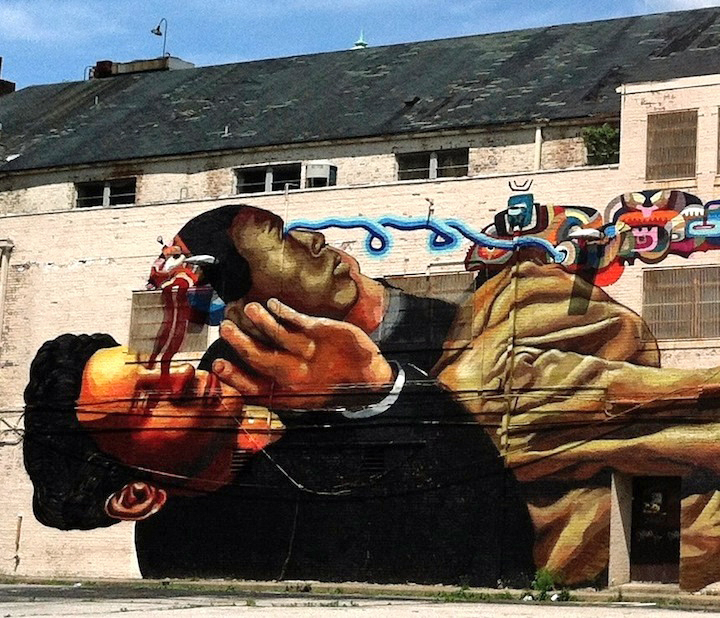
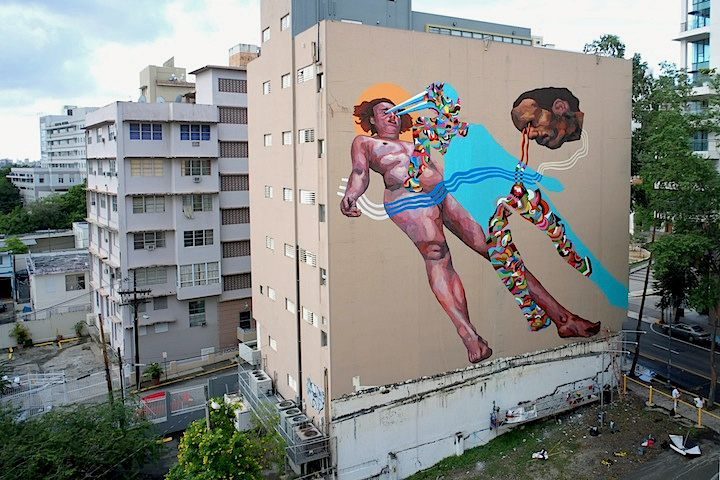
Interview by Lois Stavsky. Photos of Brooklyn rooftop and Baltimore mural by Lois Stavsky. Final image of wall in Santurce, Puerto Rico — which I caught only at the beginning — courtesy of the artist.

{ 0 comments }

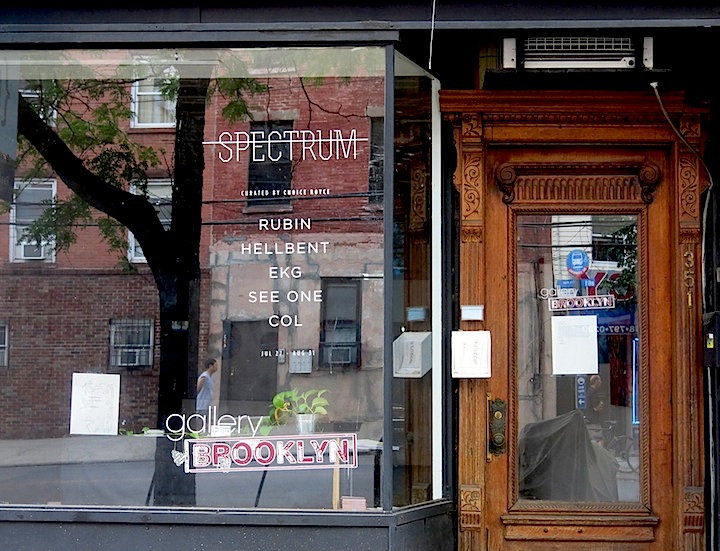
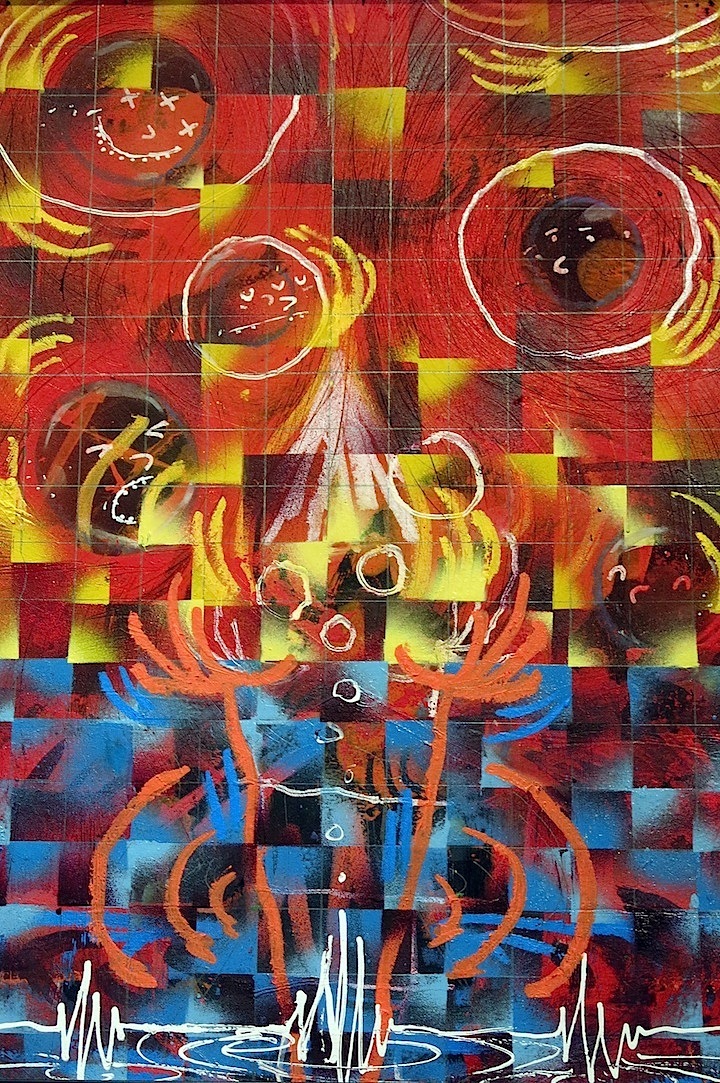
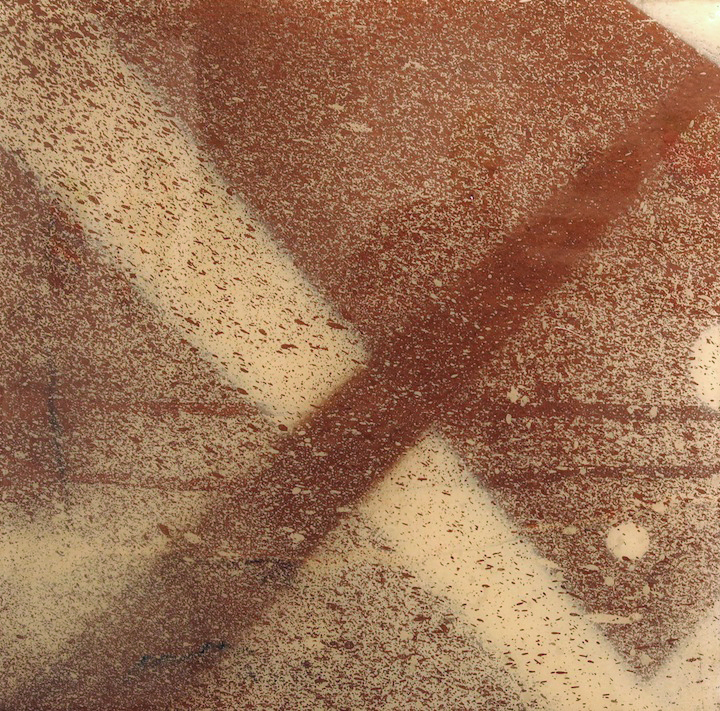
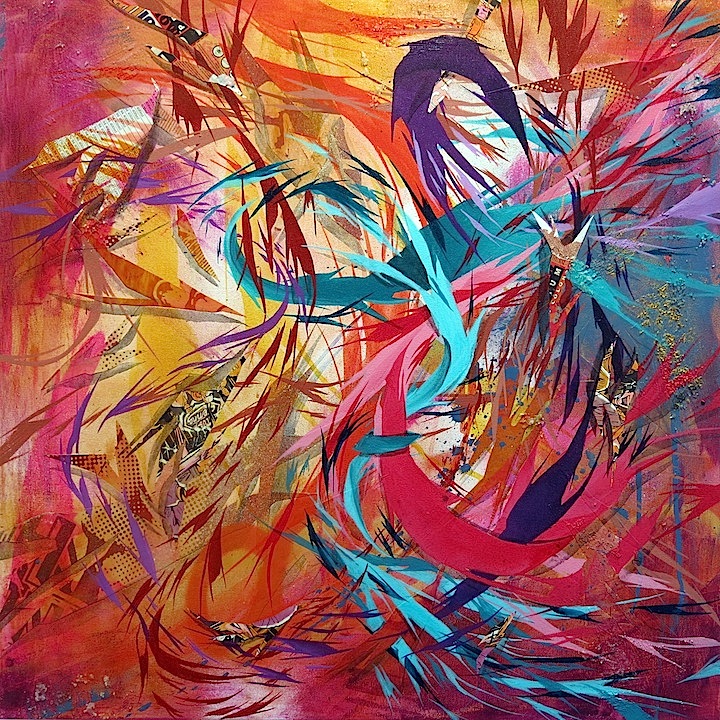
One of NYC’s most prolific street artists, Royce Bannon aka Choice Royce is also a first-rate curator.  His most recent venture, SPECTRUM, is on view at Gallery Brooklyn through August 31.

Gallery Brooklyn

Your iconic monsters surface throughout the boroughs – both on the streets and in galleries – and you also have curated some of NYC’s most impressive street art shows.  What got you into curating?

Back in 2005, my sister and her husband ran a gallery space in Harlem.  I loved the idea of organizing an exhibit that would showcase my friends’ work.  And since I had access to a space, I did just that.

Who were some of the artists in your first exhibit?

They were mostly members of my crew, the Endless Love Crew. Guys like Abe Lincoln, Jr., Infinity, GoreB, Anera…

EKG and Royce Bannon

I remember seeing Work to Do at 112 Greene Street a few years back in SoHo. It was amazing!  How did it come to be?

In 2009, Steve Loeb and John Robie offered me their 4000 square foot studio space to curate an exhibit.  With help from my friends, we organized an exhibit with 50 — 60 artists. Work was installed just about everywhere in every manner possible. The response was wonderful and it whet my appetite to curate more exhibits.

What about other spaces? Where else have you curated?

I’ve curated shows at 17 Frost and at the Mishka Store in Williamsburg and at the Woodward Gallery on Manhattan’s Lower East Side. My current exhibit, SPECTRUM, is at Gallery Brooklyn here in Red Hook.

Rubin

Tell us a bit about your process of curating? How does it begin?

It begins with a concept. And once I have the concept, I contact the artists I’d like to feature and, then – sometimes — I have to begin searching for a space.

What about SPECTRUM? What is the concept behind SPECTRUM?

The concept for this show was actually See One’s. He suggested that I curate an exhibit featuring abstract graffiti with works by Col, Rubin and Hellbent and him. I added EKG.

See One

It’s certainly a great selection of artists – all five are active on the streets, as well as in their studiosHow did you hook up with Gallery Brooklyn?

I began contacting various spaces and Gallery Brooklyn – that had hosted Geometrics last year — was welcoming and enthusiastic. It was the perfect match.

And the installation is flawless!

Thanks! I couldn’t be more satisfied. I wasn’t sure what to expect, and the results are beyond my expectations! The works all complement one another.

Hellbent

How did the opening go?

It was fantastic. The response was all positive and it sold well.

What’s ahead?

More curating. More art. More writing. And more interviews for the Source.

Col

Have you any new concepts for exhibits?

I’d like to curate an exhibit on the theme of characters.

That sounds great! I am already looking forward to it!

Interview by Lois Stavsky; photos of EKG and Royce collab, See One, Rubin and Hellbent — in that order — by Lois Stavsky; final photo of Col courtesy of Royce.

{ 0 comments }

An award-winning multidisciplinary artist, Brazilian native Priscila De Carvalho currently lives and works in NYC.  We recently caught up with her in the Bronx, where she was working with local teens on a mural to commemorate the 40th anniversary of the Bronx Museum of the Arts.

Priscila De Carvalho

When and where did you do your first public mural?

In Puebla, Mexico a few years ago.

Are there any particular cultures that influence you aesthetic?

The street art culture and urban life, in general. I used to skateboard and surf back in Brazil.

Your work is not only beautiful; it also intellectually engages us. Does it have a particular message or theme?

Most of my work relates to the economic and socio-political issues surrounding the out-of-control urbanization of slum dwellers. I juxtapose my observations about sub-cultural communities with other contemporary issues such as climate change and pollution

Priscila De Carvalho

Do you work with a sketch-in-hand or do you let it flow?

I usually have a basic sketch design layout. But it doesn’t always go accordingly.

Do you generally work alone? How do you feel about collaborating with other artists?

Yes, most of the time I work alone or with some assistants. I enjoy working alone, but there’s also the communication and camaraderie — so important among artists — that only collaboration can bring.

What percentage of your time is devoted to your artwork?

At this point of my career, it’s a full time job. It’s not just the creative end of it. There’s also the administrative part. And gallery exhibits demand a huge amount of work…lots of business work, including networking.

Priscila De Carvalho

Any other passions?

Music. I studied piano for six years, but I just didn’t have what it demands.

As a muralist who works in sanctioned spaces, what are your thoughts about graffiti?

I’m highly inspired by graffiti — its energy and vitality.

Any thoughts about the graffiti/street art divide?

Graffiti has its distinct history and techniques.   It has evolved from tagging into a complex art form. Many street artists started as graffiti artists.  Street art and graffiti are connected.

Priscila De Carvalho

How do you feel about the movement of graffiti and street art into galleries?

It can turn art into a commodity. But it must remain an option, as every artist has to earn a living.

Where have you exhibited?

I’ve exhibited in Spain, London, Paris, Berlin, Nepal and Mexico. I had my first solo exhibition at The Jersey City Museum in 2009.

What’s the riskiest thing you’ve done as an artist?

In Nepal, I had to climb a 30-foot bamboo structure with no scaffolding. I was tied to a harness, and it was hard for me to visualize what I was painting. But it one of the most rewarding work/travel experiences I’ve had.

Priscila De Carvalho

Do you have a formal arts education?

No. I studied painting/sculpture informally for a few years before I started with my studio practice.

What’s ahead?

Some permanent public art projects and more exhibitions.

Interview by Lenny Collado; first photo by Lois Stavsky; all other images are courtesy of the artist.

{ 0 comments }

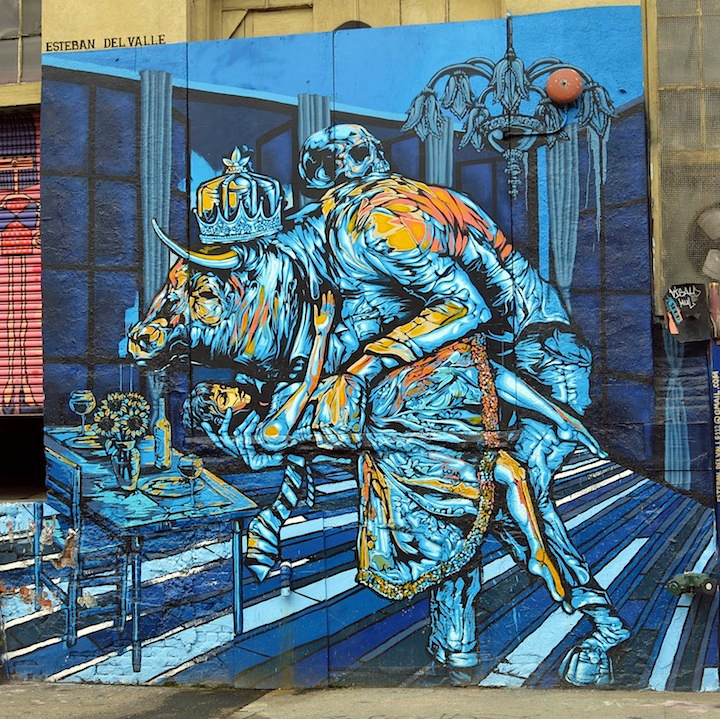
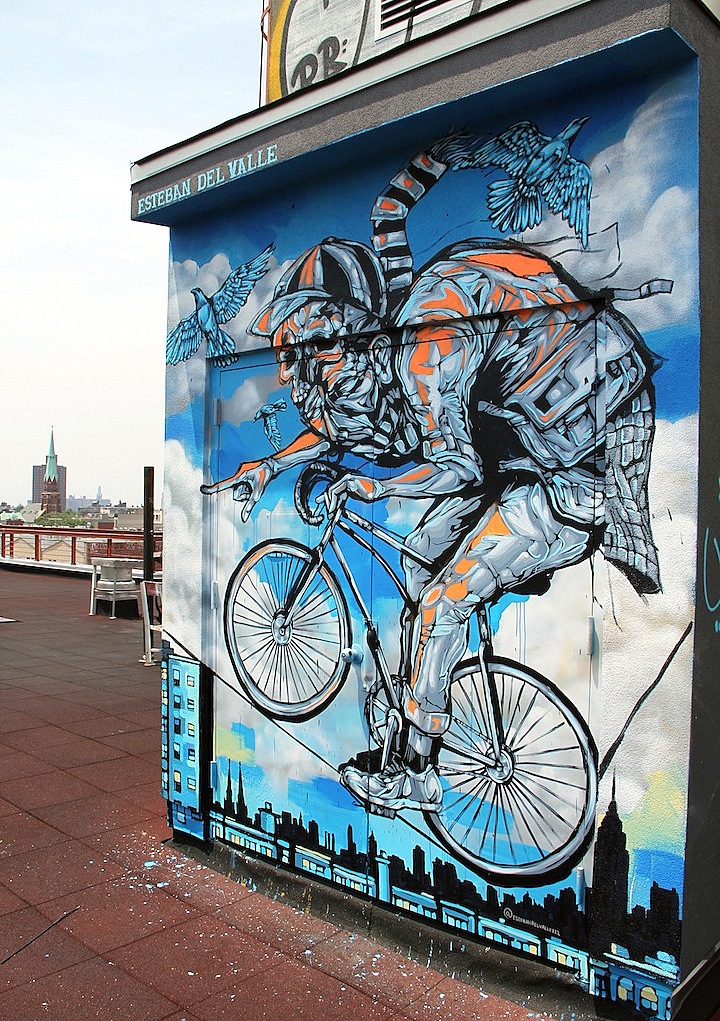
Currently based in Brooklyn, Chicago native Esteban del Valle is an interdisciplinary artist whose public artworks have surfaced in NYC, as well as in Chicago, IL, San Antonio, TX, and Kansas City, MO. We first came upon his extraordinary work at 5Pointz in Long Island City, Queens.

Esteban de Valle

When and where did first get up?

I was in junior high school back in Chicago when I did my first tag on a school bench.  I was soon hitting the back of K-Mart and piecing under nearby bridges.

What inspired you to hit the streets? Have you any early graffiti memories?

I was in sixth grade when I saw a legal wall in Chicago’s Ukrainian Village that was all graffiti.  I thought, “Wow! I want to do something like that!”

Back in Chicago, did you paint alone or were you part of a crew?

Both. Just about all the guys I went to school with were into hip-hop. We called ourselves FYM (Free Your Mind).

What percentage of your time these days is devoted to art?

120%

Esteban del Valle

Is art, then, the main source of your income?

Yes, I sell studio work. I do commissions and I work for Groundswell, an organization that engages youth in creating community murals.

How does your family feel about what you are doing?

They’re fine as long as what I do is legal.

Any thoughts about the graffiti/street art divide?

I love both.  But what I especially love about street art is that it inspires people to take to the streets to do more than just their names.

How do you feel about the movement of street art and graffiti into galleries?

It’s fine. Artists need to make a living from their work. But once it’s in a gallery, it isn’t “street art” any more.

Esteban del Valle

Why do you suppose graffiti is held in higher esteem in Europe than it is here in the States?

For the same reason public intellectuals are valued in Europe.  There’s a greater appreciation of culture, in general. And the Europeans have different notions of public space.

How do you feel about the role of the Internet in all of this?

It’s great. It makes art accessible to so many.

Have you a formal art education?

I have a BFA in Art History and Painting from Southern Illinois University and a Masters Degree in Painting from the Rhode Island School of Design.

What inspires you these days?

Innovative music and performance art are my main inspirations.  The Mars Volta and Geo Wyeth come to mind.

Esteban del Valle

Are there any particular cultures that have influenced your aesthetic?

Hip-hop and Chicago’s rich mural culture.

Do you work with a sketch-in-hand or just let it flow?

I don’t like to work from sketches. I’d rather sketch on a wall. But much of what I do has to be pre-approved, and so I need to have a basic drawing of what I plan to paint.

Are you generally satisfied with your finished piece? 

Yes. I push it until I feel satisfied.

How has your work evolved through the years?

I’ve begun to develop my own language. I’m more experimental and I’m more about moving to do what challenges me.

Esteban del Valle

Any favorite artists?

Many. Among them are: Carrie Moyer, Haig Aivazian, Jayson Musson, Trenton Doyle Hancock and Dave McKenzie.

What about those who work in public spaces?

Os Gemeos and Poser aka Pose MSK are among my favorites.

What do you see as the role of the artist in society?

To challenge and to contribute to the collective thought.

What’s ahead?

More art. More income from art. More traveling and, generally, doing what I want to do.

Interview by Lois Stavsky. All photos courtesy of the artist, except the first one at 5Pointz by Lois Stavsky

{ 1 comment }
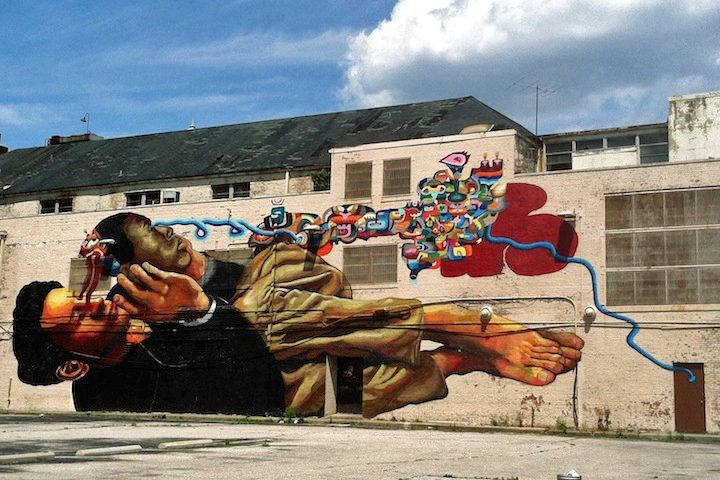
Speaking with Spidertag

July 18, 2013

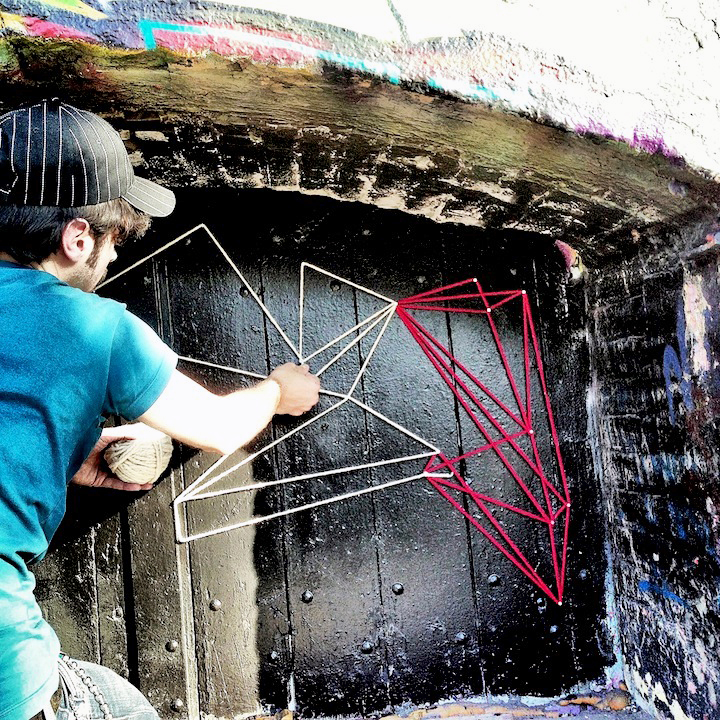
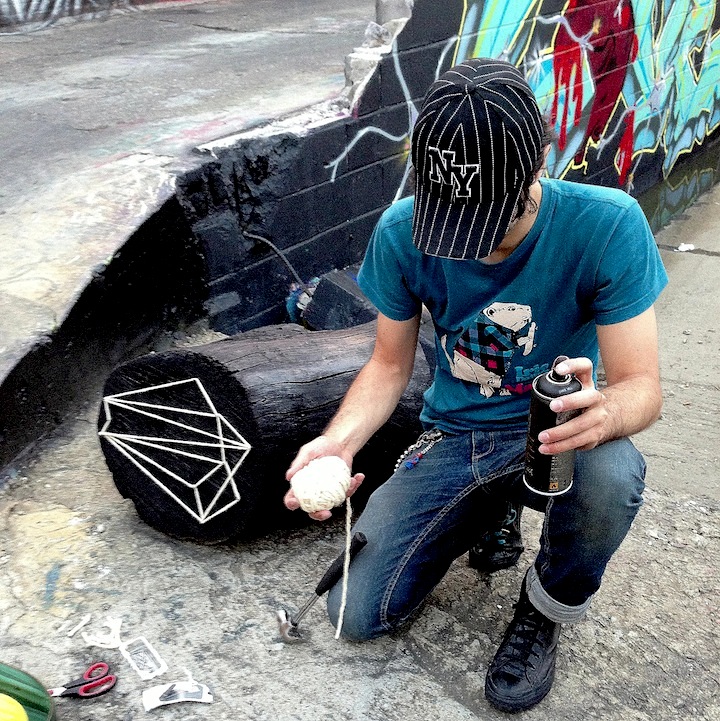
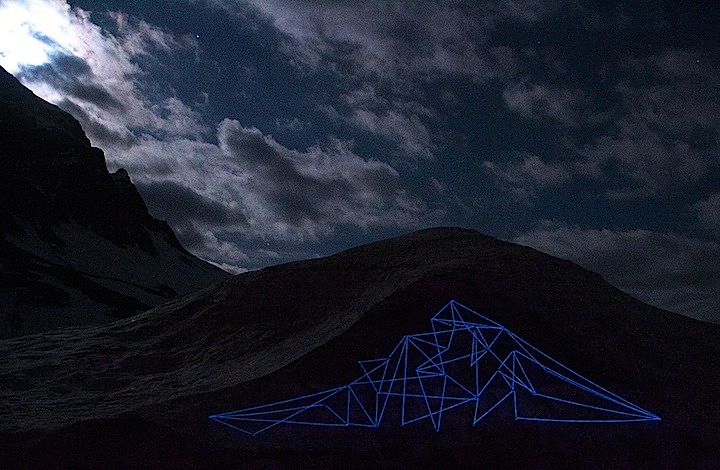
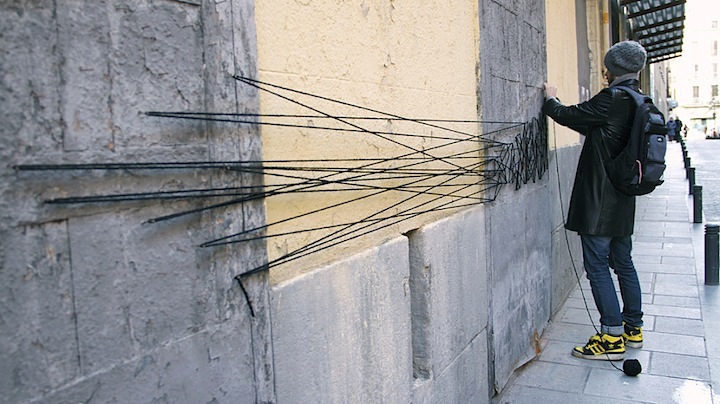
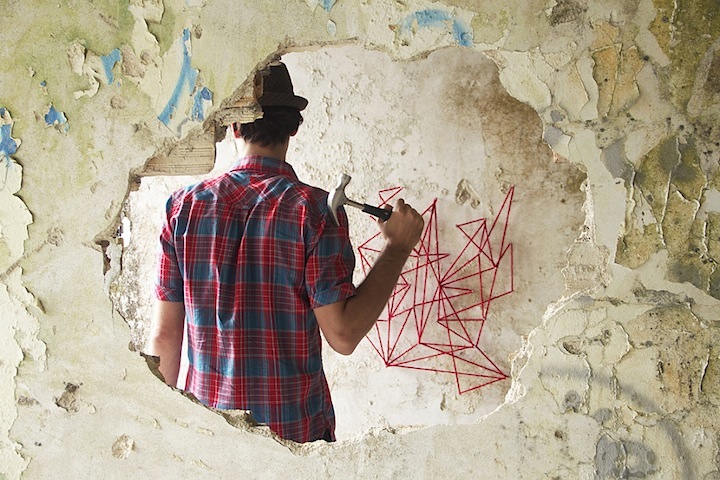
Based in Madrid, Spidertag is known for his masterful geometrical and abstract artworks fashioned with yarn and nails. I recently met up with him during his visit to New York City, where he left his mark at 5Pointz.

Spidertag

When did you start getting up?

I started doing graffiti in 2000, and in 2008 I began working as Spidertag.

Have you any preferred surfaces?

I like abandoned places. Just like a spider, I only build my geometrical webs in out-of the way, deserted spaces. When people are present, a spider’s web does not last.

Have you ever been arrested?

Not for this, but I was arrested in Berlin for bombing.

What was that like?

They pepper-sprayed me and punched me. They kept me over night.

Spidertag

Wow! And I thought the authorities in Berlin were lenient!

Not if you’re caught bombing.

What percentage of your time is devoted to your art?

All day, all night.

What is your main source of income?

Freelance photography and design. Selling artworks.

Any thoughts about the graffiti/street art divide?

I try to connect them both. But, clearly, street art is more acceptable, and street artists have more freedom than graffiti writers. In some ways, street art legitimizes graffiti.

Spidertag

Do you prefer working alone or collaborating with others?

Both. I like working alone, but I also like the mix of techniques that comes with collaboration.

With whom have you collaborated?

Back in Spain, I collaborated with Señor X, Gaucholadri, EC13 and El Niño De Las Pinturas. And in Berlin, I collaborated with Hottea.

What do you see as the role of the Internet in all this?

It’s important  — because what we do is so ephemeral.

Have you a formal art education?

I studied sculpture, but most of what I do comes from what I taught myself and through reading. I’m an avid reader.

Spidertag

What’s the riskiest thing you ever did?

Doing art while standing in deep cold water. It was irresistible.

Your work is certainly unique. What is the source of your inspiration?

I love to experiment with different materials. I’m inspired by geometrics. And I’m always trying to do something different and better. Particular spots, also, inspire me.

Do you work with a sketch in hand or let it flow?

I usually don’t work with sketches.

Are you generally satisfied with your finished piece?

Sometimes. If I like it, it feels like magic. I jump for joy. And if I don’t like it, I forget about it.

Spidertag

Are there any particular cultures that have influenced your aesthetic?

Egyptian.

How has your work evolved through the years?

I’m more engaged with the materials that I use. These days nails have a hold on me. And I’m more particular with the spots that I choose.

What’s ahead?

A movie is coming soon. More experimentation, more geometry. I don’t want to repeat myself. I would like to Spidertag an entire abandoned town, my dreamed kingdom.

Gee – that’s quite ambitious. It sounds great! What do you see as the role of the artist in society?

I wish the artist did have a significant role in society. I’m not sure he does. But the way I see it — his main goal is to teach others to follow their hearts.

Interview by Lois Stavsky. First two images photographed by Lois Stavsky at 5Pointz in Long Island City, Queens. All other photos are courtesy of the artist.

{ 8 comments }
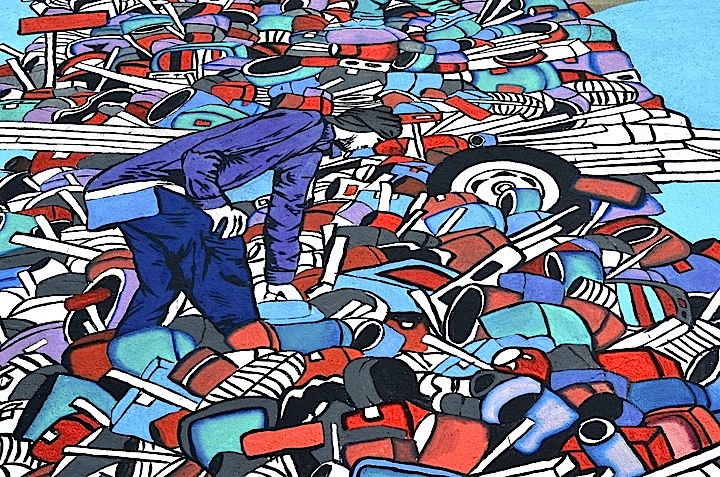
Australian artist Kyle Hughes-Odgers creates enchanting public artwork and exhibits his work in galleries across the globe. With strikingly beautiful  patterns in luscious colors — fusing figurative, abstract and narrative elements — he engages us visually and intellectually. We had the opportunity to speak to the talented artist on his recent trip to New York City, where he left his mark at the Bushwick Collective and on nearby rooftops.

kyle-hughes-odgers

When and where did you start getting up?

In 2005, I started with wheat pastes and stickers in Perth and Melbourne.

What inspired you to get up?

I was always drawing and painting. I saw doing street art as an immediate way to get my work out into a public forum.

Any early graffiti-related memories?

I was more interested in comic books.

What inspires you these days?

Everything. Architecture, patterns, narrative, decay…

Kyle Hughes-Odgers

Any preferred spots or surfaces?

I love rundown abandoned spaces with unique textures. One of my favorite spaces was an abandoned French mansion in Cambodia.

Have you exhibited your work in gallery setttings?

Yes. Shortly after I got my work up on the streets, I started showing work in galleries. I’ve had solo shows in Perth, Melbourne, Berlin and Amsterdam. And I’ve participated in group-shows all over the world.

What percentage of your time is devoted to your work?

I’m a full time artist. I work on gallery exhibitions, private commissions and large scale public art work. I also recently illustrated a children’s book.

Any thoughts about the street art/graffiti divide?

I don’t really focus on whether or not there is a divide. I’m open to anything creative.

Kyle-Hughes-Odgers

Do you prefer working alone or collaborating with others?

I like working alone, but I think it is important to collaborate.

Any thoughts about the role of the Internet in all of this?

I think the Internet is great. It’s an amazing resource to access what’s happening all around the world.

Are there any particular cultures that have influenced your aesthetic?

None that I’m conscious of.

Are you generally satisfied with your finished piece?

Sometimes.

kyle-hughes-odgers-street-art-NYC

How has your work evolved through the years?

My first work was hand-drawn characters on brown paper. But then, as I started hanging out with people who use spray paint, I became more interested in texture and colors and learned more about how to use the medium.

What do you see as the role of the artist in society?

It is the role of the artist to document our existence based on his or her observations.

Have you any thoughts about the role of the photographer?

It is very important. Street art is so ephemeral that if it’s not documented it’s as if it didn’t exist.

Kyle-Hughes-Odgers

What do you see as the future of street art?

The lines will continue to blur between the different art genres.

Any favorite street artists?

There are many; but some of my favorites are Aryz, Escif, Roa, Phibs and Beastman.

What’s ahead?

More gallery shows, more installations and ten-story high pieces.

Good luck! It all sounds great!

Photos courtesy of the artist.

{ 0 comments }
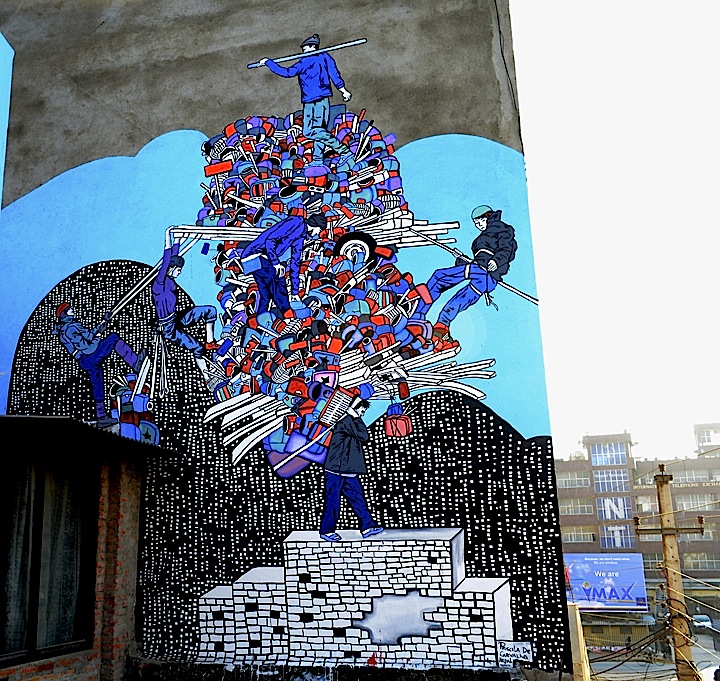
Speaking with Facter

July 4, 2013

Fletcher Anderson aka Facter, the Melbourne-based artist, writer and editor of  the popular webzine INVURT, recently spent some time in NYC during his extensive travels. While he was here, we had the opportunity to speak to him.

Facter

When and where did you start getting up?

I began bombing when I was about 14 back in 1989 in Perth, Western Australia. I was crap – terrible at doing anything more than tagging. I took an eight-year break to concentrate more on writing, and then about six years ago, I went back to it.

What inspired you back in Perth?

When I was about eight years old, my sister was seriously into graffiti — like everyone else — and turned me on to the movies Beat Street and Wild Style. Then, when I was in high school, just about everyone I knew was bombing, so I fell into it, as well.

Have you any preferred spots? 

I’ll paint anywhere and everywhere.

Have you ever been arrested?

Never for actually painting or bombing. A few years after I began painting, though, I was busted when I was caught up in a house raid where stolen paint was stashed. I got off as I wasn’t involved in the theft, but things went a bit south from there and I moved up to Queensland to get away from it all. In hindsight that was kind of fortunate, as that’s where I really discovered my love of art .

Facter

How do your folks feel about what you do on the streets these days?

They love what I do and are very supportive.

What percentage of your time is devoted to art?

I work nine to five as a Business Analyst – it pays the bills. But it also helps fund different projects that I help make happen via my webzine, Invurt.  After 5pm every night, I’m either blogging about the street art scene in Australia and NZ, writing and editing Damn It! Magazine with Jo Jette, or drawing. Weekends are full of more painting, and checking out gallery shows and attempting to have a personal life outside of it all…haha!

How does the street art scene here in NYC compare to the one back home in Melbourne?  

I really do love the NYC scene. And as I’ve only scratched its surface, I hate to generalize. But there does seem to be more openness and tolerance in Melbourne. And  it does feel like the scene back home has less of a competitive nature. Melbourne is a very cultured city, and most people try to work together towards the same goals of furthering the art they love – which is great.

Facter

Have you any favorite cities?

The Mission in San Francisco is amazing. NYC and the Bushwick Collective are brilliant. I love Boston. I find the people there so generous and helpful. Oslo was great fun, as were Tartu, Estonia and Valka/Valga  That said, I especially love Hosier Lane and Aerosol Alley, back home in Australia.

Any thoughts about the street art/graffiti divide?

I hate the idea of a divide. The media and governments spent 30 years waging a war against graffiti. They couldn’t just turn around and let it go, so they came up with the term street art to save face and try to differentiate between things they liked and things they didn’t. Suddenly there was this whole big deal about it all, and it saddens me. If it’s on the street, and it’s art, then it’s all “street art” – even graffiti. And anyone that thinks graffiti isn’t art is… well…

Wow! That makes so much sense!

At the end of the day, we all love to paint walls, so we all have that in common. What’s the point in having any kind of beef against anyone who has that love?

How do you feel about the movement of graffiti and street into galleries?

Once it’s in a gallery, it’s not street art anymore – plain and simple. It’s a street artist exhibiting street art – derived work in a gallery.  I think it’s great that more and more street artists are getting the opportunity to exhibit in galleries. Everyone wants to get paid for doing what they love to do – and it’s about time that they were recognized as the talented creatives that they are.

Facter and Sinnskyshit

Have you exhibited your work?

I have had lots of group shows and solo shows in Australia, and I was in one group show in Toronto. My aim next year is to be involved in more shows outside of Australia.

How do you feel about the role of the Internet in all of this?

I love it. Street art is the world’s first “as it happens” global art form. I honestly don’t think that the whole phenomenon would be what it is without the Internet.

Have you a formal art education?

Yes, but I never use it – I went off on a tangent long ago.

What’s the riskiest thing you ever did? And why did you take that risk?

Doing run-ups on trains always felt pretty risky. And I did it because trains are big, shiny and boring. One day, I hope, all the trains will be legally painted by the artists who were once arrested for doing so.

Facter and Sinnskyshit

What inspires your aesthetic these days?

Science fiction, ancient cultures and robots. I’m also a huge dinosaur lover… haha.

Are there any particular cultures that have influenced your aesthetic?

I grew up in the middle of nowhere near an aboriginal community – in a place in the Northern Territory of Australia called Nhulunbuy. I learnt the value and beauty of traditional cultures from an early age. Mayan and Maori art have been a huge love since I was a kid – which is why I just spent three months in Central America visiting the ruins, having my dreams of seeing them for myself fulfilled.

Do you work with a sketch in hand?

No, I usually just let it flow. I like to surprise myself – lately though, as I’ve been travelling I’ve been starting to think about my planning a bit more, due to having limited time to fuck around on a wall … it’s a different approach for me.

Are you generally satisfied with your final piece?

Hell, no!

Facter

How has your work evolved through the years?

I’ve always had a distinctive style since I first started, but I continue to refine it – I think it has enormous scope for me to do some cool things with.

What do you see as the role of the artist in society?

To visualize the collective dream.

What do see the role of the street art blogs?

In 20 years from now, I’m hoping that they will all serve as an amazing resource and snapshot of a brilliant art movement as it happened. That’s why I love writing about it and documenting it, and the only reason I do it.

That sounds right! What do you see yourself doing in five years?

More of the same of what I’m doing now! Writing, documenting, painting. Hopefully I’ll be doing more shows, travelling and painting amazing spots. I also look forward to helping launch and participating in bigger projects with more artists in Melbourne.

Photos: 1. Valka, Latvia 2. Oaxaca, Mexico 3. the Bushwick Collective 4. & 5. Oslo with Sinnskyshit 6. Boston; all photos courtesy of the artist, except Bushwick Collective by Lois Stavsky

{ 0 comments }