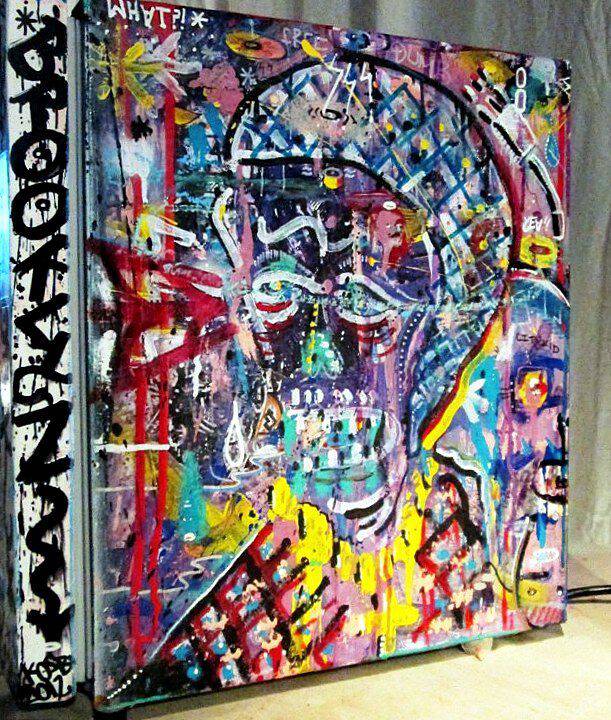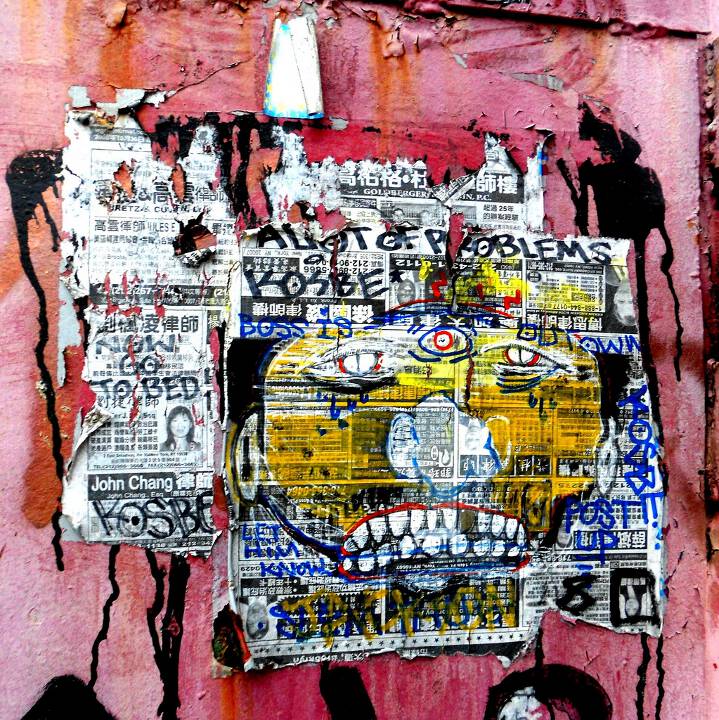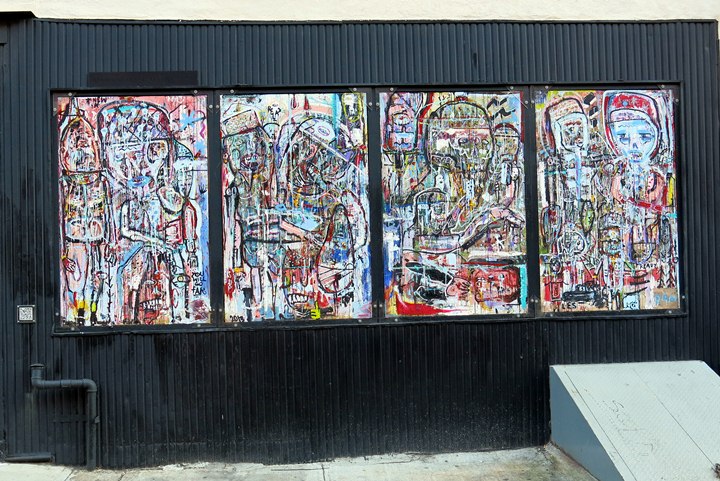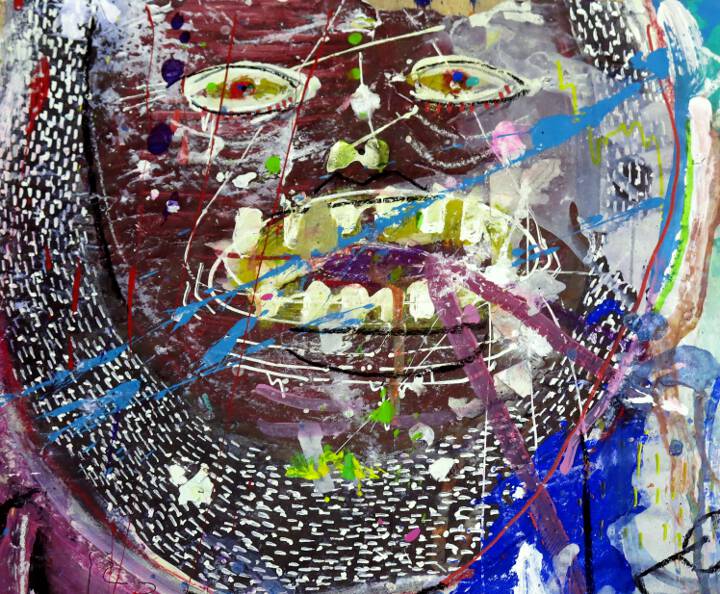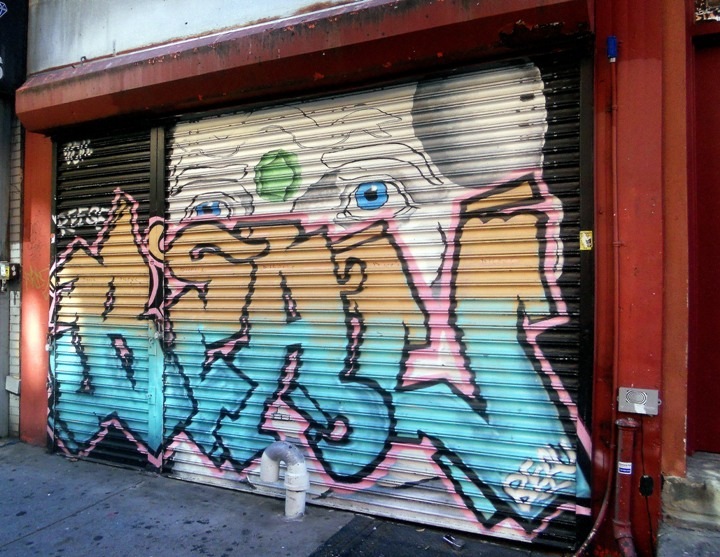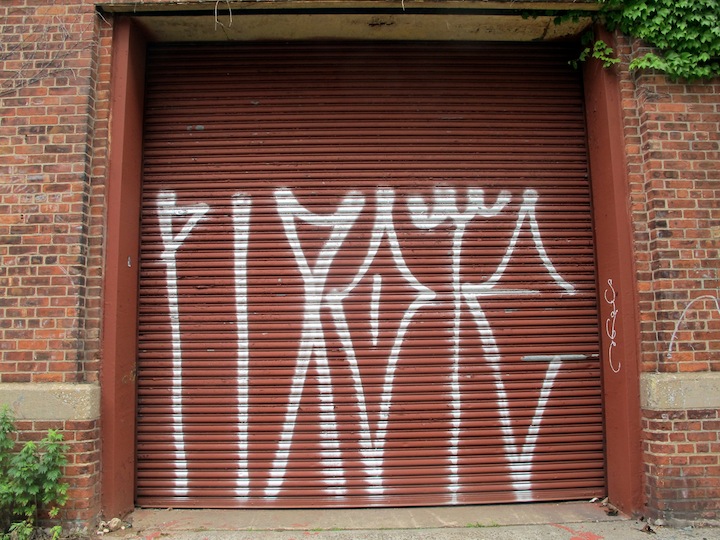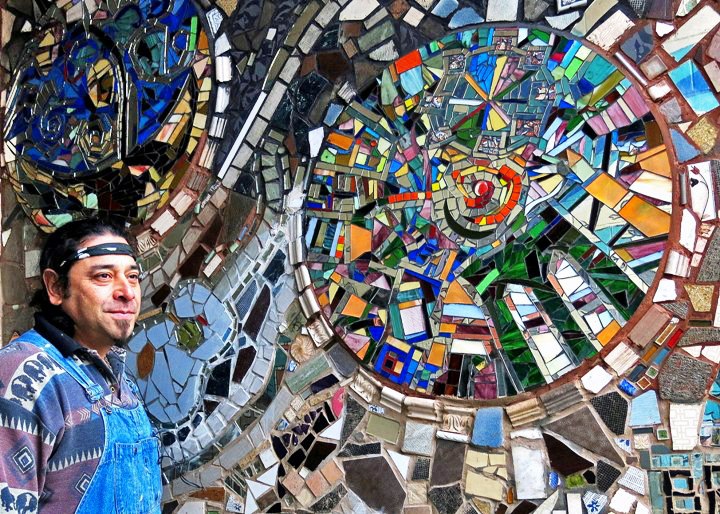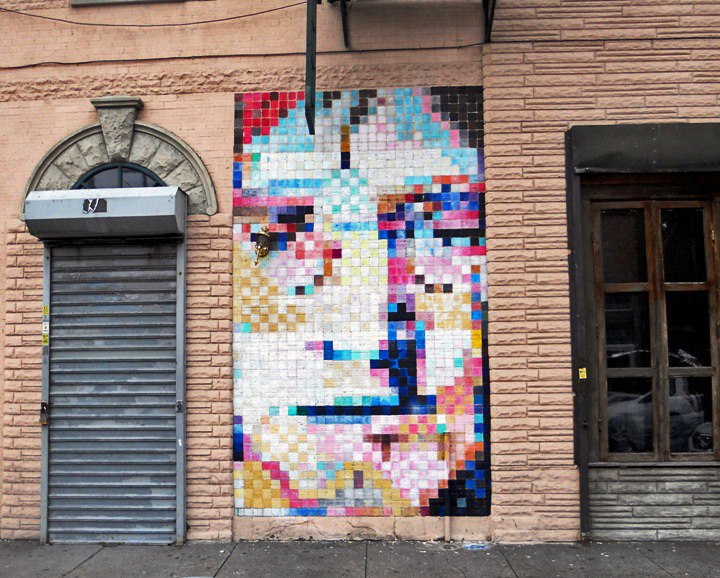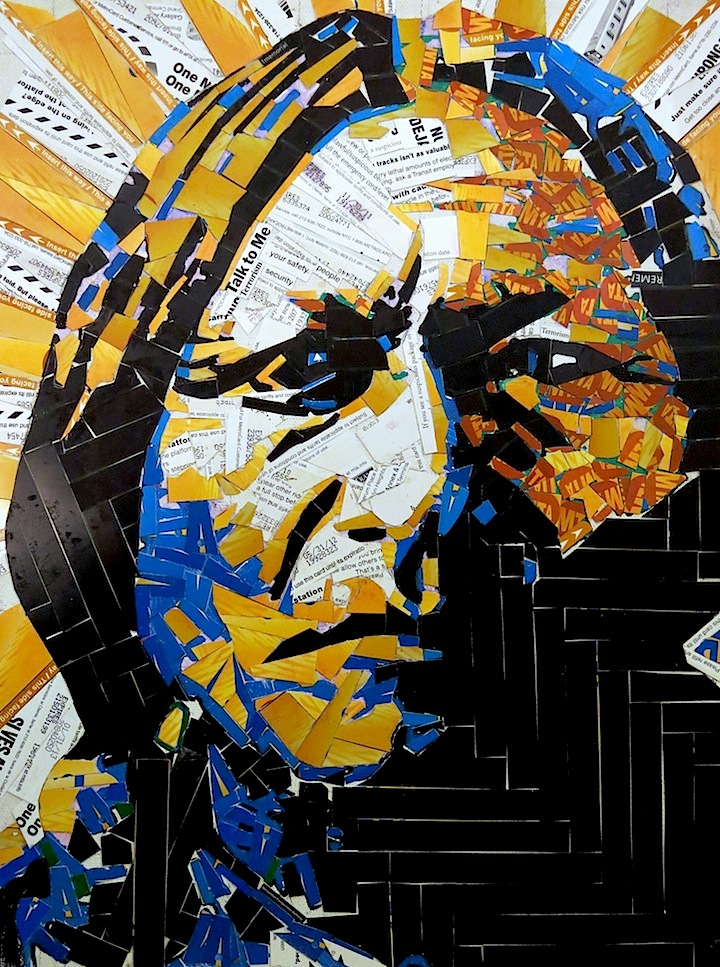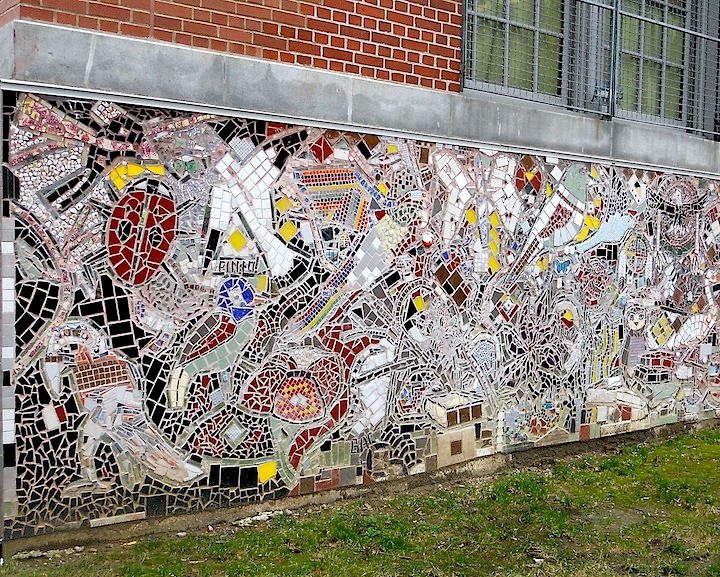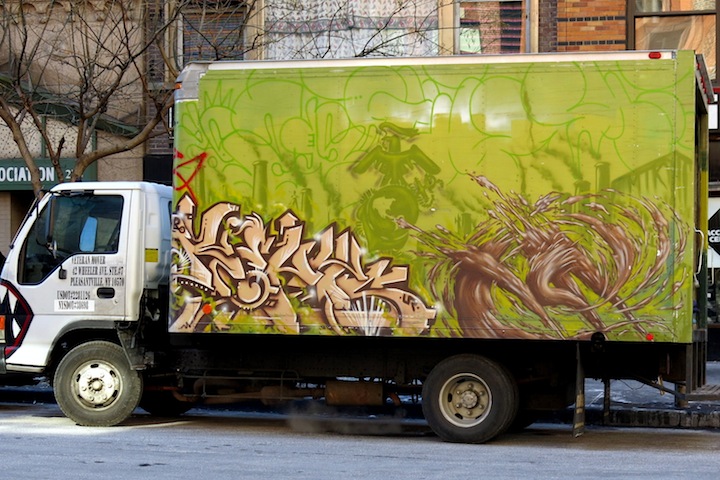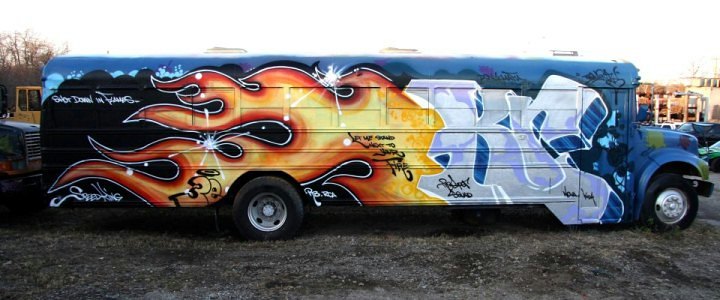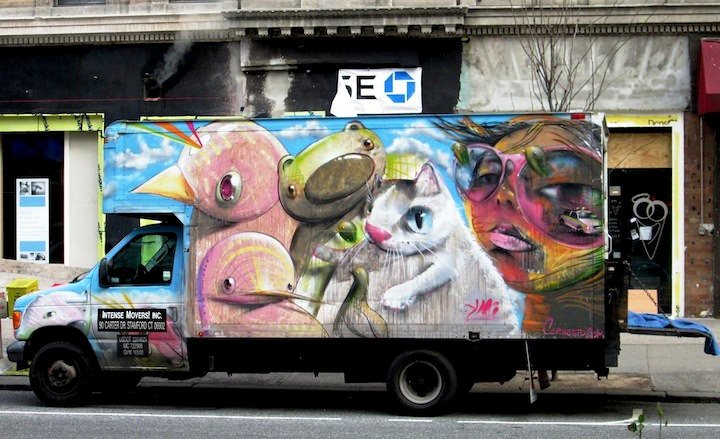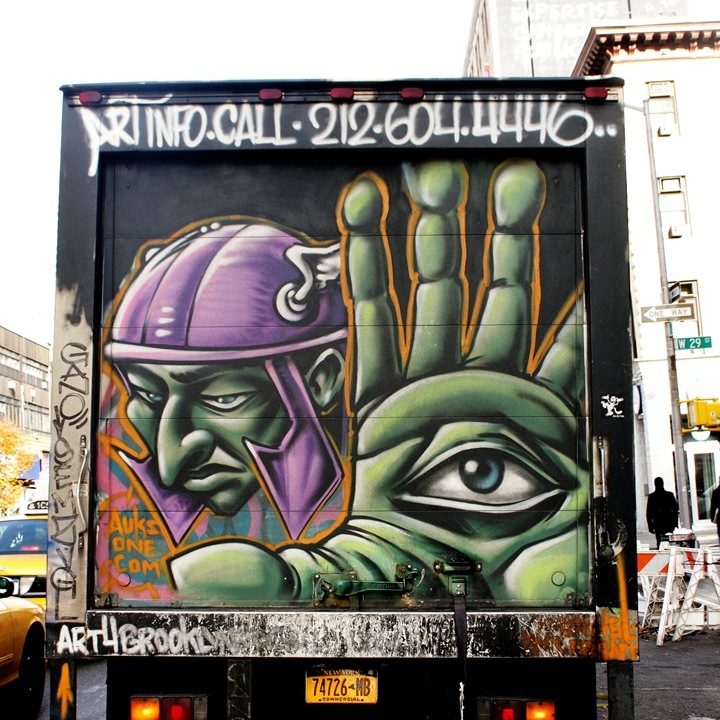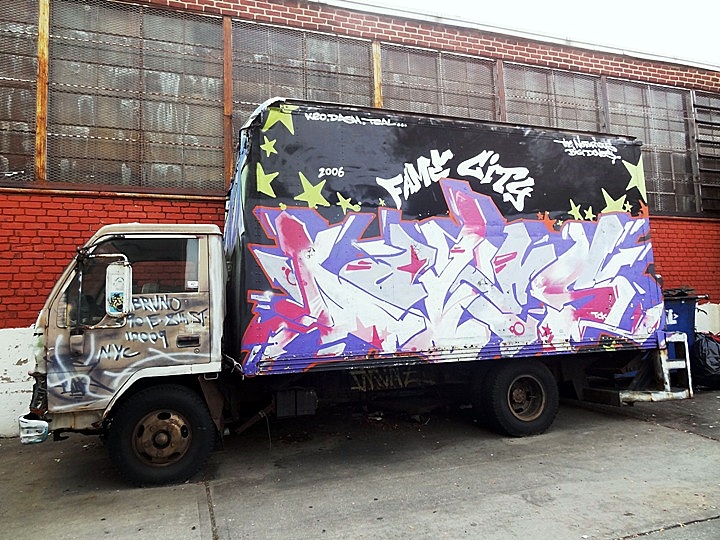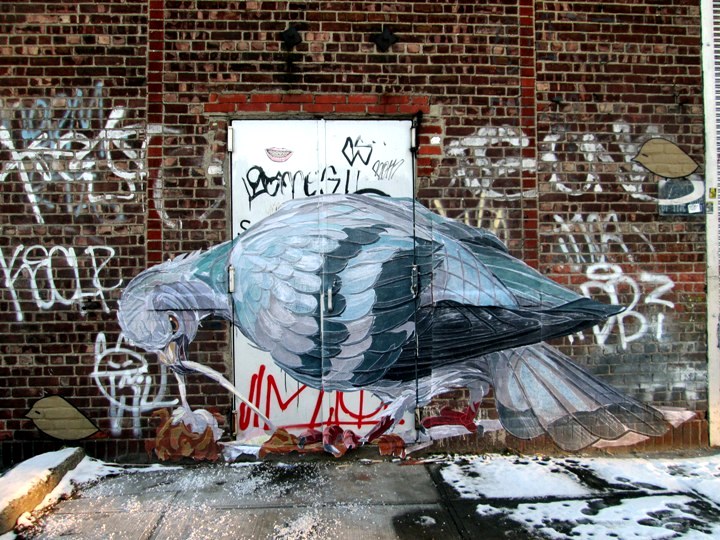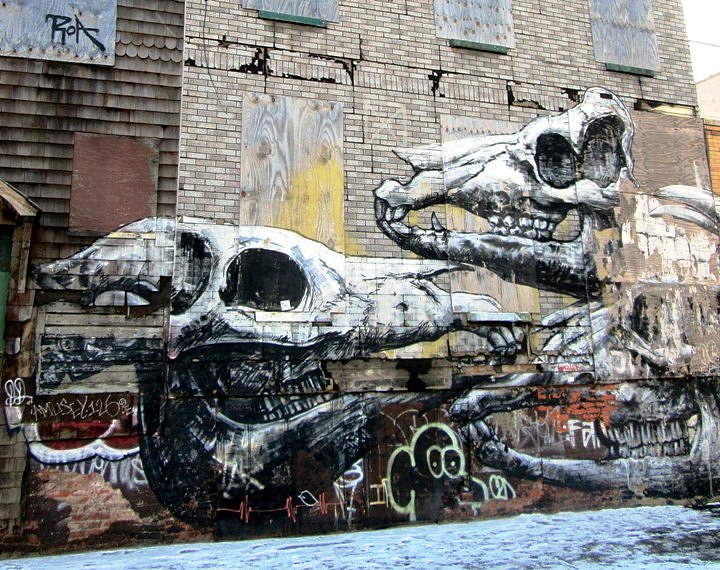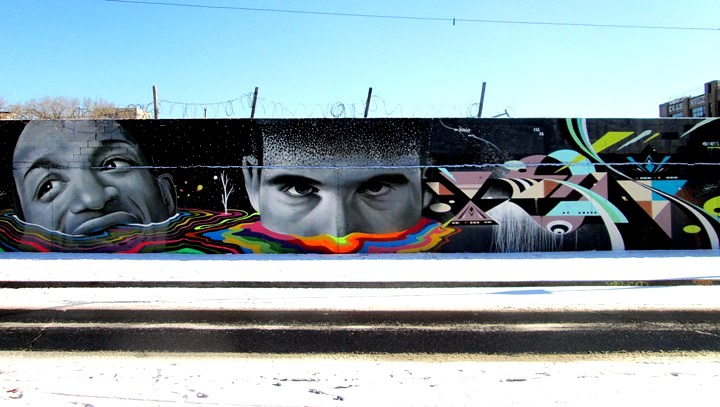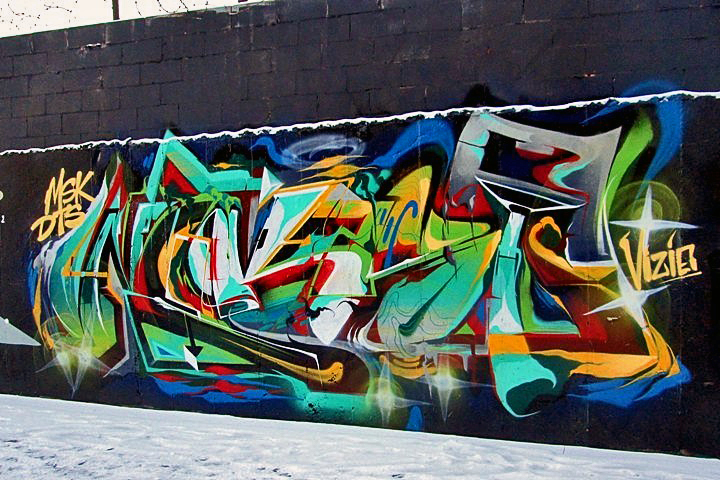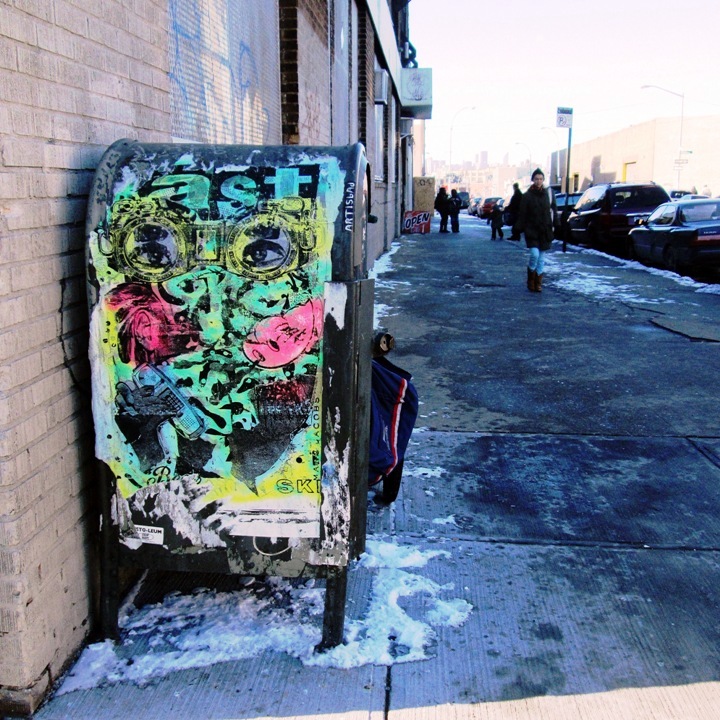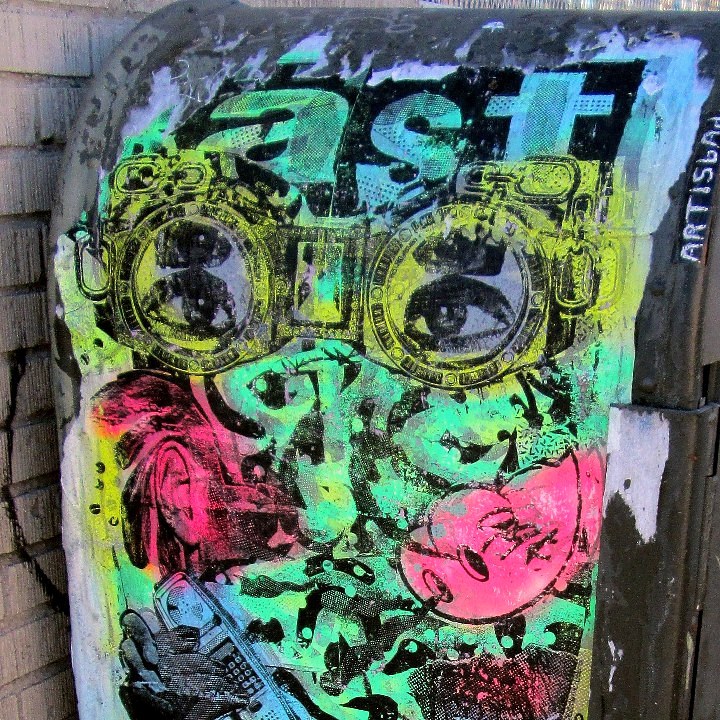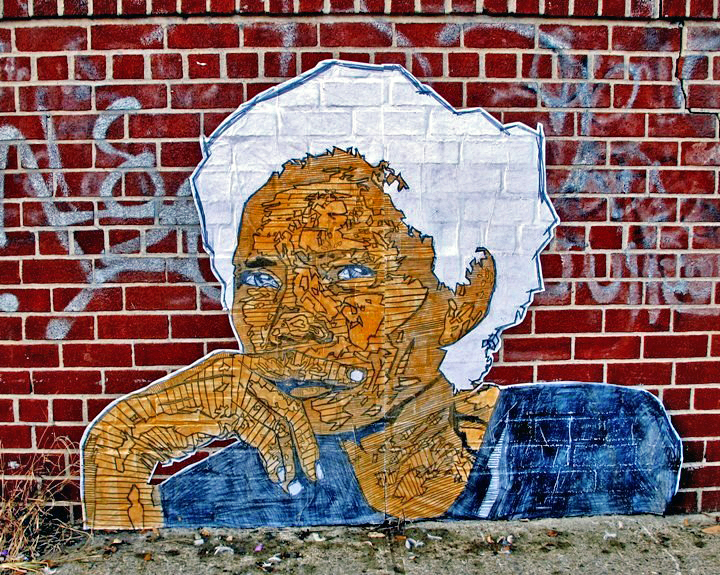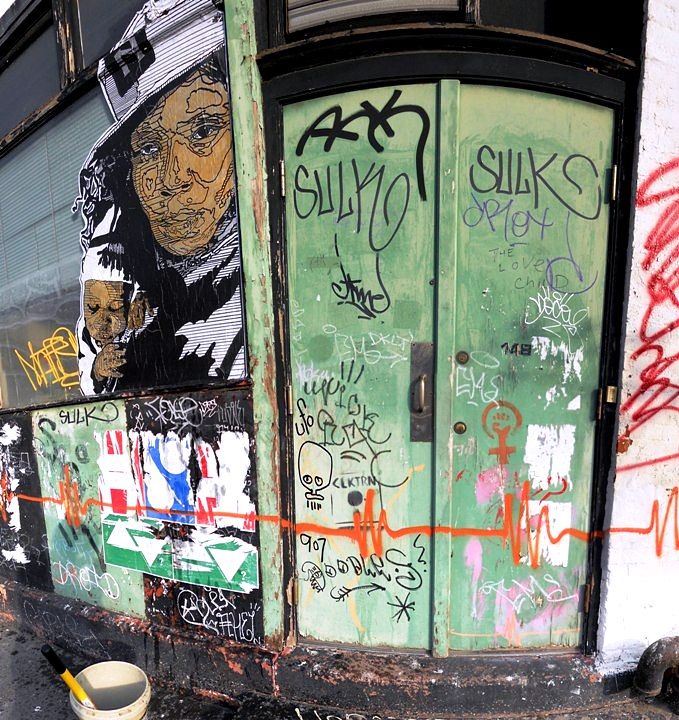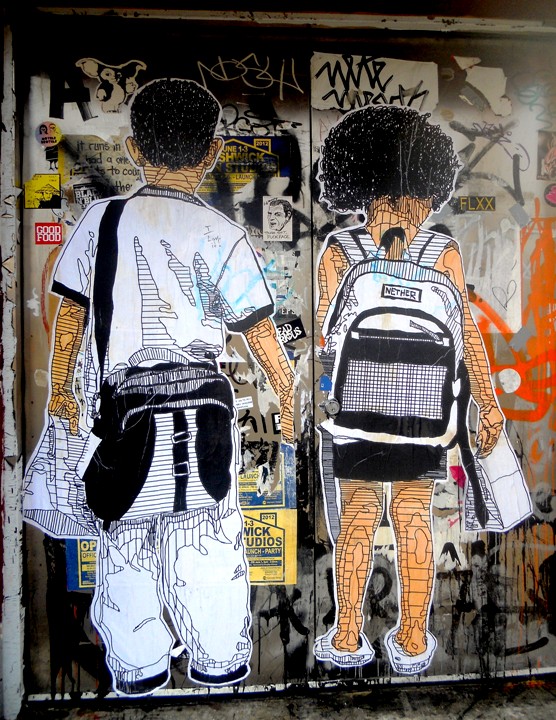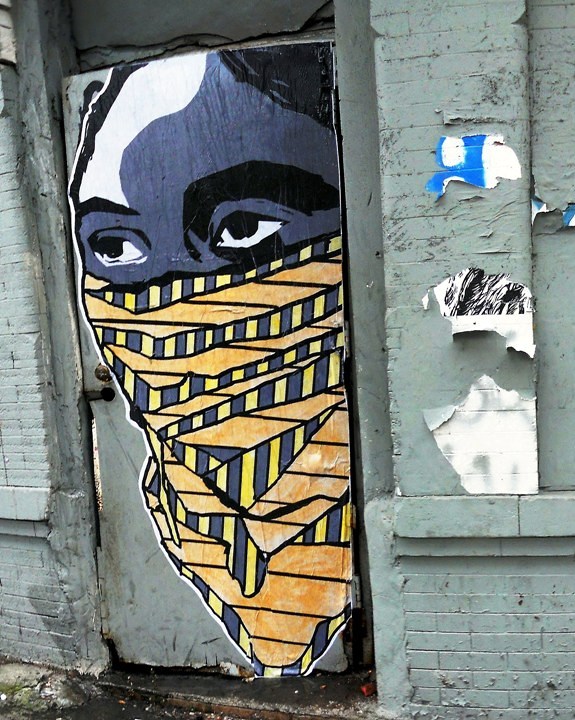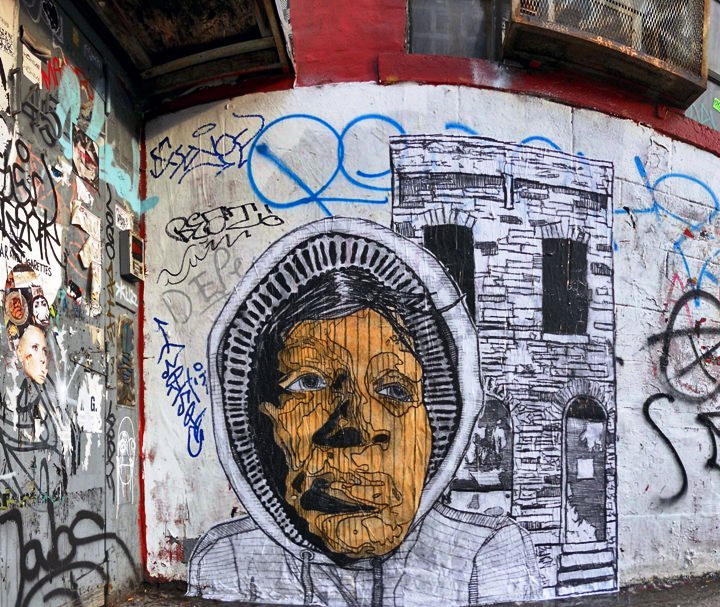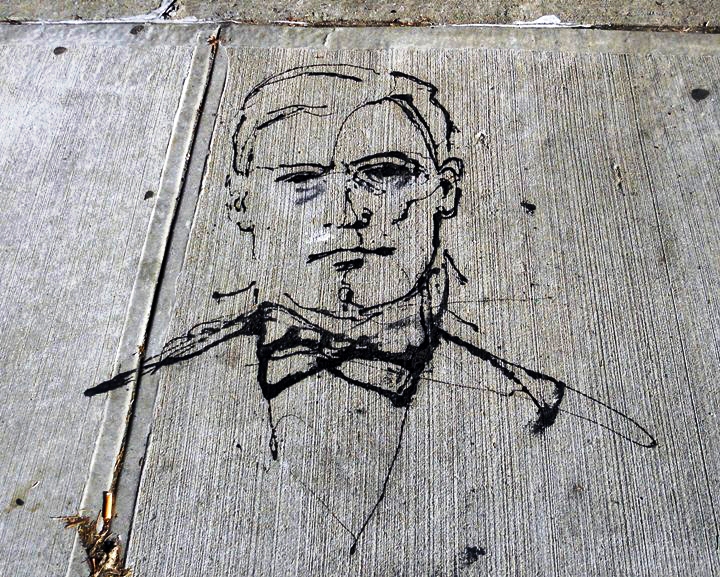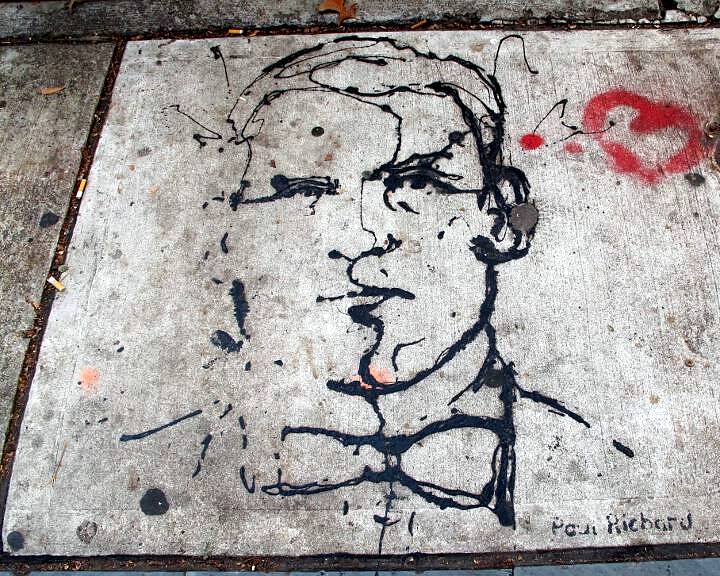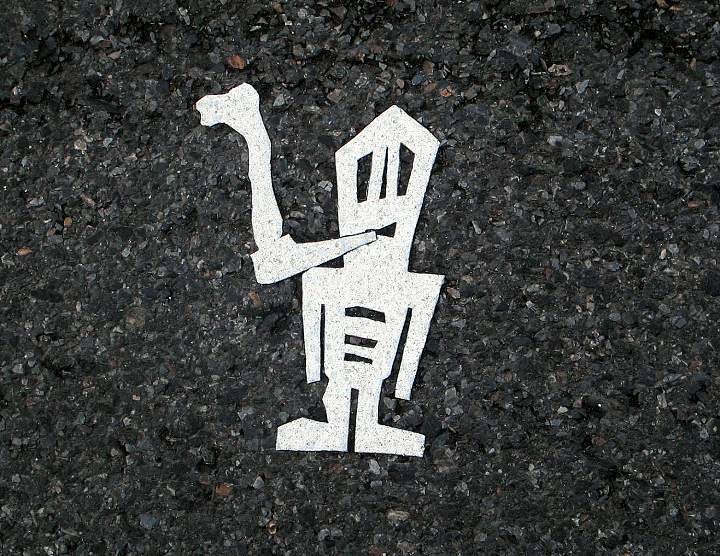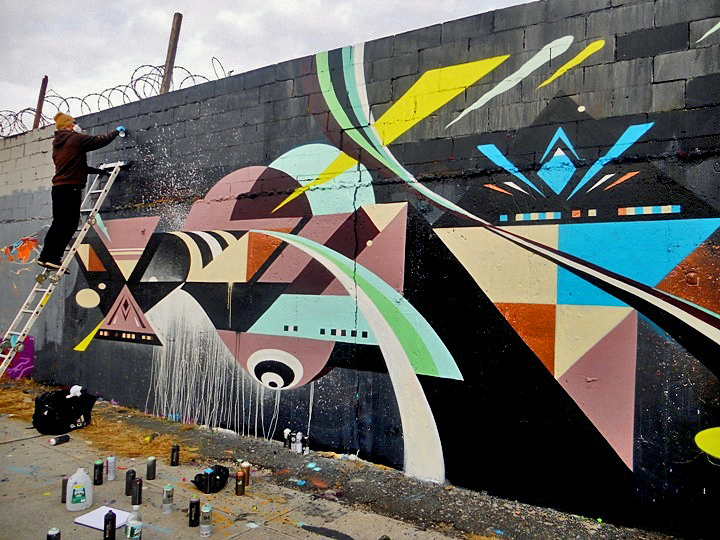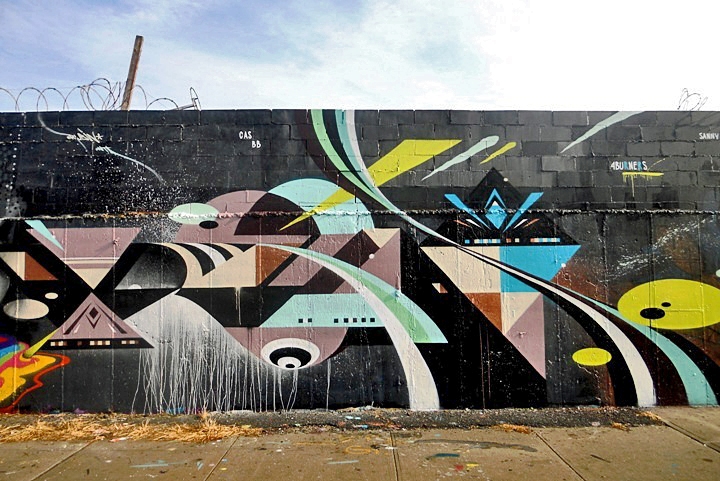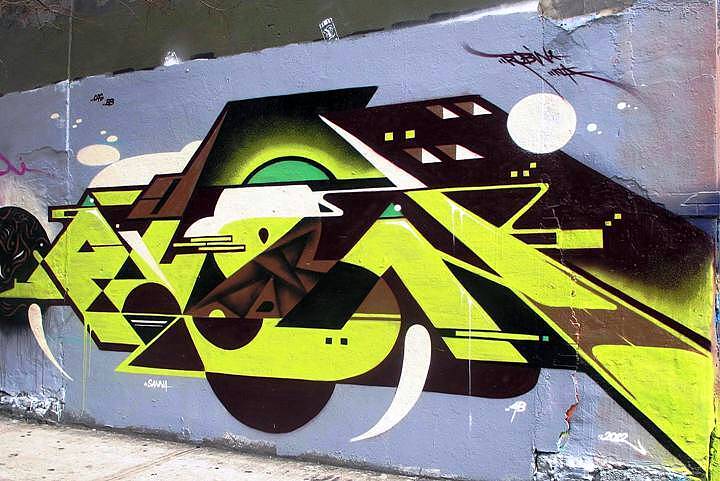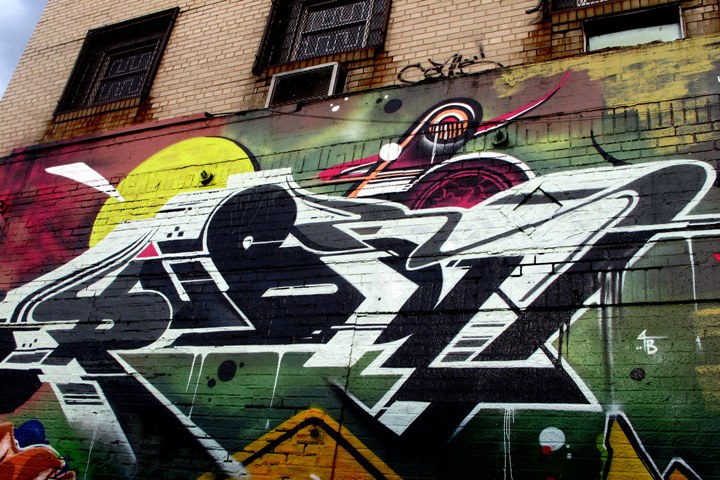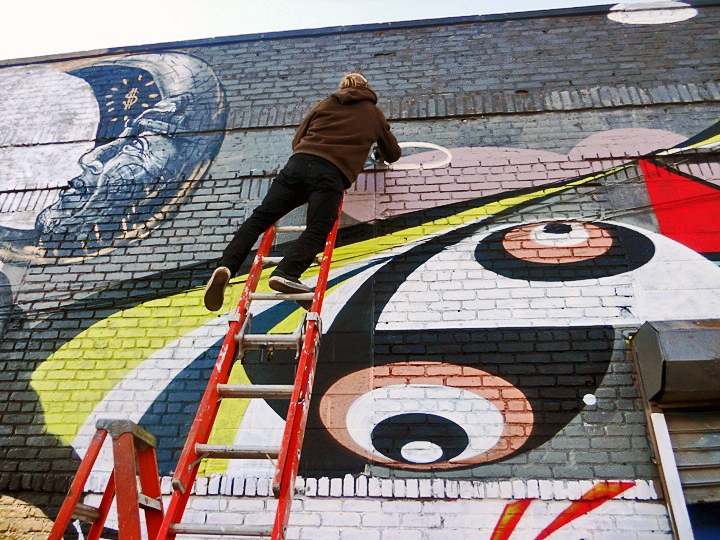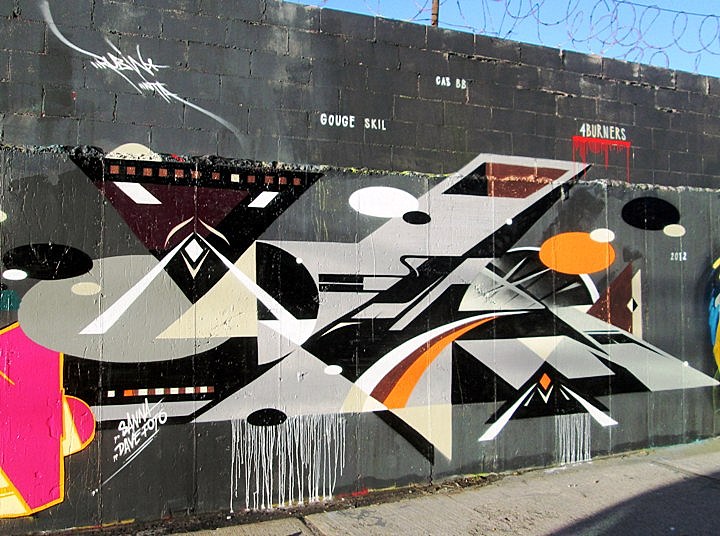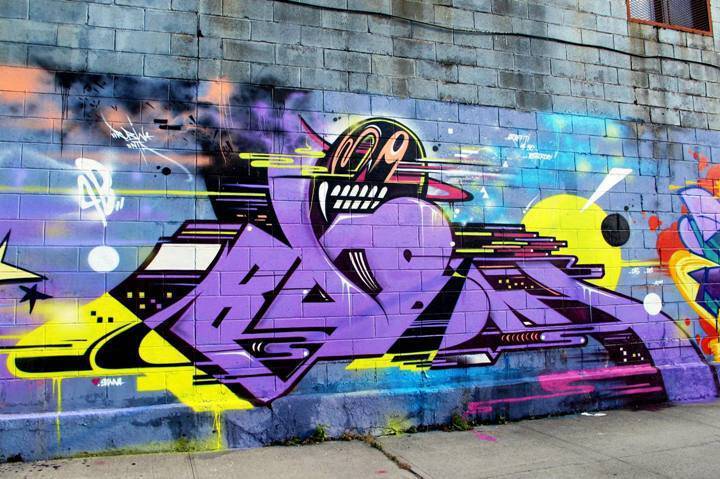
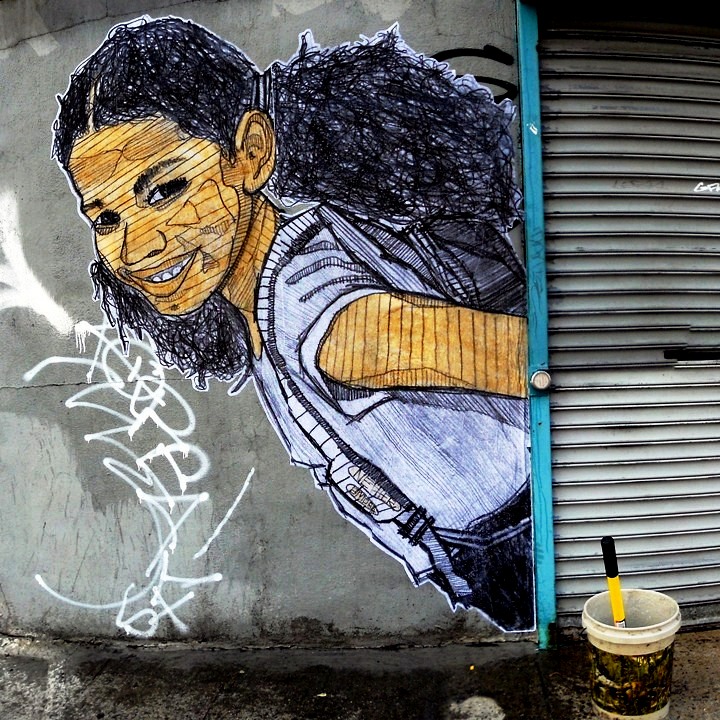
This is the sixth in a series of posts of images of girls — and women — who grace New York City’s public spaces:

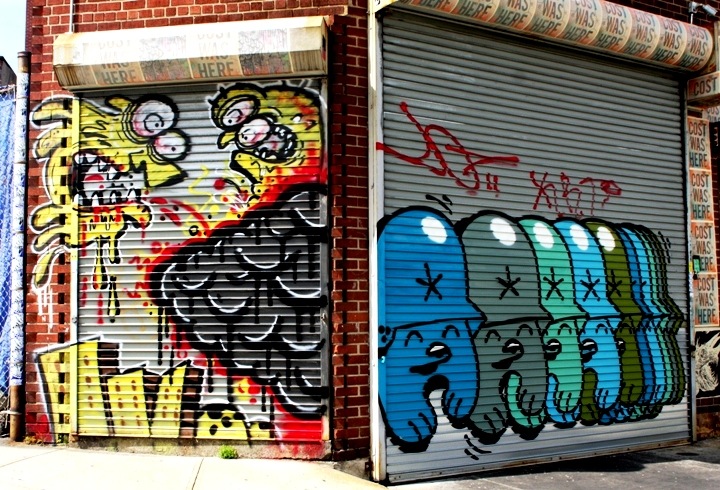
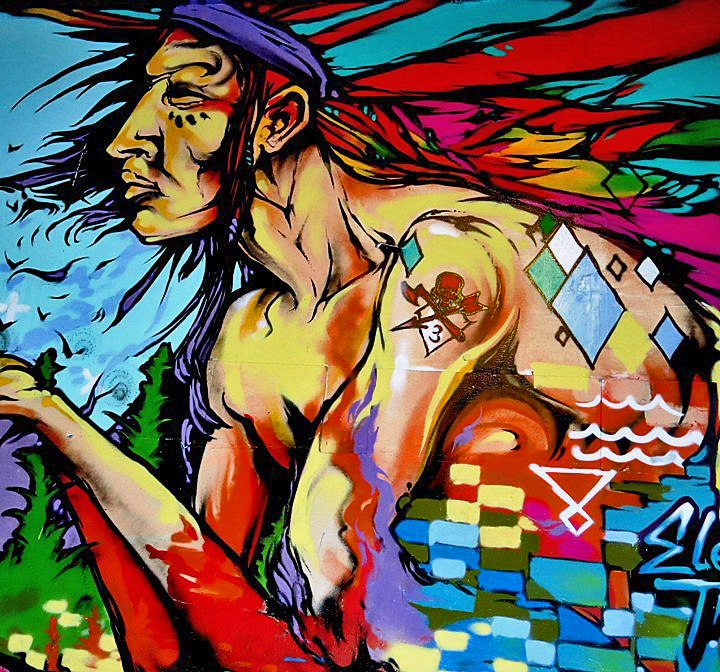
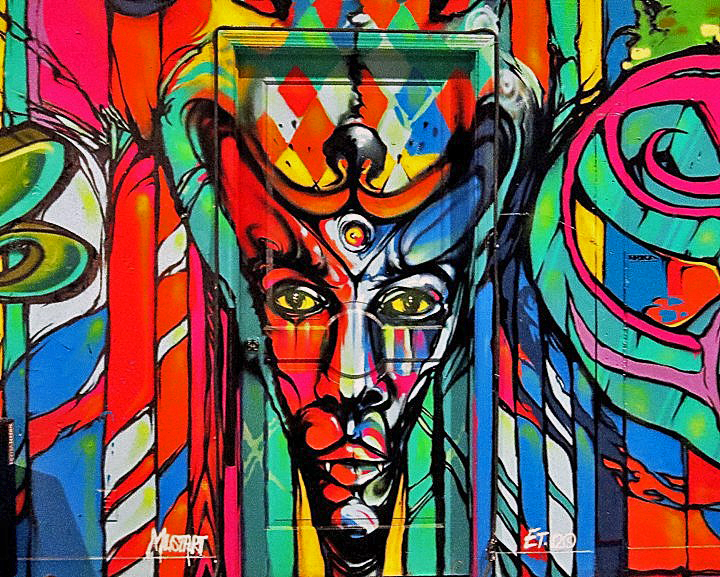
Los Angeles native Tristan Eaton in Williamsburg, Brooklyn

"Tristan Eaton street art"

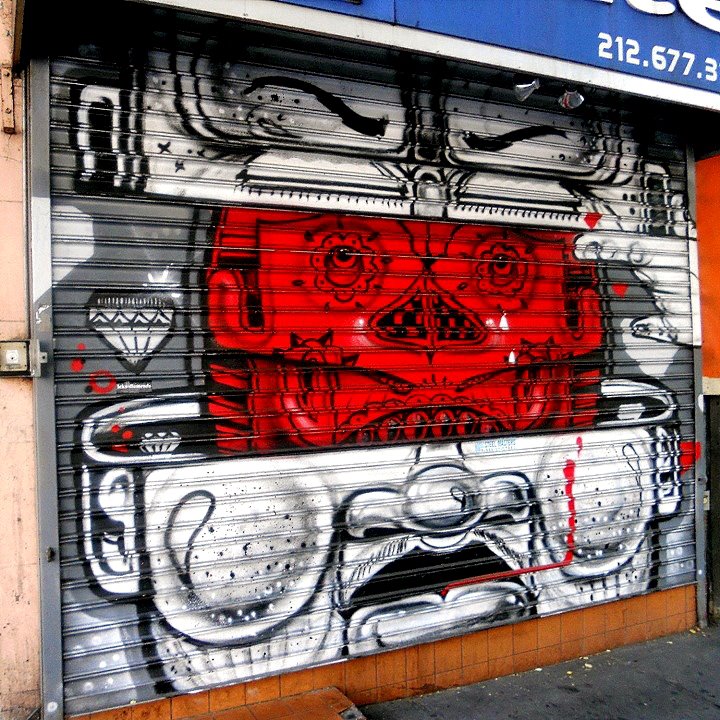
 Tokyo native Lady Aiko in Washington Heights, Manhattan

"Lady Aiko"

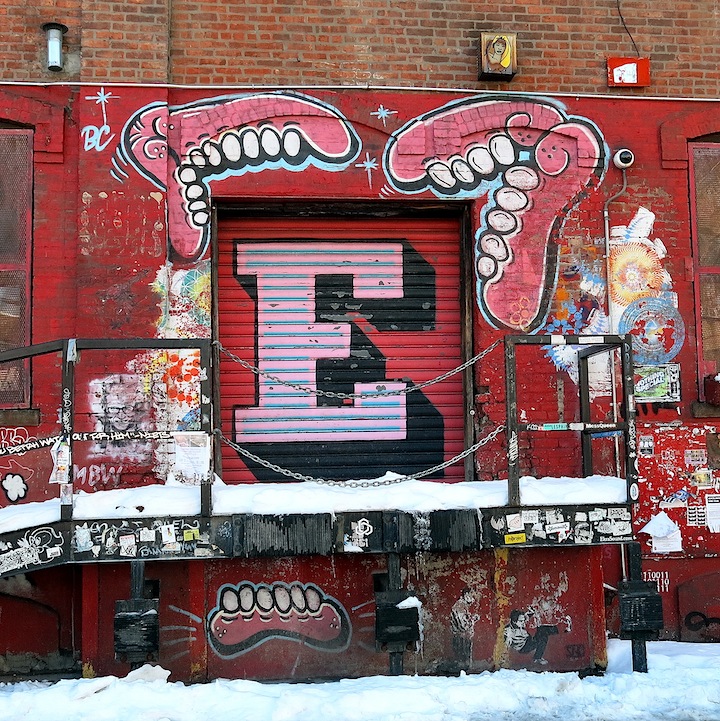
Brooklyn-based Gilf! at Bushwick Five Points

"Gilf! street art"

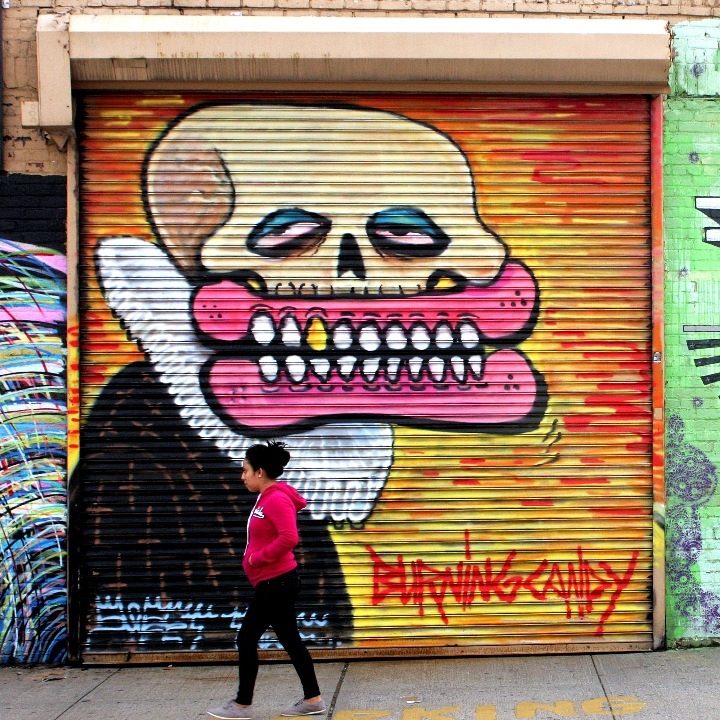
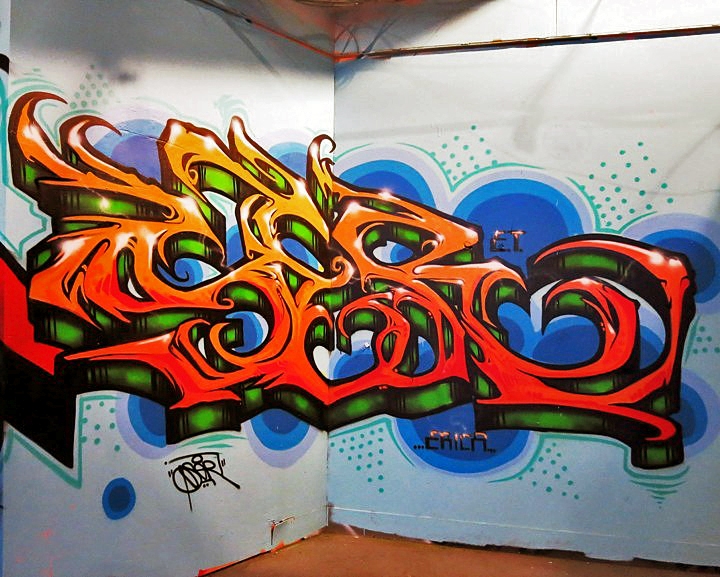
The legendary London-based Inkie at Bushwick Five Points

 Mexico City-based artist Paola Beck at Bushwick Five Points

"Paola Beck art"

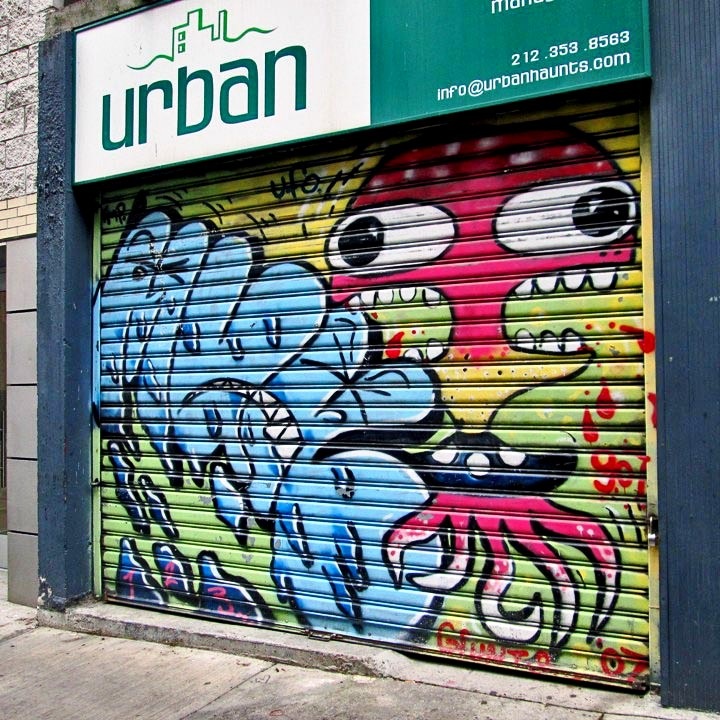
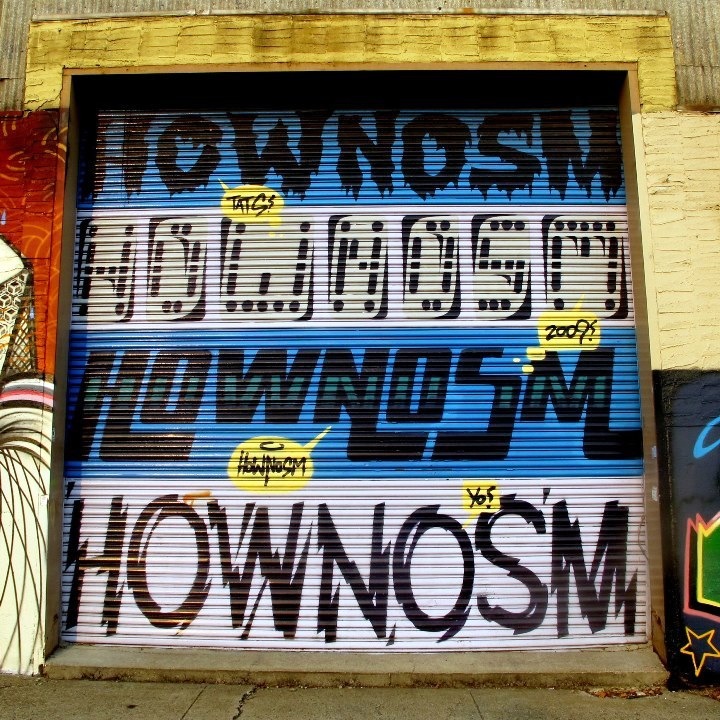
Colombia native Lorenzo Masnah in Williamsburg, Brooklyn

"Lorenzo Masnah street art"

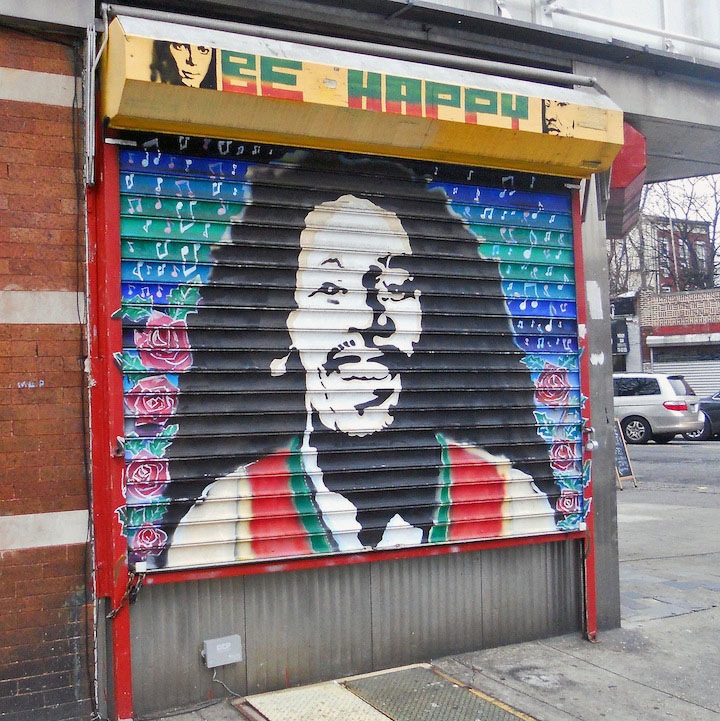
 Bronx-based artist Sien in Red Hook, Brooklyn

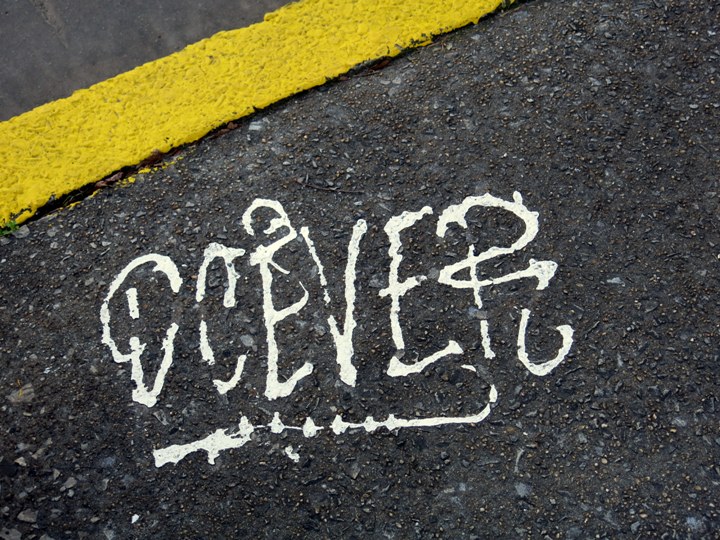
The wonderfully talented ND’A and OverUnder in the East Village

"ND'A and OverUnder street art"

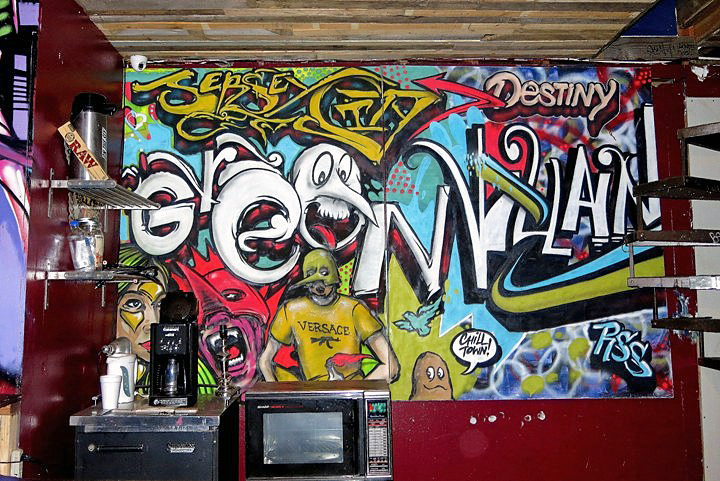
Photos of Tristan Eaton, Gilf!, Paola Beck & Sien by Lois Stavsky; Lady Aiko, Lorenzo Masnah and OverUnder & ND’A by Lenny Collado; Inkie by Tara Murray


{ 0 comments }

"cortes graffiti"

NYC-based painter and illustrator Christian Cortes has been increasingly exploring combinations of graffiti typography with surrealism, abstraction, South American iconography and New York City culture. 

Your extraordinary artwork has graced the walls of 5Pointz for years. Where else have you gotten up?

I’ve painted in France, Germany, Spain, Japan, Ecuador, the Dominican Republic and in Puerto Rico. I’ve also gotten up in Seattle, Miami and Fort Lauderdale. And here in NYC, I’ve recently painted in the Bronx.
  
Any favorite place?
 
Probably Puerto Rico. I had many Puerto Rican friends as a teenager, and I feel a strong connection between NYC and Puerto Rico.
  
When did you first start getting up in public spaces?
 
I was in 7th grade when I began paying close attention to what was happening on the 7 train, on rooftops and along the 59th Street Bridge. Soon afterwards I was bombing those surfaces. I was most active on the streets – as Waqs A3crew– between 1990 -1995 piecing. But then I took a ten-year break.
 
Do you have a formal art education?
 
I attended the High School of Art and Design and I began fine art studies at three different colleges. But I dropped out of all of them, as I became increasingly involved in my own work.
 
 
What kind of work were you doing?
 
I was doing lots of commercial work such as record covers, backdrops for videos and steady commissions for rap groups. Among my projects was a video for Jeru the Damaja. This was ideal work for me, as I’ve always felt strongly connected to musicians. When I hit a wall with other artists, it’s like we’re all making music!
 
What got you back into painting on the streets?
 
5Pointz – for sure! Also traveling and the Internet. I share much of what I do on YouTube these days. I feel a responsibility towards the younger writers, and I love the interaction with them.
 
Have you any advice for young artists?
 
Aspiring artists need to learn the value of discipline. Art doesn’t happen quickly or easily.
 
Who inspires you?
 
Mode 2 from France and I’ve developed a new appreciation for Seen. I’m also inspired by musicians – such as Sadat X of Brand Nubian and Eddie Vedder of Pearl Jam.
 
"Cortes graffiti"
 
Tell us something about your skulls. They surface in so many of your pieces.
 
Skulls have forever been a theme in all genres of art. When I first started painting skulls – while still in high school — I was suggesting that graffiti is dead. But now I think of skulls as a celebration of life through acknowledging death. And in relation to graffiti, the skulls have come to imply rebirth, as graff has been reborn.
 
What do you see as the future of graffiti?
 
I see it developing into more of a grass-roots movement. I see us developing our own events, along with smaller brands, as the huge brands have been dictating what kids see.
 
How do you feel about the street art vs. graffiti divide?
I don’t see them in conflict with one another. I see them simply as two separate genres. But I have difficulty understanding, for example, the Banksy phenomenon.
 
"Cortes graffiti"
 
What’s next?
 
More traveling, more black book videos, more tutorial videos and more walls. I’m planning to paint next in Brooklyn and I’m starting something new at 5Pointz. Next month I will be heading down to Miami for Art Basel.
 
Good luck! ‘sounds great!
 
Photos of Cortes at 5Pointz by Dani Mozeson;  in the Bronx by Lois Stavsky and painting in the Bronx by Lenny Collado

{ 0 comments }

"Sofia Maldonado collaborative street art mural"

This past weekend, Sofia Maldonado, one of our favorite artists, collaborated with the Bronx Museum’s Teen Council alumni and Jerry Otero’s Cre8tive YouTH*ink to fashion a mural celebrating the Bronx Museum’s 40th anniversary and its free admission policy.  The elegant mural can be seen on the exterior of the Andrew Freedman Home at 1125 Grand Concourse. Here are some more images:

Photos by Lenny Collado with special thanks to Sofia Maldonado, Jerry Otero aka Mista OH, Robin Cembalest of ARTnews and Miriam D. Tabb & Hannie Chia of the Bronx Museum.

{ 2 comments }

Speaking with Stik

October 19, 2012

"Stik on Brooklyn rooftop"

One of London’s best-known and most active street artists, Stik has been creating his elegantly stark stik characters for over ten years.  On his recent trip to New York City, Stik found a home for his Stik people up in the Bronx and at Bushwick Five Points.  We were delighted to have the opportunity to pose a few questions to him:

When was Stik born?

In the early part of the century.

Who is he/she/it?

My little meditations…my way of transforming the complex into the simple.  Stik is a loud whisper.

Why did you decide to get Stik up on walls and share him with others?

I wanted to keep him safe. I’ve always been drawing living things, and I didn’t want them to stay on paper. I feel they are safer on the streets.   And it is also my signal to the world that I exist – somewhat in the vein of a graffiti artist. The street is like a theatre. When I get up there, I join the dialog.  My art becomes my voice.

"Stik in the Bronx"

How do you decide which walls to hit?

When I walk by a column or wall, I try to imagine Stik there.  I like the idea of giving a personality to a wall that will be visible to others.

What about the risky aspects of what you do – both physically and legally?  Why are you willing to take such risks?

It’s a matter of putting my mark on the land. And when I’m painting, I feel connected to the wall. I feel safe. It’s my sense of entitlement and ownership. There is also a social purpose to what I am doing. Advertisers tag public spaces to push consumerism – it’s almost as though they can buy and sell our lives. People are the products. I’m pushing aesthetics. I feel as though graffiti writers get the rap for the frustration folks feel towards the advertisers.

What if a major corporation were to approach you and ask you for their use of Stik for commercial purposes?

That has already happened.  My answer is, “No.” I will not allow companies to use my image to sell products.

"Stik street art"

How have folks responded to Stik?

They love him.  They respond to his simplicity.  I like watching people’s reactions to Stik from my studio window.

Tell us something about your style.

It’s always been simple, and it seems to be getting simpler as time passes. I appreciate simplicity.

What are your feelings about street art in gallery settings? Are you comfortable creating Stik on canvas or paper and selling him?

I keep the street street and the gallery gallery.  The gallery can be a whore house, but it’s an honest living.

What brought you to NYC?

I wanted to meet people in New York. I want to find out what real New Yorkers are like. I want NYC to fess up and show me its vulnerability.

Has it? What do you think of NYC?

It’s still a big scary beast of a city, but if you’re lucky, it will roll over and let you tickle its tummy.

What’s ahead?

I have a couple of big social projects coming up in the UK and other countries.  And I plan to return to New York in the near future.

"stik on Bushwick rooftop"

That sounds great! We are already looking forward to your next visit.

Photos by Lenny Collado, Dani Mozeson and Sara Mozeson

{ 2 comments }

Deemed “The People’s Picasso” back home in Salvador, Brazil, Bel Borba has been transforming his country’s visual landscape for 35 years. For the past month, he has been here in New York City creating artwork — with Burt Sun and André Costantini — from recycled and found materials in different locations throughout the city. This past weekend, these pieces were brought together for a final installation in Times Square. Here are some images captured yesterday:

"Bel Borba street art"

"Bel Borba street art sculpture"

"Bel Borba street art installation"

"Bel Borba street art"

Bel Borba is also the subject of a documentary, Bel Borba Aqui, on view through tomorrow at the Film Forum on West Houston Street. 

Photos by Tara Murray

{ 0 comments }

Within the last few weeks over a dozen first-rate pieces have surfaced on and off Bushwick’s Morgan Avenue.  Here are a few images we’ve captured:

Phetus and Such

"Phetus and Such"

Yes1 at work

Pase

"Pase graffiti"

Bekit

Jew

D-Virus from Holland

Jem

Wane aka Knows

"Wane graffiti"

Vein

Clark Fly ID

Shank aka Demote and Dero

Photos by Lenny Collado and Dani Mozeson

{ 0 comments }

"Rmix street art"

We first met David RIMX Sepulveda at this year’s Afropunk Festival and at once fell in love with his aesthetic.  Soon after he completed his wondrous wall at Bushwick Five Points, we met up with him again and posed a few questions:

When did you start writing?

I started back in ’97. I was 16.

"RMIX street art"

What inspired you to get up?

I was attending an art high school, the Central High School of Visual Arts in Santurce, PR and my friends and I formed a crew.  I grew up in the projects of San Juan, so tagging was the natural thing to do.

Have you any preferred surfaces these days?

I like big walls and highways because I like to share my art with as many people as possible.

Have you any favorite artists who influenced you?

I love Rembrandt and the Spanish painter, Joaquín Sorolla.  My favorite Puerto Rican artists include: Lorenzo Homar, Rafael Tufiño, Antonio Martorell and José Alicia. I also love the Mexican artists Diego Rivera and Gabriel Orozco.

What about graffiti and street artists? Any favorites?

I have many. Among them are: Sen2, Ske and Rek, Sex, San and Dems from Spain and Sego from Mexico.

"Rimx graffiti"

Have you any formal art training beyond high school?

Yes. I studied art in college in Puerto Rico at la Escuela de Artes Plásticas. I’m trained as a classical painter.

Do you feel art school helped you develop your craft?

Definitely!  And learning about the history of art was important to me.

Do you tend to paint alone or with crews?

Both. I paint alone, and I also paint with El CORO, ADM and APC.

"RIMX mural art"

Where have you painted?

I’ve painted in Puerto Rico, Miami, Barcelona, Granada, Japan and New York.

Have you a favorite place to paint?

Puerto Rico, because of the weather.  But I like the scale of the buildings in New York City.

What about galleries? Have you exhibited your work in galleries?

I’ve exhibited in galleries in New York City, Miami, Paris and Japan.

"Rimx art"

 What percent of your time is devoted to art?

Almost all of it. During the day, I work at a tattoo shop.

How do you feel about the role of the Internet in all of this?

It’s great. It gets our art out to the world.

What are your thoughts on the so-called street art/graffiti divide?

I think of graffiti writers as purists. They gain their respect by being everywhere and by hitting hot spots. Street artists are more focused on ideas. But the two disciplines will merge.

What’s ahead?

More projects that engage more people. I want to continue to integrate everyday people into my work.

That sounds great! We are looking forward to seeing more of your artwork on the streets of NYC!

"Rimx art"

Photos by Lenny Collado, Tara Murray and courtesy of the artist.

{ 0 comments }

"Bushwick Five Points street art"

Within the past year, the walls along Scott, Troutman and St. Nicholas in Bushwick, Brooklyn have evolved into a vibrantly intriguing outdoor gallery. We recently had the opportunity to pose some questions to its curator, Joe Ficalora.

What inspired you to transform this neighborhood into such a wonderful open-air gallery?

I’ve lived in this neighborhood all my life.  Growing up here, I was not even allowed to play outside. The delis were drug spots, and the surrounding blocks teemed with prostitutes and junkies. I was continually exposed to hookers and gangs. My dad was murdered right down the block as he was leaving the L train Jefferson Avenue station. As artists and creative types began moving into the neighborhood, things changed. And after my mother’s death, I was moved to transform the cold industrial aura of this area into something that would revive me and provide the artists with a space to showcase their talents.  I am trying to create an environment that I couldn’t get as a child.

"Icy and Sot street art"

Wow! You are certainly succeeding. Bushwick Five Points has become one of our favorite spots in NYC! How do you manage to have access to so many walls?

Some are family-owned and others I’ve negotiated with their owners. Once these building owners see a finished wall, it is not difficult for them to recognize that the artwork surfacing here is far more appealing than random tags and unspeakable words!

We’ve noticed and love just how varied the artwork is here – in terms of both artists’ backgrounds and styles.  Have you any favorites?

I love them all, and I love the mix! Each piece is special to me. I love watching everything from the progress of the artists to the reactions of the passersby.

"Never street art"

How do you decide which artists to feature on the walls here at Bushwick Five Points?

I look for passion and integrity. I always meet the artist first, and we walk through the neighborhood together.  I show them the walls, and I tell them a bit about the other artists who’ve painted here. If I like the artist’s work and feel right about the artist, it’s a go!

"The Yok and Sheryo street art"

How do you decide which walls go to which artists?

We discuss which spaces are available and the artist then chooses his or her canvas.

Any thoughts about the graffiti/street art divide?

I admire the graffiti that has been surfacing in the vicinity of Morgan Avenue. But I love the varieties of expression that street art offers.

"Dan Witz street art"

How do you feel about the role of the Internet in all this?

I think it’s beautiful. We all get to see and appreciate what’s surfacing throughout the world.

"Hellbent street art"

What’s ahead?

I’m not looking long-term. I’m enjoying what I’m doing now. And I’d love to keep doing what I’m doing the rest of my life!

"OverUnder and LNY street art"

That sounds great! We are so glad you are doing what you are doing.

"Jim Avignon street art"

Special thanks to Bodega Wine Bar for the delicious complimentary snacks we were served while interviewing Joe.

Images beginning with top: Nick Walker, Danielle Mastrion and Concrete Jungle, photo by Dani Mozeson; Icy and Sot, photo by Lenny Collado; Priscila De Carvalho, Maria Berrio & Miriam Castillo, photo by Lois Stavsky; Never, photo by Lois Stavsky; The Yok and Sheryo, photo by Dani Mozeson; Rimx, photo by Dani Mozeson; Dan Witz, photo by Dani Mozeson; Hellbent, photo by Tara Murray; OverUnder and LNY, photo by Dani Mozeson; Jim Avignon, photo by Lois Stavsky

{ 9 comments }

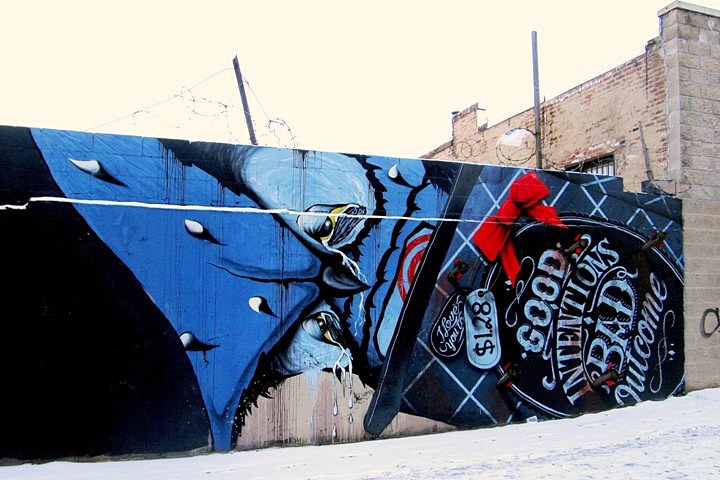
With a wide range of playful and provocative performances and installations, the 8th annual Art in Odd Places Festival is turning Manhattan’s 14th Street into NYC’s most uncoventional open-air gallery.  Here is a small sampling of what we saw:

Katrina De Wees, Forsenga

Michael Paul Britto, the Suspect War

Tomashi Jackson, High Tide (Red Handed)

"Tomashi Jackson"

 Anabella Lenzu, Ilusiones de Percantas (Women’s Dreams)

 Lizzie Scott, Styrene Lounge 

See Me Tell Me, Graffiti Fashion Show

Rory Golden, No Reenactments without Prior Permission

"Rory Golden"

Featuring over 100 artists’ projects from Avenue C to the East River, this year’s AiOP continues to reclaim public space along 14th Street through October 15th.

Photos by Lenny Collado, Dani Mozeson, Tara Murray and Lois Stavsky
{ 0 comments }

Speaking with KR.ONE

October 4, 2012

As passionate today as he was back in the 70’s when he was making his mark on a range of public surfaces, Louie Gasparro aka KR.ONE recently shared some of his experiences and impressions of the ever-evolving graffiti culture with us.

"KR.ONE graffiti"

When and where did you start getting up?

I started getting up in 1977 in Astoria, Queens. I was part of what is considered the third wave of original NYC graffiti writers.

Why did you begin writing?

We were trying to be somebodies in a world of nobodies. There was no money. It was our way of advertising ourselves…of getting our names out in a big way.  The pieces and tags we did were essentially ads that we didn’t have to pay for. And we loved that it was so underground. We had our own way of saying things that outsiders didn’t understand. It was cool.

"KR.ONE graffiti"

 Any formal training?

Nothing formal. I was inspired by comics, some how-to-books, hard rock album covers and television cartoons.  And I used to cut out of my school and hang out at the High School of Art and Design. Through Fome 1, I met writers such as Erni (Paze), Doze Green, Lady Pink, Daze and Seen TC5. But I’ve been drawing since I was a little kid – everything from hot rods to the members of the band Kiss. Once, the principal walked into my classroom when I was drawing a caricature of Gene Simmons with his tongue out spitting blood.  He looked at the piece, and I thought, “Oh my God!”  But he said he liked it and decided to hang it up in the hallway. I was amazed at his response.

"KR.ONE graffiti on canvas"

With whom did you write? Any influences?

TSS (The Super Squad), TKC (The Killer Crew), RTW (Rolling Thunder Writers),  IRT (Invading Rapid Transit) and  NWA (New Wave Artists) . I wrote with KB, Fome1, Erni,  Sick Nick, Mace, Robert 78 and RCA (Reckless Car Artist). I was influenced by Don1, Dean, KB, Son1, Roto1 and Zephyr.

Have you any particular memory from back in the days?  

I was almost killed in the M yard in 1980. There is a bus depot nearby, and there were always bus drivers hanging out. They would usually just chill, but one time as I was writing and piecing with Fome1, they began throwing bottles in our direction. The glass was shattering around us as they laughed. We took cover under the trains. Suddenly the train began to move, and I was almost hit by an oncoming motor.

"KR.ONE graffiti"

 Wow! What were your preferred surfaces back then?

I liked painting on everything. I started on paper, then walls, then trains. And when that era was over for me in 1983, it was back to walls and paper and then canvasses.

How do you feel about graffiti’s evolution? Do you follow the current scene? Any favorites?

It was all about New York City. And then it was the whole world. It went from dudes writing their names in simplistic plain letters through a metamorphosis of styles and a global expansion. It’s truly amazing.  Favorites?  Some of my favorites from today are actually European-based artists such as Swet from Denmark, Daim from Germany, Mode2 from Paris and Uor and Rife from Italy.  I still really dig what Daze, Part, Ces, Kaves and Whisper are still doing, as well.

 How do you feel about the so-called street-art and graffiti divide?

Those are just categories that do just that — they divide. It serves as a way to market both.  Street artists and graff writers have their distinct styles and mindsets. Sometimes their differences are subtle; sometimes they’re not. But both come from the streets.

What do you see as the future of graffiti? How do you feel about the movement of graffiti and street art into galleries and museums?

Graffiti and street art deserve to be in galleries and museums. There should be entire museums dedicated to urban arts.  Scholars realize what’s going on and can see that this movement  — that began largely by children — has become a true phenomena.  What essentially started in the streets has become the biggest movement in art history.

"KR.ONE graffiti"

What are you up to these days?

Since my last show, Bringer Of The Kolorstorm, this past March, I’ve been creating new works for my new solo show this coming Saturday, October 6th.  This latest offering, A Fistful of Stars, is a selection of illustrations, mixed media pieces and canvas work. I return to my old stomping ground in Long Island City at a place called C.A.W.S. (Cause Art Will Survive).

"KR.One exhibit"

How do you feel about the role of the Internet in all this?

The Internet is the cyber bench to the graffiti world…the window to the whole world.  You can be sitting in a place like Milwaukee and see a piece that was just painted in Scandinavia. It’s an instant get-up — a world-wide instant get-up. I remember when we would wait all day just to see a certain piece pass by on a train. I remember waiting on a train station for a Dondi and Lee piece to roll by, so that I could just look at it and absorb it. I don’t have to do that today.

"KR.ONE Close-up"

 What’s ahead?

I plan to stay as creative as possible and continue to share my work with others.

 Interview by Lenny Collado; Photos by Tara Murray, Lois Stavsky and courtesy of the artist
{ 2 comments }