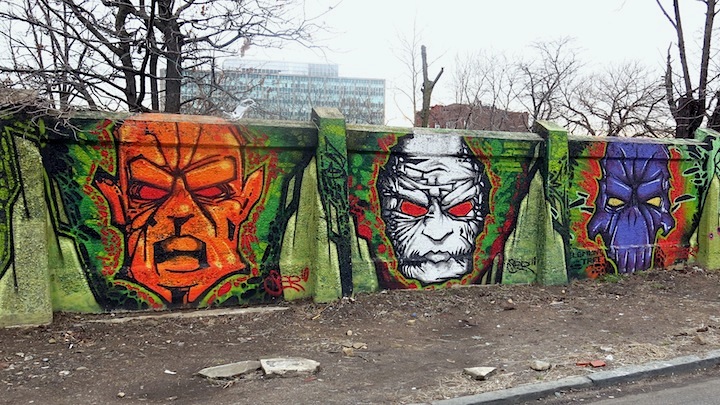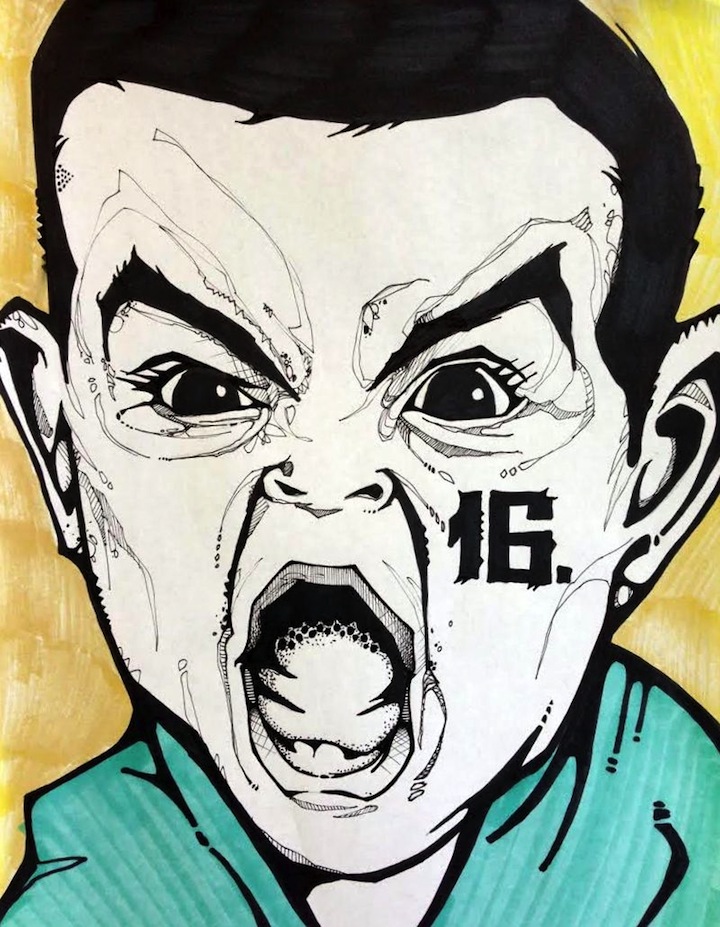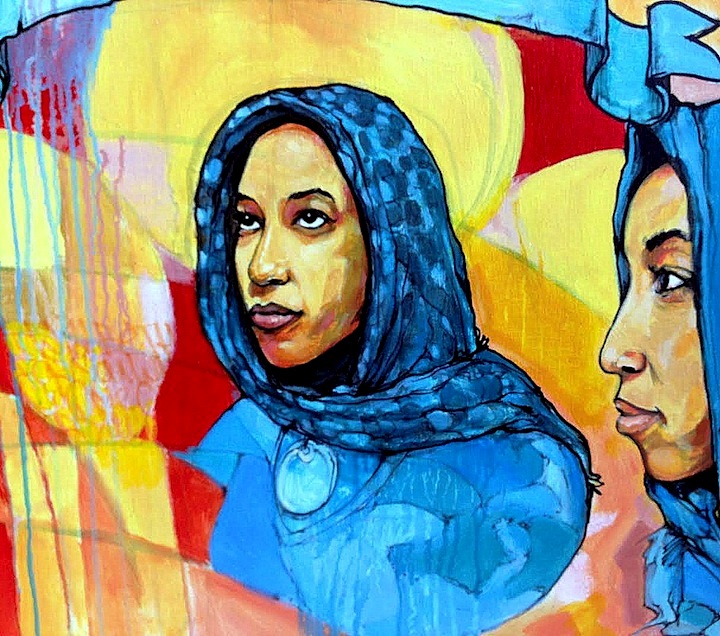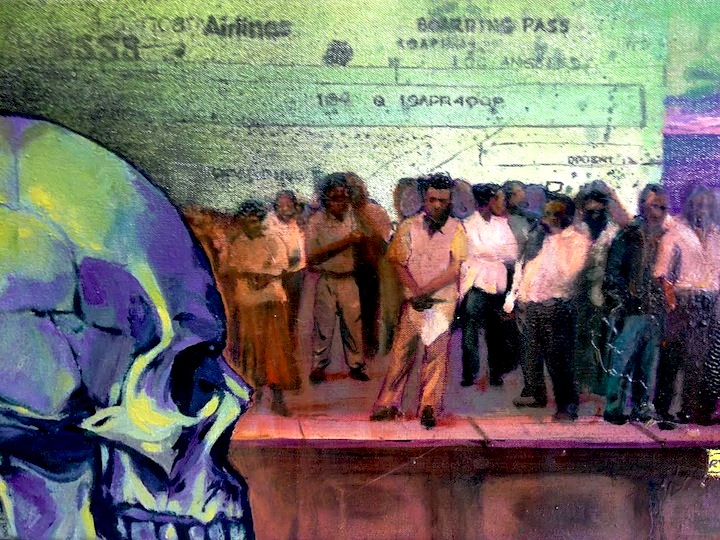
graffiti

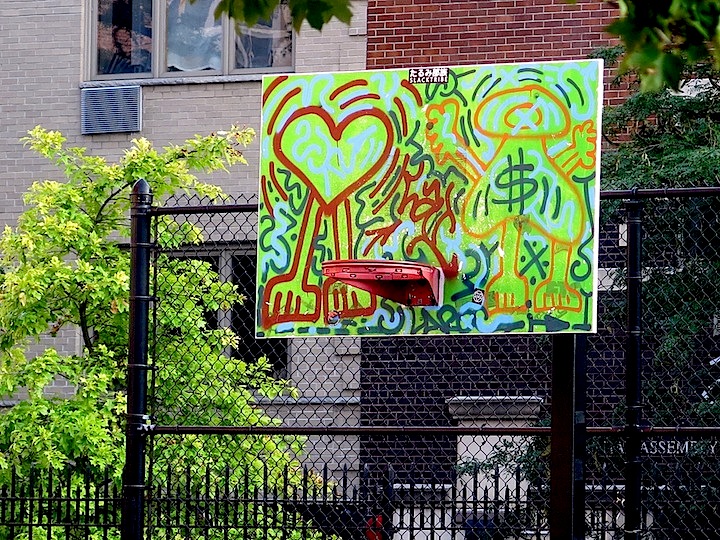
"Keith Haring and LA2"

Based on the Lower East Side, LA2 creates bold, brightly-colored energetic works on a range of surfaces. Befriended by the legendary Keith Haring as a young teen, LA2 is best-known for his distinct tag that has earned him accolades both on the streets and in galleries and museums world-wide.  I recently had the opportunity to interview him:

When and where did you first start tagging up?

I was 10 when I first started tagging. The street was my canvas.  I lived on the Lower East Side, and so those were the streets that I hit.

Who or what inspired you at the time?

I noticed kids at the Boys Club and in school tagging up. And I was inspired by Lee Quinones’s work that I saw on subway cars and on walls in my neighborhood.
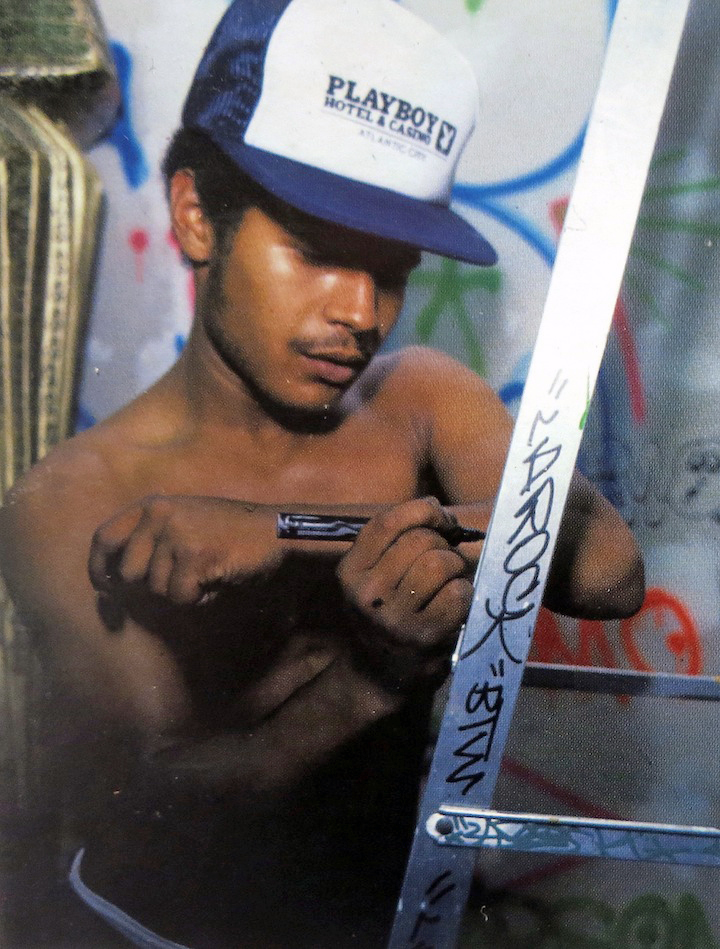
LA2

Did you tag alone or did you work with crews back in the day?

It didn’t matter.  I just wanted to tag up.  I worked mostly alone, but I did get up with TNS (The Non Stoppers) and El 3 (RIP), who later died when he was electrocuted by the 3rd rail.

You went on to collaborate with Keith Haring.  How did you first meet Keith?

Keith was looking for me.  He had seen my tag and wanted to find me.  When Keith was working on a mural at Junior High School 22, Richie SOE came to my house and told me that Keith wants to meet me, and so I went over there.

How did Keith Haring’s work change after meeting you?

Before he met me, he was doing mostly simple characters. After we began working together, his work became more energetic. And soon after Rock Hudson announced that he had AIDS, Keith came out of the closet, and his artwork took on a more sexual tone.
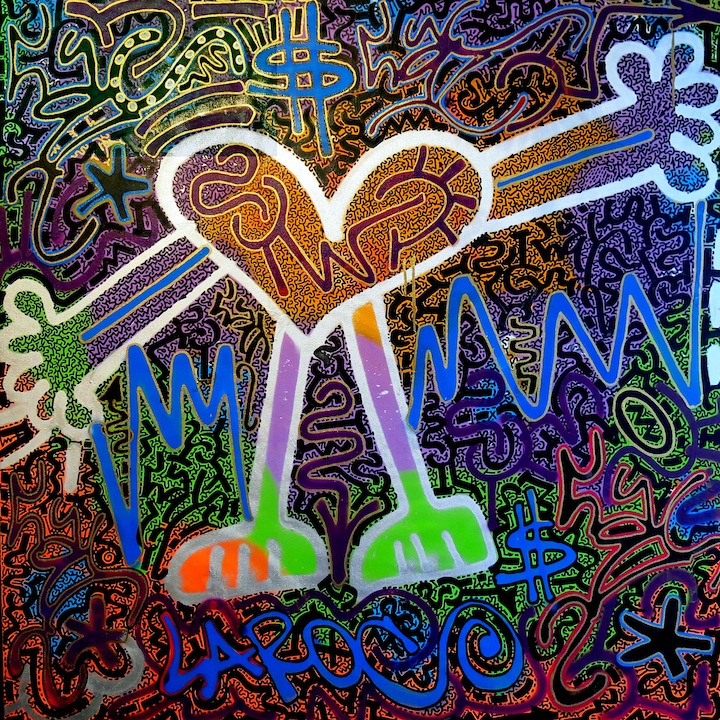
LA2 art

What was it like collaborating with Keith?

It was great.  I’ve always been fond of Keith as a person and as an artist.  We travelled to Europe together, and Keith made sure that I was paid what was due me.  I feel grateful to Keith, but not to the Keith Haring Foundation. But that’s another story.

Your artwork has been exhibited in galleries worldwide. How do you feel about the movement of graffiti and street art into galleries?

I think it’s great.  It’s a win-win for both galleries and artists. We artists have to make money to keep doing what we’re doing.

Any thoughts about the graffiti-street art divide?

There’s less and less of a divide.  After Keith Haring collaborated with me, the museums had no choice but to accept graffiti.  This past year, I became the first writer to paint in the Children’s Museum of the East End in the Hamptons.
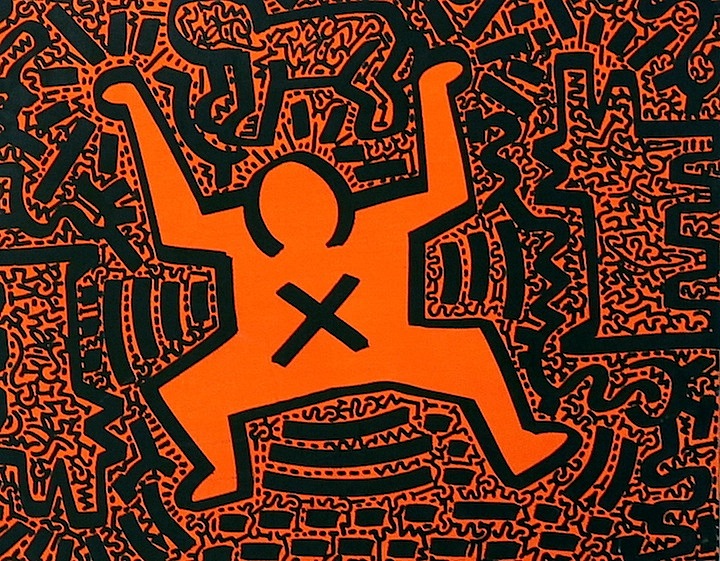
LA2

Who are some of your favorite artists?

They’re all dead.  Keith Haring, Andy Warhol, and Basquiat were my favorites.

Do you prefer working alone or collaborating with others?

I generally work alone.  But in addition to Keith Haring, I’ve collaborated with quite a few artists including Richard Hambleton, Kenny Scharf and my girlfriend’s daughter, Jasmin.  And when Stik was in from London this past fall, I collaborated with him.

How do you feel about the role of the Internet in all of this?

I think it’s great.  Since my girlfriend, Ramona, created the website, we’ve received invitations from galleries overseas in such countries as Italy and Germany.
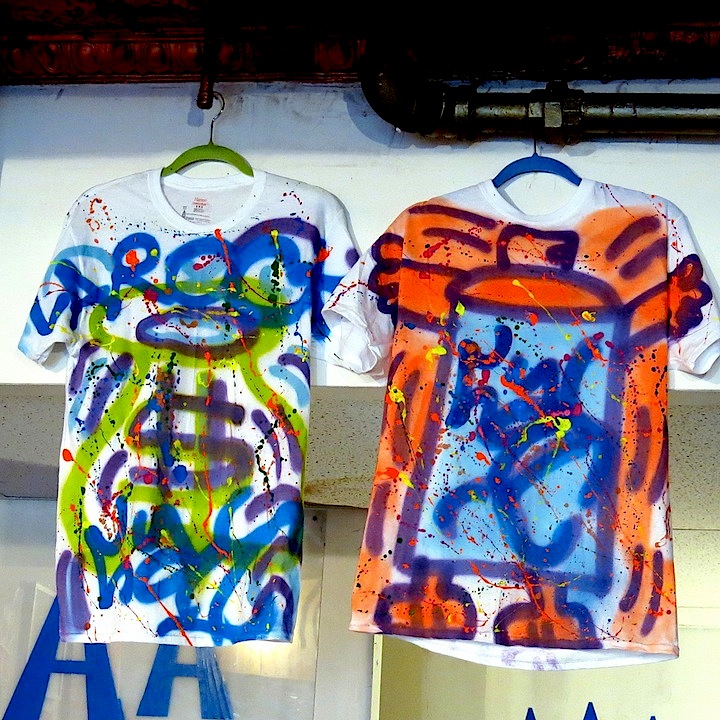
LA2

Do you have a formal art education?

No, I’m self-taught. I dropped out of Seward Park High School to travel with Keith Haring and help him establish his career. 

What is the riskiest thing you ever did?

Just getting my tag up is risky.  I’ve spent time in jail for that.  Whenever I take my dog, Nico, for a walk, I tag when he pees. And I’ve gotten locked up for that, along with Nico. He’s gotten locked up, too! 

What inspires your art?

It’s inspired by my emotions…the things I go through… my thoughts and feelings.  Creating art is how I express myself.
LA2

Do you work with a sketch in hand?

Never, it’s all straight out of my head.

Are you generally satisfied with your finished piece?

I’m always happy.  I love them all.

How has your work evolved through the years?

It has gotten more detailed.  There’s more line work and people tell me that it’s tighter.

What do you see as your role  — as an artist — in society?

My particular role is to educate kids on how to express their creativity in a healthy way.  They need to use the right materials and to cover their faces.  I developed health problems (COPD) by not protecting myself when painting.  I love lecturing kids and working with them. I will be doing a workshop with children this spring at the Angel Orensanz Center in conjunction with the Fridge Art Fair.
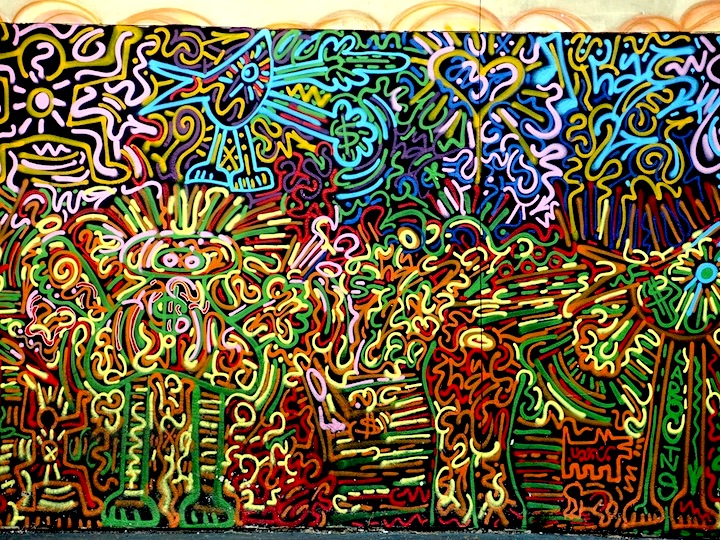
LA2

What do you see as the future of graffiti?

It’s going to become more and more valued as an art form.

The Europeans have always seemed to value it more than we have. Why do you suppose they are so much more receptive to graffiti than we here in the States are?

It’s because they appreciate art more, in general.  It’s always been that way. And on a personal level, Paul Kostabi sold my art in Italy 20 years ago, gaining the attention and appreciation of Europeans.

What’s ahead for you?

Traveling, exhibiting both here and overseas, educating the youth and continuing to become healthier.

Editor’s note: A selection of LA2’s work in on exhibit at City as Canvas: Graffiti Art from the Martin Wong Collection at the Museum of the City of New York. Curated by Sean Corcoran, it opens tomorrow, February 4, and continues through August 24.

Interview conducted and edited by Lois Stavsky;  first two photos — of LA2 collaborating with Keith Haring and of LA2 tagging — originally published in Keith Haring, Rizzoli — courtesy of LA2; all other photos by Dani Reyes Mozeson

{ 1 comment }

"Zimad and Meres"

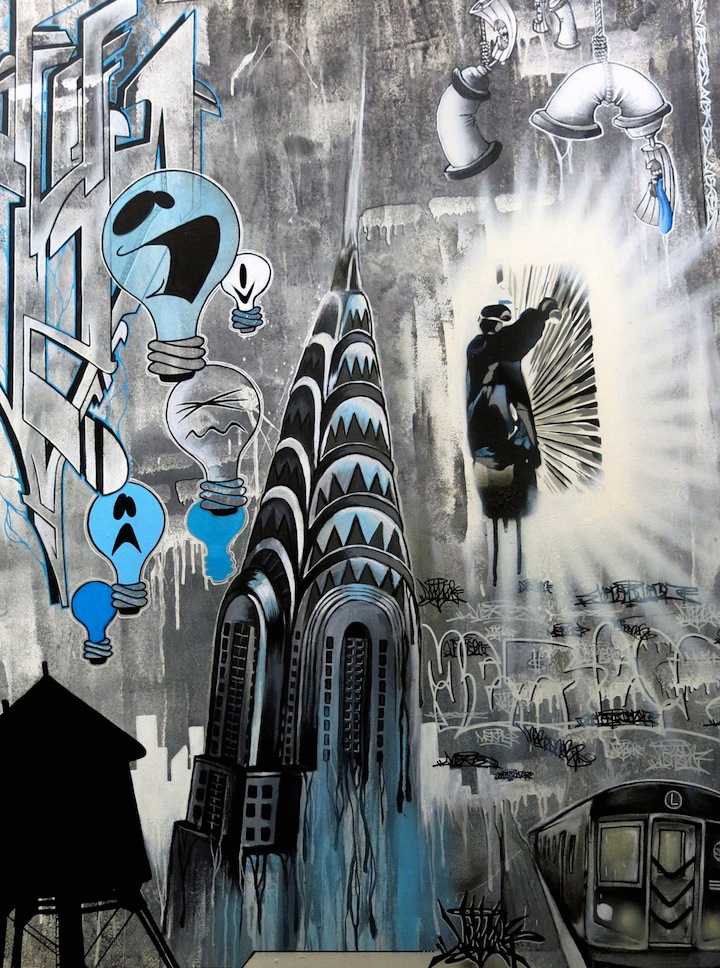
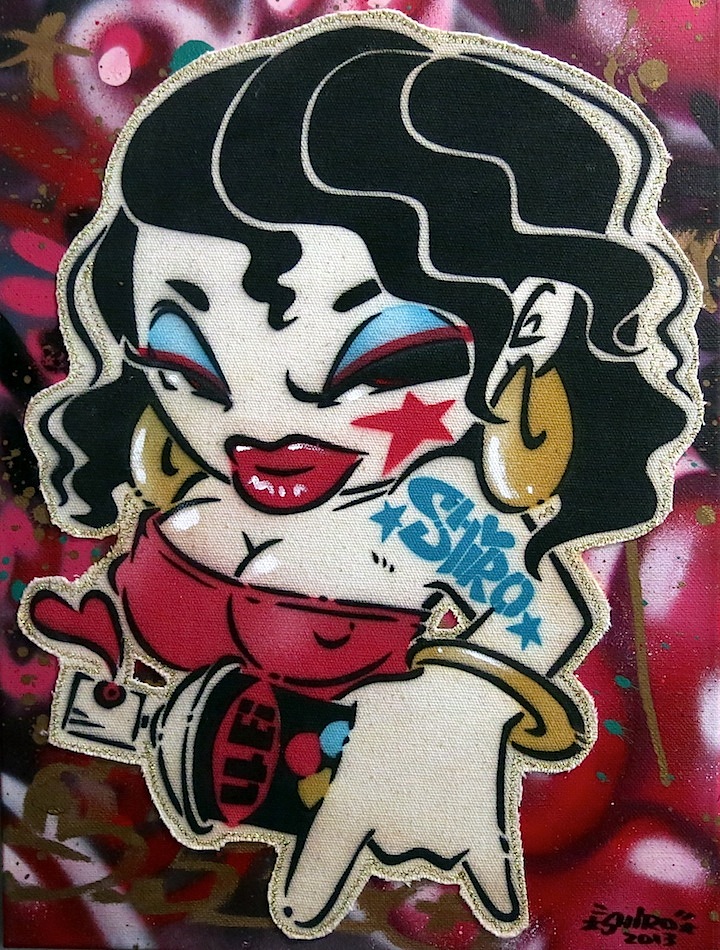
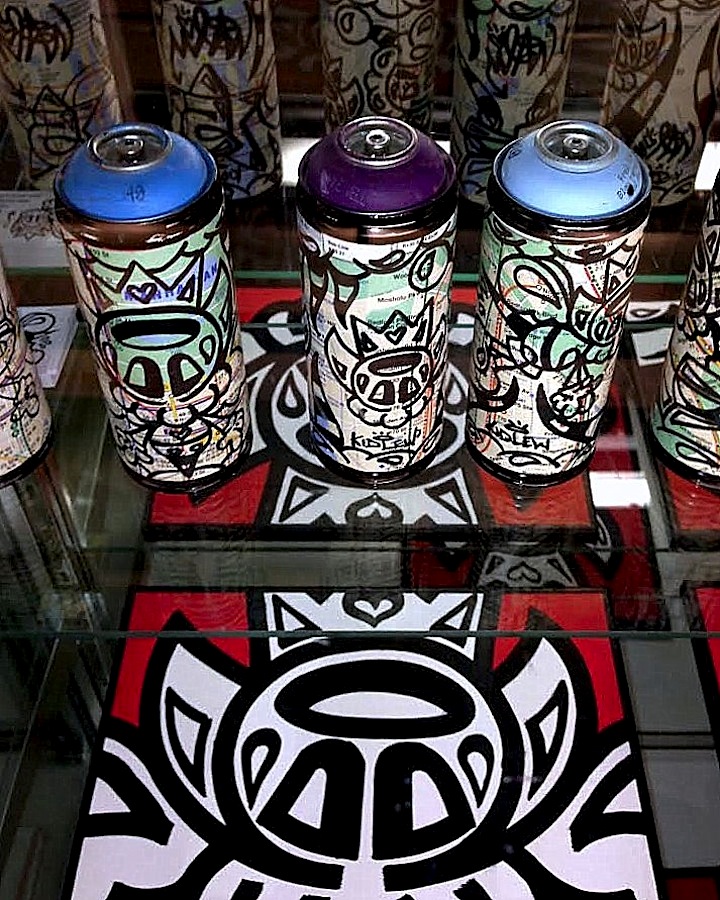
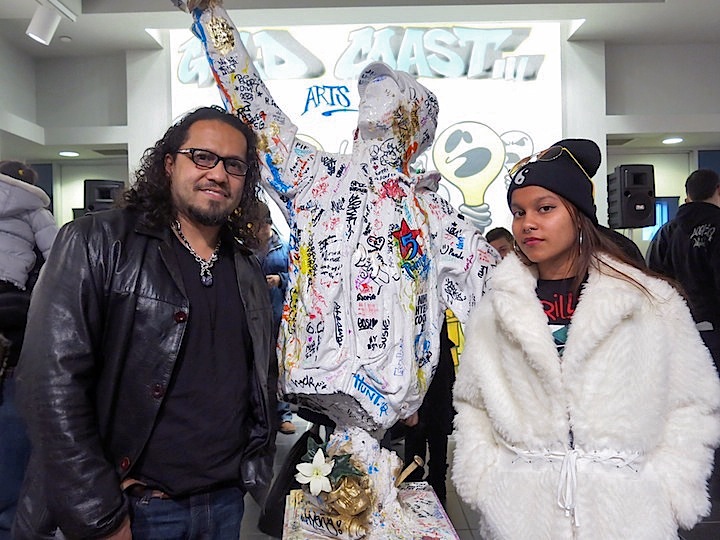
On exhibit through February at Great Neck’s Gold Coast Arts Center is WALL WORKS: The Art of Graffiti featuring works by 5Pointz (Rest in Power) curator and CEO Jonathan “Meres” Cohen and other artists who found a home at 5Pointz. Here’s a small sampling:

Meres

Meres

Shiro

Shiro

 See TF

"See tf"

Kid Lew

Kid-Lew

Hunt Rodriguez and daughter, close-up from sculpture, “Rest in Power, 5Pointz” (Click on link for video clip with full view)

"Hunt Rodriguez"

John Paul O’Grodnick

"John-Paul-O-Grodnick"

Zimad

Zimad

 First image of Zimad and Meres, close-up from photo by Richard Alicia; all others by Lois Stavsky

{ 0 comments }

"Flint and Tracy 168"

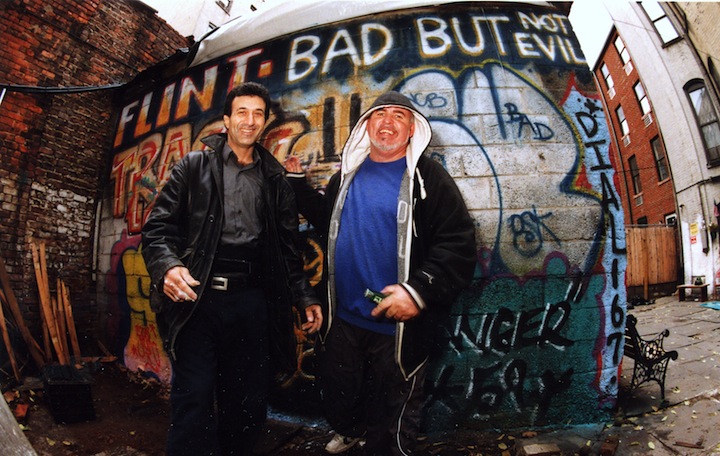
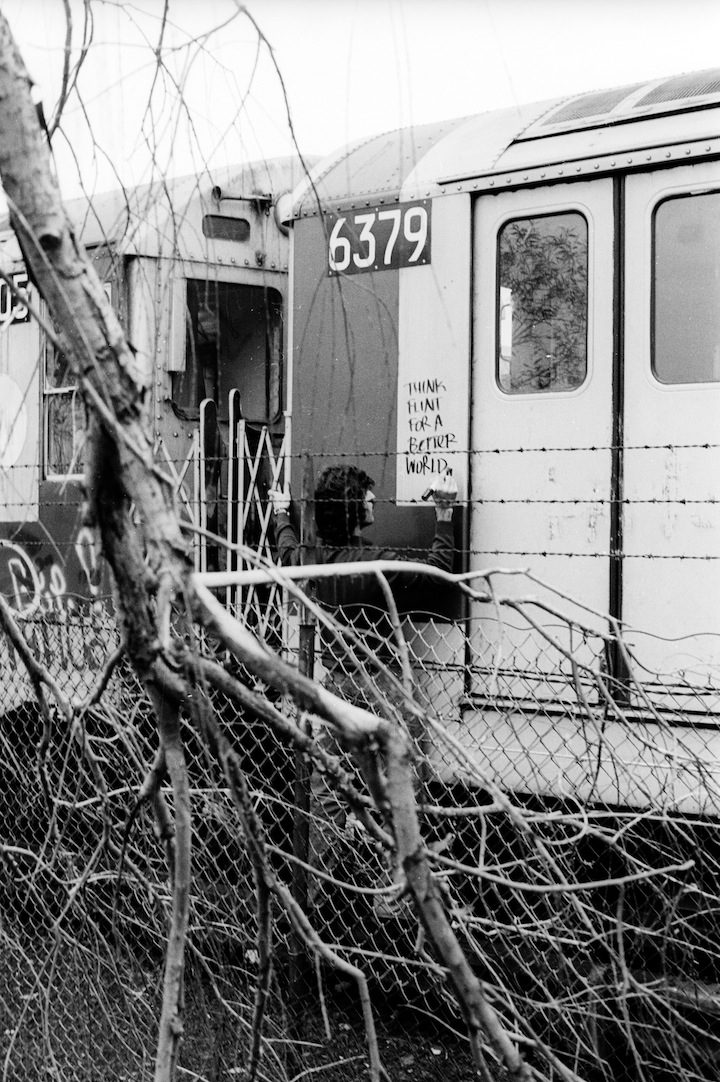
Back in the 1960’s, Flint Gennari was getting his name up, without even realizing that what he was doing was a precursor to modern graffiti.  It was wonderful to have an opportunity to meet up and speak with this graffiti pioneer.

When and where did you first get up?

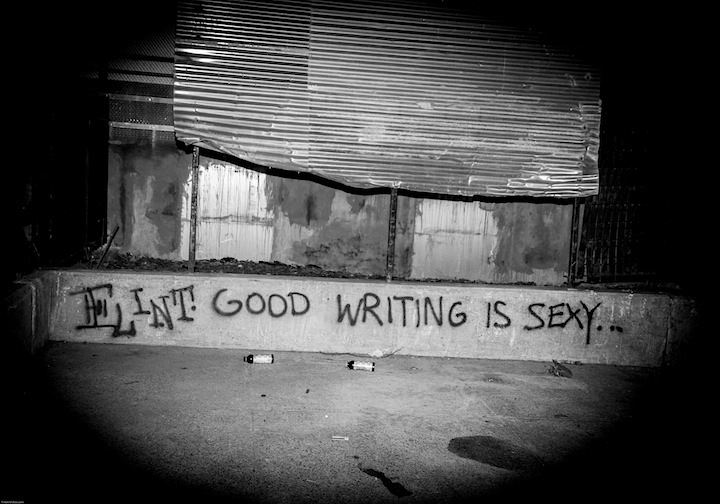
It was back in 1966.  I was nine years old, and I was traveling and camping cross-country with my family during our summer vacation.  I  was already aware of the mindless scribing on the bathroom walls. I’d seen “John loves Mary,” “For a good time, call…”  Why not write something profound or, at least, interesting — since you have a captive audience? I started writing sayings and signing them FLINT.   Anything that caught my fancy would work — something from a fortune cookie, a great lyric from a song or a quote that offers advice.  It didn’t matter that people didn’t know what to make of it. I had a secret identify, and it kept me busy.

Gee! You must have been quite precocious! And what about your name? What inspired you to start writing your name in public spaces?

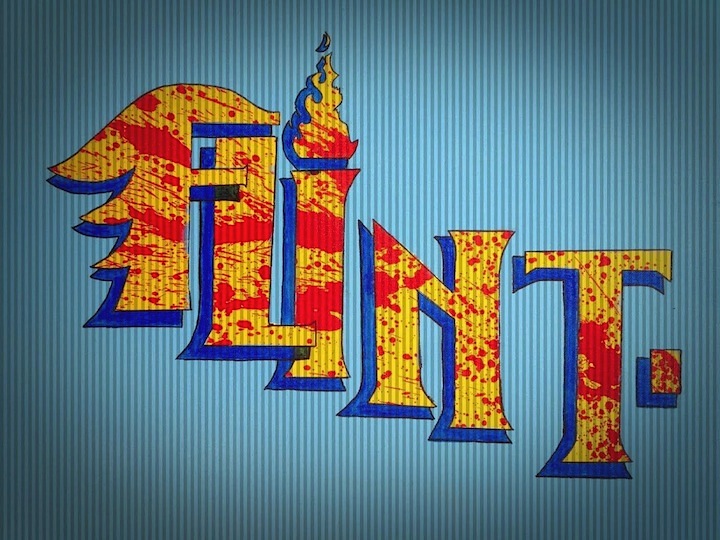
I had been learning about World War II in school, and I became obsessed with the phrase, “Kilroy was here.” Who was Kilroy? And why did he write his name everywhere? Like Kilroy, I liked the idea of advertising myself. I had hearing and speech problems, so I couldn’t understand much of what was happening in the classroom.  This made me me a loner, but I found something that could make me part of the world. I was sensitive to social change. It was the 60’s. Things were changing, and I wanted to be part of it.

"Flint graffiti"

Did any particular writers or artists inspire you?

There were no writers at the time. Graffiti – as we’ve come to know it – didn’t yet exist. I was influenced by Madison Avenue ads and slogans.  They would bombard you with whatever they were trying to sell.   The artist Peter Max was commissioned to make art to be placed on mass transportation.   He always made his name the centerpiece of the work and placed his art  — angels, butterflies, fairies etc — around his name. Was he smart?  I think so.

What about your name? How did you acquire the name “Flint?”

I spent lots of time – as a kid — with Marvel comic books and movies.   These characters were cool;  they would do what they wanted.  I became a real James Bond fan. And so I took the name of Flint, the master spy who spoofed James Bond.

How did your family feel about what you were doing back then?

They hated it. They hated the name “Flint,” but it was my given name.  I gave it to myself. Yes, I was the black sheep of the family and I was always in trouble.

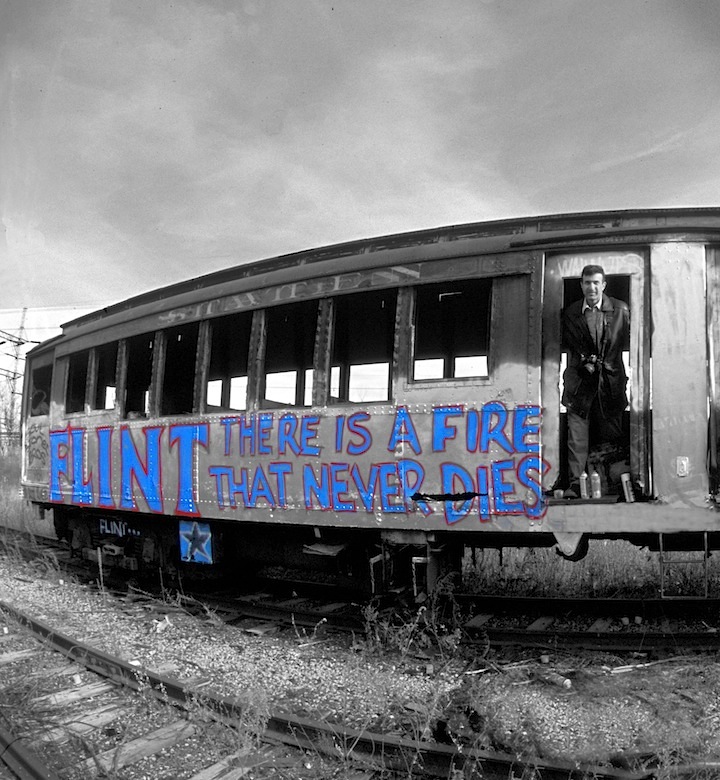
"Flint graffiti"

What about crews? Did you join any crews?

As time went by, many more writers started in Brooklyn.   Scooter and Dino Nod lived in the same apartment building two blocks away.   And Flip One lived In the other direction — one block away.   Erasmus High School was nearby, along with Mico, Mani and Wicked Gary.  Dino Nod was the president of the ExVandals — the first-ever graffiti crew — and I ran with him. Then with my writing partner, LSD OM, I founded the Rebels.  Future Rebels members included writers such as Shadow and Zephyr.

Were you influenced by these other writers? Did meeting them affect your style?

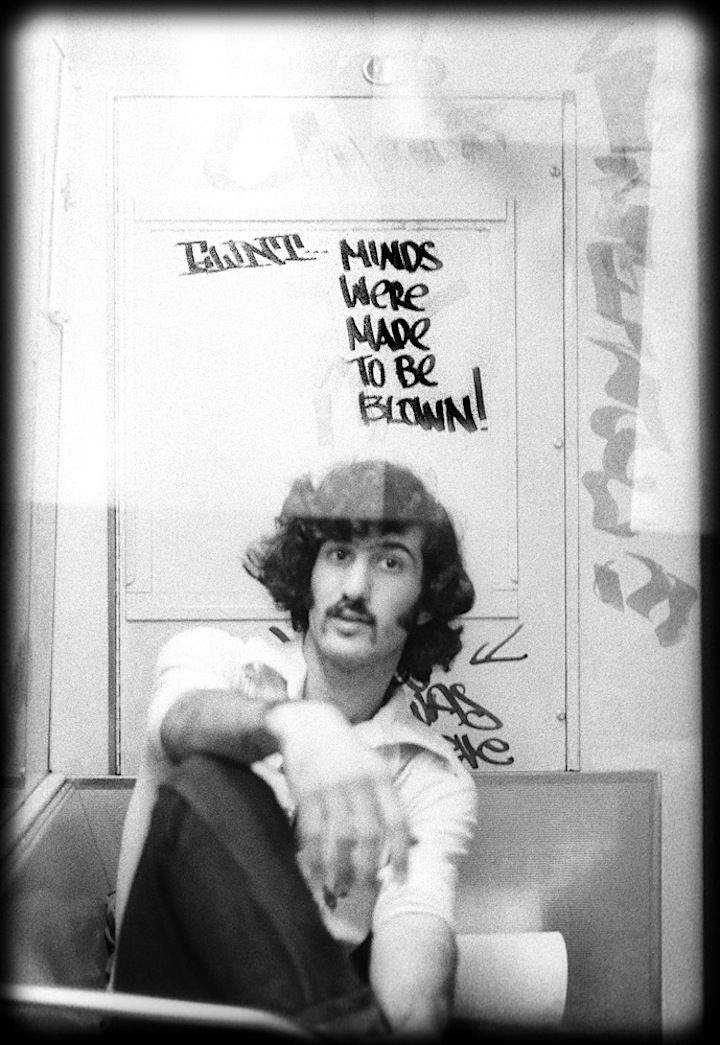
It was when I met these other writers that my sayings changed. I started writing more for them, and messages like For Those Who Dare, For Ladies Only, Bad but Not Evil and The Time Will Come... started turning up.

What is the riskiest thing you ever did?

Every time a writer gets up, he is taking a risk. But probably the riskiest thing I did was climbing down from the el to avoid the cops.

Flint

Do you have a formal art education?

I attended the High School of Art and Design, the greatest “writing” school out there. In the lunch room we all sat at the “Writers Table,”passing around our black books and refining our tags. In fact, Art and Design is where I met Al Diaz and influenced him and Basquiat to write messages.” On a more formal level, I took some classes at Pratt and at the International Center of Photography. But I’m largely self-taught.

You are an active photographer as well as an artist. At what point did your focus shift to photography?

I stopped hitting train stations and most public surfaces in 1976. And the following year, I began a 10-year project of photographing a drug addict. But even as a young child – before I could afford a camera – I loved photography, and I would borrow my father’s camera to photograph my friends.  There was a time when it became a choice between doing pieces or photographing my friends doing them.   This is how the video footage for my graffiti song came about.  I remember when my friends Flip One and Dime139 asked me to hit the yards.  I ended up doing more photography than hitting that day, but this was 1975 already.

Have you exhibited your work in gallery settings?

Yes. I’ve exhibited both my graffiti and photography. Before I graduated from high school, my work had won a Scholastic Art Award and was exhibited nationally. Then in 1998, Hugo Martinez, the founder of the United Graffiti Artists (UGA), saw my tag behind me at B&H photo, where I was working at the time, and gave me an exhibit at his gallery in Chelsea. That opened my eyes to how big graf had become: I had no idea! Since, I’ve exhibited worldwide and was featured in Born in the Streets at the Fondation Cartier in Paris.

Flint

Why do you suppose the Europeans are more receptive to graffiti than we Americans?

Europeans have always understood and respected art, particularly art that’s a bit out of the mainstream. Just look at how receptive they were to jazz musicians!

What percentage of your time is devoted to art?

All of it, though most of it is focused on my photography business. I’d like more time to focus on my own art. I do get orders for canvases and water colors all the time.

Any other passions?

Music. I play the guitar and I write songs.  I was the rhythm guitarist for the Ex Vandals Band.   Stan 153 played bass; wicked Gary was on percussion and Bama/Amrl was the leader and on drums.

Any thoughts about the graffiti/street art divide?

It’s all a means of expression, and we influence each other.   It means something special, though, that we graffiti writers are a part of New York City’s history, and that we writers have invented a new American art form which is still evolving. But I’m not a purist. I think Banksy is terrific.

How do you feel about the role of the Internet in all this?

It’s great. I’m seeing and enjoying new things all the time.  And it goes without saying how easy it has become to showcase what you are doing to a much bigger audience.

Flint

Have you any feelings about the photographers and bloggers in the scene?

It’s all good.

What do you see as the future of graffiti?

At the beginning, graffiti was considered nothing more than vandalism. When you became a writer, you entered a brotherhood  with benefits.  You belonged to a family of like-thinkers who, along with you, were creating something — without knowing exactly what.  I’ve had life-long friendships with many of the pioneers such as Tracy 168, Stayhigh 149 (R.I.P) and Taki 183. Back in the day, we never would have imagined just how influential graffiti would become – that it would impact everything from fashion and marketing to the “art world.”  Graffiti will continue to evolve, and its influence is likely to increase.

Interview by Lois Stavsky with Richard Alicea; all photos courtesy of the artist; first photo, Flint and Tracy 168.

{ 4 comments }

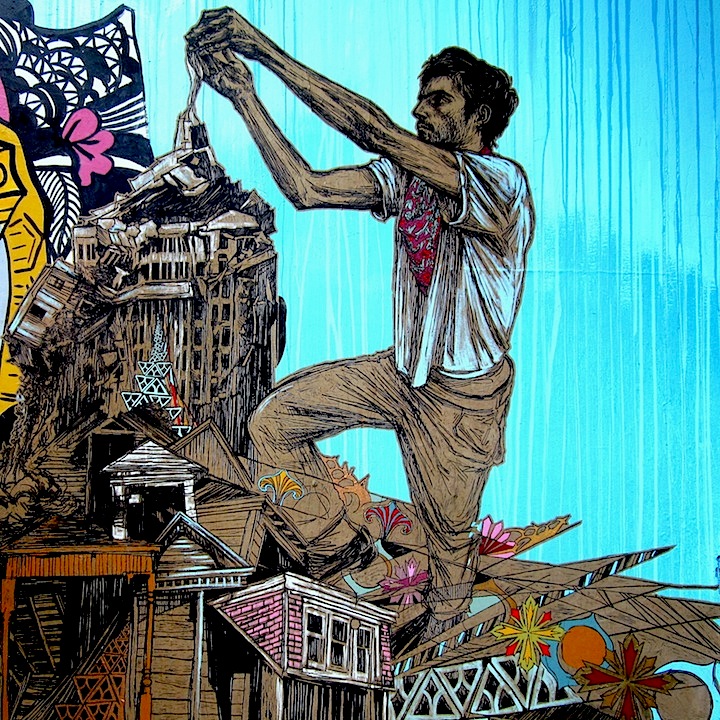
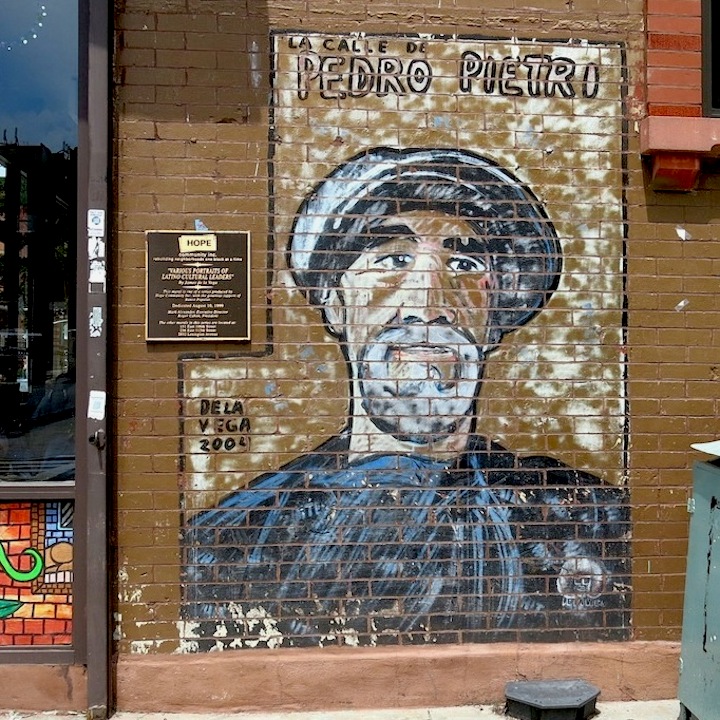
This is the fifth in an occasional series featuring images of males who surface on NYC public spaces:

Esteban del Valle on Manhattan’s Lower East Side

Esteban del Valle

Ramiro Davaro-Comas in Bushwick, Brooklyn

"ramiro davaro comas"

Close-up from huge wall by Swoon and Groundswell youth on the Bowery and Houston

Swoon

James de la Vega in East Harlem

"de la vega"

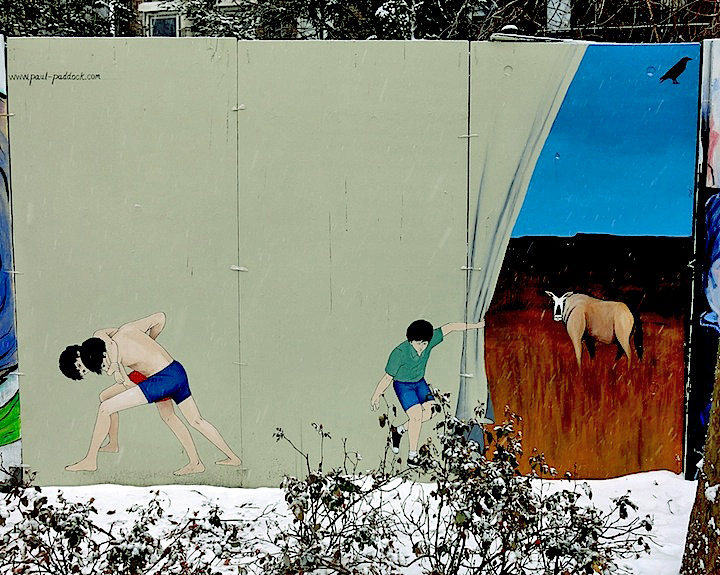
Paul Paddock in the East Village

"Paul Paddock"

Tats Cru in the East Village

"Tats Cru"

Mataone in Bushwick, Brooklyn

Mataone

 Photo of Swoon by Tara Murray, of Mataone by Dani Reyes Mozeson and all others by Lois Stavsky

{ 0 comments }

Speaking with Col Wallnuts

January 7, 2014

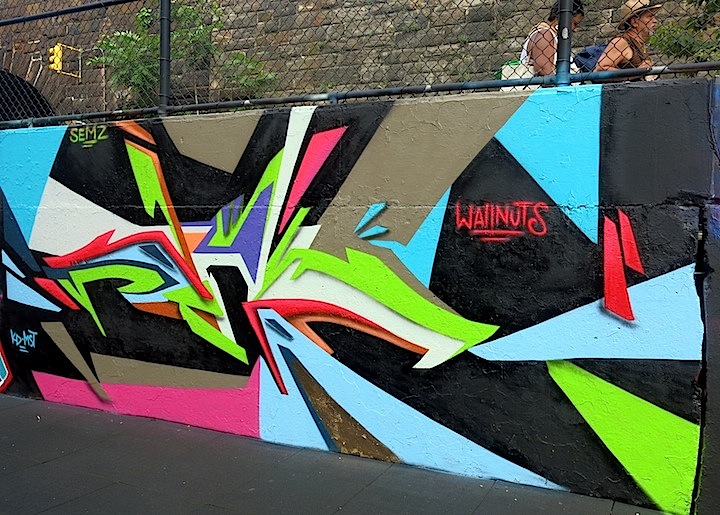
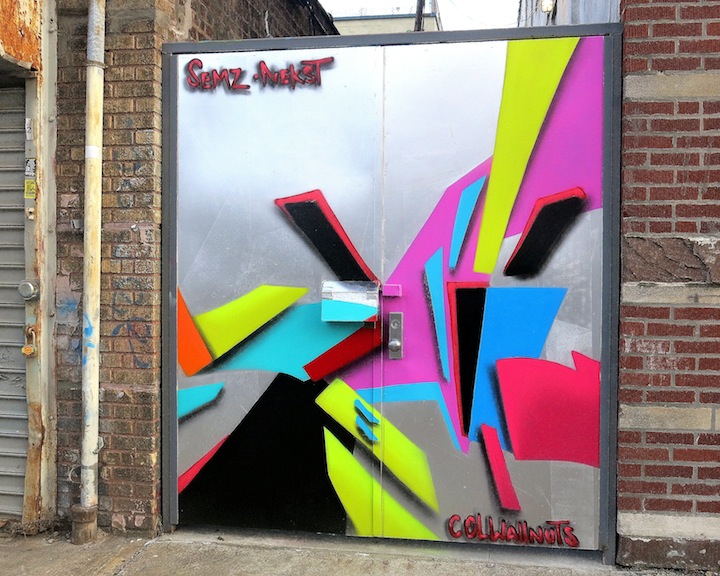
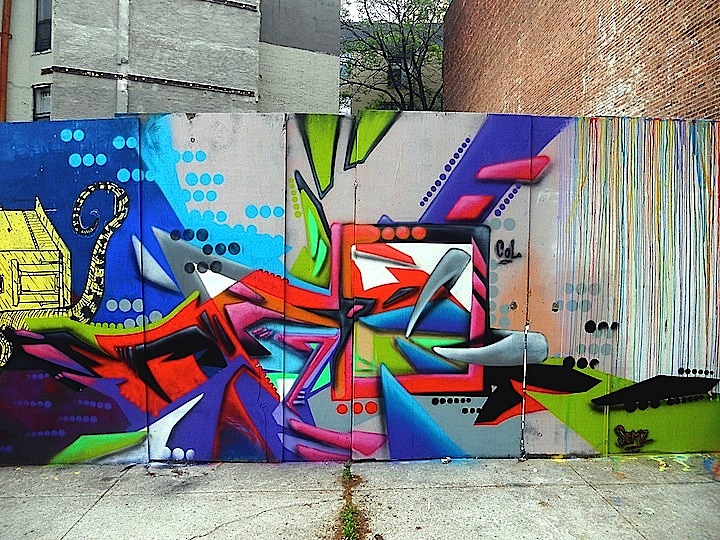
For over 20 years Col has been gracing our public spaces with his distinctly graceful aesthetic.  His street murals, along with his small works on various media, are among our favorites.  It was wonderful to have the opportunity to recently interview him.

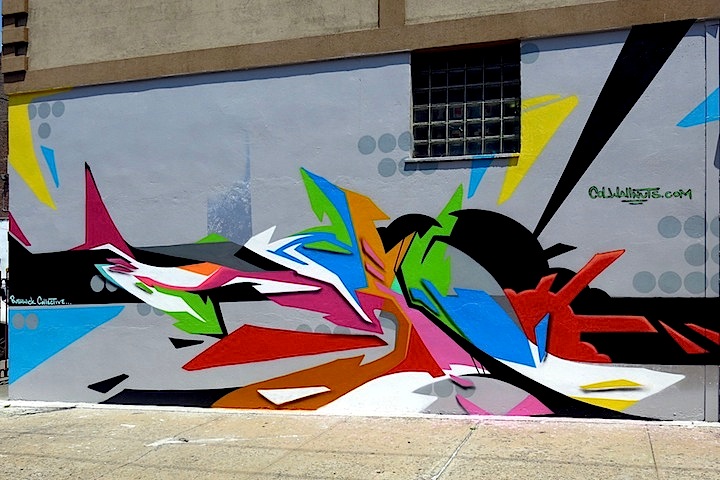
"Col Wallnuts"

When did you first get up?

I began tagging and doing some outlines in Staten Island/Brooklyn about 1993-94.

What inspired you at the time?

I was inspired by the tags and pieces I saw along highways. I always wondered who had done them.

Have you any early graffiti memories that stand out?

I loved seeing Cost and Revs in the Meatpacking District. The area has come a long way from the violence and corruption that once characterized it. But it’s great to see a piece of that time still around.

"Col Wallnuts"

Do you paint with any crews?

I was active with CTO (Check This Out), as both Vers and Edge had taken me under their wings. I’m currently part of Wallnuts, MST, MTA and KD. Wallnuts is comprised of writers from both the States and Europe. Among them are: Muse, Chester, Been3, Ree2, Soco, Riot, Phyme, Met, MadC, Zest, Dos, Free5, Kern and Mad.

Do you prefer working alone or with others?

It depends on the project. Painting with good people motivates me, sets a fire under my ass and inspires me. Painting alone is good too. It’s like nothing else exists.

Do you generally paint with a sketch-in-hand?

Almost never.  A sketch prevents one from being organic. I want to see where my idea goes and to produce what I see in my head.

"col wallnuts"

Do you have any preferred surfaces?

I love to paint on anything. I prefer painting on surfaces and in areas where no one has painted before. I enjoy challenges. Obstacles are fun. And I love working large scale on buildings. I grew up working on walls, so the bigger the better.

What about neighborhoods? Have you any favorites?

I prefer working in bad neighborhoods. There are real people there. In good neighborhoods, you’re faced with bullshit. I’ll take Marcy Avenue over Park Avenue any day of the week! Painting in an impoverished neighborhood gives it life and positive energy.

What percentage of your time — would you say — is devoted to art?

I paint seven days a week. I work through holidays. I’m always working on paper, canvas or on my computer.

"Col Wallnuts"

Have you exhibited your work in gallery settings?

Yes. I’ve exhibited at Art Basel (Miami), in NYC, LA, Chicago, DC, and in Europe.

How do you feel about the movement of graffiti into galleries?

As a painter, that’s progression. And it all begins with the tag. A tag is an art form. It’s a craft that not just anybody can do. Tags, then throw-ups and then you eventually evolve into doing pieces. And galleries have a responsibility to preserve them and share them.  Although I’m still not completely comfortable with gallery settings, it’s a good feeling to make money from my art when my work sells.

What are your thoughts on the street art/ graffiti divide?

Fifteen years ago, it was only graffiti. But we are no longer the only ones getting up. And that’s not a bad thing. I have a lot of respect for street artists. They are doing fresh stuff. Street art actually helped graffiti. Since the emergence of street art, graffiti writers have had more opportunities to exhibit their work in galleries. If you’re a wheat-paste artist keeping the movement alive…how can I hate that? There are rules, though, to graffiti and some street artists need to learn them.

"Col and Muse Wallnuts"

Have you ever been arrested?

Never for graff. But I’ve been chased a lot. Back then, cops used to catch you with paint and write on you. Then they’d let you go with a warning. Those days are over.

How did your family and friends feel about what you were doing?

My family hated it. My family didn’t want the kids doing anything illegal. They saw it as a dead end…not doing anything with yourself, but putting up your name. I also lost some friends over graffiti. But your true family will never turn their backs. Ultimately, you learn, too, that you only have yourself at the end.

Do you have a formal arts education? 

I studied Fine Arts and Advertising at FIT and at the Academy of Art University. But all my spray painting training is self-taught. I learned the hard way with Krylon, Rustoleum, American Accent and Dutch Boy. The kids today have it easy using Montana and Belton.

"Ree and Col"

Are you generally satisfied with your work?

It’s fifty-fifty. Sometimes. Other times I want to just buff and start all over. If you care about what you do, you’re your own worst critic.

What’s the riskiest thing you’ve done for your art and why were you willing to take that risk?

Painting in Israel by the Syrian border right in the line of fire. It’s the sort of thing we as artists live for. Art is stronger than war. And that’s why I did it.

Are there any particular cultures that have influenced your aesthetics?

I love the abstract movement. I enjoy the works of Pollack, Rauschenberg, Fran Stella, Jasper Johns and de Kooning. The abstract movement went against the grain of what was popular in Europe.

"Col Wallnuts"

How has your work evolved throughout the years? 

I’ll say it’s more deconstructed these days. Back then, the majority of my work was 3D, but that got old and boring to me. I went into breaking letters and transitioned from 3D to silhouette.

How do you feel about what you are doing these days?

I’m happy with my progression and where I’m going. I’m glad I didn’t listen to people around me. I’m glad that the progression came naturally, and I can’t wait to see where it goes within the next few years.

What do you think the role of the artist in society?

It’s about being a role model and reaching the youth. You got to give something to them they can grasp. You have to make them feel excited about what you are doing. The artist has to inspire and lead by example. He has to teach others that being an artist is a positive thing.

"Col Wallnuts"

How do you feel about the role of the Internet in all this?

It’s a part of you when you wake up; it’s a part of you when you go to sleep. It’s an outlet for everything we do. Before the Internet, guys were grinding…dealing with people first-hand. You had to present physical material. Today it’s digital, and it takes two minutes. There are tons of positives and negatives to the Internet. You have to use it in a way that it works for you.

Any thoughts on the photographers and bloggers out there?

I support them. They shoot my work, they are very supportive and their eye is important. I like that they provide an opportunity to others to see my work.

Any shoutouts?

Shoutout to my WALLNUTS and URNY family. The homies: Hellbent, SeeOne, Depoh, Phetus, KA, Werds, Touch, Rubin. Semz (Rest In Power) and my grandma. Semz did so much for the graffiti scene. His is a name everyone should remember. My grandma was my biggest supporter. She never understood my art, but always pushed. She was a self-taught traditionalist artist. She told me, “Never stop and don’t ever let anyone tell you that you’re not an artist or that you’re not a painter.” She’s with me in everything I do.

Interview by Lenny Collado; photo 1 at the Bushwick Collective by Lois Stavsky; 2 at the East Harlem Hall of Fame by Lois Stavsky; 3 at the Bushwick Collective by Lois Stavsky; 4 in Prospect Heights by Tara Murray; 5 in Bed-Stuy with Muse by Lois Stavsky; 6 in Inwood with Ree by Lenny Collado; 7  in Tel Aviv by Lois Stavsky, and final photo courtesy of the artist.

{ 1 comment }
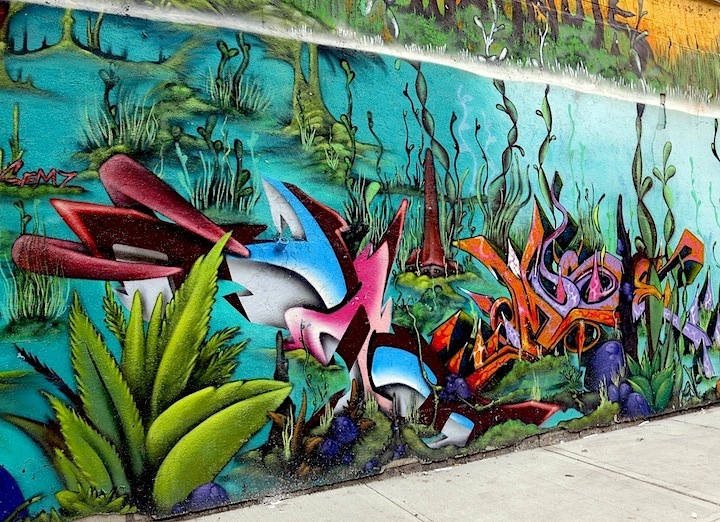
"Angel Ortiz aka LA2"

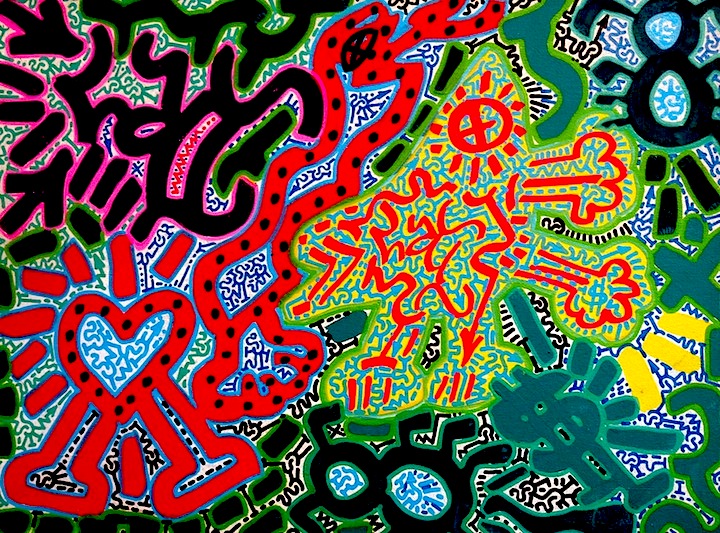
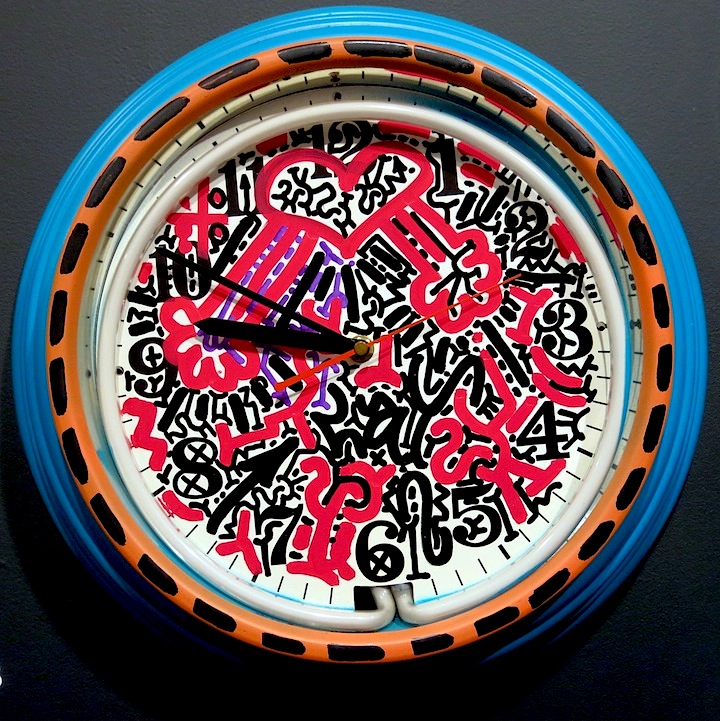
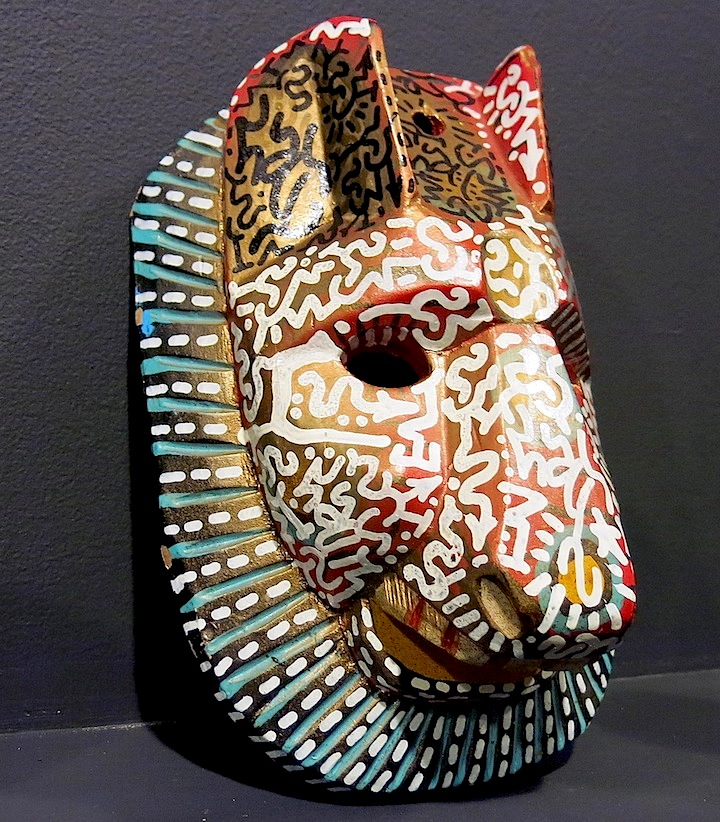
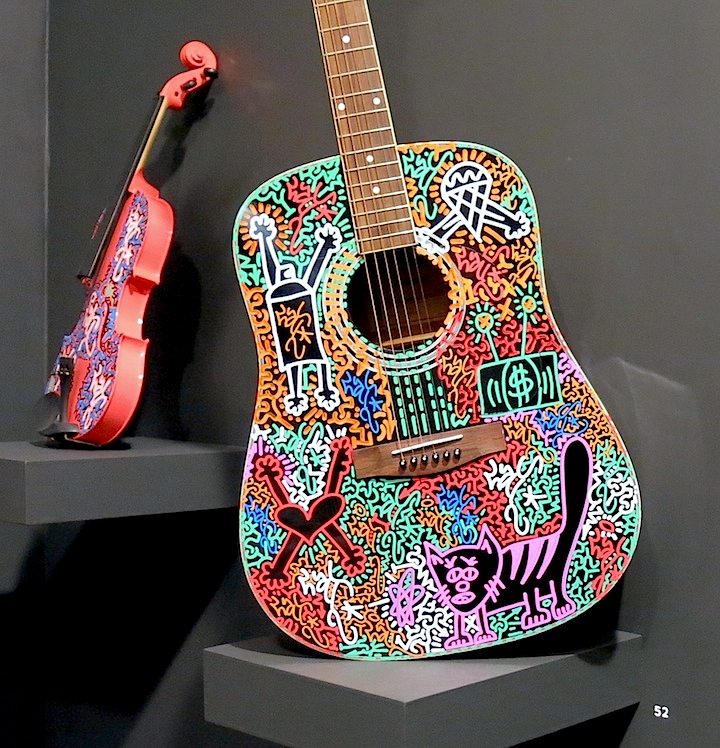
For its second annual Young Collectors Exhibition, the Leila Heller Gallery is featuring an exuberant selection of works in a wide range of media by Angel Ortiz aka LA2 and LaROC. Befriended as a young teen by the late Keith Haring, the two clearly influenced one another. And in this exhibit, as in so much of LA2’s artwork, Keith Haring’s spirit is visibly alive. There is even an LA2 Pop-Up Shop dedicated solely to LA2’s objects, reminiscent of Keith Haring’s Pop Shop, a fixture for almost 20 years on Lafayette Street in lower Manhattan. Here are a few images from the exhibit that continues through Wednesday, January 8, at 568 West 25th Street in Chelsea.

Spring Flow

"Angel Ortiz aka LA2"

Heart Clock

"Angel Ortiz aka LA2"

Untitled

"Angel Ortiz aka LA2"

Tribal Mask

"Angel Ortiz aka LA2"

Guitars

"Angel Ortiz aka LA2"

And some personalized graffiti made available to guests on opening night

"Angel Ortiz aka LA2"

 First and final photos captured on opening night by Dani Reyes Mozeson; all others by Lois Stavsky

{ 1 comment }
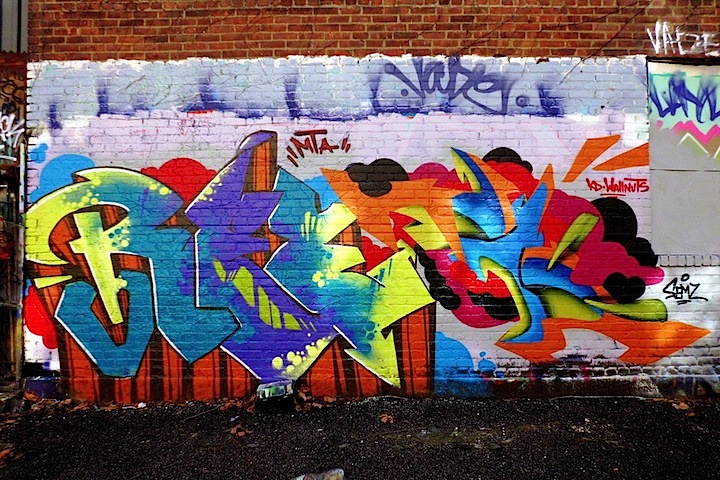
This is the third in a series of occasional posts featuring images of children that surface on NYC public spaces:

 Joe Iurato at the Bushwick Collective

Joe-Iurato-at-the-Bushwick-Collective 2

And the completed piece

Joe-Iurato-Never-Let-Go 2

Miss 163 in Hunts Point, the Bronx

Miss 163

LNY and Axel Void at the Bushwick Collective

LNY and Axel Void

Rene Gagnon at Welling Court in Astoria, Queens

Rene Gagnon

Ewok and Owns in Bushwick

Owns and Ewok

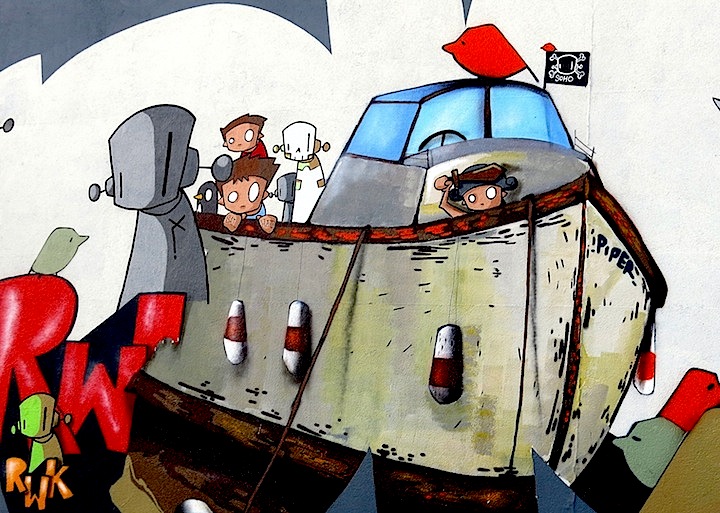
Robots Will Kill in Bushwick, close up from huge wall by Chris, Veng and ECB

RWK

Unidentified artist in Chelsea — spotted last week

street-art-NYC

First photo of Joe Iurato by Tara Murray; final photo by Dani Reyes Mozeson; all others by Lois Stavsky

{ 1 comment }
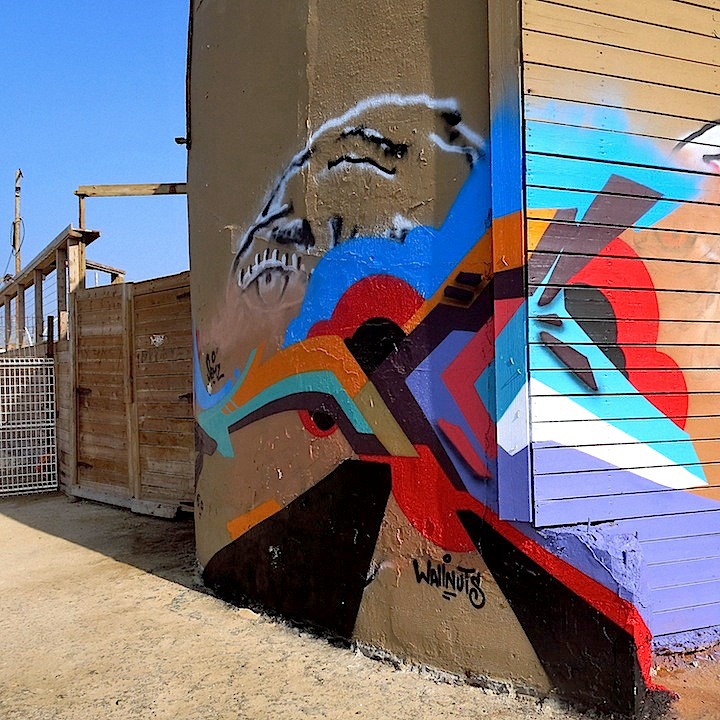
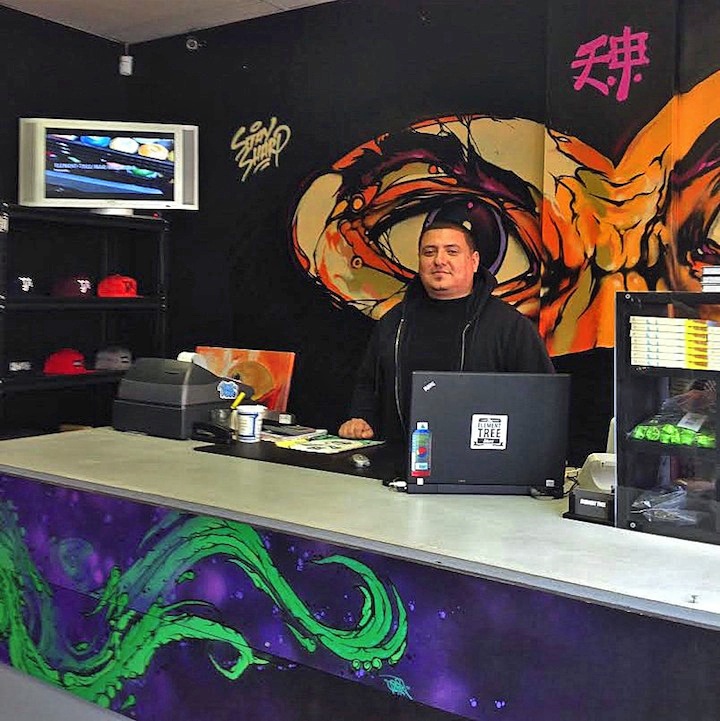
I came upon Serringe’s artwork on the streets of Jersey City earlier this year. I soon discovered that he was the force behind Element Tree and dozens of first-rate videos. I was delighted to finally have the opportunity to meet up with him at his store in Weehawken — just minutes away from Manhattan.

Christian Serringe

Tell us something about Element Tree. When did it launch?

Element Tree started as a blog in 2009.  I grew up in Jersey City around a bunch of talented people, and I needed a platform to post their work and share it with others in hopes of promoting them and myself.  Artists like Snow, T.Dee, 4sakn, Loser, Then One, Mr. Mustart and Distort —  to name a few.  There are others, but these are some of the original artists I felt people should definitely know about if they already didn’t.

When did Element Tree become a store?

I rented the space in Weehawken in February 2012. If I can’t do graff 24/7, I want to be around it. I also like the idea of nurturing the culture and keeping it healthy, and this store gives me the platform to do that.

Serringe

What inspired you to start your own business?

I have a strong entrepreneurial streak. I don’t want people telling me who the “real artists” are. I want to help the people – whose work I love — make money.

Besides the first-rate art that you show here, you also sell art supplies. What do you see as the future of this space?

I will continue to provide affordable art for folks who love graffiti and street art. Not everyone can afford to spend $1500 on a canvas. And I’m interested in providing opportunities for artists — such as commissioned murals, design work for album covers and general creative direction. I see Element Tree as a house of creative energy and incubator for ideas.

Serringe

What initially spurred your interest in graffiti?

I was always into graffiti from the time I was six years old. My older brother was a writer for a short period of time in the 90’s, and he sparked my brain, along with all the other local writers that were doing their thing when I was a kid. If they could do it, so could I. When I was a young teenager, my mom became ill and begged me not to write graffiti on the streets. She believed in my art, though… so until I was 19 years old, I detached myself from graffiti out of respect for her. She passed in 2004 — and aside from the occasional tag, I know she would be proud of me.

Did you develop any other passions while growing up?

I grew up in 80’s and 90’s: DJs, producers, skateboarders, punk rockers were everywhere. I became interested in all kinds of creative expression, and I began to create home videos with friends as a way to explore filmmaking.  Within the past three years, I created 140 videos.

Mr Mustart

And you also paint in public spaces these days.  Since you began doing so, have you had any particularly memorable experiences?

Art Basel 2012. It was the first time I traveled to paint on a wall that was sponsored at a major art event like Basel.  Art Primo powered us with the paint and Element Tree’s Mr. Mustart and Distort showcased their talents for all who passed by. It was great experience to paint among people we respected.

Have you exhibited your work?

I’ve been in a handful of shows, but Mustart, Then One and Distort stay doing their thing, showcasing and exhibiting through Element Tree-based projects and also on an independent level.  We are currently working on setting up the first Element Tree official group show… so if you’re a gallery owner, don’t hesitate to reach out!

Distort

Any thoughts about the graffiti and street art divide?

Eventually they will meet. Street art is still a baby in relation to graffiti. There are many street artists I respect. Banksy is a genius! Other favorites include: Blek le Rat, Invader and Shepherd Fairey. Oh, and if you don’t know… check out LNY. I see good things in him.

How would you explain the reluctance of the art establishment to embrace graffiti and street art?

Most people don’t understand it, and if you don’t understand something, you don’t know how to deal with it.

Then-art-Element-Tree

What do you see the future of graffiti?

It can’t be stopped. And eventually, it will gain acceptance as a legitimate art form.

No doubt!

Interview and photos by Lois Stavsky, photos 1,2 and 3 of Serrenge; photo 4, Mr. Mustart; photo 5, Distort and final image, Then One.

{ 1 comment }
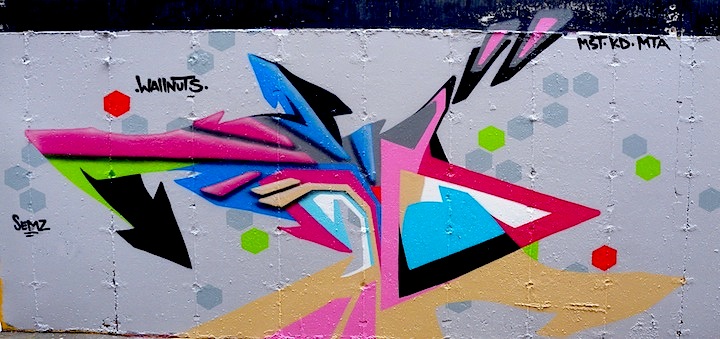
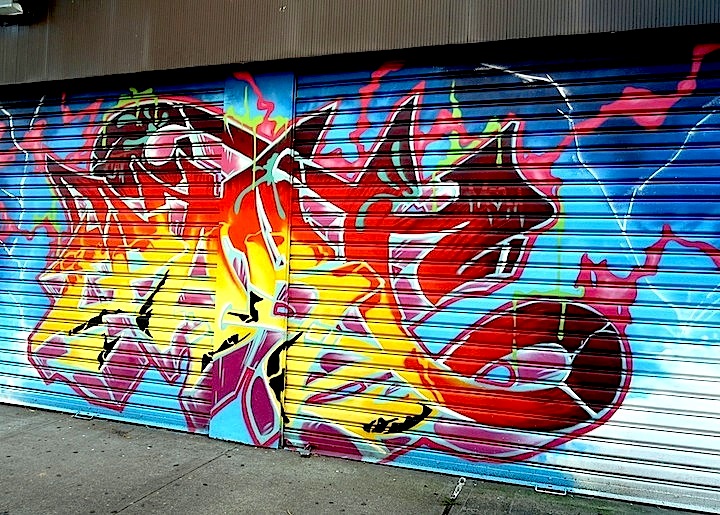
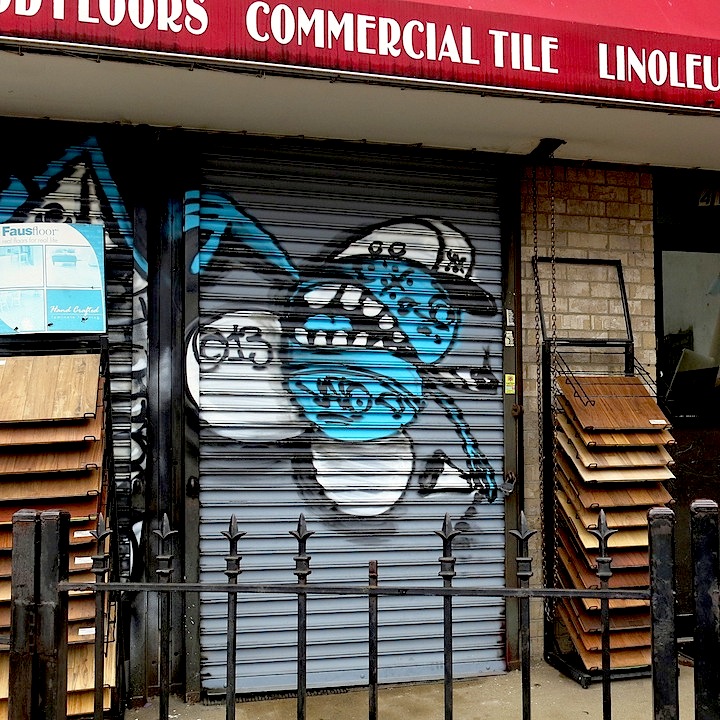
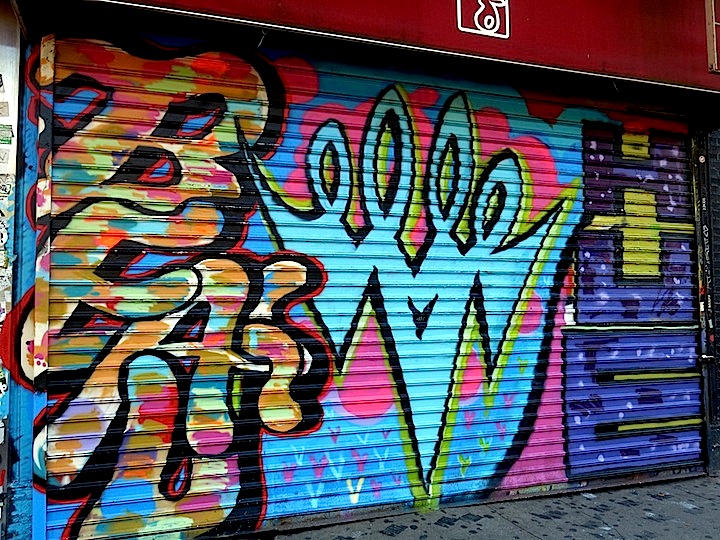
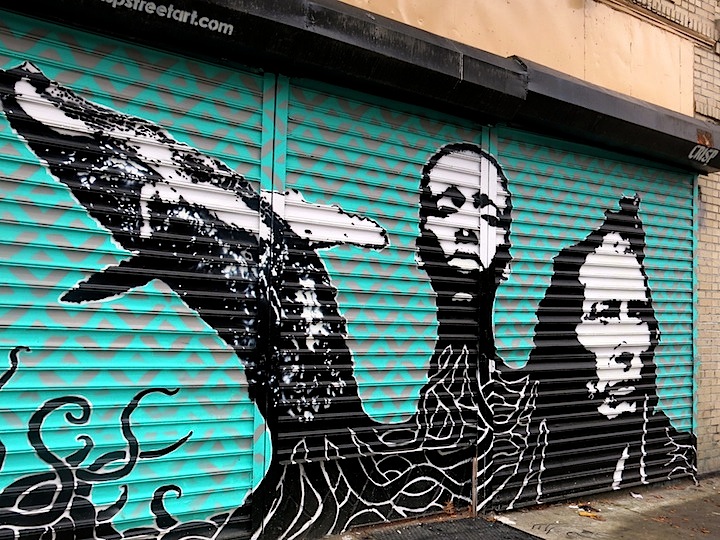
This is the sixth in an occasional series of artwork on NYC shutters:

Ewok in Williamsburg, Brooklyn

Ewok

Alice Mizrachi aka AM in East Harlem

"Alice Mizrachi"

Michael De Feo on Manhattan’s Lower East Side

Michael De Feo

Part One in East Harlem

"Part I"

Vato in Williamsburg

Vato

BeauElle and Hue on Manhattan’s Lower East Side

"Beau and Elle"

Crisp in Williamsburg, Brooklyn

Crisp

Fumero in Williamsburg, Brooklyn

Fumero

Icy and Sot in Bushwick, Brooklyn

"Icy and Sot"

Photo of Michael De Feo by Tara Murray; all others by Lois Stavsky 

{ 0 comments }
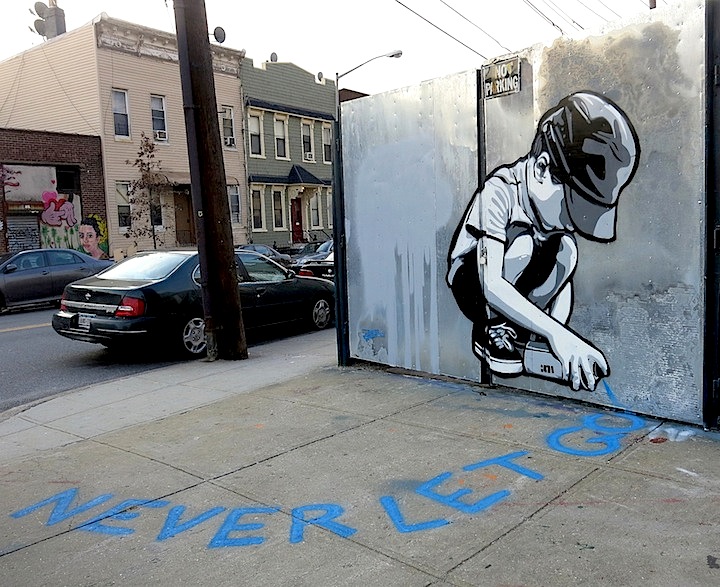
Frank-Malt-aka-Steam156

Brighton native Frank Malt aka Steam 156 has been active in the global graffiti scene for over 30 years – first as a graffiti writer in the UK, and then as a passionate documentarian of graffiti and street art around the world.  Within the past two years he has published two highly acclaimed books, 100 UK Graffiti Artists and Street Art London.  I recently met up with him in NYC.

When did it all begin?

I started in 1984 in Brighton as a b-boy. NYC’s Rock Steady Crew — that visited London in 1983 — and the hip-hop videos I saw on British TV turned me on to the break-dance culture. And from that I moved on to graffiti.

What surfaces did you hit back then?

Mostly train lines. My first hit was an electrical box off the train tracks.

Were you ever arrested?

I was chased lots, but I’m a good runner. And I like the adrenalin rush.

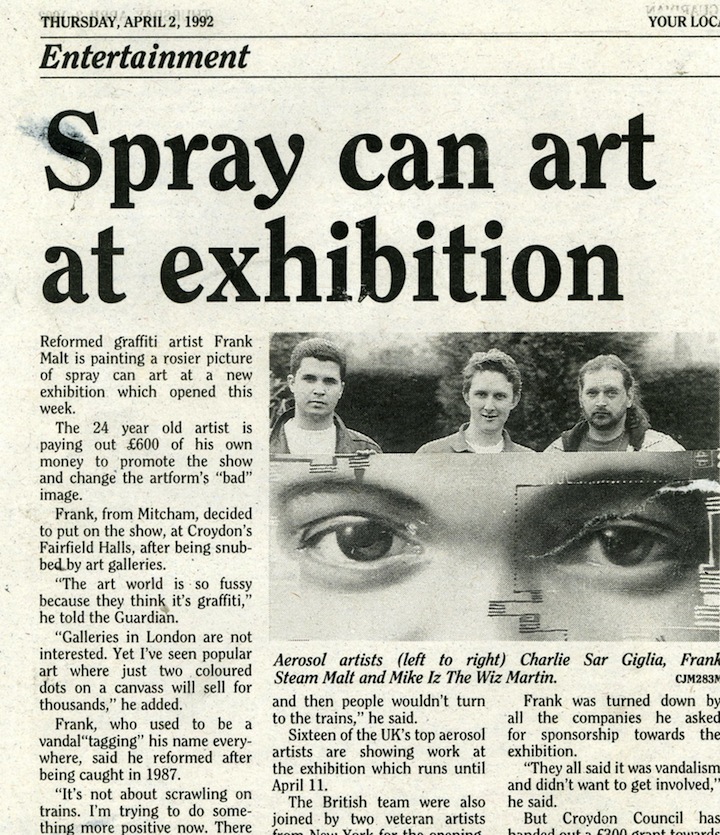
Steam-graffiti-Icons-show Croydon-1992

Have you ever shown your work in a gallery setting?

I only got involved with producing artwork for a few gallery shows. It was not really something I enjoyed doing that much. One of the shows I put together with a friend was called Icons. It was around 17 of the best British graffiti artists and I also managed to get two legendary New York artists to come over: Iz the Wiz RIP and Sar — both leading figures in the crew the Master Blasters. The show was back in 1992.

Do you have a formal art education of any kind?

No. I hated school. I was always a rebel. I got kicked out when I was 15, and I never went back.

Any particularly memorable experiences from back in the day?

The experience that always stays in my mind happened on one of my first visits to NYC back in around ‘88/’89. I had a guy show me around the Bronx. And when we reached the 238th Street Bridge, we jumped over the fence and got onto the Amtrak lines. I immediately started taking photos of all the graffiti there. Before I knew it, a whole gangs of guys came out from behind the wall throwing rocks and bats at us. I took off running down the tracks, while a huge Amtrak train was tooting its horn for me to get off the tracks. I ran as fast as I could to the next bridge and managed to get over the fence to find a subway station to get me back downtown.  I survived.

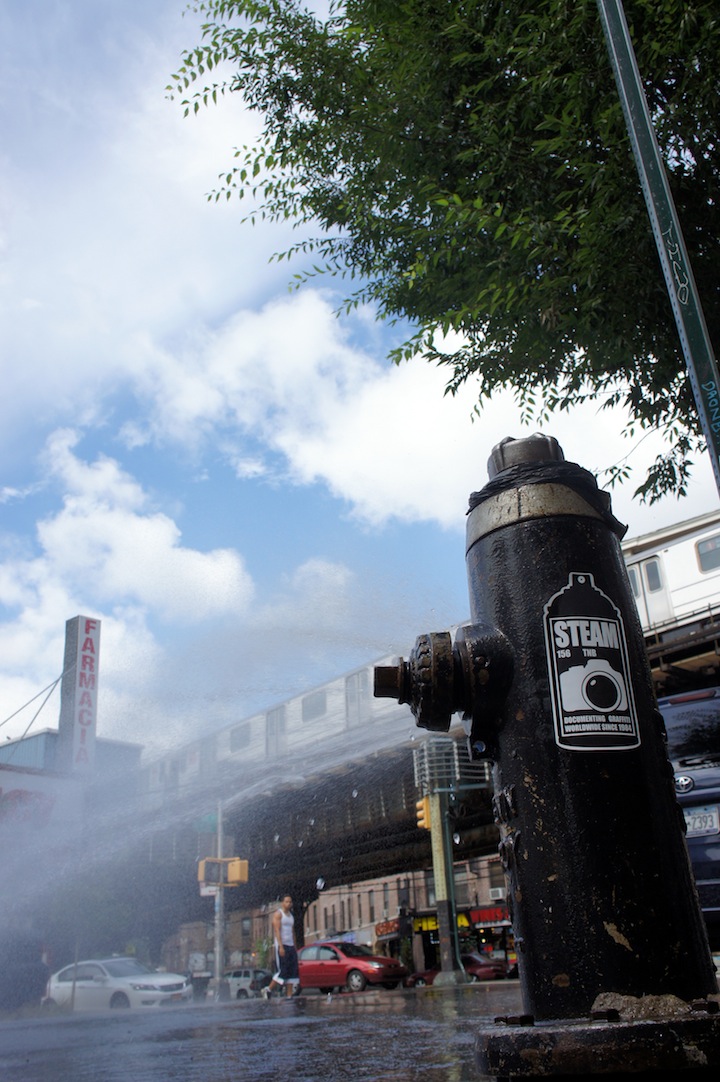
Frank-Malt-Steam156-sticker-NYC

We’re glad you did! Is there much of a graffiti/street art divide back in London?

Absolutely.  Unlike graffiti, street art gets lots of positive exposure and gets picked up by galleries.  Banksy kicked it off and pulled others into the scene. Street art has taken over London. It speaks to many more people than graffiti does. And most graffiti writers dislike street artists, and this gets acted out on the streets.

How do you feel about NYC’s current graffiti scene?

I guess it has changed a lot from the early days when I was coming to document the scene here. I remember I found a guy who was willing to drive me around every street in the Bronx for two days so I could take photos. It was pretty incredible back then.  I found so many walls, handball courts by Seen, Cope, TKid and all those amazing FX walls. I know they had a big clean-up, but no doubt New York is still the place to be. It’s incredible how much goes on here.

Any thoughts about the role of the Internet in all this?

For me the Internet was good and bad.  It was good, because I did not have to queue at the post office to send photos overseas. Everything became so much easier.  I used to spend a fortune on postage costs, because I was trading photos with so many writers around the world back then. The bad thing was — I guess — it took the excitement away from hunting to find graffiti. To me part of the buzz and excitement was to see the wall fresh —  to hunt it down without seeing it on every media site before the paint had even dried. I love seeing new graffiti before I have seen it online.

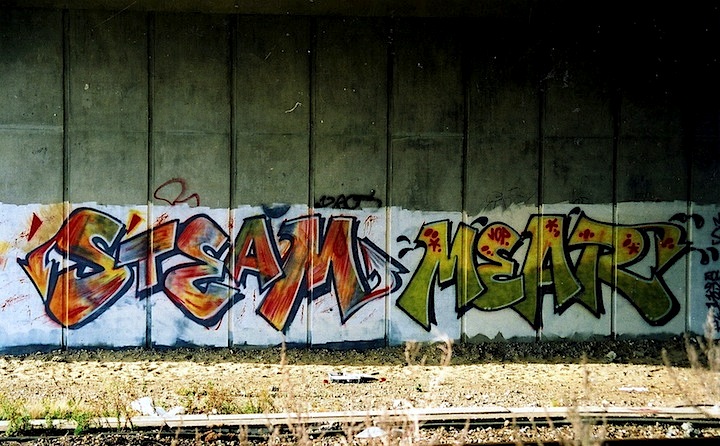
Steam-and Mear-graffiti-1993

How do you feel about the current crop of bloggers and photographers?

There are too many jumping on the bandwagon. Many don’t bring any information. And far too many people who know nothing are putting out books. There’s the potential for exploitation.

Who are some of your favorite artists who work on the streets?

Revok. He’s brilliant. Other favorites include: Risk, Vulcan, Aroe, Smug, Roa, Cope2, TKid, TATS Cru. Too many people to name — so many talented people out there in the scene.

What do you see as the future of graffiti?

Who knows? I just think it will become more and more technically advanced. It will always keep evolving.

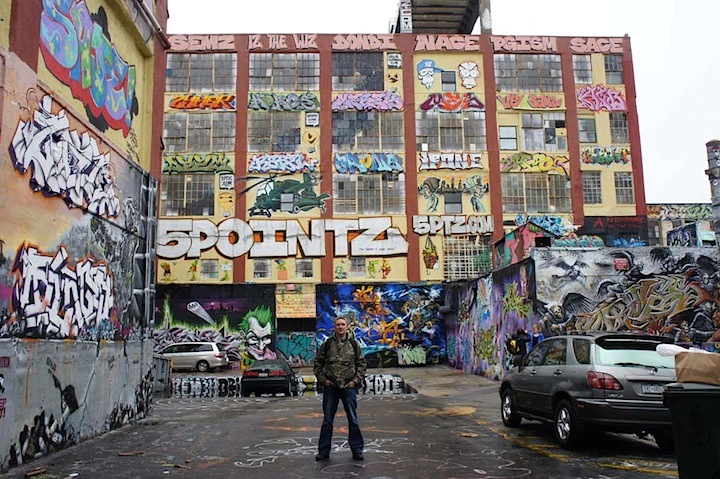
Frank-Malt-Steam-156-5Pointz

What’s ahead for you?

I just want to continue to pursue my passion and share it with others. I have a new book due out next year with an amazing line-up of European artists. I can’t say too much about it at this point, so stay tuned!

It all sounds great! Good luck and keep doing what you’re doing!

Interview by Lois Stavsky; photos courtesy of Frank Malt.

{ 1 comment }