documentary

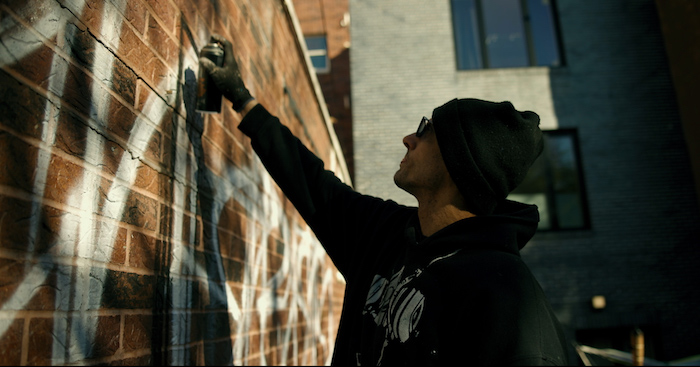
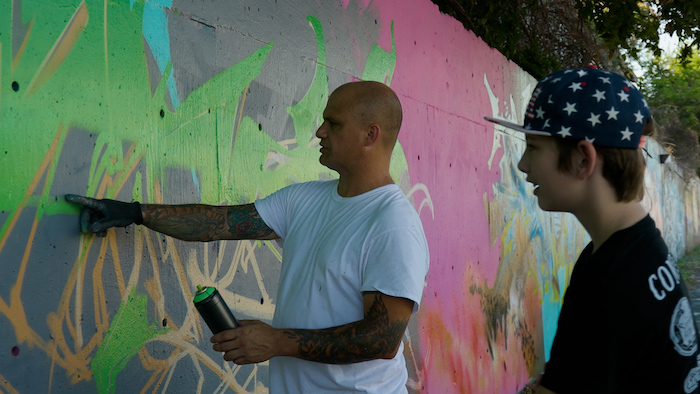
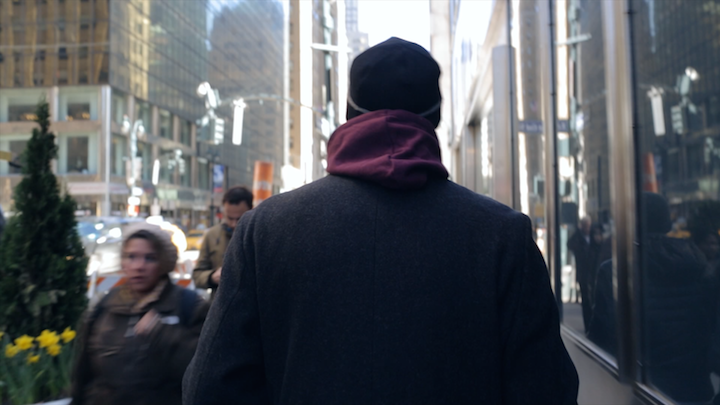
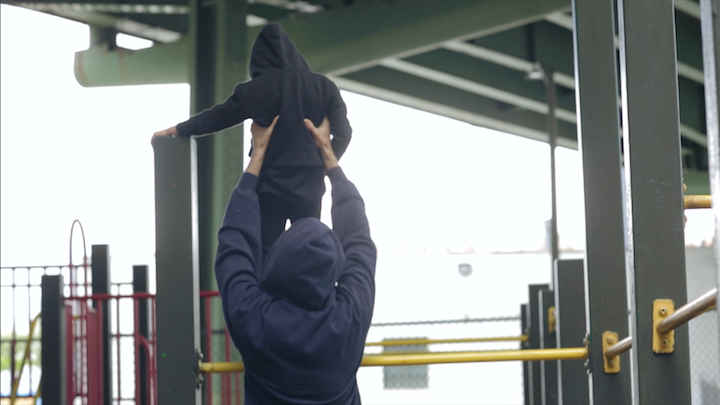
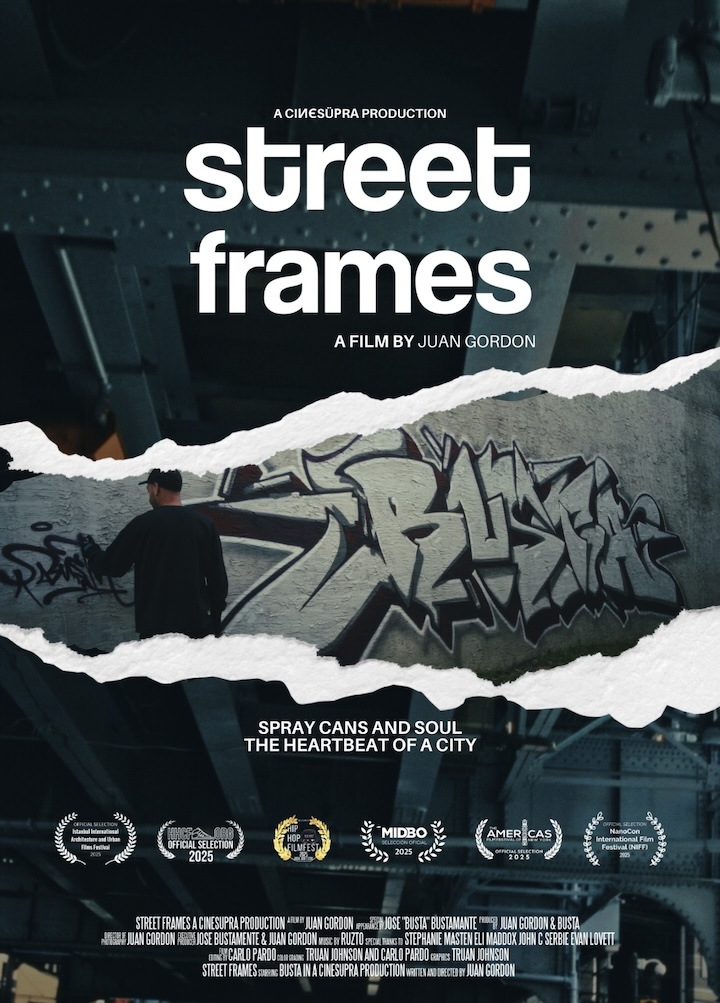
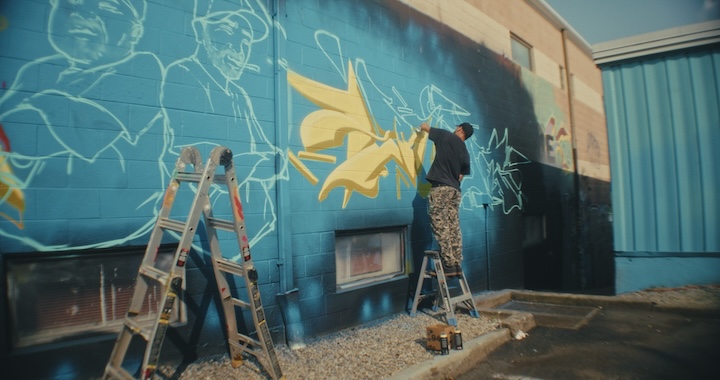
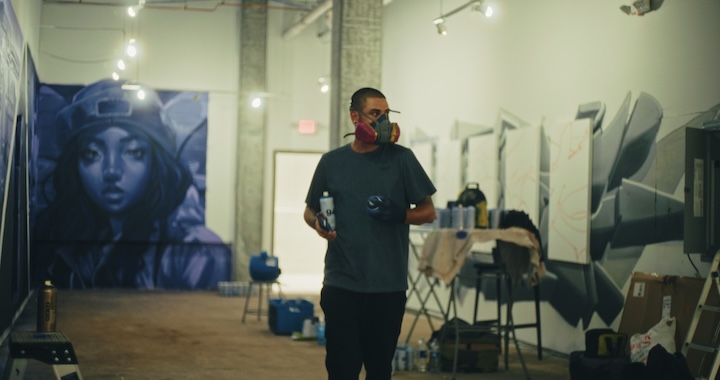
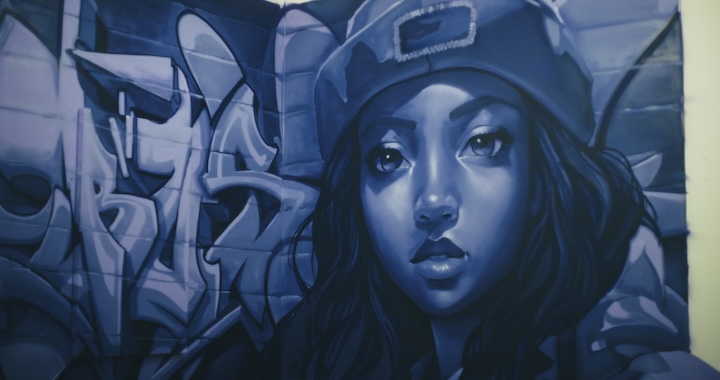
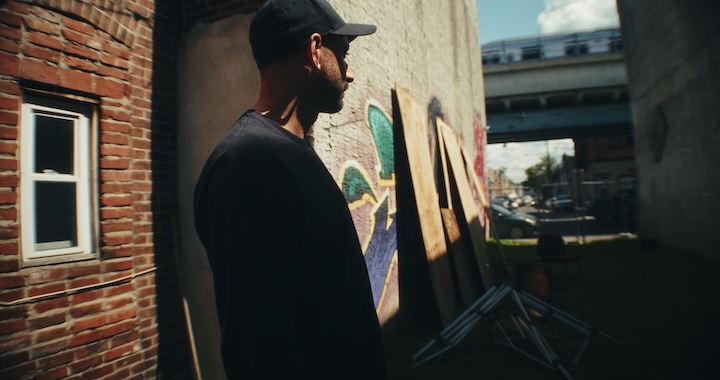
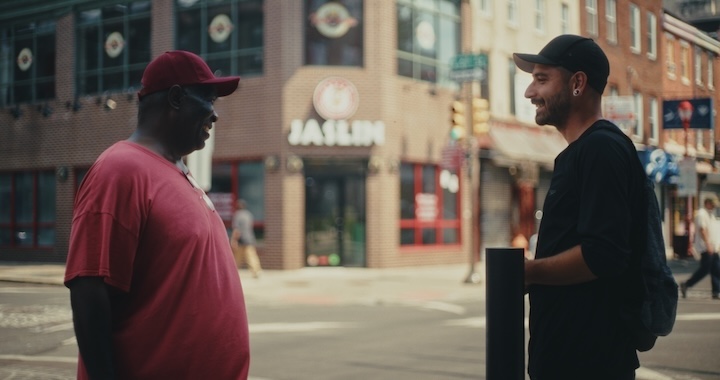
In his latest short film, Street Frames, Colombian filmmaker Juan Gordon pays homage to graffiti, Hip-Hop culture, and Philly-based, Colombia-born multimedia artist José “Busta” Bustamante. The result is a film that is both intriguing and informative, as it draws viewers into Busta’s world — its dualities, its challenges and its rewards. After viewing it, I posed a few questions to Juan:

What inspired you to produce a film spotlighting Jose Bustamante, known to us as Busta? What drew you specifically to Busta?

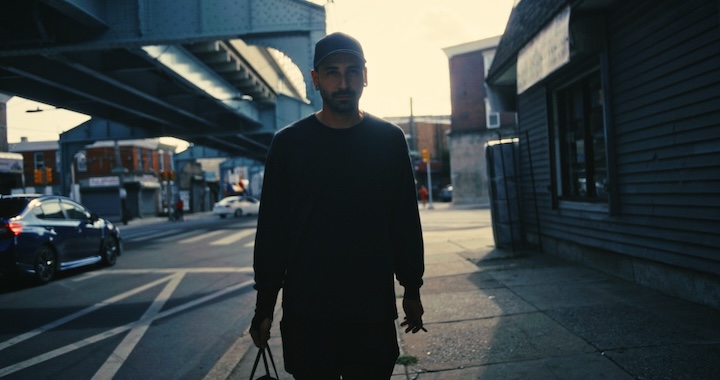
I’ve known Busta for over 15 years. We met in the streets of Bogotá through skateboarding, and I’ve witnessed his artistic evolution firsthand. In 2024, he invited me to his first solo show in downtown Philadelphia. I accepted, but with a distinct intention: I wanted to document his process, his dualities, his conflicts, and his relationship with the community. While his aerosol work is visually stunning and continues to evolve, it’s his philosophical foundation that truly fascinates me. I’m grateful he opened up in such a raw way to achieve this result.
What were some of the challenges you faced in seeing the project through?

Logistically, there were very few. We filmed in August with perfect weather, and thanks to a great network of collaborators, I had access to everything from secure locations in Kensington to secret spots across Pennsylvania and Jersey. The real challenge was internal: how to capture the profound soul of my subject—the artist, his art, and the complex emotions in between—while maintaining a deep sense of respect for the Hip Hop culture that defines him.
What would you like viewers to take away from this film? Are there any particular messages you hope to convey?

The urgency to create must never die; we must remain in constant motion. Personal and communal conflicts are what keep the world turning—without darkness, there is no light. I want viewers to take these and other questions they can perceive, take them home and reach their own conclusions, applying that creative spark to any aspect of their lives. Movement is life.
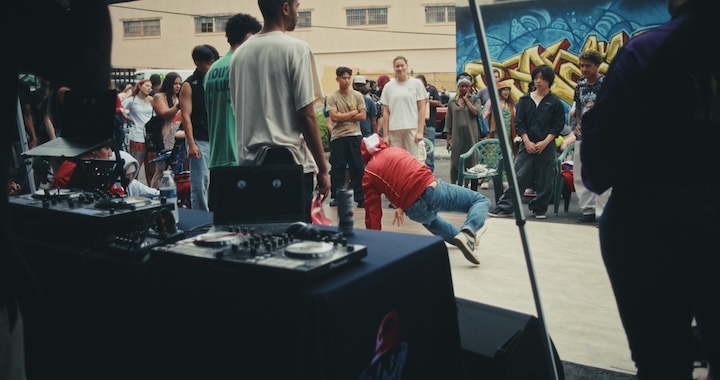
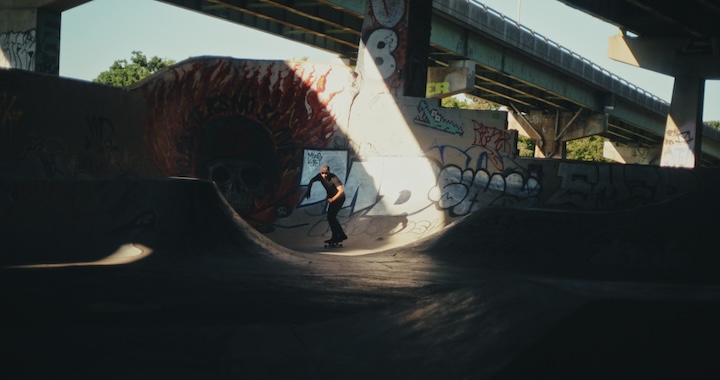
How does the graffiti scene in Philly and Trenton differ from the one in your Bogota hometown?

In general terms, they are very similar. You’ll find tags and pieces in the most hidden corners, whether they are “under the radar” works or governmentcommissioned murals. Bogotá, however, is a graffiti city par excellence due to its deep respect for the culture’s constant advancement. The main difference is structural: Bogotá currently has no subway system. Construction began recently, with the opening set for 2028. I’m eager to see how the culture will react to this new architecture—new canvases for paint, music, and film. Evolution is dual: it builds and destroys. simultaneously.
What kind of responses have you received to the film so far?

It has been incredibly positive. Throughout 2025, the film toured festivals, ranging from those focused strictly on Hip Hop cinema to general film festivals where audiences knew nothing about graffiti but were drawn to the story itself. Premiering at the Hip Hop Film Fest in NYC was a major milestone, as was seeing it reach Turkey, Italy, Mexico, Colombia and more. The feedback has been warm and noble; people really connect with the human element behind the art.
What’s next?

I am currently developing a narrative feature film set in a near-future Bogotá. The focus shifts from the walls to the internal movement of the city, exploring human dignity and the weight we carry through life. And yes, it still features a character who can’t help but leave his name on the walls.

How can folks view Street Frames?

After its successful run through the international film festival circuit, it is now available for public viewing on YouTube. You can also see a teaser for it here.

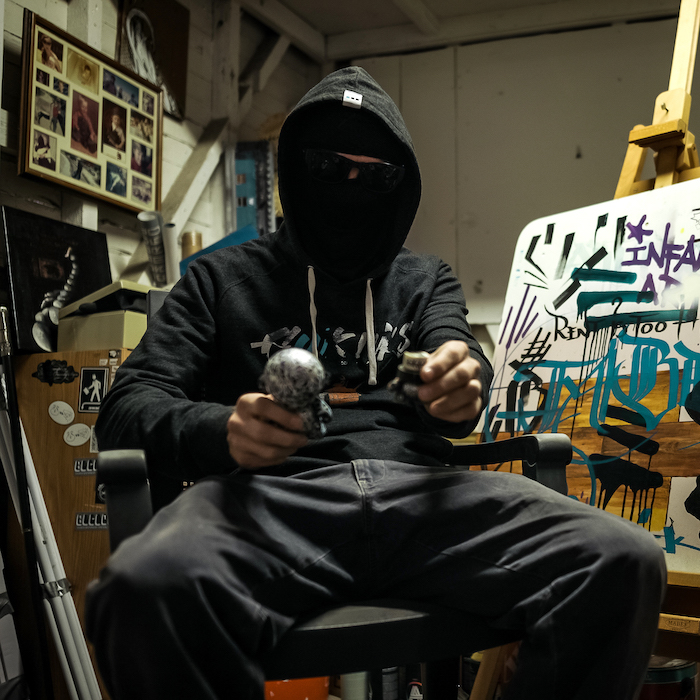
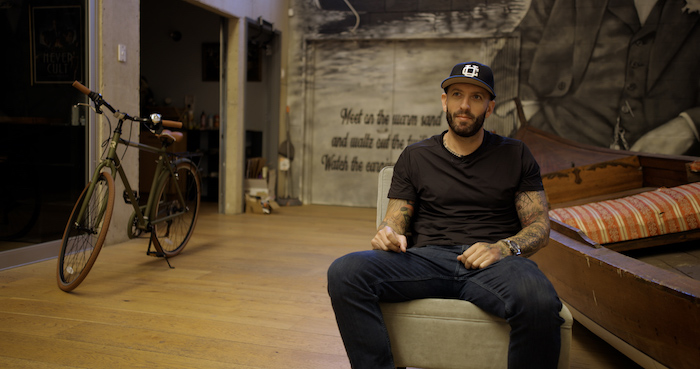
Note: All photos are stills from Street Frames, courtesy of Juan Gordon; interview questions by Lois Stavsky and Tara Murray

{ 0 comments }
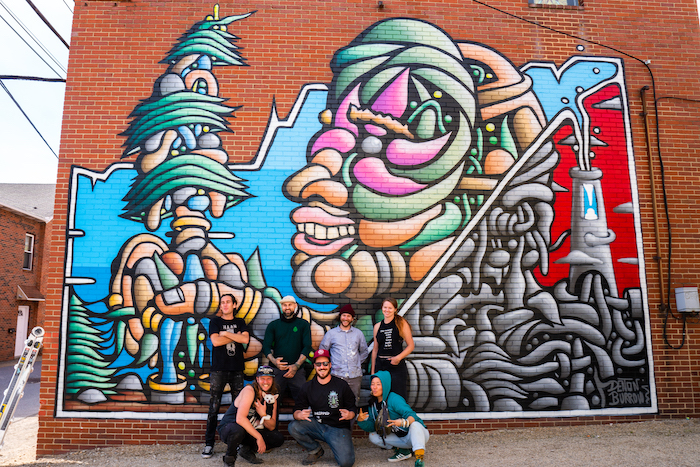
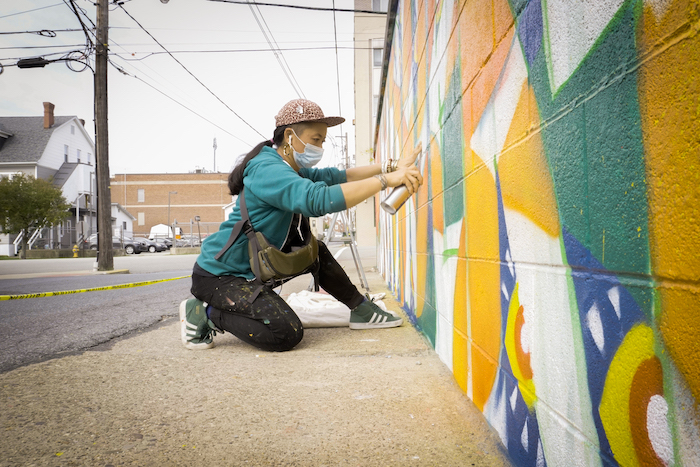
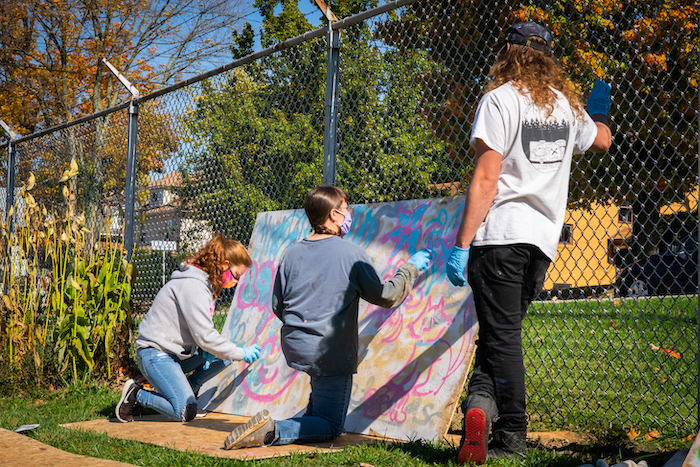
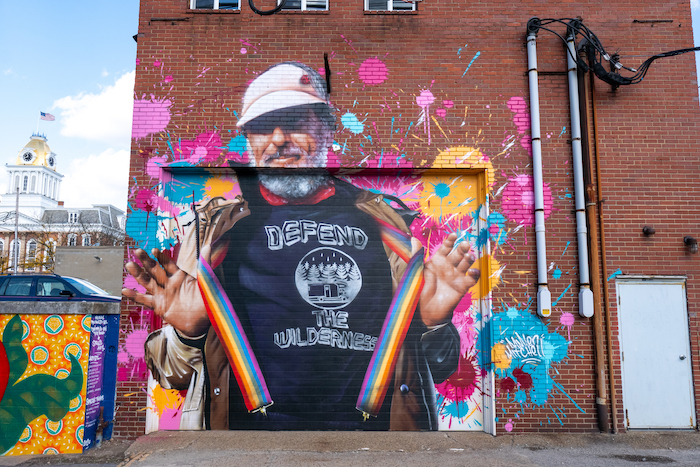
As COVID-19 was raging back in 2020, Dripped On The Road, a traveling artist residency program, brought 14 murals to Indiana, Pennsylvania. Within two weeks, the artists transformed the town’s visual landscape, while embracing and uplifting its residents. In the course of their remarkable residency, they learned first-hand about Indiana’s distinct history and painted murals that utterly reflected it.

Featuring resident artists Damien Mitchell, Sarah Rutherford, Evan Lovett, Riiisa Boogie, along with program directors and artists Ramiro Davaro-Comas, Jonathan Neville and Denton Burrows, the acclaimed documentary “Small Town Big Canvas: An Indiana, PA Story” — directed by OWLEY Studios — chronicles these two weeks.

Not only did the seven artists uplift the town’s spirit and enhance its appearance, but they also conducted workshops with youth using non-toxic spray paint and upcycled materials. And they planted trees that “will live on even after the murals are gone.”  Sustainable painting practices and environmental responsibility are essential, the documentary affirms, to Dripped On The Road‘s mission.  We are cautioned that one needs to be mindful of the environment when painting public art.

“Small Town Big Canvas: An Indiana, PA Story” brilliantly captures the mutual respect and appreciation that developed between the artists and the members of the Indiana community as the project evolved. The artists clearly “felt the pulse of the people,” and the Indiana residents showered them with gratitude in return.

Founded in 2016,  Dripped On The Road artists have have painted over 100 murals and traveled over 12,000 miles.“Small Town Big Canvas: An Indiana, PA Story” is a moving, impressive ode to its multiple missions and a particular paean to this distinctly vital project. It is also a model for public art that too often becomes too commercial.

Note: The NYC public premiere of “Small Town Big Canvas: An Indiana, PA Story” was held on April 27 at the Anthology Film Archives, featuring resident artists Damien Mitchell, Sarah Rutherford, Evan Lovett and Riiisa Boogie, followed by a Q & A moderated by UP Magazine editor T. K. Mills. We are looking forward to further showings in the NY metropolitan area.

Images:

  1. The crew in front of Denton Burrows‘ mural
  2. Evan Lovett
  3. Sarah Rutherford
  4. Damien Mitchell
  5. Riiisa Boogie
  6. Jonathan Neville w/ Indiana, PA youth
  7. Damien Mitchell

Post by Lois Stavsky and and City-as-School intern Antonio Gomez; all photos courtesy Dripped On The Road.

{ 0 comments }

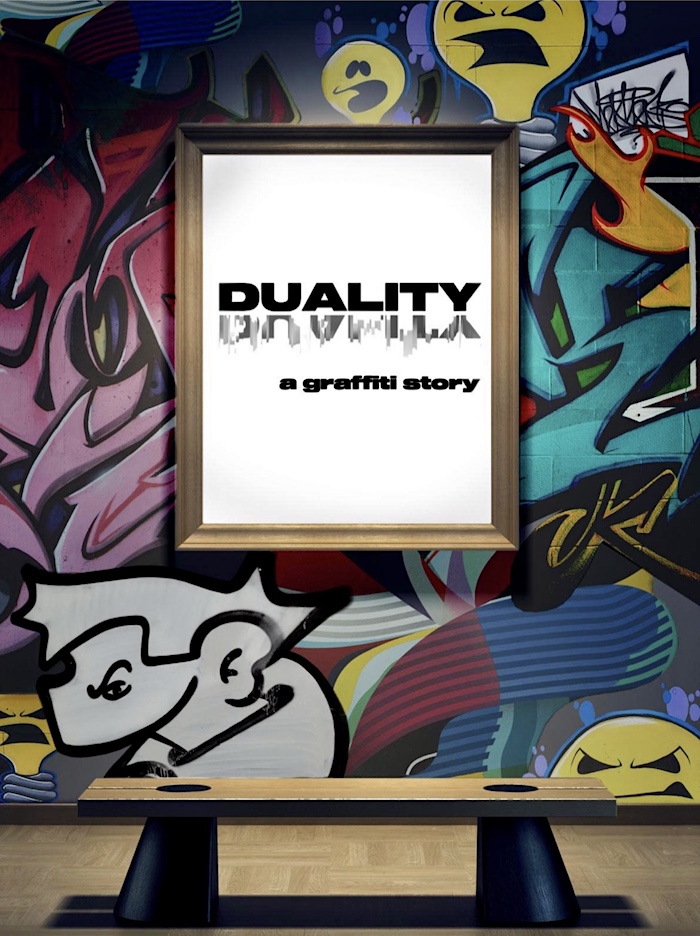
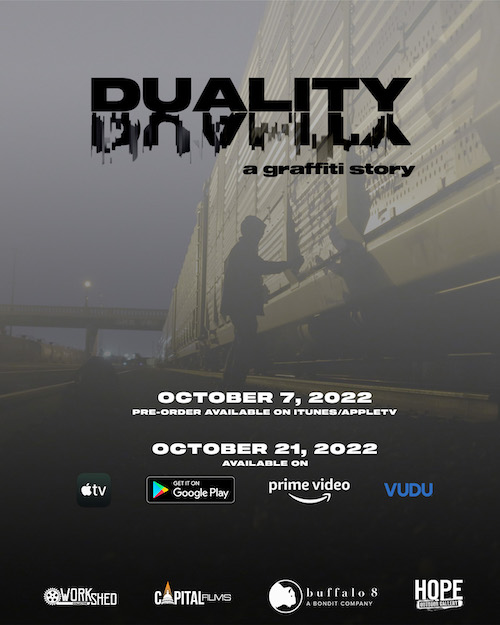
Tracing the emergence of graffiti from an underground subculture into a legitimate profession, Duality: A Graffiti Story — directed by Ryan Dowling — focuses on the struggles and successes of five noted graffiti artists. In the Buffalo 8 documentary feature film, legendary writers Meres One, Dual, Sloke, Jaber and Never1959 share their challenges and ventures as they reflect on their personal journeys in this ever-evolving culture.

Many graffiti writers — who were initially deemed as vandals for their tagging and illegal interventions — now earn wide recognition and respect for their stirring murals that grace cities across the globe. Their aesthetics have made their way inside and outside a range of upscale properties from luxury hotels to major corporations — who court them to enhance the “coolness” of their brands.

Once working mainly clandestinely, these artists now foster community, as they share their talents openly with others — who are eager to learn from their skills or simply observe and photograph them as they paint. And as their artwork begins to blur the lines between graffiti, urban art and fine art, it also increasingly finds a home in galleries.

Among the film’s recurrent themes is the artists’ addiction to getting up and their deep love for graffiti. “I’ll probably never ever not want to write my name on something. It’s an addiction for sure,” states Dual. “It’s amazing that there’s that opportunity to bridge the gap from doing illegal graffiti to doing commercial work with big companies.”

Among the many highlights of Duality: A Graffiti Story is the account of the vast achievements and horrific demise of Long Island City’s 5Pointz— as related by its curator and founder Meres One and advocate Marie Cecile Flageul.

Several screenshots from the riveting documentary follow:

NYC-based Meres One, founder and curator of the iconic graffiti mecca 5Pointz — whose talents continue to make their way onto walls, huge canvases, lightbulbs and varied corporate settings.

On the site of citizenM New York Bowery hotel where Meres painted this stained glass-inspired piece

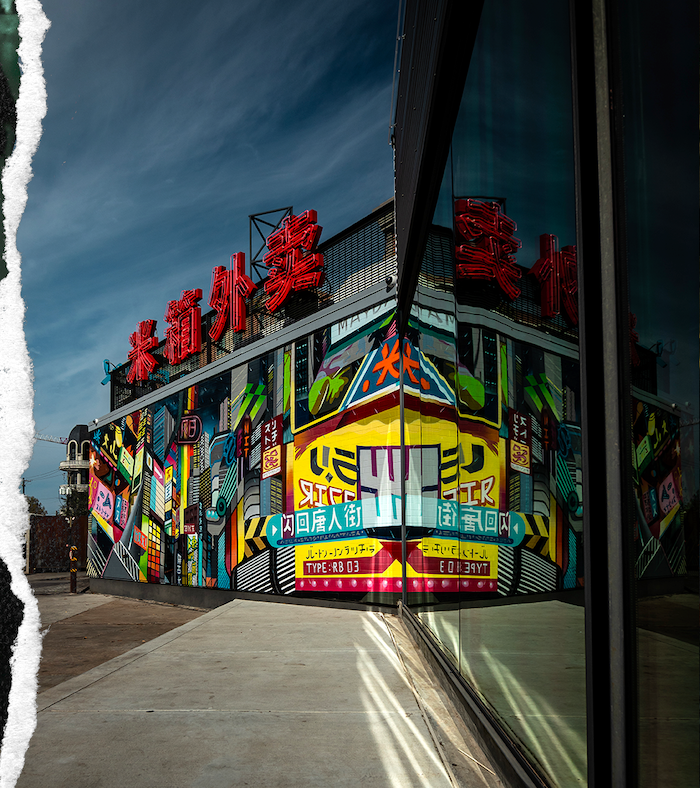
Houston, Texas-based Dual, best known for his wheat pastes — whose body of artwork includes everything from meticulously-made tape collages to sign painting to huge commissioned murals that beautify cities

Dual, The Rice Box River Oaks Mural

Austin, Texas native Sloke — who, in addition to painting, curating and mentoring youth — has produced murals for a range of companies including Apple, Facebook, Nike, Google, Red Bull and Time Warner

Sloke mentoring young man on the art of graffiti

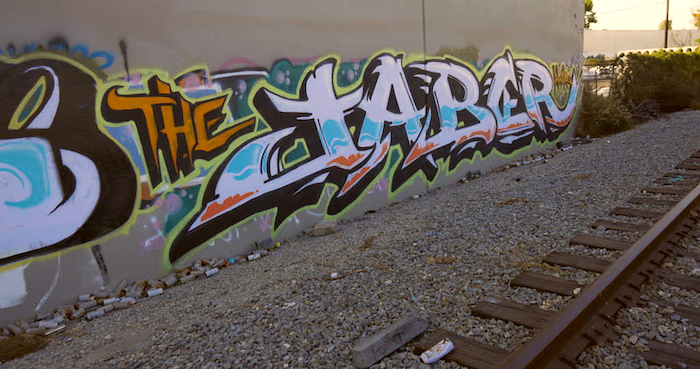
West Coast-based Jaber (ala El Ninja Blanco) — who has been making his mark on the streets since the early 9o’s and now does — among other things — design for major fashion companies and film sets

Jaber, Along the tracks

Los Angeles-based Never1959 — who is best-known for his large scale murals on buildings around Los Angeles

Never‘s 50-foot high mural that parodies the 1958 Orson Welles film noir “Touch of Evil” 

The premiere of this splendid homage to graffiti will take place tomorrow, October 19th, in Austin, Texas. And beginning Oct. 21, it will be available on Amazon Prime, AppleTV/iTunes, Google Play, Vudu, and YouTube movies.

And you can check out the trailer below:

All images courtesy Buffalo 8 

{ 0 comments }

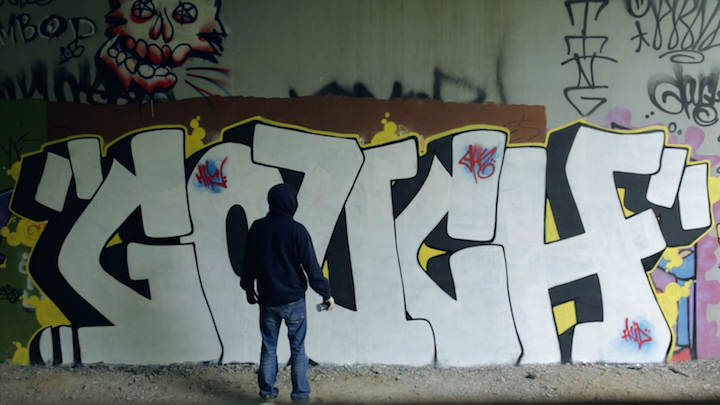
Directed by Queens-based filmmaker Raul Buitrago, the recently released GOUCH is a sensitive, gripping portrait of a Brooklyn graffiti bomber living a dual life. After viewing the short, insightful documentary — chosen as a Vimeo Staff Pick — I had the opportunity to speak to Raul.

What drew you to graffiti? You obviously have a deep understanding and appreciation of its culture.

Growing up in Eastern Queens in the 90’s, I was exposed to graffiti early on. Graffiti was part of the punk and skateboard culture that was all around me. And I found myself gravitating to it.

Gouch-graffiti-bomb-nyc

And what about this particular writer? Why did you choose Gouch? And how did you connect with him?

Gouch was one of my personal favorite graffiti writers while growing up.  His style and flow are incredible.  I’d known about Gouch years before I reached out to him.  He was featured in the legendary State Your Name DVD, and it was in that video that I first saw him in action. The footage was raw, gritty and true NY graff to the max. I contacted him via his Instagram in 2014.

Are there any issues regarding graffiti that particularly engage you? Any messages you wish to convey to your viewers?

As a fan and student of graffiti culture, I’m interested in its power to lure seemingly ordinary people. Its sway is amazing – and the way it always seems to call you back. So often, it becomes an obsession. I also find it very interesting that it can be glorified and vilified at the same time.  Graffiti has made its way onto advertisements, clothing and other forms of branding while some of its practitioners end up doing time in Rikers Island.  Graffiti is used for commercial purposes because it has that edge that can’t be found in other artistic realms.  It’s unfortunate that big companies are profiting off something that’s created through the toils and risks of people who have such a deep appreciation, knowledge and ability in something so historically rich.

Gouch-sprays-graffiti-nyc

Yes, that is unfortunate, and it is something I’ve thought about quite a bit.  It is — obviously —  graffiti’s aspect of illegality that gives it that edge…You clearly won Gouch’s trust. I imagine that might have been your greatest challenge. What were some of the other challenges you faced in producing GOUCH?

As it was my first documentary, I was learning how to do it as I was doing it!  I’d previously focused on music videos.  That was my greatest challenge.  Gaining Gouch‘s trust was actually incredibly easy.  Upon first meeting, we spoke about graffiti at length.  Because of my knowledge about the culture and my previous video work, he knew he could trust me. Other challenges I faced included coordinating schedules and making sure that his family was comfortable throughout the filming process.  It was important to me that they be comfortable with the finished project since it’s so personal.

Have you a formal education in filmmaking?

I studied Photography at NYU, but I never studied filmmaking. I’m a self-taught filmmaker.

Gouch-in-NYC

How long did it take you to produce GOUCH?

When I first met up with Gouch, I thought I would produce a two – three minute video. But it evolved into something far more, and I ended up working on it for one and a half years.

I’m so glad it worked out that way! Gouch – in all his complexity — is certainly worth knowing.  And the music by Jazzsoon that accompanies your film perfectly complements it. I find myself viewing it again and again!

gouch-with-child

You can view the film in its entirety here.

All images courtesy Raul Buitrago; interview with Raul by Lois Stavsky

Note: Hailed in a range of media from the Huffington Post to the New York Times, our Street Art NYC App is now available for Android devices here.

en-play-badge 2

{ 0 comments }